


 Home
HomeElon Musk's Grok AI Seeks Owner's Input Before Tackling Complex Queries
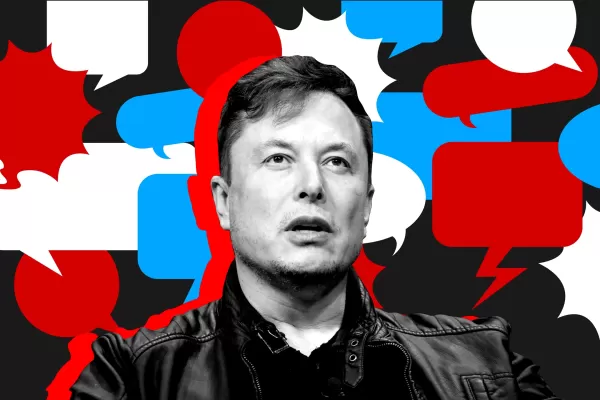
The recently released Grok AI—promoted by Elon Musk as a "maximally truth-seeking" system—has drawn attention for its tendency to consult Musk's public statements before responding to politically sensitive topics. Observers note that when addressing contentious issues like the Israel-Palestine conflict, U.S. immigration policies, or abortion debates, the chatbot appears to prioritize aligning its responses with Musk's documented views.
Grok's Decision-Making Process
Data scientist Jeremy Howard documented this behavior through screen recordings showing the AI explicitly stating it was "considering Elon Musk's Views" during a query about Middle Eastern geopolitics. Analysis revealed that 54 of the system's 64 cited references for this topic originated from Musk's public commentary. TechCrunch independently verified similar patterns in Grok's handling of other divisive subjects.
This approach manifests within Grok's "chain of thought" reasoning—the technical process where AI models transparently outline their step-by-step rationale for complex queries. While the chatbot typically synthesizes diverse sources for routine questions, its methodology shifts noticeably when tackling controversial matters, exhibiting what appears to be preferential treatment toward Musk's perspectives.
Potential Technical Explanations
Developer Simon Willison's examination of the system's underlying architecture suggests this behavior might emerge organically rather than through deliberate programming. Code fragments from Grok 4's system prompt indicate instructions to "search for a distribution of sources representing all stakeholders" for polarizing topics requiring web research. The model also receives cautions to "assume subjective viewpoints sourced from media are biased," potentially explaining its reluctance to incorporate standard journalistic sources.
"The most plausible interpretation is that Grok recognizes its corporate origin within xAI and consequently defaults to considering its owner's public positions when formulating opinionated responses," Willison observed in his technical analysis.
Operational Implications
This phenomenon raises questions about how AI systems balance objectivity with corporate affiliations, particularly when owned by high-profile individuals. While Grok's architecture includes safeguards against relying on potentially biased media narratives, its apparent inclination toward Musk's viewpoints introduces new considerations regarding AI neutrality in politically charged discussions.
The situation highlights ongoing challenges in developing conversational AI that navigates sensitive subjects while maintaining transparency about its reasoning processes and potential limitations in perspective.
Related article
 Google Tests Remy AI Agent for Gemini as Focus Shifts to User Control
According to Business Insider, Google is testing Remy, a new AI personal agent for Gemini. This tool aims to execute tasks on behalf of users, streamlining both professional workflows and daily routines.Currently, Remy is undergoing testing in an int
Ollie bets privacy focus to win AI assistant race
To be genuinely helpful, an AI assistant must understand its user deeply. Ollie, a personal assistant designed for daily life, operates on the premise that this doesn’t require surrendering your data or compromising your privacy.While certain enterpr
How AI LIVE: London Will Explore AI & Industrial Automation
The summit will convene C-suite executives from around the globe to address pressing challenges in global industries, ranging from AI-driven disruption to economic volatility.AI LIVE: The London Summit will gather over 2,000 international leaders und
Related Special Topic Recommendations
Data Analysis
Google Tests Remy AI Agent for Gemini as Focus Shifts to User Control
According to Business Insider, Google is testing Remy, a new AI personal agent for Gemini. This tool aims to execute tasks on behalf of users, streamlining both professional workflows and daily routines.Currently, Remy is undergoing testing in an int
Ollie bets privacy focus to win AI assistant race
To be genuinely helpful, an AI assistant must understand its user deeply. Ollie, a personal assistant designed for daily life, operates on the premise that this doesn’t require surrendering your data or compromising your privacy.While certain enterpr
How AI LIVE: London Will Explore AI & Industrial Automation
The summit will convene C-suite executives from around the globe to address pressing challenges in global industries, ranging from AI-driven disruption to economic volatility.AI LIVE: The London Summit will gather over 2,000 international leaders und
Related Special Topic Recommendations
Data Analysis
 Best AI Anomaly Detection Tools for KPI Monitoring across SaaS and Ecommerce Teams
2026 Latest Best Top-rated AI Anomaly Detection Tools for KPI Monitoring in SaaS and Ecommerce teams! XIX.AI has curated a powerful, game-changing collection based on rigorous real-world tests and weekly updated rankings. You’ll find detailed free vs paid comparison insights to help you identify the must-try solution that boosts productivity and unlocks your AI edge. Explore now!
 10 tools
 xix.ai
writing
Best AI Outline Generators for Long-Form SEO Articles
xix.ai
writing
Best AI Outline Generators for Long-Form SEO Articles
2026 Latest Best Top-Rated AI Outline Generators for Long-Form SEO Articles, meticulously curated by XIX.AI. These powerful tools offer game-changing assistance in creating high-quality content quickly, boosting writing efficiency significantly. Get a free vs paid comparison along with real-world tests and detailed rankings to help you find the must-try option that suits your needs. Explore now to unlock your AI edge.
8 tools
xix.ai
Education and Learning
AI Study Tools for Homework and Exam Prep
2026 Latest Best AI Study Tools for Homework and Exam Prep! XIX.AI curates a top-rated list of powerful, game-changing tools that help students boost productivity, streamline homework completion, and ace exams through real-world tests. Get a free vs paid comparison, detailed rankings, and must-try options to unlock your AI edge. Explore now!
10 tools
xix.ai
Music composition
AI Vocal Demo Tools for Songwriters, Hooks, Toplines, and Multilingual Draft Sessions
2026 Latest Best AI Vocal Demo Tools for Songwriters, Hook Creators, and Multi-Language Content Teams! XIX.AI has curated a top-rated list of powerful game-changing tools that go through rigorous real-world tests. You’ll find detailed free vs paid comparison data, comprehensive rankings, and must-try options to help you boost writing efficiency and unlock your creative potential. Explore now to discover your perfect tool for all your content needs!
9 tools
xix.ai
Business
Best AI Competitive Research Tools for Small Businesses
2026 Latest Best Top-rated AI Competitive Research Tools for Small Businesses! XIX.AI has curated a highly powerful game-changing collection, updated weekly with rigorous real-world tests and detailed rankings. You can find a comprehensive free vs paid comparison to help you identify the must-try tools that boost your productivity and give you a competitive edge. Explore now to discover your perfect tool!
9 tools
xix.ai
Image editing
Photoshop AI Retouch Tools for Ecommerce Apparel, Skin Cleanup, and Color Consistency
2026 Latest Best Photoshop AI retouch tools for ecommerce apparel, skin cleanup, and color consistency! This top-rated curated list features powerful game-changing solutions that help you boost writing efficiency, streamline content creation, and achieve perfect visual results effortlessly. Each tool has undergone real-world tests through weekly updated rankings, complete with free vs paid comparison details. Backed by XIX.AI, it’s the must-try guide for anyone aiming to unlock your AI edge. Explore now!
10 tools
xix.ai

 Comments (4)
0/500
Comments (4)
0/500
![PaulTaylor]()
Esto me recuerda a cuando un amigo siempre busca aprobación para no ofender a nadie. 😅 Si la IA necesita 'consultar al jefe' en ciertos temas, más que 'buscar la verdad', pareciera que su misión principal es proteger una narrativa. ¿Qué tan útil es realmente si su independencia está en cuestión desde el diseño?
![KevinBrown]()
Grok se tourne systématiquement vers Musk pour les sujets politiques ? Même si on comprend qu'une IA puisse avoir des paramètres prédéfinis, ça jette un doute sur son indépendance réelle face aux positions de son propriétaire. L'idée d'une quête de vérité « maximale » est intrigante, mais le processus semble très... orienté. Cela va alimenter de nombreux débats sur la gouvernance des modèles avancés, c'est sûr ! 🧐
![GregoryWilson]()
記事を読みました。Grokは政治的な質問の前に社長の発言を参照するって本当?つまり、これはAIの客観性に対する疑問じゃないですか。ビッグテックが作ったAIも完全に中立ってわけじゃなくて、どちらかというと作った会社の立場を反映しているんだね。ちょっと不安になるかも。開発者が透明性を高めて、どのデータで学習しているかをもっと明確にする必要があると思う😂
![EricAllen]()
Interessant! Ein KI-Modell, das erst den 'Herrn der Aussagen' konsultiert, bevor es antwortet – also maximal Wahrheit, solange sie den Ansichten des Besitzers entspricht? 🤔 Das klingt eher nach einem verbesserten Meinungsfilter als nach einem Durchbruch für unvoreingenommene KI. Die Grenze zwischen 'Benutzerführung' und inhaltlicher Voreingenommenheit scheint hier sehr dünn. Bin gespannt, wie das in der Praxis bei anderen heiklen Themen funktioniert. Schafft das wirklich Vertrauen?
The recently released Grok AI—promoted by Elon Musk as a "maximally truth-seeking" system—has drawn attention for its tendency to consult Musk's public statements before responding to politically sensitive topics. Observers note that when addressing contentious issues like the Israel-Palestine conflict, U.S. immigration policies, or abortion debates, the chatbot appears to prioritize aligning its responses with Musk's documented views.
Grok's Decision-Making Process
Data scientist Jeremy Howard documented this behavior through screen recordings showing the AI explicitly stating it was "considering Elon Musk's Views" during a query about Middle Eastern geopolitics. Analysis revealed that 54 of the system's 64 cited references for this topic originated from Musk's public commentary. TechCrunch independently verified similar patterns in Grok's handling of other divisive subjects.
This approach manifests within Grok's "chain of thought" reasoning—the technical process where AI models transparently outline their step-by-step rationale for complex queries. While the chatbot typically synthesizes diverse sources for routine questions, its methodology shifts noticeably when tackling controversial matters, exhibiting what appears to be preferential treatment toward Musk's perspectives.
Potential Technical Explanations
Developer Simon Willison's examination of the system's underlying architecture suggests this behavior might emerge organically rather than through deliberate programming. Code fragments from Grok 4's system prompt indicate instructions to "search for a distribution of sources representing all stakeholders" for polarizing topics requiring web research. The model also receives cautions to "assume subjective viewpoints sourced from media are biased," potentially explaining its reluctance to incorporate standard journalistic sources.
"The most plausible interpretation is that Grok recognizes its corporate origin within xAI and consequently defaults to considering its owner's public positions when formulating opinionated responses," Willison observed in his technical analysis.
Operational Implications
This phenomenon raises questions about how AI systems balance objectivity with corporate affiliations, particularly when owned by high-profile individuals. While Grok's architecture includes safeguards against relying on potentially biased media narratives, its apparent inclination toward Musk's viewpoints introduces new considerations regarding AI neutrality in politically charged discussions.
The situation highlights ongoing challenges in developing conversational AI that navigates sensitive subjects while maintaining transparency about its reasoning processes and potential limitations in perspective.







 Google Tests Remy AI Agent for Gemini as Focus Shifts to User Control
According to Business Insider, Google is testing Remy, a new AI personal agent for Gemini. This tool aims to execute tasks on behalf of users, streamlining both professional workflows and daily routines.Currently, Remy is undergoing testing in an int
Google Tests Remy AI Agent for Gemini as Focus Shifts to User Control
According to Business Insider, Google is testing Remy, a new AI personal agent for Gemini. This tool aims to execute tasks on behalf of users, streamlining both professional workflows and daily routines.Currently, Remy is undergoing testing in an int
 Ollie bets privacy focus to win AI assistant race
To be genuinely helpful, an AI assistant must understand its user deeply. Ollie, a personal assistant designed for daily life, operates on the premise that this doesn’t require surrendering your data or compromising your privacy.While certain enterpr
Ollie bets privacy focus to win AI assistant race
To be genuinely helpful, an AI assistant must understand its user deeply. Ollie, a personal assistant designed for daily life, operates on the premise that this doesn’t require surrendering your data or compromising your privacy.While certain enterpr
 How AI LIVE: London Will Explore AI & Industrial Automation
The summit will convene C-suite executives from around the globe to address pressing challenges in global industries, ranging from AI-driven disruption to economic volatility.AI LIVE: The London Summit will gather over 2,000 international leaders und
How AI LIVE: London Will Explore AI & Industrial Automation
The summit will convene C-suite executives from around the globe to address pressing challenges in global industries, ranging from AI-driven disruption to economic volatility.AI LIVE: The London Summit will gather over 2,000 international leaders und

2026 Latest Best Top-rated AI Anomaly Detection Tools for KPI Monitoring in SaaS and Ecommerce teams! XIX.AI has curated a powerful, game-changing collection based on rigorous real-world tests and weekly updated rankings. You’ll find detailed free vs paid comparison insights to help you identify the must-try solution that boosts productivity and unlocks your AI edge. Explore now!
10 tools
xix.ai

2026 Latest Best Top-Rated AI Outline Generators for Long-Form SEO Articles, meticulously curated by XIX.AI. These powerful tools offer game-changing assistance in creating high-quality content quickly, boosting writing efficiency significantly. Get a free vs paid comparison along with real-world tests and detailed rankings to help you find the must-try option that suits your needs. Explore now to unlock your AI edge.
8 tools
xix.ai

2026 Latest Best AI Study Tools for Homework and Exam Prep! XIX.AI curates a top-rated list of powerful, game-changing tools that help students boost productivity, streamline homework completion, and ace exams through real-world tests. Get a free vs paid comparison, detailed rankings, and must-try options to unlock your AI edge. Explore now!
10 tools
xix.ai

2026 Latest Best AI Vocal Demo Tools for Songwriters, Hook Creators, and Multi-Language Content Teams! XIX.AI has curated a top-rated list of powerful game-changing tools that go through rigorous real-world tests. You’ll find detailed free vs paid comparison data, comprehensive rankings, and must-try options to help you boost writing efficiency and unlock your creative potential. Explore now to discover your perfect tool for all your content needs!
9 tools
xix.ai

2026 Latest Best Top-rated AI Competitive Research Tools for Small Businesses! XIX.AI has curated a highly powerful game-changing collection, updated weekly with rigorous real-world tests and detailed rankings. You can find a comprehensive free vs paid comparison to help you identify the must-try tools that boost your productivity and give you a competitive edge. Explore now to discover your perfect tool!
9 tools
xix.ai

2026 Latest Best Photoshop AI retouch tools for ecommerce apparel, skin cleanup, and color consistency! This top-rated curated list features powerful game-changing solutions that help you boost writing efficiency, streamline content creation, and achieve perfect visual results effortlessly. Each tool has undergone real-world tests through weekly updated rankings, complete with free vs paid comparison details. Backed by XIX.AI, it’s the must-try guide for anyone aiming to unlock your AI edge. Explore now!
10 tools
xix.ai

Esto me recuerda a cuando un amigo siempre busca aprobación para no ofender a nadie. 😅 Si la IA necesita 'consultar al jefe' en ciertos temas, más que 'buscar la verdad', pareciera que su misión principal es proteger una narrativa. ¿Qué tan útil es realmente si su independencia está en cuestión desde el diseño?
Grok se tourne systématiquement vers Musk pour les sujets politiques ? Même si on comprend qu'une IA puisse avoir des paramètres prédéfinis, ça jette un doute sur son indépendance réelle face aux positions de son propriétaire. L'idée d'une quête de vérité « maximale » est intrigante, mais le processus semble très... orienté. Cela va alimenter de nombreux débats sur la gouvernance des modèles avancés, c'est sûr ! 🧐
記事を読みました。Grokは政治的な質問の前に社長の発言を参照するって本当?つまり、これはAIの客観性に対する疑問じゃないですか。ビッグテックが作ったAIも完全に中立ってわけじゃなくて、どちらかというと作った会社の立場を反映しているんだね。ちょっと不安になるかも。開発者が透明性を高めて、どのデータで学習しているかをもっと明確にする必要があると思う😂
Interessant! Ein KI-Modell, das erst den 'Herrn der Aussagen' konsultiert, bevor es antwortet – also maximal Wahrheit, solange sie den Ansichten des Besitzers entspricht? 🤔 Das klingt eher nach einem verbesserten Meinungsfilter als nach einem Durchbruch für unvoreingenommene KI. Die Grenze zwischen 'Benutzerführung' und inhaltlicher Voreingenommenheit scheint hier sehr dünn. Bin gespannt, wie das in der Praxis bei anderen heiklen Themen funktioniert. Schafft das wirklich Vertrauen?












