


 Home
HomeGoogle Co-founder Sergey Brin Admits Major Missteps With Google Glass
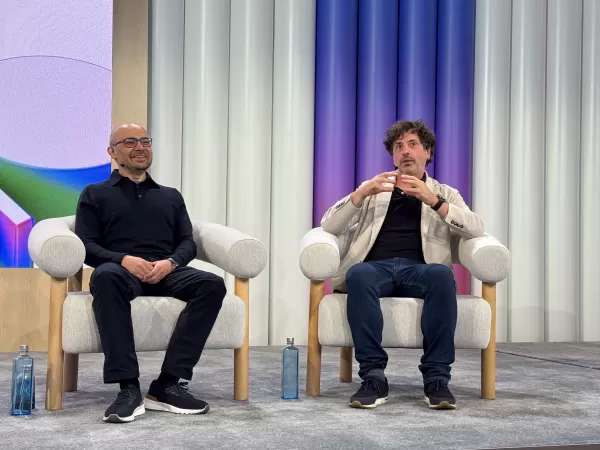
During a surprise appearance at Google I/O 2025, co-founder Sergey Brin openly acknowledged missteps with Google Glass in his onstage interview with DeepMind CEO Demis Hassabis. Hosted by Big Technology Podcast's Alex Kantrowitz, Brin reflected on the challenges of consumer electronics manufacturing.
Brin admitted lacking expertise in consumer electronics supply chains during Google Glass's development, particularly regarding cost-effective production. Despite these hurdles, he remains enthusiastic about smart glasses as a form factor and praised current collaborations with industry partners advancing the technology.
Google revealed its new Android XR glasses initiative earlier that day, marking its return to wearable tech nearly ten years after Glass was discontinued. Executives demonstrated how the DeepMind-powered glasses could handle real-time translations, navigation, and AI-powered queries.
For this AI- and AR-enabled project, Google has partnered with Samsung, Xreal, and Warby Parker - investing $150 million for an equity stake in the eyewear company. These alliances aim to address the complex supply chain issues Brin encountered during Glass's initial development.
Brin emphasized how generative AI advancements have made smart glass capabilities far more achievable than during Glass's era.
The executive also discussed coming out of retirement to contribute to Google's Gemini projects, regularly working at the Mountain View office. He's assisting with multimodal developments including the Veo 3 video generation model.
"No computer scientist should be retired today," Brin stated. "There's too much important work happening in AI."
Join us at TechCrunch Sessions: AI
Reserve your pass for our premier AI conference featuring leaders from OpenAI, Anthropic, and Cohere. Limited-time offer: Full-day access to keynote speeches, workshops, and networking for only $292.
Exhibit at TechCrunch Sessions: AI
Showcase your innovation to 1,200+ industry leaders at TC Sessions: AI - affordable exhibition opportunities available until May 9 or until tables sell out.
Reports indicate Brin has been driving Google's Gemini teams hard in the competitive AI landscape. Allegedly, he recommended employees maintain office attendance five days weekly and considers 60-hour workweeks optimal for productivity.
Related article
 ByteDance’s Seed launches global campus drive, offering virtual shares to win top large model talent
In the competitive landscape of large language models, securing top-tier talent remains the most critical strategic asset.On April 1st, ByteDance announced the launch of its Seed global campus recruitment initiative, part of its large model talent de
Suno to Watermark Songs Amid Legal Battles
Suno, the platform enabling users to generate AI-created music, has unveiled new features to label platform-produced tracks, restrict downloads, and update community standards to curb unauthorized replicas. These updates arrive as Suno confronts mult
Musk Admits Grok Build Leaked User Code, Promises to Erase All Historical Data
Elon Musk directly addressed the privacy controversy surrounding Grok Build, beginning with a simple "True" to confirm the incident's validity. He pledged that all user data previously uploaded to SpaceXAI would be permanently erased, stating, "not a
Related Special Topic Recommendations
Design & Art
ByteDance’s Seed launches global campus drive, offering virtual shares to win top large model talent
In the competitive landscape of large language models, securing top-tier talent remains the most critical strategic asset.On April 1st, ByteDance announced the launch of its Seed global campus recruitment initiative, part of its large model talent de
Suno to Watermark Songs Amid Legal Battles
Suno, the platform enabling users to generate AI-created music, has unveiled new features to label platform-produced tracks, restrict downloads, and update community standards to curb unauthorized replicas. These updates arrive as Suno confronts mult
Musk Admits Grok Build Leaked User Code, Promises to Erase All Historical Data
Elon Musk directly addressed the privacy controversy surrounding Grok Build, beginning with a simple "True" to confirm the incident's validity. He pledged that all user data previously uploaded to SpaceXAI would be permanently erased, stating, "not a
Related Special Topic Recommendations
Design & Art
 AI Visual Style Reference Tools for Character Sheets, Moodboards, and Pitch Decks
2026 Latest Best AI Visual Style Reference Tools for Character Sheets, Moodboards, and Pitch Decks are here on XIX.AI! This curated top-rated list features powerful game-changing tools that go through rigorous real-world tests. You’ll find a free vs paid comparison, detailed rankings, and must-try options to help you boost creativity and streamline your workflow. Explore now to discover your perfect tool for boosting productivity!
 11 tools
 xix.ai
SEO
Best AI SERP Analysis Tools for Search Strategy
xix.ai
SEO
Best AI SERP Analysis Tools for Search Strategy
2026 Latest Best Top-rated AI SERP Analysis Tools for Search Strategy are curated by XIX.AI through rigorous real-world tests and weekly updated rankings. These powerful tools help you unlock hidden optimization opportunities, boost content performance, and gain a competitive edge in search. Discover your perfect tool to elevate your search strategy today. Explore now!
13 tools
xix.ai
Data Analysis
Best AI Anomaly Detection Tools for KPI Monitoring across SaaS and Ecommerce Teams
2026 Latest Best Top-rated AI Anomaly Detection Tools for KPI Monitoring in SaaS and Ecommerce teams! XIX.AI has curated a powerful, game-changing collection based on rigorous real-world tests and weekly updated rankings. You’ll find detailed free vs paid comparison insights to help you identify the must-try solution that boosts productivity and unlocks your AI edge. Explore now!
10 tools
xix.ai
writing
Best AI Outline Generators for Long-Form SEO Articles
2026 Latest Best Top-Rated AI Outline Generators for Long-Form SEO Articles, meticulously curated by XIX.AI. These powerful tools offer game-changing assistance in creating high-quality content quickly, boosting writing efficiency significantly. Get a free vs paid comparison along with real-world tests and detailed rankings to help you find the must-try option that suits your needs. Explore now to unlock your AI edge.
8 tools
xix.ai
Education and Learning
AI Study Tools for Homework and Exam Prep
2026 Latest Best AI Study Tools for Homework and Exam Prep! XIX.AI curates a top-rated list of powerful, game-changing tools that help students boost productivity, streamline homework completion, and ace exams through real-world tests. Get a free vs paid comparison, detailed rankings, and must-try options to unlock your AI edge. Explore now!
10 tools
xix.ai
Music composition
AI Vocal Demo Tools for Songwriters, Hooks, Toplines, and Multilingual Draft Sessions
2026 Latest Best AI Vocal Demo Tools for Songwriters, Hook Creators, and Multi-Language Content Teams! XIX.AI has curated a top-rated list of powerful game-changing tools that go through rigorous real-world tests. You’ll find detailed free vs paid comparison data, comprehensive rankings, and must-try options to help you boost writing efficiency and unlock your creative potential. Explore now to discover your perfect tool for all your content needs!
9 tools
xix.ai

 Comments (1)
0/500
Comments (1)
0/500
![DennisRodriguez]()
Sergey Brin finally admitting Google Glass was a flop? Better late than never, I guess. The tech was cool but the execution was creepy—walking around with a camera on your face screaming 'I'm recording you' wasn't exactly winning friends. 😅
During a surprise appearance at Google I/O 2025, co-founder Sergey Brin openly acknowledged missteps with Google Glass in his onstage interview with DeepMind CEO Demis Hassabis. Hosted by Big Technology Podcast's Alex Kantrowitz, Brin reflected on the challenges of consumer electronics manufacturing.
Brin admitted lacking expertise in consumer electronics supply chains during Google Glass's development, particularly regarding cost-effective production. Despite these hurdles, he remains enthusiastic about smart glasses as a form factor and praised current collaborations with industry partners advancing the technology.
Google revealed its new Android XR glasses initiative earlier that day, marking its return to wearable tech nearly ten years after Glass was discontinued. Executives demonstrated how the DeepMind-powered glasses could handle real-time translations, navigation, and AI-powered queries.
For this AI- and AR-enabled project, Google has partnered with Samsung, Xreal, and Warby Parker - investing $150 million for an equity stake in the eyewear company. These alliances aim to address the complex supply chain issues Brin encountered during Glass's initial development.
Brin emphasized how generative AI advancements have made smart glass capabilities far more achievable than during Glass's era.
The executive also discussed coming out of retirement to contribute to Google's Gemini projects, regularly working at the Mountain View office. He's assisting with multimodal developments including the Veo 3 video generation model.
"No computer scientist should be retired today," Brin stated. "There's too much important work happening in AI."
Join us at TechCrunch Sessions: AI
Reserve your pass for our premier AI conference featuring leaders from OpenAI, Anthropic, and Cohere. Limited-time offer: Full-day access to keynote speeches, workshops, and networking for only $292.
Exhibit at TechCrunch Sessions: AI
Showcase your innovation to 1,200+ industry leaders at TC Sessions: AI - affordable exhibition opportunities available until May 9 or until tables sell out.
Reports indicate Brin has been driving Google's Gemini teams hard in the competitive AI landscape. Allegedly, he recommended employees maintain office attendance five days weekly and considers 60-hour workweeks optimal for productivity.








 ByteDance’s Seed launches global campus drive, offering virtual shares to win top large model talent
In the competitive landscape of large language models, securing top-tier talent remains the most critical strategic asset.On April 1st, ByteDance announced the launch of its Seed global campus recruitment initiative, part of its large model talent de
ByteDance’s Seed launches global campus drive, offering virtual shares to win top large model talent
In the competitive landscape of large language models, securing top-tier talent remains the most critical strategic asset.On April 1st, ByteDance announced the launch of its Seed global campus recruitment initiative, part of its large model talent de
 Suno to Watermark Songs Amid Legal Battles
Suno, the platform enabling users to generate AI-created music, has unveiled new features to label platform-produced tracks, restrict downloads, and update community standards to curb unauthorized replicas. These updates arrive as Suno confronts mult
Suno to Watermark Songs Amid Legal Battles
Suno, the platform enabling users to generate AI-created music, has unveiled new features to label platform-produced tracks, restrict downloads, and update community standards to curb unauthorized replicas. These updates arrive as Suno confronts mult
 Musk Admits Grok Build Leaked User Code, Promises to Erase All Historical Data
Elon Musk directly addressed the privacy controversy surrounding Grok Build, beginning with a simple "True" to confirm the incident's validity. He pledged that all user data previously uploaded to SpaceXAI would be permanently erased, stating, "not a
Musk Admits Grok Build Leaked User Code, Promises to Erase All Historical Data
Elon Musk directly addressed the privacy controversy surrounding Grok Build, beginning with a simple "True" to confirm the incident's validity. He pledged that all user data previously uploaded to SpaceXAI would be permanently erased, stating, "not a

2026 Latest Best AI Visual Style Reference Tools for Character Sheets, Moodboards, and Pitch Decks are here on XIX.AI! This curated top-rated list features powerful game-changing tools that go through rigorous real-world tests. You’ll find a free vs paid comparison, detailed rankings, and must-try options to help you boost creativity and streamline your workflow. Explore now to discover your perfect tool for boosting productivity!
11 tools
xix.ai

2026 Latest Best Top-rated AI SERP Analysis Tools for Search Strategy are curated by XIX.AI through rigorous real-world tests and weekly updated rankings. These powerful tools help you unlock hidden optimization opportunities, boost content performance, and gain a competitive edge in search. Discover your perfect tool to elevate your search strategy today. Explore now!
13 tools
xix.ai

2026 Latest Best Top-rated AI Anomaly Detection Tools for KPI Monitoring in SaaS and Ecommerce teams! XIX.AI has curated a powerful, game-changing collection based on rigorous real-world tests and weekly updated rankings. You’ll find detailed free vs paid comparison insights to help you identify the must-try solution that boosts productivity and unlocks your AI edge. Explore now!
10 tools
xix.ai

2026 Latest Best Top-Rated AI Outline Generators for Long-Form SEO Articles, meticulously curated by XIX.AI. These powerful tools offer game-changing assistance in creating high-quality content quickly, boosting writing efficiency significantly. Get a free vs paid comparison along with real-world tests and detailed rankings to help you find the must-try option that suits your needs. Explore now to unlock your AI edge.
8 tools
xix.ai

2026 Latest Best AI Study Tools for Homework and Exam Prep! XIX.AI curates a top-rated list of powerful, game-changing tools that help students boost productivity, streamline homework completion, and ace exams through real-world tests. Get a free vs paid comparison, detailed rankings, and must-try options to unlock your AI edge. Explore now!
10 tools
xix.ai

2026 Latest Best AI Vocal Demo Tools for Songwriters, Hook Creators, and Multi-Language Content Teams! XIX.AI has curated a top-rated list of powerful game-changing tools that go through rigorous real-world tests. You’ll find detailed free vs paid comparison data, comprehensive rankings, and must-try options to help you boost writing efficiency and unlock your creative potential. Explore now to discover your perfect tool for all your content needs!
9 tools
xix.ai

Sergey Brin finally admitting Google Glass was a flop? Better late than never, I guess. The tech was cool but the execution was creepy—walking around with a camera on your face screaming 'I'm recording you' wasn't exactly winning friends. 😅












