


 Home
Google Unveils Agentic AI for Gemini, Launching with Enterprise Clients
During a Google Cloud event on Thursday, the company unveiled plans to integrate Gemini AI into the agentic era. This launch introduces a unified agent capable of not only answering queries but also executing tasks on behalf of users, all within a single interface.
This development aligns with the broader shift in AI tools, which are evolving from simple conversational interfaces to systems that can assume responsibility for assigned tasks. These advanced tools can generate code, schedule meetings, book appointments and travel, and perform other complex actions. This move also follows the emergence of consumer-facing agents like Meta’s Muse, messaging-based agents such as Instinct, and the recent introduction of ChatGPT’s Dots.
Google is well-positioned to achieve scale with its agentic initiatives. As Google CEO Sundar Pichai highlighted at the start of the event, Gemini currently boasts over 1 billion monthly active users. He further noted that nearly 90% of Fortune 100 companies now utilize Gemini Enterprise in their operations.
Given Gemini’s strong adoption in the corporate sector, Google will initially roll out the agent to businesses before expanding its availability to consumers.
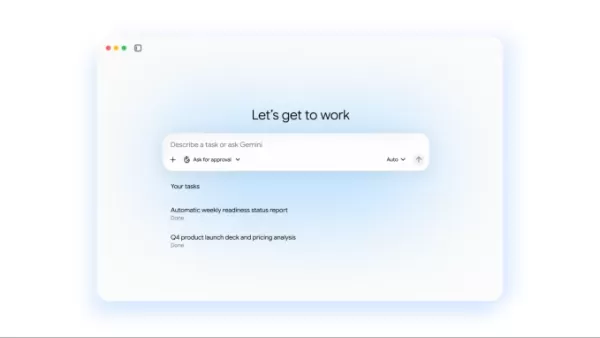
Image Credits:Google
According to Pichai, this phased approach allows the company to address the more complex challenges related to security, scale, and performance that arise when deploying powerful agents.
Thomas Kurian, CEO of Google Cloud, explained that the new agent can be assigned “objectives, not just instructions.” This capability enables it to plan workflows, utilize custom skills and tools, and connect with businesses’ internal systems to achieve its goals.
By default, the AI selects the most suitable model to complete the task. However, users can also manually choose a model, including third-party options starting with Anthropic’s Claude models. Google stated that the model picker will eventually expand to include open-source models and other private models.
Users can attach files, folders, or other projects tailored to specific workstreams, such as those combining files and skills, with their requests. The agent can connect to business data and systems, including Google Workspace, Microsoft 365, Slack, Jira, Confluence, Git, BigQuery, Databricks, Postgres, Snowflake, and others.
It can also securely connect and operate with any Model Context Protocol (MCP) server, whether located inside or outside the company’s network.
Users can monitor Gemini’s activities through a “tasks inbox” interface. This dashboard displays Gemini’s thought process, task delegation to subagents, loading of specialized skills, code generation, and overall progress.
Notably, the AI will have its own Workspace account, functioning like another employee. This means it has a unique email address and context. It understands company structure, including team memberships, time zones, approval hierarchies, and calendar schedules. Users can interact with the agent by tagging it, emailing it, sharing content with it, or adding it to group chats. As it performs actions, it generates an audit trail attributed to the agent rather than an individual.
The agent will be accessible on iOS and Android mobile devices, Windows and Mac desktops, command line interfaces, Google Workspace, Microsoft 365, ServiceNow, and Slack.
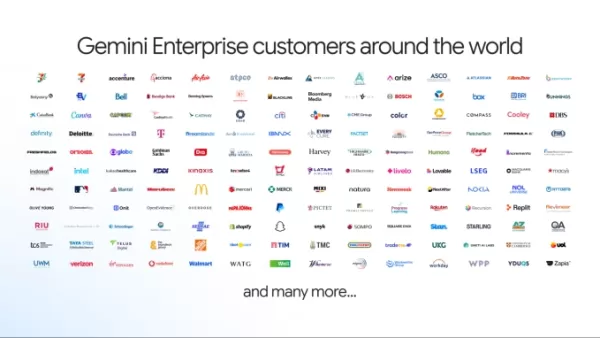
Image Credits:Google
Early testers of the agent include sportswear brand On, Shopify, and PayPal. Additionally, Gemini Enterprise customers include major corporations such as BNP Paribas, Bradesco, Merck, Orange Spain, Santee Cooper, SOMPO, Ulta Beauty, and Wesfarmers.
Google announced new flexible spending options, including multi-model orchestration, smart routing, and real-time spend caps, designed to help businesses better manage their enterprise AI costs.
Related article
 Google Unveils Dreambeans, Its Most Eccentric AI Tool Yet, to Transform Your Life Into a Cartoon
Google Labs, the division responsible for experimental product design, has released a new AI-powered application for iOS and Android that brings your daily life to life.Introducing Dreambeans. The reasoning behind the name will be explained shortly.W
Stripe to Acquire OpenRouter as AI Model Routing Gains Momentum
Stripe has agreed to acquire OpenRouter, an AI model-routing platform that gives developers access to hundreds of models through a single interface. The deal adds model selection and routing to Stripe’s existing work around AI usage and token-based b
Google AI Overviews Gain Ground in Search Results
According to Similarweb’s 2026 Generative AI Landscape report, Google’s AI-generated summaries appeared in 43% of US searches, a significant rise from 15% recorded a year prior.While AI Overviews present generated summaries within standard search res
Related Special Topic Recommendations
Design & Art
 Top AI Illustration Tools: Create Editorial Scenes and Cover Art Faster
2026 Latest Top-rated AI Illustration Tools: Our curated list features the best powerfully designed tools for creating stunning editorial scenes and eye-catching cover art quickly. Each option has gone through rigorous real-world tests, offering a free vs paid comparison to help you find the perfect match for your workflow. Try these must-try solutions today to unlock your AI edge and boost your creative productivity. Explore now at XIX.AI.
 10 tools
 xix.ai
Education and Learning
Top AI Tutors for Exam Prep: Practice Math, Science, and English
2026 Latest Top-Rated Best AI Tutors for Exam Prep are here on XIX.AI! Our curated list features powerful game-changing tools that offer free vs paid comparison, real-world tests, and weekly updated rankings. They help boost your writing efficiency, simplify complex topic learning, and unlock your academic potential. Explore now to Discover your perfect exam prep tool and Start creating today to Unlock your AI edge!
10 tools
xix.ai
Finance
AI Budget Planning Tools for Personal Money Management
2026 Latest Best Top-Rated AI Budget Planning Tools for Personal Money Management are here on XIX.AI! This curated collection features powerful, game-changing solutions that help you conduct real-world tests, understand spending habits, and create personalized plans to boost productivity. Enjoy a free vs paid comparison along with detailed rankings. Must-try tools designed to simplify money management and unlock your AI edge. Explore now!
11 tools
xix.ai
Health & Wellness
AI Sleep Tracking Assistants: Improve Recovery with Better Bedtime Habits
2026 Latest Best Top-Rated AI Sleep Tracking Assistants curated for ultimate recovery. This fully updated weekly guide features powerful tools that deliver real-world tests, free vs paid comparison, and detailed rankings to help you find the must-try solution that boosts sleep quality and supports better bedtime habits. Explore now at XIX.AI to Unlock your AI edge.
10 tools
xix.ai
Data Analysis
AI SQL Copilots for Product and Revenue Analytics
2026 Latest Best Top-Rated AI SQL Copilots for Product and Revenue Analytics! XIX.AI has curated a powerful, game-changing collection of must-try tools that undergo real-world tests through weekly updated rankings. These tools help users boost productivity significantly by accelerating data analysis, streamlining complex queries, and generating accurate insights to drive smarter business decisions. Explore now to Discover your perfect tool for unlocking your AI edge!
14 tools
xix.ai
Education and Learning
Best AI Homework Helpers That Teach: Learn Concepts, Not Just Answers
2026 Latest Best Top-Rated AI Homework Helpers That Teach Core Concepts Not Just Answers Powerful Tools for Students Must-Try Curated List Weekly Updated Free vs Paid Comparison Real-World Tests Accurate Rankings to Help You Unlock Your Full Learning Potential Explore now to Discover your perfect tool for smarter studying.
10 tools
xix.ai

 Comments (0)
0/500
During a Google Cloud event on Thursday, the company unveiled plans to integrate Gemini AI into the agentic era. This launch introduces a unified agent capable of not only answering queries but also executing tasks on behalf of users, all within a single interface.
This development aligns with the broader shift in AI tools, which are evolving from simple conversational interfaces to systems that can assume responsibility for assigned tasks. These advanced tools can generate code, schedule meetings, book appointments and travel, and perform other complex actions. This move also follows the emergence of consumer-facing agents like Meta’s Muse, messaging-based agents such as Instinct, and the recent introduction of ChatGPT’s Dots.
Google is well-positioned to achieve scale with its agentic initiatives. As Google CEO Sundar Pichai highlighted at the start of the event, Gemini currently boasts over 1 billion monthly active users. He further noted that nearly 90% of Fortune 100 companies now utilize Gemini Enterprise in their operations.
Given Gemini’s strong adoption in the corporate sector, Google will initially roll out the agent to businesses before expanding its availability to consumers.
Image Credits:Google
According to Pichai, this phased approach allows the company to address the more complex challenges related to security, scale, and performance that arise when deploying powerful agents.
Thomas Kurian, CEO of Google Cloud, explained that the new agent can be assigned “objectives, not just instructions.” This capability enables it to plan workflows, utilize custom skills and tools, and connect with businesses’ internal systems to achieve its goals.
By default, the AI selects the most suitable model to complete the task. However, users can also manually choose a model, including third-party options starting with Anthropic’s Claude models. Google stated that the model picker will eventually expand to include open-source models and other private models.
Users can attach files, folders, or other projects tailored to specific workstreams, such as those combining files and skills, with their requests. The agent can connect to business data and systems, including Google Workspace, Microsoft 365, Slack, Jira, Confluence, Git, BigQuery, Databricks, Postgres, Snowflake, and others.
It can also securely connect and operate with any Model Context Protocol (MCP) server, whether located inside or outside the company’s network.
Users can monitor Gemini’s activities through a “tasks inbox” interface. This dashboard displays Gemini’s thought process, task delegation to subagents, loading of specialized skills, code generation, and overall progress.
Notably, the AI will have its own Workspace account, functioning like another employee. This means it has a unique email address and context. It understands company structure, including team memberships, time zones, approval hierarchies, and calendar schedules. Users can interact with the agent by tagging it, emailing it, sharing content with it, or adding it to group chats. As it performs actions, it generates an audit trail attributed to the agent rather than an individual.
The agent will be accessible on iOS and Android mobile devices, Windows and Mac desktops, command line interfaces, Google Workspace, Microsoft 365, ServiceNow, and Slack.
Image Credits:Google
Early testers of the agent include sportswear brand On, Shopify, and PayPal. Additionally, Gemini Enterprise customers include major corporations such as BNP Paribas, Bradesco, Merck, Orange Spain, Santee Cooper, SOMPO, Ulta Beauty, and Wesfarmers.
Google announced new flexible spending options, including multi-model orchestration, smart routing, and real-time spend caps, designed to help businesses better manage their enterprise AI costs.








 Google Unveils Dreambeans, Its Most Eccentric AI Tool Yet, to Transform Your Life Into a Cartoon
Google Labs, the division responsible for experimental product design, has released a new AI-powered application for iOS and Android that brings your daily life to life.Introducing Dreambeans. The reasoning behind the name will be explained shortly.W
 Stripe to Acquire OpenRouter as AI Model Routing Gains Momentum
Stripe has agreed to acquire OpenRouter, an AI model-routing platform that gives developers access to hundreds of models through a single interface. The deal adds model selection and routing to Stripe’s existing work around AI usage and token-based b
 Google AI Overviews Gain Ground in Search Results
According to Similarweb’s 2026 Generative AI Landscape report, Google’s AI-generated summaries appeared in 43% of US searches, a significant rise from 15% recorded a year prior.While AI Overviews present generated summaries within standard search res

2026 Latest Top-rated AI Illustration Tools: Our curated list features the best powerfully designed tools for creating stunning editorial scenes and eye-catching cover art quickly. Each option has gone through rigorous real-world tests, offering a free vs paid comparison to help you find the perfect match for your workflow. Try these must-try solutions today to unlock your AI edge and boost your creative productivity. Explore now at XIX.AI.
10 tools
xix.ai

2026 Latest Top-Rated Best AI Tutors for Exam Prep are here on XIX.AI! Our curated list features powerful game-changing tools that offer free vs paid comparison, real-world tests, and weekly updated rankings. They help boost your writing efficiency, simplify complex topic learning, and unlock your academic potential. Explore now to Discover your perfect exam prep tool and Start creating today to Unlock your AI edge!
10 tools
xix.ai

2026 Latest Best Top-Rated AI Budget Planning Tools for Personal Money Management are here on XIX.AI! This curated collection features powerful, game-changing solutions that help you conduct real-world tests, understand spending habits, and create personalized plans to boost productivity. Enjoy a free vs paid comparison along with detailed rankings. Must-try tools designed to simplify money management and unlock your AI edge. Explore now!
11 tools
xix.ai

2026 Latest Best Top-Rated AI Sleep Tracking Assistants curated for ultimate recovery. This fully updated weekly guide features powerful tools that deliver real-world tests, free vs paid comparison, and detailed rankings to help you find the must-try solution that boosts sleep quality and supports better bedtime habits. Explore now at XIX.AI to Unlock your AI edge.
10 tools
xix.ai

2026 Latest Best Top-Rated AI SQL Copilots for Product and Revenue Analytics! XIX.AI has curated a powerful, game-changing collection of must-try tools that undergo real-world tests through weekly updated rankings. These tools help users boost productivity significantly by accelerating data analysis, streamlining complex queries, and generating accurate insights to drive smarter business decisions. Explore now to Discover your perfect tool for unlocking your AI edge!
14 tools
xix.ai

2026 Latest Best Top-Rated AI Homework Helpers That Teach Core Concepts Not Just Answers Powerful Tools for Students Must-Try Curated List Weekly Updated Free vs Paid Comparison Real-World Tests Accurate Rankings to Help You Unlock Your Full Learning Potential Explore now to Discover your perfect tool for smarter studying.
10 tools
xix.ai












