


 Home
HomeGitHub Code Exposes Anthropic as AMD Customer, Signaling Shift From NVIDIA
A single line of public code, inadvertently exposing commercial secrets, has unveiled Anthropic’s next-generation chip architecture. According to industry analysis firm SemiAnalysis, code published on GitHub by AMD’s senior director of AI business clearly identifies Anthropic as an AMD customer. This unofficial, non-media leak sends a strong message: Anthropic is actively broadening its hardware partnerships, reducing reliance on a single compute provider.
On Monday, SemiAnalysis published an analysis on X, derived from a technical review of public code released by AMD’s senior director. The code explicitly references Anthropic’s status as an AMD client. The firm noted it would provide further details and context regarding the code. If accurate, this development positions AMD to capture a share of the high-end AI training market, previously dominated by NVIDIA and Google, while accelerating Anthropic’s shift toward a diversified computing infrastructure.
The source of this information is notable. Rather than coming through official press releases or news outlets, the data emerged from code pushed to GitHub by an AMD executive. SemiAnalysis analyzed the code and shared its findings on X. In the tech sector, accidental leaks via public repositories are not rare; given that GitHub is searchable and the publisher held a senior role at AMD, the credibility of this information is high. SemiAnalysis has pledged to continue dissecting the code’s logic, offering the market a comprehensive breakdown.
Even before this AMD connection was revealed, Anthropic’s computing procurement was already multi-sourced. Google’s TPU (Tensor Processing Unit) serves as a key resource, tied to Google’s strategic investment in Anthropic. Additionally, Samsung has been integrated into its supplier ecosystem. This existing setup shows Anthropic has avoided betting on a single vendor, instead building a diversified supplier matrix. Adding AMD introduces another high-performance computing option alongside NVIDIA GPUs.
For Anthropic, integrating AMD carries significant strategic value. As model training and inference scales grow, risks associated with single-supplier dependency—such as supply chain vulnerabilities, limited bargaining power, and technological lock-in—have become apparent. By leveraging Google TPU, Samsung, and AMD simultaneously, Anthropic can better balance cost control, supply stability, and technical flexibility. For AMD, securing Anthropic as a client is a major milestone. Having consistently invested in data center AI chips, AMD’s MI series GPUs are key competitors to NVIDIA’s H series. Official adoption by Anthropic would boost AMD’s presence among top AI labs and generate tangible revenue for its data center AI division.
Anthropic’s strategy mirrors a broader industry trend. As OpenAI, Google DeepMind, Meta AI, and other leaders increase their compute demands, AI firms are collectively expanding their chip supplier bases to mitigate the risk of over-reliance on a single provider. This collective diversification creates an entry point for AMD, Intel, and other challengers to NVIDIA into the core AI customer supply chain.
Related article
 How to fix Core Web Vitals for better SEO rankings
Streamline Report Card Comments with AI ToolsIntroductionAI Tools for Generating Report Card CommentsMagic SchoolAlmanac AIChat GPTUsing Magic School to Generate Report Card CommentsLogging into Magic SchoolSelecting the Report Card Comments ToolCust
Slackbot Becomes an AI Agent
Slackbot, the automated assistant embedded in Salesforce’s corporate messaging platform Slack, is evolving into an AI agent. Salesforce CTO Parker Harris envisions it achieving viral status comparable to OpenAI’s ChatGPT.The cloud software giant laun
ByteDance Boosts Core AI Incentives as Doubao Surges 14.6%
ByteDance recently convened a DouBao equity briefing to unveil fresh incentive policies for staff involved in the DouBao division. The strike price for DouBao shares has been lifted from $14.85 in June 2026 to $17.02, marking an approximate 14.6% inc
Related Special Topic Recommendations
Education and Learning
How to fix Core Web Vitals for better SEO rankings
Streamline Report Card Comments with AI ToolsIntroductionAI Tools for Generating Report Card CommentsMagic SchoolAlmanac AIChat GPTUsing Magic School to Generate Report Card CommentsLogging into Magic SchoolSelecting the Report Card Comments ToolCust
Slackbot Becomes an AI Agent
Slackbot, the automated assistant embedded in Salesforce’s corporate messaging platform Slack, is evolving into an AI agent. Salesforce CTO Parker Harris envisions it achieving viral status comparable to OpenAI’s ChatGPT.The cloud software giant laun
ByteDance Boosts Core AI Incentives as Doubao Surges 14.6%
ByteDance recently convened a DouBao equity briefing to unveil fresh incentive policies for staff involved in the DouBao division. The strike price for DouBao shares has been lifted from $14.85 in June 2026 to $17.02, marking an approximate 14.6% inc
Related Special Topic Recommendations
Education and Learning
 AI Study Tools for Homework and Exam Prep
2026 Latest Best AI Study Tools for Homework and Exam Prep! XIX.AI curates a top-rated list of powerful, game-changing tools that help students boost productivity, streamline homework completion, and ace exams through real-world tests. Get a free vs paid comparison, detailed rankings, and must-try options to unlock your AI edge. Explore now!
 10 tools
 xix.ai
Music composition
AI Vocal Demo Tools for Songwriters, Hooks, Toplines, and Multilingual Draft Sessions
xix.ai
Music composition
AI Vocal Demo Tools for Songwriters, Hooks, Toplines, and Multilingual Draft Sessions
2026 Latest Best AI Vocal Demo Tools for Songwriters, Hook Creators, and Multi-Language Content Teams! XIX.AI has curated a top-rated list of powerful game-changing tools that go through rigorous real-world tests. You’ll find detailed free vs paid comparison data, comprehensive rankings, and must-try options to help you boost writing efficiency and unlock your creative potential. Explore now to discover your perfect tool for all your content needs!
9 tools
xix.ai
Business
Best AI Competitive Research Tools for Small Businesses
2026 Latest Best Top-rated AI Competitive Research Tools for Small Businesses! XIX.AI has curated a highly powerful game-changing collection, updated weekly with rigorous real-world tests and detailed rankings. You can find a comprehensive free vs paid comparison to help you identify the must-try tools that boost your productivity and give you a competitive edge. Explore now to discover your perfect tool!
9 tools
xix.ai
Image editing
Photoshop AI Retouch Tools for Ecommerce Apparel, Skin Cleanup, and Color Consistency
2026 Latest Best Photoshop AI retouch tools for ecommerce apparel, skin cleanup, and color consistency! This top-rated curated list features powerful game-changing solutions that help you boost writing efficiency, streamline content creation, and achieve perfect visual results effortlessly. Each tool has undergone real-world tests through weekly updated rankings, complete with free vs paid comparison details. Backed by XIX.AI, it’s the must-try guide for anyone aiming to unlock your AI edge. Explore now!
10 tools
xix.ai
Prompt
Best AI Prompt Libraries for ChatGPT Workflows
2026 Latest Best Top-Rated AI Prompt Libraries for optimizing all types of ChatGPT workflows. XIX.AI has curated a powerful, game-changing collection that goes through rigorous real-world tests to ensure top performance. You can find detailed free vs paid comparisons and expert rankings to help you choose the must-try tools that boost your productivity and unlock your AI edge. Explore now!
11 tools
xix.ai
Education and Learning
AI Quiz Builder Platforms for Teachers, Tutors, and Cohort-Based Learning Programs
2026 Latest Best AI Quiz Builder Platforms for Teachers, Tutors, and Cohort-Based Learning Programs! XIX.AI has curated a top-rated list of powerful game-changing tools that go through real-world tests to deliver accurate rankings. These must-try platforms help boost writing efficiency, streamline content creation, and simplify quiz design across all learning scenarios. Explore now to discover your perfect tool for unlocking your AI edge in teaching!
13 tools
xix.ai

 Comments (0)
0/500
Comments (0)
0/500
A single line of public code, inadvertently exposing commercial secrets, has unveiled Anthropic’s next-generation chip architecture. According to industry analysis firm SemiAnalysis, code published on GitHub by AMD’s senior director of AI business clearly identifies Anthropic as an AMD customer. This unofficial, non-media leak sends a strong message: Anthropic is actively broadening its hardware partnerships, reducing reliance on a single compute provider.
On Monday, SemiAnalysis published an analysis on X, derived from a technical review of public code released by AMD’s senior director. The code explicitly references Anthropic’s status as an AMD client. The firm noted it would provide further details and context regarding the code. If accurate, this development positions AMD to capture a share of the high-end AI training market, previously dominated by NVIDIA and Google, while accelerating Anthropic’s shift toward a diversified computing infrastructure.
The source of this information is notable. Rather than coming through official press releases or news outlets, the data emerged from code pushed to GitHub by an AMD executive. SemiAnalysis analyzed the code and shared its findings on X. In the tech sector, accidental leaks via public repositories are not rare; given that GitHub is searchable and the publisher held a senior role at AMD, the credibility of this information is high. SemiAnalysis has pledged to continue dissecting the code’s logic, offering the market a comprehensive breakdown.
Even before this AMD connection was revealed, Anthropic’s computing procurement was already multi-sourced. Google’s TPU (Tensor Processing Unit) serves as a key resource, tied to Google’s strategic investment in Anthropic. Additionally, Samsung has been integrated into its supplier ecosystem. This existing setup shows Anthropic has avoided betting on a single vendor, instead building a diversified supplier matrix. Adding AMD introduces another high-performance computing option alongside NVIDIA GPUs.
For Anthropic, integrating AMD carries significant strategic value. As model training and inference scales grow, risks associated with single-supplier dependency—such as supply chain vulnerabilities, limited bargaining power, and technological lock-in—have become apparent. By leveraging Google TPU, Samsung, and AMD simultaneously, Anthropic can better balance cost control, supply stability, and technical flexibility. For AMD, securing Anthropic as a client is a major milestone. Having consistently invested in data center AI chips, AMD’s MI series GPUs are key competitors to NVIDIA’s H series. Official adoption by Anthropic would boost AMD’s presence among top AI labs and generate tangible revenue for its data center AI division.
Anthropic’s strategy mirrors a broader industry trend. As OpenAI, Google DeepMind, Meta AI, and other leaders increase their compute demands, AI firms are collectively expanding their chip supplier bases to mitigate the risk of over-reliance on a single provider. This collective diversification creates an entry point for AMD, Intel, and other challengers to NVIDIA into the core AI customer supply chain.








 How to fix Core Web Vitals for better SEO rankings
Streamline Report Card Comments with AI ToolsIntroductionAI Tools for Generating Report Card CommentsMagic SchoolAlmanac AIChat GPTUsing Magic School to Generate Report Card CommentsLogging into Magic SchoolSelecting the Report Card Comments ToolCust
How to fix Core Web Vitals for better SEO rankings
Streamline Report Card Comments with AI ToolsIntroductionAI Tools for Generating Report Card CommentsMagic SchoolAlmanac AIChat GPTUsing Magic School to Generate Report Card CommentsLogging into Magic SchoolSelecting the Report Card Comments ToolCust
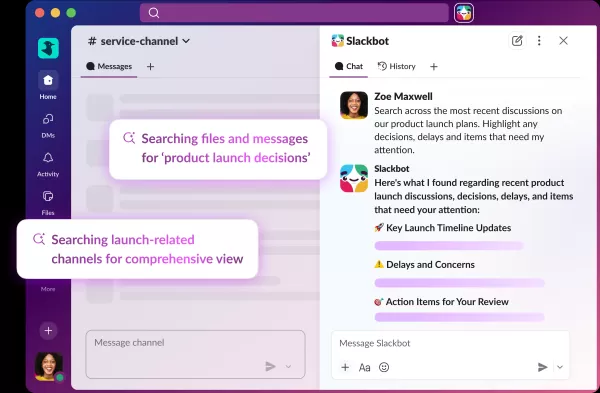 Slackbot Becomes an AI Agent
Slackbot, the automated assistant embedded in Salesforce’s corporate messaging platform Slack, is evolving into an AI agent. Salesforce CTO Parker Harris envisions it achieving viral status comparable to OpenAI’s ChatGPT.The cloud software giant laun
Slackbot Becomes an AI Agent
Slackbot, the automated assistant embedded in Salesforce’s corporate messaging platform Slack, is evolving into an AI agent. Salesforce CTO Parker Harris envisions it achieving viral status comparable to OpenAI’s ChatGPT.The cloud software giant laun
 ByteDance Boosts Core AI Incentives as Doubao Surges 14.6%
ByteDance recently convened a DouBao equity briefing to unveil fresh incentive policies for staff involved in the DouBao division. The strike price for DouBao shares has been lifted from $14.85 in June 2026 to $17.02, marking an approximate 14.6% inc
ByteDance Boosts Core AI Incentives as Doubao Surges 14.6%
ByteDance recently convened a DouBao equity briefing to unveil fresh incentive policies for staff involved in the DouBao division. The strike price for DouBao shares has been lifted from $14.85 in June 2026 to $17.02, marking an approximate 14.6% inc

2026 Latest Best AI Study Tools for Homework and Exam Prep! XIX.AI curates a top-rated list of powerful, game-changing tools that help students boost productivity, streamline homework completion, and ace exams through real-world tests. Get a free vs paid comparison, detailed rankings, and must-try options to unlock your AI edge. Explore now!
10 tools
xix.ai

2026 Latest Best AI Vocal Demo Tools for Songwriters, Hook Creators, and Multi-Language Content Teams! XIX.AI has curated a top-rated list of powerful game-changing tools that go through rigorous real-world tests. You’ll find detailed free vs paid comparison data, comprehensive rankings, and must-try options to help you boost writing efficiency and unlock your creative potential. Explore now to discover your perfect tool for all your content needs!
9 tools
xix.ai

2026 Latest Best Top-rated AI Competitive Research Tools for Small Businesses! XIX.AI has curated a highly powerful game-changing collection, updated weekly with rigorous real-world tests and detailed rankings. You can find a comprehensive free vs paid comparison to help you identify the must-try tools that boost your productivity and give you a competitive edge. Explore now to discover your perfect tool!
9 tools
xix.ai

2026 Latest Best Photoshop AI retouch tools for ecommerce apparel, skin cleanup, and color consistency! This top-rated curated list features powerful game-changing solutions that help you boost writing efficiency, streamline content creation, and achieve perfect visual results effortlessly. Each tool has undergone real-world tests through weekly updated rankings, complete with free vs paid comparison details. Backed by XIX.AI, it’s the must-try guide for anyone aiming to unlock your AI edge. Explore now!
10 tools
xix.ai
2026 Latest Best Top-Rated AI Prompt Libraries for optimizing all types of ChatGPT workflows. XIX.AI has curated a powerful, game-changing collection that goes through rigorous real-world tests to ensure top performance. You can find detailed free vs paid comparisons and expert rankings to help you choose the must-try tools that boost your productivity and unlock your AI edge. Explore now!
11 tools
xix.ai

2026 Latest Best AI Quiz Builder Platforms for Teachers, Tutors, and Cohort-Based Learning Programs! XIX.AI has curated a top-rated list of powerful game-changing tools that go through real-world tests to deliver accurate rankings. These must-try platforms help boost writing efficiency, streamline content creation, and simplify quiz design across all learning scenarios. Explore now to discover your perfect tool for unlocking your AI edge in teaching!
13 tools
xix.ai












