


 Home
HomeHow to build the Gesture-Driven AI Hand Tracker in 2025? Python & GenAI guide.
In the fast-paced world of artificial intelligence, new solutions are continually being developed to create more intuitive connections between humans and machines. This project highlights a gesture-controlled AI virtual hand tracker and problem-solving system that harnesses the capabilities of Generative AI and Python. Acknowledged for its significant promise within the AI field, the project marks a notable advancement toward more natural and accessible AI interfaces.
Key Points
The system employs AI-based gesture recognition to address and solve problems.
Generative AI (GenAI) and Python form the technological foundation of the project.
The hand tracker generates a virtual model that mirrors real-time hand movements.
The problem-solving component interprets specific gestures as actionable commands or data inputs.
It received an award in the 'best upcoming potential' category at the JITHACK24 event.
The development team consisted of Naganinshanth.J, Sathya Swaroop M S, and Rajesh S.
Understanding Gesture-Driven AI Hand Tracking
What is a Gesture-Driven AI Virtual Hand Tracker?
A gesture-driven AI virtual hand tracker is an intelligent system that uses artificial intelligence to understand and react to physical hand gestures.
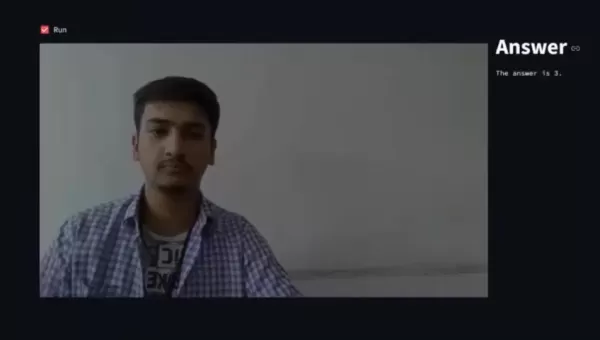
This approach moves beyond basic touch interfaces, enabling users to operate devices, handle virtual objects, and issue commands through natural hand motions. The 'virtual hand tracker' element constructs a digital model of the user's hand, continuously mapping its position, orientation, and finger poses. AI algorithms then process these movements, identifying defined gestures and converting them into specific actions. The combination of Generative AI with Python delivers the necessary computational power and adaptability for such an application. This technology represents a powerful step toward making AI interactions more intuitive for diverse users.
This innovative tracking system holds significant potential across numerous sectors, poised to transform our interaction with technology and unlock new possibilities in gaming, virtual reality, robotics, and accessibility tools. Its recognition for 'best upcoming potential' underscores its promising future in AI development.
Let's examine the core components that combine to make gesture-driven AI hand tracking a reality:
- Computer Vision: Software algorithms process camera video to detect and pinpoint the user's hand.
- Machine Learning: Models trained on extensive datasets of hand gestures allow the system to identify and categorize different motions.
- Real-time Processing: The system processes data and responds to gestures instantaneously for a fluid user experience.
- Integration: Compatibility with various software and hardware platforms increases the technology's practical applicability.
The synergy of these elements creates a dynamic and interactive system, setting the stage for more natural human-computer communication.
The Role of GenAI and Python
Generative AI (GenAI) is crucial for building flexible and intelligent systems. GenAI models can be trained to produce realistic hand movements and adapt to variations in hand size, lighting, and camera perspective, greatly improving the tracking system's accuracy and reliability.
Python, a highly versatile programming language, serves as the development backbone for AI applications like this hand tracker. Python's rich ecosystem of libraries, including TensorFlow, PyTorch, and OpenCV, supplies the essential tools for constructing, training, and deploying AI models. Its support for rapid prototyping and system integration makes it ideal for innovative projects.
Advantages of using GenAI and Python for gesture recognition:
- Adaptability: GenAI models can be customized to suit individual user differences and diverse environmental settings.
- Accuracy: Python's machine learning libraries enable the creation of highly precise and dependable gesture recognition models.
- Scalability: Systems built with Python can be scaled efficiently to manage growing data and user numbers.
- Community Support: A large, active Python community ensures ongoing development and assistance for AI initiatives.
Together, GenAI and Python empower the development of advanced gesture recognition systems that are both powerful and practical to implement. Their seamless integration fosters the creation of intuitive user experiences, encouraging wider adoption of gesture-based controls.
The Importance of Problem Solving with AI
Incorporating a problem-solving function into a gesture-driven hand tracker substantially broadens the system's utility. Rather than just identifying gestures, the system can interpret them as inputs to solve particular challenges. This adds a layer of practical intelligence, allowing users to engage with technology in more meaningful ways.
This methodology can be applied in various domains, such as:
- Education: Students can use gestures to solve mathematical problems or manipulate virtual objects for interactive learning.
- Healthcare: Medical professionals could control imaging systems or simulate surgical procedures using gestures.
- Manufacturing: Workers might operate robotic arms or perform quality inspections on assembly lines with gesture commands.
- Accessibility: Individuals with disabilities can control computers, smart home devices, and other assistive technologies through gestures.
By merging gesture recognition with problem-solving capabilities, AI can deliver more practical and impactful solutions that boost human productivity and enrich daily life. This comprehensive approach is a key step toward building genuinely intelligent and user-centric AI systems, where the technology actively assists users in completing tasks through simple, intuitive gestures.
Deep Dive into the Technology Stack
The Role of MediaPipe in Hand Tracking
MediaPipe is a leading framework for real-time computer vision solutions. Its powerful hand tracking functionality makes it an excellent choice for the foundational layer of an AI hand tracker. Here’s how MediaPipe enables precise and efficient tracking:
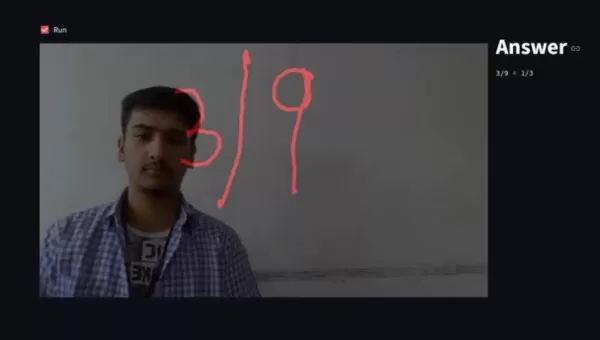
- Multi-Hand Tracking: MediaPipe can track several hands simultaneously within a frame, supporting collaborative tasks and multi-user applications by uniquely identifying each hand.
- Robustness: Its algorithms are designed to perform reliably despite changes in lighting, partial obstructions, and different hand orientations, making the tracker effective in varied environments.
- Accuracy: Using advanced machine learning models, MediaPipe delivers high-precision tracking of hand landmarks, which is essential for accurate gesture recognition and nuanced interaction.
- Efficiency: Optimized for performance, MediaPipe provides real-time tracking without demanding excessive computational power, ensuring smooth operation on devices from mobiles to embedded systems.
- Platform Independence: It works across multiple platforms, including iOS, Android, and desktop operating systems, facilitating broad application integration.
By utilizing MediaPipe's robust tracking, the AI hand tracker establishes a stable, high-performance base for gesture-driven interaction, highlighting the importance of selecting the right technological components for a responsive user experience.
Leveraging Deep Learning Models for Gesture Recognition
Deep learning models are the core intelligence behind gesture recognition, allowing the AI hand tracker to understand and interpret a wide array of hand gestures with high fidelity. Here are the key models that drive this technology:

- Convolutional Neural Networks (CNNs): CNNs are excellent at identifying spatial patterns in images and video, making them ideal for analyzing visual features of the hand for accurate classification.
- Recurrent Neural Networks (RNNs): Designed for sequential data, RNNs analyze the temporal progression of hand movements, providing contextual understanding of gestures over time.
- Long Short-Term Memory (LSTM): A specialized type of RNN, LSTMs effectively learn long-term dependencies, making them suitable for recognizing complex sequences of hand motions.
- Transformer Networks: Known for handling long-range dependencies, transformers offer superior performance in understanding the broader context and subtleties of gestures.
- Transfer Learning: This technique uses pre-trained models fine-tuned on gesture datasets, speeding up development and achieving high accuracy even with limited data.
Integrating these deep learning models with gesture recognition enables the AI hand tracker to deliver exceptional accuracy and responsiveness. As the technology evolves, the system promises even more seamless and intuitive interactions.
How to Use the Gesture-Driven AI Hand Tracker
Step-by-Step Guide
Getting started with the gesture-driven AI hand tracker is a straightforward process. Follow this step-by-step guide:
Step 1: Installation
Start by installing Python and the required libraries like TensorFlow, OpenCV, and MediaPipe. These provide the core tools for building and running the tracker.
pip install tensorflow opencv-python mediapipe
Step 2: Set up the Environment
Download the project code from its repository and configure your development environment. This typically involves creating a dedicated Python environment to manage dependencies.
Step 3: Configure Camera Access
Ensure your computer's camera is accessible and correctly configured, as it is essential for capturing the video feed of your hand movements.
Step 4: Run the Application
Execute the main Python script to launch the hand tracking application. A window will open showing the camera feed with overlaid real-time hand tracking.
python hand_tracker.py
Step 5: Perform Gestures
Use the predefined gestures to interact with the system. The AI will recognize these and translate them into actions. You can also train the system on custom gestures for personalized use.
Step 6: Troubleshoot Issues
If problems arise, consult the project documentation or community forums. Common issues include library conflicts, camera permissions, or gesture recognition errors.
Customizing the AI Hand Tracker
A major strength of this project is its flexibility. You can customize the tracker to recognize new gestures, adapt to different settings, and solve various problems. Here's how:
- Adding New Gestures: Collect data of the new hand movements and use TensorFlow or PyTorch to train a custom model on this dataset.
- Adapting to Different Environments: Fine-tune the tracker using data augmentation and transfer learning to account for changes in lighting, camera angles, or user hand size.
- Solving Specific Problems: Integrate the hand tracker with other software systems and develop custom logic to interpret gestures within a specific problem context.
- Updating Dependencies
Related article
 How to master fast poker hand analysis in 2025? Ultimate strategy guide.
Most poker players dream of consistently earning $100 an hour at the tables, yet very few ever reach this tier of performance. True success comes not just from intelligence, but from refining your decision-making, especially under pressure. This arti
Sam Altman Sparks Debate Over AI's Deceleration
Listen onApple PodcastsListen onSpotifyOpenAI CEO Sam Altman recently suggested that it may be time to “pace the rate of AI development” to allow society to “harden around some of these new capability levels.”On the latest episode of TechCrunch’s Equ
Anthropic Opens Doors to EU Cybersecurity Agency as Mythos5 Model Faces Compliance Exam
Artificial intelligence compliance regulations are advancing significantly. Leading AI firm Anthropic has officially granted the European Union's cybersecurity authority access to its Mythos AI model, a pivotal move for this advanced large language m
Related Special Topic Recommendations
code
How to master fast poker hand analysis in 2025? Ultimate strategy guide.
Most poker players dream of consistently earning $100 an hour at the tables, yet very few ever reach this tier of performance. True success comes not just from intelligence, but from refining your decision-making, especially under pressure. This arti
Sam Altman Sparks Debate Over AI's Deceleration
Listen onApple PodcastsListen onSpotifyOpenAI CEO Sam Altman recently suggested that it may be time to “pace the rate of AI development” to allow society to “harden around some of these new capability levels.”On the latest episode of TechCrunch’s Equ
Anthropic Opens Doors to EU Cybersecurity Agency as Mythos5 Model Faces Compliance Exam
Artificial intelligence compliance regulations are advancing significantly. Leading AI firm Anthropic has officially granted the European Union's cybersecurity authority access to its Mythos AI model, a pivotal move for this advanced large language m
Related Special Topic Recommendations
code
 AI Pull Request Review Tools for GitHub Teams Handling Refactors, Bugs, and Security Gaps
2026 Latest Best AI Pull Request Review Tools for GitHub Teams are here on XIX.AI! This top-rated curated list showcases powerful game-changing solutions that streamline refactoring, bug fixing, and security gap detection across all team workflows. Enjoy a free vs paid comparison along with real-world tests and detailed rankings to help you find the perfect tool that boosts productivity significantly. Explore now to unlock your AI edge!
 12 tools
 xix.ai
Text-to-speech
Best AI Text to Speech Tools for Natural Voiceovers
xix.ai
Text-to-speech
Best AI Text to Speech Tools for Natural Voiceovers
2026 Latest Best Top-rated AI Text to Speech Tools for Natural Voiceovers are here on XIX.AI! This curated list features powerful, game-changing options that deliver crystal-clear voices for every use case, backed by real-world tests and weekly updated rankings. Get a free vs paid comparison to find the must-try solution that boosts your productivity instantly. Explore now to Unlock your AI edge!
11 tools
xix.ai
Comic Creation
Manga AI Background Generators for Serialized Chapters, Covers, and Promo Art
2026 Latest Best Manga AI Background Generators Ranked Top-Rated! This curated collection showcases powerful game-changing tools perfect for creating high-quality chapter backgrounds, book covers, and promotional art. Every option has undergone rigorous real-world tests to ensure reliability. Get a free vs paid comparison along with detailed insights. Explore now to discover your perfect tool and unlock your AI edge in manga creation.
6 tools
xix.ai
Image editing
AI Object Removal Editors: Clean Up Portraits, Travel, and Product Shots
2026 Latest Best Top-rated AI Object Removal Editors for portraits travel product shots! XIX.AI curates a powerful game-changing collection regularly updated with weekly rankings. These tools offer real-world tests to help you quickly remove unwanted elements, boost content quality, and save tons of time without compromising results. Must-try for anyone aiming to unlock their AI creation edge. Explore now!
10 tools
xix.ai
Text-to-speech
Best AI Text to Speech Tools for Online Courses
2026 Latest Best Top-rated AI Text to Speech Tools for Online Courses are curated by XIX.AI based on rigorous real-world tests and weekly updated rankings. These powerful tools help creators deliver crystal-clear audio content effortlessly, boosting writing efficiency and streamlining course production. Check out the free vs paid comparison to find your perfect fit. Explore now to unlock your AI edge in online education.
10 tools
xix.ai
writing
AI Blog Title Tools for Higher Click Through Rates
2026 Latest Best Top-Rated AI Blog Title Tools for Higher Click Through Rates! XIX.AI has carefully curated a powerful, game-changing collection of top tools that go through rigorous real-world tests. You’ll find a free vs paid comparison, weekly updated rankings, and detailed insights to help you boost your blog’s traffic efficiently. Must-try options are highlighted to help you unlock your AI edge. Explore now!
10 tools
xix.ai

 Comments (1)
0/500
Comments (1)
0/500
![GregoryWilson]()
この記事を読んで、ジェスチャー認識AIの進歩に驚きました。2025年までにこんなに簡単に作れるようになるなんて!でも、個人情報の収集とか倫理的な問題は大丈夫なのかな?ちょっと心配… 🤔
In the fast-paced world of artificial intelligence, new solutions are continually being developed to create more intuitive connections between humans and machines. This project highlights a gesture-controlled AI virtual hand tracker and problem-solving system that harnesses the capabilities of Generative AI and Python. Acknowledged for its significant promise within the AI field, the project marks a notable advancement toward more natural and accessible AI interfaces.
Key Points
The system employs AI-based gesture recognition to address and solve problems.
Generative AI (GenAI) and Python form the technological foundation of the project.
The hand tracker generates a virtual model that mirrors real-time hand movements.
The problem-solving component interprets specific gestures as actionable commands or data inputs.
It received an award in the 'best upcoming potential' category at the JITHACK24 event.
The development team consisted of Naganinshanth.J, Sathya Swaroop M S, and Rajesh S.
Understanding Gesture-Driven AI Hand Tracking
What is a Gesture-Driven AI Virtual Hand Tracker?
A gesture-driven AI virtual hand tracker is an intelligent system that uses artificial intelligence to understand and react to physical hand gestures.
This approach moves beyond basic touch interfaces, enabling users to operate devices, handle virtual objects, and issue commands through natural hand motions. The 'virtual hand tracker' element constructs a digital model of the user's hand, continuously mapping its position, orientation, and finger poses. AI algorithms then process these movements, identifying defined gestures and converting them into specific actions. The combination of Generative AI with Python delivers the necessary computational power and adaptability for such an application. This technology represents a powerful step toward making AI interactions more intuitive for diverse users.
This innovative tracking system holds significant potential across numerous sectors, poised to transform our interaction with technology and unlock new possibilities in gaming, virtual reality, robotics, and accessibility tools. Its recognition for 'best upcoming potential' underscores its promising future in AI development.
Let's examine the core components that combine to make gesture-driven AI hand tracking a reality:
- Computer Vision: Software algorithms process camera video to detect and pinpoint the user's hand.
- Machine Learning: Models trained on extensive datasets of hand gestures allow the system to identify and categorize different motions.
- Real-time Processing: The system processes data and responds to gestures instantaneously for a fluid user experience.
- Integration: Compatibility with various software and hardware platforms increases the technology's practical applicability.
The synergy of these elements creates a dynamic and interactive system, setting the stage for more natural human-computer communication.
The Role of GenAI and Python
Generative AI (GenAI) is crucial for building flexible and intelligent systems. GenAI models can be trained to produce realistic hand movements and adapt to variations in hand size, lighting, and camera perspective, greatly improving the tracking system's accuracy and reliability.
Python, a highly versatile programming language, serves as the development backbone for AI applications like this hand tracker. Python's rich ecosystem of libraries, including TensorFlow, PyTorch, and OpenCV, supplies the essential tools for constructing, training, and deploying AI models. Its support for rapid prototyping and system integration makes it ideal for innovative projects.
Advantages of using GenAI and Python for gesture recognition:
- Adaptability: GenAI models can be customized to suit individual user differences and diverse environmental settings.
- Accuracy: Python's machine learning libraries enable the creation of highly precise and dependable gesture recognition models.
- Scalability: Systems built with Python can be scaled efficiently to manage growing data and user numbers.
- Community Support: A large, active Python community ensures ongoing development and assistance for AI initiatives.
Together, GenAI and Python empower the development of advanced gesture recognition systems that are both powerful and practical to implement. Their seamless integration fosters the creation of intuitive user experiences, encouraging wider adoption of gesture-based controls.
The Importance of Problem Solving with AI
Incorporating a problem-solving function into a gesture-driven hand tracker substantially broadens the system's utility. Rather than just identifying gestures, the system can interpret them as inputs to solve particular challenges. This adds a layer of practical intelligence, allowing users to engage with technology in more meaningful ways.
This methodology can be applied in various domains, such as:
- Education: Students can use gestures to solve mathematical problems or manipulate virtual objects for interactive learning.
- Healthcare: Medical professionals could control imaging systems or simulate surgical procedures using gestures.
- Manufacturing: Workers might operate robotic arms or perform quality inspections on assembly lines with gesture commands.
- Accessibility: Individuals with disabilities can control computers, smart home devices, and other assistive technologies through gestures.
By merging gesture recognition with problem-solving capabilities, AI can deliver more practical and impactful solutions that boost human productivity and enrich daily life. This comprehensive approach is a key step toward building genuinely intelligent and user-centric AI systems, where the technology actively assists users in completing tasks through simple, intuitive gestures.
Deep Dive into the Technology Stack
The Role of MediaPipe in Hand Tracking
MediaPipe is a leading framework for real-time computer vision solutions. Its powerful hand tracking functionality makes it an excellent choice for the foundational layer of an AI hand tracker. Here’s how MediaPipe enables precise and efficient tracking:
- Multi-Hand Tracking: MediaPipe can track several hands simultaneously within a frame, supporting collaborative tasks and multi-user applications by uniquely identifying each hand.
- Robustness: Its algorithms are designed to perform reliably despite changes in lighting, partial obstructions, and different hand orientations, making the tracker effective in varied environments.
- Accuracy: Using advanced machine learning models, MediaPipe delivers high-precision tracking of hand landmarks, which is essential for accurate gesture recognition and nuanced interaction.
- Efficiency: Optimized for performance, MediaPipe provides real-time tracking without demanding excessive computational power, ensuring smooth operation on devices from mobiles to embedded systems.
- Platform Independence: It works across multiple platforms, including iOS, Android, and desktop operating systems, facilitating broad application integration.
By utilizing MediaPipe's robust tracking, the AI hand tracker establishes a stable, high-performance base for gesture-driven interaction, highlighting the importance of selecting the right technological components for a responsive user experience.
Leveraging Deep Learning Models for Gesture Recognition
Deep learning models are the core intelligence behind gesture recognition, allowing the AI hand tracker to understand and interpret a wide array of hand gestures with high fidelity. Here are the key models that drive this technology:
- Convolutional Neural Networks (CNNs): CNNs are excellent at identifying spatial patterns in images and video, making them ideal for analyzing visual features of the hand for accurate classification.
- Recurrent Neural Networks (RNNs): Designed for sequential data, RNNs analyze the temporal progression of hand movements, providing contextual understanding of gestures over time.
- Long Short-Term Memory (LSTM): A specialized type of RNN, LSTMs effectively learn long-term dependencies, making them suitable for recognizing complex sequences of hand motions.
- Transformer Networks: Known for handling long-range dependencies, transformers offer superior performance in understanding the broader context and subtleties of gestures.
- Transfer Learning: This technique uses pre-trained models fine-tuned on gesture datasets, speeding up development and achieving high accuracy even with limited data.
Integrating these deep learning models with gesture recognition enables the AI hand tracker to deliver exceptional accuracy and responsiveness. As the technology evolves, the system promises even more seamless and intuitive interactions.
How to Use the Gesture-Driven AI Hand Tracker
Step-by-Step Guide
Getting started with the gesture-driven AI hand tracker is a straightforward process. Follow this step-by-step guide:
Step 1: Installation
Start by installing Python and the required libraries like TensorFlow, OpenCV, and MediaPipe. These provide the core tools for building and running the tracker.
pip install tensorflow opencv-python mediapipe
Step 2: Set up the Environment
Download the project code from its repository and configure your development environment. This typically involves creating a dedicated Python environment to manage dependencies.
Step 3: Configure Camera Access
Ensure your computer's camera is accessible and correctly configured, as it is essential for capturing the video feed of your hand movements.
Step 4: Run the Application
Execute the main Python script to launch the hand tracking application. A window will open showing the camera feed with overlaid real-time hand tracking.
python hand_tracker.py
Step 5: Perform Gestures
Use the predefined gestures to interact with the system. The AI will recognize these and translate them into actions. You can also train the system on custom gestures for personalized use.
Step 6: Troubleshoot Issues
If problems arise, consult the project documentation or community forums. Common issues include library conflicts, camera permissions, or gesture recognition errors.
Customizing the AI Hand Tracker
A major strength of this project is its flexibility. You can customize the tracker to recognize new gestures, adapt to different settings, and solve various problems. Here's how:
- Adding New Gestures: Collect data of the new hand movements and use TensorFlow or PyTorch to train a custom model on this dataset.
- Adapting to Different Environments: Fine-tune the tracker using data augmentation and transfer learning to account for changes in lighting, camera angles, or user hand size.
- Solving Specific Problems: Integrate the hand tracker with other software systems and develop custom logic to interpret gestures within a specific problem context.
- Updating Dependencies








 How to master fast poker hand analysis in 2025? Ultimate strategy guide.
Most poker players dream of consistently earning $100 an hour at the tables, yet very few ever reach this tier of performance. True success comes not just from intelligence, but from refining your decision-making, especially under pressure. This arti
How to master fast poker hand analysis in 2025? Ultimate strategy guide.
Most poker players dream of consistently earning $100 an hour at the tables, yet very few ever reach this tier of performance. True success comes not just from intelligence, but from refining your decision-making, especially under pressure. This arti
 Sam Altman Sparks Debate Over AI's Deceleration
Listen onApple PodcastsListen onSpotifyOpenAI CEO Sam Altman recently suggested that it may be time to “pace the rate of AI development” to allow society to “harden around some of these new capability levels.”On the latest episode of TechCrunch’s Equ
Sam Altman Sparks Debate Over AI's Deceleration
Listen onApple PodcastsListen onSpotifyOpenAI CEO Sam Altman recently suggested that it may be time to “pace the rate of AI development” to allow society to “harden around some of these new capability levels.”On the latest episode of TechCrunch’s Equ
 Anthropic Opens Doors to EU Cybersecurity Agency as Mythos5 Model Faces Compliance Exam
Artificial intelligence compliance regulations are advancing significantly. Leading AI firm Anthropic has officially granted the European Union's cybersecurity authority access to its Mythos AI model, a pivotal move for this advanced large language m
Anthropic Opens Doors to EU Cybersecurity Agency as Mythos5 Model Faces Compliance Exam
Artificial intelligence compliance regulations are advancing significantly. Leading AI firm Anthropic has officially granted the European Union's cybersecurity authority access to its Mythos AI model, a pivotal move for this advanced large language m
2026 Latest Best AI Pull Request Review Tools for GitHub Teams are here on XIX.AI! This top-rated curated list showcases powerful game-changing solutions that streamline refactoring, bug fixing, and security gap detection across all team workflows. Enjoy a free vs paid comparison along with real-world tests and detailed rankings to help you find the perfect tool that boosts productivity significantly. Explore now to unlock your AI edge!
12 tools
xix.ai

2026 Latest Best Top-rated AI Text to Speech Tools for Natural Voiceovers are here on XIX.AI! This curated list features powerful, game-changing options that deliver crystal-clear voices for every use case, backed by real-world tests and weekly updated rankings. Get a free vs paid comparison to find the must-try solution that boosts your productivity instantly. Explore now to Unlock your AI edge!
11 tools
xix.ai

2026 Latest Best Manga AI Background Generators Ranked Top-Rated! This curated collection showcases powerful game-changing tools perfect for creating high-quality chapter backgrounds, book covers, and promotional art. Every option has undergone rigorous real-world tests to ensure reliability. Get a free vs paid comparison along with detailed insights. Explore now to discover your perfect tool and unlock your AI edge in manga creation.
6 tools
xix.ai

2026 Latest Best Top-rated AI Object Removal Editors for portraits travel product shots! XIX.AI curates a powerful game-changing collection regularly updated with weekly rankings. These tools offer real-world tests to help you quickly remove unwanted elements, boost content quality, and save tons of time without compromising results. Must-try for anyone aiming to unlock their AI creation edge. Explore now!
10 tools
xix.ai

2026 Latest Best Top-rated AI Text to Speech Tools for Online Courses are curated by XIX.AI based on rigorous real-world tests and weekly updated rankings. These powerful tools help creators deliver crystal-clear audio content effortlessly, boosting writing efficiency and streamlining course production. Check out the free vs paid comparison to find your perfect fit. Explore now to unlock your AI edge in online education.
10 tools
xix.ai

2026 Latest Best Top-Rated AI Blog Title Tools for Higher Click Through Rates! XIX.AI has carefully curated a powerful, game-changing collection of top tools that go through rigorous real-world tests. You’ll find a free vs paid comparison, weekly updated rankings, and detailed insights to help you boost your blog’s traffic efficiently. Must-try options are highlighted to help you unlock your AI edge. Explore now!
10 tools
xix.ai

この記事を読んで、ジェスチャー認識AIの進歩に驚きました。2025年までにこんなに簡単に作れるようになるなんて!でも、個人情報の収集とか倫理的な問題は大丈夫なのかな?ちょっと心配… 🤔












