


 Home
HomeFacial Recognition Ethics in AI 2025: A Comprehensive Guide for Users?
Facial recognition and artificial intelligence are swiftly reshaping industries from security and healthcare to customer engagement. These innovations hold great promise for boosting efficiency and enabling new solutions, but they also introduce serious ethical questions around privacy, bias, and accountability. This guide explores the core ethical issues in facial recognition and AI, examining current industry standards, evolving regulations, and best practices for responsible implementation. A clear understanding of these factors is key to building trust, promoting fairness, and minimizing risks as these powerful tools become more widespread.
Key Points
The ethical landscape of facial recognition and AI is dominated by concerns over privacy and algorithmic bias.
New industry standards and government regulations are emerging to guide responsible use.
Ensuring fairness requires actively addressing bias in the data used to train AI systems.
Transparency and clear accountability are fundamental for earning public trust in AI.
Responsible deployment depends on stakeholder input and strong ethical guidelines.
Understanding the Ethical Landscape of Facial Recognition and AI
The Power and Peril of Facial Recognition and AI
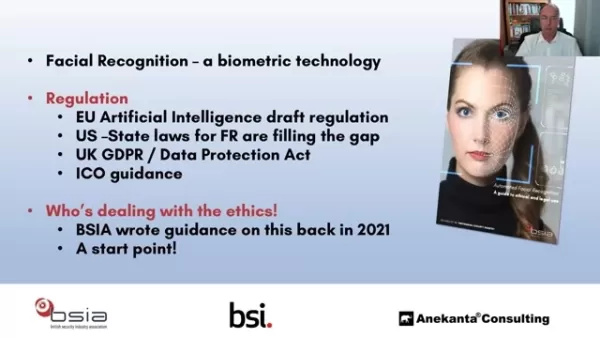
Facial recognition is a biometric technology that uses AI algorithms to identify or verify a person from their facial features. The AI component allows these systems to learn, adapt, and improve their accuracy. Applications are diverse and growing:
- Security and Surveillance: Monitoring airports, public areas, and private facilities to enhance safety.
- Law Enforcement: Aiding criminal investigations by identifying persons of interest.
- Access Control: Managing entry to buildings, devices, or sensitive information seamlessly.
- Customer Service: Personalizing interactions and improving service efficiency in retail and hospitality.
- Healthcare: Assisting with patient identification and monitoring.
This rapid advancement, however, is accompanied by significant risks:
- Privacy Violations: The potential for intrusive surveillance and unauthorized collection of sensitive biometric data.
- Bias and Discrimination: Algorithmic errors that lead to unfair treatment, particularly for underrepresented demographic groups.
- Lack of Transparency: The "black box" nature of some AI, making it difficult to understand or question its decisions.
- Security Vulnerabilities: Risks of data breaches or the malicious hacking of AI systems.
Confronting these ethical challenges is essential to harness the benefits of this technology while protecting individual rights and social values.
Industry Standards and Regulatory Frameworks
In response to these ethical issues, organizations and governments are developing standards and rules to promote responsible innovation. These efforts focus on guidance, transparency, and accountability. Key developments include:
EU Artificial Intelligence Act: A proposed regulation that classifies AI systems by risk level, imposing strict requirements for high-risk uses like biometric identification. Its scope is broad, affecting any company operating within the EU market.
US State Laws: Several states have passed laws governing facial recognition, especially in law enforcement. Illinois's Biometric Information Privacy Act (BIPA) sets strict rules for collecting and storing biometric data. States like California, Washington, and Texas continue to refine their own privacy statutes.
UK GDPR and Data Protection Act: These laws regulate all personal data processing in the UK, including biometric data from facial recognition. They mandate transparency, a legitimate purpose, and data minimization.
ICO Guidance: The UK's Information Commissioner's Office offers specific advice on using biometric data, stressing the principles of fairness, transparency, and accountability.
Industry groups, such as the British Security Industry Association (BSIA), also provide guidance that often informs formal standards. Together, these frameworks reflect a global push toward ethical AI practices.
Mitigating Bias and Ensuring Fairness in AI Systems
Addressing Bias in Training Data
Unfair AI outcomes frequently stem from biased training data. If a facial recognition system is trained mostly on images of one demographic, its accuracy will likely suffer for others. Mitigation strategies include:
- Data Diversity: Curating training datasets that represent a wide spectrum of people across gender, race, age, and skin tone.
- Bias Detection and Mitigation Techniques: Using specialized tools to identify and correct skew in data and algorithms.
- Regular Audits: Continuously testing system performance across different groups to spot and correct discriminatory patterns.
Diverse data is the bedrock of creating equitable and reliable facial recognition technology.
Algorithmic Transparency and Explainability
Understanding AI decision-making is crucial for fairness and trust. Algorithmic transparency means being able to explain how an AI system reaches its conclusions. Explainable AI (XAI) methods provide this clarity by revealing the factors behind an output. These techniques help by:
- Uncovering hidden biases within algorithms.
- Building user and public trust in the system.
- Enabling meaningful human review and oversight.
- Allowing individuals to question or challenge automated decisions.
XAI is a vital tool for ensuring AI operates ethically and understandably.
Ethical Frameworks and Governance
Strong ethical guidelines and governance are critical for responsible AI. An ethical framework provides principles to guide every stage of an AI system's lifecycle. Essential components include:
- Defined Ethical Principles: A clear set of values, such as fairness, privacy, and accountability, to steer development.
- Stakeholder Engagement: Involving a diverse range of voices, including ethicists and community advocates, in creating guidelines.
- Risk Assessment: Proactively identifying potential harms and ethical pitfalls before deployment.
- Accountability Mechanisms: Establishing clear channels for redress if the system causes harm.
- Ongoing Monitoring and Evaluation: Continuously assessing system impact to ensure it aligns with ethical goals.
Such frameworks help ensure AI development remains aligned with broader organizational and social values.
Practical Steps for Responsible Deployment of Facial Recognition and AI
Conduct a Data Protection Impact Assessment (DPIA)
Prior to deployment, perform a comprehensive DPIA to evaluate privacy risks and plan safeguards. This assessment should cover:
- The system's specific purpose and scope.
- The nature of the personal data being processed.
- Potential impacts on individuals' rights and freedoms.
- Measures to reduce risks and ensure legal compliance.
Obtain Informed Consent
Where applicable, ensure individuals are clearly informed about the use of facial recognition and explicitly consent to their biometric data being processed. Transparency and user choice are paramount for respecting privacy.
- Explain the reason for data collection in plain language.
- Offer a genuine opt-out alternative where possible.
- Implement strong data protection measures.
Implement Robust Security Measures
Protect AI systems and the sensitive biometric data they handle from breaches and misuse. Essential security practices include:
- End-to-end encryption of data.
- Strict access controls and authentication.
- Regular security testing and audits.
Strong security is non-negotiable for safeguarding public trust in biometric systems.
Weighing the Pros and Cons of Facial Recognition
Pros
Enhances public and private security
Improves operational efficiency
Simplifies secure access control
Enables personalized user experiences
Cons
Risks violating individual privacy
Can perpetuate bias and discrimination
Often lacks transparency in decision-making
Potential for abuse and unauthorized surveillance
Frequently Asked Questions (FAQ)
What is algorithmic bias, and how does it impact facial recognition systems?
Algorithmic bias refers to systematic errors in an AI system that produce consistently unfair results, favoring some groups over others. In facial recognition, this often occurs when the training data isn't representative of the full population, leading to higher error rates for people of color, women, or older adults. This can result in serious consequences like false identification or unequal access to services.
How can organizations ensure transparency in their AI systems?
Organizations can promote AI transparency by:Adopting Explainable AI (XAI) methods that clarify how decisions are made.Thoroughly documenting the data sources, models, and algorithms used in development.Clearly communicating the system's capabilities, limitations, and intended use to the public.Transparency fosters greater user confidence and facilitates accountability.
What are the key ethical principles to consider when deploying facial recognition technology?
Core ethical principles include:Privacy: Protecting biometric data and securing informed consent.Fairness: Actively working to prevent biased or discriminatory outcomes.Transparency: Being open about how the technology works and its limitations.Accountability: Having clear responsibility for the system's impacts and avenues for remedy if things go wrong.
Related Questions
What is the best facial recognition software available in the market?
We do not provide specific product ratings or recommendations, as the "best" solution depends entirely on an organization's unique needs, context, and ethical requirements.
What are the potential social implications of widespread facial recognition technology?
Widespread adoption could profoundly affect society. Potential benefits include stronger security and more efficient services. However, significant concerns exist:Privacy Erosion: Constant surveillance may discourage free expression and association in public spaces.Systemic Discrimination: Biased algorithms could worsen existing social inequalities.Loss of Anonymity: The ability to remain anonymous in crowds could diminish.Power Imbalance: The technology could be misused for excessive social control or oppression.These implications must be carefully weighed to ensure the technology benefits society as a whole.
How does facial recognition compare to other biometric technologies, such as fingerprinting or iris scanning?
Each biometric method has distinct trade-offs:FeatureFacial RecognitionFingerprintingIris ScanningConvenienceContactless and can work at a distanceRequires physical contact with a sensorRequires close proximity and user cooperationAccuracyCan vary with lighting, angle, or obstructionsGenerally very high accuracy, but affected by skin conditionExceptionally high accuracy under ideal conditionsPrivacyRaises significant privacy concerns due to passive collectionLess intrusive than facial scanningOften viewed as more private but can feel invasiveCostRelatively low due to standard camera hardwareCost varies with sensor quality and typeTypically higher due to specialized equipmentPublic AcceptanceMixed, with growing privacy concernsWidely accepted for security purposesOften seen as more intrusive for casual useSecurityVulnerable to spoofing with photos or masksHighly secure, though fingerprints can be copiedConsidered very secure due to unique iris patternsThe choice depends on the specific application, balancing needs for convenience, accuracy, cost, and privacy.
Related article
 U.S. Stocks Hit Historic Milestone as AI and Aerospace Giants Prepare for Trillion-Dollar Debut
Elon Musk, Sam Altman, and Dario Amodei, three titans of the technology sector, are advancing toward initial public offerings for their respective ventures. With SpaceX, OpenAI, and Anthropic—three industry behemoths nearing trillion-dollar valuation
Swedish AI Startup Lovable Eyes $13.2 Billion Valuation After Major Funding Round
As AI-driven coding tools gain traction, Swedish startup Lovable has secured a major funding round. The company aims to raise $3 billion, potentially boosting its valuation to $13.2 billion—double the $6.6 billion recorded last December. Menlo Ventur
Google Tests Remy AI Agent for Gemini as Focus Shifts to User Control
According to Business Insider, Google is testing Remy, a new AI personal agent for Gemini. This tool aims to execute tasks on behalf of users, streamlining both professional workflows and daily routines.Currently, Remy is undergoing testing in an int
Related Special Topic Recommendations
Data Analysis
U.S. Stocks Hit Historic Milestone as AI and Aerospace Giants Prepare for Trillion-Dollar Debut
Elon Musk, Sam Altman, and Dario Amodei, three titans of the technology sector, are advancing toward initial public offerings for their respective ventures. With SpaceX, OpenAI, and Anthropic—three industry behemoths nearing trillion-dollar valuation
Swedish AI Startup Lovable Eyes $13.2 Billion Valuation After Major Funding Round
As AI-driven coding tools gain traction, Swedish startup Lovable has secured a major funding round. The company aims to raise $3 billion, potentially boosting its valuation to $13.2 billion—double the $6.6 billion recorded last December. Menlo Ventur
Google Tests Remy AI Agent for Gemini as Focus Shifts to User Control
According to Business Insider, Google is testing Remy, a new AI personal agent for Gemini. This tool aims to execute tasks on behalf of users, streamlining both professional workflows and daily routines.Currently, Remy is undergoing testing in an int
Related Special Topic Recommendations
Data Analysis
 Best AI Anomaly Detection Tools for KPI Monitoring across SaaS and Ecommerce Teams
2026 Latest Best Top-rated AI Anomaly Detection Tools for KPI Monitoring in SaaS and Ecommerce teams! XIX.AI has curated a powerful, game-changing collection based on rigorous real-world tests and weekly updated rankings. You’ll find detailed free vs paid comparison insights to help you identify the must-try solution that boosts productivity and unlocks your AI edge. Explore now!
 10 tools
 xix.ai
writing
Best AI Outline Generators for Long-Form SEO Articles
xix.ai
writing
Best AI Outline Generators for Long-Form SEO Articles
2026 Latest Best Top-Rated AI Outline Generators for Long-Form SEO Articles, meticulously curated by XIX.AI. These powerful tools offer game-changing assistance in creating high-quality content quickly, boosting writing efficiency significantly. Get a free vs paid comparison along with real-world tests and detailed rankings to help you find the must-try option that suits your needs. Explore now to unlock your AI edge.
8 tools
xix.ai
Education and Learning
AI Study Tools for Homework and Exam Prep
2026 Latest Best AI Study Tools for Homework and Exam Prep! XIX.AI curates a top-rated list of powerful, game-changing tools that help students boost productivity, streamline homework completion, and ace exams through real-world tests. Get a free vs paid comparison, detailed rankings, and must-try options to unlock your AI edge. Explore now!
10 tools
xix.ai
Music composition
AI Vocal Demo Tools for Songwriters, Hooks, Toplines, and Multilingual Draft Sessions
2026 Latest Best AI Vocal Demo Tools for Songwriters, Hook Creators, and Multi-Language Content Teams! XIX.AI has curated a top-rated list of powerful game-changing tools that go through rigorous real-world tests. You’ll find detailed free vs paid comparison data, comprehensive rankings, and must-try options to help you boost writing efficiency and unlock your creative potential. Explore now to discover your perfect tool for all your content needs!
9 tools
xix.ai
Business
Best AI Competitive Research Tools for Small Businesses
2026 Latest Best Top-rated AI Competitive Research Tools for Small Businesses! XIX.AI has curated a highly powerful game-changing collection, updated weekly with rigorous real-world tests and detailed rankings. You can find a comprehensive free vs paid comparison to help you identify the must-try tools that boost your productivity and give you a competitive edge. Explore now to discover your perfect tool!
9 tools
xix.ai
Image editing
Photoshop AI Retouch Tools for Ecommerce Apparel, Skin Cleanup, and Color Consistency
2026 Latest Best Photoshop AI retouch tools for ecommerce apparel, skin cleanup, and color consistency! This top-rated curated list features powerful game-changing solutions that help you boost writing efficiency, streamline content creation, and achieve perfect visual results effortlessly. Each tool has undergone real-world tests through weekly updated rankings, complete with free vs paid comparison details. Backed by XIX.AI, it’s the must-try guide for anyone aiming to unlock your AI edge. Explore now!
10 tools
xix.ai

 Comments (3)
0/500
Comments (3)
0/500
![NicholasRoberts]()
Honestly, the 'comprehensive' part feels like a stretch given how fast tech moves. I just worry about my face being used to unlock my banking app without my explicit consent every single time. It's convenient, sure, but at what cost? Also, can we talk about how biased these systems still are for people with darker skin tones? Not just a 'guide', more like a disclaimer. 👁️📱
![JuanMoore]()
Interesting read! The part about bias in facial recognition systems really hit home. I've seen some studies showing how these algorithms can be less accurate for certain demographics, which is a huge problem if they're used for things like law enforcement or hiring. It's not just a tech issue, it's a social justice one. We need way more transparency and regulation before this stuff becomes even more widespread. The 'guide for users' angle is good—people need to know their rights and how to push back.
![EricRoberts]()
こんな記事読むと、顔認証ってすごく便利そうなのにやっぱり怖いね。カメラに認識されるたびに、誰がデータ見てるのか気になって仕方ない。何年か後には映画みたいに監視社会になってたら嫌だな... 😥 もっと技術の使い道について、普通のユーザーにもわかりやすいルールが作られてほしいです。
Facial recognition and artificial intelligence are swiftly reshaping industries from security and healthcare to customer engagement. These innovations hold great promise for boosting efficiency and enabling new solutions, but they also introduce serious ethical questions around privacy, bias, and accountability. This guide explores the core ethical issues in facial recognition and AI, examining current industry standards, evolving regulations, and best practices for responsible implementation. A clear understanding of these factors is key to building trust, promoting fairness, and minimizing risks as these powerful tools become more widespread.
Key Points
The ethical landscape of facial recognition and AI is dominated by concerns over privacy and algorithmic bias.
New industry standards and government regulations are emerging to guide responsible use.
Ensuring fairness requires actively addressing bias in the data used to train AI systems.
Transparency and clear accountability are fundamental for earning public trust in AI.
Responsible deployment depends on stakeholder input and strong ethical guidelines.
Understanding the Ethical Landscape of Facial Recognition and AI
The Power and Peril of Facial Recognition and AI
Facial recognition is a biometric technology that uses AI algorithms to identify or verify a person from their facial features. The AI component allows these systems to learn, adapt, and improve their accuracy. Applications are diverse and growing:
- Security and Surveillance: Monitoring airports, public areas, and private facilities to enhance safety.
- Law Enforcement: Aiding criminal investigations by identifying persons of interest.
- Access Control: Managing entry to buildings, devices, or sensitive information seamlessly.
- Customer Service: Personalizing interactions and improving service efficiency in retail and hospitality.
- Healthcare: Assisting with patient identification and monitoring.
This rapid advancement, however, is accompanied by significant risks:
- Privacy Violations: The potential for intrusive surveillance and unauthorized collection of sensitive biometric data.
- Bias and Discrimination: Algorithmic errors that lead to unfair treatment, particularly for underrepresented demographic groups.
- Lack of Transparency: The "black box" nature of some AI, making it difficult to understand or question its decisions.
- Security Vulnerabilities: Risks of data breaches or the malicious hacking of AI systems.
Confronting these ethical challenges is essential to harness the benefits of this technology while protecting individual rights and social values.
Industry Standards and Regulatory Frameworks
In response to these ethical issues, organizations and governments are developing standards and rules to promote responsible innovation. These efforts focus on guidance, transparency, and accountability. Key developments include:
EU Artificial Intelligence Act: A proposed regulation that classifies AI systems by risk level, imposing strict requirements for high-risk uses like biometric identification. Its scope is broad, affecting any company operating within the EU market.
US State Laws: Several states have passed laws governing facial recognition, especially in law enforcement. Illinois's Biometric Information Privacy Act (BIPA) sets strict rules for collecting and storing biometric data. States like California, Washington, and Texas continue to refine their own privacy statutes.
UK GDPR and Data Protection Act: These laws regulate all personal data processing in the UK, including biometric data from facial recognition. They mandate transparency, a legitimate purpose, and data minimization.
ICO Guidance: The UK's Information Commissioner's Office offers specific advice on using biometric data, stressing the principles of fairness, transparency, and accountability.
Industry groups, such as the British Security Industry Association (BSIA), also provide guidance that often informs formal standards. Together, these frameworks reflect a global push toward ethical AI practices.
Mitigating Bias and Ensuring Fairness in AI Systems
Addressing Bias in Training Data
Unfair AI outcomes frequently stem from biased training data. If a facial recognition system is trained mostly on images of one demographic, its accuracy will likely suffer for others. Mitigation strategies include:
- Data Diversity: Curating training datasets that represent a wide spectrum of people across gender, race, age, and skin tone.
- Bias Detection and Mitigation Techniques: Using specialized tools to identify and correct skew in data and algorithms.
- Regular Audits: Continuously testing system performance across different groups to spot and correct discriminatory patterns.
Diverse data is the bedrock of creating equitable and reliable facial recognition technology.
Algorithmic Transparency and Explainability
Understanding AI decision-making is crucial for fairness and trust. Algorithmic transparency means being able to explain how an AI system reaches its conclusions. Explainable AI (XAI) methods provide this clarity by revealing the factors behind an output. These techniques help by:
- Uncovering hidden biases within algorithms.
- Building user and public trust in the system.
- Enabling meaningful human review and oversight.
- Allowing individuals to question or challenge automated decisions.
XAI is a vital tool for ensuring AI operates ethically and understandably.
Ethical Frameworks and Governance
Strong ethical guidelines and governance are critical for responsible AI. An ethical framework provides principles to guide every stage of an AI system's lifecycle. Essential components include:
- Defined Ethical Principles: A clear set of values, such as fairness, privacy, and accountability, to steer development.
- Stakeholder Engagement: Involving a diverse range of voices, including ethicists and community advocates, in creating guidelines.
- Risk Assessment: Proactively identifying potential harms and ethical pitfalls before deployment.
- Accountability Mechanisms: Establishing clear channels for redress if the system causes harm.
- Ongoing Monitoring and Evaluation: Continuously assessing system impact to ensure it aligns with ethical goals.
Such frameworks help ensure AI development remains aligned with broader organizational and social values.
Practical Steps for Responsible Deployment of Facial Recognition and AI
Conduct a Data Protection Impact Assessment (DPIA)
Prior to deployment, perform a comprehensive DPIA to evaluate privacy risks and plan safeguards. This assessment should cover:
- The system's specific purpose and scope.
- The nature of the personal data being processed.
- Potential impacts on individuals' rights and freedoms.
- Measures to reduce risks and ensure legal compliance.
Obtain Informed Consent
Where applicable, ensure individuals are clearly informed about the use of facial recognition and explicitly consent to their biometric data being processed. Transparency and user choice are paramount for respecting privacy.
- Explain the reason for data collection in plain language.
- Offer a genuine opt-out alternative where possible.
- Implement strong data protection measures.
Implement Robust Security Measures
Protect AI systems and the sensitive biometric data they handle from breaches and misuse. Essential security practices include:
- End-to-end encryption of data.
- Strict access controls and authentication.
- Regular security testing and audits.
Strong security is non-negotiable for safeguarding public trust in biometric systems.
Weighing the Pros and Cons of Facial Recognition
Pros
Enhances public and private security
Improves operational efficiency
Simplifies secure access control
Enables personalized user experiences
Cons
Risks violating individual privacy
Can perpetuate bias and discrimination
Often lacks transparency in decision-making
Potential for abuse and unauthorized surveillance
Frequently Asked Questions (FAQ)
What is algorithmic bias, and how does it impact facial recognition systems?
Algorithmic bias refers to systematic errors in an AI system that produce consistently unfair results, favoring some groups over others. In facial recognition, this often occurs when the training data isn't representative of the full population, leading to higher error rates for people of color, women, or older adults. This can result in serious consequences like false identification or unequal access to services.
How can organizations ensure transparency in their AI systems?
Organizations can promote AI transparency by:Adopting Explainable AI (XAI) methods that clarify how decisions are made.Thoroughly documenting the data sources, models, and algorithms used in development.Clearly communicating the system's capabilities, limitations, and intended use to the public.Transparency fosters greater user confidence and facilitates accountability.
What are the key ethical principles to consider when deploying facial recognition technology?
Core ethical principles include:Privacy: Protecting biometric data and securing informed consent.Fairness: Actively working to prevent biased or discriminatory outcomes.Transparency: Being open about how the technology works and its limitations.Accountability: Having clear responsibility for the system's impacts and avenues for remedy if things go wrong.
Related Questions
What is the best facial recognition software available in the market?
We do not provide specific product ratings or recommendations, as the "best" solution depends entirely on an organization's unique needs, context, and ethical requirements.
What are the potential social implications of widespread facial recognition technology?
Widespread adoption could profoundly affect society. Potential benefits include stronger security and more efficient services. However, significant concerns exist:Privacy Erosion: Constant surveillance may discourage free expression and association in public spaces.Systemic Discrimination: Biased algorithms could worsen existing social inequalities.Loss of Anonymity: The ability to remain anonymous in crowds could diminish.Power Imbalance: The technology could be misused for excessive social control or oppression.These implications must be carefully weighed to ensure the technology benefits society as a whole.
How does facial recognition compare to other biometric technologies, such as fingerprinting or iris scanning?
Each biometric method has distinct trade-offs:FeatureFacial RecognitionFingerprintingIris ScanningConvenienceContactless and can work at a distanceRequires physical contact with a sensorRequires close proximity and user cooperationAccuracyCan vary with lighting, angle, or obstructionsGenerally very high accuracy, but affected by skin conditionExceptionally high accuracy under ideal conditionsPrivacyRaises significant privacy concerns due to passive collectionLess intrusive than facial scanningOften viewed as more private but can feel invasiveCostRelatively low due to standard camera hardwareCost varies with sensor quality and typeTypically higher due to specialized equipmentPublic AcceptanceMixed, with growing privacy concernsWidely accepted for security purposesOften seen as more intrusive for casual useSecurityVulnerable to spoofing with photos or masksHighly secure, though fingerprints can be copiedConsidered very secure due to unique iris patternsThe choice depends on the specific application, balancing needs for convenience, accuracy, cost, and privacy.








 U.S. Stocks Hit Historic Milestone as AI and Aerospace Giants Prepare for Trillion-Dollar Debut
Elon Musk, Sam Altman, and Dario Amodei, three titans of the technology sector, are advancing toward initial public offerings for their respective ventures. With SpaceX, OpenAI, and Anthropic—three industry behemoths nearing trillion-dollar valuation
U.S. Stocks Hit Historic Milestone as AI and Aerospace Giants Prepare for Trillion-Dollar Debut
Elon Musk, Sam Altman, and Dario Amodei, three titans of the technology sector, are advancing toward initial public offerings for their respective ventures. With SpaceX, OpenAI, and Anthropic—three industry behemoths nearing trillion-dollar valuation
 Swedish AI Startup Lovable Eyes $13.2 Billion Valuation After Major Funding Round
As AI-driven coding tools gain traction, Swedish startup Lovable has secured a major funding round. The company aims to raise $3 billion, potentially boosting its valuation to $13.2 billion—double the $6.6 billion recorded last December. Menlo Ventur
Google Tests Remy AI Agent for Gemini as Focus Shifts to User Control
According to Business Insider, Google is testing Remy, a new AI personal agent for Gemini. This tool aims to execute tasks on behalf of users, streamlining both professional workflows and daily routines.Currently, Remy is undergoing testing in an int
Swedish AI Startup Lovable Eyes $13.2 Billion Valuation After Major Funding Round
As AI-driven coding tools gain traction, Swedish startup Lovable has secured a major funding round. The company aims to raise $3 billion, potentially boosting its valuation to $13.2 billion—double the $6.6 billion recorded last December. Menlo Ventur
Google Tests Remy AI Agent for Gemini as Focus Shifts to User Control
According to Business Insider, Google is testing Remy, a new AI personal agent for Gemini. This tool aims to execute tasks on behalf of users, streamlining both professional workflows and daily routines.Currently, Remy is undergoing testing in an int

2026 Latest Best Top-rated AI Anomaly Detection Tools for KPI Monitoring in SaaS and Ecommerce teams! XIX.AI has curated a powerful, game-changing collection based on rigorous real-world tests and weekly updated rankings. You’ll find detailed free vs paid comparison insights to help you identify the must-try solution that boosts productivity and unlocks your AI edge. Explore now!
10 tools
xix.ai

2026 Latest Best Top-Rated AI Outline Generators for Long-Form SEO Articles, meticulously curated by XIX.AI. These powerful tools offer game-changing assistance in creating high-quality content quickly, boosting writing efficiency significantly. Get a free vs paid comparison along with real-world tests and detailed rankings to help you find the must-try option that suits your needs. Explore now to unlock your AI edge.
8 tools
xix.ai

2026 Latest Best AI Study Tools for Homework and Exam Prep! XIX.AI curates a top-rated list of powerful, game-changing tools that help students boost productivity, streamline homework completion, and ace exams through real-world tests. Get a free vs paid comparison, detailed rankings, and must-try options to unlock your AI edge. Explore now!
10 tools
xix.ai

2026 Latest Best AI Vocal Demo Tools for Songwriters, Hook Creators, and Multi-Language Content Teams! XIX.AI has curated a top-rated list of powerful game-changing tools that go through rigorous real-world tests. You’ll find detailed free vs paid comparison data, comprehensive rankings, and must-try options to help you boost writing efficiency and unlock your creative potential. Explore now to discover your perfect tool for all your content needs!
9 tools
xix.ai

2026 Latest Best Top-rated AI Competitive Research Tools for Small Businesses! XIX.AI has curated a highly powerful game-changing collection, updated weekly with rigorous real-world tests and detailed rankings. You can find a comprehensive free vs paid comparison to help you identify the must-try tools that boost your productivity and give you a competitive edge. Explore now to discover your perfect tool!
9 tools
xix.ai

2026 Latest Best Photoshop AI retouch tools for ecommerce apparel, skin cleanup, and color consistency! This top-rated curated list features powerful game-changing solutions that help you boost writing efficiency, streamline content creation, and achieve perfect visual results effortlessly. Each tool has undergone real-world tests through weekly updated rankings, complete with free vs paid comparison details. Backed by XIX.AI, it’s the must-try guide for anyone aiming to unlock your AI edge. Explore now!
10 tools
xix.ai

Honestly, the 'comprehensive' part feels like a stretch given how fast tech moves. I just worry about my face being used to unlock my banking app without my explicit consent every single time. It's convenient, sure, but at what cost? Also, can we talk about how biased these systems still are for people with darker skin tones? Not just a 'guide', more like a disclaimer. 👁️📱
Interesting read! The part about bias in facial recognition systems really hit home. I've seen some studies showing how these algorithms can be less accurate for certain demographics, which is a huge problem if they're used for things like law enforcement or hiring. It's not just a tech issue, it's a social justice one. We need way more transparency and regulation before this stuff becomes even more widespread. The 'guide for users' angle is good—people need to know their rights and how to push back.
こんな記事読むと、顔認証ってすごく便利そうなのにやっぱり怖いね。カメラに認識されるたびに、誰がデータ見てるのか気になって仕方ない。何年か後には映画みたいに監視社会になってたら嫌だな... 😥 もっと技術の使い道について、普通のユーザーにもわかりやすいルールが作られてほしいです。












