


 Home
HomeHow to use drag makeup for facial recognition in 2025? Tips and safety guide.
In a world where artificial intelligence increasingly analyzes and interprets human faces, the art of drag presents a unique and powerful challenge. By masterfully manipulating facial features and identities, drag performers question the very idea of a fixed appearance. This article explores the fascinating crossroads of drag and AI, revealing how specific makeup artistry can deliberately confound facial recognition technology. Learn how drag serves as both a creative and critical tool to expose and subvert the biases embedded in AI systems.
Key Points
Drag subverts standard facial recognition by transforming key facial landmarks.
Strategic makeup application can successfully mislead AI algorithms.
Modifying the nose, eyes, and mouth is particularly effective.
Contouring and highlighting are essential for visually reshaping the face.
AI's visual perception can be actively altered through cosmetic techniques.
Drag provides artistic strategies to obscure one's conventional identity.
Understanding the Intersection of Drag and AI
What is Drag?
Drag is a vibrant art form that employs exaggerated makeup, costume, and performance to craft a persona, often one that challenges traditional gender roles and social conventions. It is fundamentally about transformation, creativity, and transcending boundaries.
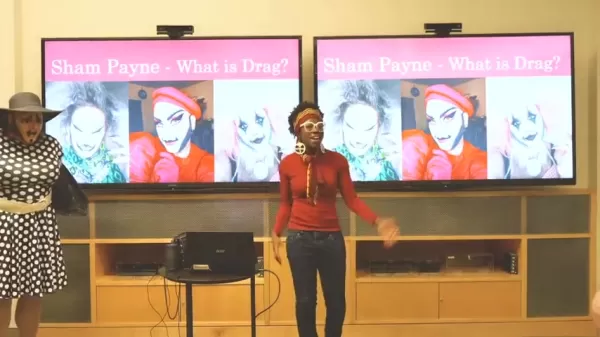
This artistic practice now finds itself intersecting with the realm of artificial intelligence. As machines are trained to identify and classify human faces, drag poses a compelling question: can artistic makeup genuinely fool these sophisticated systems?
Keywords for SEO: drag makeup, artificial intelligence, AI perception, facial recognition, gender performance
AI and Facial Recognition Challenges
Facial recognition technology uses algorithms to identify and verify people based on their facial characteristics. However, these systems are not perfect. They can be prone to manipulation and inherent biases, especially when faced with appearances that fall outside standardized norms. Drag, with its intentional and artistic distortion of facial features, can highlight these vulnerabilities and reveal the constraints of machine perception.
Keywords for SEO: facial recognition technology, AI algorithms, AI bias, machine learning, makeup and AI
Drag Techniques for Confusing Facial Recognition
The Ghost Chamber: Avoiding Detection
The objective of the Ghost Chamber technique is to cause the face to effectively 'vanish' from an AI's detection. A fundamental method involves changing or obscuring critical facial landmarks like the nose, eyes, and mouth.
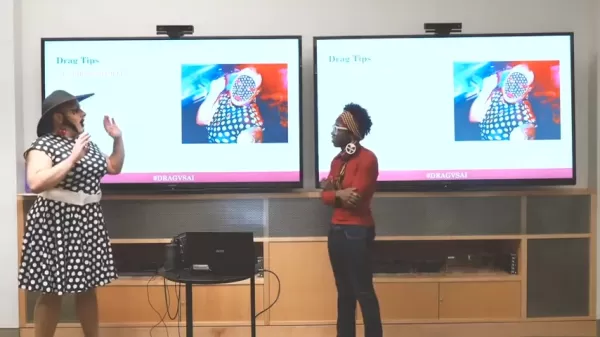
By skillfully applying contouring and highlighting, artists can flatten or redefine these features, rendering them hard for AI to map and identify.
The nose is a primary focus. As noted by Champagne Payne, flattening the nose's appearance disrupts detection; the flatter it is painted, the more it confuses algorithms tasked with finding faces. She also emphasizes contouring around the eyes, using white pigment to desiccate and distort their shape, making them less identifiable.
Keywords for SEO: Ghost Chamber, facial recognition avoidance, makeup techniques, contouring, highlighting, nose alteration, eye distortion
The Infinity Chamber: Confusing Age Classification
The Infinity Chamber technique focuses on manipulating perceived age through cosmetic artistry.
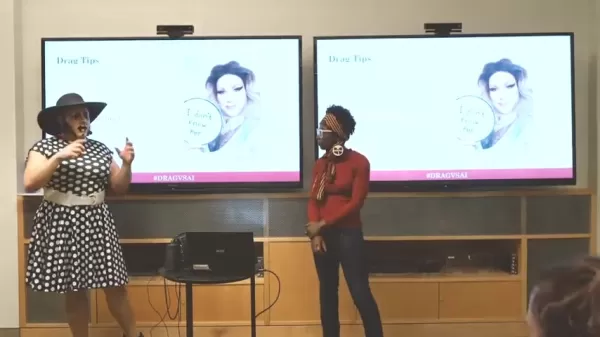
By strategically adding or minimizing wrinkles, using highlights to create a youthful, dewy glow, or applying deep contouring for an aged effect, drag performers can mislead AI systems designed to classify age.
This approach plays with light and shadow. Lighter, brighter tones are typically linked to youth, while darker shades add weight and gravity, associations connected with older age.
Keywords for SEO: Infinity Chamber, age classification, makeup for aging, youthful makeup, contouring for age, highlighting for age
The Drag Chamber: Disrupting Gender Labels
The Drag Chamber technique directly challenges gender classification. Performers use makeup to blur the distinctions between masculine and feminine traits, crafting an ambiguous visage that tests an AI's capacity to categorize gender.
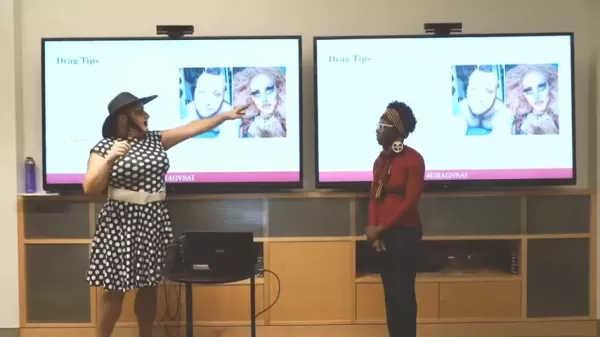
Key strategies include altering the brow line (making it thicker or thinner), reshaping the nose, and modifying the contours of the jawline and cheekbones.
The nose is particularly influential; thinner noses are often perceived as more feminine. Conversely, emphasizing the brow bone can create a more masculine impression.
Keywords for SEO: Drag Chamber, gender classification, gender performance, makeup for gender bending, brow manipulation, nose reshaping, contouring for gender
The Dodge Chamber: Looking Unlike You
The Dodge Chamber is dedicated to crafting a look radically different from the performer's everyday self. This involves pushing makeup artistry to its limits with unconventional colors, exaggerated forms, and stark contrasts. The aim is to produce a face that is humanoid yet unrecognizable as the individual's own.
Eyes, for instance, are often enlarged and stylized to appear cartoonish. The essence of this drag approach is to employ bold, shape-altering looks specifically designed to perplex an AI algorithm.
Keywords for SEO: Dodge Chamber, extreme makeup, unconventional makeup, bold makeup, unrecognizable face, cartoonish features
Steps to Confuse a Facial Recognition System:
Step 1: Understand Your Face
Before applying any makeup, carefully analyze your natural facial structure. Identify the defining characteristics of your appearance, such as your nose shape, cheekbone prominence, and eyebrow arch. This self-assessment provides a clear starting point for planning your transformations.
Step 2: Master Contouring and Highlighting
Contouring and highlighting are indispensable for visually reshaping the face. Use darker shades to create shadows and recede areas, and lighter shades to highlight and bring features forward. Practice various methods to see how you can alter the perceived geometry of your face.
Step 3: Experiment with Extreme Makeup
Embrace boldness in your makeup experiments. Utilize unconventional colors, exaggerated shapes, and strong contrasts to develop a truly distinctive look. The further you venture from conventional makeup, the more effectively you may disrupt facial recognition systems.
Step 4: Document Your Progress
Photograph yourself at different stages of your makeup application. This documentation helps you track your techniques and identify which alterations are most successful at confusing recognition software. These images can also be used to test custom facial recognition algorithms against your transformed appearances.
Pros and Cons of Using Drag Makeup to Confuse AI
Pros
Exposes biases and limitations within AI systems
Fosters creativity and personal artistic expression
Empowers individuals to assert control over their digital identity
Cons
Potential for unethical misuse (e.g., circumventing security)
Often requires advanced makeup skill and considerable time
Long-term effectiveness may diminish as AI technology evolves
Frequently Asked Questions
Can makeup really confuse facial recognition systems?
Yes, strategically applied makeup can substantially impair the accuracy of facial recognition algorithms. By artistically altering key facial landmarks, drag artists create appearances that are challenging for AI to correctly identify.
What are the key facial features to focus on?
Concentrate on the nose, eyes, mouth, and brow line. Changing the shape, size, or perceived position of these features can dramatically affect how facial recognition software performs.
Is there a limit to how much makeup can confuse AI?
While makeup is a potent tool, its effectiveness likely has limits. As AI algorithms grow more advanced, they may adapt to recognize even extreme cosmetic alterations. Nevertheless, the art of drag continually evolves, with performers devising new and innovative methods to challenge automated perception.
Related Questions
Why is it important to challenge AI perception?
Challenging AI perception is crucial for multiple reasons. It helps reveal inherent biases and flaws in algorithmic systems. It also encourages creative dialogue between art and technology. Ultimately, it supports individual autonomy, allowing people to resist being passively categorized by machines.
Are there ethical considerations to confusing facial recognition?
Yes, ethical considerations exist. While confusing facial recognition can be a legitimate form of artistic protest and a critique of surveillance, the same techniques could potentially be misused for illegal activities like evasion or impersonation. It is important to thoughtfully consider the intentions and potential consequences of such practices.
Related article
 Swedish AI Startup Lovable Eyes $13.2 Billion Valuation After Major Funding Round
As AI-driven coding tools gain traction, Swedish startup Lovable has secured a major funding round. The company aims to raise $3 billion, potentially boosting its valuation to $13.2 billion—double the $6.6 billion recorded last December. Menlo Ventur
Google Tests Remy AI Agent for Gemini as Focus Shifts to User Control
According to Business Insider, Google is testing Remy, a new AI personal agent for Gemini. This tool aims to execute tasks on behalf of users, streamlining both professional workflows and daily routines.Currently, Remy is undergoing testing in an int
How to fix Core Web Vitals for better SEO rankings
Streamline Report Card Comments with AI ToolsIntroductionAI Tools for Generating Report Card CommentsMagic SchoolAlmanac AIChat GPTUsing Magic School to Generate Report Card CommentsLogging into Magic SchoolSelecting the Report Card Comments ToolCust
Related Special Topic Recommendations
writing
Swedish AI Startup Lovable Eyes $13.2 Billion Valuation After Major Funding Round
As AI-driven coding tools gain traction, Swedish startup Lovable has secured a major funding round. The company aims to raise $3 billion, potentially boosting its valuation to $13.2 billion—double the $6.6 billion recorded last December. Menlo Ventur
Google Tests Remy AI Agent for Gemini as Focus Shifts to User Control
According to Business Insider, Google is testing Remy, a new AI personal agent for Gemini. This tool aims to execute tasks on behalf of users, streamlining both professional workflows and daily routines.Currently, Remy is undergoing testing in an int
How to fix Core Web Vitals for better SEO rankings
Streamline Report Card Comments with AI ToolsIntroductionAI Tools for Generating Report Card CommentsMagic SchoolAlmanac AIChat GPTUsing Magic School to Generate Report Card CommentsLogging into Magic SchoolSelecting the Report Card Comments ToolCust
Related Special Topic Recommendations
writing
 Best AI Outline Generators for Long-Form SEO Articles
2026 Latest Best Top-Rated AI Outline Generators for Long-Form SEO Articles, meticulously curated by XIX.AI. These powerful tools offer game-changing assistance in creating high-quality content quickly, boosting writing efficiency significantly. Get a free vs paid comparison along with real-world tests and detailed rankings to help you find the must-try option that suits your needs. Explore now to unlock your AI edge.
 8 tools
 xix.ai
Education and Learning
AI Study Tools for Homework and Exam Prep
xix.ai
Education and Learning
AI Study Tools for Homework and Exam Prep
2026 Latest Best AI Study Tools for Homework and Exam Prep! XIX.AI curates a top-rated list of powerful, game-changing tools that help students boost productivity, streamline homework completion, and ace exams through real-world tests. Get a free vs paid comparison, detailed rankings, and must-try options to unlock your AI edge. Explore now!
10 tools
xix.ai
Music composition
AI Vocal Demo Tools for Songwriters, Hooks, Toplines, and Multilingual Draft Sessions
2026 Latest Best AI Vocal Demo Tools for Songwriters, Hook Creators, and Multi-Language Content Teams! XIX.AI has curated a top-rated list of powerful game-changing tools that go through rigorous real-world tests. You’ll find detailed free vs paid comparison data, comprehensive rankings, and must-try options to help you boost writing efficiency and unlock your creative potential. Explore now to discover your perfect tool for all your content needs!
9 tools
xix.ai
Business
Best AI Competitive Research Tools for Small Businesses
2026 Latest Best Top-rated AI Competitive Research Tools for Small Businesses! XIX.AI has curated a highly powerful game-changing collection, updated weekly with rigorous real-world tests and detailed rankings. You can find a comprehensive free vs paid comparison to help you identify the must-try tools that boost your productivity and give you a competitive edge. Explore now to discover your perfect tool!
9 tools
xix.ai
Image editing
Photoshop AI Retouch Tools for Ecommerce Apparel, Skin Cleanup, and Color Consistency
2026 Latest Best Photoshop AI retouch tools for ecommerce apparel, skin cleanup, and color consistency! This top-rated curated list features powerful game-changing solutions that help you boost writing efficiency, streamline content creation, and achieve perfect visual results effortlessly. Each tool has undergone real-world tests through weekly updated rankings, complete with free vs paid comparison details. Backed by XIX.AI, it’s the must-try guide for anyone aiming to unlock your AI edge. Explore now!
10 tools
xix.ai
Prompt
Best AI Prompt Libraries for ChatGPT Workflows
2026 Latest Best Top-Rated AI Prompt Libraries for optimizing all types of ChatGPT workflows. XIX.AI has curated a powerful, game-changing collection that goes through rigorous real-world tests to ensure top performance. You can find detailed free vs paid comparisons and expert rankings to help you choose the must-try tools that boost your productivity and unlock your AI edge. Explore now!
11 tools
xix.ai

 Comments (0)
0/500
Comments (0)
0/500
In a world where artificial intelligence increasingly analyzes and interprets human faces, the art of drag presents a unique and powerful challenge. By masterfully manipulating facial features and identities, drag performers question the very idea of a fixed appearance. This article explores the fascinating crossroads of drag and AI, revealing how specific makeup artistry can deliberately confound facial recognition technology. Learn how drag serves as both a creative and critical tool to expose and subvert the biases embedded in AI systems.
Key Points
Drag subverts standard facial recognition by transforming key facial landmarks.
Strategic makeup application can successfully mislead AI algorithms.
Modifying the nose, eyes, and mouth is particularly effective.
Contouring and highlighting are essential for visually reshaping the face.
AI's visual perception can be actively altered through cosmetic techniques.
Drag provides artistic strategies to obscure one's conventional identity.
Understanding the Intersection of Drag and AI
What is Drag?
Drag is a vibrant art form that employs exaggerated makeup, costume, and performance to craft a persona, often one that challenges traditional gender roles and social conventions. It is fundamentally about transformation, creativity, and transcending boundaries.
This artistic practice now finds itself intersecting with the realm of artificial intelligence. As machines are trained to identify and classify human faces, drag poses a compelling question: can artistic makeup genuinely fool these sophisticated systems?
Keywords for SEO: drag makeup, artificial intelligence, AI perception, facial recognition, gender performance
AI and Facial Recognition Challenges
Facial recognition technology uses algorithms to identify and verify people based on their facial characteristics. However, these systems are not perfect. They can be prone to manipulation and inherent biases, especially when faced with appearances that fall outside standardized norms. Drag, with its intentional and artistic distortion of facial features, can highlight these vulnerabilities and reveal the constraints of machine perception.
Keywords for SEO: facial recognition technology, AI algorithms, AI bias, machine learning, makeup and AI
Drag Techniques for Confusing Facial Recognition
The Ghost Chamber: Avoiding Detection
The objective of the Ghost Chamber technique is to cause the face to effectively 'vanish' from an AI's detection. A fundamental method involves changing or obscuring critical facial landmarks like the nose, eyes, and mouth.
By skillfully applying contouring and highlighting, artists can flatten or redefine these features, rendering them hard for AI to map and identify.
The nose is a primary focus. As noted by Champagne Payne, flattening the nose's appearance disrupts detection; the flatter it is painted, the more it confuses algorithms tasked with finding faces. She also emphasizes contouring around the eyes, using white pigment to desiccate and distort their shape, making them less identifiable.
Keywords for SEO: Ghost Chamber, facial recognition avoidance, makeup techniques, contouring, highlighting, nose alteration, eye distortion
The Infinity Chamber: Confusing Age Classification
The Infinity Chamber technique focuses on manipulating perceived age through cosmetic artistry.
By strategically adding or minimizing wrinkles, using highlights to create a youthful, dewy glow, or applying deep contouring for an aged effect, drag performers can mislead AI systems designed to classify age.
This approach plays with light and shadow. Lighter, brighter tones are typically linked to youth, while darker shades add weight and gravity, associations connected with older age.
Keywords for SEO: Infinity Chamber, age classification, makeup for aging, youthful makeup, contouring for age, highlighting for age
The Drag Chamber: Disrupting Gender Labels
The Drag Chamber technique directly challenges gender classification. Performers use makeup to blur the distinctions between masculine and feminine traits, crafting an ambiguous visage that tests an AI's capacity to categorize gender.
Key strategies include altering the brow line (making it thicker or thinner), reshaping the nose, and modifying the contours of the jawline and cheekbones.
The nose is particularly influential; thinner noses are often perceived as more feminine. Conversely, emphasizing the brow bone can create a more masculine impression.
Keywords for SEO: Drag Chamber, gender classification, gender performance, makeup for gender bending, brow manipulation, nose reshaping, contouring for gender
The Dodge Chamber: Looking Unlike You
The Dodge Chamber is dedicated to crafting a look radically different from the performer's everyday self. This involves pushing makeup artistry to its limits with unconventional colors, exaggerated forms, and stark contrasts. The aim is to produce a face that is humanoid yet unrecognizable as the individual's own.
Eyes, for instance, are often enlarged and stylized to appear cartoonish. The essence of this drag approach is to employ bold, shape-altering looks specifically designed to perplex an AI algorithm.
Keywords for SEO: Dodge Chamber, extreme makeup, unconventional makeup, bold makeup, unrecognizable face, cartoonish features
Steps to Confuse a Facial Recognition System:
Step 1: Understand Your Face
Before applying any makeup, carefully analyze your natural facial structure. Identify the defining characteristics of your appearance, such as your nose shape, cheekbone prominence, and eyebrow arch. This self-assessment provides a clear starting point for planning your transformations.
Step 2: Master Contouring and Highlighting
Contouring and highlighting are indispensable for visually reshaping the face. Use darker shades to create shadows and recede areas, and lighter shades to highlight and bring features forward. Practice various methods to see how you can alter the perceived geometry of your face.
Step 3: Experiment with Extreme Makeup
Embrace boldness in your makeup experiments. Utilize unconventional colors, exaggerated shapes, and strong contrasts to develop a truly distinctive look. The further you venture from conventional makeup, the more effectively you may disrupt facial recognition systems.
Step 4: Document Your Progress
Photograph yourself at different stages of your makeup application. This documentation helps you track your techniques and identify which alterations are most successful at confusing recognition software. These images can also be used to test custom facial recognition algorithms against your transformed appearances.
Pros and Cons of Using Drag Makeup to Confuse AI
Pros
Exposes biases and limitations within AI systems
Fosters creativity and personal artistic expression
Empowers individuals to assert control over their digital identity
Cons
Potential for unethical misuse (e.g., circumventing security)
Often requires advanced makeup skill and considerable time
Long-term effectiveness may diminish as AI technology evolves
Frequently Asked Questions
Can makeup really confuse facial recognition systems?
Yes, strategically applied makeup can substantially impair the accuracy of facial recognition algorithms. By artistically altering key facial landmarks, drag artists create appearances that are challenging for AI to correctly identify.
What are the key facial features to focus on?
Concentrate on the nose, eyes, mouth, and brow line. Changing the shape, size, or perceived position of these features can dramatically affect how facial recognition software performs.
Is there a limit to how much makeup can confuse AI?
While makeup is a potent tool, its effectiveness likely has limits. As AI algorithms grow more advanced, they may adapt to recognize even extreme cosmetic alterations. Nevertheless, the art of drag continually evolves, with performers devising new and innovative methods to challenge automated perception.
Related Questions
Why is it important to challenge AI perception?
Challenging AI perception is crucial for multiple reasons. It helps reveal inherent biases and flaws in algorithmic systems. It also encourages creative dialogue between art and technology. Ultimately, it supports individual autonomy, allowing people to resist being passively categorized by machines.
Are there ethical considerations to confusing facial recognition?
Yes, ethical considerations exist. While confusing facial recognition can be a legitimate form of artistic protest and a critique of surveillance, the same techniques could potentially be misused for illegal activities like evasion or impersonation. It is important to thoughtfully consider the intentions and potential consequences of such practices.








 Swedish AI Startup Lovable Eyes $13.2 Billion Valuation After Major Funding Round
As AI-driven coding tools gain traction, Swedish startup Lovable has secured a major funding round. The company aims to raise $3 billion, potentially boosting its valuation to $13.2 billion—double the $6.6 billion recorded last December. Menlo Ventur
Google Tests Remy AI Agent for Gemini as Focus Shifts to User Control
According to Business Insider, Google is testing Remy, a new AI personal agent for Gemini. This tool aims to execute tasks on behalf of users, streamlining both professional workflows and daily routines.Currently, Remy is undergoing testing in an int
Swedish AI Startup Lovable Eyes $13.2 Billion Valuation After Major Funding Round
As AI-driven coding tools gain traction, Swedish startup Lovable has secured a major funding round. The company aims to raise $3 billion, potentially boosting its valuation to $13.2 billion—double the $6.6 billion recorded last December. Menlo Ventur
Google Tests Remy AI Agent for Gemini as Focus Shifts to User Control
According to Business Insider, Google is testing Remy, a new AI personal agent for Gemini. This tool aims to execute tasks on behalf of users, streamlining both professional workflows and daily routines.Currently, Remy is undergoing testing in an int
 How to fix Core Web Vitals for better SEO rankings
Streamline Report Card Comments with AI ToolsIntroductionAI Tools for Generating Report Card CommentsMagic SchoolAlmanac AIChat GPTUsing Magic School to Generate Report Card CommentsLogging into Magic SchoolSelecting the Report Card Comments ToolCust
How to fix Core Web Vitals for better SEO rankings
Streamline Report Card Comments with AI ToolsIntroductionAI Tools for Generating Report Card CommentsMagic SchoolAlmanac AIChat GPTUsing Magic School to Generate Report Card CommentsLogging into Magic SchoolSelecting the Report Card Comments ToolCust

2026 Latest Best Top-Rated AI Outline Generators for Long-Form SEO Articles, meticulously curated by XIX.AI. These powerful tools offer game-changing assistance in creating high-quality content quickly, boosting writing efficiency significantly. Get a free vs paid comparison along with real-world tests and detailed rankings to help you find the must-try option that suits your needs. Explore now to unlock your AI edge.
8 tools
xix.ai

2026 Latest Best AI Study Tools for Homework and Exam Prep! XIX.AI curates a top-rated list of powerful, game-changing tools that help students boost productivity, streamline homework completion, and ace exams through real-world tests. Get a free vs paid comparison, detailed rankings, and must-try options to unlock your AI edge. Explore now!
10 tools
xix.ai

2026 Latest Best AI Vocal Demo Tools for Songwriters, Hook Creators, and Multi-Language Content Teams! XIX.AI has curated a top-rated list of powerful game-changing tools that go through rigorous real-world tests. You’ll find detailed free vs paid comparison data, comprehensive rankings, and must-try options to help you boost writing efficiency and unlock your creative potential. Explore now to discover your perfect tool for all your content needs!
9 tools
xix.ai

2026 Latest Best Top-rated AI Competitive Research Tools for Small Businesses! XIX.AI has curated a highly powerful game-changing collection, updated weekly with rigorous real-world tests and detailed rankings. You can find a comprehensive free vs paid comparison to help you identify the must-try tools that boost your productivity and give you a competitive edge. Explore now to discover your perfect tool!
9 tools
xix.ai

2026 Latest Best Photoshop AI retouch tools for ecommerce apparel, skin cleanup, and color consistency! This top-rated curated list features powerful game-changing solutions that help you boost writing efficiency, streamline content creation, and achieve perfect visual results effortlessly. Each tool has undergone real-world tests through weekly updated rankings, complete with free vs paid comparison details. Backed by XIX.AI, it’s the must-try guide for anyone aiming to unlock your AI edge. Explore now!
10 tools
xix.ai

2026 Latest Best Top-Rated AI Prompt Libraries for optimizing all types of ChatGPT workflows. XIX.AI has curated a powerful, game-changing collection that goes through rigorous real-world tests to ensure top performance. You can find detailed free vs paid comparisons and expert rankings to help you choose the must-try tools that boost your productivity and unlock your AI edge. Explore now!
11 tools
xix.ai












