


 Home
HomeUS Pushes for Nvidia to Reduce AI Chip Sales to China
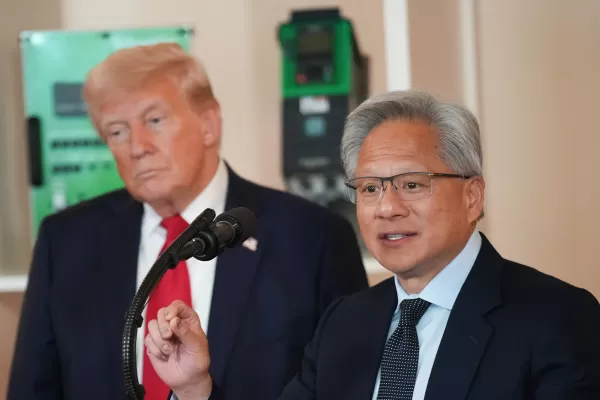
Recent reports from The New York Times and The Financial Times reveal that the Trump administration has mandated Nvidia and AMD allocate 15% of their AI chip sales revenue from China to federal coffers. This unprecedented arrangement reportedly followed negotiations between Nvidia CEO Jensen Huang and former President Donald Trump just prior to the Commerce Department issuing export licenses for AI chips.
During a Monday press briefing, President Trump substantiated these reports, disclosing he initially demanded 20% before settling at 15% after discussions with Huang. "I told him 'America deserves 20% if we're approving this,'" Trump recounted. "He countered with 15%, so we struck that compromise."
The licensed exports include modified versions of both companies' flagship products - Nvidia's H20 and AMD's MI308 processors - deliberately engineered with reduced capabilities to satisfy U.S. export controls implemented last April. While both firms confirmed impending shipments last month following license approvals, Nvidia's H20 recently drew scrutiny from Chinese authorities over potential security vulnerabilities.
Trump dismissed concerns about the H20, characterizing it as "existing technology China already possesses." He suggested conditional approval for Nvidia's cutting-edge Blackwell processors, contingent on substantial performance reductions between 30-50%.
Projections suggest this agreement could generate approximately $2 billion annually for U.S. government revenues, according to The New York Times. The publication described the arrangement as extraordinary, consistent with the administration's unconventional financial strategies including cryptocurrency-backed fundraising, university litigation, media network disputes, and sweeping tariff implementations. These developments follow Trump's recent ultimatum threatening 100% semiconductor tariffs unless domestic manufacturing commitments materialize.
Related Developments
- Trump calls for Intel CEO's resignation over Chinese affiliations
- Proposed 100% chip tariff contains significant exemption clause
The former president disclosed earlier this year he contemplated breaking up Nvidia before Huang's diplomatic efforts secured relaxed export controls. Trump has repeatedly intervened in corporate matters under national security justifications, including proposals for U.S. government equity in TikTok and demands for Intel leadership changes regarding Chinese relationships.
Updated August 11th: Includes presidential confirmation.
Related article
![Nvidia CEO Jensen Huang tells Trump ‘we’re not going to let [an AI slowdown] happen’](data:image/gif;base64,R0lGODlhAQABAIAAAAAAAP///yH5BAEAAAAALAAAAAABAAEAAAIBRAA7) Nvidia CEO Jensen Huang tells Trump ‘we’re not going to let [an AI slowdown] happen’
During his appearance at the All-In Summit in Los Angeles on Monday, Nvidia CEO Jensen Huang received an unexpected call from President Donald Trump, one he couldn’t simply ignore.“I’m on stage with the besties,” Huang explained to Trump, referencing
Jensen Huang Reveals Nvidia’s ‘Brand New’ $200B Market Opportunity
Nvidia founder and CEO Jensen Huang stands out as one of the most compelling corporate visionaries, if not the greatest, in driving his company’s narrative. He may even eclipse Salesforce’s Marc Benioff in his unwavering optimism regarding the firm’s
Microsoft, Azure and AI Tech Combat California Wildfire Risks
Microsoft invests in AI-driven wildfire detection, with Juan Lavista Ferres, CVP and Chief Data Scientist, discussing strategies to mitigate environmental damage.According to NASA, climate change impacts everyone on Earth, manifesting as rising tempe
Related Special Topic Recommendations
writing
Nvidia CEO Jensen Huang tells Trump ‘we’re not going to let [an AI slowdown] happen’
During his appearance at the All-In Summit in Los Angeles on Monday, Nvidia CEO Jensen Huang received an unexpected call from President Donald Trump, one he couldn’t simply ignore.“I’m on stage with the besties,” Huang explained to Trump, referencing
Jensen Huang Reveals Nvidia’s ‘Brand New’ $200B Market Opportunity
Nvidia founder and CEO Jensen Huang stands out as one of the most compelling corporate visionaries, if not the greatest, in driving his company’s narrative. He may even eclipse Salesforce’s Marc Benioff in his unwavering optimism regarding the firm’s
Microsoft, Azure and AI Tech Combat California Wildfire Risks
Microsoft invests in AI-driven wildfire detection, with Juan Lavista Ferres, CVP and Chief Data Scientist, discussing strategies to mitigate environmental damage.According to NASA, climate change impacts everyone on Earth, manifesting as rising tempe
Related Special Topic Recommendations
writing
 Best AI Outline Generators for Long-Form SEO Articles
2026 Latest Best Top-Rated AI Outline Generators for Long-Form SEO Articles, meticulously curated by XIX.AI. These powerful tools offer game-changing assistance in creating high-quality content quickly, boosting writing efficiency significantly. Get a free vs paid comparison along with real-world tests and detailed rankings to help you find the must-try option that suits your needs. Explore now to unlock your AI edge.
 8 tools
 xix.ai
Education and Learning
AI Study Tools for Homework and Exam Prep
xix.ai
Education and Learning
AI Study Tools for Homework and Exam Prep
2026 Latest Best AI Study Tools for Homework and Exam Prep! XIX.AI curates a top-rated list of powerful, game-changing tools that help students boost productivity, streamline homework completion, and ace exams through real-world tests. Get a free vs paid comparison, detailed rankings, and must-try options to unlock your AI edge. Explore now!
10 tools
xix.ai
Music composition
AI Vocal Demo Tools for Songwriters, Hooks, Toplines, and Multilingual Draft Sessions
2026 Latest Best AI Vocal Demo Tools for Songwriters, Hook Creators, and Multi-Language Content Teams! XIX.AI has curated a top-rated list of powerful game-changing tools that go through rigorous real-world tests. You’ll find detailed free vs paid comparison data, comprehensive rankings, and must-try options to help you boost writing efficiency and unlock your creative potential. Explore now to discover your perfect tool for all your content needs!
9 tools
xix.ai
Business
Best AI Competitive Research Tools for Small Businesses
2026 Latest Best Top-rated AI Competitive Research Tools for Small Businesses! XIX.AI has curated a highly powerful game-changing collection, updated weekly with rigorous real-world tests and detailed rankings. You can find a comprehensive free vs paid comparison to help you identify the must-try tools that boost your productivity and give you a competitive edge. Explore now to discover your perfect tool!
9 tools
xix.ai
Image editing
Photoshop AI Retouch Tools for Ecommerce Apparel, Skin Cleanup, and Color Consistency
2026 Latest Best Photoshop AI retouch tools for ecommerce apparel, skin cleanup, and color consistency! This top-rated curated list features powerful game-changing solutions that help you boost writing efficiency, streamline content creation, and achieve perfect visual results effortlessly. Each tool has undergone real-world tests through weekly updated rankings, complete with free vs paid comparison details. Backed by XIX.AI, it’s the must-try guide for anyone aiming to unlock your AI edge. Explore now!
10 tools
xix.ai
Prompt
Best AI Prompt Libraries for ChatGPT Workflows
2026 Latest Best Top-Rated AI Prompt Libraries for optimizing all types of ChatGPT workflows. XIX.AI has curated a powerful, game-changing collection that goes through rigorous real-world tests to ensure top performance. You can find detailed free vs paid comparisons and expert rankings to help you choose the must-try tools that boost your productivity and unlock your AI edge. Explore now!
11 tools
xix.ai

 Comments (0)
0/500
Comments (0)
0/500
Recent reports from The New York Times and The Financial Times reveal that the Trump administration has mandated Nvidia and AMD allocate 15% of their AI chip sales revenue from China to federal coffers. This unprecedented arrangement reportedly followed negotiations between Nvidia CEO Jensen Huang and former President Donald Trump just prior to the Commerce Department issuing export licenses for AI chips.
During a Monday press briefing, President Trump substantiated these reports, disclosing he initially demanded 20% before settling at 15% after discussions with Huang. "I told him 'America deserves 20% if we're approving this,'" Trump recounted. "He countered with 15%, so we struck that compromise."
The licensed exports include modified versions of both companies' flagship products - Nvidia's H20 and AMD's MI308 processors - deliberately engineered with reduced capabilities to satisfy U.S. export controls implemented last April. While both firms confirmed impending shipments last month following license approvals, Nvidia's H20 recently drew scrutiny from Chinese authorities over potential security vulnerabilities.
Trump dismissed concerns about the H20, characterizing it as "existing technology China already possesses." He suggested conditional approval for Nvidia's cutting-edge Blackwell processors, contingent on substantial performance reductions between 30-50%.
Projections suggest this agreement could generate approximately $2 billion annually for U.S. government revenues, according to The New York Times. The publication described the arrangement as extraordinary, consistent with the administration's unconventional financial strategies including cryptocurrency-backed fundraising, university litigation, media network disputes, and sweeping tariff implementations. These developments follow Trump's recent ultimatum threatening 100% semiconductor tariffs unless domestic manufacturing commitments materialize.
Related Developments
- Trump calls for Intel CEO's resignation over Chinese affiliations
- Proposed 100% chip tariff contains significant exemption clause
The former president disclosed earlier this year he contemplated breaking up Nvidia before Huang's diplomatic efforts secured relaxed export controls. Trump has repeatedly intervened in corporate matters under national security justifications, including proposals for U.S. government equity in TikTok and demands for Intel leadership changes regarding Chinese relationships.
Updated August 11th: Includes presidential confirmation.








![Nvidia CEO Jensen Huang tells Trump ‘we’re not going to let [an AI slowdown] happen’](https://img.xix.ai/uploads/79/6aa87327d0e12.webp) Nvidia CEO Jensen Huang tells Trump ‘we’re not going to let [an AI slowdown] happen’
During his appearance at the All-In Summit in Los Angeles on Monday, Nvidia CEO Jensen Huang received an unexpected call from President Donald Trump, one he couldn’t simply ignore.“I’m on stage with the besties,” Huang explained to Trump, referencing
Nvidia CEO Jensen Huang tells Trump ‘we’re not going to let [an AI slowdown] happen’
During his appearance at the All-In Summit in Los Angeles on Monday, Nvidia CEO Jensen Huang received an unexpected call from President Donald Trump, one he couldn’t simply ignore.“I’m on stage with the besties,” Huang explained to Trump, referencing
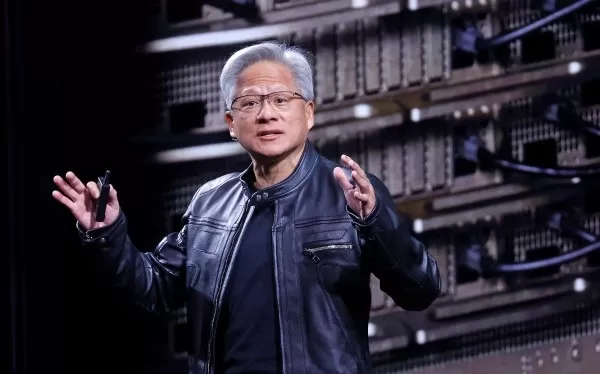 Jensen Huang Reveals Nvidia’s ‘Brand New’ $200B Market Opportunity
Nvidia founder and CEO Jensen Huang stands out as one of the most compelling corporate visionaries, if not the greatest, in driving his company’s narrative. He may even eclipse Salesforce’s Marc Benioff in his unwavering optimism regarding the firm’s
Jensen Huang Reveals Nvidia’s ‘Brand New’ $200B Market Opportunity
Nvidia founder and CEO Jensen Huang stands out as one of the most compelling corporate visionaries, if not the greatest, in driving his company’s narrative. He may even eclipse Salesforce’s Marc Benioff in his unwavering optimism regarding the firm’s
 Microsoft, Azure and AI Tech Combat California Wildfire Risks
Microsoft invests in AI-driven wildfire detection, with Juan Lavista Ferres, CVP and Chief Data Scientist, discussing strategies to mitigate environmental damage.According to NASA, climate change impacts everyone on Earth, manifesting as rising tempe
Microsoft, Azure and AI Tech Combat California Wildfire Risks
Microsoft invests in AI-driven wildfire detection, with Juan Lavista Ferres, CVP and Chief Data Scientist, discussing strategies to mitigate environmental damage.According to NASA, climate change impacts everyone on Earth, manifesting as rising tempe

2026 Latest Best Top-Rated AI Outline Generators for Long-Form SEO Articles, meticulously curated by XIX.AI. These powerful tools offer game-changing assistance in creating high-quality content quickly, boosting writing efficiency significantly. Get a free vs paid comparison along with real-world tests and detailed rankings to help you find the must-try option that suits your needs. Explore now to unlock your AI edge.
8 tools
xix.ai

2026 Latest Best AI Study Tools for Homework and Exam Prep! XIX.AI curates a top-rated list of powerful, game-changing tools that help students boost productivity, streamline homework completion, and ace exams through real-world tests. Get a free vs paid comparison, detailed rankings, and must-try options to unlock your AI edge. Explore now!
10 tools
xix.ai

2026 Latest Best AI Vocal Demo Tools for Songwriters, Hook Creators, and Multi-Language Content Teams! XIX.AI has curated a top-rated list of powerful game-changing tools that go through rigorous real-world tests. You’ll find detailed free vs paid comparison data, comprehensive rankings, and must-try options to help you boost writing efficiency and unlock your creative potential. Explore now to discover your perfect tool for all your content needs!
9 tools
xix.ai

2026 Latest Best Top-rated AI Competitive Research Tools for Small Businesses! XIX.AI has curated a highly powerful game-changing collection, updated weekly with rigorous real-world tests and detailed rankings. You can find a comprehensive free vs paid comparison to help you identify the must-try tools that boost your productivity and give you a competitive edge. Explore now to discover your perfect tool!
9 tools
xix.ai

2026 Latest Best Photoshop AI retouch tools for ecommerce apparel, skin cleanup, and color consistency! This top-rated curated list features powerful game-changing solutions that help you boost writing efficiency, streamline content creation, and achieve perfect visual results effortlessly. Each tool has undergone real-world tests through weekly updated rankings, complete with free vs paid comparison details. Backed by XIX.AI, it’s the must-try guide for anyone aiming to unlock your AI edge. Explore now!
10 tools
xix.ai
2026 Latest Best Top-Rated AI Prompt Libraries for optimizing all types of ChatGPT workflows. XIX.AI has curated a powerful, game-changing collection that goes through rigorous real-world tests to ensure top performance. You can find detailed free vs paid comparisons and expert rankings to help you choose the must-try tools that boost your productivity and unlock your AI edge. Explore now!
11 tools
xix.ai












