


 Home
HomeWhat is Pre-Code Cinema? Decoding the Hays Gaze and Gold Diggers.
Embark on an insightful journey into the captivating world of classic cinema. We are delving deep into the pre-Hays Code era, a period marked by cinematic boldness and exploration. Our focus tonight is the Hays Gaze, highlighting films that defied conventions and mirrored the social currents of their time. We will explore the intriguing theme of 'gold diggers' as depicted in the 1930s, beginning with the film Baby Face, starring Barbara Stanwyck.
Key Points
The Hays Code profoundly influenced the themes and content of Hollywood films.
Pre-Code films frequently addressed controversial topics like female ambition and sexuality with greater openness.
The 'gold digger' archetype mirrored the anxieties and aspirations prevalent during the Great Depression.
Barbara Stanwyck's performance in 'Baby Face' stands as a prime example of a strong, independent female character.
The creation of the Legion of Decency was partly a reaction to the perceived moral laxity in pre-Code films.
Films evolve in cycles, much like the superhero genre is a dominant cycle today.
The Hays Gaze: A Spotlight on Pre-Code Cinema
Understanding the Hays Code and its Impact
The Hays Code, formally known as the Motion Picture Production Code, was a set of moral guidelines enforced for most United States motion pictures released by major studios from 1934 to 1968. Before its strict implementation, Hollywood enjoyed a period of relative creative freedom, allowing filmmakers to explore themes later deemed taboo. This pre-Code period is what we refer to as The Hays Gaze.
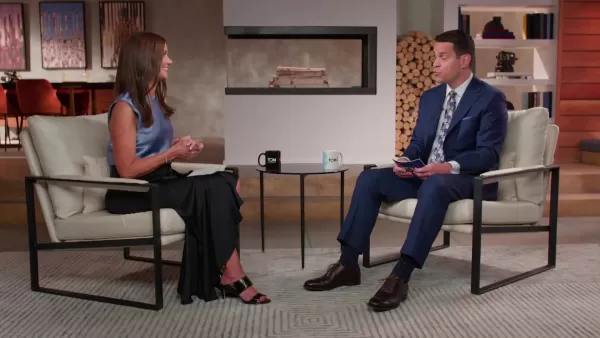
During this era, film cycles progressed much more rapidly, similar to how superhero and murder mystery genres represent contemporary cycles.
The 'Gold Digger' Trope: Reflecting Depression-Era Anxieties
The 'gold digger' character, a woman who strategically pursues wealthy men for financial security, became a prominent figure in early 1930s cinema. This archetype reflected the economic hardships of the Great Depression, where financial stability was a paramount concern. It also highlighted evolving societal roles for women, who were increasingly seeking independence and challenging traditional norms.
The gold digger theme was part of a series of narrative cycles that also included kept women, fallen women, and social climbers.
Baby Face (1933): A Case Study in Pre-Code Provocation
Baby Face, starring the iconic Barbara Stanwyck, is a quintessential pre-Code film that demonstrates the era's willingness to tackle controversial subjects. The film follows Lily Powers, a young woman who uses her sexuality to ascend the corporate ladder at a New York bank.
Barbara Stanwyck's work will feature prominently throughout this entire spotlight series.

In the film, she progresses through every level of employee at the bank, leveraging relationships to reach the top. The movie contained content considered egregious at the time, leading to studio mandates for changes. One notable scene involves Barbara Stanwyck's character seducing a man in a train car.
This explicit portrayal of female ambition and sexual agency was a hallmark of pre-Code cinema. The film included several scenes that raised eyebrows for their daring content.
Examining Barbara Stanwyck's Performance in 'Baby Face'
Stanwyck's Lily Powers: A Complex Character Study
Barbara Stanwyck's portrayal of Lily Powers is far from a simple caricature. She brings to life a complex character motivated by a desire to escape poverty and take control of her own destiny. While her methods are undoubtedly manipulative, Stanwyck infuses Lily with a vulnerability and intelligence that renders her surprisingly sympathetic.
The Nietzschean Influence: Exploitation as Empowerment
A particularly striking scene in Baby Face involves an elderly family friend introducing Lily to the philosophy of Nietzsche. He encourages her to exploit her youth and beauty to gain power over men, framing this strategy as a form of empowerment. This moment encapsulates the pre-Code era's comfort with morally ambiguous characters and provocative ideas.
Lily endured a difficult childhood; her father owned a bar and had effectively prostituted her. An elderly family friend introduces her to Nietzsche's philosophy. The friend advises her to exploit her own attributes, emphasizing that she possesses power and should use men to her advantage.
How to Appreciate Pre-Code Era Films Like Baby Face
Contextualize the Film
Understand the historical and social context in which Baby Face was created. The Great Depression, evolving gender roles, and the absence of strict censorship all contributed to the film's distinctive tone and thematic choices.
Challenge Modern Sensibilities
Appreciate the film's boldness in challenging conventional morality. Pre-Code films often presented complex characters and situations that resisted simple moral judgments.
Acknowledge the Artistry
Look beyond the potentially provocative content and recognize the film's artistic qualities. Baby Face boasts strong performances, stylish cinematography, and a compelling narrative structure.
Baby Face: Pros
and Cons
Pros
Powerful performance by Barbara Stanwyck
Provocative exploration of female ambition
Distinctive pre-Code visual style
Fascinating window into a unique period of filmmaking
Cons
Morally ambiguous themes may not resonate with all audiences
Certain content might be viewed as exploitative by modern standards
The film's conclusion has been criticized as a concession to appease censors
FAQ
What defines a pre-Code film?
A pre-Code film is any motion picture produced in the United States between the advent of sound in the late 1920s and the strict enforcement of the Motion Picture Production Code (Hays Code) in mid-1934.
Why was the Hays Code implemented?
The Hays Code was introduced in response to growing concerns about the moral content of Hollywood films. Religious groups, parent-teacher associations, and some industry insiders believed movies were contributing to a perceived decline in societal values.
Are pre-Code films more 'daring' than films made after the Hays Code was enforced?
Yes, pre-Code films are generally considered more daring than those produced after the Hays Code's strict enforcement. They often featured more explicit treatments of sexuality, violence, and morally complex characters.
Related Questions
What were the long-term effects of the Hays Code on Hollywood?
The Hays Code had a profound and enduring impact on Hollywood. It dictated the types of narratives that could be told, the characters that could be portrayed, and the moral conclusions films were required to uphold. Although the code eventually became obsolete, its influence can still be observed in aspects of modern filmmaking.
Related article
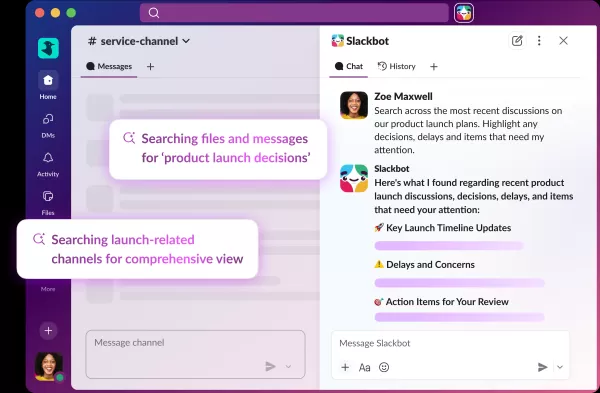
 Slackbot Becomes an AI Agent
Slackbot, the automated assistant embedded in Salesforce’s corporate messaging platform Slack, is evolving into an AI agent. Salesforce CTO Parker Harris envisions it achieving viral status comparable to OpenAI’s ChatGPT.The cloud software giant laun
ByteDance Boosts Core AI Incentives as Doubao Surges 14.6%
ByteDance recently convened a DouBao equity briefing to unveil fresh incentive policies for staff involved in the DouBao division. The strike price for DouBao shares has been lifted from $14.85 in June 2026 to $17.02, marking an approximate 14.6% inc
MiniMax Unveils 10x Team Program to Incentivize Global AI Experts
MiniMax (Xiyu Technology), the General Artificial Intelligence Lab, has officially launched "10x Team," a global talent collaboration initiative. This program aims to recruit top experts across industries to explore the deep application of large mode
Related Special Topic Recommendations
Education and Learning
Slackbot Becomes an AI Agent
Slackbot, the automated assistant embedded in Salesforce’s corporate messaging platform Slack, is evolving into an AI agent. Salesforce CTO Parker Harris envisions it achieving viral status comparable to OpenAI’s ChatGPT.The cloud software giant laun
ByteDance Boosts Core AI Incentives as Doubao Surges 14.6%
ByteDance recently convened a DouBao equity briefing to unveil fresh incentive policies for staff involved in the DouBao division. The strike price for DouBao shares has been lifted from $14.85 in June 2026 to $17.02, marking an approximate 14.6% inc
MiniMax Unveils 10x Team Program to Incentivize Global AI Experts
MiniMax (Xiyu Technology), the General Artificial Intelligence Lab, has officially launched "10x Team," a global talent collaboration initiative. This program aims to recruit top experts across industries to explore the deep application of large mode
Related Special Topic Recommendations
Education and Learning
 AI Study Tools for Homework and Exam Prep
2026 Latest Best AI Study Tools for Homework and Exam Prep! XIX.AI curates a top-rated list of powerful, game-changing tools that help students boost productivity, streamline homework completion, and ace exams through real-world tests. Get a free vs paid comparison, detailed rankings, and must-try options to unlock your AI edge. Explore now!
 10 tools
 xix.ai
Music composition
AI Vocal Demo Tools for Songwriters, Hooks, Toplines, and Multilingual Draft Sessions
xix.ai
Music composition
AI Vocal Demo Tools for Songwriters, Hooks, Toplines, and Multilingual Draft Sessions
2026 Latest Best AI Vocal Demo Tools for Songwriters, Hook Creators, and Multi-Language Content Teams! XIX.AI has curated a top-rated list of powerful game-changing tools that go through rigorous real-world tests. You’ll find detailed free vs paid comparison data, comprehensive rankings, and must-try options to help you boost writing efficiency and unlock your creative potential. Explore now to discover your perfect tool for all your content needs!
9 tools
xix.ai
Business
Best AI Competitive Research Tools for Small Businesses
2026 Latest Best Top-rated AI Competitive Research Tools for Small Businesses! XIX.AI has curated a highly powerful game-changing collection, updated weekly with rigorous real-world tests and detailed rankings. You can find a comprehensive free vs paid comparison to help you identify the must-try tools that boost your productivity and give you a competitive edge. Explore now to discover your perfect tool!
9 tools
xix.ai
Image editing
Photoshop AI Retouch Tools for Ecommerce Apparel, Skin Cleanup, and Color Consistency
2026 Latest Best Photoshop AI retouch tools for ecommerce apparel, skin cleanup, and color consistency! This top-rated curated list features powerful game-changing solutions that help you boost writing efficiency, streamline content creation, and achieve perfect visual results effortlessly. Each tool has undergone real-world tests through weekly updated rankings, complete with free vs paid comparison details. Backed by XIX.AI, it’s the must-try guide for anyone aiming to unlock your AI edge. Explore now!
10 tools
xix.ai
Prompt
Best AI Prompt Libraries for ChatGPT Workflows
2026 Latest Best Top-Rated AI Prompt Libraries for optimizing all types of ChatGPT workflows. XIX.AI has curated a powerful, game-changing collection that goes through rigorous real-world tests to ensure top performance. You can find detailed free vs paid comparisons and expert rankings to help you choose the must-try tools that boost your productivity and unlock your AI edge. Explore now!
11 tools
xix.ai
Education and Learning
AI Quiz Builder Platforms for Teachers, Tutors, and Cohort-Based Learning Programs
2026 Latest Best AI Quiz Builder Platforms for Teachers, Tutors, and Cohort-Based Learning Programs! XIX.AI has curated a top-rated list of powerful game-changing tools that go through real-world tests to deliver accurate rankings. These must-try platforms help boost writing efficiency, streamline content creation, and simplify quiz design across all learning scenarios. Explore now to discover your perfect tool for unlocking your AI edge in teaching!
13 tools
xix.ai

 Comments (0)
0/500
Comments (0)
0/500
Embark on an insightful journey into the captivating world of classic cinema. We are delving deep into the pre-Hays Code era, a period marked by cinematic boldness and exploration. Our focus tonight is the Hays Gaze, highlighting films that defied conventions and mirrored the social currents of their time. We will explore the intriguing theme of 'gold diggers' as depicted in the 1930s, beginning with the film Baby Face, starring Barbara Stanwyck.
Key Points
The Hays Code profoundly influenced the themes and content of Hollywood films.
Pre-Code films frequently addressed controversial topics like female ambition and sexuality with greater openness.
The 'gold digger' archetype mirrored the anxieties and aspirations prevalent during the Great Depression.
Barbara Stanwyck's performance in 'Baby Face' stands as a prime example of a strong, independent female character.
The creation of the Legion of Decency was partly a reaction to the perceived moral laxity in pre-Code films.
Films evolve in cycles, much like the superhero genre is a dominant cycle today.
The Hays Gaze: A Spotlight on Pre-Code Cinema
Understanding the Hays Code and its Impact
The Hays Code, formally known as the Motion Picture Production Code, was a set of moral guidelines enforced for most United States motion pictures released by major studios from 1934 to 1968. Before its strict implementation, Hollywood enjoyed a period of relative creative freedom, allowing filmmakers to explore themes later deemed taboo. This pre-Code period is what we refer to as The Hays Gaze.
During this era, film cycles progressed much more rapidly, similar to how superhero and murder mystery genres represent contemporary cycles.
The 'Gold Digger' Trope: Reflecting Depression-Era Anxieties
The 'gold digger' character, a woman who strategically pursues wealthy men for financial security, became a prominent figure in early 1930s cinema. This archetype reflected the economic hardships of the Great Depression, where financial stability was a paramount concern. It also highlighted evolving societal roles for women, who were increasingly seeking independence and challenging traditional norms.
The gold digger theme was part of a series of narrative cycles that also included kept women, fallen women, and social climbers.
Baby Face (1933): A Case Study in Pre-Code Provocation
Baby Face, starring the iconic Barbara Stanwyck, is a quintessential pre-Code film that demonstrates the era's willingness to tackle controversial subjects. The film follows Lily Powers, a young woman who uses her sexuality to ascend the corporate ladder at a New York bank.
Barbara Stanwyck's work will feature prominently throughout this entire spotlight series.
In the film, she progresses through every level of employee at the bank, leveraging relationships to reach the top. The movie contained content considered egregious at the time, leading to studio mandates for changes. One notable scene involves Barbara Stanwyck's character seducing a man in a train car.
This explicit portrayal of female ambition and sexual agency was a hallmark of pre-Code cinema. The film included several scenes that raised eyebrows for their daring content.
Examining Barbara Stanwyck's Performance in 'Baby Face'
Stanwyck's Lily Powers: A Complex Character Study
Barbara Stanwyck's portrayal of Lily Powers is far from a simple caricature. She brings to life a complex character motivated by a desire to escape poverty and take control of her own destiny. While her methods are undoubtedly manipulative, Stanwyck infuses Lily with a vulnerability and intelligence that renders her surprisingly sympathetic.
The Nietzschean Influence: Exploitation as Empowerment
A particularly striking scene in Baby Face involves an elderly family friend introducing Lily to the philosophy of Nietzsche. He encourages her to exploit her youth and beauty to gain power over men, framing this strategy as a form of empowerment. This moment encapsulates the pre-Code era's comfort with morally ambiguous characters and provocative ideas.
Lily endured a difficult childhood; her father owned a bar and had effectively prostituted her. An elderly family friend introduces her to Nietzsche's philosophy. The friend advises her to exploit her own attributes, emphasizing that she possesses power and should use men to her advantage.
How to Appreciate Pre-Code Era Films Like Baby Face
Contextualize the Film
Understand the historical and social context in which Baby Face was created. The Great Depression, evolving gender roles, and the absence of strict censorship all contributed to the film's distinctive tone and thematic choices.
Challenge Modern Sensibilities
Appreciate the film's boldness in challenging conventional morality. Pre-Code films often presented complex characters and situations that resisted simple moral judgments.
Acknowledge the Artistry
Look beyond the potentially provocative content and recognize the film's artistic qualities. Baby Face boasts strong performances, stylish cinematography, and a compelling narrative structure.
Baby Face: Pros
and Cons
Pros
Powerful performance by Barbara Stanwyck
Provocative exploration of female ambition
Distinctive pre-Code visual style
Fascinating window into a unique period of filmmaking
Cons
Morally ambiguous themes may not resonate with all audiences
Certain content might be viewed as exploitative by modern standards
The film's conclusion has been criticized as a concession to appease censors
FAQ
What defines a pre-Code film?
A pre-Code film is any motion picture produced in the United States between the advent of sound in the late 1920s and the strict enforcement of the Motion Picture Production Code (Hays Code) in mid-1934.
Why was the Hays Code implemented?
The Hays Code was introduced in response to growing concerns about the moral content of Hollywood films. Religious groups, parent-teacher associations, and some industry insiders believed movies were contributing to a perceived decline in societal values.
Are pre-Code films more 'daring' than films made after the Hays Code was enforced?
Yes, pre-Code films are generally considered more daring than those produced after the Hays Code's strict enforcement. They often featured more explicit treatments of sexuality, violence, and morally complex characters.
Related Questions
What were the long-term effects of the Hays Code on Hollywood?
The Hays Code had a profound and enduring impact on Hollywood. It dictated the types of narratives that could be told, the characters that could be portrayed, and the moral conclusions films were required to uphold. Although the code eventually became obsolete, its influence can still be observed in aspects of modern filmmaking.








 Slackbot Becomes an AI Agent
Slackbot, the automated assistant embedded in Salesforce’s corporate messaging platform Slack, is evolving into an AI agent. Salesforce CTO Parker Harris envisions it achieving viral status comparable to OpenAI’s ChatGPT.The cloud software giant laun
Slackbot Becomes an AI Agent
Slackbot, the automated assistant embedded in Salesforce’s corporate messaging platform Slack, is evolving into an AI agent. Salesforce CTO Parker Harris envisions it achieving viral status comparable to OpenAI’s ChatGPT.The cloud software giant laun
 ByteDance Boosts Core AI Incentives as Doubao Surges 14.6%
ByteDance recently convened a DouBao equity briefing to unveil fresh incentive policies for staff involved in the DouBao division. The strike price for DouBao shares has been lifted from $14.85 in June 2026 to $17.02, marking an approximate 14.6% inc
ByteDance Boosts Core AI Incentives as Doubao Surges 14.6%
ByteDance recently convened a DouBao equity briefing to unveil fresh incentive policies for staff involved in the DouBao division. The strike price for DouBao shares has been lifted from $14.85 in June 2026 to $17.02, marking an approximate 14.6% inc
 MiniMax Unveils 10x Team Program to Incentivize Global AI Experts
MiniMax (Xiyu Technology), the General Artificial Intelligence Lab, has officially launched "10x Team," a global talent collaboration initiative. This program aims to recruit top experts across industries to explore the deep application of large mode
MiniMax Unveils 10x Team Program to Incentivize Global AI Experts
MiniMax (Xiyu Technology), the General Artificial Intelligence Lab, has officially launched "10x Team," a global talent collaboration initiative. This program aims to recruit top experts across industries to explore the deep application of large mode

2026 Latest Best AI Study Tools for Homework and Exam Prep! XIX.AI curates a top-rated list of powerful, game-changing tools that help students boost productivity, streamline homework completion, and ace exams through real-world tests. Get a free vs paid comparison, detailed rankings, and must-try options to unlock your AI edge. Explore now!
10 tools
xix.ai

2026 Latest Best AI Vocal Demo Tools for Songwriters, Hook Creators, and Multi-Language Content Teams! XIX.AI has curated a top-rated list of powerful game-changing tools that go through rigorous real-world tests. You’ll find detailed free vs paid comparison data, comprehensive rankings, and must-try options to help you boost writing efficiency and unlock your creative potential. Explore now to discover your perfect tool for all your content needs!
9 tools
xix.ai

2026 Latest Best Top-rated AI Competitive Research Tools for Small Businesses! XIX.AI has curated a highly powerful game-changing collection, updated weekly with rigorous real-world tests and detailed rankings. You can find a comprehensive free vs paid comparison to help you identify the must-try tools that boost your productivity and give you a competitive edge. Explore now to discover your perfect tool!
9 tools
xix.ai

2026 Latest Best Photoshop AI retouch tools for ecommerce apparel, skin cleanup, and color consistency! This top-rated curated list features powerful game-changing solutions that help you boost writing efficiency, streamline content creation, and achieve perfect visual results effortlessly. Each tool has undergone real-world tests through weekly updated rankings, complete with free vs paid comparison details. Backed by XIX.AI, it’s the must-try guide for anyone aiming to unlock your AI edge. Explore now!
10 tools
xix.ai

2026 Latest Best Top-Rated AI Prompt Libraries for optimizing all types of ChatGPT workflows. XIX.AI has curated a powerful, game-changing collection that goes through rigorous real-world tests to ensure top performance. You can find detailed free vs paid comparisons and expert rankings to help you choose the must-try tools that boost your productivity and unlock your AI edge. Explore now!
11 tools
xix.ai

2026 Latest Best AI Quiz Builder Platforms for Teachers, Tutors, and Cohort-Based Learning Programs! XIX.AI has curated a top-rated list of powerful game-changing tools that go through real-world tests to deliver accurate rankings. These must-try platforms help boost writing efficiency, streamline content creation, and simplify quiz design across all learning scenarios. Explore now to discover your perfect tool for unlocking your AI edge in teaching!
13 tools
xix.ai












