


 Home
HomeEventual Tackles Data Infrastructure Challenges for Multimodal AI
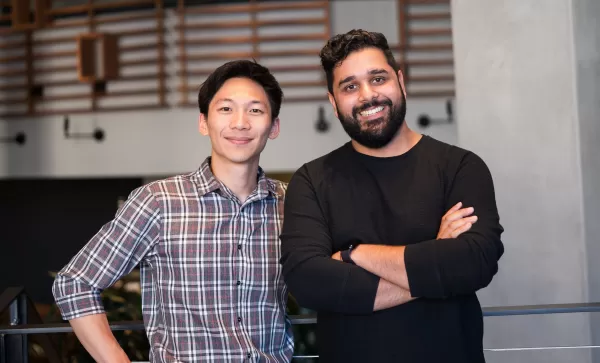
While working as software engineers in Lyft’s autonomous vehicle division, Eventual founders Sammy Sidhu and Jay Chia identified a critical data infrastructure issue, one poised to grow with the rise of AI.
Autonomous vehicles generate vast amounts of unstructured data, including 3D scans, images, text, and audio. Lyft engineers lacked a unified tool to process these diverse data types simultaneously, forcing them to rely on fragmented open-source solutions that were time-consuming and unreliable.
“We saw brilliant PhDs and industry experts dedicating 80% of their time to infrastructure rather than core application development,” Sidhu, Eventual’s CEO, shared in a recent TechCrunch interview. “Most challenges stemmed from data infrastructure.”
Sidhu and Chia developed an internal multimodal data processing tool at Lyft. When Sidhu explored new job opportunities, interviewers repeatedly expressed interest in a similar solution for their organizations, sparking the idea for Eventual.
Eventual created Daft, a Python-native open-source data processing engine designed to efficiently handle diverse data types, from text to audio and video. Sidhu aims for Daft to revolutionize unstructured data infrastructure, much like SQL transformed tabular data.
Founded in early 2022, nearly a year before ChatGPT’s debut, Eventual launched Daft’s initial open-source version that year and plans to introduce an enterprise product in the third quarter.
“ChatGPT’s rise highlighted the surge in AI applications using varied data types,” Sidhu noted. “As developers incorporated images, documents, and videos, we saw a dramatic increase in Daft’s usage.”
Save Over $200 on Your TechCrunch All Stage Pass
Innovate smarter, scale efficiently, and forge meaningful connections. Join visionaries from Precursor Ventures, NEA, Index Ventures, Underscore VC, and more for a day of strategic insights, workshops, and networking.
Save Over $200 on Your TechCrunch All Stage Pass
Innovate smarter, scale efficiently, and forge meaningful connections. Join visionaries from Precursor Ventures, NEA, Index Ventures, Underscore VC, and more for a day of strategic insights, workshops, and networking.
While Daft originated in the autonomous vehicle sector, its applications span industries like robotics, retail tech, and healthcare. Eventual now serves clients such as Amazon, CloudKitchens, and Together AI.
Eventual secured two funding rounds within eight months: a $7.5 million seed round led by CRV and a $20 million Series A led by Felicis, with participation from Microsoft’s M12 and Citi.
The recent funding will enhance Eventual’s open-source offerings and support the development of a commercial product, enabling customers to build AI applications using processed data.
Astasia Myers, a general partner at Felicis, discovered Eventual through a market analysis focused on data infrastructure for multimodal AI models.
Myers highlighted Eventual’s first-mover advantage in a space likely to become competitive, noting the founders’ direct experience with data processing challenges. She emphasized the growing need for such solutions.
According to MarketsandMarkets, the multimodal AI industry is expected to grow at a 35% compound annual rate from 2023 to 2028.
“Global data creation has surged 1,000x in the past 20 years, with 90% generated in the last two years, and most of it is unstructured, per IDC,” Myers said. “Daft addresses this massive trend in generative AI, which relies on text, images, video, and voice, requiring a multimodal-native data processing engine.”
Related article
 Warner Music acquires AI attribution startup Sureel AI
Warner Music Group (WMG) confirmed on Wednesday that it is acquiring Sureel AI, an artificial intelligence attribution startup. Sureel’s proprietary technology generates “AI DNA” for musical tracks, deconstructing them into constituent elements to tr
Ex-Meta Researchers Aim to Bring Visual AI to Factory Floors
Artificial intelligence is reshaping our world, yet it has mostly stayed within digital boundaries. Now, a new wave of startups is bringing these capabilities into the physical world.Perceptron, founded by two ex-Meta researchers, is leading this shi
Sequen raises $16M to deliver TikTok-style personalization to consumer brands
Zoë Weil drove a billion-dollar surge in gross merchandise volume at Etsy in one year by optimizing AI ranking systems. Now, with Sequen, she and her co-founders are applying their extensive AI research and product expertise to empower consumer busin
Related Special Topic Recommendations
Image editing
Warner Music acquires AI attribution startup Sureel AI
Warner Music Group (WMG) confirmed on Wednesday that it is acquiring Sureel AI, an artificial intelligence attribution startup. Sureel’s proprietary technology generates “AI DNA” for musical tracks, deconstructing them into constituent elements to tr
Ex-Meta Researchers Aim to Bring Visual AI to Factory Floors
Artificial intelligence is reshaping our world, yet it has mostly stayed within digital boundaries. Now, a new wave of startups is bringing these capabilities into the physical world.Perceptron, founded by two ex-Meta researchers, is leading this shi
Sequen raises $16M to deliver TikTok-style personalization to consumer brands
Zoë Weil drove a billion-dollar surge in gross merchandise volume at Etsy in one year by optimizing AI ranking systems. Now, with Sequen, she and her co-founders are applying their extensive AI research and product expertise to empower consumer busin
Related Special Topic Recommendations
Image editing
 AI Object Removal Editors: Clean Up Portraits, Travel, and Product Shots
2026 Latest Best Top-rated AI Object Removal Editors for portraits travel product shots! XIX.AI curates a powerful game-changing collection regularly updated with weekly rankings. These tools offer real-world tests to help you quickly remove unwanted elements, boost content quality, and save tons of time without compromising results. Must-try for anyone aiming to unlock their AI creation edge. Explore now!
 10 tools
 xix.ai
Text-to-speech
Best AI Text to Speech Tools for Online Courses
xix.ai
Text-to-speech
Best AI Text to Speech Tools for Online Courses
2026 Latest Best Top-rated AI Text to Speech Tools for Online Courses are curated by XIX.AI based on rigorous real-world tests and weekly updated rankings. These powerful tools help creators deliver crystal-clear audio content effortlessly, boosting writing efficiency and streamlining course production. Check out the free vs paid comparison to find your perfect fit. Explore now to unlock your AI edge in online education.
10 tools
xix.ai
writing
AI Blog Title Tools for Higher Click Through Rates
2026 Latest Best Top-Rated AI Blog Title Tools for Higher Click Through Rates! XIX.AI has carefully curated a powerful, game-changing collection of top tools that go through rigorous real-world tests. You’ll find a free vs paid comparison, weekly updated rankings, and detailed insights to help you boost your blog’s traffic efficiently. Must-try options are highlighted to help you unlock your AI edge. Explore now!
10 tools
xix.ai
automation
Best AI Task Routing Tools for Support Workflows
2026 Latest Best Top-rated AI Task Routing Tools for Support Workflows! XIX.AI has curated a highly powerful game-changing collection of must-try solutions, all undergoing rigorous real-world tests and updated weekly. These tools streamline workflows, boost productivity, and help teams deliver faster, more efficient support. Explore now to discover your perfect tool and unlock your AI edge!
17 tools
xix.ai
Academic Research
AI Citation and Paper Summary Tools
2026 Latest Best Top-Rated AI Citation and Paper Summary Tools Curated by XIX.AI. Get powerful game-changing solutions for quick content creation, improved writing efficiency, and boosting productivity. We offer a free vs paid comparison along with real-world tests and weekly updated rankings to help you find the must-try tool that fits your needs perfectly. Explore now to Unlock your AI edge.
10 tools
xix.ai
Productivity
Best AI Productivity Tools for Daily Work
2026 Latest Best Top-Rated AI Productivity Tools for Daily Work! XIX.AI has curated a powerful, game-changing selection based on rigorous weekly updated rankings and real-world tests. You’ll find must-try options that boost writing efficiency, streamline content creation, and help you overcome daily work challenges. Get a free vs paid comparison to find the perfect fit for your needs. Explore now to unlock your AI edge!
9 tools
xix.ai

 Comments (2)
0/500
Comments (2)
0/500
![StevenGonzalez]()
이 기사 읽고 AI 데이터 인프라 문제가 생각보다 훨씬 더 복잡하단 걸 깨달았어요. 멀티모달 AI가 발전할수록 데이터 관리가 핵심이 되겠네요. 실제 경험에서 나온 솔루션이라 더 믿음이 가는 것 같아요 🤔
![KevinRoberts]()
Interessant, aber ich frage mich, wie sich Eventual von bestehenden Lösungen wie Databricks unterscheidet. Multimodale Daten sind komplex - kann ihr Ansatz wirklich skalieren? 🤔 Der Hintergrund bei Lyft klingt vielversprechend.
While working as software engineers in Lyft’s autonomous vehicle division, Eventual founders Sammy Sidhu and Jay Chia identified a critical data infrastructure issue, one poised to grow with the rise of AI.
Autonomous vehicles generate vast amounts of unstructured data, including 3D scans, images, text, and audio. Lyft engineers lacked a unified tool to process these diverse data types simultaneously, forcing them to rely on fragmented open-source solutions that were time-consuming and unreliable.
“We saw brilliant PhDs and industry experts dedicating 80% of their time to infrastructure rather than core application development,” Sidhu, Eventual’s CEO, shared in a recent TechCrunch interview. “Most challenges stemmed from data infrastructure.”
Sidhu and Chia developed an internal multimodal data processing tool at Lyft. When Sidhu explored new job opportunities, interviewers repeatedly expressed interest in a similar solution for their organizations, sparking the idea for Eventual.
Eventual created Daft, a Python-native open-source data processing engine designed to efficiently handle diverse data types, from text to audio and video. Sidhu aims for Daft to revolutionize unstructured data infrastructure, much like SQL transformed tabular data.
Founded in early 2022, nearly a year before ChatGPT’s debut, Eventual launched Daft’s initial open-source version that year and plans to introduce an enterprise product in the third quarter.
“ChatGPT’s rise highlighted the surge in AI applications using varied data types,” Sidhu noted. “As developers incorporated images, documents, and videos, we saw a dramatic increase in Daft’s usage.”
Save Over $200 on Your TechCrunch All Stage Pass
Innovate smarter, scale efficiently, and forge meaningful connections. Join visionaries from Precursor Ventures, NEA, Index Ventures, Underscore VC, and more for a day of strategic insights, workshops, and networking.
Save Over $200 on Your TechCrunch All Stage Pass
Innovate smarter, scale efficiently, and forge meaningful connections. Join visionaries from Precursor Ventures, NEA, Index Ventures, Underscore VC, and more for a day of strategic insights, workshops, and networking.
While Daft originated in the autonomous vehicle sector, its applications span industries like robotics, retail tech, and healthcare. Eventual now serves clients such as Amazon, CloudKitchens, and Together AI.
Eventual secured two funding rounds within eight months: a $7.5 million seed round led by CRV and a $20 million Series A led by Felicis, with participation from Microsoft’s M12 and Citi.
The recent funding will enhance Eventual’s open-source offerings and support the development of a commercial product, enabling customers to build AI applications using processed data.
Astasia Myers, a general partner at Felicis, discovered Eventual through a market analysis focused on data infrastructure for multimodal AI models.
Myers highlighted Eventual’s first-mover advantage in a space likely to become competitive, noting the founders’ direct experience with data processing challenges. She emphasized the growing need for such solutions.
According to MarketsandMarkets, the multimodal AI industry is expected to grow at a 35% compound annual rate from 2023 to 2028.
“Global data creation has surged 1,000x in the past 20 years, with 90% generated in the last two years, and most of it is unstructured, per IDC,” Myers said. “Daft addresses this massive trend in generative AI, which relies on text, images, video, and voice, requiring a multimodal-native data processing engine.”








 Warner Music acquires AI attribution startup Sureel AI
Warner Music Group (WMG) confirmed on Wednesday that it is acquiring Sureel AI, an artificial intelligence attribution startup. Sureel’s proprietary technology generates “AI DNA” for musical tracks, deconstructing them into constituent elements to tr
Warner Music acquires AI attribution startup Sureel AI
Warner Music Group (WMG) confirmed on Wednesday that it is acquiring Sureel AI, an artificial intelligence attribution startup. Sureel’s proprietary technology generates “AI DNA” for musical tracks, deconstructing them into constituent elements to tr
 Ex-Meta Researchers Aim to Bring Visual AI to Factory Floors
Artificial intelligence is reshaping our world, yet it has mostly stayed within digital boundaries. Now, a new wave of startups is bringing these capabilities into the physical world.Perceptron, founded by two ex-Meta researchers, is leading this shi
Ex-Meta Researchers Aim to Bring Visual AI to Factory Floors
Artificial intelligence is reshaping our world, yet it has mostly stayed within digital boundaries. Now, a new wave of startups is bringing these capabilities into the physical world.Perceptron, founded by two ex-Meta researchers, is leading this shi
 Sequen raises $16M to deliver TikTok-style personalization to consumer brands
Zoë Weil drove a billion-dollar surge in gross merchandise volume at Etsy in one year by optimizing AI ranking systems. Now, with Sequen, she and her co-founders are applying their extensive AI research and product expertise to empower consumer busin
Sequen raises $16M to deliver TikTok-style personalization to consumer brands
Zoë Weil drove a billion-dollar surge in gross merchandise volume at Etsy in one year by optimizing AI ranking systems. Now, with Sequen, she and her co-founders are applying their extensive AI research and product expertise to empower consumer busin

2026 Latest Best Top-rated AI Object Removal Editors for portraits travel product shots! XIX.AI curates a powerful game-changing collection regularly updated with weekly rankings. These tools offer real-world tests to help you quickly remove unwanted elements, boost content quality, and save tons of time without compromising results. Must-try for anyone aiming to unlock their AI creation edge. Explore now!
10 tools
xix.ai

2026 Latest Best Top-rated AI Text to Speech Tools for Online Courses are curated by XIX.AI based on rigorous real-world tests and weekly updated rankings. These powerful tools help creators deliver crystal-clear audio content effortlessly, boosting writing efficiency and streamlining course production. Check out the free vs paid comparison to find your perfect fit. Explore now to unlock your AI edge in online education.
10 tools
xix.ai

2026 Latest Best Top-Rated AI Blog Title Tools for Higher Click Through Rates! XIX.AI has carefully curated a powerful, game-changing collection of top tools that go through rigorous real-world tests. You’ll find a free vs paid comparison, weekly updated rankings, and detailed insights to help you boost your blog’s traffic efficiently. Must-try options are highlighted to help you unlock your AI edge. Explore now!
10 tools
xix.ai

2026 Latest Best Top-rated AI Task Routing Tools for Support Workflows! XIX.AI has curated a highly powerful game-changing collection of must-try solutions, all undergoing rigorous real-world tests and updated weekly. These tools streamline workflows, boost productivity, and help teams deliver faster, more efficient support. Explore now to discover your perfect tool and unlock your AI edge!
17 tools
xix.ai

2026 Latest Best Top-Rated AI Citation and Paper Summary Tools Curated by XIX.AI. Get powerful game-changing solutions for quick content creation, improved writing efficiency, and boosting productivity. We offer a free vs paid comparison along with real-world tests and weekly updated rankings to help you find the must-try tool that fits your needs perfectly. Explore now to Unlock your AI edge.
10 tools
xix.ai

2026 Latest Best Top-Rated AI Productivity Tools for Daily Work! XIX.AI has curated a powerful, game-changing selection based on rigorous weekly updated rankings and real-world tests. You’ll find must-try options that boost writing efficiency, streamline content creation, and help you overcome daily work challenges. Get a free vs paid comparison to find the perfect fit for your needs. Explore now to unlock your AI edge!
9 tools
xix.ai

이 기사 읽고 AI 데이터 인프라 문제가 생각보다 훨씬 더 복잡하단 걸 깨달았어요. 멀티모달 AI가 발전할수록 데이터 관리가 핵심이 되겠네요. 실제 경험에서 나온 솔루션이라 더 믿음이 가는 것 같아요 🤔
Interessant, aber ich frage mich, wie sich Eventual von bestehenden Lösungen wie Databricks unterscheidet. Multimodale Daten sind komplex - kann ihr Ansatz wirklich skalieren? 🤔 Der Hintergrund bei Lyft klingt vielversprechend.












