In an age where AI tools like ChatGPT are as common as spell-check, a revealing MIT study warns that our growing dependence on large language models (LLMs) could be subtly undermining our ability to think critically and learn deeply. Conducted over four months by MIT Media Lab researchers, the study introduces “cognitive debt,” a concept that challenges educators, students, and tech enthusiasts to reconsider their reliance on AI.
The findings carry significant weight. As students globally turn to AI for academic support, we may be fostering a generation that writes faster but thinks less profoundly. This isn’t just another tech cautionary tale; it’s a scientifically grounded exploration of how outsourcing cognitive tasks to AI impacts our brain’s capacity for deep thought.
How AI Affects Brain Function
The MIT study tracked 54 college students from five Boston-area schools, splitting them into three groups: one using OpenAI’s GPT-4o, another relying on traditional search engines, and a third writing essays without external tools. Using EEG brain monitoring, researchers found that the group writing without AI showed stronger neural connections across multiple brain regions.
Notably, differences appeared in theta and alpha brain waves, which are tied to working memory and executive function. The group working independently displayed enhanced fronto-parietal alpha connectivity, reflecting focused internal processing and creative idea formation. Conversely, the LLM group exhibited reduced frontal theta connectivity, suggesting lower demands on working memory and executive control.
In essence, using AI for writing puts the brain in a low-effort mode. While this may seem efficient, it leads to cognitive disengagement. Neural pathways for generating ideas, analyzing critically, and synthesizing creatively are underused, akin to muscles weakening from inactivity.
Memory Gaps in AI-Assisted Writing
One striking finding relates to memory retention. Over 80% of LLM users struggled to accurately recall quotes from essays they had just written, with none achieving perfect recall. This is no small issue.
The study showed that AI-generated essays aren’t deeply internalized. Crafting sentences independently, grappling with word choices and arguments, builds strong memory traces. But when AI produces the content—even if users edit it—the brain processes it as external, not fully absorbing it.
This issue goes beyond simple recall. The LLM group also struggled to quote their own essays shortly after writing them, indicating a lack of cognitive ownership. If students can’t recall what they “wrote,” can they truly claim to have learned?
AI’s Impact on Originality
Human graders noted that many LLM essays felt generic and lacked personality, often using repetitive phrasing. Natural language processing (NLP) analysis backed this up, showing that LLM-assisted essays were more uniform, with less variation and a reliance on predictable language patterns.
This homogenization of thought risks creating intellectual conformity. When countless students use the same AI tools for assignments, unique perspectives and creative insights are lost, replaced by a standardized, algorithm-driven output that lacks the richness of human thought.
The Cost of Cognitive Debt
The idea of “cognitive debt” parallels technical debt in software—short-term ease creates long-term challenges. While AI simplifies writing in the moment, over time it may weaken critical thinking, increase vulnerability to manipulation, and stifle creativity.
In the study’s final session, students switching from LLM to independent writing showed weaker neural connectivity and less engagement in alpha and beta brain networks compared to the group that wrote without AI. Prior AI reliance left them less equipped for independent tasks, as their cognitive networks were underprepared.
This could lead to a generation struggling with:
Solving problems independently
Evaluating information critically
Generating original ideas
Engaging in sustained, deep thought
Taking intellectual ownership of work
Search Engines: A Balanced Alternative
The study found that search engine users fell between the AI and independent groups. They showed some reduction in neural connectivity compared to the brain-only group but maintained stronger cognitive engagement than LLM users. Search engine users had to actively evaluate and integrate information, unlike the more passive role of accepting AI-generated content.
This highlights a key difference: the level of cognitive effort matters. Search engines provide options, requiring users to think critically. LLMs deliver answers, often requiring only acceptance or rejection.
Rethinking AI in Education
These findings come at a pivotal moment for education. As schools worldwide navigate AI integration, the MIT study offers evidence for caution. Heavy, unreflective use of LLMs may alter how brains process information, with unintended consequences.
For educators, the takeaway is nuanced. AI tools shouldn’t be banned—they’re widespread and valuable for certain tasks. Instead, the study suggests prioritizing independent work to build cognitive strength. The challenge is crafting curricula that balance AI’s benefits with opportunities for unassisted thinking.
Strategies could include:
AI-free tasks to foster critical thinking
Gradual introduction of AI after mastering core concepts
Clear guidance on when AI supports or hinders learning
Assessments that prioritize process over output
Regular exercises for unassisted cognitive development
The MIT study doesn’t reject AI but calls for its thoughtful use. Just as we balance screen time with physical activity, we must balance AI assistance with cognitive exercise to maintain mental sharpness.
Future research should focus on designing AI tools that enhance, not replace, cognitive effort. How can AI amplify creativity rather than standardize it? These questions will guide the future of educational technology.
Why Thinking Matters
The core message: using your brain remains essential. This isn’t nostalgia for pre-AI days; it’s a recognition that cognitive skills need active cultivation. Like muscles, mental abilities grow through challenge and weaken without it.
The MIT study serves as both a warning and an opportunity. The warning: unchecked reliance on AI writing tools risks eroding the cognitive skills that define human intelligence. The opportunity: by understanding these risks, we can create systems, policies, and practices that use AI to enhance, not diminish, human thought.
Cognitive debt reminds us that convenience has a price. In our rush to embrace那是 for efficiency, we must protect the deep thinking, creativity, and intellectual ownership that drive meaningful learning. The future belongs to those who can thoughtfully balance AI use with the power of their own minds.
As educators, students, and lifelong learners, we face a choice: drift toward cognitive dependency or shape a world where AI amplifies human potential. The MIT study lays out the stakes. The next step is ours.
Google Tests Remy AI Agent for Gemini as Focus Shifts to User ControlAccording to Business Insider, Google is testing Remy, a new AI personal agent for Gemini. This tool aims to execute tasks on behalf of users, streamlining both professional workflows and daily routines.Currently, Remy is undergoing testing in an int
Ollie bets privacy focus to win AI assistant raceTo be genuinely helpful, an AI assistant must understand its user deeply. Ollie, a personal assistant designed for daily life, operates on the premise that this doesn’t require surrendering your data or compromising your privacy.While certain enterpr
How AI LIVE: London Will Explore AI & Industrial AutomationThe summit will convene C-suite executives from around the globe to address pressing challenges in global industries, ranging from AI-driven disruption to economic volatility.AI LIVE: The London Summit will gather over 2,000 international leaders und
2026 Latest Best AI Visual Style Reference Tools for Character Sheets, Moodboards, and Pitch Decks are here on XIX.AI! This curated top-rated list features powerful game-changing tools that go through rigorous real-world tests. You’ll find a free vs paid comparison, detailed rankings, and must-try options to help you boost creativity and streamline your workflow. Explore now to discover your perfect tool for boosting productivity!
2026 Latest Best Top-rated AI SERP Analysis Tools for Search Strategy are curated by XIX.AI through rigorous real-world tests and weekly updated rankings. These powerful tools help you unlock hidden optimization opportunities, boost content performance, and gain a competitive edge in search. Discover your perfect tool to elevate your search strategy today. Explore now!
2026 Latest Best Top-rated AI Anomaly Detection Tools for KPI Monitoring in SaaS and Ecommerce teams! XIX.AI has curated a powerful, game-changing collection based on rigorous real-world tests and weekly updated rankings. You’ll find detailed free vs paid comparison insights to help you identify the must-try solution that boosts productivity and unlocks your AI edge. Explore now!
2026 Latest Best Top-Rated AI Outline Generators for Long-Form SEO Articles, meticulously curated by XIX.AI. These powerful tools offer game-changing assistance in creating high-quality content quickly, boosting writing efficiency significantly. Get a free vs paid comparison along with real-world tests and detailed rankings to help you find the must-try option that suits your needs. Explore now to unlock your AI edge.
2026 Latest Best AI Study Tools for Homework and Exam Prep! XIX.AI curates a top-rated list of powerful, game-changing tools that help students boost productivity, streamline homework completion, and ace exams through real-world tests. Get a free vs paid comparison, detailed rankings, and must-try options to unlock your AI edge. Explore now!
2026 Latest Best AI Vocal Demo Tools for Songwriters, Hook Creators, and Multi-Language Content Teams! XIX.AI has curated a top-rated list of powerful game-changing tools that go through rigorous real-world tests. You’ll find detailed free vs paid comparison data, comprehensive rankings, and must-try options to help you boost writing efficiency and unlock your creative potential. Explore now to discover your perfect tool for all your content needs!
Étude intrigante ! En tant qu'utilisateur régulier de ces outils, je ressens effectivement que je m'appuie parfois trop sur l'IA pour structurer mes idées. C'est tellement pratique... mais après coup, on se demande si on n'a pas perdu une certaine profondeur d'analyse personnelle. Un peu comme un muscle qu'on arrête d'entraîner. 😅 Y a-t-il un juste milieu entre assistance et paresse cognitive ?
Cette étude du MIT soulève un point crucial ! 🤔 On utilise tous ChatGPT au quotidien, mais est-ce qu'on ne devient pas trop paresseux mentalement ? Je me surprends à moins vérifier les infos moi-même... Ça fait réfléchir !
Исследование MIT как холодный душ после эйфории от ИИ! 😅 Всем нравится быстрый ответ от ChatGPT, но я уже заметил, что сам стал меньше анализировать сложные задачи — просто переспрашиваю нейросеть. А если она вдруг ошибётся? Мы рискуем превратиться в «пассивных потребителей знаний», даже не замечая этого. Может, стоит иногда специально отключать автозаполнение и тренировать мозг вручную, как на старых Nokia? 🤔
By clicking "Accept All Cookies", you agree to the storing of cookies on your device to enhance site navigation, analyze site usage, and assist in our marketing efforts.Privacy Policy Notice
When you visit any website, it may store or retrieve information on your browser, mostly in the form of cookies. This information might be about you, your preferences or your device and is mostly used to make the site work as you expect it to. The information does not usually directly identify you, but it can give you a more personalized web experience. Because we respect your right to privacy, you can choose not to allow some types of cookies. Click on the different category headings to find out more and change our default settings.However, blocking some types of cookies may impact your experience of the site and the services we are able to offer. Privacy PolicyStatement
Manage Preferences
Strictly Necessary Cookie
Always Active
These cookies are necessary for the website to function and cannot be switched off in our systems. They are usually only set in response to actions made by you which amount to a request for services, such as setting your privacy preferences, logging in or filling in forms. You can set your browser to block or alert you about these cookies, but some parts of the site will not then work. These cookies do not store any personally identifiable information.



 Home
Home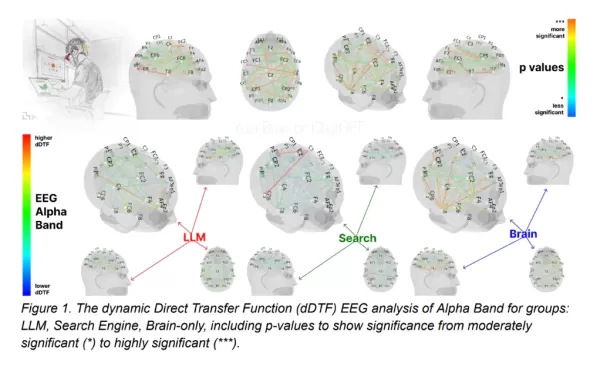
 Google Tests Remy AI Agent for Gemini as Focus Shifts to User Control
According to Business Insider, Google is testing Remy, a new AI personal agent for Gemini. This tool aims to execute tasks on behalf of users, streamlining both professional workflows and daily routines.Currently, Remy is undergoing testing in an int
Google Tests Remy AI Agent for Gemini as Focus Shifts to User Control
According to Business Insider, Google is testing Remy, a new AI personal agent for Gemini. This tool aims to execute tasks on behalf of users, streamlining both professional workflows and daily routines.Currently, Remy is undergoing testing in an int
 AI Visual Style Reference Tools for Character Sheets, Moodboards, and Pitch Decks
 11 tools
 xix.ai
SEO
xix.ai
SEO

 Comments (3)
0/500
Comments (3)
0/500








 Ollie bets privacy focus to win AI assistant race
To be genuinely helpful, an AI assistant must understand its user deeply. Ollie, a personal assistant designed for daily life, operates on the premise that this doesn’t require surrendering your data or compromising your privacy.While certain enterpr
Ollie bets privacy focus to win AI assistant race
To be genuinely helpful, an AI assistant must understand its user deeply. Ollie, a personal assistant designed for daily life, operates on the premise that this doesn’t require surrendering your data or compromising your privacy.While certain enterpr
 How AI LIVE: London Will Explore AI & Industrial Automation
The summit will convene C-suite executives from around the globe to address pressing challenges in global industries, ranging from AI-driven disruption to economic volatility.AI LIVE: The London Summit will gather over 2,000 international leaders und
How AI LIVE: London Will Explore AI & Industrial Automation
The summit will convene C-suite executives from around the globe to address pressing challenges in global industries, ranging from AI-driven disruption to economic volatility.AI LIVE: The London Summit will gather over 2,000 international leaders und