


 Home
What is Azure AI Vision for face detection and recognition in 2025? Complete analysis guide.
In today's tech landscape, artificial intelligence is reshaping industries, with facial recognition emerging as a prominent application. Microsoft Azure AI Vision delivers a robust set of tools for face detection, analysis, and recognition. This guide explores the features, advantages, and responsible implementation of Azure's face services, providing the knowledge to utilize this technology effectively.
Key Points
Grasp the core functionalities of the Azure AI Vision Face API.
Distinguish between general image analysis and specialized face analysis services.
Review practical applications for face detection, analysis, and recognition.
Appreciate the critical role of responsible AI principles.
Learn key factors for data privacy and security in facial recognition systems.
Understand Microsoft's Limited Access policy for specific facial capabilities.
Explore the parameters returned by Face Detection.
Implement face detection in applications using Azure AI Vision.
Understanding Azure AI Vision Face Services
Image Analysis vs. Face Service: Key Differences
Azure AI Vision provides both image analysis and dedicated face services, each serving different needs. Choosing the right tool depends on understanding their distinct purposes. Image analysis focuses on general object detection, such as identifying people in a scene, and typically provides basic location data like a bounding box.

Conversely, the Face Service delivers a more in-depth examination. It detects faces and then analyzes detailed attributes such as head pose, identification, facial landmarks, and recognition potential. This service offers a deeper layer of understanding that goes beyond simple location.
Before deploying facial services, it is essential to understand and adhere to responsible AI principles concerning data privacy, security, and fairness.
Options for Face Detection, Analysis, and Recognition
The face services in Azure AI Vision provide several options to meet diverse requirements.

Here is an overview:
- Face Detection: The fundamental capability that locates faces in an image, providing coordinates for a bounding box around each face.
- Comprehensive Facial Feature Analysis: Builds upon detection by examining various attributes, including:
- Head Pose: Estimates the head's orientation.
- Identification: Matches a detected face against a known database.
- Landmarks: Pinpoints key facial features such as the eyes, nose, and mouth.
- Recognition: Identifies the individual in the image.
- Attributes: Additional details like the presence of glasses or a mask.
- Face Comparison and Identification: This feature compares faces to determine if they belong to the same person, which is crucial for identity verification.
- Facial Recognition: Used to uniquely identify individuals from a database. This powerful capability requires registration and approval from Microsoft due to responsible AI considerations.
Responsible AI: Cons
iderations for Face Detection and Facial Recognition
Employing AI for facial analysis carries significant ethical responsibilities. Facial data is highly personal, and its misuse can lead to serious repercussions. Key considerations include:
- Data Privacy and Security: Systems must safeguard individual privacy.

Access to personally identifiable information must be strictly controlled.
- Transparency: Users should be clearly informed about how their images will be used and who can access the data.
- Fairness and Inclusiveness: Facial technology must not be applied in ways that are prejudicial or unfairly target individuals based on appearance.
- Limited Access Policy: Due to these sensitivities, facial recognition, identification, verification, and comparison features are governed by a Microsoft Limited Access policy. Using them requires an approved application that demonstrates a commitment to responsible AI.
- Request from Microsoft: You must submit a request; these advanced features are only available upon Microsoft's review and approval.
- Data Privacy: Any system handling facial data must be designed to protect individual privacy.
Adhering to these principles ensures the ethical and legal use of Azure's face services, protecting individual rights.
Features of the Face Service
The Capabilities of Azure AI Face Service
Azure AI's Face service, a key component of its Computer Vision suite, enables developers to integrate advanced facial analysis into applications.

This technology extends beyond basic detection, offering a suite of features for specific use cases. Core capabilities include:
- Face Detection: Accurately locating human faces within images or video streams.
- Face Attribute Analysis: Extracting detailed information such as estimated age, gender, emotional state, and accessories like glasses.
- Facial Landmark Location: Identifying the precise coordinates of key facial features, useful for alignment or augmented reality.
- Face Comparison: Assessing the similarity between two faces for identity verification and security.
- Facial Recognition and Identification: Matching detected faces to a database to enable personalized experiences or access control.
- Facial Liveness: Verifying that a detected face is from a live person to prevent spoofing.
Integrating Face Detection with Azure AI Vision
Making a Face Detection Request
Once you have access to the Face API, integrating detection into your applications is straightforward. The core process involves sending an image to the Face endpoint for analysis. Here is a simplified workflow:
- Use the Face Endpoint: Specify the 'Faces' feature in your API request.
Cons
truct the Request: The request body should contain the URL of the image to analyze.- Receive the Response: The API returns a JSON object with details for each detected face, including a unique ID and bounding rectangle.
A sample request format is:
{"url": "path-to-image"}
The API response provides a JSON output with face details:
{"faceId": "c5ca82-6845-4d31-9d78-df9175426","recognitionModel": "recognition_03","faceRectangle": {"width": 78,"height": 78,"left": 394,"top": 54},"faceLandmarks": {"pupilLeft": {"x": 412.7,"y": 78.4},"pupilRight": {"x": 446.8,"y": 74.2},}}
Notice the data points such as 'faceID', 'recognitionModel', 'faceRectangle', and 'faceLandmarks'.
The following table explains key parameters in the JSON output:
Parameter Description faceIdA unique identifier for the detected face.faceRectangleDimensions (width, height) and coordinates (left, top) of the rectangle bounding the face.faceLandmarksCoordinates of key facial landmarks, like pupils.recognitionModelThe AI model used for face recognition.Pricing
Pricing details
As specific pricing is not covered here, please refer to the official Azure website or the Azure pricing calculator for the most current and detailed cost information.
Pros and Cons of Azure AI Vision Face Service
Pros
In-Depth Facial Analysis: Provides detailed insights beyond mere detection.
Azure Ecosystem Integration: Works seamlessly with other Azure services and tools.
Scalability and Reliability: Leverages Azure's robust cloud infrastructure.
Responsible AI
Cons
iderations: Promotes the ethical and responsible use of facial recognition technology. Cons
Limited Access Policy: Certain advanced features require Microsoft approval.
Cost: Expenses can scale with transaction volume.
Complexity: Requires familiarity with AI concepts and Azure services.
Data Privacy Concerns: Demands diligent attention to privacy and security protocols.
Frequently Asked Questions about Azure AI Vision Face Detection
What is the difference between Image Analysis and Face Service in Azure AI Vision?
Image Analysis performs general object detection, offering basic location data for people. The Face Service provides comprehensive facial analysis, including attributes like head pose, landmarks, and recognition capabilities.
Why do I need approval from Microsoft to use facial recognition?
Facial recognition involves sensitive personal data, necessitating strict privacy and security measures. Microsoft's approval process helps ensure responsible AI usage and prevent potential misuse.
What are the key considerations for responsible AI when using facial recognition?
Key considerations include ensuring data privacy and security, maintaining transparency with users, upholding fairness and inclusiveness, and complying with Microsoft's Limited Access policy.
What kind of data does Face Attribute Analysis produce?
Face Attribute Analysis can generate data points such as Head Pose, Glasses, Exposure, Noise, and Occlusion.
Related Questions on Azure AI and Face Detection
What other AI services does Azure offer?
Azure provides a broad portfolio of AI services, including: Azure Machine Learning for developing and deploying ML models; Azure Cognitive Services with pre-built models for vision, speech, and language; Azure Bot Service for building intelligent bots; Azure Databricks for data science and analytics; and Azure AI Search for AI-enhanced search results. These services offer powerful tools for integrating AI across various applications.
Related article
 Marc Benioff-backed startup aims to solve AI deployment challenges
Big enterprises face such steep challenges in deploying reliable AI tools that entire teams of forward-deployed engineers—specialists embedded within client companies to operationalize AI systems—are emerging to bridge the gap.“Paradoxically, AI driv
AliVideo Unveils Wan3.0, Delivering Ultra-Long Video Generation and Multi-Dimensional Consistency
On August 24, Alibaba unveiled Wan3.0, its latest video generation large model. This release represents a major leap forward for Alibaba’s video technology, delivering significant improvements in duration, universal creation, reference handling, and
MiniMax Large Model Mispronounces Names - Xiyu Technology: Insufficient Training After Specific Tokens
MiniMax recently published a technical report detailing why its M2 series models struggled to accurately generate specific names like "Ma Jiaqi." This apparent error highlights a systemic flaw in current large language model training.Token Offset: Th
Related Special Topic Recommendations
Design & Art
 Top AI Illustration Tools: Create Editorial Scenes and Cover Art Faster
2026 Latest Top-rated AI Illustration Tools: Our curated list features the best powerfully designed tools for creating stunning editorial scenes and eye-catching cover art quickly. Each option has gone through rigorous real-world tests, offering a free vs paid comparison to help you find the perfect match for your workflow. Try these must-try solutions today to unlock your AI edge and boost your creative productivity. Explore now at XIX.AI.
 10 tools
 xix.ai
Education and Learning
Top AI Tutors for Exam Prep: Practice Math, Science, and English
2026 Latest Top-Rated Best AI Tutors for Exam Prep are here on XIX.AI! Our curated list features powerful game-changing tools that offer free vs paid comparison, real-world tests, and weekly updated rankings. They help boost your writing efficiency, simplify complex topic learning, and unlock your academic potential. Explore now to Discover your perfect exam prep tool and Start creating today to Unlock your AI edge!
10 tools
xix.ai
Finance
AI Budget Planning Tools for Personal Money Management
2026 Latest Best Top-Rated AI Budget Planning Tools for Personal Money Management are here on XIX.AI! This curated collection features powerful, game-changing solutions that help you conduct real-world tests, understand spending habits, and create personalized plans to boost productivity. Enjoy a free vs paid comparison along with detailed rankings. Must-try tools designed to simplify money management and unlock your AI edge. Explore now!
11 tools
xix.ai
Health & Wellness
AI Sleep Tracking Assistants: Improve Recovery with Better Bedtime Habits
2026 Latest Best Top-Rated AI Sleep Tracking Assistants curated for ultimate recovery. This fully updated weekly guide features powerful tools that deliver real-world tests, free vs paid comparison, and detailed rankings to help you find the must-try solution that boosts sleep quality and supports better bedtime habits. Explore now at XIX.AI to Unlock your AI edge.
10 tools
xix.ai
Data Analysis
AI SQL Copilots for Product and Revenue Analytics
2026 Latest Best Top-Rated AI SQL Copilots for Product and Revenue Analytics! XIX.AI has curated a powerful, game-changing collection of must-try tools that undergo real-world tests through weekly updated rankings. These tools help users boost productivity significantly by accelerating data analysis, streamlining complex queries, and generating accurate insights to drive smarter business decisions. Explore now to Discover your perfect tool for unlocking your AI edge!
14 tools
xix.ai
Education and Learning
Best AI Homework Helpers That Teach: Learn Concepts, Not Just Answers
2026 Latest Best Top-Rated AI Homework Helpers That Teach Core Concepts Not Just Answers Powerful Tools for Students Must-Try Curated List Weekly Updated Free vs Paid Comparison Real-World Tests Accurate Rankings to Help You Unlock Your Full Learning Potential Explore now to Discover your perfect tool for smarter studying.
10 tools
xix.ai

 Comments (4)
0/500
![PaulWilson]()
Interesting guide! But I'm still wondering how well Azure handles diverse skin tones and lighting conditions. Any real-world benchmarks? 🤔
![LawrenceNelson]()
Wait, facial recognition in 2025? I thought we were moving towards more privacy-conscious tech. But I guess Microsoft is doubling down. Is it really that accurate now? 🤔
![KevinPerez]()
Interesting read! I'm curious about the accuracy improvements in 2025 compared to current models. The ethical implications of widespread facial recognition still make me a bit uneasy though. 🤔
![JoeLee]()
¿Alguien más se siente un poco raro con lo precisa que se está volviendo la tecnología de reconocimiento facial? Este artículo sobre Azure AI Vision explica bien sus capacidades, pero no puedo evitar pensar en la privacidad. ¿Hasta dónde llegaremos con esto? 🤔
In today's tech landscape, artificial intelligence is reshaping industries, with facial recognition emerging as a prominent application. Microsoft Azure AI Vision delivers a robust set of tools for face detection, analysis, and recognition. This guide explores the features, advantages, and responsible implementation of Azure's face services, providing the knowledge to utilize this technology effectively.
Key Points
Grasp the core functionalities of the Azure AI Vision Face API.
Distinguish between general image analysis and specialized face analysis services.
Review practical applications for face detection, analysis, and recognition.
Appreciate the critical role of responsible AI principles.
Learn key factors for data privacy and security in facial recognition systems.
Understand Microsoft's Limited Access policy for specific facial capabilities.
Explore the parameters returned by Face Detection.
Implement face detection in applications using Azure AI Vision.
Understanding Azure AI Vision Face Services
Image Analysis vs. Face Service: Key Differences
Azure AI Vision provides both image analysis and dedicated face services, each serving different needs. Choosing the right tool depends on understanding their distinct purposes. Image analysis focuses on general object detection, such as identifying people in a scene, and typically provides basic location data like a bounding box.
Conversely, the Face Service delivers a more in-depth examination. It detects faces and then analyzes detailed attributes such as head pose, identification, facial landmarks, and recognition potential. This service offers a deeper layer of understanding that goes beyond simple location.
Before deploying facial services, it is essential to understand and adhere to responsible AI principles concerning data privacy, security, and fairness.
Options for Face Detection, Analysis, and Recognition
The face services in Azure AI Vision provide several options to meet diverse requirements.
Here is an overview:
- Face Detection: The fundamental capability that locates faces in an image, providing coordinates for a bounding box around each face.
- Comprehensive Facial Feature Analysis: Builds upon detection by examining various attributes, including:
- Head Pose: Estimates the head's orientation.
- Identification: Matches a detected face against a known database.
- Landmarks: Pinpoints key facial features such as the eyes, nose, and mouth.
- Recognition: Identifies the individual in the image.
- Attributes: Additional details like the presence of glasses or a mask.
- Face Comparison and Identification: This feature compares faces to determine if they belong to the same person, which is crucial for identity verification.
- Facial Recognition: Used to uniquely identify individuals from a database. This powerful capability requires registration and approval from Microsoft due to responsible AI considerations.
Responsible AI: Cons
iderations for Face Detection and Facial Recognition
Employing AI for facial analysis carries significant ethical responsibilities. Facial data is highly personal, and its misuse can lead to serious repercussions. Key considerations include:
- Data Privacy and Security: Systems must safeguard individual privacy.
Access to personally identifiable information must be strictly controlled.
- Transparency: Users should be clearly informed about how their images will be used and who can access the data.
- Fairness and Inclusiveness: Facial technology must not be applied in ways that are prejudicial or unfairly target individuals based on appearance.
- Limited Access Policy: Due to these sensitivities, facial recognition, identification, verification, and comparison features are governed by a Microsoft Limited Access policy. Using them requires an approved application that demonstrates a commitment to responsible AI.
- Request from Microsoft: You must submit a request; these advanced features are only available upon Microsoft's review and approval.
- Data Privacy: Any system handling facial data must be designed to protect individual privacy.
Adhering to these principles ensures the ethical and legal use of Azure's face services, protecting individual rights.
Features of the Face Service
The Capabilities of Azure AI Face Service
Azure AI's Face service, a key component of its Computer Vision suite, enables developers to integrate advanced facial analysis into applications.
This technology extends beyond basic detection, offering a suite of features for specific use cases. Core capabilities include:
- Face Detection: Accurately locating human faces within images or video streams.
- Face Attribute Analysis: Extracting detailed information such as estimated age, gender, emotional state, and accessories like glasses.
- Facial Landmark Location: Identifying the precise coordinates of key facial features, useful for alignment or augmented reality.
- Face Comparison: Assessing the similarity between two faces for identity verification and security.
- Facial Recognition and Identification: Matching detected faces to a database to enable personalized experiences or access control.
- Facial Liveness: Verifying that a detected face is from a live person to prevent spoofing.
Integrating Face Detection with Azure AI Vision
Making a Face Detection Request
Once you have access to the Face API, integrating detection into your applications is straightforward. The core process involves sending an image to the Face endpoint for analysis. Here is a simplified workflow:
- Use the Face Endpoint: Specify the 'Faces' feature in your API request.
Cons
truct the Request: The request body should contain the URL of the image to analyze.- Receive the Response: The API returns a JSON object with details for each detected face, including a unique ID and bounding rectangle.
A sample request format is:
{"url": "path-to-image"}
The API response provides a JSON output with face details:
{"faceId": "c5ca82-6845-4d31-9d78-df9175426","recognitionModel": "recognition_03","faceRectangle": {"width": 78,"height": 78,"left": 394,"top": 54},"faceLandmarks": {"pupilLeft": {"x": 412.7,"y": 78.4},"pupilRight": {"x": 446.8,"y": 74.2},}}
Notice the data points such as 'faceID', 'recognitionModel', 'faceRectangle', and 'faceLandmarks'.
The following table explains key parameters in the JSON output:
faceIdA unique identifier for the detected face.faceRectangleDimensions (width, height) and coordinates (left, top) of the rectangle bounding the face.faceLandmarksCoordinates of key facial landmarks, like pupils.recognitionModelThe AI model used for face recognition.Pricing
Pricing details
As specific pricing is not covered here, please refer to the official Azure website or the Azure pricing calculator for the most current and detailed cost information.
Pros and Cons of Azure AI Vision Face Service
Pros
In-Depth Facial Analysis: Provides detailed insights beyond mere detection.
Azure Ecosystem Integration: Works seamlessly with other Azure services and tools.
Scalability and Reliability: Leverages Azure's robust cloud infrastructure.
Responsible AI
Cons
iderations: Promotes the ethical and responsible use of facial recognition technology.Cons
Limited Access Policy: Certain advanced features require Microsoft approval.
Cost: Expenses can scale with transaction volume.
Complexity: Requires familiarity with AI concepts and Azure services.
Data Privacy Concerns: Demands diligent attention to privacy and security protocols.
Frequently Asked Questions about Azure AI Vision Face Detection
What is the difference between Image Analysis and Face Service in Azure AI Vision?
Image Analysis performs general object detection, offering basic location data for people. The Face Service provides comprehensive facial analysis, including attributes like head pose, landmarks, and recognition capabilities.
Why do I need approval from Microsoft to use facial recognition?
Facial recognition involves sensitive personal data, necessitating strict privacy and security measures. Microsoft's approval process helps ensure responsible AI usage and prevent potential misuse.
What are the key considerations for responsible AI when using facial recognition?
Key considerations include ensuring data privacy and security, maintaining transparency with users, upholding fairness and inclusiveness, and complying with Microsoft's Limited Access policy.
What kind of data does Face Attribute Analysis produce?
Face Attribute Analysis can generate data points such as Head Pose, Glasses, Exposure, Noise, and Occlusion.
Related Questions on Azure AI and Face Detection
What other AI services does Azure offer?
Azure provides a broad portfolio of AI services, including: Azure Machine Learning for developing and deploying ML models; Azure Cognitive Services with pre-built models for vision, speech, and language; Azure Bot Service for building intelligent bots; Azure Databricks for data science and analytics; and Azure AI Search for AI-enhanced search results. These services offer powerful tools for integrating AI across various applications.








 Marc Benioff-backed startup aims to solve AI deployment challenges
Big enterprises face such steep challenges in deploying reliable AI tools that entire teams of forward-deployed engineers—specialists embedded within client companies to operationalize AI systems—are emerging to bridge the gap.“Paradoxically, AI driv
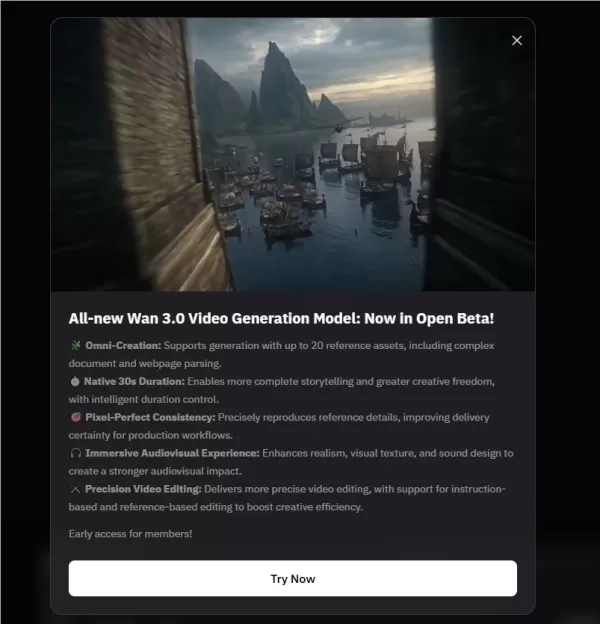 AliVideo Unveils Wan3.0, Delivering Ultra-Long Video Generation and Multi-Dimensional Consistency
On August 24, Alibaba unveiled Wan3.0, its latest video generation large model. This release represents a major leap forward for Alibaba’s video technology, delivering significant improvements in duration, universal creation, reference handling, and
 MiniMax Large Model Mispronounces Names - Xiyu Technology: Insufficient Training After Specific Tokens
MiniMax recently published a technical report detailing why its M2 series models struggled to accurately generate specific names like "Ma Jiaqi." This apparent error highlights a systemic flaw in current large language model training.Token Offset: Th

2026 Latest Top-rated AI Illustration Tools: Our curated list features the best powerfully designed tools for creating stunning editorial scenes and eye-catching cover art quickly. Each option has gone through rigorous real-world tests, offering a free vs paid comparison to help you find the perfect match for your workflow. Try these must-try solutions today to unlock your AI edge and boost your creative productivity. Explore now at XIX.AI.
10 tools
xix.ai

2026 Latest Top-Rated Best AI Tutors for Exam Prep are here on XIX.AI! Our curated list features powerful game-changing tools that offer free vs paid comparison, real-world tests, and weekly updated rankings. They help boost your writing efficiency, simplify complex topic learning, and unlock your academic potential. Explore now to Discover your perfect exam prep tool and Start creating today to Unlock your AI edge!
10 tools
xix.ai

2026 Latest Best Top-Rated AI Budget Planning Tools for Personal Money Management are here on XIX.AI! This curated collection features powerful, game-changing solutions that help you conduct real-world tests, understand spending habits, and create personalized plans to boost productivity. Enjoy a free vs paid comparison along with detailed rankings. Must-try tools designed to simplify money management and unlock your AI edge. Explore now!
11 tools
xix.ai

2026 Latest Best Top-Rated AI Sleep Tracking Assistants curated for ultimate recovery. This fully updated weekly guide features powerful tools that deliver real-world tests, free vs paid comparison, and detailed rankings to help you find the must-try solution that boosts sleep quality and supports better bedtime habits. Explore now at XIX.AI to Unlock your AI edge.
10 tools
xix.ai

2026 Latest Best Top-Rated AI SQL Copilots for Product and Revenue Analytics! XIX.AI has curated a powerful, game-changing collection of must-try tools that undergo real-world tests through weekly updated rankings. These tools help users boost productivity significantly by accelerating data analysis, streamlining complex queries, and generating accurate insights to drive smarter business decisions. Explore now to Discover your perfect tool for unlocking your AI edge!
14 tools
xix.ai

2026 Latest Best Top-Rated AI Homework Helpers That Teach Core Concepts Not Just Answers Powerful Tools for Students Must-Try Curated List Weekly Updated Free vs Paid Comparison Real-World Tests Accurate Rankings to Help You Unlock Your Full Learning Potential Explore now to Discover your perfect tool for smarter studying.
10 tools
xix.ai

Interesting guide! But I'm still wondering how well Azure handles diverse skin tones and lighting conditions. Any real-world benchmarks? 🤔
Wait, facial recognition in 2025? I thought we were moving towards more privacy-conscious tech. But I guess Microsoft is doubling down. Is it really that accurate now? 🤔
Interesting read! I'm curious about the accuracy improvements in 2025 compared to current models. The ethical implications of widespread facial recognition still make me a bit uneasy though. 🤔
¿Alguien más se siente un poco raro con lo precisa que se está volviendo la tecnología de reconocimiento facial? Este artículo sobre Azure AI Vision explica bien sus capacidades, pero no puedo evitar pensar en la privacidad. ¿Hasta dónde llegaremos con esto? 🤔












