


 Home
HomeAxiado AI Security Shields Data Centers Against Rising Cyber Threats
In an age marked by escalating cyber threats, protecting sensitive data within data centers has become a top priority. Traditional security methods, predominantly reliant on software, frequently prove inadequate against sophisticated hardware-level attacks. Axiado stands as an innovator, transforming data center security with its advanced AI-driven hardware solutions. This article explores Axiado's groundbreaking technology, highlighting its capacity to strengthen cybersecurity resilience by confronting threats directly at the hardware level. Discover how Axiado's Trusted Compute Unit (TCU) delivers strengthened security measures and reinforces data centers against evolving cyber risks, establishing a foundation for proactive defense and robust protection.
Key Points
Axiado delivers AI-powered hardware security solutions to protect data centers from cyber threats.
The Trusted Compute Unit (TCU) is a fundamental component within Axiado's security architecture.
Conventional software-centric security methods are often ineffective against advanced hardware attacks.
Axiado's solutions complement existing security measures, boosting the overall protection of data centers.
AI-driven anomaly detection facilitates proactive defense against newly emerging cyber threats.
The Evolving Cyber Threat Landscape and Data Center Security
Understanding the Challenges of Modern Cybersecurity
The digital era has seen a sharp rise in cyber threats, targeting diverse systems and infrastructures with growing sophistication. Data centers, which store immense volumes of sensitive information, are especially vulnerable.

Traditional cybersecurity measures, mainly software-based, often struggle to keep up with evolving attack methods. Attackers are now skilled at exploiting weaknesses at the hardware level, where software defenses have limited oversight. This demands a fundamental shift toward security solutions that can effectively neutralize threats at their source, guaranteeing strong protection for critical data and infrastructure.
The necessity for a comprehensive cybersecurity strategy: As cyber threats grow increasingly complex, a comprehensive approach to cybersecurity is essential. This involves not just securing the software layer but also hardening the underlying hardware. By integrating robust hardware security measures, organizations can build a multi-layered defense system that guards against a broader spectrum of threats.
The Limitations of Software-Based Security Solutions
Software-based security solutions are vital for defending systems from various cyber threats. However, these approaches have inherent limitations in countering hardware-level attacks. Software defenses typically function at a higher level of abstraction, lacking direct insight into the complex operations of the hardware. Malicious actors can capitalize on this gap by targeting vulnerabilities in firmware, boot sequences, or other low-level components, where software security is less effective.
The growing prominence of hardware-level attacks: The increasing frequency of hardware-level attacks underscores the need for security solutions that operate at this foundational level. By targeting hardware, attackers can gain unauthorized data access, manipulate system operations, or even fully compromise the infrastructure. Such attacks are particularly challenging to identify and counter using conventional software methods, posing a major concern for data center security.
Axiado: An AI-Powered Hardware Security Breakthrough
Introducing Axiado and Its Revolutionary Approach
Axiado is a leader in cybersecurity innovation, providing AI-powered hardware security solutions that redefine how data centers are safeguarded.

The company's core technology, the Trusted Compute Unit (TCU), establishes a solid foundation for defending against sophisticated hardware-level attacks. By embedding AI and machine learning algorithms directly into hardware, Axiado's solutions offer unmatched visibility and control over system behavior, enabling proactive threat detection and response.
A Meeting at Qualcomm and a Shared Vision: The origin of Axiado's breakthrough can be linked to a meeting at Qualcomm, where a disruptive networking concept was born. This idea was subsequently broadened to address critical challenges in data center security.
The Trusted Compute Unit (TCU): A Deep Dive
The Trusted Compute Unit (TCU) is the central element of Axiado's security architecture. Engineered to function at the hardware level, the TCU provides a secure, isolated environment for critical security operations. It incorporates multiple security features, including:
- Root of Trust: Creates a secure basis for system integrity by verifying the authenticity and integrity of firmware and boot processes.
- Hardware-Based Encryption: Facilitates secure data storage and transmission through hardware-accelerated encryption algorithms.
- AI-Driven Anomaly Detection: Utilizes AI and machine learning to identify unusual system behavior that may signal a cyberattack.

By continuously monitoring various hardware-level metrics, the TCU can spot deviations from normal operation and initiate appropriate security measures.
- Secure Boot: Guarantees that only authorized and trusted software is loaded during system startup, preventing the execution of malicious code.
How Axiado’s AI Enhances Data Center Security
Axiado's integration of AI and machine learning into its hardware security solutions provides significant advantages over traditional methods. AI-driven anomaly detection allows the TCU to identify and counter emerging cyber threats in real time. By analyzing a wide range of hardware-level metrics, the AI algorithms can detect subtle anomalies in system behavior that may indicate a potential attack.
AI as the Basis for Proactive Defense: The AI algorithms continuously learn and adapt to the evolving threat landscape, enabling proactive defense against zero-day exploits and other sophisticated attacks. This capability allows data centers to maintain an advantage over attackers, reducing the risk of data breaches and system compromises.
Weighing the Advantages and Disadvantages
Pros
Strengthened security posture through hardware-level protection
Proactive threat identification via AI-driven anomaly detection
Scalable and cost-efficient solutions suitable for various data center setups
Enhanced compliance with industry regulations and standards
Cons
Upfront investment required for new hardware security infrastructure
Potential challenges when integrating with legacy systems
Requirement for specialized skills to manage and maintain the AI algorithms
Real-World Applications and Use Cases
Securing Hyperscale Data Centers
Axiado's solutions are particularly effective for securing hyperscale data centers, which process enormous data volumes and are prime targets for sophisticated cyberattacks. By integrating Axiado's TCUs into servers and network infrastructure, hyperscale data centers can substantially improve their security posture and shield sensitive data from evolving cyber threats.
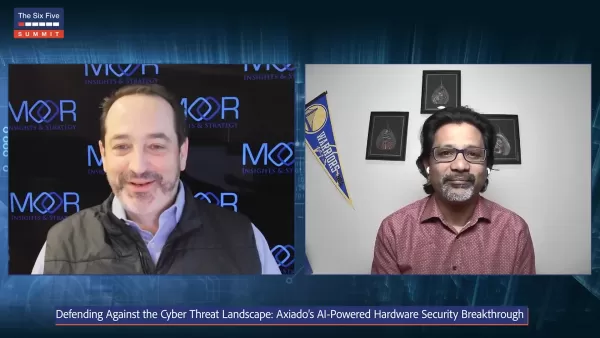
Single-Chip DCSCM: Axiado provides a single-chip Data Center Secure Control Module (DCSCM).
Protecting Enterprise Data Centers
Enterprise data centers also confront growing cyber threats, necessitating strong security measures to protect vital business data and applications. Axiado’s solutions offer a cost-effective and scalable method for enhancing security in enterprise environments. Deploying TCUs on critical servers and network devices allows organizations to gain superior visibility and control over their hardware infrastructure, facilitating proactive threat detection and mitigation.
Securing Edge Computing Environments
With the expansion of edge computing, data processing and storage are increasingly decentralized across various locations. This introduces new security challenges, as edge devices are often deployed in less secure environments. Axiado's solutions provide a secure and reliable method for protecting edge computing infrastructure. Integrating TCUs into edge devices helps organizations ensure the integrity and confidentiality of data processed and stored at the edge.
Frequently Asked Questions
What is Axiado's Trusted Compute Unit (TCU)?
The Trusted Compute Unit (TCU) is a core hardware security component within Axiado's platform. It acts as a secure, isolated environment integrating multiple security functions, including a root of trust, hardware-based encryption, AI-driven anomaly detection, and secure boot. The TCU enables proactive threat identification and strengthens the overall security stance of data centers.
How does Axiado's AI-powered hardware security differ from traditional software-based security?
Axiado's AI-powered hardware security differs from traditional software-based security in several key aspects:Hardware-Level Protection: Axiado's solutions operate at the hardware level, offering greater visibility and control over system behavior than software-based defenses.AI-Driven Anomaly Detection: Axiado uses AI and machine learning to detect and respond to emerging cyber threats in real time, enabling preemptive defense against zero-day exploits and other advanced attacks.Immutable Root of Trust: Axiado establishes a genuine, immutable root of trust, ensuring a secure foundation for system integrity and blocking unauthorized modifications.
What kind of threats can Axiado's security solutions protect against?
Axiado’s AI-powered hardware security solutions defend against a wide array of cyber threats, including:Hardware-Level Attacks: Protects against attacks targeting firmware, boot processes, or other low-level component vulnerabilities.Ransomware Attacks: Detects and mitigates ransomware by identifying abnormal encryption activities and preventing unauthorized data access.Data Breaches: Prevents data breaches by securing sensitive data both at rest and in transit using hardware-accelerated encryption.Insider Threats: Reduces insider threats by monitoring user activities and detecting anomalous behavior that may indicate malicious intent.
Understanding Core Elements of Today's Security Landscape
What are the components Axiado integrates to boost security?
Axiado integrates a Baseboard Management Controller (BMC), a Trusted Platform Module (TPM), a Root of Trust, and LAN on Motherboard or FPGA combinations to create a unified, single-chip platform security solution. These components enable hardware-level security, enhancing threat detection and mitigation capabilities beyond traditional software-based approaches. The company focuses on delivering a true, immutable root of trust and minimizing the platform's attack surface. Key elements employed for protection include: Root of Trust, TPM, BMC, and LAN on Motherboard or FPGA Combination.
Related article
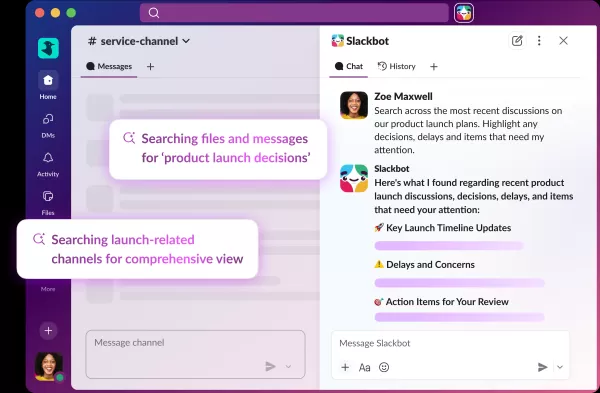
 Slackbot Becomes an AI Agent
Slackbot, the automated assistant embedded in Salesforce’s corporate messaging platform Slack, is evolving into an AI agent. Salesforce CTO Parker Harris envisions it achieving viral status comparable to OpenAI’s ChatGPT.The cloud software giant laun
ByteDance Boosts Core AI Incentives as Doubao Surges 14.6%
ByteDance recently convened a DouBao equity briefing to unveil fresh incentive policies for staff involved in the DouBao division. The strike price for DouBao shares has been lifted from $14.85 in June 2026 to $17.02, marking an approximate 14.6% inc
MiniMax Unveils 10x Team Program to Incentivize Global AI Experts
MiniMax (Xiyu Technology), the General Artificial Intelligence Lab, has officially launched "10x Team," a global talent collaboration initiative. This program aims to recruit top experts across industries to explore the deep application of large mode
Related Special Topic Recommendations
Education and Learning
Slackbot Becomes an AI Agent
Slackbot, the automated assistant embedded in Salesforce’s corporate messaging platform Slack, is evolving into an AI agent. Salesforce CTO Parker Harris envisions it achieving viral status comparable to OpenAI’s ChatGPT.The cloud software giant laun
ByteDance Boosts Core AI Incentives as Doubao Surges 14.6%
ByteDance recently convened a DouBao equity briefing to unveil fresh incentive policies for staff involved in the DouBao division. The strike price for DouBao shares has been lifted from $14.85 in June 2026 to $17.02, marking an approximate 14.6% inc
MiniMax Unveils 10x Team Program to Incentivize Global AI Experts
MiniMax (Xiyu Technology), the General Artificial Intelligence Lab, has officially launched "10x Team," a global talent collaboration initiative. This program aims to recruit top experts across industries to explore the deep application of large mode
Related Special Topic Recommendations
Education and Learning
 AI Study Tools for Homework and Exam Prep
2026 Latest Best AI Study Tools for Homework and Exam Prep! XIX.AI curates a top-rated list of powerful, game-changing tools that help students boost productivity, streamline homework completion, and ace exams through real-world tests. Get a free vs paid comparison, detailed rankings, and must-try options to unlock your AI edge. Explore now!
 10 tools
 xix.ai
Music composition
AI Vocal Demo Tools for Songwriters, Hooks, Toplines, and Multilingual Draft Sessions
xix.ai
Music composition
AI Vocal Demo Tools for Songwriters, Hooks, Toplines, and Multilingual Draft Sessions
2026 Latest Best AI Vocal Demo Tools for Songwriters, Hook Creators, and Multi-Language Content Teams! XIX.AI has curated a top-rated list of powerful game-changing tools that go through rigorous real-world tests. You’ll find detailed free vs paid comparison data, comprehensive rankings, and must-try options to help you boost writing efficiency and unlock your creative potential. Explore now to discover your perfect tool for all your content needs!
9 tools
xix.ai
Business
Best AI Competitive Research Tools for Small Businesses
2026 Latest Best Top-rated AI Competitive Research Tools for Small Businesses! XIX.AI has curated a highly powerful game-changing collection, updated weekly with rigorous real-world tests and detailed rankings. You can find a comprehensive free vs paid comparison to help you identify the must-try tools that boost your productivity and give you a competitive edge. Explore now to discover your perfect tool!
9 tools
xix.ai
Image editing
Photoshop AI Retouch Tools for Ecommerce Apparel, Skin Cleanup, and Color Consistency
2026 Latest Best Photoshop AI retouch tools for ecommerce apparel, skin cleanup, and color consistency! This top-rated curated list features powerful game-changing solutions that help you boost writing efficiency, streamline content creation, and achieve perfect visual results effortlessly. Each tool has undergone real-world tests through weekly updated rankings, complete with free vs paid comparison details. Backed by XIX.AI, it’s the must-try guide for anyone aiming to unlock your AI edge. Explore now!
10 tools
xix.ai
Prompt
Best AI Prompt Libraries for ChatGPT Workflows
2026 Latest Best Top-Rated AI Prompt Libraries for optimizing all types of ChatGPT workflows. XIX.AI has curated a powerful, game-changing collection that goes through rigorous real-world tests to ensure top performance. You can find detailed free vs paid comparisons and expert rankings to help you choose the must-try tools that boost your productivity and unlock your AI edge. Explore now!
11 tools
xix.ai
Education and Learning
AI Quiz Builder Platforms for Teachers, Tutors, and Cohort-Based Learning Programs
2026 Latest Best AI Quiz Builder Platforms for Teachers, Tutors, and Cohort-Based Learning Programs! XIX.AI has curated a top-rated list of powerful game-changing tools that go through real-world tests to deliver accurate rankings. These must-try platforms help boost writing efficiency, streamline content creation, and simplify quiz design across all learning scenarios. Explore now to discover your perfect tool for unlocking your AI edge in teaching!
13 tools
xix.ai

 Comments (0)
0/500
Comments (0)
0/500
In an age marked by escalating cyber threats, protecting sensitive data within data centers has become a top priority. Traditional security methods, predominantly reliant on software, frequently prove inadequate against sophisticated hardware-level attacks. Axiado stands as an innovator, transforming data center security with its advanced AI-driven hardware solutions. This article explores Axiado's groundbreaking technology, highlighting its capacity to strengthen cybersecurity resilience by confronting threats directly at the hardware level. Discover how Axiado's Trusted Compute Unit (TCU) delivers strengthened security measures and reinforces data centers against evolving cyber risks, establishing a foundation for proactive defense and robust protection.
Key Points
Axiado delivers AI-powered hardware security solutions to protect data centers from cyber threats.
The Trusted Compute Unit (TCU) is a fundamental component within Axiado's security architecture.
Conventional software-centric security methods are often ineffective against advanced hardware attacks.
Axiado's solutions complement existing security measures, boosting the overall protection of data centers.
AI-driven anomaly detection facilitates proactive defense against newly emerging cyber threats.
The Evolving Cyber Threat Landscape and Data Center Security
Understanding the Challenges of Modern Cybersecurity
The digital era has seen a sharp rise in cyber threats, targeting diverse systems and infrastructures with growing sophistication. Data centers, which store immense volumes of sensitive information, are especially vulnerable.
Traditional cybersecurity measures, mainly software-based, often struggle to keep up with evolving attack methods. Attackers are now skilled at exploiting weaknesses at the hardware level, where software defenses have limited oversight. This demands a fundamental shift toward security solutions that can effectively neutralize threats at their source, guaranteeing strong protection for critical data and infrastructure.
The necessity for a comprehensive cybersecurity strategy: As cyber threats grow increasingly complex, a comprehensive approach to cybersecurity is essential. This involves not just securing the software layer but also hardening the underlying hardware. By integrating robust hardware security measures, organizations can build a multi-layered defense system that guards against a broader spectrum of threats.
The Limitations of Software-Based Security Solutions
Software-based security solutions are vital for defending systems from various cyber threats. However, these approaches have inherent limitations in countering hardware-level attacks. Software defenses typically function at a higher level of abstraction, lacking direct insight into the complex operations of the hardware. Malicious actors can capitalize on this gap by targeting vulnerabilities in firmware, boot sequences, or other low-level components, where software security is less effective.
The growing prominence of hardware-level attacks: The increasing frequency of hardware-level attacks underscores the need for security solutions that operate at this foundational level. By targeting hardware, attackers can gain unauthorized data access, manipulate system operations, or even fully compromise the infrastructure. Such attacks are particularly challenging to identify and counter using conventional software methods, posing a major concern for data center security.
Axiado: An AI-Powered Hardware Security Breakthrough
Introducing Axiado and Its Revolutionary Approach
Axiado is a leader in cybersecurity innovation, providing AI-powered hardware security solutions that redefine how data centers are safeguarded.
The company's core technology, the Trusted Compute Unit (TCU), establishes a solid foundation for defending against sophisticated hardware-level attacks. By embedding AI and machine learning algorithms directly into hardware, Axiado's solutions offer unmatched visibility and control over system behavior, enabling proactive threat detection and response.
A Meeting at Qualcomm and a Shared Vision: The origin of Axiado's breakthrough can be linked to a meeting at Qualcomm, where a disruptive networking concept was born. This idea was subsequently broadened to address critical challenges in data center security.
The Trusted Compute Unit (TCU): A Deep Dive
The Trusted Compute Unit (TCU) is the central element of Axiado's security architecture. Engineered to function at the hardware level, the TCU provides a secure, isolated environment for critical security operations. It incorporates multiple security features, including:
- Root of Trust: Creates a secure basis for system integrity by verifying the authenticity and integrity of firmware and boot processes.
- Hardware-Based Encryption: Facilitates secure data storage and transmission through hardware-accelerated encryption algorithms.
- AI-Driven Anomaly Detection: Utilizes AI and machine learning to identify unusual system behavior that may signal a cyberattack.
By continuously monitoring various hardware-level metrics, the TCU can spot deviations from normal operation and initiate appropriate security measures.
- Secure Boot: Guarantees that only authorized and trusted software is loaded during system startup, preventing the execution of malicious code.
How Axiado’s AI Enhances Data Center Security
Axiado's integration of AI and machine learning into its hardware security solutions provides significant advantages over traditional methods. AI-driven anomaly detection allows the TCU to identify and counter emerging cyber threats in real time. By analyzing a wide range of hardware-level metrics, the AI algorithms can detect subtle anomalies in system behavior that may indicate a potential attack.
AI as the Basis for Proactive Defense: The AI algorithms continuously learn and adapt to the evolving threat landscape, enabling proactive defense against zero-day exploits and other sophisticated attacks. This capability allows data centers to maintain an advantage over attackers, reducing the risk of data breaches and system compromises.
Weighing the Advantages and Disadvantages
Pros
Strengthened security posture through hardware-level protection
Proactive threat identification via AI-driven anomaly detection
Scalable and cost-efficient solutions suitable for various data center setups
Enhanced compliance with industry regulations and standards
Cons
Upfront investment required for new hardware security infrastructure
Potential challenges when integrating with legacy systems
Requirement for specialized skills to manage and maintain the AI algorithms
Real-World Applications and Use Cases
Securing Hyperscale Data Centers
Axiado's solutions are particularly effective for securing hyperscale data centers, which process enormous data volumes and are prime targets for sophisticated cyberattacks. By integrating Axiado's TCUs into servers and network infrastructure, hyperscale data centers can substantially improve their security posture and shield sensitive data from evolving cyber threats.
Single-Chip DCSCM: Axiado provides a single-chip Data Center Secure Control Module (DCSCM).
Protecting Enterprise Data Centers
Enterprise data centers also confront growing cyber threats, necessitating strong security measures to protect vital business data and applications. Axiado’s solutions offer a cost-effective and scalable method for enhancing security in enterprise environments. Deploying TCUs on critical servers and network devices allows organizations to gain superior visibility and control over their hardware infrastructure, facilitating proactive threat detection and mitigation.
Securing Edge Computing Environments
With the expansion of edge computing, data processing and storage are increasingly decentralized across various locations. This introduces new security challenges, as edge devices are often deployed in less secure environments. Axiado's solutions provide a secure and reliable method for protecting edge computing infrastructure. Integrating TCUs into edge devices helps organizations ensure the integrity and confidentiality of data processed and stored at the edge.
Frequently Asked Questions
What is Axiado's Trusted Compute Unit (TCU)?
The Trusted Compute Unit (TCU) is a core hardware security component within Axiado's platform. It acts as a secure, isolated environment integrating multiple security functions, including a root of trust, hardware-based encryption, AI-driven anomaly detection, and secure boot. The TCU enables proactive threat identification and strengthens the overall security stance of data centers.
How does Axiado's AI-powered hardware security differ from traditional software-based security?
Axiado's AI-powered hardware security differs from traditional software-based security in several key aspects:Hardware-Level Protection: Axiado's solutions operate at the hardware level, offering greater visibility and control over system behavior than software-based defenses.AI-Driven Anomaly Detection: Axiado uses AI and machine learning to detect and respond to emerging cyber threats in real time, enabling preemptive defense against zero-day exploits and other advanced attacks.Immutable Root of Trust: Axiado establishes a genuine, immutable root of trust, ensuring a secure foundation for system integrity and blocking unauthorized modifications.
What kind of threats can Axiado's security solutions protect against?
Axiado’s AI-powered hardware security solutions defend against a wide array of cyber threats, including:Hardware-Level Attacks: Protects against attacks targeting firmware, boot processes, or other low-level component vulnerabilities.Ransomware Attacks: Detects and mitigates ransomware by identifying abnormal encryption activities and preventing unauthorized data access.Data Breaches: Prevents data breaches by securing sensitive data both at rest and in transit using hardware-accelerated encryption.Insider Threats: Reduces insider threats by monitoring user activities and detecting anomalous behavior that may indicate malicious intent.
Understanding Core Elements of Today's Security Landscape
What are the components Axiado integrates to boost security?
Axiado integrates a Baseboard Management Controller (BMC), a Trusted Platform Module (TPM), a Root of Trust, and LAN on Motherboard or FPGA combinations to create a unified, single-chip platform security solution. These components enable hardware-level security, enhancing threat detection and mitigation capabilities beyond traditional software-based approaches. The company focuses on delivering a true, immutable root of trust and minimizing the platform's attack surface. Key elements employed for protection include: Root of Trust, TPM, BMC, and LAN on Motherboard or FPGA Combination.








 Slackbot Becomes an AI Agent
Slackbot, the automated assistant embedded in Salesforce’s corporate messaging platform Slack, is evolving into an AI agent. Salesforce CTO Parker Harris envisions it achieving viral status comparable to OpenAI’s ChatGPT.The cloud software giant laun
Slackbot Becomes an AI Agent
Slackbot, the automated assistant embedded in Salesforce’s corporate messaging platform Slack, is evolving into an AI agent. Salesforce CTO Parker Harris envisions it achieving viral status comparable to OpenAI’s ChatGPT.The cloud software giant laun
 ByteDance Boosts Core AI Incentives as Doubao Surges 14.6%
ByteDance recently convened a DouBao equity briefing to unveil fresh incentive policies for staff involved in the DouBao division. The strike price for DouBao shares has been lifted from $14.85 in June 2026 to $17.02, marking an approximate 14.6% inc
ByteDance Boosts Core AI Incentives as Doubao Surges 14.6%
ByteDance recently convened a DouBao equity briefing to unveil fresh incentive policies for staff involved in the DouBao division. The strike price for DouBao shares has been lifted from $14.85 in June 2026 to $17.02, marking an approximate 14.6% inc
 MiniMax Unveils 10x Team Program to Incentivize Global AI Experts
MiniMax (Xiyu Technology), the General Artificial Intelligence Lab, has officially launched "10x Team," a global talent collaboration initiative. This program aims to recruit top experts across industries to explore the deep application of large mode
MiniMax Unveils 10x Team Program to Incentivize Global AI Experts
MiniMax (Xiyu Technology), the General Artificial Intelligence Lab, has officially launched "10x Team," a global talent collaboration initiative. This program aims to recruit top experts across industries to explore the deep application of large mode

2026 Latest Best AI Study Tools for Homework and Exam Prep! XIX.AI curates a top-rated list of powerful, game-changing tools that help students boost productivity, streamline homework completion, and ace exams through real-world tests. Get a free vs paid comparison, detailed rankings, and must-try options to unlock your AI edge. Explore now!
10 tools
xix.ai

2026 Latest Best AI Vocal Demo Tools for Songwriters, Hook Creators, and Multi-Language Content Teams! XIX.AI has curated a top-rated list of powerful game-changing tools that go through rigorous real-world tests. You’ll find detailed free vs paid comparison data, comprehensive rankings, and must-try options to help you boost writing efficiency and unlock your creative potential. Explore now to discover your perfect tool for all your content needs!
9 tools
xix.ai

2026 Latest Best Top-rated AI Competitive Research Tools for Small Businesses! XIX.AI has curated a highly powerful game-changing collection, updated weekly with rigorous real-world tests and detailed rankings. You can find a comprehensive free vs paid comparison to help you identify the must-try tools that boost your productivity and give you a competitive edge. Explore now to discover your perfect tool!
9 tools
xix.ai

2026 Latest Best Photoshop AI retouch tools for ecommerce apparel, skin cleanup, and color consistency! This top-rated curated list features powerful game-changing solutions that help you boost writing efficiency, streamline content creation, and achieve perfect visual results effortlessly. Each tool has undergone real-world tests through weekly updated rankings, complete with free vs paid comparison details. Backed by XIX.AI, it’s the must-try guide for anyone aiming to unlock your AI edge. Explore now!
10 tools
xix.ai
2026 Latest Best Top-Rated AI Prompt Libraries for optimizing all types of ChatGPT workflows. XIX.AI has curated a powerful, game-changing collection that goes through rigorous real-world tests to ensure top performance. You can find detailed free vs paid comparisons and expert rankings to help you choose the must-try tools that boost your productivity and unlock your AI edge. Explore now!
11 tools
xix.ai

2026 Latest Best AI Quiz Builder Platforms for Teachers, Tutors, and Cohort-Based Learning Programs! XIX.AI has curated a top-rated list of powerful game-changing tools that go through real-world tests to deliver accurate rankings. These must-try platforms help boost writing efficiency, streamline content creation, and simplify quiz design across all learning scenarios. Explore now to discover your perfect tool for unlocking your AI edge in teaching!
13 tools
xix.ai












