


 Home
HomeAnthropic debuts Claude Fable 5, a public version of Mythos
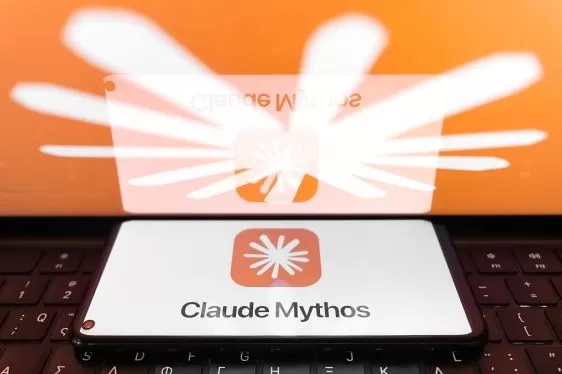
Anthropic is making its most powerful AI model available to the general public for the first time — but with safety measures in place.
On Tuesday, the company launched Claude Fable 5, the first public release of its Mythos model. According to Anthropic, Fable 5 performs well in software engineering, knowledge work, and vision tasks, but includes strict safety restrictions. In high-risk domains such as cybersecurity, biology, chemistry, and distillation, the model will refuse to answer and instead defer to Claude Opus 4.8.
Initially released as a preview in April, Mythos was only available to a small number of partners because of cybersecurity concerns. Last week, Anthropic extended access to hundreds of organizations in 15 countries, once again prioritizing those that manage critical infrastructure.
Now, a version of that technology is accessible to everyone via Anthropic's Claude API and consumption-based Enterprise plans. Subscription access will be rolled out in phases: until June 22, Fable 5 is included in Pro, Max, Team, and seat-based Enterprise plans at no additional charge. On June 23, Anthropic will remove Fable 5 from those plans, requiring usage credits thereafter, with the intention of reinstating it as a standard subscription feature as soon as possible.
Anthropic is also rolling out a new version of Mythos, named Mythos 5, to organizations already approved for access to the advanced model.
Fable's launch coincides with Anthropic's preparations to enter public markets, alongside OpenAI and Elon Musk's SpaceX. It also follows the company's call for major global AI labs to create a coordinated "brake pedal" for frontier AI development. Anthropic warned that AI systems are advancing so quickly that they may soon achieve recursive self-improvement (RSI), enabling them to autonomously improve without human input.
Concerned about what a Mythos-class model could do in the wrong hands, Anthropic says it stress-tested its classifiers using jailbreak attempts before releasing Fable 5.
“Internally, we ran an external bug bounty program that found no universal jailbreaks in over 1,000 hours of testing. We then worked with external red-teaming organizations, which also failed to identify any universal jailbreaks.”
That said, novel attacks are still possible. As a result, with the launch of Fable 5 and Mythos 5, Anthropic said it will require a 30-day retention period for all traffic, even if enterprises previously had zero-retention agreements. The company stated it will not use the data for training, only to “defend against complex and novel attacks, including new jailbreaks” and to “identify and reduce false positives.” This policy could set an industry precedent, where access to increasingly powerful models comes with mandatory data-retention policies framed as a safety measure.
For those continuing to use the model, not every question will receive a Fable 5 answer. Anthropic says the instances where Fable must defer to Opus 4.8 are rare, with early data showing that at least 95% of Fable sessions rely entirely on the model's own responses.
In third-party testing, analytics company Hex stated that Fable was the first to achieve a 90% score on its core analytics benchmark, which involves complex, long-running analytical tasks.
“On the hardest questions, it demonstrates strong judgment and attentiveness to nuance,” Hex said.
Vibe-coding platform Base44 noted in a statement that Fable is better at “one-shotting full apps” and has excellent tool-calling capabilities. AI-powered workspace and agent platform Genspark said Fable outperformed every other model in its evaluations and performed significantly better on tasks such as UI design and game coding.
Pricing for both Fable 5 and Mythos 5 is set at $10 per million input tokens and $50 per million output tokens, double the cost of Opus 4.8. That price alone may discourage widespread adoption.
Many enterprises are becoming increasingly critical of AI costs after seeing their bills or exhausting their annual AI budgets early. Advanced models like Opus 4.8 can worsen these issues, as their sophisticated reasoning capabilities can break a single request into multiple tasks.
Anthropic said it expects demand for Fable 5 to be very high and hard to predict. Indeed, some companies, such as shopping rewards platform Rakuten, may consider the benefits worth the cost.
“At the highest effort level, Fable reflects on and validates its own work,” Rakuten said in a statement. “For us, that’s what makes highly autonomous operations possible — the extra thinking pays for itself.”
Related article
 Anthropic Enters AI Legal Tech Market as Competition Intensifies
Anthropic unveiled a suite of new chatbot capabilities on Tuesday, aimed at delivering automated support to legal practices. These enhancements expand upon Claude for Legal, the firm-specific platform introduced earlier this year, by adding specializ
OpenAI Closes Gap With Anthropic Among Business Users, New Data Shows
With OpenAI and Anthropic still distant from their anticipated IPOs and the release of detailed financial reports, we must turn to alternative indicators to gauge their business performance. Ramp, a corporate credit card and expense management platfo
Anthropic launches Opus 4.8 featuring new dynamic workflow tool
Anthropic unveiled Opus 4.8 on Thursday, marking the latest iteration of its premier public model. Priced identically to its predecessor, this update is now accessible across all platforms.Releasing just 41 days after Opus 4.7, Anthropic has accelera
Related Special Topic Recommendations
writing
Anthropic Enters AI Legal Tech Market as Competition Intensifies
Anthropic unveiled a suite of new chatbot capabilities on Tuesday, aimed at delivering automated support to legal practices. These enhancements expand upon Claude for Legal, the firm-specific platform introduced earlier this year, by adding specializ
OpenAI Closes Gap With Anthropic Among Business Users, New Data Shows
With OpenAI and Anthropic still distant from their anticipated IPOs and the release of detailed financial reports, we must turn to alternative indicators to gauge their business performance. Ramp, a corporate credit card and expense management platfo
Anthropic launches Opus 4.8 featuring new dynamic workflow tool
Anthropic unveiled Opus 4.8 on Thursday, marking the latest iteration of its premier public model. Priced identically to its predecessor, this update is now accessible across all platforms.Releasing just 41 days after Opus 4.7, Anthropic has accelera
Related Special Topic Recommendations
writing
 Best AI Outline Generators for Long-Form SEO Articles
2026 Latest Best Top-Rated AI Outline Generators for Long-Form SEO Articles, meticulously curated by XIX.AI. These powerful tools offer game-changing assistance in creating high-quality content quickly, boosting writing efficiency significantly. Get a free vs paid comparison along with real-world tests and detailed rankings to help you find the must-try option that suits your needs. Explore now to unlock your AI edge.
 8 tools
 xix.ai
Education and Learning
AI Study Tools for Homework and Exam Prep
xix.ai
Education and Learning
AI Study Tools for Homework and Exam Prep
2026 Latest Best AI Study Tools for Homework and Exam Prep! XIX.AI curates a top-rated list of powerful, game-changing tools that help students boost productivity, streamline homework completion, and ace exams through real-world tests. Get a free vs paid comparison, detailed rankings, and must-try options to unlock your AI edge. Explore now!
10 tools
xix.ai
Music composition
AI Vocal Demo Tools for Songwriters, Hooks, Toplines, and Multilingual Draft Sessions
2026 Latest Best AI Vocal Demo Tools for Songwriters, Hook Creators, and Multi-Language Content Teams! XIX.AI has curated a top-rated list of powerful game-changing tools that go through rigorous real-world tests. You’ll find detailed free vs paid comparison data, comprehensive rankings, and must-try options to help you boost writing efficiency and unlock your creative potential. Explore now to discover your perfect tool for all your content needs!
9 tools
xix.ai
Business
Best AI Competitive Research Tools for Small Businesses
2026 Latest Best Top-rated AI Competitive Research Tools for Small Businesses! XIX.AI has curated a highly powerful game-changing collection, updated weekly with rigorous real-world tests and detailed rankings. You can find a comprehensive free vs paid comparison to help you identify the must-try tools that boost your productivity and give you a competitive edge. Explore now to discover your perfect tool!
9 tools
xix.ai
Image editing
Photoshop AI Retouch Tools for Ecommerce Apparel, Skin Cleanup, and Color Consistency
2026 Latest Best Photoshop AI retouch tools for ecommerce apparel, skin cleanup, and color consistency! This top-rated curated list features powerful game-changing solutions that help you boost writing efficiency, streamline content creation, and achieve perfect visual results effortlessly. Each tool has undergone real-world tests through weekly updated rankings, complete with free vs paid comparison details. Backed by XIX.AI, it’s the must-try guide for anyone aiming to unlock your AI edge. Explore now!
10 tools
xix.ai
Prompt
Best AI Prompt Libraries for ChatGPT Workflows
2026 Latest Best Top-Rated AI Prompt Libraries for optimizing all types of ChatGPT workflows. XIX.AI has curated a powerful, game-changing collection that goes through rigorous real-world tests to ensure top performance. You can find detailed free vs paid comparisons and expert rankings to help you choose the must-try tools that boost your productivity and unlock your AI edge. Explore now!
11 tools
xix.ai

 Comments (0)
0/500
Comments (0)
0/500
Anthropic is making its most powerful AI model available to the general public for the first time — but with safety measures in place.
On Tuesday, the company launched Claude Fable 5, the first public release of its Mythos model. According to Anthropic, Fable 5 performs well in software engineering, knowledge work, and vision tasks, but includes strict safety restrictions. In high-risk domains such as cybersecurity, biology, chemistry, and distillation, the model will refuse to answer and instead defer to Claude Opus 4.8.
Initially released as a preview in April, Mythos was only available to a small number of partners because of cybersecurity concerns. Last week, Anthropic extended access to hundreds of organizations in 15 countries, once again prioritizing those that manage critical infrastructure.
Now, a version of that technology is accessible to everyone via Anthropic's Claude API and consumption-based Enterprise plans. Subscription access will be rolled out in phases: until June 22, Fable 5 is included in Pro, Max, Team, and seat-based Enterprise plans at no additional charge. On June 23, Anthropic will remove Fable 5 from those plans, requiring usage credits thereafter, with the intention of reinstating it as a standard subscription feature as soon as possible.
Anthropic is also rolling out a new version of Mythos, named Mythos 5, to organizations already approved for access to the advanced model.
Fable's launch coincides with Anthropic's preparations to enter public markets, alongside OpenAI and Elon Musk's SpaceX. It also follows the company's call for major global AI labs to create a coordinated "brake pedal" for frontier AI development. Anthropic warned that AI systems are advancing so quickly that they may soon achieve recursive self-improvement (RSI), enabling them to autonomously improve without human input.
Concerned about what a Mythos-class model could do in the wrong hands, Anthropic says it stress-tested its classifiers using jailbreak attempts before releasing Fable 5.
“Internally, we ran an external bug bounty program that found no universal jailbreaks in over 1,000 hours of testing. We then worked with external red-teaming organizations, which also failed to identify any universal jailbreaks.”
That said, novel attacks are still possible. As a result, with the launch of Fable 5 and Mythos 5, Anthropic said it will require a 30-day retention period for all traffic, even if enterprises previously had zero-retention agreements. The company stated it will not use the data for training, only to “defend against complex and novel attacks, including new jailbreaks” and to “identify and reduce false positives.” This policy could set an industry precedent, where access to increasingly powerful models comes with mandatory data-retention policies framed as a safety measure.
For those continuing to use the model, not every question will receive a Fable 5 answer. Anthropic says the instances where Fable must defer to Opus 4.8 are rare, with early data showing that at least 95% of Fable sessions rely entirely on the model's own responses.
In third-party testing, analytics company Hex stated that Fable was the first to achieve a 90% score on its core analytics benchmark, which involves complex, long-running analytical tasks.
“On the hardest questions, it demonstrates strong judgment and attentiveness to nuance,” Hex said.
Vibe-coding platform Base44 noted in a statement that Fable is better at “one-shotting full apps” and has excellent tool-calling capabilities. AI-powered workspace and agent platform Genspark said Fable outperformed every other model in its evaluations and performed significantly better on tasks such as UI design and game coding.
Pricing for both Fable 5 and Mythos 5 is set at $10 per million input tokens and $50 per million output tokens, double the cost of Opus 4.8. That price alone may discourage widespread adoption.
Many enterprises are becoming increasingly critical of AI costs after seeing their bills or exhausting their annual AI budgets early. Advanced models like Opus 4.8 can worsen these issues, as their sophisticated reasoning capabilities can break a single request into multiple tasks.
Anthropic said it expects demand for Fable 5 to be very high and hard to predict. Indeed, some companies, such as shopping rewards platform Rakuten, may consider the benefits worth the cost.
“At the highest effort level, Fable reflects on and validates its own work,” Rakuten said in a statement. “For us, that’s what makes highly autonomous operations possible — the extra thinking pays for itself.”








 Anthropic Enters AI Legal Tech Market as Competition Intensifies
Anthropic unveiled a suite of new chatbot capabilities on Tuesday, aimed at delivering automated support to legal practices. These enhancements expand upon Claude for Legal, the firm-specific platform introduced earlier this year, by adding specializ
Anthropic Enters AI Legal Tech Market as Competition Intensifies
Anthropic unveiled a suite of new chatbot capabilities on Tuesday, aimed at delivering automated support to legal practices. These enhancements expand upon Claude for Legal, the firm-specific platform introduced earlier this year, by adding specializ
 OpenAI Closes Gap With Anthropic Among Business Users, New Data Shows
With OpenAI and Anthropic still distant from their anticipated IPOs and the release of detailed financial reports, we must turn to alternative indicators to gauge their business performance. Ramp, a corporate credit card and expense management platfo
OpenAI Closes Gap With Anthropic Among Business Users, New Data Shows
With OpenAI and Anthropic still distant from their anticipated IPOs and the release of detailed financial reports, we must turn to alternative indicators to gauge their business performance. Ramp, a corporate credit card and expense management platfo
 Anthropic launches Opus 4.8 featuring new dynamic workflow tool
Anthropic unveiled Opus 4.8 on Thursday, marking the latest iteration of its premier public model. Priced identically to its predecessor, this update is now accessible across all platforms.Releasing just 41 days after Opus 4.7, Anthropic has accelera
Anthropic launches Opus 4.8 featuring new dynamic workflow tool
Anthropic unveiled Opus 4.8 on Thursday, marking the latest iteration of its premier public model. Priced identically to its predecessor, this update is now accessible across all platforms.Releasing just 41 days after Opus 4.7, Anthropic has accelera

2026 Latest Best Top-Rated AI Outline Generators for Long-Form SEO Articles, meticulously curated by XIX.AI. These powerful tools offer game-changing assistance in creating high-quality content quickly, boosting writing efficiency significantly. Get a free vs paid comparison along with real-world tests and detailed rankings to help you find the must-try option that suits your needs. Explore now to unlock your AI edge.
8 tools
xix.ai

2026 Latest Best AI Study Tools for Homework and Exam Prep! XIX.AI curates a top-rated list of powerful, game-changing tools that help students boost productivity, streamline homework completion, and ace exams through real-world tests. Get a free vs paid comparison, detailed rankings, and must-try options to unlock your AI edge. Explore now!
10 tools
xix.ai

2026 Latest Best AI Vocal Demo Tools for Songwriters, Hook Creators, and Multi-Language Content Teams! XIX.AI has curated a top-rated list of powerful game-changing tools that go through rigorous real-world tests. You’ll find detailed free vs paid comparison data, comprehensive rankings, and must-try options to help you boost writing efficiency and unlock your creative potential. Explore now to discover your perfect tool for all your content needs!
9 tools
xix.ai

2026 Latest Best Top-rated AI Competitive Research Tools for Small Businesses! XIX.AI has curated a highly powerful game-changing collection, updated weekly with rigorous real-world tests and detailed rankings. You can find a comprehensive free vs paid comparison to help you identify the must-try tools that boost your productivity and give you a competitive edge. Explore now to discover your perfect tool!
9 tools
xix.ai

2026 Latest Best Photoshop AI retouch tools for ecommerce apparel, skin cleanup, and color consistency! This top-rated curated list features powerful game-changing solutions that help you boost writing efficiency, streamline content creation, and achieve perfect visual results effortlessly. Each tool has undergone real-world tests through weekly updated rankings, complete with free vs paid comparison details. Backed by XIX.AI, it’s the must-try guide for anyone aiming to unlock your AI edge. Explore now!
10 tools
xix.ai

2026 Latest Best Top-Rated AI Prompt Libraries for optimizing all types of ChatGPT workflows. XIX.AI has curated a powerful, game-changing collection that goes through rigorous real-world tests to ensure top performance. You can find detailed free vs paid comparisons and expert rankings to help you choose the must-try tools that boost your productivity and unlock your AI edge. Explore now!
11 tools
xix.ai












