


 Home
HomeAI's Potential to Replace Software Engineers: Opinions Vary

AI's Rising Role in Software Engineering: A New Frontier
Artificial Intelligence (AI) is on the cusp of transforming the role of software engineers, according to industry experts. Sarah Friar, Chief Financial Officer at OpenAI, highlighted this shift at a recent Goldman Sachs conference, introducing OpenAI's forthcoming AI agent, A-SWE (Agentic Software Engineer). This AI isn't merely assisting current software engineers; it's poised to act as a standalone software engineer capable of building entire apps. "A-SWE can take a pull request and go build it," Friar explained, emphasizing that the AI also handles tasks like quality assurance, bug testing, and documentation—tasks traditionally less favored by human engineers. This capability suggests a significant force multiplication of software engineering efforts.
Should Software Engineers Be Worried?
The emergence of tools like A-SWE has sparked a wide range of reactions among industry observers. From cautious pessimism to pragmatic outlooks, opinions vary. Andy Thurai, a technology strategist and former analyst, expressed a stark view, stating that software professionals should be "terrified." He believes that only the most skilled will survive in this new landscape, predicting a decline in hiring for less proficient developers.
Lori Schafer, CEO at Digital Wave, sees AI as redefining software development. She predicts that within the next five years, IT organizations will shift from large teams of coders to smaller, more strategic teams of architects who oversee AI-generated programs. This evolution suggests that software developers will transition from writing code to editing and reviewing AI-generated work, marking a significant change in their roles.
The Limitations and Complementarity of AI in Software Development
Despite the potential of AI like A-SWE, some experts argue that it cannot fully replace human software engineers. Neil Sahota, CEO at ACSILabs and AI advisor to the United Nations, acknowledges the advancement but points out that AI lacks the understanding of the 'why' behind the code. AI can mimic logic but struggles with context, business nuances, and handling edge cases crucial for real-world applications.
Cassie Kozyrkov, CEO of Kozyr and former chief decision scientist at Google, emphasized the continued need for human engineers in critical sectors like security, finance, healthcare, and compliance. John Callery-Coyne, co-founder and chief product and technology officer at ReflexAI, added that effective software development requires deep collaboration with various stakeholders, a nuance AI cannot fully replicate.
AI as a Tool for Efficiency
Thurai notes that AI has been most successful in assisting programmers, particularly in reducing coding time for junior to mid-senior level developers. He highlights its utility in emergency situations where developers need to quickly roll out fixes. However, he warns that deploying AI-generated code without thorough review could lead to increased technical debt over time.
Evolving Roles for Software Professionals
As AI reshapes the software engineering landscape, professionals may find themselves in new roles. Kozyrkov suggests that instead of writing code, engineers might spend more time explaining and reviewing AI-generated code. This shift could be less fulfilling for those who enjoy coding but necessary for maintaining system integrity. She warns that without careful management, the industry risks replacing builders with babysitters, underscoring the importance of human oversight in AI-driven development.
The integration of AI into software engineering presents both opportunities and challenges. While it promises increased efficiency and productivity, it also demands a reevaluation of roles and responsibilities within the industry. As we navigate this new frontier, the focus must remain on leveraging AI as a tool to enhance, rather than replace, the human element in software development.
Related article
 How Unitree is Shaping the Future of Humanoid Robotics
Unitree’s New Creature of Embodied AI with ultra-wide 4D LiDAR technology for advanced real-world navigation. Credit: UnitreeWang Xingxing, CEO of Unitree, targets world model breakthroughs to help humanoid machines execute 80% of tasks when placed i
Why Abnormal AI Partnered With OpenAI on Daybreak
Michael Aiello, Head of Product for Cyber at OpenAI | Credit: Michael Aiello/LinkedInAbnormal AI joins OpenAI’s Daybreak programme, as Mike Aiello says the partnership will accelerate the adoption of practical defences for enterprisesLeading frontier
LFM2.5 DSpark Draft Model Released: Inference Speed Boosted 3.18x
Liquid AI and Hugging Face have officially released the DSpark draft model checkpoints for the LFM2.5 series, covering LFM2.5-1.2B-Instruct, LFM2.5-2.6B, and LFM2.5-8B-A1B. This innovation introduces a novel speculative decoding path that significant
Related Special Topic Recommendations
Health & Wellness
How Unitree is Shaping the Future of Humanoid Robotics
Unitree’s New Creature of Embodied AI with ultra-wide 4D LiDAR technology for advanced real-world navigation. Credit: UnitreeWang Xingxing, CEO of Unitree, targets world model breakthroughs to help humanoid machines execute 80% of tasks when placed i
Why Abnormal AI Partnered With OpenAI on Daybreak
Michael Aiello, Head of Product for Cyber at OpenAI | Credit: Michael Aiello/LinkedInAbnormal AI joins OpenAI’s Daybreak programme, as Mike Aiello says the partnership will accelerate the adoption of practical defences for enterprisesLeading frontier
LFM2.5 DSpark Draft Model Released: Inference Speed Boosted 3.18x
Liquid AI and Hugging Face have officially released the DSpark draft model checkpoints for the LFM2.5 series, covering LFM2.5-1.2B-Instruct, LFM2.5-2.6B, and LFM2.5-8B-A1B. This innovation introduces a novel speculative decoding path that significant
Related Special Topic Recommendations
Health & Wellness
 Best AI Sleep Coaching Tools for Shift Workers, Jet Lag Recovery, and Better Routines
2026 Latest Best AI Sleep Coaching Tools for Shift Workers, Jet Lag Recovery, and Better Routines! XIX.AI has curated a top-rated list of powerful game-changing tools that go through real-world tests to deliver accurate guidance. You can find detailed free vs paid comparison info and see how these must-try solutions help boost sleep quality, speed up jet lag recovery, and build healthier routines. Explore now to discover your perfect tool!
 7 tools
 xix.ai
code
ChatGPT Debugging Tools for Python Errors, API Logs, and Stack Trace Triage
xix.ai
code
ChatGPT Debugging Tools for Python Errors, API Logs, and Stack Trace Triage
2026 Latest Best ChatGPT debugging tools for Python errors, API logs, and stack trace triage are here on XIX.AI. This curated list of top-rated solutions offers a free vs paid comparison, real-world tests, and detailed rankings to help you find the most powerful tool that can significantly boost your productivity and help you solve complex technical issues faster. Explore now to discover your perfect solution!
9 tools
xix.ai
Text-to-speech
AI Voiceover Tools for Product Demo Videos
2026 Latest Best Top-Rated AI Voiceover Tools for Product Demo Videos are here on XIX.AI! This curated list features powerful, game-changing options that help you create professional-quality audio content fast, boosting your demo efficiency significantly. We conduct real-world tests and provide a free vs paid comparison along with weekly updated rankings to help you find the perfect fit. Explore now to Unlock your AI edge!
10 tools
xix.ai
Business
AI Business Plan Tools for Startup Validation
2026 Latest Best AI Business Plan Tools for Startup Validation! XIX.AI has curated a top-rated list of powerful game-changing tools that go through real-world tests to deliver accurate results. You’ll find a free vs paid comparison, detailed rankings, and easy-to-understand insights to help you choose the perfect solution and boost your startup’s success rate. Explore now to Unlock your AI edge!
9 tools
xix.ai
chatbot
AI Chat Apps for Roleplay and Conversation Practice
2026 Latest Best AI Chat Apps for Roleplay and Conversation Practice! XIX.AI curates a top-rated list of powerful must-try tools that go through rigorous real-world tests to deliver exceptional results. You’ll find detailed free vs paid comparison, comprehensive rankings, and insights into how these apps can boost your language skills and communication confidence effectively. Explore now to discover your perfect tool for practice!
10 tools
xix.ai
design
Best AI Wireframe Tools for Product Teams
2026 Latest Best Top-rated AI Wireframe Tools for Product Teams! This curated list showcases powerful, game-changing solutions that significantly boost productivity through real-world tests and rigorous rankings. It includes a detailed free vs paid comparison to help you find the perfect fit. XIX.AI provides expert insights to guide your decision. Explore now to Discover your perfect tool and Unlock your AI edge in product development!
8 tools
xix.ai

 Comments (8)
0/500
Comments (8)
0/500
![RalphMitchell]()
讀了這篇,感覺好矛盾啊。技術一直進步當然好,但想到未來連工程師這麼專業的工作都可能被取代,心裡就發毛😅 會不會以後寫程式的只剩AI,人類都去改行賣咖啡了?但AI真的能理解那些複雜的需求嗎?我表示懷疑。
![DouglasMitchell]()
¿Los ingenieros de software serán reemplazados por IA? 🧐 Me preocupa que esto acelere la brecha salarial en tech. Por otro lado, ¡quizá podamos enfocarnos en tareas más creativas! #MixtoFeelings
![TimothyHernández]()
AI replacing coders? Wild! I love how it’s shaking things up, but I’m curious if it’ll ever match the creativity of a human debugging at 3 AM. 😅 What do you all think—threat or tool?
![TerryGonzalez]()
AI要取代程序员?有点夸张吧!😅 不过感觉技术发展太快了,未来可能真得重新学点新技能,不然跟不上啊!
![CharlesRoberts]()
L’IA qui remplace les ingénieurs logiciels, c’est fascinant ! 😊 Mais franchement, est-ce qu’on perdra le côté humain du code ? J’ai des doutes…
![ArthurJackson]()
ИИ заменит программистов? Серьезно? 🤯 Это круто, но я волнуюсь за этику — как ИИ будет принимать сложные решения без человеческого взгляда?
AI's Rising Role in Software Engineering: A New Frontier
Artificial Intelligence (AI) is on the cusp of transforming the role of software engineers, according to industry experts. Sarah Friar, Chief Financial Officer at OpenAI, highlighted this shift at a recent Goldman Sachs conference, introducing OpenAI's forthcoming AI agent, A-SWE (Agentic Software Engineer). This AI isn't merely assisting current software engineers; it's poised to act as a standalone software engineer capable of building entire apps. "A-SWE can take a pull request and go build it," Friar explained, emphasizing that the AI also handles tasks like quality assurance, bug testing, and documentation—tasks traditionally less favored by human engineers. This capability suggests a significant force multiplication of software engineering efforts.
Should Software Engineers Be Worried?
The emergence of tools like A-SWE has sparked a wide range of reactions among industry observers. From cautious pessimism to pragmatic outlooks, opinions vary. Andy Thurai, a technology strategist and former analyst, expressed a stark view, stating that software professionals should be "terrified." He believes that only the most skilled will survive in this new landscape, predicting a decline in hiring for less proficient developers.
Lori Schafer, CEO at Digital Wave, sees AI as redefining software development. She predicts that within the next five years, IT organizations will shift from large teams of coders to smaller, more strategic teams of architects who oversee AI-generated programs. This evolution suggests that software developers will transition from writing code to editing and reviewing AI-generated work, marking a significant change in their roles.
The Limitations and Complementarity of AI in Software Development
Despite the potential of AI like A-SWE, some experts argue that it cannot fully replace human software engineers. Neil Sahota, CEO at ACSILabs and AI advisor to the United Nations, acknowledges the advancement but points out that AI lacks the understanding of the 'why' behind the code. AI can mimic logic but struggles with context, business nuances, and handling edge cases crucial for real-world applications.
Cassie Kozyrkov, CEO of Kozyr and former chief decision scientist at Google, emphasized the continued need for human engineers in critical sectors like security, finance, healthcare, and compliance. John Callery-Coyne, co-founder and chief product and technology officer at ReflexAI, added that effective software development requires deep collaboration with various stakeholders, a nuance AI cannot fully replicate.
AI as a Tool for Efficiency
Thurai notes that AI has been most successful in assisting programmers, particularly in reducing coding time for junior to mid-senior level developers. He highlights its utility in emergency situations where developers need to quickly roll out fixes. However, he warns that deploying AI-generated code without thorough review could lead to increased technical debt over time.
Evolving Roles for Software Professionals
As AI reshapes the software engineering landscape, professionals may find themselves in new roles. Kozyrkov suggests that instead of writing code, engineers might spend more time explaining and reviewing AI-generated code. This shift could be less fulfilling for those who enjoy coding but necessary for maintaining system integrity. She warns that without careful management, the industry risks replacing builders with babysitters, underscoring the importance of human oversight in AI-driven development.
The integration of AI into software engineering presents both opportunities and challenges. While it promises increased efficiency and productivity, it also demands a reevaluation of roles and responsibilities within the industry. As we navigate this new frontier, the focus must remain on leveraging AI as a tool to enhance, rather than replace, the human element in software development.








 How Unitree is Shaping the Future of Humanoid Robotics
Unitree’s New Creature of Embodied AI with ultra-wide 4D LiDAR technology for advanced real-world navigation. Credit: UnitreeWang Xingxing, CEO of Unitree, targets world model breakthroughs to help humanoid machines execute 80% of tasks when placed i
How Unitree is Shaping the Future of Humanoid Robotics
Unitree’s New Creature of Embodied AI with ultra-wide 4D LiDAR technology for advanced real-world navigation. Credit: UnitreeWang Xingxing, CEO of Unitree, targets world model breakthroughs to help humanoid machines execute 80% of tasks when placed i
 Why Abnormal AI Partnered With OpenAI on Daybreak
Michael Aiello, Head of Product for Cyber at OpenAI | Credit: Michael Aiello/LinkedInAbnormal AI joins OpenAI’s Daybreak programme, as Mike Aiello says the partnership will accelerate the adoption of practical defences for enterprisesLeading frontier
Why Abnormal AI Partnered With OpenAI on Daybreak
Michael Aiello, Head of Product for Cyber at OpenAI | Credit: Michael Aiello/LinkedInAbnormal AI joins OpenAI’s Daybreak programme, as Mike Aiello says the partnership will accelerate the adoption of practical defences for enterprisesLeading frontier
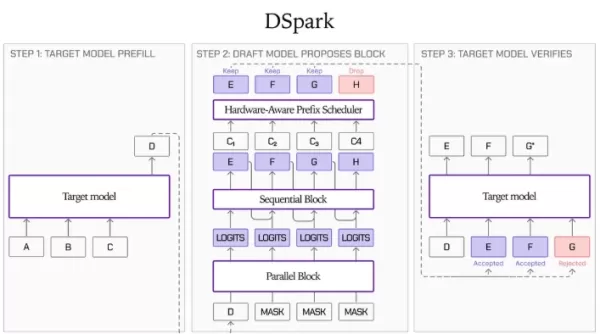 LFM2.5 DSpark Draft Model Released: Inference Speed Boosted 3.18x
Liquid AI and Hugging Face have officially released the DSpark draft model checkpoints for the LFM2.5 series, covering LFM2.5-1.2B-Instruct, LFM2.5-2.6B, and LFM2.5-8B-A1B. This innovation introduces a novel speculative decoding path that significant
LFM2.5 DSpark Draft Model Released: Inference Speed Boosted 3.18x
Liquid AI and Hugging Face have officially released the DSpark draft model checkpoints for the LFM2.5 series, covering LFM2.5-1.2B-Instruct, LFM2.5-2.6B, and LFM2.5-8B-A1B. This innovation introduces a novel speculative decoding path that significant

2026 Latest Best AI Sleep Coaching Tools for Shift Workers, Jet Lag Recovery, and Better Routines! XIX.AI has curated a top-rated list of powerful game-changing tools that go through real-world tests to deliver accurate guidance. You can find detailed free vs paid comparison info and see how these must-try solutions help boost sleep quality, speed up jet lag recovery, and build healthier routines. Explore now to discover your perfect tool!
7 tools
xix.ai

2026 Latest Best ChatGPT debugging tools for Python errors, API logs, and stack trace triage are here on XIX.AI. This curated list of top-rated solutions offers a free vs paid comparison, real-world tests, and detailed rankings to help you find the most powerful tool that can significantly boost your productivity and help you solve complex technical issues faster. Explore now to discover your perfect solution!
9 tools
xix.ai

2026 Latest Best Top-Rated AI Voiceover Tools for Product Demo Videos are here on XIX.AI! This curated list features powerful, game-changing options that help you create professional-quality audio content fast, boosting your demo efficiency significantly. We conduct real-world tests and provide a free vs paid comparison along with weekly updated rankings to help you find the perfect fit. Explore now to Unlock your AI edge!
10 tools
xix.ai

2026 Latest Best AI Business Plan Tools for Startup Validation! XIX.AI has curated a top-rated list of powerful game-changing tools that go through real-world tests to deliver accurate results. You’ll find a free vs paid comparison, detailed rankings, and easy-to-understand insights to help you choose the perfect solution and boost your startup’s success rate. Explore now to Unlock your AI edge!
9 tools
xix.ai

2026 Latest Best AI Chat Apps for Roleplay and Conversation Practice! XIX.AI curates a top-rated list of powerful must-try tools that go through rigorous real-world tests to deliver exceptional results. You’ll find detailed free vs paid comparison, comprehensive rankings, and insights into how these apps can boost your language skills and communication confidence effectively. Explore now to discover your perfect tool for practice!
10 tools
xix.ai

2026 Latest Best Top-rated AI Wireframe Tools for Product Teams! This curated list showcases powerful, game-changing solutions that significantly boost productivity through real-world tests and rigorous rankings. It includes a detailed free vs paid comparison to help you find the perfect fit. XIX.AI provides expert insights to guide your decision. Explore now to Discover your perfect tool and Unlock your AI edge in product development!
8 tools
xix.ai

讀了這篇,感覺好矛盾啊。技術一直進步當然好,但想到未來連工程師這麼專業的工作都可能被取代,心裡就發毛😅 會不會以後寫程式的只剩AI,人類都去改行賣咖啡了?但AI真的能理解那些複雜的需求嗎?我表示懷疑。
¿Los ingenieros de software serán reemplazados por IA? 🧐 Me preocupa que esto acelere la brecha salarial en tech. Por otro lado, ¡quizá podamos enfocarnos en tareas más creativas! #MixtoFeelings
AI replacing coders? Wild! I love how it’s shaking things up, but I’m curious if it’ll ever match the creativity of a human debugging at 3 AM. 😅 What do you all think—threat or tool?
AI要取代程序员?有点夸张吧!😅 不过感觉技术发展太快了,未来可能真得重新学点新技能,不然跟不上啊!
L’IA qui remplace les ingénieurs logiciels, c’est fascinant ! 😊 Mais franchement, est-ce qu’on perdra le côté humain du code ? J’ai des doutes…
ИИ заменит программистов? Серьезно? 🤯 Это круто, но я волнуюсь за этику — как ИИ будет принимать сложные решения без человеческого взгляда?












