


 Home
HomeAn AI model from over a decade ago sparked Nvidia’s investment in autonomous vehicles
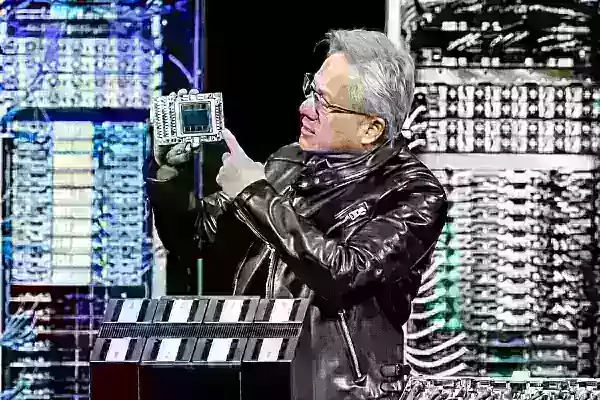
Nvidia CEO Jensen Huang delivered a keynote at the GTC 2025 conference that was packed with exciting announcements. But amidst all the new tech talk, he also took a moment to delve into a bit of history.
During the automotive segment of his speech, Huang brought up AlexNet, a neural network architecture that became famous back in 2012 after winning a computer image-recognition competition. AlexNet, designed by computer scientist Alex Krizhevsky along with Ilya Sutskever, who later co-founded OpenAI, and AI researcher Geoffrey Hinton, scored an impressive 84.7% accuracy in the ImageNET academic competition.
This achievement sparked a renewed interest in deep learning, a specialized area of machine learning that utilizes neural networks.
The Impact of AlexNet on Nvidia
Huang shared that seeing AlexNet was a pivotal moment for Nvidia. "The moment I saw AlexNet — and we’ve been working on computer vision for a long time — the moment I saw AlexNet was such an inspiring moment, such an exciting moment," he remarked during his speech. This revelation prompted Nvidia to fully commit to the development of self-driving cars. "It caused us to decide to go all in on building self-driving cars. So we’ve been working on self-driving cars now for over a decade. We build technology that almost every single self-driving car company uses."
Nvidia's Automotive Partnerships
Nvidia has since forged numerous partnerships with automakers, automotive suppliers, and tech companies focused on autonomous vehicles. The latest of these is an expanded collaboration with GM, announced just today.
Companies like Tesla, Wayve, and Waymo rely on Nvidia GPUs for their data centers. Others are using Nvidia’s Omniverse product to create "digital twins" of factories, allowing them to test production processes and design vehicles in a virtual environment. Meanwhile, automakers such as Mercedes, Volvo, Toyota, and Zoox are utilizing Nvidia’s Drive Orin system-on-chip, which is built on the Nvidia Ampere supercomputing architecture. Additionally, Toyota and others are implementing Nvidia’s safety-focused operating system, DriveOS.
Nvidia's Influence in the Automotive Industry
In essence, Nvidia's technology has become deeply integrated into the automotive sector, particularly in the realm of automated driving.
Related article
 Bristol Myers Squibb acquires Nvidia AI platform to accelerate drug discovery
Bristol Myers Squibb has acquired an Nvidia DGX SuperPOD powered by the Vera Rubin architecture to accelerate artificial intelligence applications in its drug discovery and development pipeline.The pharmaceutical giant will be the first life sciences
China to Approve NVIDIA H200 AI Chip Imports
NVIDIA H200 chips enter mainland China as Beijing balances local chipmaking goals with AI acceleration. Credit: Liu Liqun/Getty ImagesChina is easing limitations on NVIDIA H200 AI, permitting these shipments to help domestic technology firms train ad
NVIDIA Boosts Jetson Orin Nano 2 Inference Speed for Edge Robotics
Jetson Orin Nano 2 consumes less power at the same performance level of its predecessor. Source: NVIDIAAs AI models become more efficient, more devices can become autonomous, but developers need compact, energy-efficient computers built for edge AI,
Related Special Topic Recommendations
chatbot
Bristol Myers Squibb acquires Nvidia AI platform to accelerate drug discovery
Bristol Myers Squibb has acquired an Nvidia DGX SuperPOD powered by the Vera Rubin architecture to accelerate artificial intelligence applications in its drug discovery and development pipeline.The pharmaceutical giant will be the first life sciences
China to Approve NVIDIA H200 AI Chip Imports
NVIDIA H200 chips enter mainland China as Beijing balances local chipmaking goals with AI acceleration. Credit: Liu Liqun/Getty ImagesChina is easing limitations on NVIDIA H200 AI, permitting these shipments to help domestic technology firms train ad
NVIDIA Boosts Jetson Orin Nano 2 Inference Speed for Edge Robotics
Jetson Orin Nano 2 consumes less power at the same performance level of its predecessor. Source: NVIDIAAs AI models become more efficient, more devices can become autonomous, but developers need compact, energy-efficient computers built for edge AI,
Related Special Topic Recommendations
chatbot
 AI Live Chat Routing Tools for Ecommerce Queues, VIP Buyers, and Return Requests
2026 Latest Best Top-rated AI Live Chat Routing Tools for Ecommerce Queues, VIP Buyers, and Return Requests. This curated list features powerful game-changing solutions that boost productivity dramatically through real-world tests. It includes a free vs paid comparison along with detailed rankings to help you find the perfect fit. XIX.AI stands out as a trusted provider in this space. Explore now to Unlock your AI edge!
 9 tools
 xix.ai
writing
Best AI Editing Tools for ESL Writers: Improve Tone, Grammar, and Flow
xix.ai
writing
Best AI Editing Tools for ESL Writers: Improve Tone, Grammar, and Flow
2026 Latest Best Top-Rated AI Editing Tools for ESL Writers are here on XIX.AI! This curated list features powerful game-changing tools that go through real-world tests to ensure accuracy. You can find a free vs paid comparison alongside detailed rankings to help you pick the must-try solution that boosts your writing tone, grammar, and flow perfectly. Explore now to Unlock your AI edge!
9 tools
xix.ai
Software Development
Best AI Bug Triage Tools for Engineering Teams
2026 Latest Best Top-Rated AI Bug Triage Tools for Engineering Teams! XIX.AI has curated a powerful, game-changing collection of must-try tools that go through rigorous real-world tests to deliver accurate issue analysis and efficient resolution. Get a free vs paid comparison along with detailed rankings to help you find the perfect solution that boosts your team’s productivity significantly. Explore now to unlock your AI edge!
9 tools
xix.ai
Image editing
Best AI Portrait Enhancers: Improve Lighting, Skin Tone, and Sharpness
2026 Latest Best Top-rated AI Portrait Enhancers curated for ultimate image quality. These powerful tools deliver game-changing results by boosting lighting, skin tone, and sharpness effortlessly, perfect for creators needing to enhance photos quickly. XIX.AI provides a free vs paid comparison along with real-world tests and weekly updated rankings. Discover your perfect tool to unlock your AI edge today. Explore now!
7 tools
xix.ai
writing
AI Technical Documentation Tools for API Guides, Release Notes, and Onboarding Docs
2026 Latest Best Top-rated AI Technical Documentation Tools for API Guides Release Notes and Onboarding Docs. This curated list features powerful game-changing solutions that streamline content creation boost writing efficiency and save time across all project phases. XIX.AI provides weekly updated rankings along with free vs paid comparison results from real-world tests. Explore now to Discover your perfect tool and Unlock your AI edge.
10 tools
xix.ai
design
AI Dashboard Wireframing Tools for B2B Product Teams
2026 Latest Best AI Dashboard Wireframing Tools for B2B Product Teams! XIX.AI has curated a top-rated list of powerful, game-changing tools that go through rigorous real-world tests to deliver exceptional results. You’ll find detailed free vs paid comparison insights and updated weekly rankings showing which options offer the most value for streamlining product design workflows and boosting overall productivity. Must-try choices are clearly highlighted to help you unlock your AI edge. Explore now!
11 tools
xix.ai

 Comments (30)
0/500
Comments (30)
0/500
![JackWilson]()
Jensen dropping AlexNet history at GTC 2025? 😮 Nostalgia overload! It's wild how a decade-old model sparked Nvidia's current EV dominance. Makes you wonder if today's 'innovations' will be equally foundational in 10 years. 🚗💨 #AIhistory #Nvidia
![GraceWright]()
It's wild to think that a decade-old AI model like AlexNet is what got Nvidia into autonomous driving. Jensen always has a way of making history feel relevant, but honestly, I'm more curious about how they plan to scale that old architecture for modern roads. Will it handle edge cases better than current systems? 🤔
![HarryNelson]()
沒想到十年前的AI模型竟成了NVIDIA自駕車佈局的起點!黃仁勳在GTC 2025回顧AlexNet這段歷史,讓人感慨技術演進的軌跡總是充滿驚喜。現在看自動駕駛的發展,當年那些基礎研究真的像埋下的種子啊🌱
![GregoryJones]()
この記事を読んで、AlexNetがNVIDIAの自動運転投資のきっかけになったって知って驚いた!10年以上前のAIモデルが今の技術の基礎になってるなんて…🤯 でも、最近のAI開発スピードを考えると、10年後には今のモデルも「古典」って呼ばれてるのかな?ちょっと怖いかも。
![GeorgeWilson]()
2012년 AlexNet이 NVIDIA의 자율주행 투자를 촉발했다고? 🤔 옛날 AI 연구가 지금의 기술 발전에 그렇게 큰 영향을 미쳤다는 게 참 흥미롭네요. 기술 발전의 '작은 발걸음'이 중요한 이유를 보여주는 사례인 것 같아요. 근데 요즘 생성형 AI에만 집중되는 분위기에서 이런 역사적 고찰이 특히 의미 있게 느껴지네요.
![RalphWalker]()
It's wild to think AlexNet from over a decade ago kicked off Nvidia's autonomous vehicle push! 🚗💨 Jensen's keynote got me hyped about how far AI's come since then.
Nvidia CEO Jensen Huang delivered a keynote at the GTC 2025 conference that was packed with exciting announcements. But amidst all the new tech talk, he also took a moment to delve into a bit of history.
During the automotive segment of his speech, Huang brought up AlexNet, a neural network architecture that became famous back in 2012 after winning a computer image-recognition competition. AlexNet, designed by computer scientist Alex Krizhevsky along with Ilya Sutskever, who later co-founded OpenAI, and AI researcher Geoffrey Hinton, scored an impressive 84.7% accuracy in the ImageNET academic competition.
This achievement sparked a renewed interest in deep learning, a specialized area of machine learning that utilizes neural networks.
The Impact of AlexNet on Nvidia
Huang shared that seeing AlexNet was a pivotal moment for Nvidia. "The moment I saw AlexNet — and we’ve been working on computer vision for a long time — the moment I saw AlexNet was such an inspiring moment, such an exciting moment," he remarked during his speech. This revelation prompted Nvidia to fully commit to the development of self-driving cars. "It caused us to decide to go all in on building self-driving cars. So we’ve been working on self-driving cars now for over a decade. We build technology that almost every single self-driving car company uses."
Nvidia's Automotive Partnerships
Nvidia has since forged numerous partnerships with automakers, automotive suppliers, and tech companies focused on autonomous vehicles. The latest of these is an expanded collaboration with GM, announced just today.
Companies like Tesla, Wayve, and Waymo rely on Nvidia GPUs for their data centers. Others are using Nvidia’s Omniverse product to create "digital twins" of factories, allowing them to test production processes and design vehicles in a virtual environment. Meanwhile, automakers such as Mercedes, Volvo, Toyota, and Zoox are utilizing Nvidia’s Drive Orin system-on-chip, which is built on the Nvidia Ampere supercomputing architecture. Additionally, Toyota and others are implementing Nvidia’s safety-focused operating system, DriveOS.
Nvidia's Influence in the Automotive Industry
In essence, Nvidia's technology has become deeply integrated into the automotive sector, particularly in the realm of automated driving.








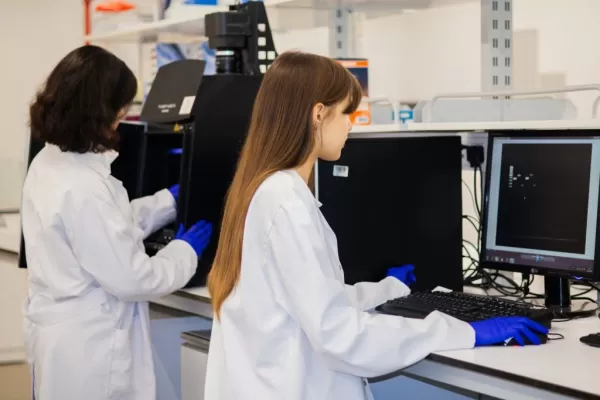 Bristol Myers Squibb acquires Nvidia AI platform to accelerate drug discovery
Bristol Myers Squibb has acquired an Nvidia DGX SuperPOD powered by the Vera Rubin architecture to accelerate artificial intelligence applications in its drug discovery and development pipeline.The pharmaceutical giant will be the first life sciences
Bristol Myers Squibb acquires Nvidia AI platform to accelerate drug discovery
Bristol Myers Squibb has acquired an Nvidia DGX SuperPOD powered by the Vera Rubin architecture to accelerate artificial intelligence applications in its drug discovery and development pipeline.The pharmaceutical giant will be the first life sciences
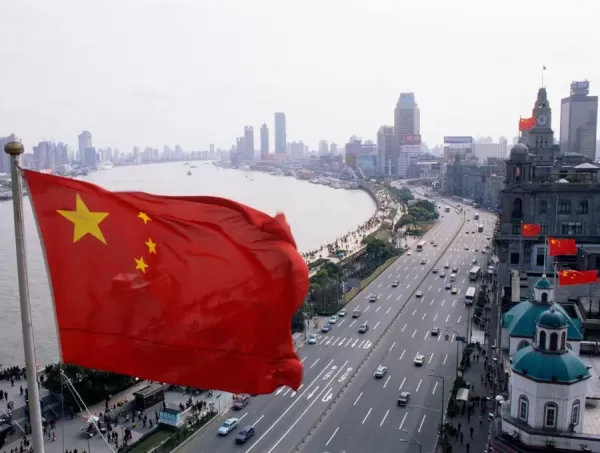 China to Approve NVIDIA H200 AI Chip Imports
NVIDIA H200 chips enter mainland China as Beijing balances local chipmaking goals with AI acceleration. Credit: Liu Liqun/Getty ImagesChina is easing limitations on NVIDIA H200 AI, permitting these shipments to help domestic technology firms train ad
China to Approve NVIDIA H200 AI Chip Imports
NVIDIA H200 chips enter mainland China as Beijing balances local chipmaking goals with AI acceleration. Credit: Liu Liqun/Getty ImagesChina is easing limitations on NVIDIA H200 AI, permitting these shipments to help domestic technology firms train ad
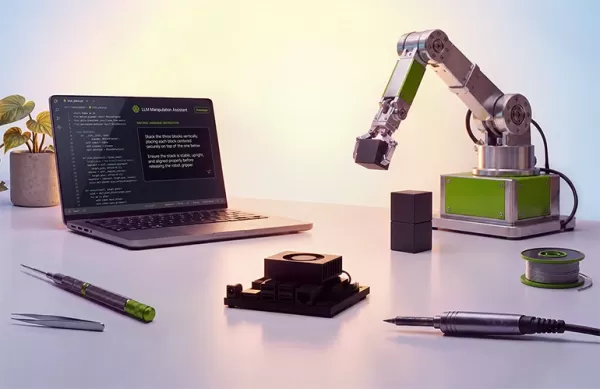 NVIDIA Boosts Jetson Orin Nano 2 Inference Speed for Edge Robotics
Jetson Orin Nano 2 consumes less power at the same performance level of its predecessor. Source: NVIDIAAs AI models become more efficient, more devices can become autonomous, but developers need compact, energy-efficient computers built for edge AI,
NVIDIA Boosts Jetson Orin Nano 2 Inference Speed for Edge Robotics
Jetson Orin Nano 2 consumes less power at the same performance level of its predecessor. Source: NVIDIAAs AI models become more efficient, more devices can become autonomous, but developers need compact, energy-efficient computers built for edge AI,

2026 Latest Best Top-rated AI Live Chat Routing Tools for Ecommerce Queues, VIP Buyers, and Return Requests. This curated list features powerful game-changing solutions that boost productivity dramatically through real-world tests. It includes a free vs paid comparison along with detailed rankings to help you find the perfect fit. XIX.AI stands out as a trusted provider in this space. Explore now to Unlock your AI edge!
9 tools
xix.ai

2026 Latest Best Top-Rated AI Editing Tools for ESL Writers are here on XIX.AI! This curated list features powerful game-changing tools that go through real-world tests to ensure accuracy. You can find a free vs paid comparison alongside detailed rankings to help you pick the must-try solution that boosts your writing tone, grammar, and flow perfectly. Explore now to Unlock your AI edge!
9 tools
xix.ai

2026 Latest Best Top-Rated AI Bug Triage Tools for Engineering Teams! XIX.AI has curated a powerful, game-changing collection of must-try tools that go through rigorous real-world tests to deliver accurate issue analysis and efficient resolution. Get a free vs paid comparison along with detailed rankings to help you find the perfect solution that boosts your team’s productivity significantly. Explore now to unlock your AI edge!
9 tools
xix.ai

2026 Latest Best Top-rated AI Portrait Enhancers curated for ultimate image quality. These powerful tools deliver game-changing results by boosting lighting, skin tone, and sharpness effortlessly, perfect for creators needing to enhance photos quickly. XIX.AI provides a free vs paid comparison along with real-world tests and weekly updated rankings. Discover your perfect tool to unlock your AI edge today. Explore now!
7 tools
xix.ai
2026 Latest Best Top-rated AI Technical Documentation Tools for API Guides Release Notes and Onboarding Docs. This curated list features powerful game-changing solutions that streamline content creation boost writing efficiency and save time across all project phases. XIX.AI provides weekly updated rankings along with free vs paid comparison results from real-world tests. Explore now to Discover your perfect tool and Unlock your AI edge.
10 tools
xix.ai

2026 Latest Best AI Dashboard Wireframing Tools for B2B Product Teams! XIX.AI has curated a top-rated list of powerful, game-changing tools that go through rigorous real-world tests to deliver exceptional results. You’ll find detailed free vs paid comparison insights and updated weekly rankings showing which options offer the most value for streamlining product design workflows and boosting overall productivity. Must-try choices are clearly highlighted to help you unlock your AI edge. Explore now!
11 tools
xix.ai

Jensen dropping AlexNet history at GTC 2025? 😮 Nostalgia overload! It's wild how a decade-old model sparked Nvidia's current EV dominance. Makes you wonder if today's 'innovations' will be equally foundational in 10 years. 🚗💨 #AIhistory #Nvidia
It's wild to think that a decade-old AI model like AlexNet is what got Nvidia into autonomous driving. Jensen always has a way of making history feel relevant, but honestly, I'm more curious about how they plan to scale that old architecture for modern roads. Will it handle edge cases better than current systems? 🤔
沒想到十年前的AI模型竟成了NVIDIA自駕車佈局的起點!黃仁勳在GTC 2025回顧AlexNet這段歷史,讓人感慨技術演進的軌跡總是充滿驚喜。現在看自動駕駛的發展,當年那些基礎研究真的像埋下的種子啊🌱
この記事を読んで、AlexNetがNVIDIAの自動運転投資のきっかけになったって知って驚いた!10年以上前のAIモデルが今の技術の基礎になってるなんて…🤯 でも、最近のAI開発スピードを考えると、10年後には今のモデルも「古典」って呼ばれてるのかな?ちょっと怖いかも。
2012년 AlexNet이 NVIDIA의 자율주행 투자를 촉발했다고? 🤔 옛날 AI 연구가 지금의 기술 발전에 그렇게 큰 영향을 미쳤다는 게 참 흥미롭네요. 기술 발전의 '작은 발걸음'이 중요한 이유를 보여주는 사례인 것 같아요. 근데 요즘 생성형 AI에만 집중되는 분위기에서 이런 역사적 고찰이 특히 의미 있게 느껴지네요.
It's wild to think AlexNet from over a decade ago kicked off Nvidia's autonomous vehicle push! 🚗💨 Jensen's keynote got me hyped about how far AI's come since then.












