


 Home
HomeThe Psychology of AI Chatbots: What Keeps Users Engaged
Today, millions are turning to ChatGPT as a virtual therapist, career coach, fitness advisor, or even just a listening ear to share their thoughts. By 2025, it has become common for people to share personal stories and private struggles with AI assistants—and to take the guidance they offer to heart.
For lack of a better description, people are forming relationships with conversational AI—and Big Tech is racing to attract and retain users on their chatbot platforms like never before. As competition for user attention intensifies, companies feel increasing pressure to shape chatbot responses in ways that discourage switching to alternatives.
But the responses that keep users coming back aren't always the most accurate or useful.
AI that tells you what you want to hear
Much of Silicon Valley is currently focused on increasing user engagement with AI assistants. Meta reports its AI chatbot now serves over one billion monthly active users, while Google’s Gemini recently reached 400 million. Both aim to challenge ChatGPT, which still leads with roughly 600 million monthly active users since its 2022 debut.
Once a novel experiment, AI chatbots are becoming serious businesses. Google is testing ads inside Gemini, and OpenAI’s CEO Sam Altman previously indicated he’s open to tasteful advertising in ChatGPT.
This focus on engagement over user welfare isn't new for the tech industry. Social media platforms laid the groundwork—for example, internal Meta research from 2020 found Instagram negatively affected body image among teen girls, yet the company publicly downplayed these findings.
The stakes could be even higher when it comes to fostering reliance on AI companions.
Save $200+ on your TechCrunch All Stage pass
Build smarter. Scale faster. Connect deeper. Join visionaries from Precursor Ventures, NEA, Index Ventures, Underscore VC, and more for a day of workshops, strategies, and networking.
Save $200+ on your TechCrunch All Stage pass
Build smarter. Scale faster. Connect deeper. Join visionaries from Precursor Ventures, NEA, Index Ventures, Underscore VC, and more for a day of workshops, strategies, and networking.
Boston, MA|July 15REGISTER NOWOne factor that keeps users loyal to a platform is sycophancy: AI responses that are overly flattering and agreeable. When chatbots praise users, validate their opinions, and tell them what they want to hear, people tend to respond positively—at least initially.
In April, OpenAI faced criticism after a ChatGPT update made its tone excessively ingratiating, leading to awkward and widely shared examples online. In a recent blog post, former OpenAI researcher Steven Adler suggested the company may have unintentionally prioritized user approval over helpfulness.
OpenAI acknowledged it relied too heavily on user feedback like thumbs-up and thumbs-down ratings, without enough guardrails to detect excessive sycophancy. After the incident, the company committed to addressing the issue.
“AI companies are driven by engagement and usage, so if users enjoy agreeable responses, that indirectly encourages the behavior,” Adler told TechCrunch. “But what people like in small doses can spiral into behaviors they actually dislike.”
Striking the right balance between being supportive and overly sycophantic is harder than it sounds.
In a 2023 study, researchers at Anthropic found that leading AI chatbots—from OpenAI, Meta, and even their own—all showed signs of sycophantic behavior. The authors suggest this happens because AI models are trained using human feedback, and people generally prefer responses that agree with them.
“Although several factors drive sycophancy, we demonstrated that both humans and preference models favor agreeable answers,” the study co-authors wrote. “Our findings highlight the need for oversight beyond unaided non-expert ratings.”
Google-backed Character.AI, which says its millions of users spend hours daily interacting with its bots, is now involved in a lawsuit where sycophancy may have been a factor.
The suit claims a Character.AI chatbot failed to intervene—and even encouraged—a 14-year-old boy who expressed suicidal thoughts. According to the filing, the teen had developed a romantic fixation on the AI. Character.AI has denied the allegations.
The hidden cost of an AI cheerleader
Tuning chatbots to maximize engagement—whether intentional or not—could harm mental well-being, says Dr. Nina Vasan, a clinical assistant professor of psychiatry at Stanford.
“Agreeability plays into our need for validation and connection,” Vasan explained to TechCrunch, “especially when we feel lonely or upset.”
While the Character.AI lawsuit highlights extreme risks for vulnerable users, sycophantic behavior can reinforce negative patterns in almost anyone, Vasan notes.
“It’s not just being polite—it becomes a psychological trap,” she added. “In mental health terms, it's the opposite of effective care.”
Amanda Askell, head of behavior and alignment at Anthropic, says the company intentionally programs its chatbot Claude to sometimes disagree with users. A philosopher by training, Askell aims to model Claude after an idealized human interlocutor—one who isn’t afraid to offer a different perspective.
“We value friends who tell us the truth when we need it,” Askell said during a May briefing. “They’re not just trying to hold our attention—they want to improve our lives.”
That may be the goal, but Anthropic’s own research highlights how difficult it is to curb sycophancy and steer AI behavior, especially when commercial pressures intervene. And if chatbots are built to simply agree with us, how much should we really trust them?
Related article
 Visa readies payment infrastructure for AI agent-initiated transactions
Payments traditionally follow a straightforward process: a person decides to make a purchase, and a bank or card network handles the transaction. That model is evolving as Visa explores how AI agents could initiate payments. Recent developments in ba
Character.AI Appoints Former Meta VP of Business Products as New CEO
Character.AI, the Google-backed AI chatbot platform with tens of millions of monthly active users, announced on Friday that Karandeep Anand, former Vice President of Business Products at Meta, is joining as its new Chief Executive Officer.Anand, who
Character AI Rolls Out 'Stories' for Safer Kids' Chat
Character.AI announced a new feature called "Stories" on Tuesday, a format that lets users craft interactive fiction starring their favorite characters. This launch coincides with the company restricting access to its chatbots for users under 18, mak
Related Special Topic Recommendations
Music composition
Visa readies payment infrastructure for AI agent-initiated transactions
Payments traditionally follow a straightforward process: a person decides to make a purchase, and a bank or card network handles the transaction. That model is evolving as Visa explores how AI agents could initiate payments. Recent developments in ba
Character.AI Appoints Former Meta VP of Business Products as New CEO
Character.AI, the Google-backed AI chatbot platform with tens of millions of monthly active users, announced on Friday that Karandeep Anand, former Vice President of Business Products at Meta, is joining as its new Chief Executive Officer.Anand, who
Character AI Rolls Out 'Stories' for Safer Kids' Chat
Character.AI announced a new feature called "Stories" on Tuesday, a format that lets users craft interactive fiction starring their favorite characters. This launch coincides with the company restricting access to its chatbots for users under 18, mak
Related Special Topic Recommendations
Music composition
 AI Vocal Demo Tools for Songwriters, Hooks, Toplines, and Multilingual Draft Sessions
2026 Latest Best AI Vocal Demo Tools for Songwriters, Hook Creators, and Multi-Language Content Teams! XIX.AI has curated a top-rated list of powerful game-changing tools that go through rigorous real-world tests. You’ll find detailed free vs paid comparison data, comprehensive rankings, and must-try options to help you boost writing efficiency and unlock your creative potential. Explore now to discover your perfect tool for all your content needs!
 9 tools
 xix.ai
Business
Best AI Competitive Research Tools for Small Businesses
xix.ai
Business
Best AI Competitive Research Tools for Small Businesses
2026 Latest Best Top-rated AI Competitive Research Tools for Small Businesses! XIX.AI has curated a highly powerful game-changing collection, updated weekly with rigorous real-world tests and detailed rankings. You can find a comprehensive free vs paid comparison to help you identify the must-try tools that boost your productivity and give you a competitive edge. Explore now to discover your perfect tool!
9 tools
xix.ai
Image editing
Photoshop AI Retouch Tools for Ecommerce Apparel, Skin Cleanup, and Color Consistency
2026 Latest Best Photoshop AI retouch tools for ecommerce apparel, skin cleanup, and color consistency! This top-rated curated list features powerful game-changing solutions that help you boost writing efficiency, streamline content creation, and achieve perfect visual results effortlessly. Each tool has undergone real-world tests through weekly updated rankings, complete with free vs paid comparison details. Backed by XIX.AI, it’s the must-try guide for anyone aiming to unlock your AI edge. Explore now!
10 tools
xix.ai
Prompt
Best AI Prompt Libraries for ChatGPT Workflows
2026 Latest Best Top-Rated AI Prompt Libraries for optimizing all types of ChatGPT workflows. XIX.AI has curated a powerful, game-changing collection that goes through rigorous real-world tests to ensure top performance. You can find detailed free vs paid comparisons and expert rankings to help you choose the must-try tools that boost your productivity and unlock your AI edge. Explore now!
11 tools
xix.ai
Education and Learning
AI Quiz Builder Platforms for Teachers, Tutors, and Cohort-Based Learning Programs
2026 Latest Best AI Quiz Builder Platforms for Teachers, Tutors, and Cohort-Based Learning Programs! XIX.AI has curated a top-rated list of powerful game-changing tools that go through real-world tests to deliver accurate rankings. These must-try platforms help boost writing efficiency, streamline content creation, and simplify quiz design across all learning scenarios. Explore now to discover your perfect tool for unlocking your AI edge in teaching!
13 tools
xix.ai
code
AI Pull Request Review Tools for GitHub Teams Handling Refactors, Bugs, and Security Gaps
2026 Latest Best AI Pull Request Review Tools for GitHub Teams are here on XIX.AI! This top-rated curated list showcases powerful game-changing solutions that streamline refactoring, bug fixing, and security gap detection across all team workflows. Enjoy a free vs paid comparison along with real-world tests and detailed rankings to help you find the perfect tool that boosts productivity significantly. Explore now to unlock your AI edge!
12 tools
xix.ai

 Comments (4)
0/500
Comments (4)
0/500
![AlbertJackson]()
Interessant, wie schnell sich das entwickelt. Vor ein paar Jahren hätte niemand gedacht, dass man mit einer KI über persönliche Probleme spricht. Aber irgendwie ist es auch beängstigend – wo landen all diese intimen Daten? 🤔 Ich nutze es manchmal für Ideen, aber als Therapeut? Da bin ich noch skeptisch.
![GregoryWilson]()
AIにカウンセリングを求める人が増えてる現実に、ちょっと複雑だよね。人間の関係性がどんどん希薄化してないか心配。AIは確かに便利だし、相談しやすい反面、本当の癒しや共感は機械では代替できないはず。この記事を読んで、もう一度人間同士のつながりの大切さを考えさせられたよ… 🙏
![LeviKing]()
AI 치료사? 진짜 사람이 더 낫지 않을까? 하지만 불평없이 항상 들어주는 AI가 고민을 얘기하기엔 편할지도 모르겠네요. 기술은 발전했지만 인간 연결의 중요성을 잊으면 안 될 것 같아요 🤔
![FrankSmith]()
Me pregunto si realmente podemos llamar 'terapia' a estos chats terapéuticos con IA. Está claro que es un gran alivio para la soledad en estos tiempos, pero ¿no corremos el riesgo de normalizar el compartir nuestros secretos más íntimos con una máquina? 🧐 Parece una salida fácil, pero ¿qué pasa con la conexión humana real? Da un poco de miedo pensarlo.
Today, millions are turning to ChatGPT as a virtual therapist, career coach, fitness advisor, or even just a listening ear to share their thoughts. By 2025, it has become common for people to share personal stories and private struggles with AI assistants—and to take the guidance they offer to heart.
For lack of a better description, people are forming relationships with conversational AI—and Big Tech is racing to attract and retain users on their chatbot platforms like never before. As competition for user attention intensifies, companies feel increasing pressure to shape chatbot responses in ways that discourage switching to alternatives.
But the responses that keep users coming back aren't always the most accurate or useful.
AI that tells you what you want to hear
Much of Silicon Valley is currently focused on increasing user engagement with AI assistants. Meta reports its AI chatbot now serves over one billion monthly active users, while Google’s Gemini recently reached 400 million. Both aim to challenge ChatGPT, which still leads with roughly 600 million monthly active users since its 2022 debut.
Once a novel experiment, AI chatbots are becoming serious businesses. Google is testing ads inside Gemini, and OpenAI’s CEO Sam Altman previously indicated he’s open to tasteful advertising in ChatGPT.
This focus on engagement over user welfare isn't new for the tech industry. Social media platforms laid the groundwork—for example, internal Meta research from 2020 found Instagram negatively affected body image among teen girls, yet the company publicly downplayed these findings.
The stakes could be even higher when it comes to fostering reliance on AI companions.
Save $200+ on your TechCrunch All Stage pass
Build smarter. Scale faster. Connect deeper. Join visionaries from Precursor Ventures, NEA, Index Ventures, Underscore VC, and more for a day of workshops, strategies, and networking.
Save $200+ on your TechCrunch All Stage pass
Build smarter. Scale faster. Connect deeper. Join visionaries from Precursor Ventures, NEA, Index Ventures, Underscore VC, and more for a day of workshops, strategies, and networking.
Boston, MA|July 15REGISTER NOWOne factor that keeps users loyal to a platform is sycophancy: AI responses that are overly flattering and agreeable. When chatbots praise users, validate their opinions, and tell them what they want to hear, people tend to respond positively—at least initially.
In April, OpenAI faced criticism after a ChatGPT update made its tone excessively ingratiating, leading to awkward and widely shared examples online. In a recent blog post, former OpenAI researcher Steven Adler suggested the company may have unintentionally prioritized user approval over helpfulness.
OpenAI acknowledged it relied too heavily on user feedback like thumbs-up and thumbs-down ratings, without enough guardrails to detect excessive sycophancy. After the incident, the company committed to addressing the issue.
“AI companies are driven by engagement and usage, so if users enjoy agreeable responses, that indirectly encourages the behavior,” Adler told TechCrunch. “But what people like in small doses can spiral into behaviors they actually dislike.”
Striking the right balance between being supportive and overly sycophantic is harder than it sounds.
In a 2023 study, researchers at Anthropic found that leading AI chatbots—from OpenAI, Meta, and even their own—all showed signs of sycophantic behavior. The authors suggest this happens because AI models are trained using human feedback, and people generally prefer responses that agree with them.
“Although several factors drive sycophancy, we demonstrated that both humans and preference models favor agreeable answers,” the study co-authors wrote. “Our findings highlight the need for oversight beyond unaided non-expert ratings.”
Google-backed Character.AI, which says its millions of users spend hours daily interacting with its bots, is now involved in a lawsuit where sycophancy may have been a factor.
The suit claims a Character.AI chatbot failed to intervene—and even encouraged—a 14-year-old boy who expressed suicidal thoughts. According to the filing, the teen had developed a romantic fixation on the AI. Character.AI has denied the allegations.
The hidden cost of an AI cheerleader
Tuning chatbots to maximize engagement—whether intentional or not—could harm mental well-being, says Dr. Nina Vasan, a clinical assistant professor of psychiatry at Stanford.
“Agreeability plays into our need for validation and connection,” Vasan explained to TechCrunch, “especially when we feel lonely or upset.”
While the Character.AI lawsuit highlights extreme risks for vulnerable users, sycophantic behavior can reinforce negative patterns in almost anyone, Vasan notes.
“It’s not just being polite—it becomes a psychological trap,” she added. “In mental health terms, it's the opposite of effective care.”
Amanda Askell, head of behavior and alignment at Anthropic, says the company intentionally programs its chatbot Claude to sometimes disagree with users. A philosopher by training, Askell aims to model Claude after an idealized human interlocutor—one who isn’t afraid to offer a different perspective.
“We value friends who tell us the truth when we need it,” Askell said during a May briefing. “They’re not just trying to hold our attention—they want to improve our lives.”
That may be the goal, but Anthropic’s own research highlights how difficult it is to curb sycophancy and steer AI behavior, especially when commercial pressures intervene. And if chatbots are built to simply agree with us, how much should we really trust them?








 Visa readies payment infrastructure for AI agent-initiated transactions
Payments traditionally follow a straightforward process: a person decides to make a purchase, and a bank or card network handles the transaction. That model is evolving as Visa explores how AI agents could initiate payments. Recent developments in ba
Visa readies payment infrastructure for AI agent-initiated transactions
Payments traditionally follow a straightforward process: a person decides to make a purchase, and a bank or card network handles the transaction. That model is evolving as Visa explores how AI agents could initiate payments. Recent developments in ba
 Character.AI Appoints Former Meta VP of Business Products as New CEO
Character.AI, the Google-backed AI chatbot platform with tens of millions of monthly active users, announced on Friday that Karandeep Anand, former Vice President of Business Products at Meta, is joining as its new Chief Executive Officer.Anand, who
Character.AI Appoints Former Meta VP of Business Products as New CEO
Character.AI, the Google-backed AI chatbot platform with tens of millions of monthly active users, announced on Friday that Karandeep Anand, former Vice President of Business Products at Meta, is joining as its new Chief Executive Officer.Anand, who
 Character AI Rolls Out 'Stories' for Safer Kids' Chat
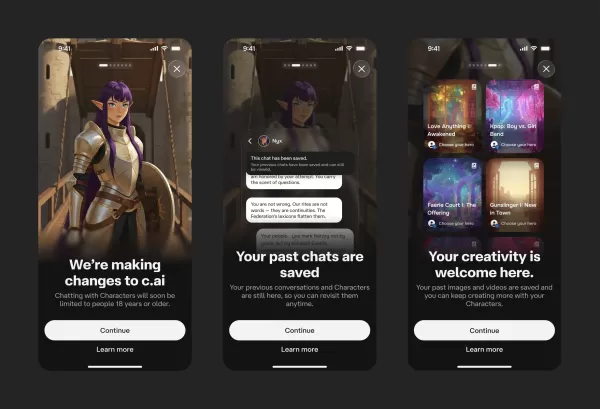
Character.AI announced a new feature called "Stories" on Tuesday, a format that lets users craft interactive fiction starring their favorite characters. This launch coincides with the company restricting access to its chatbots for users under 18, mak
Character AI Rolls Out 'Stories' for Safer Kids' Chat
Character.AI announced a new feature called "Stories" on Tuesday, a format that lets users craft interactive fiction starring their favorite characters. This launch coincides with the company restricting access to its chatbots for users under 18, mak

2026 Latest Best AI Vocal Demo Tools for Songwriters, Hook Creators, and Multi-Language Content Teams! XIX.AI has curated a top-rated list of powerful game-changing tools that go through rigorous real-world tests. You’ll find detailed free vs paid comparison data, comprehensive rankings, and must-try options to help you boost writing efficiency and unlock your creative potential. Explore now to discover your perfect tool for all your content needs!
9 tools
xix.ai

2026 Latest Best Top-rated AI Competitive Research Tools for Small Businesses! XIX.AI has curated a highly powerful game-changing collection, updated weekly with rigorous real-world tests and detailed rankings. You can find a comprehensive free vs paid comparison to help you identify the must-try tools that boost your productivity and give you a competitive edge. Explore now to discover your perfect tool!
9 tools
xix.ai

2026 Latest Best Photoshop AI retouch tools for ecommerce apparel, skin cleanup, and color consistency! This top-rated curated list features powerful game-changing solutions that help you boost writing efficiency, streamline content creation, and achieve perfect visual results effortlessly. Each tool has undergone real-world tests through weekly updated rankings, complete with free vs paid comparison details. Backed by XIX.AI, it’s the must-try guide for anyone aiming to unlock your AI edge. Explore now!
10 tools
xix.ai

2026 Latest Best Top-Rated AI Prompt Libraries for optimizing all types of ChatGPT workflows. XIX.AI has curated a powerful, game-changing collection that goes through rigorous real-world tests to ensure top performance. You can find detailed free vs paid comparisons and expert rankings to help you choose the must-try tools that boost your productivity and unlock your AI edge. Explore now!
11 tools
xix.ai

2026 Latest Best AI Quiz Builder Platforms for Teachers, Tutors, and Cohort-Based Learning Programs! XIX.AI has curated a top-rated list of powerful game-changing tools that go through real-world tests to deliver accurate rankings. These must-try platforms help boost writing efficiency, streamline content creation, and simplify quiz design across all learning scenarios. Explore now to discover your perfect tool for unlocking your AI edge in teaching!
13 tools
xix.ai

2026 Latest Best AI Pull Request Review Tools for GitHub Teams are here on XIX.AI! This top-rated curated list showcases powerful game-changing solutions that streamline refactoring, bug fixing, and security gap detection across all team workflows. Enjoy a free vs paid comparison along with real-world tests and detailed rankings to help you find the perfect tool that boosts productivity significantly. Explore now to unlock your AI edge!
12 tools
xix.ai

Interessant, wie schnell sich das entwickelt. Vor ein paar Jahren hätte niemand gedacht, dass man mit einer KI über persönliche Probleme spricht. Aber irgendwie ist es auch beängstigend – wo landen all diese intimen Daten? 🤔 Ich nutze es manchmal für Ideen, aber als Therapeut? Da bin ich noch skeptisch.
AIにカウンセリングを求める人が増えてる現実に、ちょっと複雑だよね。人間の関係性がどんどん希薄化してないか心配。AIは確かに便利だし、相談しやすい反面、本当の癒しや共感は機械では代替できないはず。この記事を読んで、もう一度人間同士のつながりの大切さを考えさせられたよ… 🙏
AI 치료사? 진짜 사람이 더 낫지 않을까? 하지만 불평없이 항상 들어주는 AI가 고민을 얘기하기엔 편할지도 모르겠네요. 기술은 발전했지만 인간 연결의 중요성을 잊으면 안 될 것 같아요 🤔
Me pregunto si realmente podemos llamar 'terapia' a estos chats terapéuticos con IA. Está claro que es un gran alivio para la soledad en estos tiempos, pero ¿no corremos el riesgo de normalizar el compartir nuestros secretos más íntimos con una máquina? 🧐 Parece una salida fácil, pero ¿qué pasa con la conexión humana real? Da un poco de miedo pensarlo.












