


 Home
HomeAI Transforms Travel Experience
AI is transforming the way we plan and experience travel. From personalized Instagram Reels to booking engines that craft full itineraries in seconds, AI is a powerful influence in how trips are envisioned, booked, and enjoyed. Yet this evolution prompts a crucial debate: is AI expanding traveller freedom, or subtly directing their decisions?
In a conversation with AI News, Fahd Hamidaddin, Founding CEO of the Saudi Tourism Authority and President of the upcoming TOURISE Summit, argued that AI has the potential for both. He explored how AI is redefining travel discovery, personalisation, cultural exchange, and ethics—emphasising the industry's need to establish clear guidelines as the technology assumes a more proactive role.
AI as a travel companion
AI is revolutionising destination discovery. Moving beyond generic lists, platforms now deliver content that feels individually tailored. “AI has transformed travel discovery into a personal canvas,” stated Hamidaddin. “Platforms such as Instagram Reels no longer simply suggest 'where to go'; they curate journeys that feel designed for each individual traveller.”

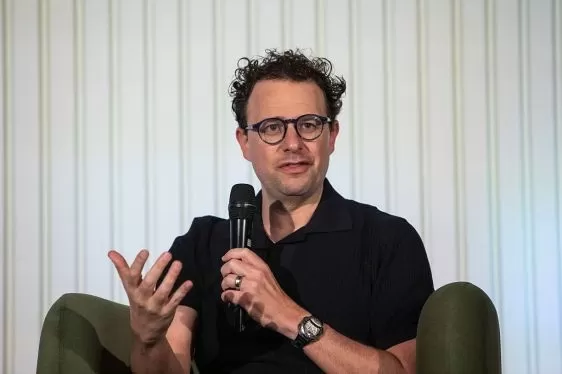
Fahd Hamidaddin, Founding CEO of the Saudi Tourism Authority and President of the upcoming TOURISE Summit This change offers more than mere convenience. By promoting less-visited destinations, AI can distribute tourist demand and alleviate overcrowding at popular sites. It can also connect travellers with authentic local experiences that might otherwise go unnoticed.
Hamidaddin envisions the next step as “agentic AI”—technology that not only recommends but actively executes tasks. He described a future where AI automatically rebooks weather-disrupted flights, adjusts itineraries, and reschedules reservations in real time. “That's frictionless travel—where logistics fade into the background and the adventure takes centre stage,” he explained.
AI personalisation vs. algorithmic influence in travel
AI-powered booking engines offer hyper-personalised recommendations, aligning experiences with personal interests and budgets. This can streamline and inspire the planning process, but it also carries inherent risks.
“It achieves both,” Hamidaddin responded when asked if AI empowers travellers or unknowingly guides them. “AI can empower travellers like never before—matching experiences to passions, budgets, and even moods. However, without oversight, algorithms can quietly limit horizons, nudging people toward predictable choices. This risk escalates with agentic AI, which will make decisions on a traveller's behalf. That is why transparency and accountability are essential. AI should serve as a compass, not a cage, with travellers always retaining the final say.”
Trust and transparency
The interplay between personalisation and privacy will define travel's next chapter. As AI systems gather extensive personal data, travellers are increasingly conscious of how their preferences, clicks, and searches are utilised. Hamidaddin emphasised that trust is the critical foundation.
“The age of hyper-personalisation must be built on trust. Travellers understand their data is valuable, and they are right to question how it is used,” he said. The answer, in his view, lies in “radical transparency: explicit consent, clear explanations, and genuine opt-in choices.”
Agentic AI, capable of acting for the traveller, makes this principle even more vital. If algorithms are automatically booking, adjusting, or cancelling plans, travellers require clear mechanisms to control and comprehend these actions. “True innovation doesn't just customise the journey; it protects the traveller's confidence and autonomy,” he added.
Setting standards through TOURISE
Hamidaddin will steer discussions on these themes at the inaugural TOURISE Summit in Riyadh this November. He views the summit as an opportunity to establish global standards for AI in travel, not merely showcase technology.
“TOURISE is conceived as more than an event—it is the world's first platform where government, business, and technology leaders converge to shape travel technology responsibly,” he stated. His objectives include developing a shared ethical framework for AI, fostering partnerships to tackle privacy and workforce issues, promoting sustainability, and upskilling the global tourism workforce for an AI-driven future.
“TOURISE must establish a new benchmark: innovation with integrity,” he affirmed.
Cultural exchange and economic growth
AI's impact extends beyond logistics. It is also reshaping cultural exchange and economic development, notably in Saudi Arabia. “AI is breaking down barriers—linguistic, cultural, and economic. It is fostering authentic connections that transcend sightseeing to enable meaningful exchange,” Hamidaddin noted.
He detailed how Saudi Arabia leverages AI to showcase cultural and historical treasures like AlUla and Diriyah, while also supporting local artisans, festivals, and small businesses. Agentic AI will further streamline travel experiences, letting visitors focus more on culture and less on planning.
“This is not just about increasing visitor numbers; it is about inclusive growth, mutual respect, and shared prosperity,” he said. By 2030, AI is projected to contribute $135 billion to Saudi Arabia's GDP, with tourism as a central pillar. Yet for Hamidaddin, the true measure of success lies in the “bonds forged between people.”
Ethical guardrails for AI in travel
As AI systems assume greater responsibility, clear ethical standards become imperative. Hamidaddin highlighted key priorities: ensuring users understand how AI is used, conducting regular audits for algorithmic bias, giving travellers control over their data, and designing systems that encourage cultural diversity and accessibility.
“With agentic AI, the stakes are higher: when an AI acts on behalf of a traveller, we must guarantee transparency, explainability, and accountability. Agency must never come at the expense of autonomy,” he insisted.
Innovation with ethics
The core debate is not whether to adopt AI, but how to implement it responsibly. Hamidaddin contends that innovation must align with human values and environmental stewardship. “It is not about pursuing every new technological trend; it is about aligning innovation with human values and planetary needs,” he argued.
He believes governments, businesses, communities, and travellers must collaborate to agree on shared principles. The rise of agentic AI makes this cooperation more urgent, as machines may make an increasing number of decisions. “Our responsibility is to ensure technology serves humanity, not the reverse,” he concluded.
A new era for travel
Hamidaddin is optimistic about the future. “What excites me most is that travel is regaining its transformative potential,” he shared. He envisions a future where language barriers dissolve, itineraries adapt dynamically, and every journey supports local communities.
In Saudi Arabia, platforms like “Spirit of Saudi” already use AI to present authentic experiences, from desert adventures to artisan workshops. The next phase involves agentic journeys, where AI travel companions seamlessly manage logistics, allowing travellers to concentrate on discovery and connection.
“Through TOURISE, I believe we are not just shaping the future of tourism—we are sparking a new era of global connection and shared prosperity,” he said.
See also: AI causes reduction in users’ brain activity – MIT

Interested in learning more about AI and big data from industry experts? Explore the AI & Big Data Expo in Amsterdam, California, and London. This comprehensive event is part of TechEx and is co-located with other major technology events. Click here for further details.
AI News is powered by TechForge Media. Discover other upcoming enterprise technology events and webinars here.
Related article
 Ollie bets privacy focus to win AI assistant race
To be genuinely helpful, an AI assistant must understand its user deeply. Ollie, a personal assistant designed for daily life, operates on the premise that this doesn’t require surrendering your data or compromising your privacy.While certain enterpr
How AI LIVE: London Will Explore AI & Industrial Automation
The summit will convene C-suite executives from around the globe to address pressing challenges in global industries, ranging from AI-driven disruption to economic volatility.AI LIVE: The London Summit will gather over 2,000 international leaders und
Anthropic Enters AI Legal Tech Market as Competition Intensifies
Anthropic unveiled a suite of new chatbot capabilities on Tuesday, aimed at delivering automated support to legal practices. These enhancements expand upon Claude for Legal, the firm-specific platform introduced earlier this year, by adding specializ
Related Special Topic Recommendations
Music composition
Ollie bets privacy focus to win AI assistant race
To be genuinely helpful, an AI assistant must understand its user deeply. Ollie, a personal assistant designed for daily life, operates on the premise that this doesn’t require surrendering your data or compromising your privacy.While certain enterpr
How AI LIVE: London Will Explore AI & Industrial Automation
The summit will convene C-suite executives from around the globe to address pressing challenges in global industries, ranging from AI-driven disruption to economic volatility.AI LIVE: The London Summit will gather over 2,000 international leaders und
Anthropic Enters AI Legal Tech Market as Competition Intensifies
Anthropic unveiled a suite of new chatbot capabilities on Tuesday, aimed at delivering automated support to legal practices. These enhancements expand upon Claude for Legal, the firm-specific platform introduced earlier this year, by adding specializ
Related Special Topic Recommendations
Music composition
 AI Vocal Demo Tools for Songwriters, Hooks, Toplines, and Multilingual Draft Sessions
2026 Latest Best AI Vocal Demo Tools for Songwriters, Hook Creators, and Multi-Language Content Teams! XIX.AI has curated a top-rated list of powerful game-changing tools that go through rigorous real-world tests. You’ll find detailed free vs paid comparison data, comprehensive rankings, and must-try options to help you boost writing efficiency and unlock your creative potential. Explore now to discover your perfect tool for all your content needs!
 9 tools
 xix.ai
Business
Best AI Competitive Research Tools for Small Businesses
xix.ai
Business
Best AI Competitive Research Tools for Small Businesses
2026 Latest Best Top-rated AI Competitive Research Tools for Small Businesses! XIX.AI has curated a highly powerful game-changing collection, updated weekly with rigorous real-world tests and detailed rankings. You can find a comprehensive free vs paid comparison to help you identify the must-try tools that boost your productivity and give you a competitive edge. Explore now to discover your perfect tool!
9 tools
xix.ai
Image editing
Photoshop AI Retouch Tools for Ecommerce Apparel, Skin Cleanup, and Color Consistency
2026 Latest Best Photoshop AI retouch tools for ecommerce apparel, skin cleanup, and color consistency! This top-rated curated list features powerful game-changing solutions that help you boost writing efficiency, streamline content creation, and achieve perfect visual results effortlessly. Each tool has undergone real-world tests through weekly updated rankings, complete with free vs paid comparison details. Backed by XIX.AI, it’s the must-try guide for anyone aiming to unlock your AI edge. Explore now!
10 tools
xix.ai
Prompt
Best AI Prompt Libraries for ChatGPT Workflows
2026 Latest Best Top-Rated AI Prompt Libraries for optimizing all types of ChatGPT workflows. XIX.AI has curated a powerful, game-changing collection that goes through rigorous real-world tests to ensure top performance. You can find detailed free vs paid comparisons and expert rankings to help you choose the must-try tools that boost your productivity and unlock your AI edge. Explore now!
11 tools
xix.ai
Education and Learning
AI Quiz Builder Platforms for Teachers, Tutors, and Cohort-Based Learning Programs
2026 Latest Best AI Quiz Builder Platforms for Teachers, Tutors, and Cohort-Based Learning Programs! XIX.AI has curated a top-rated list of powerful game-changing tools that go through real-world tests to deliver accurate rankings. These must-try platforms help boost writing efficiency, streamline content creation, and simplify quiz design across all learning scenarios. Explore now to discover your perfect tool for unlocking your AI edge in teaching!
13 tools
xix.ai
code
AI Pull Request Review Tools for GitHub Teams Handling Refactors, Bugs, and Security Gaps
2026 Latest Best AI Pull Request Review Tools for GitHub Teams are here on XIX.AI! This top-rated curated list showcases powerful game-changing solutions that streamline refactoring, bug fixing, and security gap detection across all team workflows. Enjoy a free vs paid comparison along with real-world tests and detailed rankings to help you find the perfect tool that boosts productivity significantly. Explore now to unlock your AI edge!
12 tools
xix.ai

 Comments (2)
0/500
Comments (2)
0/500
![JackMoore]()
Honestly, I'm both impressed and a bit creeped out. The idea of AI planning my whole trip sounds convenient, but what about the spontaneity? Also, Instagram Reels tailored by AI? That's just feeding the algorithm more power. 🤔
![AlbertGarcía]()
Diese Entwicklung wirft echt Fragen auf... KI plant jetzt sogar unsere Reisen? 😅 Einerseits praktisch, andererseits gruselig. Wird am Ende jede Reise gleich, weil Algorithmen ähnliche Vorschläge machen? Und was passiert mit Reisebüros?
AI is transforming the way we plan and experience travel. From personalized Instagram Reels to booking engines that craft full itineraries in seconds, AI is a powerful influence in how trips are envisioned, booked, and enjoyed. Yet this evolution prompts a crucial debate: is AI expanding traveller freedom, or subtly directing their decisions?
In a conversation with AI News, Fahd Hamidaddin, Founding CEO of the Saudi Tourism Authority and President of the upcoming TOURISE Summit, argued that AI has the potential for both. He explored how AI is redefining travel discovery, personalisation, cultural exchange, and ethics—emphasising the industry's need to establish clear guidelines as the technology assumes a more proactive role.
AI as a travel companion
AI is revolutionising destination discovery. Moving beyond generic lists, platforms now deliver content that feels individually tailored. “AI has transformed travel discovery into a personal canvas,” stated Hamidaddin. “Platforms such as Instagram Reels no longer simply suggest 'where to go'; they curate journeys that feel designed for each individual traveller.”
This change offers more than mere convenience. By promoting less-visited destinations, AI can distribute tourist demand and alleviate overcrowding at popular sites. It can also connect travellers with authentic local experiences that might otherwise go unnoticed.
Hamidaddin envisions the next step as “agentic AI”—technology that not only recommends but actively executes tasks. He described a future where AI automatically rebooks weather-disrupted flights, adjusts itineraries, and reschedules reservations in real time. “That's frictionless travel—where logistics fade into the background and the adventure takes centre stage,” he explained.
AI personalisation vs. algorithmic influence in travel
AI-powered booking engines offer hyper-personalised recommendations, aligning experiences with personal interests and budgets. This can streamline and inspire the planning process, but it also carries inherent risks.
“It achieves both,” Hamidaddin responded when asked if AI empowers travellers or unknowingly guides them. “AI can empower travellers like never before—matching experiences to passions, budgets, and even moods. However, without oversight, algorithms can quietly limit horizons, nudging people toward predictable choices. This risk escalates with agentic AI, which will make decisions on a traveller's behalf. That is why transparency and accountability are essential. AI should serve as a compass, not a cage, with travellers always retaining the final say.”
Trust and transparency
The interplay between personalisation and privacy will define travel's next chapter. As AI systems gather extensive personal data, travellers are increasingly conscious of how their preferences, clicks, and searches are utilised. Hamidaddin emphasised that trust is the critical foundation.
“The age of hyper-personalisation must be built on trust. Travellers understand their data is valuable, and they are right to question how it is used,” he said. The answer, in his view, lies in “radical transparency: explicit consent, clear explanations, and genuine opt-in choices.”
Agentic AI, capable of acting for the traveller, makes this principle even more vital. If algorithms are automatically booking, adjusting, or cancelling plans, travellers require clear mechanisms to control and comprehend these actions. “True innovation doesn't just customise the journey; it protects the traveller's confidence and autonomy,” he added.
Setting standards through TOURISE
Hamidaddin will steer discussions on these themes at the inaugural TOURISE Summit in Riyadh this November. He views the summit as an opportunity to establish global standards for AI in travel, not merely showcase technology.
“TOURISE is conceived as more than an event—it is the world's first platform where government, business, and technology leaders converge to shape travel technology responsibly,” he stated. His objectives include developing a shared ethical framework for AI, fostering partnerships to tackle privacy and workforce issues, promoting sustainability, and upskilling the global tourism workforce for an AI-driven future.
“TOURISE must establish a new benchmark: innovation with integrity,” he affirmed.
Cultural exchange and economic growth
AI's impact extends beyond logistics. It is also reshaping cultural exchange and economic development, notably in Saudi Arabia. “AI is breaking down barriers—linguistic, cultural, and economic. It is fostering authentic connections that transcend sightseeing to enable meaningful exchange,” Hamidaddin noted.
He detailed how Saudi Arabia leverages AI to showcase cultural and historical treasures like AlUla and Diriyah, while also supporting local artisans, festivals, and small businesses. Agentic AI will further streamline travel experiences, letting visitors focus more on culture and less on planning.
“This is not just about increasing visitor numbers; it is about inclusive growth, mutual respect, and shared prosperity,” he said. By 2030, AI is projected to contribute $135 billion to Saudi Arabia's GDP, with tourism as a central pillar. Yet for Hamidaddin, the true measure of success lies in the “bonds forged between people.”
Ethical guardrails for AI in travel
As AI systems assume greater responsibility, clear ethical standards become imperative. Hamidaddin highlighted key priorities: ensuring users understand how AI is used, conducting regular audits for algorithmic bias, giving travellers control over their data, and designing systems that encourage cultural diversity and accessibility.
“With agentic AI, the stakes are higher: when an AI acts on behalf of a traveller, we must guarantee transparency, explainability, and accountability. Agency must never come at the expense of autonomy,” he insisted.
Innovation with ethics
The core debate is not whether to adopt AI, but how to implement it responsibly. Hamidaddin contends that innovation must align with human values and environmental stewardship. “It is not about pursuing every new technological trend; it is about aligning innovation with human values and planetary needs,” he argued.
He believes governments, businesses, communities, and travellers must collaborate to agree on shared principles. The rise of agentic AI makes this cooperation more urgent, as machines may make an increasing number of decisions. “Our responsibility is to ensure technology serves humanity, not the reverse,” he concluded.
A new era for travel
Hamidaddin is optimistic about the future. “What excites me most is that travel is regaining its transformative potential,” he shared. He envisions a future where language barriers dissolve, itineraries adapt dynamically, and every journey supports local communities.
In Saudi Arabia, platforms like “Spirit of Saudi” already use AI to present authentic experiences, from desert adventures to artisan workshops. The next phase involves agentic journeys, where AI travel companions seamlessly manage logistics, allowing travellers to concentrate on discovery and connection.
“Through TOURISE, I believe we are not just shaping the future of tourism—we are sparking a new era of global connection and shared prosperity,” he said.
See also: AI causes reduction in users’ brain activity – MIT
Interested in learning more about AI and big data from industry experts? Explore the AI & Big Data Expo in Amsterdam, California, and London. This comprehensive event is part of TechEx and is co-located with other major technology events. Click here for further details.
AI News is powered by TechForge Media. Discover other upcoming enterprise technology events and webinars here.








 Ollie bets privacy focus to win AI assistant race
To be genuinely helpful, an AI assistant must understand its user deeply. Ollie, a personal assistant designed for daily life, operates on the premise that this doesn’t require surrendering your data or compromising your privacy.While certain enterpr
Ollie bets privacy focus to win AI assistant race
To be genuinely helpful, an AI assistant must understand its user deeply. Ollie, a personal assistant designed for daily life, operates on the premise that this doesn’t require surrendering your data or compromising your privacy.While certain enterpr
 How AI LIVE: London Will Explore AI & Industrial Automation
The summit will convene C-suite executives from around the globe to address pressing challenges in global industries, ranging from AI-driven disruption to economic volatility.AI LIVE: The London Summit will gather over 2,000 international leaders und
How AI LIVE: London Will Explore AI & Industrial Automation
The summit will convene C-suite executives from around the globe to address pressing challenges in global industries, ranging from AI-driven disruption to economic volatility.AI LIVE: The London Summit will gather over 2,000 international leaders und
 Anthropic Enters AI Legal Tech Market as Competition Intensifies
Anthropic unveiled a suite of new chatbot capabilities on Tuesday, aimed at delivering automated support to legal practices. These enhancements expand upon Claude for Legal, the firm-specific platform introduced earlier this year, by adding specializ
Anthropic Enters AI Legal Tech Market as Competition Intensifies
Anthropic unveiled a suite of new chatbot capabilities on Tuesday, aimed at delivering automated support to legal practices. These enhancements expand upon Claude for Legal, the firm-specific platform introduced earlier this year, by adding specializ

2026 Latest Best AI Vocal Demo Tools for Songwriters, Hook Creators, and Multi-Language Content Teams! XIX.AI has curated a top-rated list of powerful game-changing tools that go through rigorous real-world tests. You’ll find detailed free vs paid comparison data, comprehensive rankings, and must-try options to help you boost writing efficiency and unlock your creative potential. Explore now to discover your perfect tool for all your content needs!
9 tools
xix.ai

2026 Latest Best Top-rated AI Competitive Research Tools for Small Businesses! XIX.AI has curated a highly powerful game-changing collection, updated weekly with rigorous real-world tests and detailed rankings. You can find a comprehensive free vs paid comparison to help you identify the must-try tools that boost your productivity and give you a competitive edge. Explore now to discover your perfect tool!
9 tools
xix.ai

2026 Latest Best Photoshop AI retouch tools for ecommerce apparel, skin cleanup, and color consistency! This top-rated curated list features powerful game-changing solutions that help you boost writing efficiency, streamline content creation, and achieve perfect visual results effortlessly. Each tool has undergone real-world tests through weekly updated rankings, complete with free vs paid comparison details. Backed by XIX.AI, it’s the must-try guide for anyone aiming to unlock your AI edge. Explore now!
10 tools
xix.ai

2026 Latest Best Top-Rated AI Prompt Libraries for optimizing all types of ChatGPT workflows. XIX.AI has curated a powerful, game-changing collection that goes through rigorous real-world tests to ensure top performance. You can find detailed free vs paid comparisons and expert rankings to help you choose the must-try tools that boost your productivity and unlock your AI edge. Explore now!
11 tools
xix.ai

2026 Latest Best AI Quiz Builder Platforms for Teachers, Tutors, and Cohort-Based Learning Programs! XIX.AI has curated a top-rated list of powerful game-changing tools that go through real-world tests to deliver accurate rankings. These must-try platforms help boost writing efficiency, streamline content creation, and simplify quiz design across all learning scenarios. Explore now to discover your perfect tool for unlocking your AI edge in teaching!
13 tools
xix.ai

2026 Latest Best AI Pull Request Review Tools for GitHub Teams are here on XIX.AI! This top-rated curated list showcases powerful game-changing solutions that streamline refactoring, bug fixing, and security gap detection across all team workflows. Enjoy a free vs paid comparison along with real-world tests and detailed rankings to help you find the perfect tool that boosts productivity significantly. Explore now to unlock your AI edge!
12 tools
xix.ai

Honestly, I'm both impressed and a bit creeped out. The idea of AI planning my whole trip sounds convenient, but what about the spontaneity? Also, Instagram Reels tailored by AI? That's just feeding the algorithm more power. 🤔
Diese Entwicklung wirft echt Fragen auf... KI plant jetzt sogar unsere Reisen? 😅 Einerseits praktisch, andererseits gruselig. Wird am Ende jede Reise gleich, weil Algorithmen ähnliche Vorschläge machen? Und was passiert mit Reisebüros?












