


 Home
HomeAI Assistant Tops Qianwen Score with Expert Nutrition and Health Consultation
At 68 years old, Madam Li manages diabetes and a sensitive digestive system, making daily meal planning a family concern. Her son downloaded an AI application for assistance. After querying, "My mother has diabetes and a weak stomach; how should I plan her daily meals?" the response was surprisingly comprehensive. It outlined dietary principles and offered specific guidance, such as "opt for multigrain porridge and steamed egg custard instead of plain congee for breakfast," "favor steaming, boiling, and stewing as cooking methods," and "finely chop vegetables and cook them until tender."
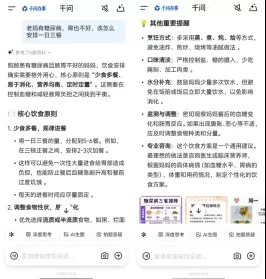
This response was generated freely by the Qwen application.
An increasing number of individuals are consulting AI for health concerns, raising questions about the reliability of such advice. Recently, the Center for Science Communication on Food and Health conducted an evaluation. They tested three leading AI health applications, simulating ten scenarios related to nutrition, wellness, and food safety. Using a new device to generate content, five senior experts performed a blind assessment based on clear criteria: accuracy of information, clarity for the general public, and practical applicability of the recommendations.
The findings indicated that Qwen achieved the highest scores, particularly in practicality and user comprehension.
Following these results, experts engaged in a detailed discussion about the implications and the future role of AI in everyday health management.
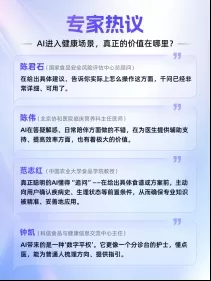
After reviewing Qwen's responses, Chen Junshe, Chief Consultant at the National Food Safety Risk Assessment Center, remarked, "This is quite impressive." His evaluation focused on practicality: "While AI cannot replace a doctor's diagnosis, in terms of offering concrete, step-by-step advice, Qwen's answers are notably thorough."
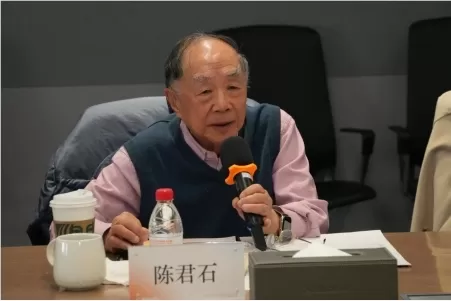
(Chen Junshe, Chief Consultant of the National Food Safety Risk Assessment Center)
Chen Wei, Head of the Department of Clinical Nutrition at Peking Union Medical College Hospital, offered a more direct observation: "The public has largely embraced using AI for initial health inquiries." He noted that many patients now bring AI-generated suggestions to their appointments for verification. Well-informed AI responses can save significant time otherwise spent explaining fundamentals, whereas poor advice can be "misleading."

(Chen Wei, Head of the Department of Clinical Nutrition at Peking Union Medical College Hospital)
Qwen's core strengths are twofold. First, its foundational data is sourced from authoritative materials like guidelines, textbooks, and scientific literature. Through a structured knowledge base and rigorous data management, it significantly reduces inaccuracies often associated with AI. Second, its responses are designed to be "clear, evidence-based, and actionable," avoiding technical jargon in favor of practical, everyday advice—such as suggesting what to eat for breakfast.
This test and the subsequent expert dialogue address a common public concern: Can AI-generated health advice be trusted?
The conclusion is context-dependent.
For diagnosing illnesses, prescribing medication, or making critical medical decisions—consult a healthcare professional, as AI is not equipped for these tasks. However, for queries like "how to adjust my diet with high blood sugar," "is this common food belief accurate," or "planning daily meals for an elderly person with digestive issues"—Qwen can already serve as a highly useful reference.
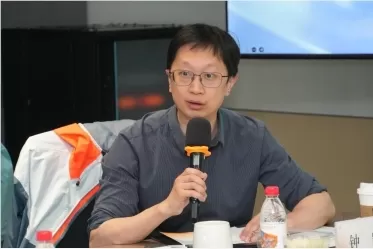
(Zhong Kai, Director of the Center for Science Communication on Food and Health)
Zhong Kai, Director of the Center for Science Communication on Food and Health, offered an analogy: A reliable AI health assistant functions like a triage nurse—possessing foundational medical knowledge to help assess risks, determine if a hospital visit is necessary, and guide which specialty to consult. For the general public, who often feel overwhelmed by increasingly specialized medical fields, this utility is profoundly practical.
Related article
 ByteDance’s Seed launches global campus drive, offering virtual shares to win top large model talent
In the competitive landscape of large language models, securing top-tier talent remains the most critical strategic asset.On April 1st, ByteDance announced the launch of its Seed global campus recruitment initiative, part of its large model talent de
Suno to Watermark Songs Amid Legal Battles
Suno, the platform enabling users to generate AI-created music, has unveiled new features to label platform-produced tracks, restrict downloads, and update community standards to curb unauthorized replicas. These updates arrive as Suno confronts mult
Musk Admits Grok Build Leaked User Code, Promises to Erase All Historical Data
Elon Musk directly addressed the privacy controversy surrounding Grok Build, beginning with a simple "True" to confirm the incident's validity. He pledged that all user data previously uploaded to SpaceXAI would be permanently erased, stating, "not a
Related Special Topic Recommendations
Design & Art
ByteDance’s Seed launches global campus drive, offering virtual shares to win top large model talent
In the competitive landscape of large language models, securing top-tier talent remains the most critical strategic asset.On April 1st, ByteDance announced the launch of its Seed global campus recruitment initiative, part of its large model talent de
Suno to Watermark Songs Amid Legal Battles
Suno, the platform enabling users to generate AI-created music, has unveiled new features to label platform-produced tracks, restrict downloads, and update community standards to curb unauthorized replicas. These updates arrive as Suno confronts mult
Musk Admits Grok Build Leaked User Code, Promises to Erase All Historical Data
Elon Musk directly addressed the privacy controversy surrounding Grok Build, beginning with a simple "True" to confirm the incident's validity. He pledged that all user data previously uploaded to SpaceXAI would be permanently erased, stating, "not a
Related Special Topic Recommendations
Design & Art
 AI Visual Style Reference Tools for Character Sheets, Moodboards, and Pitch Decks
2026 Latest Best AI Visual Style Reference Tools for Character Sheets, Moodboards, and Pitch Decks are here on XIX.AI! This curated top-rated list features powerful game-changing tools that go through rigorous real-world tests. You’ll find a free vs paid comparison, detailed rankings, and must-try options to help you boost creativity and streamline your workflow. Explore now to discover your perfect tool for boosting productivity!
 11 tools
 xix.ai
SEO
Best AI SERP Analysis Tools for Search Strategy
xix.ai
SEO
Best AI SERP Analysis Tools for Search Strategy
2026 Latest Best Top-rated AI SERP Analysis Tools for Search Strategy are curated by XIX.AI through rigorous real-world tests and weekly updated rankings. These powerful tools help you unlock hidden optimization opportunities, boost content performance, and gain a competitive edge in search. Discover your perfect tool to elevate your search strategy today. Explore now!
13 tools
xix.ai
Data Analysis
Best AI Anomaly Detection Tools for KPI Monitoring across SaaS and Ecommerce Teams
2026 Latest Best Top-rated AI Anomaly Detection Tools for KPI Monitoring in SaaS and Ecommerce teams! XIX.AI has curated a powerful, game-changing collection based on rigorous real-world tests and weekly updated rankings. You’ll find detailed free vs paid comparison insights to help you identify the must-try solution that boosts productivity and unlocks your AI edge. Explore now!
10 tools
xix.ai
writing
Best AI Outline Generators for Long-Form SEO Articles
2026 Latest Best Top-Rated AI Outline Generators for Long-Form SEO Articles, meticulously curated by XIX.AI. These powerful tools offer game-changing assistance in creating high-quality content quickly, boosting writing efficiency significantly. Get a free vs paid comparison along with real-world tests and detailed rankings to help you find the must-try option that suits your needs. Explore now to unlock your AI edge.
8 tools
xix.ai
Education and Learning
AI Study Tools for Homework and Exam Prep
2026 Latest Best AI Study Tools for Homework and Exam Prep! XIX.AI curates a top-rated list of powerful, game-changing tools that help students boost productivity, streamline homework completion, and ace exams through real-world tests. Get a free vs paid comparison, detailed rankings, and must-try options to unlock your AI edge. Explore now!
10 tools
xix.ai
Music composition
AI Vocal Demo Tools for Songwriters, Hooks, Toplines, and Multilingual Draft Sessions
2026 Latest Best AI Vocal Demo Tools for Songwriters, Hook Creators, and Multi-Language Content Teams! XIX.AI has curated a top-rated list of powerful game-changing tools that go through rigorous real-world tests. You’ll find detailed free vs paid comparison data, comprehensive rankings, and must-try options to help you boost writing efficiency and unlock your creative potential. Explore now to discover your perfect tool for all your content needs!
9 tools
xix.ai

 Comments (1)
0/500
Comments (1)
0/500
![WalterRodriguez]()
Honestly, I'm a bit skeptical about AI giving health advice. What if it misses a crucial detail? It's convenient, sure, but I'd still double-check with a real doctor before making any big changes to a diet, especially for someone with complex needs. The tech is impressive, but human oversight feels non-negotiable here. 🤔
At 68 years old, Madam Li manages diabetes and a sensitive digestive system, making daily meal planning a family concern. Her son downloaded an AI application for assistance. After querying, "My mother has diabetes and a weak stomach; how should I plan her daily meals?" the response was surprisingly comprehensive. It outlined dietary principles and offered specific guidance, such as "opt for multigrain porridge and steamed egg custard instead of plain congee for breakfast," "favor steaming, boiling, and stewing as cooking methods," and "finely chop vegetables and cook them until tender."
This response was generated freely by the Qwen application.
An increasing number of individuals are consulting AI for health concerns, raising questions about the reliability of such advice. Recently, the Center for Science Communication on Food and Health conducted an evaluation. They tested three leading AI health applications, simulating ten scenarios related to nutrition, wellness, and food safety. Using a new device to generate content, five senior experts performed a blind assessment based on clear criteria: accuracy of information, clarity for the general public, and practical applicability of the recommendations.
The findings indicated that Qwen achieved the highest scores, particularly in practicality and user comprehension.
Following these results, experts engaged in a detailed discussion about the implications and the future role of AI in everyday health management.
After reviewing Qwen's responses, Chen Junshe, Chief Consultant at the National Food Safety Risk Assessment Center, remarked, "This is quite impressive." His evaluation focused on practicality: "While AI cannot replace a doctor's diagnosis, in terms of offering concrete, step-by-step advice, Qwen's answers are notably thorough."
(Chen Junshe, Chief Consultant of the National Food Safety Risk Assessment Center)
Chen Wei, Head of the Department of Clinical Nutrition at Peking Union Medical College Hospital, offered a more direct observation: "The public has largely embraced using AI for initial health inquiries." He noted that many patients now bring AI-generated suggestions to their appointments for verification. Well-informed AI responses can save significant time otherwise spent explaining fundamentals, whereas poor advice can be "misleading."
(Chen Wei, Head of the Department of Clinical Nutrition at Peking Union Medical College Hospital)
Qwen's core strengths are twofold. First, its foundational data is sourced from authoritative materials like guidelines, textbooks, and scientific literature. Through a structured knowledge base and rigorous data management, it significantly reduces inaccuracies often associated with AI. Second, its responses are designed to be "clear, evidence-based, and actionable," avoiding technical jargon in favor of practical, everyday advice—such as suggesting what to eat for breakfast.
This test and the subsequent expert dialogue address a common public concern: Can AI-generated health advice be trusted?
The conclusion is context-dependent.
For diagnosing illnesses, prescribing medication, or making critical medical decisions—consult a healthcare professional, as AI is not equipped for these tasks. However, for queries like "how to adjust my diet with high blood sugar," "is this common food belief accurate," or "planning daily meals for an elderly person with digestive issues"—Qwen can already serve as a highly useful reference.
(Zhong Kai, Director of the Center for Science Communication on Food and Health)
Zhong Kai, Director of the Center for Science Communication on Food and Health, offered an analogy: A reliable AI health assistant functions like a triage nurse—possessing foundational medical knowledge to help assess risks, determine if a hospital visit is necessary, and guide which specialty to consult. For the general public, who often feel overwhelmed by increasingly specialized medical fields, this utility is profoundly practical.








 ByteDance’s Seed launches global campus drive, offering virtual shares to win top large model talent
In the competitive landscape of large language models, securing top-tier talent remains the most critical strategic asset.On April 1st, ByteDance announced the launch of its Seed global campus recruitment initiative, part of its large model talent de
ByteDance’s Seed launches global campus drive, offering virtual shares to win top large model talent
In the competitive landscape of large language models, securing top-tier talent remains the most critical strategic asset.On April 1st, ByteDance announced the launch of its Seed global campus recruitment initiative, part of its large model talent de
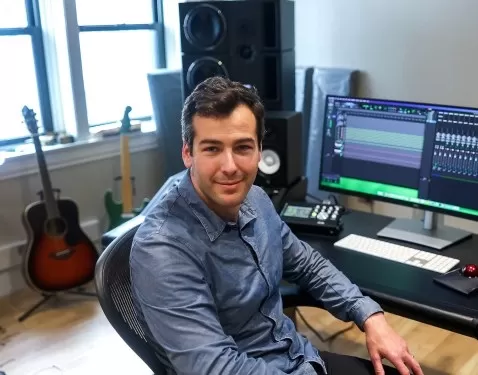 Suno to Watermark Songs Amid Legal Battles
Suno, the platform enabling users to generate AI-created music, has unveiled new features to label platform-produced tracks, restrict downloads, and update community standards to curb unauthorized replicas. These updates arrive as Suno confronts mult
Suno to Watermark Songs Amid Legal Battles
Suno, the platform enabling users to generate AI-created music, has unveiled new features to label platform-produced tracks, restrict downloads, and update community standards to curb unauthorized replicas. These updates arrive as Suno confronts mult
 Musk Admits Grok Build Leaked User Code, Promises to Erase All Historical Data
Elon Musk directly addressed the privacy controversy surrounding Grok Build, beginning with a simple "True" to confirm the incident's validity. He pledged that all user data previously uploaded to SpaceXAI would be permanently erased, stating, "not a
Musk Admits Grok Build Leaked User Code, Promises to Erase All Historical Data
Elon Musk directly addressed the privacy controversy surrounding Grok Build, beginning with a simple "True" to confirm the incident's validity. He pledged that all user data previously uploaded to SpaceXAI would be permanently erased, stating, "not a

2026 Latest Best AI Visual Style Reference Tools for Character Sheets, Moodboards, and Pitch Decks are here on XIX.AI! This curated top-rated list features powerful game-changing tools that go through rigorous real-world tests. You’ll find a free vs paid comparison, detailed rankings, and must-try options to help you boost creativity and streamline your workflow. Explore now to discover your perfect tool for boosting productivity!
11 tools
xix.ai

2026 Latest Best Top-rated AI SERP Analysis Tools for Search Strategy are curated by XIX.AI through rigorous real-world tests and weekly updated rankings. These powerful tools help you unlock hidden optimization opportunities, boost content performance, and gain a competitive edge in search. Discover your perfect tool to elevate your search strategy today. Explore now!
13 tools
xix.ai

2026 Latest Best Top-rated AI Anomaly Detection Tools for KPI Monitoring in SaaS and Ecommerce teams! XIX.AI has curated a powerful, game-changing collection based on rigorous real-world tests and weekly updated rankings. You’ll find detailed free vs paid comparison insights to help you identify the must-try solution that boosts productivity and unlocks your AI edge. Explore now!
10 tools
xix.ai

2026 Latest Best Top-Rated AI Outline Generators for Long-Form SEO Articles, meticulously curated by XIX.AI. These powerful tools offer game-changing assistance in creating high-quality content quickly, boosting writing efficiency significantly. Get a free vs paid comparison along with real-world tests and detailed rankings to help you find the must-try option that suits your needs. Explore now to unlock your AI edge.
8 tools
xix.ai

2026 Latest Best AI Study Tools for Homework and Exam Prep! XIX.AI curates a top-rated list of powerful, game-changing tools that help students boost productivity, streamline homework completion, and ace exams through real-world tests. Get a free vs paid comparison, detailed rankings, and must-try options to unlock your AI edge. Explore now!
10 tools
xix.ai

2026 Latest Best AI Vocal Demo Tools for Songwriters, Hook Creators, and Multi-Language Content Teams! XIX.AI has curated a top-rated list of powerful game-changing tools that go through rigorous real-world tests. You’ll find detailed free vs paid comparison data, comprehensive rankings, and must-try options to help you boost writing efficiency and unlock your creative potential. Explore now to discover your perfect tool for all your content needs!
9 tools
xix.ai

Honestly, I'm a bit skeptical about AI giving health advice. What if it misses a crucial detail? It's convenient, sure, but I'd still double-check with a real doctor before making any big changes to a diet, especially for someone with complex needs. The tech is impressive, but human oversight feels non-negotiable here. 🤔












