


 Home
Home1X starts manufacturing NEO humanoid robots in California

1X is hiring staff for its new humanoid robot factory in California. | Credit: 1X Technologies
1X Technologies AS announced this week the launch of full-scale production at its new facility in Hayward, California. This site serves as the primary manufacturing hub for NEO, the company's humanoid robot designed to operate quietly—at a decibel level lower than a modern refrigerator—while navigating household environments.
The 58,000-square-foot (5,388.3 square meter) factory is built around what 1X calls its "machine park," where raw materials are transformed into specialized components. Unlike traditional assembly plants that source parts from global suppliers, the Palo Alto-based company employs a vertically integrated "factory OS" to oversee every stage of production in real time.
On the production floor, copper coils are wound on automated lines to create custom motors, while specialized labs subject the humanoid hardware to over 20 million cycles of stress testing to ensure long-term durability.
"This is more than just a factory opening—it's proof that the future of humanoid robotics is being built right here in the United States," said Bernt Børnich, founder and CEO of 1X. "We're not just dreaming about abundance; we're manufacturing it. Increased production means more robots, and more robots represent the fastest path to achieving physical AI. Production is underway now, and American consumers will be among the first in the world to welcome NEO into their homes."
NEO factory is vertically integrated and utilizes robots
1X Technologies stated that its production process features several specialized zones:
Joint and limb assembly: Where the robot's tendon-driven actuators and 3D-lattice cushioned limbs are built.Final integration: The stage where the household robots stand for the first time and are fitted with their machine-washable nylon "knit suits," available in tan, gray, or dark brown.The reliability lab: A dedicated space designed to "break things fast" to identify potential failures before robots reach consumers.Early versions of NEO are already active on the factory floor, assisting with internal logistics and stocking parts. These units serve a dual purpose: performing labor and gathering real-world data to refine the NEO Cortex brain, which runs on the NVIDIA Jetson Thor platform.
"Humanoid robots require high-performance, real-time AI inference and continuous training and testing in simulation for safe and reliable operation," explained Deepu Talla, vice president of robotics and edge AI at NVIDIA. "By leveraging NVIDIA Jetson Thor as the brain and the NVIDIA Isaac open robotics platform for training, 1X can accelerate the development and deployment of intelligent robots like NEO that can work safely alongside people."
1X plans to ship humanoid to consumers this year
While the first year's production sold out within five days of its October launch, 1X Technologies noted it is currently using the Hayward production line to supply its research and development efforts and internal home-testing programs.
Domestic shipments to the general public are scheduled to begin in 2026.
Related article
![Nvidia CEO Jensen Huang tells Trump ‘we’re not going to let [an AI slowdown] happen’](data:image/gif;base64,R0lGODlhAQABAIAAAAAAAP///yH5BAEAAAAALAAAAAABAAEAAAIBRAA7) Nvidia CEO Jensen Huang tells Trump ‘we’re not going to let [an AI slowdown] happen’
During his appearance at the All-In Summit in Los Angeles on Monday, Nvidia CEO Jensen Huang received an unexpected call from President Donald Trump, one he couldn’t simply ignore.“I’m on stage with the besties,” Huang explained to Trump, referencing
Jensen Huang Reveals Nvidia’s ‘Brand New’ $200B Market Opportunity
Nvidia founder and CEO Jensen Huang stands out as one of the most compelling corporate visionaries, if not the greatest, in driving his company’s narrative. He may even eclipse Salesforce’s Marc Benioff in his unwavering optimism regarding the firm’s
OneRail Leverages Nvidia AI to Optimize Real-Time Last-Mile Delivery
OneRail has introduced an AI-driven delivery platform leveraging Nvidia technology to assist retailers, wholesalers, and distributors in determining the most efficient delivery methods for individual orders.Named OmniSTAR, the system assesses various
Related Special Topic Recommendations
Data Analysis
Nvidia CEO Jensen Huang tells Trump ‘we’re not going to let [an AI slowdown] happen’
During his appearance at the All-In Summit in Los Angeles on Monday, Nvidia CEO Jensen Huang received an unexpected call from President Donald Trump, one he couldn’t simply ignore.“I’m on stage with the besties,” Huang explained to Trump, referencing
Jensen Huang Reveals Nvidia’s ‘Brand New’ $200B Market Opportunity
Nvidia founder and CEO Jensen Huang stands out as one of the most compelling corporate visionaries, if not the greatest, in driving his company’s narrative. He may even eclipse Salesforce’s Marc Benioff in his unwavering optimism regarding the firm’s
OneRail Leverages Nvidia AI to Optimize Real-Time Last-Mile Delivery
OneRail has introduced an AI-driven delivery platform leveraging Nvidia technology to assist retailers, wholesalers, and distributors in determining the most efficient delivery methods for individual orders.Named OmniSTAR, the system assesses various
Related Special Topic Recommendations
Data Analysis
 Best AI Anomaly Detection Tools for KPI Monitoring across SaaS and Ecommerce Teams
2026 Latest Best Top-rated AI Anomaly Detection Tools for KPI Monitoring in SaaS and Ecommerce teams! XIX.AI has curated a powerful, game-changing collection based on rigorous real-world tests and weekly updated rankings. You’ll find detailed free vs paid comparison insights to help you identify the must-try solution that boosts productivity and unlocks your AI edge. Explore now!
 10 tools
 xix.ai
writing
Best AI Outline Generators for Long-Form SEO Articles
xix.ai
writing
Best AI Outline Generators for Long-Form SEO Articles
2026 Latest Best Top-Rated AI Outline Generators for Long-Form SEO Articles, meticulously curated by XIX.AI. These powerful tools offer game-changing assistance in creating high-quality content quickly, boosting writing efficiency significantly. Get a free vs paid comparison along with real-world tests and detailed rankings to help you find the must-try option that suits your needs. Explore now to unlock your AI edge.
8 tools
xix.ai
Education and Learning
AI Study Tools for Homework and Exam Prep
2026 Latest Best AI Study Tools for Homework and Exam Prep! XIX.AI curates a top-rated list of powerful, game-changing tools that help students boost productivity, streamline homework completion, and ace exams through real-world tests. Get a free vs paid comparison, detailed rankings, and must-try options to unlock your AI edge. Explore now!
10 tools
xix.ai
Music composition
AI Vocal Demo Tools for Songwriters, Hooks, Toplines, and Multilingual Draft Sessions
2026 Latest Best AI Vocal Demo Tools for Songwriters, Hook Creators, and Multi-Language Content Teams! XIX.AI has curated a top-rated list of powerful game-changing tools that go through rigorous real-world tests. You’ll find detailed free vs paid comparison data, comprehensive rankings, and must-try options to help you boost writing efficiency and unlock your creative potential. Explore now to discover your perfect tool for all your content needs!
9 tools
xix.ai
Business
Best AI Competitive Research Tools for Small Businesses
2026 Latest Best Top-rated AI Competitive Research Tools for Small Businesses! XIX.AI has curated a highly powerful game-changing collection, updated weekly with rigorous real-world tests and detailed rankings. You can find a comprehensive free vs paid comparison to help you identify the must-try tools that boost your productivity and give you a competitive edge. Explore now to discover your perfect tool!
9 tools
xix.ai
Image editing
Photoshop AI Retouch Tools for Ecommerce Apparel, Skin Cleanup, and Color Consistency
2026 Latest Best Photoshop AI retouch tools for ecommerce apparel, skin cleanup, and color consistency! This top-rated curated list features powerful game-changing solutions that help you boost writing efficiency, streamline content creation, and achieve perfect visual results effortlessly. Each tool has undergone real-world tests through weekly updated rankings, complete with free vs paid comparison details. Backed by XIX.AI, it’s the must-try guide for anyone aiming to unlock your AI edge. Explore now!
10 tools
xix.ai

 Comments (0)
0/500
Comments (0)
0/500
1X is hiring staff for its new humanoid robot factory in California. | Credit: 1X Technologies
1X Technologies AS announced this week the launch of full-scale production at its new facility in Hayward, California. This site serves as the primary manufacturing hub for NEO, the company's humanoid robot designed to operate quietly—at a decibel level lower than a modern refrigerator—while navigating household environments.
The 58,000-square-foot (5,388.3 square meter) factory is built around what 1X calls its "machine park," where raw materials are transformed into specialized components. Unlike traditional assembly plants that source parts from global suppliers, the Palo Alto-based company employs a vertically integrated "factory OS" to oversee every stage of production in real time.
On the production floor, copper coils are wound on automated lines to create custom motors, while specialized labs subject the humanoid hardware to over 20 million cycles of stress testing to ensure long-term durability.
"This is more than just a factory opening—it's proof that the future of humanoid robotics is being built right here in the United States," said Bernt Børnich, founder and CEO of 1X. "We're not just dreaming about abundance; we're manufacturing it. Increased production means more robots, and more robots represent the fastest path to achieving physical AI. Production is underway now, and American consumers will be among the first in the world to welcome NEO into their homes."
NEO factory is vertically integrated and utilizes robots
1X Technologies stated that its production process features several specialized zones:
Joint and limb assembly: Where the robot's tendon-driven actuators and 3D-lattice cushioned limbs are built.Final integration: The stage where the household robots stand for the first time and are fitted with their machine-washable nylon "knit suits," available in tan, gray, or dark brown.The reliability lab: A dedicated space designed to "break things fast" to identify potential failures before robots reach consumers.Early versions of NEO are already active on the factory floor, assisting with internal logistics and stocking parts. These units serve a dual purpose: performing labor and gathering real-world data to refine the NEO Cortex brain, which runs on the NVIDIA Jetson Thor platform.
"Humanoid robots require high-performance, real-time AI inference and continuous training and testing in simulation for safe and reliable operation," explained Deepu Talla, vice president of robotics and edge AI at NVIDIA. "By leveraging NVIDIA Jetson Thor as the brain and the NVIDIA Isaac open robotics platform for training, 1X can accelerate the development and deployment of intelligent robots like NEO that can work safely alongside people."
1X plans to ship humanoid to consumers this year
While the first year's production sold out within five days of its October launch, 1X Technologies noted it is currently using the Hayward production line to supply its research and development efforts and internal home-testing programs.
Domestic shipments to the general public are scheduled to begin in 2026.








![Nvidia CEO Jensen Huang tells Trump ‘we’re not going to let [an AI slowdown] happen’](https://img.xix.ai/uploads/79/6aa87327d0e12.webp) Nvidia CEO Jensen Huang tells Trump ‘we’re not going to let [an AI slowdown] happen’
During his appearance at the All-In Summit in Los Angeles on Monday, Nvidia CEO Jensen Huang received an unexpected call from President Donald Trump, one he couldn’t simply ignore.“I’m on stage with the besties,” Huang explained to Trump, referencing
Nvidia CEO Jensen Huang tells Trump ‘we’re not going to let [an AI slowdown] happen’
During his appearance at the All-In Summit in Los Angeles on Monday, Nvidia CEO Jensen Huang received an unexpected call from President Donald Trump, one he couldn’t simply ignore.“I’m on stage with the besties,” Huang explained to Trump, referencing
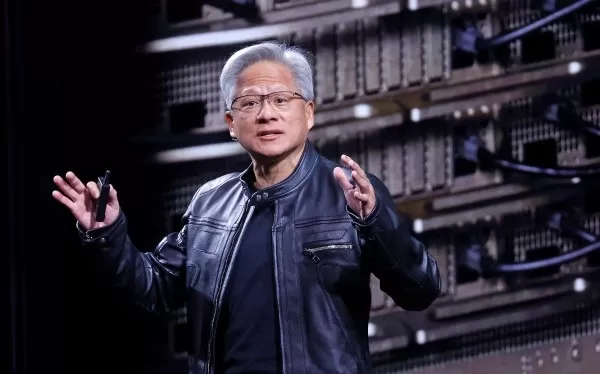 Jensen Huang Reveals Nvidia’s ‘Brand New’ $200B Market Opportunity
Nvidia founder and CEO Jensen Huang stands out as one of the most compelling corporate visionaries, if not the greatest, in driving his company’s narrative. He may even eclipse Salesforce’s Marc Benioff in his unwavering optimism regarding the firm’s
Jensen Huang Reveals Nvidia’s ‘Brand New’ $200B Market Opportunity
Nvidia founder and CEO Jensen Huang stands out as one of the most compelling corporate visionaries, if not the greatest, in driving his company’s narrative. He may even eclipse Salesforce’s Marc Benioff in his unwavering optimism regarding the firm’s
 OneRail Leverages Nvidia AI to Optimize Real-Time Last-Mile Delivery
OneRail has introduced an AI-driven delivery platform leveraging Nvidia technology to assist retailers, wholesalers, and distributors in determining the most efficient delivery methods for individual orders.Named OmniSTAR, the system assesses various
OneRail Leverages Nvidia AI to Optimize Real-Time Last-Mile Delivery
OneRail has introduced an AI-driven delivery platform leveraging Nvidia technology to assist retailers, wholesalers, and distributors in determining the most efficient delivery methods for individual orders.Named OmniSTAR, the system assesses various

2026 Latest Best Top-rated AI Anomaly Detection Tools for KPI Monitoring in SaaS and Ecommerce teams! XIX.AI has curated a powerful, game-changing collection based on rigorous real-world tests and weekly updated rankings. You’ll find detailed free vs paid comparison insights to help you identify the must-try solution that boosts productivity and unlocks your AI edge. Explore now!
10 tools
xix.ai

2026 Latest Best Top-Rated AI Outline Generators for Long-Form SEO Articles, meticulously curated by XIX.AI. These powerful tools offer game-changing assistance in creating high-quality content quickly, boosting writing efficiency significantly. Get a free vs paid comparison along with real-world tests and detailed rankings to help you find the must-try option that suits your needs. Explore now to unlock your AI edge.
8 tools
xix.ai

2026 Latest Best AI Study Tools for Homework and Exam Prep! XIX.AI curates a top-rated list of powerful, game-changing tools that help students boost productivity, streamline homework completion, and ace exams through real-world tests. Get a free vs paid comparison, detailed rankings, and must-try options to unlock your AI edge. Explore now!
10 tools
xix.ai

2026 Latest Best AI Vocal Demo Tools for Songwriters, Hook Creators, and Multi-Language Content Teams! XIX.AI has curated a top-rated list of powerful game-changing tools that go through rigorous real-world tests. You’ll find detailed free vs paid comparison data, comprehensive rankings, and must-try options to help you boost writing efficiency and unlock your creative potential. Explore now to discover your perfect tool for all your content needs!
9 tools
xix.ai

2026 Latest Best Top-rated AI Competitive Research Tools for Small Businesses! XIX.AI has curated a highly powerful game-changing collection, updated weekly with rigorous real-world tests and detailed rankings. You can find a comprehensive free vs paid comparison to help you identify the must-try tools that boost your productivity and give you a competitive edge. Explore now to discover your perfect tool!
9 tools
xix.ai

2026 Latest Best Photoshop AI retouch tools for ecommerce apparel, skin cleanup, and color consistency! This top-rated curated list features powerful game-changing solutions that help you boost writing efficiency, streamline content creation, and achieve perfect visual results effortlessly. Each tool has undergone real-world tests through weekly updated rankings, complete with free vs paid comparison details. Backed by XIX.AI, it’s the must-try guide for anyone aiming to unlock your AI edge. Explore now!
10 tools
xix.ai












