Discover quality AI tools
Bring together the world’s leading artificial intelligence tools to help improve work efficiency

Articles published by KennethMartin
Zhipu AI launched GLM-5.3-FlashX on its BigModel platform, featuring 200 tokens per second output speed. This enhanced version builds on the popular GLM-5.3-Flash, leveraging 100,000 domestic chips to optimize inference efficiency. It prioritizes intelligence, cost-effectiveness, and speed, offering high-throughput, low-latency services for enterprises. Available via API and experience center, the upgrade aims to boost commercial viability in high-concurrency scenarios, marking significant progress in domestic large model inference and accessibility.
Zhipu AI launched GLM-5.3-FlashX on its BigModel platform, featuring 200 tokens per second output speed. This enhanced version builds on the popular GLM-5.3-Flash, leveraging 100,000 domestic chips to optimize inference efficiency. It prioritizes intelligence, cost-effectiveness, and speed, offering high-throughput, low-latency services for enterprises. Available via API and experience center, the upgrade aims to boost commercial viability in high-concurrency scenarios, marking significant progress in domestic large model inference and accessibility.

WikiHow has filed a lawsuit against OpenAI in the U.S. District Court for the Southern District of New York, alleging that OpenAI scraped over 11,000 of its tutorial articles without permission to train ChatGPT and related GPT models, violating at least 1,200 registered copyrights. The platform claims the AI can reproduce its content and generate full tutorials autonomously, reducing production costs and diverting its traffic and revenue, while also threatening to discourage creators. OpenAI states its models were trained solely on publicly available data under fair use principles. The case is seen as a key indicator for defining boundaries between AI training and copyright protection.
WikiHow has filed a lawsuit against OpenAI in the U.S. District Court for the Southern District of New York, alleging that OpenAI scraped over 11,000 of its tutorial articles without permission to train ChatGPT and related GPT models, violating at least 1,200 registered copyrights. The platform claims the AI can reproduce its content and generate full tutorials autonomously, reducing production costs and diverting its traffic and revenue, while also threatening to discourage creators. OpenAI states its models were trained solely on publicly available data under fair use principles. The case is seen as a key indicator for defining boundaries between AI training and copyright protection.

Google DeepMind acquires minority stake in CCP Games, developer of EVE Online, for AI model testing. CCP Games repurchased from Pearl Abyss for $120M, renaming to Fenris Creations. DeepMind cites EVE's complex socio-economic sandbox as ideal for advancing AI planning, memory, and multi-agent collaboration. This signals a shift in AI labs toward large-scale social simulations for real-world decision-making training.
Google DeepMind acquires minority stake in CCP Games, developer of EVE Online, for AI model testing. CCP Games repurchased from Pearl Abyss for $120M, renaming to Fenris Creations. DeepMind cites EVE's complex socio-economic sandbox as ideal for advancing AI planning, memory, and multi-agent collaboration. This signals a shift in AI labs toward large-scale social simulations for real-world decision-making training.
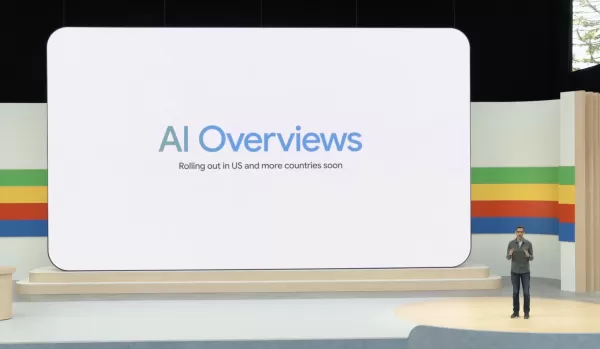
Google has removed its AI Overviews feature for certain health-related queries, like those about liver blood test ranges, following a Guardian investigation that found the tool provided misleading information by omitting key factors. While Google did not confirm the specific removals, a spokesperson stated the company works on broad improvements and an internal clinical review found much of the information was accurate and supported. A patient advocacy group welcomed the move but expressed broader concerns about AI Overviews handling health queries.
Google has removed its AI Overviews feature for certain health-related queries, like those about liver blood test ranges, following a Guardian investigation that found the tool provided misleading information by omitting key factors. While Google did not confirm the specific removals, a spokesperson stated the company works on broad improvements and an internal clinical review found much of the information was accurate and supported. A patient advocacy group welcomed the move but expressed broader concerns about AI Overviews handling health queries.