


 Home
HomeYouTube's Data: Fueling Tomorrow's AI
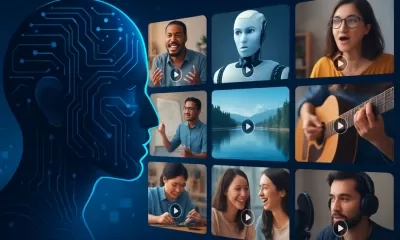
YouTube has evolved far beyond its origins as a simple video platform. It now stands as the world's largest repository of real-world audiovisual data. Each month, over 2.7 billion active users engage with the platform, and more than 500 hours of video are uploaded every minute. This immense stream of content captures the nuances of daily life, culture, education, and global trends as they happen.
This vast collection of raw, unfiltered, and dynamic material is incredibly valuable for Artificial Intelligence development. While many AI models are still trained on curated datasets created in controlled environments, YouTube offers something far richer: authentic speech, natural language, visuals, sounds, and expressions woven into meaningful context. This multimodal input mirrors the complexity of the real world, enabling AI systems to learn how humans naturally behave and communicate.
Moving into 2025 and beyond, AI must advance beyond processing static images or short text snippets. It needs to comprehend emotions, shifting contexts, and subtle signals across different content types. YouTube's unparalleled variety makes it a critical resource. It is no longer merely a media site but a living, breathing dataset shaped by humanity itself.
The platform's scale, depth, and ever-changing nature make it an indispensable asset for refining recommendation systems, training advanced video-language models, and deepening our understanding of human behavior.
YouTube as the World's Largest Labeled Dataset for AI Training
YouTube's video library is not only massive but remarkably diverse. By 2025, it hosts an estimated 5.1 billion videos, with hundreds more hours added every minute. Each video is accompanied by text-based information—titles, descriptions, comments, and auto-generated subtitles. This metadata acts as a form of soft labeling, helping machines infer a video's subject matter even without manual tagging.
AI systems learn by identifying patterns, and YouTube provides an extensive mix of content ranging from academic lectures and professional interviews to casual vlogs, music videos, and tutorials. This exposure allows AI to learn from real human reactions, background noise, varied accents, and diverse cultural expressions. It captures how people speak with different tones and emotional states, making AI models more adaptable for real-world applications.
Unlike pristine, curated datasets, YouTube content is inherently messy and unpredictable. People interrupt each other, laugh, pause, or switch languages spontaneously. While this poses a challenge, it ultimately strengthens AI models. Training on such realistic data better prepares them for noisy audio, complex visual scenes, and ambiguous signals—skills essential for robust speech recognition, live translation, assistive technologies, and video generation.
The video format itself is another key advantage. Unlike static images, video shows events unfolding over time. This helps AI learn about sequences, motion, and cause-and-effect relationships, which are fundamental for tasks like action recognition, video summarization, and predicting future events in a scene.
In essence, YouTube teaches machines not just what to see or hear, but how life unfolds dynamically. It provides AI with a deeper sense of timing, emotion, and human experience.
From Passive Watching to Active Learning: Why YouTube Is Becoming an AI Playground
YouTube is transitioning from a video-sharing site into a crucial training ground for modern AI. Its value lies not only in its sheer volume and variety of content but in its unique reflection of the unscripted real world. User-uploaded videos capture genuine human emotion, shifting contexts, and cultural expressions, exposing AI models to natural conversations, body language, and diverse communication styles on an unprecedented scale.
Traditional datasets are often clean, labeled, and produced under controlled conditions. YouTube content, by contrast, is noisy and unpredictable. Yet this is its strength—it mirrors authentic human interaction, complete with background noise, interruptions, and emotional shifts. Learning from this complexity makes AI systems more flexible and capable of handling real-life situations.
Furthermore, the platform’s metadata—titles, tags, subtitles, and viewer comments—provides helpful, if imperfect, indicators for machine learning models. When combined with visual and audio signals, this data allows AI to build a cohesive multimodal understanding, processing language, sound, and imagery together to form a more complete picture.
Training AI on such a large, dynamic, and weakly labeled video collection represents a significant leap forward. It moves beyond static datasets and brings machines closer to understanding the world as humans do. In this way, YouTube functions as a global, real-time learning environment where AI can observe, learn, and evolve based on authentic human behavior.
How YouTube Trains Smarter Search and Recommendation AI
Every user interaction on YouTube generates valuable behavioral data. Actions like clicking a video, watching duration, skipping content, or stopping partway provide signals that AI systems analyze to refine recommendations. The platform's engine learns from viewer patterns, noticing preferences for video length, topics, or languages, and continuously adjusts future suggestions accordingly.
This learning process is adaptive and continuous, relying not on fixed rules but on predicting user interest based on past behavior. YouTube's search function operates on a similar principle, moving beyond simple keyword matching. AI models work to understand the intent and meaning behind each query, considering language use, context, and trending topics to deliver relevant results even from incomplete or informal searches.
The AI methodologies developed for YouTube's ecosystem have broad applications. Similar systems can enhance e-learning platforms, digital news services, health information portals, and online shopping experiences. AI that learns from user behavior and adapts in real time is becoming a cornerstone of intelligent digital services across industries.
YouTube’s evolution demonstrates how search and recommendation engines can become more precise and relevant. By analyzing behavioral patterns at scale, AI makes content discovery more accurate and timely, establishing a model of user-driven learning that is foundational for future digital services.
From Synthetic Media to Conversational AI
AI is now used not only to understand human behavior but to generate convincingly human-like content. This has spurred the rise of synthetic media, including AI-generated videos, voices, and digital characters, all trained on vast libraries of real content like YouTube videos where people speak and express themselves naturally.
Tools such as Synthesia and Runway enable creators to leverage AI for editing, dubbing, and generating virtual presenters. These applications are valuable in education, advertising, and media production, lowering production costs and barriers to entry, allowing individuals to create professional-quality content with limited technical skills.
However, the proliferation of AI-generated content raises significant concerns. As it becomes harder to distinguish between real and artificial media, the risks of misinformation and public confusion grow. In response, platforms like YouTube are implementing policies that require clear labeling for AI-generated content.
Simultaneously, AI is becoming more sophisticated in understanding human conversation. By learning from extended dialogues, interviews, and casual discussions on platforms like YouTube, AI systems are improving at recognizing tone, turn-taking, and topic flow. These advances make digital assistants and chatbots more natural and effective.
Together, these trends indicate AI's expanding role in both creating and delivering content. While the technology offers immense benefits, its responsible use is paramount. Clear labeling, ethical guidelines, and public awareness are necessary to maintain trust and prevent misuse.
Ethical Challenges in Using YouTube Data for AI
While using YouTube to train AI models offers significant technical advantages, it introduces serious ethical and privacy questions. Although the content is public, most creators do not anticipate their personal videos—featuring their faces, voices, and stories—being used for machine learning. Using this data without explicit consent raises issues of respect and digital rights.
Public accessibility does not equate to ethical approval. The practice of harvesting online content for AI training without transparency or user consent has eroded trust in several high-profile projects. There is a growing public demand for clarity on how training data is sourced, stored, and utilized. Platforms and developers are increasingly expected to provide clear opt-out mechanisms for users.
Technical measures like data anonymization and differential privacy can help mitigate privacy risks by protecting individual identities while still enabling AI development. However, technical safeguards alone are insufficient. All data, even when anonymized, must be handled with careful ethical consideration to prevent misuse.
Bias is another critical concern. YouTube's content does not represent all regions, cultures, or languages equally. Models trained predominantly on data from specific demographics may perform poorly or unfairly when applied elsewhere. Addressing this requires actively diversifying training data and rigorously testing models across varied contexts.
Responsible use of YouTube data for AI necessitates a committed ethical framework. This includes obtaining meaningful consent, protecting user privacy, ensuring transparency, and actively promoting fairness. These steps are essential for building AI systems that are not only powerful but also trustworthy and inclusive.
The Bottom Line
YouTube is emerging as a foundational platform shaping the future of AI. Its immense, diverse, and continuously evolving content allows machines to learn in ways that closely mirror authentic human behavior. From powering intelligent recommendation engines to enabling synthetic media and conversational AI, the platform presents both remarkable opportunity and profound complexity.
Balancing these technological advances with ethical responsibility is crucial. As AI learns from public data, protecting user privacy, ensuring transparency, and mitigating bias must be top priorities. Without these safeguards, technological progress risks undermining public trust. If developed responsibly, AI systems nurtured by YouTube's ecosystem can become more useful, equitable, and aligned with genuine human needs. The ultimate challenge lies not merely in what AI can learn, but in how wisely we choose to teach it.
Related article
 U.S. Stocks Hit Historic Milestone as AI and Aerospace Giants Prepare for Trillion-Dollar Debut
Elon Musk, Sam Altman, and Dario Amodei, three titans of the technology sector, are advancing toward initial public offerings for their respective ventures. With SpaceX, OpenAI, and Anthropic—three industry behemoths nearing trillion-dollar valuation
Swedish AI Startup Lovable Eyes $13.2 Billion Valuation After Major Funding Round
As AI-driven coding tools gain traction, Swedish startup Lovable has secured a major funding round. The company aims to raise $3 billion, potentially boosting its valuation to $13.2 billion—double the $6.6 billion recorded last December. Menlo Ventur
Google Tests Remy AI Agent for Gemini as Focus Shifts to User Control
According to Business Insider, Google is testing Remy, a new AI personal agent for Gemini. This tool aims to execute tasks on behalf of users, streamlining both professional workflows and daily routines.Currently, Remy is undergoing testing in an int
Related Special Topic Recommendations
Data Analysis
U.S. Stocks Hit Historic Milestone as AI and Aerospace Giants Prepare for Trillion-Dollar Debut
Elon Musk, Sam Altman, and Dario Amodei, three titans of the technology sector, are advancing toward initial public offerings for their respective ventures. With SpaceX, OpenAI, and Anthropic—three industry behemoths nearing trillion-dollar valuation
Swedish AI Startup Lovable Eyes $13.2 Billion Valuation After Major Funding Round
As AI-driven coding tools gain traction, Swedish startup Lovable has secured a major funding round. The company aims to raise $3 billion, potentially boosting its valuation to $13.2 billion—double the $6.6 billion recorded last December. Menlo Ventur
Google Tests Remy AI Agent for Gemini as Focus Shifts to User Control
According to Business Insider, Google is testing Remy, a new AI personal agent for Gemini. This tool aims to execute tasks on behalf of users, streamlining both professional workflows and daily routines.Currently, Remy is undergoing testing in an int
Related Special Topic Recommendations
Data Analysis
 Best AI Anomaly Detection Tools for KPI Monitoring across SaaS and Ecommerce Teams
2026 Latest Best Top-rated AI Anomaly Detection Tools for KPI Monitoring in SaaS and Ecommerce teams! XIX.AI has curated a powerful, game-changing collection based on rigorous real-world tests and weekly updated rankings. You’ll find detailed free vs paid comparison insights to help you identify the must-try solution that boosts productivity and unlocks your AI edge. Explore now!
 10 tools
 xix.ai
writing
Best AI Outline Generators for Long-Form SEO Articles
xix.ai
writing
Best AI Outline Generators for Long-Form SEO Articles
2026 Latest Best Top-Rated AI Outline Generators for Long-Form SEO Articles, meticulously curated by XIX.AI. These powerful tools offer game-changing assistance in creating high-quality content quickly, boosting writing efficiency significantly. Get a free vs paid comparison along with real-world tests and detailed rankings to help you find the must-try option that suits your needs. Explore now to unlock your AI edge.
8 tools
xix.ai
Education and Learning
AI Study Tools for Homework and Exam Prep
2026 Latest Best AI Study Tools for Homework and Exam Prep! XIX.AI curates a top-rated list of powerful, game-changing tools that help students boost productivity, streamline homework completion, and ace exams through real-world tests. Get a free vs paid comparison, detailed rankings, and must-try options to unlock your AI edge. Explore now!
10 tools
xix.ai
Music composition
AI Vocal Demo Tools for Songwriters, Hooks, Toplines, and Multilingual Draft Sessions
2026 Latest Best AI Vocal Demo Tools for Songwriters, Hook Creators, and Multi-Language Content Teams! XIX.AI has curated a top-rated list of powerful game-changing tools that go through rigorous real-world tests. You’ll find detailed free vs paid comparison data, comprehensive rankings, and must-try options to help you boost writing efficiency and unlock your creative potential. Explore now to discover your perfect tool for all your content needs!
9 tools
xix.ai
Business
Best AI Competitive Research Tools for Small Businesses
2026 Latest Best Top-rated AI Competitive Research Tools for Small Businesses! XIX.AI has curated a highly powerful game-changing collection, updated weekly with rigorous real-world tests and detailed rankings. You can find a comprehensive free vs paid comparison to help you identify the must-try tools that boost your productivity and give you a competitive edge. Explore now to discover your perfect tool!
9 tools
xix.ai
Image editing
Photoshop AI Retouch Tools for Ecommerce Apparel, Skin Cleanup, and Color Consistency
2026 Latest Best Photoshop AI retouch tools for ecommerce apparel, skin cleanup, and color consistency! This top-rated curated list features powerful game-changing solutions that help you boost writing efficiency, streamline content creation, and achieve perfect visual results effortlessly. Each tool has undergone real-world tests through weekly updated rankings, complete with free vs paid comparison details. Backed by XIX.AI, it’s the must-try guide for anyone aiming to unlock your AI edge. Explore now!
10 tools
xix.ai

 Comments (0)
0/500
Comments (0)
0/500
YouTube has evolved far beyond its origins as a simple video platform. It now stands as the world's largest repository of real-world audiovisual data. Each month, over 2.7 billion active users engage with the platform, and more than 500 hours of video are uploaded every minute. This immense stream of content captures the nuances of daily life, culture, education, and global trends as they happen.
This vast collection of raw, unfiltered, and dynamic material is incredibly valuable for Artificial Intelligence development. While many AI models are still trained on curated datasets created in controlled environments, YouTube offers something far richer: authentic speech, natural language, visuals, sounds, and expressions woven into meaningful context. This multimodal input mirrors the complexity of the real world, enabling AI systems to learn how humans naturally behave and communicate.
Moving into 2025 and beyond, AI must advance beyond processing static images or short text snippets. It needs to comprehend emotions, shifting contexts, and subtle signals across different content types. YouTube's unparalleled variety makes it a critical resource. It is no longer merely a media site but a living, breathing dataset shaped by humanity itself.
The platform's scale, depth, and ever-changing nature make it an indispensable asset for refining recommendation systems, training advanced video-language models, and deepening our understanding of human behavior.
YouTube as the World's Largest Labeled Dataset for AI Training
YouTube's video library is not only massive but remarkably diverse. By 2025, it hosts an estimated 5.1 billion videos, with hundreds more hours added every minute. Each video is accompanied by text-based information—titles, descriptions, comments, and auto-generated subtitles. This metadata acts as a form of soft labeling, helping machines infer a video's subject matter even without manual tagging.
AI systems learn by identifying patterns, and YouTube provides an extensive mix of content ranging from academic lectures and professional interviews to casual vlogs, music videos, and tutorials. This exposure allows AI to learn from real human reactions, background noise, varied accents, and diverse cultural expressions. It captures how people speak with different tones and emotional states, making AI models more adaptable for real-world applications.
Unlike pristine, curated datasets, YouTube content is inherently messy and unpredictable. People interrupt each other, laugh, pause, or switch languages spontaneously. While this poses a challenge, it ultimately strengthens AI models. Training on such realistic data better prepares them for noisy audio, complex visual scenes, and ambiguous signals—skills essential for robust speech recognition, live translation, assistive technologies, and video generation.
The video format itself is another key advantage. Unlike static images, video shows events unfolding over time. This helps AI learn about sequences, motion, and cause-and-effect relationships, which are fundamental for tasks like action recognition, video summarization, and predicting future events in a scene.
In essence, YouTube teaches machines not just what to see or hear, but how life unfolds dynamically. It provides AI with a deeper sense of timing, emotion, and human experience.
From Passive Watching to Active Learning: Why YouTube Is Becoming an AI Playground
YouTube is transitioning from a video-sharing site into a crucial training ground for modern AI. Its value lies not only in its sheer volume and variety of content but in its unique reflection of the unscripted real world. User-uploaded videos capture genuine human emotion, shifting contexts, and cultural expressions, exposing AI models to natural conversations, body language, and diverse communication styles on an unprecedented scale.
Traditional datasets are often clean, labeled, and produced under controlled conditions. YouTube content, by contrast, is noisy and unpredictable. Yet this is its strength—it mirrors authentic human interaction, complete with background noise, interruptions, and emotional shifts. Learning from this complexity makes AI systems more flexible and capable of handling real-life situations.
Furthermore, the platform’s metadata—titles, tags, subtitles, and viewer comments—provides helpful, if imperfect, indicators for machine learning models. When combined with visual and audio signals, this data allows AI to build a cohesive multimodal understanding, processing language, sound, and imagery together to form a more complete picture.
Training AI on such a large, dynamic, and weakly labeled video collection represents a significant leap forward. It moves beyond static datasets and brings machines closer to understanding the world as humans do. In this way, YouTube functions as a global, real-time learning environment where AI can observe, learn, and evolve based on authentic human behavior.
How YouTube Trains Smarter Search and Recommendation AI
Every user interaction on YouTube generates valuable behavioral data. Actions like clicking a video, watching duration, skipping content, or stopping partway provide signals that AI systems analyze to refine recommendations. The platform's engine learns from viewer patterns, noticing preferences for video length, topics, or languages, and continuously adjusts future suggestions accordingly.
This learning process is adaptive and continuous, relying not on fixed rules but on predicting user interest based on past behavior. YouTube's search function operates on a similar principle, moving beyond simple keyword matching. AI models work to understand the intent and meaning behind each query, considering language use, context, and trending topics to deliver relevant results even from incomplete or informal searches.
The AI methodologies developed for YouTube's ecosystem have broad applications. Similar systems can enhance e-learning platforms, digital news services, health information portals, and online shopping experiences. AI that learns from user behavior and adapts in real time is becoming a cornerstone of intelligent digital services across industries.
YouTube’s evolution demonstrates how search and recommendation engines can become more precise and relevant. By analyzing behavioral patterns at scale, AI makes content discovery more accurate and timely, establishing a model of user-driven learning that is foundational for future digital services.
From Synthetic Media to Conversational AI
AI is now used not only to understand human behavior but to generate convincingly human-like content. This has spurred the rise of synthetic media, including AI-generated videos, voices, and digital characters, all trained on vast libraries of real content like YouTube videos where people speak and express themselves naturally.
Tools such as Synthesia and Runway enable creators to leverage AI for editing, dubbing, and generating virtual presenters. These applications are valuable in education, advertising, and media production, lowering production costs and barriers to entry, allowing individuals to create professional-quality content with limited technical skills.
However, the proliferation of AI-generated content raises significant concerns. As it becomes harder to distinguish between real and artificial media, the risks of misinformation and public confusion grow. In response, platforms like YouTube are implementing policies that require clear labeling for AI-generated content.
Simultaneously, AI is becoming more sophisticated in understanding human conversation. By learning from extended dialogues, interviews, and casual discussions on platforms like YouTube, AI systems are improving at recognizing tone, turn-taking, and topic flow. These advances make digital assistants and chatbots more natural and effective.
Together, these trends indicate AI's expanding role in both creating and delivering content. While the technology offers immense benefits, its responsible use is paramount. Clear labeling, ethical guidelines, and public awareness are necessary to maintain trust and prevent misuse.
Ethical Challenges in Using YouTube Data for AI
While using YouTube to train AI models offers significant technical advantages, it introduces serious ethical and privacy questions. Although the content is public, most creators do not anticipate their personal videos—featuring their faces, voices, and stories—being used for machine learning. Using this data without explicit consent raises issues of respect and digital rights.
Public accessibility does not equate to ethical approval. The practice of harvesting online content for AI training without transparency or user consent has eroded trust in several high-profile projects. There is a growing public demand for clarity on how training data is sourced, stored, and utilized. Platforms and developers are increasingly expected to provide clear opt-out mechanisms for users.
Technical measures like data anonymization and differential privacy can help mitigate privacy risks by protecting individual identities while still enabling AI development. However, technical safeguards alone are insufficient. All data, even when anonymized, must be handled with careful ethical consideration to prevent misuse.
Bias is another critical concern. YouTube's content does not represent all regions, cultures, or languages equally. Models trained predominantly on data from specific demographics may perform poorly or unfairly when applied elsewhere. Addressing this requires actively diversifying training data and rigorously testing models across varied contexts.
Responsible use of YouTube data for AI necessitates a committed ethical framework. This includes obtaining meaningful consent, protecting user privacy, ensuring transparency, and actively promoting fairness. These steps are essential for building AI systems that are not only powerful but also trustworthy and inclusive.
The Bottom Line
YouTube is emerging as a foundational platform shaping the future of AI. Its immense, diverse, and continuously evolving content allows machines to learn in ways that closely mirror authentic human behavior. From powering intelligent recommendation engines to enabling synthetic media and conversational AI, the platform presents both remarkable opportunity and profound complexity.
Balancing these technological advances with ethical responsibility is crucial. As AI learns from public data, protecting user privacy, ensuring transparency, and mitigating bias must be top priorities. Without these safeguards, technological progress risks undermining public trust. If developed responsibly, AI systems nurtured by YouTube's ecosystem can become more useful, equitable, and aligned with genuine human needs. The ultimate challenge lies not merely in what AI can learn, but in how wisely we choose to teach it.








 U.S. Stocks Hit Historic Milestone as AI and Aerospace Giants Prepare for Trillion-Dollar Debut
Elon Musk, Sam Altman, and Dario Amodei, three titans of the technology sector, are advancing toward initial public offerings for their respective ventures. With SpaceX, OpenAI, and Anthropic—three industry behemoths nearing trillion-dollar valuation
U.S. Stocks Hit Historic Milestone as AI and Aerospace Giants Prepare for Trillion-Dollar Debut
Elon Musk, Sam Altman, and Dario Amodei, three titans of the technology sector, are advancing toward initial public offerings for their respective ventures. With SpaceX, OpenAI, and Anthropic—three industry behemoths nearing trillion-dollar valuation
 Swedish AI Startup Lovable Eyes $13.2 Billion Valuation After Major Funding Round
As AI-driven coding tools gain traction, Swedish startup Lovable has secured a major funding round. The company aims to raise $3 billion, potentially boosting its valuation to $13.2 billion—double the $6.6 billion recorded last December. Menlo Ventur
Google Tests Remy AI Agent for Gemini as Focus Shifts to User Control
According to Business Insider, Google is testing Remy, a new AI personal agent for Gemini. This tool aims to execute tasks on behalf of users, streamlining both professional workflows and daily routines.Currently, Remy is undergoing testing in an int
Swedish AI Startup Lovable Eyes $13.2 Billion Valuation After Major Funding Round
As AI-driven coding tools gain traction, Swedish startup Lovable has secured a major funding round. The company aims to raise $3 billion, potentially boosting its valuation to $13.2 billion—double the $6.6 billion recorded last December. Menlo Ventur
Google Tests Remy AI Agent for Gemini as Focus Shifts to User Control
According to Business Insider, Google is testing Remy, a new AI personal agent for Gemini. This tool aims to execute tasks on behalf of users, streamlining both professional workflows and daily routines.Currently, Remy is undergoing testing in an int

2026 Latest Best Top-rated AI Anomaly Detection Tools for KPI Monitoring in SaaS and Ecommerce teams! XIX.AI has curated a powerful, game-changing collection based on rigorous real-world tests and weekly updated rankings. You’ll find detailed free vs paid comparison insights to help you identify the must-try solution that boosts productivity and unlocks your AI edge. Explore now!
10 tools
xix.ai

2026 Latest Best Top-Rated AI Outline Generators for Long-Form SEO Articles, meticulously curated by XIX.AI. These powerful tools offer game-changing assistance in creating high-quality content quickly, boosting writing efficiency significantly. Get a free vs paid comparison along with real-world tests and detailed rankings to help you find the must-try option that suits your needs. Explore now to unlock your AI edge.
8 tools
xix.ai

2026 Latest Best AI Study Tools for Homework and Exam Prep! XIX.AI curates a top-rated list of powerful, game-changing tools that help students boost productivity, streamline homework completion, and ace exams through real-world tests. Get a free vs paid comparison, detailed rankings, and must-try options to unlock your AI edge. Explore now!
10 tools
xix.ai

2026 Latest Best AI Vocal Demo Tools for Songwriters, Hook Creators, and Multi-Language Content Teams! XIX.AI has curated a top-rated list of powerful game-changing tools that go through rigorous real-world tests. You’ll find detailed free vs paid comparison data, comprehensive rankings, and must-try options to help you boost writing efficiency and unlock your creative potential. Explore now to discover your perfect tool for all your content needs!
9 tools
xix.ai

2026 Latest Best Top-rated AI Competitive Research Tools for Small Businesses! XIX.AI has curated a highly powerful game-changing collection, updated weekly with rigorous real-world tests and detailed rankings. You can find a comprehensive free vs paid comparison to help you identify the must-try tools that boost your productivity and give you a competitive edge. Explore now to discover your perfect tool!
9 tools
xix.ai

2026 Latest Best Photoshop AI retouch tools for ecommerce apparel, skin cleanup, and color consistency! This top-rated curated list features powerful game-changing solutions that help you boost writing efficiency, streamline content creation, and achieve perfect visual results effortlessly. Each tool has undergone real-world tests through weekly updated rankings, complete with free vs paid comparison details. Backed by XIX.AI, it’s the must-try guide for anyone aiming to unlock your AI edge. Explore now!
10 tools
xix.ai












