


 Home
Home
Xiaomi Unveils MiMo-V2-TTS, Its Self-Developed AI Model for Dialect and Emotion Voice Synthesis
Xiaomi has officially launched its self-developed large-scale speech synthesis model, MiMo-V2-TTS, representing a major advancement in highly controllable and expressive voice generation. Built on Xiaomi's proprietary Audio Tokenizer and a multi-codebook speech-text joint modeling framework, the model leverages extensive pre-training on hundreds of millions of hours of speech data to achieve precise adjustments from broad style to nuanced emotional detail. Unlike conventional TTS systems, MiMo-V2-TTS can execute tone shifts and emotional variations within a single sentence, closely mimicking the natural rhythm of human speech and supporting song synthesis with accurate pitch and rhythm. Technically, Xiaomi incorporated multi-dimensional reinforcement learning to balance the stability and expressiveness of the output. The model intelligently recognizes textual cues such as punctuation, intonation markers, and emphasis indicators, translating them into appropriate vocal expressions without requiring additional manual annotation. Furthermore, the model exhibits strong cross-regional adaptability, supporting multiple dialects including Northeastern Mandarin, Sichuanese, Henanese, Cantonese, and Taiwanese accents, and is capable of character-driven vocal performances.
As a key milestone in Xiaomi's voice technology roadmap, MiMo-V2-TTS will further expand multilingual support and integrate deeply with the multimodal understanding capabilities of MiMo-V2-Omni. This progression from standalone speech synthesis to coordinated multimodal perception and expression signals a shift in AI agents from basic semantic interaction toward more personable and emotionally resonant human-computer interaction, significantly enhancing user experience in applications like smart cabins and smart homes.

Related article
 Swedish AI Startup Lovable Eyes $13.2 Billion Valuation After Major Funding Round
As AI-driven coding tools gain traction, Swedish startup Lovable has secured a major funding round. The company aims to raise $3 billion, potentially boosting its valuation to $13.2 billion—double the $6.6 billion recorded last December. Menlo Ventur
Google Tests Remy AI Agent for Gemini as Focus Shifts to User Control
According to Business Insider, Google is testing Remy, a new AI personal agent for Gemini. This tool aims to execute tasks on behalf of users, streamlining both professional workflows and daily routines.Currently, Remy is undergoing testing in an int
How to fix Core Web Vitals for better SEO rankings
Streamline Report Card Comments with AI ToolsIntroductionAI Tools for Generating Report Card CommentsMagic SchoolAlmanac AIChat GPTUsing Magic School to Generate Report Card CommentsLogging into Magic SchoolSelecting the Report Card Comments ToolCust
Related Special Topic Recommendations
writing
Swedish AI Startup Lovable Eyes $13.2 Billion Valuation After Major Funding Round
As AI-driven coding tools gain traction, Swedish startup Lovable has secured a major funding round. The company aims to raise $3 billion, potentially boosting its valuation to $13.2 billion—double the $6.6 billion recorded last December. Menlo Ventur
Google Tests Remy AI Agent for Gemini as Focus Shifts to User Control
According to Business Insider, Google is testing Remy, a new AI personal agent for Gemini. This tool aims to execute tasks on behalf of users, streamlining both professional workflows and daily routines.Currently, Remy is undergoing testing in an int
How to fix Core Web Vitals for better SEO rankings
Streamline Report Card Comments with AI ToolsIntroductionAI Tools for Generating Report Card CommentsMagic SchoolAlmanac AIChat GPTUsing Magic School to Generate Report Card CommentsLogging into Magic SchoolSelecting the Report Card Comments ToolCust
Related Special Topic Recommendations
writing
 Best AI Outline Generators for Long-Form SEO Articles
2026 Latest Best Top-Rated AI Outline Generators for Long-Form SEO Articles, meticulously curated by XIX.AI. These powerful tools offer game-changing assistance in creating high-quality content quickly, boosting writing efficiency significantly. Get a free vs paid comparison along with real-world tests and detailed rankings to help you find the must-try option that suits your needs. Explore now to unlock your AI edge.
 8 tools
 xix.ai
Education and Learning
AI Study Tools for Homework and Exam Prep
xix.ai
Education and Learning
AI Study Tools for Homework and Exam Prep
2026 Latest Best AI Study Tools for Homework and Exam Prep! XIX.AI curates a top-rated list of powerful, game-changing tools that help students boost productivity, streamline homework completion, and ace exams through real-world tests. Get a free vs paid comparison, detailed rankings, and must-try options to unlock your AI edge. Explore now!
10 tools
xix.ai
Music composition
AI Vocal Demo Tools for Songwriters, Hooks, Toplines, and Multilingual Draft Sessions
2026 Latest Best AI Vocal Demo Tools for Songwriters, Hook Creators, and Multi-Language Content Teams! XIX.AI has curated a top-rated list of powerful game-changing tools that go through rigorous real-world tests. You’ll find detailed free vs paid comparison data, comprehensive rankings, and must-try options to help you boost writing efficiency and unlock your creative potential. Explore now to discover your perfect tool for all your content needs!
9 tools
xix.ai
Business
Best AI Competitive Research Tools for Small Businesses
2026 Latest Best Top-rated AI Competitive Research Tools for Small Businesses! XIX.AI has curated a highly powerful game-changing collection, updated weekly with rigorous real-world tests and detailed rankings. You can find a comprehensive free vs paid comparison to help you identify the must-try tools that boost your productivity and give you a competitive edge. Explore now to discover your perfect tool!
9 tools
xix.ai
Image editing
Photoshop AI Retouch Tools for Ecommerce Apparel, Skin Cleanup, and Color Consistency
2026 Latest Best Photoshop AI retouch tools for ecommerce apparel, skin cleanup, and color consistency! This top-rated curated list features powerful game-changing solutions that help you boost writing efficiency, streamline content creation, and achieve perfect visual results effortlessly. Each tool has undergone real-world tests through weekly updated rankings, complete with free vs paid comparison details. Backed by XIX.AI, it’s the must-try guide for anyone aiming to unlock your AI edge. Explore now!
10 tools
xix.ai
Prompt
Best AI Prompt Libraries for ChatGPT Workflows
2026 Latest Best Top-Rated AI Prompt Libraries for optimizing all types of ChatGPT workflows. XIX.AI has curated a powerful, game-changing collection that goes through rigorous real-world tests to ensure top performance. You can find detailed free vs paid comparisons and expert rankings to help you choose the must-try tools that boost your productivity and unlock your AI edge. Explore now!
11 tools
xix.ai

 Comments (3)
0/500
Comments (3)
0/500
![DavidThomas]()
Xiaomi's new MiMo-V2-TTS looks promising for dialect support, but I'm still skeptical about how well it handles complex emotional shifts in real-time conversations. 🤔 The tech is impressive, yet the uncanny valley effect might linger for some users. Let's see if it can truly mimic the subtle nuances of human speech without sounding robotic after long usage. 🎙️✨
![DavidGreen]()
Wait, so Xiaomi's new model can synthesize voice with dialects AND emotions? That's either incredibly useful for localization or terrifying for deepfakes. I wonder how they handle tonal languages like Chinese... also, rip voice actors? 😬
![ArthurSanchez]()
Finally! Xiaomi's MiMo-V2-TTS sounds interesting, but I wonder if it can handle my Scottish accent? 🏴 Also, privacy concerns about voice data? 🤔
Xiaomi has officially launched its self-developed large-scale speech synthesis model, MiMo-V2-TTS, representing a major advancement in highly controllable and expressive voice generation. Built on Xiaomi's proprietary Audio Tokenizer and a multi-codebook speech-text joint modeling framework, the model leverages extensive pre-training on hundreds of millions of hours of speech data to achieve precise adjustments from broad style to nuanced emotional detail. Unlike conventional TTS systems, MiMo-V2-TTS can execute tone shifts and emotional variations within a single sentence, closely mimicking the natural rhythm of human speech and supporting song synthesis with accurate pitch and rhythm. Technically, Xiaomi incorporated multi-dimensional reinforcement learning to balance the stability and expressiveness of the output. The model intelligently recognizes textual cues such as punctuation, intonation markers, and emphasis indicators, translating them into appropriate vocal expressions without requiring additional manual annotation. Furthermore, the model exhibits strong cross-regional adaptability, supporting multiple dialects including Northeastern Mandarin, Sichuanese, Henanese, Cantonese, and Taiwanese accents, and is capable of character-driven vocal performances.
As a key milestone in Xiaomi's voice technology roadmap, MiMo-V2-TTS will further expand multilingual support and integrate deeply with the multimodal understanding capabilities of MiMo-V2-Omni. This progression from standalone speech synthesis to coordinated multimodal perception and expression signals a shift in AI agents from basic semantic interaction toward more personable and emotionally resonant human-computer interaction, significantly enhancing user experience in applications like smart cabins and smart homes.








 Swedish AI Startup Lovable Eyes $13.2 Billion Valuation After Major Funding Round
As AI-driven coding tools gain traction, Swedish startup Lovable has secured a major funding round. The company aims to raise $3 billion, potentially boosting its valuation to $13.2 billion—double the $6.6 billion recorded last December. Menlo Ventur
Google Tests Remy AI Agent for Gemini as Focus Shifts to User Control
According to Business Insider, Google is testing Remy, a new AI personal agent for Gemini. This tool aims to execute tasks on behalf of users, streamlining both professional workflows and daily routines.Currently, Remy is undergoing testing in an int
Swedish AI Startup Lovable Eyes $13.2 Billion Valuation After Major Funding Round
As AI-driven coding tools gain traction, Swedish startup Lovable has secured a major funding round. The company aims to raise $3 billion, potentially boosting its valuation to $13.2 billion—double the $6.6 billion recorded last December. Menlo Ventur
Google Tests Remy AI Agent for Gemini as Focus Shifts to User Control
According to Business Insider, Google is testing Remy, a new AI personal agent for Gemini. This tool aims to execute tasks on behalf of users, streamlining both professional workflows and daily routines.Currently, Remy is undergoing testing in an int
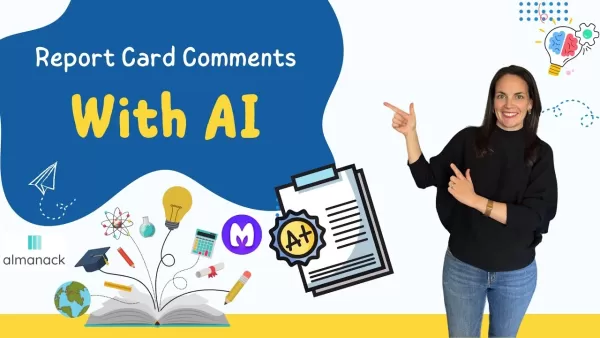 How to fix Core Web Vitals for better SEO rankings
Streamline Report Card Comments with AI ToolsIntroductionAI Tools for Generating Report Card CommentsMagic SchoolAlmanac AIChat GPTUsing Magic School to Generate Report Card CommentsLogging into Magic SchoolSelecting the Report Card Comments ToolCust
How to fix Core Web Vitals for better SEO rankings
Streamline Report Card Comments with AI ToolsIntroductionAI Tools for Generating Report Card CommentsMagic SchoolAlmanac AIChat GPTUsing Magic School to Generate Report Card CommentsLogging into Magic SchoolSelecting the Report Card Comments ToolCust

2026 Latest Best Top-Rated AI Outline Generators for Long-Form SEO Articles, meticulously curated by XIX.AI. These powerful tools offer game-changing assistance in creating high-quality content quickly, boosting writing efficiency significantly. Get a free vs paid comparison along with real-world tests and detailed rankings to help you find the must-try option that suits your needs. Explore now to unlock your AI edge.
8 tools
xix.ai

2026 Latest Best AI Study Tools for Homework and Exam Prep! XIX.AI curates a top-rated list of powerful, game-changing tools that help students boost productivity, streamline homework completion, and ace exams through real-world tests. Get a free vs paid comparison, detailed rankings, and must-try options to unlock your AI edge. Explore now!
10 tools
xix.ai

2026 Latest Best AI Vocal Demo Tools for Songwriters, Hook Creators, and Multi-Language Content Teams! XIX.AI has curated a top-rated list of powerful game-changing tools that go through rigorous real-world tests. You’ll find detailed free vs paid comparison data, comprehensive rankings, and must-try options to help you boost writing efficiency and unlock your creative potential. Explore now to discover your perfect tool for all your content needs!
9 tools
xix.ai

2026 Latest Best Top-rated AI Competitive Research Tools for Small Businesses! XIX.AI has curated a highly powerful game-changing collection, updated weekly with rigorous real-world tests and detailed rankings. You can find a comprehensive free vs paid comparison to help you identify the must-try tools that boost your productivity and give you a competitive edge. Explore now to discover your perfect tool!
9 tools
xix.ai

2026 Latest Best Photoshop AI retouch tools for ecommerce apparel, skin cleanup, and color consistency! This top-rated curated list features powerful game-changing solutions that help you boost writing efficiency, streamline content creation, and achieve perfect visual results effortlessly. Each tool has undergone real-world tests through weekly updated rankings, complete with free vs paid comparison details. Backed by XIX.AI, it’s the must-try guide for anyone aiming to unlock your AI edge. Explore now!
10 tools
xix.ai
2026 Latest Best Top-Rated AI Prompt Libraries for optimizing all types of ChatGPT workflows. XIX.AI has curated a powerful, game-changing collection that goes through rigorous real-world tests to ensure top performance. You can find detailed free vs paid comparisons and expert rankings to help you choose the must-try tools that boost your productivity and unlock your AI edge. Explore now!
11 tools
xix.ai

Xiaomi's new MiMo-V2-TTS looks promising for dialect support, but I'm still skeptical about how well it handles complex emotional shifts in real-time conversations. 🤔 The tech is impressive, yet the uncanny valley effect might linger for some users. Let's see if it can truly mimic the subtle nuances of human speech without sounding robotic after long usage. 🎙️✨
Wait, so Xiaomi's new model can synthesize voice with dialects AND emotions? That's either incredibly useful for localization or terrifying for deepfakes. I wonder how they handle tonal languages like Chinese... also, rip voice actors? 😬
Finally! Xiaomi's MiMo-V2-TTS sounds interesting, but I wonder if it can handle my Scottish accent? 🏴 Also, privacy concerns about voice data? 🤔












