


 Home
Wan-Streamer v0.2 delivers ultra-low latency AI chat
As modern technology advances rapidly, human-AI interaction is becoming more common. Traditional video calls often struggle with lag, delays, and audio-visual desynchronization. Wan-Streamer v0.2, the latest release from Tongyi Lab, overcomes these challenges entirely, enabling truly natural "face-to-face" communication with a response delay of just 550 milliseconds.
Wan-Streamer v0.2 is a new end-to-end multimodal understanding and generation model. It integrates "listening, seeing, speaking, and performing" within a single Transformer model, allowing AI to perceive and respond to conversations in real time, just like humans. This means that whether it's voice, text, or video, AI can instantly understand and generate appropriate responses.
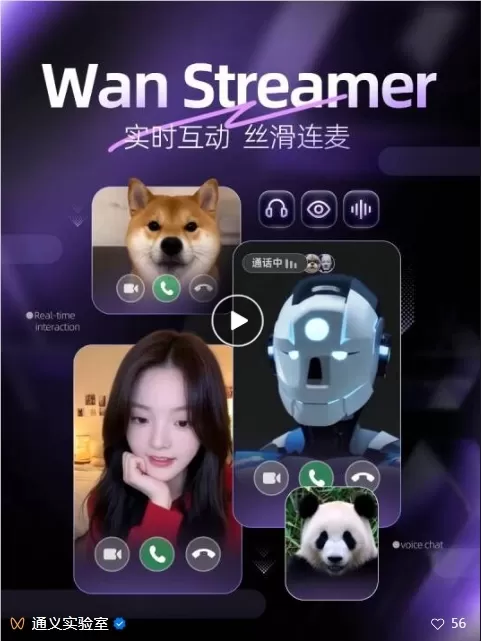
Compared to other real-time interactive systems on the market, Wan-Streamer demonstrates excellent response speed, with an overall latency of only 0.55 seconds (including network transmission), significantly faster than most existing voice dialogue models. In addition, its video quality has been significantly improved, with the resolution increasing from 192×336 to 640×368, making scene details more clearly visible.
This technological breakthrough stems from its unique architecture design. Traditional real-time interactive systems usually adopt a cascading pipeline mode, leading to slow information transmission and easy synchronization issues. Wan-Streamer introduces the concept of streaming units, allowing it to complete user input perception, state updates, and response generation within 160 milliseconds, thus achieving smooth interaction.
In this version, AI is not just a "floating head," but a full-body digital human capable of naturally expressing emotions and actions. You can see the AI's eye contact, posture, and gestures, as well as its surrounding environment. This design makes users feel more realism and warmth when interacting with AI.
Additionally, the application scenarios of Wan-Streamer v0.2 are very broad, including spoken language practice, psychological counseling, educational tutoring, game NPC interaction, and more, covering almost all fields that require a sense of presence.
In summary, Wan-Streamer v0.2, through the combination of native streaming architecture and distributed inference, makes AI communication closer to real human interaction. How this technology will further develop is worth our continued attention.
Related article
 Meta Wants Your Next Gadget to Be Muse-Infused
Meta’s Muse, an AI assistant that handles travel bookings, form submissions, and shopping, has gained widespread adoption, yet a new initiative may especially intrigue developers and hardware enthusiasts.On Friday, Meta unveiled Muse Gadgets, an open
Meta Joins TSMC and Micron to Equip New Servers with Old Memory
As artificial intelligence adoption accelerates worldwide, next-generation DDR5 memory is experiencing a critical supply shortage. To avoid delays in AI data center deployments, Meta has partnered with industry leaders like TSMC and Micron to enginee
How Time Series Databases Power Real-Time Robotics Data
Doug Pagnutti of Tiger Data.Pagnutti serves as an industrial developer advocate at Tiger Data, supporting teams in building real-world industrial systems. With over 12 years of experience in oil and gas and manufacturing automation, he worked on PLCs
Related Special Topic Recommendations
Design & Art
 Top AI Illustration Tools: Create Editorial Scenes and Cover Art Faster
2026 Latest Top-rated AI Illustration Tools: Our curated list features the best powerfully designed tools for creating stunning editorial scenes and eye-catching cover art quickly. Each option has gone through rigorous real-world tests, offering a free vs paid comparison to help you find the perfect match for your workflow. Try these must-try solutions today to unlock your AI edge and boost your creative productivity. Explore now at XIX.AI.
 10 tools
 xix.ai
Education and Learning
Top AI Tutors for Exam Prep: Practice Math, Science, and English
2026 Latest Top-Rated Best AI Tutors for Exam Prep are here on XIX.AI! Our curated list features powerful game-changing tools that offer free vs paid comparison, real-world tests, and weekly updated rankings. They help boost your writing efficiency, simplify complex topic learning, and unlock your academic potential. Explore now to Discover your perfect exam prep tool and Start creating today to Unlock your AI edge!
10 tools
xix.ai
Finance
AI Budget Planning Tools for Personal Money Management
2026 Latest Best Top-Rated AI Budget Planning Tools for Personal Money Management are here on XIX.AI! This curated collection features powerful, game-changing solutions that help you conduct real-world tests, understand spending habits, and create personalized plans to boost productivity. Enjoy a free vs paid comparison along with detailed rankings. Must-try tools designed to simplify money management and unlock your AI edge. Explore now!
11 tools
xix.ai
Health & Wellness
AI Sleep Tracking Assistants: Improve Recovery with Better Bedtime Habits
2026 Latest Best Top-Rated AI Sleep Tracking Assistants curated for ultimate recovery. This fully updated weekly guide features powerful tools that deliver real-world tests, free vs paid comparison, and detailed rankings to help you find the must-try solution that boosts sleep quality and supports better bedtime habits. Explore now at XIX.AI to Unlock your AI edge.
10 tools
xix.ai
Data Analysis
AI SQL Copilots for Product and Revenue Analytics
2026 Latest Best Top-Rated AI SQL Copilots for Product and Revenue Analytics! XIX.AI has curated a powerful, game-changing collection of must-try tools that undergo real-world tests through weekly updated rankings. These tools help users boost productivity significantly by accelerating data analysis, streamlining complex queries, and generating accurate insights to drive smarter business decisions. Explore now to Discover your perfect tool for unlocking your AI edge!
14 tools
xix.ai
Education and Learning
Best AI Homework Helpers That Teach: Learn Concepts, Not Just Answers
2026 Latest Best Top-Rated AI Homework Helpers That Teach Core Concepts Not Just Answers Powerful Tools for Students Must-Try Curated List Weekly Updated Free vs Paid Comparison Real-World Tests Accurate Rankings to Help You Unlock Your Full Learning Potential Explore now to Discover your perfect tool for smarter studying.
10 tools
xix.ai

 Comments (0)
0/500
As modern technology advances rapidly, human-AI interaction is becoming more common. Traditional video calls often struggle with lag, delays, and audio-visual desynchronization. Wan-Streamer v0.2, the latest release from Tongyi Lab, overcomes these challenges entirely, enabling truly natural "face-to-face" communication with a response delay of just 550 milliseconds.
Wan-Streamer v0.2 is a new end-to-end multimodal understanding and generation model. It integrates "listening, seeing, speaking, and performing" within a single Transformer model, allowing AI to perceive and respond to conversations in real time, just like humans. This means that whether it's voice, text, or video, AI can instantly understand and generate appropriate responses.
Compared to other real-time interactive systems on the market, Wan-Streamer demonstrates excellent response speed, with an overall latency of only 0.55 seconds (including network transmission), significantly faster than most existing voice dialogue models. In addition, its video quality has been significantly improved, with the resolution increasing from 192×336 to 640×368, making scene details more clearly visible.
This technological breakthrough stems from its unique architecture design. Traditional real-time interactive systems usually adopt a cascading pipeline mode, leading to slow information transmission and easy synchronization issues. Wan-Streamer introduces the concept of streaming units, allowing it to complete user input perception, state updates, and response generation within 160 milliseconds, thus achieving smooth interaction.
In this version, AI is not just a "floating head," but a full-body digital human capable of naturally expressing emotions and actions. You can see the AI's eye contact, posture, and gestures, as well as its surrounding environment. This design makes users feel more realism and warmth when interacting with AI.
Additionally, the application scenarios of Wan-Streamer v0.2 are very broad, including spoken language practice, psychological counseling, educational tutoring, game NPC interaction, and more, covering almost all fields that require a sense of presence.
In summary, Wan-Streamer v0.2, through the combination of native streaming architecture and distributed inference, makes AI communication closer to real human interaction. How this technology will further develop is worth our continued attention.








 Meta Wants Your Next Gadget to Be Muse-Infused
Meta’s Muse, an AI assistant that handles travel bookings, form submissions, and shopping, has gained widespread adoption, yet a new initiative may especially intrigue developers and hardware enthusiasts.On Friday, Meta unveiled Muse Gadgets, an open
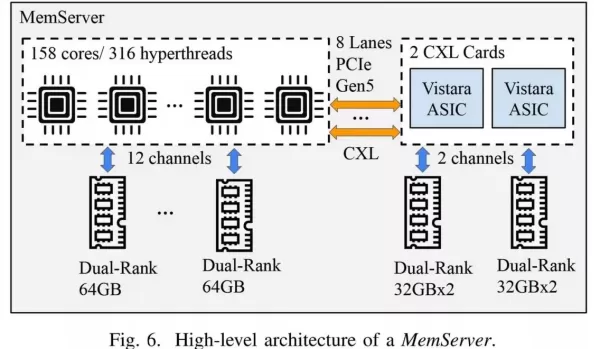 Meta Joins TSMC and Micron to Equip New Servers with Old Memory
As artificial intelligence adoption accelerates worldwide, next-generation DDR5 memory is experiencing a critical supply shortage. To avoid delays in AI data center deployments, Meta has partnered with industry leaders like TSMC and Micron to enginee
 How Time Series Databases Power Real-Time Robotics Data
Doug Pagnutti of Tiger Data.Pagnutti serves as an industrial developer advocate at Tiger Data, supporting teams in building real-world industrial systems. With over 12 years of experience in oil and gas and manufacturing automation, he worked on PLCs

2026 Latest Top-rated AI Illustration Tools: Our curated list features the best powerfully designed tools for creating stunning editorial scenes and eye-catching cover art quickly. Each option has gone through rigorous real-world tests, offering a free vs paid comparison to help you find the perfect match for your workflow. Try these must-try solutions today to unlock your AI edge and boost your creative productivity. Explore now at XIX.AI.
10 tools
xix.ai

2026 Latest Top-Rated Best AI Tutors for Exam Prep are here on XIX.AI! Our curated list features powerful game-changing tools that offer free vs paid comparison, real-world tests, and weekly updated rankings. They help boost your writing efficiency, simplify complex topic learning, and unlock your academic potential. Explore now to Discover your perfect exam prep tool and Start creating today to Unlock your AI edge!
10 tools
xix.ai

2026 Latest Best Top-Rated AI Budget Planning Tools for Personal Money Management are here on XIX.AI! This curated collection features powerful, game-changing solutions that help you conduct real-world tests, understand spending habits, and create personalized plans to boost productivity. Enjoy a free vs paid comparison along with detailed rankings. Must-try tools designed to simplify money management and unlock your AI edge. Explore now!
11 tools
xix.ai

2026 Latest Best Top-Rated AI Sleep Tracking Assistants curated for ultimate recovery. This fully updated weekly guide features powerful tools that deliver real-world tests, free vs paid comparison, and detailed rankings to help you find the must-try solution that boosts sleep quality and supports better bedtime habits. Explore now at XIX.AI to Unlock your AI edge.
10 tools
xix.ai

2026 Latest Best Top-Rated AI SQL Copilots for Product and Revenue Analytics! XIX.AI has curated a powerful, game-changing collection of must-try tools that undergo real-world tests through weekly updated rankings. These tools help users boost productivity significantly by accelerating data analysis, streamlining complex queries, and generating accurate insights to drive smarter business decisions. Explore now to Discover your perfect tool for unlocking your AI edge!
14 tools
xix.ai

2026 Latest Best Top-Rated AI Homework Helpers That Teach Core Concepts Not Just Answers Powerful Tools for Students Must-Try Curated List Weekly Updated Free vs Paid Comparison Real-World Tests Accurate Rankings to Help You Unlock Your Full Learning Potential Explore now to Discover your perfect tool for smarter studying.
10 tools
xix.ai












