


 Home
HomeMinecraft Villager AI Reimagines Music with Unique Sound Cover
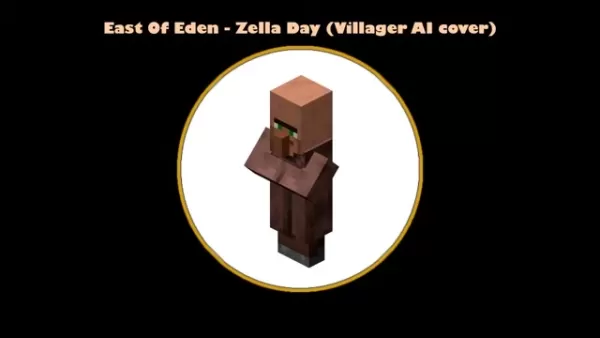
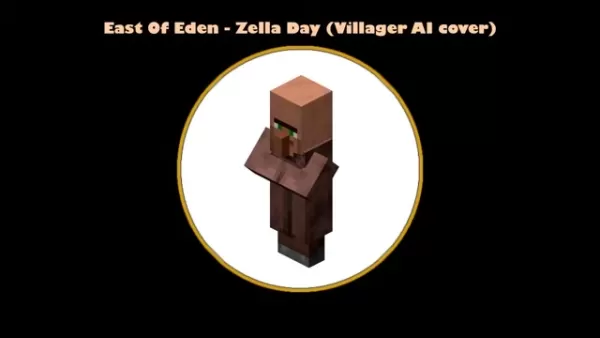
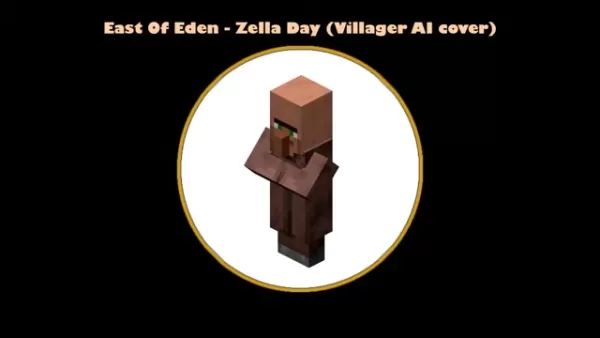
The music production landscape continues to transform as AI technologies push creative boundaries in unexpected ways. One particularly fascinating development is AI-generated music covers that reinterpret popular songs using the distinctive vocal sounds of Minecraft villagers. These quirky yet musically capable covers demonstrate how machine learning can extract musical potential from unconventional sound sources, blending digital nostalgia with contemporary AI innovation.
Key Points
- AI transforms Minecraft villager sounds into musical performances
- Machine learning models analyze and reconstruct songs using game audio
- Process involves extensive training on both original music and sound samples
- Results showcase innovative applications of AI in creative audio production
- Delivers both technical achievement and humorous entertainment value
Understanding Villager AI Music Covers
The Science Behind the Sounds
Villager AI music covers represent a novel intersection of gaming culture and artificial intelligence. These creations utilize the primitive vocal sounds from Minecraft's villager characters, processing them through sophisticated algorithms to recreate recognizable songs while maintaining the villagers' signature blocky charm.
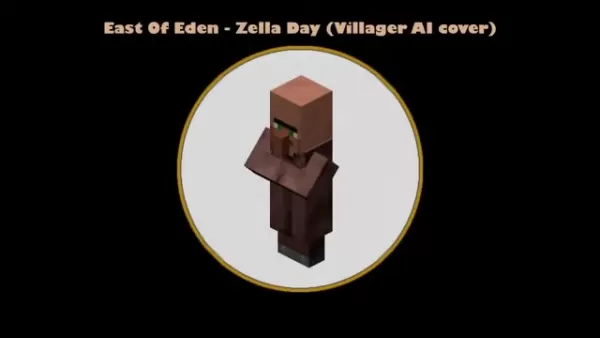
The technical process involves deep learning models trained on:
- Original song structures and melodies
- Comprehensive libraries of villager vocalizations
- Audio processing techniques for pitch and timing adjustment
This combination allows the AI to map musical elements onto the limitations of villager sounds, producing surprisingly coherent - if unconventional - musical performances that appeal to both Minecraft fans and music technology enthusiasts.
Technical Foundations
The creation pipeline relies on several advanced technologies working in concert:
- Neural network architectures specialized for audio processing
- Precise pitch-shifting algorithms to match musical notes
- Temporal alignment systems for rhythmic accuracy
- Sound synthesis techniques to enrich the basic sound palette
Data preparation proves particularly crucial, as engineers must carefully catalog and index thousands of villager sound samples by pitch, duration, and timbre. This structured database enables the AI to select optimal sounds when reconstructing musical phrases.
Creating Villager AI Covers
Sound Source Analysis
Minecraft's villager sounds possess several unique characteristics that present both challenges and opportunities for musical adaptation:
Sound Property Musical Application Limited frequency range Requires careful pitch mapping Short duration Needs time-stretching for sustained notes Distinctive timbre Creates signature sound character Emotional expressiveness Enables dynamic performance
Production Workflow
The typical creation process involves these key stages:
- Sound Extraction: Harvesting game audio files and isolating villager vocalizations
- Data Processing: Cleaning, categorizing and enhancing sound samples
- Model Training: Teaching AI systems to recognize musical patterns in source material
- Composition: Guiding the AI to reconstruct target songs using villager sounds
- Post-Production: Mixing and mastering the final audio output
Practical Implementation
Technical Requirements
Creating professional-quality villager AI covers demands substantial computing resources:
- High-performance GPU for machine learning tasks
- Specialized audio processing software (DAWs, spectral editors)
- Substantial storage for sound libraries and training data
- Advanced machine learning frameworks (TensorFlow, PyTorch)
Creative Considerations
Successful projects balance technical execution with artistic vision:
- Song selection that suits villager sound characteristics
- Creative interpretation rather than strict replication
- Embracing the inherent humor in the concept
- Maintaining musical integrity despite unusual sound sources
Applications and Impact
Creative Possibilities
This technology opens doors to numerous innovative applications:
- Novel entertainment content blending gaming and music
- Educational demonstrations of audio processing techniques
- Experimental music production approaches
- Sound design innovations for media projects
Industry Implications
The development of villager AI covers highlights broader trends:
- Democratization of music production through AI
- New forms of digital nostalgia and remix culture
- Growing intersection between gaming and music industries
- Expanding creative possibilities through machine learning
Frequently Asked Questions
How does the AI match villager sounds to musical notes?
The system analyzes pitch content in source sounds and applies digital signal processing to shift frequencies to desired musical notes while preserving characteristic timbre.
Can this technology recreate any song?
While theoretically possible, results vary based on song complexity and how well it suits the limited villager sound palette. Simpler melodies with clear phrasing work best.
What are the copyright considerations?
Creators must consider rights for both the original musical composition and game sound assets. Many post covers as transformative works under fair use principles.
How long does the creation process take?
Production time ranges from days to weeks depending on song length and desired quality, with model training representing the most time-intensive phase.
Future Developments
Technical Advancements
Emerging technologies promise even more sophisticated results:
- Improved neural vocoders for cleaner sound
- Real-time generation capabilities
- Enhanced emotional expression in synthetic voices
- Automated mixing and mastering workflows
Expanding Applications
Similar techniques could be applied to:
- Other game character sounds
- Synthetic instrument creation
- Accessible music production tools
- Interactive music experiences
 Musk Admits Grok Build Leaked User Code, Promises to Erase All Historical Data
Elon Musk directly addressed the privacy controversy surrounding Grok Build, beginning with a simple "True" to confirm the incident's validity. He pledged that all user data previously uploaded to SpaceXAI would be permanently erased, stating, "not a
U.S. Stocks Hit Historic Milestone as AI and Aerospace Giants Prepare for Trillion-Dollar Debut
Elon Musk, Sam Altman, and Dario Amodei, three titans of the technology sector, are advancing toward initial public offerings for their respective ventures. With SpaceX, OpenAI, and Anthropic—three industry behemoths nearing trillion-dollar valuation
Swedish AI Startup Lovable Eyes $13.2 Billion Valuation After Major Funding Round
As AI-driven coding tools gain traction, Swedish startup Lovable has secured a major funding round. The company aims to raise $3 billion, potentially boosting its valuation to $13.2 billion—double the $6.6 billion recorded last December. Menlo Ventur
Related Special Topic Recommendations
SEO
Musk Admits Grok Build Leaked User Code, Promises to Erase All Historical Data
Elon Musk directly addressed the privacy controversy surrounding Grok Build, beginning with a simple "True" to confirm the incident's validity. He pledged that all user data previously uploaded to SpaceXAI would be permanently erased, stating, "not a
U.S. Stocks Hit Historic Milestone as AI and Aerospace Giants Prepare for Trillion-Dollar Debut
Elon Musk, Sam Altman, and Dario Amodei, three titans of the technology sector, are advancing toward initial public offerings for their respective ventures. With SpaceX, OpenAI, and Anthropic—three industry behemoths nearing trillion-dollar valuation
Swedish AI Startup Lovable Eyes $13.2 Billion Valuation After Major Funding Round
As AI-driven coding tools gain traction, Swedish startup Lovable has secured a major funding round. The company aims to raise $3 billion, potentially boosting its valuation to $13.2 billion—double the $6.6 billion recorded last December. Menlo Ventur
Related Special Topic Recommendations
SEO
 Best AI SERP Analysis Tools for Search Strategy
2026 Latest Best Top-rated AI SERP Analysis Tools for Search Strategy are curated by XIX.AI through rigorous real-world tests and weekly updated rankings. These powerful tools help you unlock hidden optimization opportunities, boost content performance, and gain a competitive edge in search. Discover your perfect tool to elevate your search strategy today. Explore now!
 13 tools
 xix.ai
Data Analysis
Best AI Anomaly Detection Tools for KPI Monitoring across SaaS and Ecommerce Teams
xix.ai
Data Analysis
Best AI Anomaly Detection Tools for KPI Monitoring across SaaS and Ecommerce Teams
2026 Latest Best Top-rated AI Anomaly Detection Tools for KPI Monitoring in SaaS and Ecommerce teams! XIX.AI has curated a powerful, game-changing collection based on rigorous real-world tests and weekly updated rankings. You’ll find detailed free vs paid comparison insights to help you identify the must-try solution that boosts productivity and unlocks your AI edge. Explore now!
10 tools
xix.ai
writing
Best AI Outline Generators for Long-Form SEO Articles
2026 Latest Best Top-Rated AI Outline Generators for Long-Form SEO Articles, meticulously curated by XIX.AI. These powerful tools offer game-changing assistance in creating high-quality content quickly, boosting writing efficiency significantly. Get a free vs paid comparison along with real-world tests and detailed rankings to help you find the must-try option that suits your needs. Explore now to unlock your AI edge.
8 tools
xix.ai
Education and Learning
AI Study Tools for Homework and Exam Prep
2026 Latest Best AI Study Tools for Homework and Exam Prep! XIX.AI curates a top-rated list of powerful, game-changing tools that help students boost productivity, streamline homework completion, and ace exams through real-world tests. Get a free vs paid comparison, detailed rankings, and must-try options to unlock your AI edge. Explore now!
10 tools
xix.ai
Music composition
AI Vocal Demo Tools for Songwriters, Hooks, Toplines, and Multilingual Draft Sessions
2026 Latest Best AI Vocal Demo Tools for Songwriters, Hook Creators, and Multi-Language Content Teams! XIX.AI has curated a top-rated list of powerful game-changing tools that go through rigorous real-world tests. You’ll find detailed free vs paid comparison data, comprehensive rankings, and must-try options to help you boost writing efficiency and unlock your creative potential. Explore now to discover your perfect tool for all your content needs!
9 tools
xix.ai
Business
Best AI Competitive Research Tools for Small Businesses
2026 Latest Best Top-rated AI Competitive Research Tools for Small Businesses! XIX.AI has curated a highly powerful game-changing collection, updated weekly with rigorous real-world tests and detailed rankings. You can find a comprehensive free vs paid comparison to help you identify the must-try tools that boost your productivity and give you a competitive edge. Explore now to discover your perfect tool!
9 tools
xix.ai

 Comments (1)
0/500
Comments (1)
0/500
![ScottJackson]()
마인크래프트 주민 목소리로 음악 커버라니 정말 독특한 아이디어네요! 😂 AI가 계속해서 예술 분야에 도전하는 모습이 인상깊어요. 근데 진짜 마을 주민들이 이 노래를 들으면 뭐라고 할까 궁금하네요 재밌게 봤습니다!
The music production landscape continues to transform as AI technologies push creative boundaries in unexpected ways. One particularly fascinating development is AI-generated music covers that reinterpret popular songs using the distinctive vocal sounds of Minecraft villagers. These quirky yet musically capable covers demonstrate how machine learning can extract musical potential from unconventional sound sources, blending digital nostalgia with contemporary AI innovation.
Key Points
- AI transforms Minecraft villager sounds into musical performances
- Machine learning models analyze and reconstruct songs using game audio
- Process involves extensive training on both original music and sound samples
- Results showcase innovative applications of AI in creative audio production
- Delivers both technical achievement and humorous entertainment value
Understanding Villager AI Music Covers
The Science Behind the Sounds
Villager AI music covers represent a novel intersection of gaming culture and artificial intelligence. These creations utilize the primitive vocal sounds from Minecraft's villager characters, processing them through sophisticated algorithms to recreate recognizable songs while maintaining the villagers' signature blocky charm.
The technical process involves deep learning models trained on:
- Original song structures and melodies
- Comprehensive libraries of villager vocalizations
- Audio processing techniques for pitch and timing adjustment
This combination allows the AI to map musical elements onto the limitations of villager sounds, producing surprisingly coherent - if unconventional - musical performances that appeal to both Minecraft fans and music technology enthusiasts.
Technical Foundations
The creation pipeline relies on several advanced technologies working in concert:
- Neural network architectures specialized for audio processing
- Precise pitch-shifting algorithms to match musical notes
- Temporal alignment systems for rhythmic accuracy
- Sound synthesis techniques to enrich the basic sound palette
Data preparation proves particularly crucial, as engineers must carefully catalog and index thousands of villager sound samples by pitch, duration, and timbre. This structured database enables the AI to select optimal sounds when reconstructing musical phrases.
Creating Villager AI Covers
Sound Source Analysis
Minecraft's villager sounds possess several unique characteristics that present both challenges and opportunities for musical adaptation:
| Sound Property | Musical Application |
|---|---|
| Limited frequency range | Requires careful pitch mapping |
| Short duration | Needs time-stretching for sustained notes |
| Distinctive timbre | Creates signature sound character |
| Emotional expressiveness | Enables dynamic performance |
Production Workflow
The typical creation process involves these key stages:
- Sound Extraction: Harvesting game audio files and isolating villager vocalizations
- Data Processing: Cleaning, categorizing and enhancing sound samples
- Model Training: Teaching AI systems to recognize musical patterns in source material
- Composition: Guiding the AI to reconstruct target songs using villager sounds
- Post-Production: Mixing and mastering the final audio output
Practical Implementation
Technical Requirements
Creating professional-quality villager AI covers demands substantial computing resources:
- High-performance GPU for machine learning tasks
- Specialized audio processing software (DAWs, spectral editors)
- Substantial storage for sound libraries and training data
- Advanced machine learning frameworks (TensorFlow, PyTorch)
Creative Considerations
Successful projects balance technical execution with artistic vision:
- Song selection that suits villager sound characteristics
- Creative interpretation rather than strict replication
- Embracing the inherent humor in the concept
- Maintaining musical integrity despite unusual sound sources
Applications and Impact
Creative Possibilities
This technology opens doors to numerous innovative applications:
- Novel entertainment content blending gaming and music
- Educational demonstrations of audio processing techniques
- Experimental music production approaches
- Sound design innovations for media projects
Industry Implications
The development of villager AI covers highlights broader trends:
- Democratization of music production through AI
- New forms of digital nostalgia and remix culture
- Growing intersection between gaming and music industries
- Expanding creative possibilities through machine learning
Frequently Asked Questions
How does the AI match villager sounds to musical notes?
The system analyzes pitch content in source sounds and applies digital signal processing to shift frequencies to desired musical notes while preserving characteristic timbre.
Can this technology recreate any song?
While theoretically possible, results vary based on song complexity and how well it suits the limited villager sound palette. Simpler melodies with clear phrasing work best.
What are the copyright considerations?
Creators must consider rights for both the original musical composition and game sound assets. Many post covers as transformative works under fair use principles.
How long does the creation process take?
Production time ranges from days to weeks depending on song length and desired quality, with model training representing the most time-intensive phase.
Future Developments
Technical Advancements
Emerging technologies promise even more sophisticated results:
- Improved neural vocoders for cleaner sound
- Real-time generation capabilities
- Enhanced emotional expression in synthetic voices
- Automated mixing and mastering workflows
Expanding Applications
Similar techniques could be applied to:
- Other game character sounds
- Synthetic instrument creation
- Accessible music production tools
- Interactive music experiences








 Musk Admits Grok Build Leaked User Code, Promises to Erase All Historical Data
Elon Musk directly addressed the privacy controversy surrounding Grok Build, beginning with a simple "True" to confirm the incident's validity. He pledged that all user data previously uploaded to SpaceXAI would be permanently erased, stating, "not a
Musk Admits Grok Build Leaked User Code, Promises to Erase All Historical Data
Elon Musk directly addressed the privacy controversy surrounding Grok Build, beginning with a simple "True" to confirm the incident's validity. He pledged that all user data previously uploaded to SpaceXAI would be permanently erased, stating, "not a
 U.S. Stocks Hit Historic Milestone as AI and Aerospace Giants Prepare for Trillion-Dollar Debut
Elon Musk, Sam Altman, and Dario Amodei, three titans of the technology sector, are advancing toward initial public offerings for their respective ventures. With SpaceX, OpenAI, and Anthropic—three industry behemoths nearing trillion-dollar valuation
U.S. Stocks Hit Historic Milestone as AI and Aerospace Giants Prepare for Trillion-Dollar Debut
Elon Musk, Sam Altman, and Dario Amodei, three titans of the technology sector, are advancing toward initial public offerings for their respective ventures. With SpaceX, OpenAI, and Anthropic—three industry behemoths nearing trillion-dollar valuation
 Swedish AI Startup Lovable Eyes $13.2 Billion Valuation After Major Funding Round
As AI-driven coding tools gain traction, Swedish startup Lovable has secured a major funding round. The company aims to raise $3 billion, potentially boosting its valuation to $13.2 billion—double the $6.6 billion recorded last December. Menlo Ventur
Swedish AI Startup Lovable Eyes $13.2 Billion Valuation After Major Funding Round
As AI-driven coding tools gain traction, Swedish startup Lovable has secured a major funding round. The company aims to raise $3 billion, potentially boosting its valuation to $13.2 billion—double the $6.6 billion recorded last December. Menlo Ventur

2026 Latest Best Top-rated AI SERP Analysis Tools for Search Strategy are curated by XIX.AI through rigorous real-world tests and weekly updated rankings. These powerful tools help you unlock hidden optimization opportunities, boost content performance, and gain a competitive edge in search. Discover your perfect tool to elevate your search strategy today. Explore now!
13 tools
xix.ai

2026 Latest Best Top-rated AI Anomaly Detection Tools for KPI Monitoring in SaaS and Ecommerce teams! XIX.AI has curated a powerful, game-changing collection based on rigorous real-world tests and weekly updated rankings. You’ll find detailed free vs paid comparison insights to help you identify the must-try solution that boosts productivity and unlocks your AI edge. Explore now!
10 tools
xix.ai

2026 Latest Best Top-Rated AI Outline Generators for Long-Form SEO Articles, meticulously curated by XIX.AI. These powerful tools offer game-changing assistance in creating high-quality content quickly, boosting writing efficiency significantly. Get a free vs paid comparison along with real-world tests and detailed rankings to help you find the must-try option that suits your needs. Explore now to unlock your AI edge.
8 tools
xix.ai

2026 Latest Best AI Study Tools for Homework and Exam Prep! XIX.AI curates a top-rated list of powerful, game-changing tools that help students boost productivity, streamline homework completion, and ace exams through real-world tests. Get a free vs paid comparison, detailed rankings, and must-try options to unlock your AI edge. Explore now!
10 tools
xix.ai

2026 Latest Best AI Vocal Demo Tools for Songwriters, Hook Creators, and Multi-Language Content Teams! XIX.AI has curated a top-rated list of powerful game-changing tools that go through rigorous real-world tests. You’ll find detailed free vs paid comparison data, comprehensive rankings, and must-try options to help you boost writing efficiency and unlock your creative potential. Explore now to discover your perfect tool for all your content needs!
9 tools
xix.ai

2026 Latest Best Top-rated AI Competitive Research Tools for Small Businesses! XIX.AI has curated a highly powerful game-changing collection, updated weekly with rigorous real-world tests and detailed rankings. You can find a comprehensive free vs paid comparison to help you identify the must-try tools that boost your productivity and give you a competitive edge. Explore now to discover your perfect tool!
9 tools
xix.ai

마인크래프트 주민 목소리로 음악 커버라니 정말 독특한 아이디어네요! 😂 AI가 계속해서 예술 분야에 도전하는 모습이 인상깊어요. 근데 진짜 마을 주민들이 이 노래를 들으면 뭐라고 할까 궁금하네요 재밌게 봤습니다!












