


 Home
HomeMastering Storyboarding with Artificial Intelligence: A Complete Guide
The film industry is undergoing a transformation, driven by artificial intelligence (AI). Storyboarding is one area experiencing remarkable innovation. This guide examines how AI is used to create storyboards, covering its history, real-world applications, user experiences, and future potential. For filmmakers, animators, and content creators, leveraging AI can optimize your creative workflow. Our goal is to provide practical insights for integrating AI into your storyboarding process.
Key Points
AI-powered storyboarding tools are becoming indispensable in the creative sector.
Knowing the history of AI provides perspective on its current role in storyboarding.
Hands-on experience with AI tools reveals their practicality and performance.
Ongoing discussions about AI in film and television guide its ethical use.
AI can dramatically cut down the time and cost involved in storyboarding.
AI tools help produce a wide range of creative visual concepts.
Using AI for storyboarding prompts questions about creative ownership and control.
Real-world examples highlight the transformative potential of AI in storyboarding.
Clarifying common AI myths leads to a more accurate assessment of its abilities.
AI technology is advancing, offering increasingly sophisticated storyboarding options.
Introduction to AI and Storyboarding
What is Storyboarding?
Storyboarding translates a film, animation, or video narrative into a visual plan. It involves outlining key scenes, shots, and camera angles to map the story's visual progression. Conventionally, this is a hands-on task where artists draw each frame manually, which can be slow and costly for extensive projects. The main purpose is to visualize and organize the sequence of events needed to tell your story effectively. A well-executed storyboard is vital for a seamless production, particularly in marketing videos and films.
AI is revolutionizing this practice. AI tools help produce storyboards faster and more efficiently.
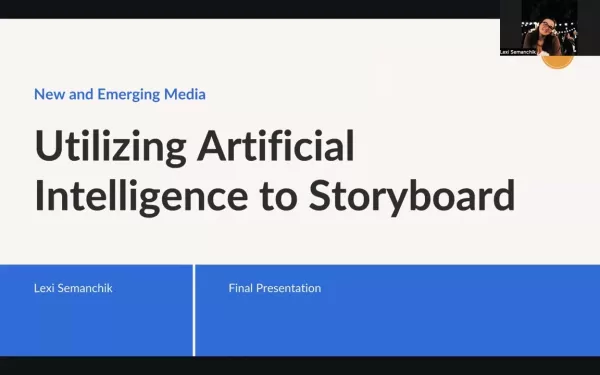
These tools automate various tasks, including generating preliminary sketches, proposing camera angles, and producing fully rendered scenes from text descriptions or scripts.
Advantages of AI-assisted storyboarding include:
- Greater Efficiency: AI shortens the time needed to develop a storyboard.
- Lower Costs: Automating tasks reduces production expenses.
- Creative Enhancement: AI can propose unique ideas and visual styles you might not have envisioned.
- Better Collaboration: AI platforms offer a shared space for teams to visualize and improve the story together.
Rapid Iteration: AI allows for quick adjustments and experimentation, helping filmmakers test various visual approaches effortlessly.
Grasping the basics of storyboarding and the potential of AI tools opens up new avenues for creative expression and efficient production.
The Evolution of AI in Creative Industries
AI's integration into creative fields has been a steady, profound evolution, fueled by progress in machine learning, computer vision, and natural language processing. Initially, AI was mainly applied to technical functions like image recognition and video editing. As AI algorithms grew more advanced, their use expanded to creative endeavors such as content generation and design.
In visual arts, AI tools now produce images, paintings, and entire virtual environments. These tools use generative models to create original content from user inputs. For instance, AI image generators can produce realistic or stylized visuals from text prompts, offering new possibilities for visual storytelling.
AI's role in filmmaking has also expanded, especially in special effects, animation, and virtual production. AI can automate motion capture, facial recognition, and scene reconstruction, enabling filmmakers to craft breathtaking, immersive experiences. AI's application in pre-production tasks like storyboarding is especially promising, as it helps filmmakers visualize concepts and plan shots more effectively. For example, AI can convert scripts into storyboards, suggesting camera angles, scene layouts, and character positions. This not only conserves time and resources but also encourages creative exploration.
As AI tools become more affordable and accessible, they democratize the creative process, allowing independent filmmakers and content creators to utilize AI without significant investment. AI's influence in creative industries is set to grow, shaping the future of storytelling and visual communication.
Personal Experiences with AI in Storyboarding
Initial Skepticism and Gradual Acceptance
At first, using artificial intelligence for storyboarding may appear unconventional or even daunting. The traditional approach of hand-drawn storyboards has been a filmmaking staple for years, and the notion of delegating this creative task to a machine can spark worries about artistic integrity and originality. However, as AI technology progresses and becomes more embedded in daily life, it's important to approach it with curiosity and explore its potential benefits. Many may question whether AI can truly capture the distinct vision and artistic touch of a human creator.
As you gain familiarity with AI-powered storyboarding tools, you'll find they are designed to complement, not replace, human creativity. They handle repetitive jobs like creating initial sketches or recommending camera angles, giving filmmakers more time to concentrate on nuanced storytelling elements. By testing different AI algorithms and inputting various prompts, you can uncover new visual opportunities and broaden your creative scope. You'll come to see AI as a powerful collaborator that accelerates your workflow and helps realize your ideas.
Adopting AI in storyboarding is a step-by-step journey that demands patience, curiosity, and adaptability. By moving past initial doubts and embracing AI's potential, filmmakers can achieve greater efficiency, creativity, and visual storytelling impact.
Practical Application: Storyboarding at Work
A practical use of AI in storyboarding is in professional video production for business. AI-powered tools can simplify creating storyboards for various video types, such as:
- Training Videos: AI helps illustrate the steps and main ideas in training modules.
- Marketing Videos: AI generates storyboards that convey your brand message and engage your target audience.
- Internal Communication Videos: AI aids in producing compelling and informative videos for internal use.
- Product Demo Videos: AI assists in presenting your product's features and benefits in an attractive visual format.
For example, consider developing a storyboard for a marketing video about a new software product. Using AI tools, you can enter a summary of the video's goal, audience, and key messages. The AI then produces a sequence of storyboard panels, each showing a critical scene or moment. You can tailor these AI-generated storyboards by modifying camera angles, character positions, and visual styles to fit your creative vision. AI helps efficiently create storyboards that satisfy both creative and business requirements.
AI tools can also recommend alternative visual options and storytelling techniques you might not have thought of, expanding your creative possibilities. Additionally, AI storyboarding platforms often include collaboration tools that let team members give feedback, share ideas, and collectively refine the storyboard.
A Step-by-Step Guide to Using AI for Storyboarding
Step 1: Choosing the Right AI Storyboarding Tool
The first step in using AI for storyboarding is selecting the appropriate tool for your project. Several AI-powered storyboarding platforms are available, each with distinct features, capabilities, and pricing. Some well-known options are:
- Boords: A web-based storyboarding tool with AI support for generating scenes and camera angles.
- Plot: An AI-driven platform that creates storyboards from scripts or outlines.
- StudioBinder: A full production management suite that includes AI-enhanced storyboarding features.
- Canva: While not exclusively for storyboarding, Canva provides AI design help for creating visual layouts and graphics.
When choosing an AI storyboarding tool, consider your budget, project needs, and desired level of control. After selecting a tool, proceed to the next step.
Step 2: Inputting Your Script or Outline
Most AI storyboarding tools need a script or project outline. The AI analyzes the text and creates storyboard panels based on the content. When preparing your script or outline, include detailed descriptions of settings, characters, actions, and emotions. The more specific your input, the more accurately the AI can generate relevant storyboards. Use clear, impactful language to craft an outline that works effectively with AI tools.
Example Script Excerpt:
INT. COFFEE SHOP - DAY
SARAH (30s, determined) sits at a table, sipping her latte. Across from her, MARK (30s, skeptical) leans back in his chair.
SARAH(Enthusiastically)So, what do you think? This new software can revolutionize our workflow.
MARK(Raising an eyebrow)Revolutionize? That's a pretty bold claim. Show me.
Step 3: Generating Initial Storyboard Panels
After inputting your script or outline, use the AI tool to produce initial storyboard panels. The AI analyzes the text and creates visual representations for each scene or shot. At this stage, the AI provides a first draft, giving you a foundation for your storyboard. These panels may need refinement, but they offer a valuable starting point. AI generates a set of panels that establish a basis for further development. These visuals provide a clear beginning for additional work.
Step 4: Customizing and Refining the Storyboard
Once the initial panels are generated, customize and refine them to align with your creative vision. Most AI storyboarding tools let you adjust camera angles, character placements, visual styles, and other elements. This is your chance to add personal touches and perfect the storyboards to your specifications. You can also use AI to test different visual alternatives and generate fresh ideas. Experiment with colors, moods, and character arrangements. Improve the storyboards by adding specific details and personal elements.
Step 5: Collaborating and Sharing Your Storyboard
AI tools also enhance collaboration through features that allow team members to provide feedback, share ideas, and collectively refine the storyboard. You can share storyboards with clients, colleagues, and stakeholders for review and approval. This ensures everyone is aligned and the final video meets creative and business goals. AI platforms often include real-time feedback, version control, and annotation tools, simplifying collaborative management. Utilize these collaborative features to develop a better storyboard. Integrating AI into storyboarding greatly reduces the time and resources needed for high-quality visuals, letting filmmakers and content creators focus on other project aspects like directing, editing, and post-production.
Pricing of AI Storyboarding Tools
Understanding Subscription Models
AI storyboarding tool prices vary by platform and features. Many offer subscription-based plans, granting access to software and features for a monthly or annual fee. These plans often have different tiers with varying levels of usage, storage, and support. Subscription models let users access the latest updates and features without large upfront costs. Pricing generally ranges from free to enterprise-level subscriptions. Common pricing factors include:
- Number of Users: Some platforms charge per user, which can be costlier for larger teams.
- Number of Projects: Certain plans limit how many projects you can create.
- Storage Capacity: You might need extra storage for storyboards and assets, depending on your needs.
- Advanced Features: AI assistance, collaboration tools, and custom branding may be available only in higher-tier plans.
Free vs. Paid Options
Some AI storyboarding tools provide free plans with limited features, while others offer paid options with more advanced capabilities. Free plans are excellent for testing the software and assessing basic needs, but they often restrict usage, storage, and support. Paid plans offer more flexibility and functionality, making them ideal for professional use. Deciding between free and paid options depends on your budget, project requirements, and skill level. Assess your project's scope and needs. Free versions suit small or trial projects, while paid plans are better for professional applications.
Pros and Cons of Using AI for Storyboarding
Pros
Faster and more efficient storyboarding.
Lower pre-production costs.
Generation of diverse and innovative visual concepts.
Enhanced team collaboration.
Quick iteration and testing of visual options.
Cons
Possible reduction in creative control and originality.
Ethical issues regarding copyright and ownership.
Risk of bias and discrimination in AI-generated content.
Need for technical knowledge and training.
Reliance on AI algorithms and their potential constraints.
Core Features of AI Storyboarding Tools
Key Features to Look For
When assessing AI storyboarding tools, consider these essential features:
- AI-Powered Scene Generation: Automatically creates storyboard panels from your script or outline.
- Camera Angle Suggestions: Proposes suitable camera angles for each scene to create dynamic, engaging storyboards.
- Character Placement Assistance: Helps position characters effectively within scenes.
- Visual Style Customization: Allows adjustment of the storyboard's visual style, including detail level, color scheme, and overall look.
- Collaboration Tools: Enable team members to give feedback, share ideas, and refine the storyboard together.
- Integration with Other Software: Some tools connect with video editing programs and project management software.
- Animation Capabilities: Selected tools may include animation features, showing how scenes will appear in motion. These core features are crucial for a successful AI storyboarding experience.
Use Cases for AI Storyboarding
Diverse Applications of AI Storyboarding
AI storyboarding is utilized in various settings, from filmmaking and animation to marketing and education. Specific use cases include:
- Film and Television Pre-Production: AI accelerates storyboarding, helping filmmakers visualize ideas and plan shots more efficiently.
- Animation Production: AI aids animators in creating storyboards for animated films, TV series, and video games.
- Marketing Video Creation: AI helps marketers develop compelling storyboards for promotional videos, product demos, and social media content.
- Educational Content Development: AI assists educators in designing storyboards for instructional videos and e-learning modules.
- Game Development: AI supports game designers in crafting visual narratives for video games and interactive experiences. AI optimizes numerous processes, delivering value across multiple industries.
AI in Marketing and Advertising
AI-driven storyboarding offers significant advantages for marketing and advertising campaigns. AI can produce storyboards that match a brand's message and target audience. It can suggest various visual strategies, helping marketers create more captivating and successful campaigns. AI also facilitates A/B testing of different storyboard versions to identify the most effective one.
Frequently Asked Questions
Is AI going to replace human storyboard artists?
AI is unlikely to fully replace human storyboard artists. Instead, it acts as a creative enhancer. AI streamlines initial storyboarding phases, freeing artists to concentrate on creative direction and customization. The most effective results usually emerge from a partnership between AI and human skills. Human artists contribute creative insight and nuance that AI cannot replicate.
How accurate are AI-generated storyboards?
The accuracy of AI-generated storyboards relies on input quality and AI algorithm sophistication. AI algorithms evolve, learning from user feedback and data. Providing precise, detailed inputs improves the AI's ability to generate useful storyboards. While AI-generated storyboard accuracy is constantly improving, human review remains essential to ensure final storyboards meet creative and business goals. Even with advanced AI, human input is necessary for perfecting the visual narrative.
Related Questions
What are the ethical considerations of using AI in creative industries?
Using AI in creative fields raises several ethical issues, including:Copyright and Ownership: Determining who holds rights to AI-generated content.Bias and Discrimination: Whether AI algorithms can reinforce bias or discrimination.Job Displacement: The potential for AI to reduce employment in creative sectors.Authenticity and Originality: Whether AI can produce genuinely original and authentic work.These are vital questions that require attention as AI becomes more common in creative industries. Ethical debates are necessary to navigate and solve these issues. Industry-wide dialogue and policy development are needed to address these challenges and ensure AI supplements rather than undermines human creativity. Open conversations are crucial for establishing responsible AI use in creative fields.
How can I stay up-to-date on the latest advancements in AI storyboarding?
To keep current with the latest AI storyboarding developments, consider these approaches:Follow Industry Blogs and Publications: Stay informed about AI progress. Look to industry experts who share insights and best practices. These are excellent sources for tracking AI advancements.Attend Conferences and Webinars: Participate in events to hear from industry leaders and learn about new trends. These forums often highlight emerging technologies and methods.Experiment with Different AI Storyboarding Tools: Hands-on experience offers practical understanding of AI's capabilities and limits. By testing various platforms, you can determine what suits your project best. This method provides a detailed grasp of AI's role in storyboarding.Join Online Communities and Forums: Connect with peers and professionals to exchange ideas and learn from each other. Active involvement in these groups helps you stay informed about current trends. These interactive communities are ideal for learning and discussing new developments.Take Online Courses and Tutorials: Expand your knowledge through structured learning. Many online courses and tutorials cover AI, machine learning, and their applications in creative industries. This approach offers a formal and comprehensive understanding of the topic.
Related article
 U.S. Stocks Hit Historic Milestone as AI and Aerospace Giants Prepare for Trillion-Dollar Debut
Elon Musk, Sam Altman, and Dario Amodei, three titans of the technology sector, are advancing toward initial public offerings for their respective ventures. With SpaceX, OpenAI, and Anthropic—three industry behemoths nearing trillion-dollar valuation
Swedish AI Startup Lovable Eyes $13.2 Billion Valuation After Major Funding Round
As AI-driven coding tools gain traction, Swedish startup Lovable has secured a major funding round. The company aims to raise $3 billion, potentially boosting its valuation to $13.2 billion—double the $6.6 billion recorded last December. Menlo Ventur
Google Tests Remy AI Agent for Gemini as Focus Shifts to User Control
According to Business Insider, Google is testing Remy, a new AI personal agent for Gemini. This tool aims to execute tasks on behalf of users, streamlining both professional workflows and daily routines.Currently, Remy is undergoing testing in an int
Related Special Topic Recommendations
SEO
U.S. Stocks Hit Historic Milestone as AI and Aerospace Giants Prepare for Trillion-Dollar Debut
Elon Musk, Sam Altman, and Dario Amodei, three titans of the technology sector, are advancing toward initial public offerings for their respective ventures. With SpaceX, OpenAI, and Anthropic—three industry behemoths nearing trillion-dollar valuation
Swedish AI Startup Lovable Eyes $13.2 Billion Valuation After Major Funding Round
As AI-driven coding tools gain traction, Swedish startup Lovable has secured a major funding round. The company aims to raise $3 billion, potentially boosting its valuation to $13.2 billion—double the $6.6 billion recorded last December. Menlo Ventur
Google Tests Remy AI Agent for Gemini as Focus Shifts to User Control
According to Business Insider, Google is testing Remy, a new AI personal agent for Gemini. This tool aims to execute tasks on behalf of users, streamlining both professional workflows and daily routines.Currently, Remy is undergoing testing in an int
Related Special Topic Recommendations
SEO
 Best AI SERP Analysis Tools for Search Strategy
2026 Latest Best Top-rated AI SERP Analysis Tools for Search Strategy are curated by XIX.AI through rigorous real-world tests and weekly updated rankings. These powerful tools help you unlock hidden optimization opportunities, boost content performance, and gain a competitive edge in search. Discover your perfect tool to elevate your search strategy today. Explore now!
 13 tools
 xix.ai
Data Analysis
Best AI Anomaly Detection Tools for KPI Monitoring across SaaS and Ecommerce Teams
xix.ai
Data Analysis
Best AI Anomaly Detection Tools for KPI Monitoring across SaaS and Ecommerce Teams
2026 Latest Best Top-rated AI Anomaly Detection Tools for KPI Monitoring in SaaS and Ecommerce teams! XIX.AI has curated a powerful, game-changing collection based on rigorous real-world tests and weekly updated rankings. You’ll find detailed free vs paid comparison insights to help you identify the must-try solution that boosts productivity and unlocks your AI edge. Explore now!
10 tools
xix.ai
writing
Best AI Outline Generators for Long-Form SEO Articles
2026 Latest Best Top-Rated AI Outline Generators for Long-Form SEO Articles, meticulously curated by XIX.AI. These powerful tools offer game-changing assistance in creating high-quality content quickly, boosting writing efficiency significantly. Get a free vs paid comparison along with real-world tests and detailed rankings to help you find the must-try option that suits your needs. Explore now to unlock your AI edge.
8 tools
xix.ai
Education and Learning
AI Study Tools for Homework and Exam Prep
2026 Latest Best AI Study Tools for Homework and Exam Prep! XIX.AI curates a top-rated list of powerful, game-changing tools that help students boost productivity, streamline homework completion, and ace exams through real-world tests. Get a free vs paid comparison, detailed rankings, and must-try options to unlock your AI edge. Explore now!
10 tools
xix.ai
Music composition
AI Vocal Demo Tools for Songwriters, Hooks, Toplines, and Multilingual Draft Sessions
2026 Latest Best AI Vocal Demo Tools for Songwriters, Hook Creators, and Multi-Language Content Teams! XIX.AI has curated a top-rated list of powerful game-changing tools that go through rigorous real-world tests. You’ll find detailed free vs paid comparison data, comprehensive rankings, and must-try options to help you boost writing efficiency and unlock your creative potential. Explore now to discover your perfect tool for all your content needs!
9 tools
xix.ai
Business
Best AI Competitive Research Tools for Small Businesses
2026 Latest Best Top-rated AI Competitive Research Tools for Small Businesses! XIX.AI has curated a highly powerful game-changing collection, updated weekly with rigorous real-world tests and detailed rankings. You can find a comprehensive free vs paid comparison to help you identify the must-try tools that boost your productivity and give you a competitive edge. Explore now to discover your perfect tool!
9 tools
xix.ai

 Comments (1)
0/500
Comments (1)
0/500
![WilliamLewis]()
This guide is a game-changer for indie filmmakers! Finally, a clear breakdown of AI storyboarding tools that won't break the bank. The section on real-world applications was super helpful. Can't wait to try some of these techniques for my next short film project. 🎬
The film industry is undergoing a transformation, driven by artificial intelligence (AI). Storyboarding is one area experiencing remarkable innovation. This guide examines how AI is used to create storyboards, covering its history, real-world applications, user experiences, and future potential. For filmmakers, animators, and content creators, leveraging AI can optimize your creative workflow. Our goal is to provide practical insights for integrating AI into your storyboarding process.
Key Points
AI-powered storyboarding tools are becoming indispensable in the creative sector.
Knowing the history of AI provides perspective on its current role in storyboarding.
Hands-on experience with AI tools reveals their practicality and performance.
Ongoing discussions about AI in film and television guide its ethical use.
AI can dramatically cut down the time and cost involved in storyboarding.
AI tools help produce a wide range of creative visual concepts.
Using AI for storyboarding prompts questions about creative ownership and control.
Real-world examples highlight the transformative potential of AI in storyboarding.
Clarifying common AI myths leads to a more accurate assessment of its abilities.
AI technology is advancing, offering increasingly sophisticated storyboarding options.
Introduction to AI and Storyboarding
What is Storyboarding?
Storyboarding translates a film, animation, or video narrative into a visual plan. It involves outlining key scenes, shots, and camera angles to map the story's visual progression. Conventionally, this is a hands-on task where artists draw each frame manually, which can be slow and costly for extensive projects. The main purpose is to visualize and organize the sequence of events needed to tell your story effectively. A well-executed storyboard is vital for a seamless production, particularly in marketing videos and films.
AI is revolutionizing this practice. AI tools help produce storyboards faster and more efficiently.
These tools automate various tasks, including generating preliminary sketches, proposing camera angles, and producing fully rendered scenes from text descriptions or scripts.
Advantages of AI-assisted storyboarding include:
- Greater Efficiency: AI shortens the time needed to develop a storyboard.
- Lower Costs: Automating tasks reduces production expenses.
- Creative Enhancement: AI can propose unique ideas and visual styles you might not have envisioned.
- Better Collaboration: AI platforms offer a shared space for teams to visualize and improve the story together.
Rapid Iteration: AI allows for quick adjustments and experimentation, helping filmmakers test various visual approaches effortlessly.
Grasping the basics of storyboarding and the potential of AI tools opens up new avenues for creative expression and efficient production.
The Evolution of AI in Creative Industries
AI's integration into creative fields has been a steady, profound evolution, fueled by progress in machine learning, computer vision, and natural language processing. Initially, AI was mainly applied to technical functions like image recognition and video editing. As AI algorithms grew more advanced, their use expanded to creative endeavors such as content generation and design.
In visual arts, AI tools now produce images, paintings, and entire virtual environments. These tools use generative models to create original content from user inputs. For instance, AI image generators can produce realistic or stylized visuals from text prompts, offering new possibilities for visual storytelling.
AI's role in filmmaking has also expanded, especially in special effects, animation, and virtual production. AI can automate motion capture, facial recognition, and scene reconstruction, enabling filmmakers to craft breathtaking, immersive experiences. AI's application in pre-production tasks like storyboarding is especially promising, as it helps filmmakers visualize concepts and plan shots more effectively. For example, AI can convert scripts into storyboards, suggesting camera angles, scene layouts, and character positions. This not only conserves time and resources but also encourages creative exploration.
As AI tools become more affordable and accessible, they democratize the creative process, allowing independent filmmakers and content creators to utilize AI without significant investment. AI's influence in creative industries is set to grow, shaping the future of storytelling and visual communication.
Personal Experiences with AI in Storyboarding
Initial Skepticism and Gradual Acceptance
At first, using artificial intelligence for storyboarding may appear unconventional or even daunting. The traditional approach of hand-drawn storyboards has been a filmmaking staple for years, and the notion of delegating this creative task to a machine can spark worries about artistic integrity and originality. However, as AI technology progresses and becomes more embedded in daily life, it's important to approach it with curiosity and explore its potential benefits. Many may question whether AI can truly capture the distinct vision and artistic touch of a human creator.
As you gain familiarity with AI-powered storyboarding tools, you'll find they are designed to complement, not replace, human creativity. They handle repetitive jobs like creating initial sketches or recommending camera angles, giving filmmakers more time to concentrate on nuanced storytelling elements. By testing different AI algorithms and inputting various prompts, you can uncover new visual opportunities and broaden your creative scope. You'll come to see AI as a powerful collaborator that accelerates your workflow and helps realize your ideas.
Adopting AI in storyboarding is a step-by-step journey that demands patience, curiosity, and adaptability. By moving past initial doubts and embracing AI's potential, filmmakers can achieve greater efficiency, creativity, and visual storytelling impact.
Practical Application: Storyboarding at Work
A practical use of AI in storyboarding is in professional video production for business. AI-powered tools can simplify creating storyboards for various video types, such as:
- Training Videos: AI helps illustrate the steps and main ideas in training modules.
- Marketing Videos: AI generates storyboards that convey your brand message and engage your target audience.
- Internal Communication Videos: AI aids in producing compelling and informative videos for internal use.
- Product Demo Videos: AI assists in presenting your product's features and benefits in an attractive visual format.
For example, consider developing a storyboard for a marketing video about a new software product. Using AI tools, you can enter a summary of the video's goal, audience, and key messages. The AI then produces a sequence of storyboard panels, each showing a critical scene or moment. You can tailor these AI-generated storyboards by modifying camera angles, character positions, and visual styles to fit your creative vision. AI helps efficiently create storyboards that satisfy both creative and business requirements.
AI tools can also recommend alternative visual options and storytelling techniques you might not have thought of, expanding your creative possibilities. Additionally, AI storyboarding platforms often include collaboration tools that let team members give feedback, share ideas, and collectively refine the storyboard.
A Step-by-Step Guide to Using AI for Storyboarding
Step 1: Choosing the Right AI Storyboarding Tool
The first step in using AI for storyboarding is selecting the appropriate tool for your project. Several AI-powered storyboarding platforms are available, each with distinct features, capabilities, and pricing. Some well-known options are:
- Boords: A web-based storyboarding tool with AI support for generating scenes and camera angles.
- Plot: An AI-driven platform that creates storyboards from scripts or outlines.
- StudioBinder: A full production management suite that includes AI-enhanced storyboarding features.
- Canva: While not exclusively for storyboarding, Canva provides AI design help for creating visual layouts and graphics.
When choosing an AI storyboarding tool, consider your budget, project needs, and desired level of control. After selecting a tool, proceed to the next step.
Step 2: Inputting Your Script or Outline
Most AI storyboarding tools need a script or project outline. The AI analyzes the text and creates storyboard panels based on the content. When preparing your script or outline, include detailed descriptions of settings, characters, actions, and emotions. The more specific your input, the more accurately the AI can generate relevant storyboards. Use clear, impactful language to craft an outline that works effectively with AI tools.
Example Script Excerpt:
INT. COFFEE SHOP - DAY
SARAH (30s, determined) sits at a table, sipping her latte. Across from her, MARK (30s, skeptical) leans back in his chair.
SARAH(Enthusiastically)So, what do you think? This new software can revolutionize our workflow.
MARK(Raising an eyebrow)Revolutionize? That's a pretty bold claim. Show me.
Step 3: Generating Initial Storyboard Panels
After inputting your script or outline, use the AI tool to produce initial storyboard panels. The AI analyzes the text and creates visual representations for each scene or shot. At this stage, the AI provides a first draft, giving you a foundation for your storyboard. These panels may need refinement, but they offer a valuable starting point. AI generates a set of panels that establish a basis for further development. These visuals provide a clear beginning for additional work.
Step 4: Customizing and Refining the Storyboard
Once the initial panels are generated, customize and refine them to align with your creative vision. Most AI storyboarding tools let you adjust camera angles, character placements, visual styles, and other elements. This is your chance to add personal touches and perfect the storyboards to your specifications. You can also use AI to test different visual alternatives and generate fresh ideas. Experiment with colors, moods, and character arrangements. Improve the storyboards by adding specific details and personal elements.
Step 5: Collaborating and Sharing Your Storyboard
AI tools also enhance collaboration through features that allow team members to provide feedback, share ideas, and collectively refine the storyboard. You can share storyboards with clients, colleagues, and stakeholders for review and approval. This ensures everyone is aligned and the final video meets creative and business goals. AI platforms often include real-time feedback, version control, and annotation tools, simplifying collaborative management. Utilize these collaborative features to develop a better storyboard. Integrating AI into storyboarding greatly reduces the time and resources needed for high-quality visuals, letting filmmakers and content creators focus on other project aspects like directing, editing, and post-production.
Pricing of AI Storyboarding Tools
Understanding Subscription Models
AI storyboarding tool prices vary by platform and features. Many offer subscription-based plans, granting access to software and features for a monthly or annual fee. These plans often have different tiers with varying levels of usage, storage, and support. Subscription models let users access the latest updates and features without large upfront costs. Pricing generally ranges from free to enterprise-level subscriptions. Common pricing factors include:
- Number of Users: Some platforms charge per user, which can be costlier for larger teams.
- Number of Projects: Certain plans limit how many projects you can create.
- Storage Capacity: You might need extra storage for storyboards and assets, depending on your needs.
- Advanced Features: AI assistance, collaboration tools, and custom branding may be available only in higher-tier plans.
Free vs. Paid Options
Some AI storyboarding tools provide free plans with limited features, while others offer paid options with more advanced capabilities. Free plans are excellent for testing the software and assessing basic needs, but they often restrict usage, storage, and support. Paid plans offer more flexibility and functionality, making them ideal for professional use. Deciding between free and paid options depends on your budget, project requirements, and skill level. Assess your project's scope and needs. Free versions suit small or trial projects, while paid plans are better for professional applications.
Pros and Cons of Using AI for Storyboarding
Pros
Faster and more efficient storyboarding.
Lower pre-production costs.
Generation of diverse and innovative visual concepts.
Enhanced team collaboration.
Quick iteration and testing of visual options.
Cons
Possible reduction in creative control and originality.
Ethical issues regarding copyright and ownership.
Risk of bias and discrimination in AI-generated content.
Need for technical knowledge and training.
Reliance on AI algorithms and their potential constraints.
Core Features of AI Storyboarding Tools
Key Features to Look For
When assessing AI storyboarding tools, consider these essential features:
- AI-Powered Scene Generation: Automatically creates storyboard panels from your script or outline.
- Camera Angle Suggestions: Proposes suitable camera angles for each scene to create dynamic, engaging storyboards.
- Character Placement Assistance: Helps position characters effectively within scenes.
- Visual Style Customization: Allows adjustment of the storyboard's visual style, including detail level, color scheme, and overall look.
- Collaboration Tools: Enable team members to give feedback, share ideas, and refine the storyboard together.
- Integration with Other Software: Some tools connect with video editing programs and project management software.
- Animation Capabilities: Selected tools may include animation features, showing how scenes will appear in motion. These core features are crucial for a successful AI storyboarding experience.
Use Cases for AI Storyboarding
Diverse Applications of AI Storyboarding
AI storyboarding is utilized in various settings, from filmmaking and animation to marketing and education. Specific use cases include:
- Film and Television Pre-Production: AI accelerates storyboarding, helping filmmakers visualize ideas and plan shots more efficiently.
- Animation Production: AI aids animators in creating storyboards for animated films, TV series, and video games.
- Marketing Video Creation: AI helps marketers develop compelling storyboards for promotional videos, product demos, and social media content.
- Educational Content Development: AI assists educators in designing storyboards for instructional videos and e-learning modules.
- Game Development: AI supports game designers in crafting visual narratives for video games and interactive experiences. AI optimizes numerous processes, delivering value across multiple industries.
AI in Marketing and Advertising
AI-driven storyboarding offers significant advantages for marketing and advertising campaigns. AI can produce storyboards that match a brand's message and target audience. It can suggest various visual strategies, helping marketers create more captivating and successful campaigns. AI also facilitates A/B testing of different storyboard versions to identify the most effective one.
Frequently Asked Questions
Is AI going to replace human storyboard artists?
AI is unlikely to fully replace human storyboard artists. Instead, it acts as a creative enhancer. AI streamlines initial storyboarding phases, freeing artists to concentrate on creative direction and customization. The most effective results usually emerge from a partnership between AI and human skills. Human artists contribute creative insight and nuance that AI cannot replicate.
How accurate are AI-generated storyboards?
The accuracy of AI-generated storyboards relies on input quality and AI algorithm sophistication. AI algorithms evolve, learning from user feedback and data. Providing precise, detailed inputs improves the AI's ability to generate useful storyboards. While AI-generated storyboard accuracy is constantly improving, human review remains essential to ensure final storyboards meet creative and business goals. Even with advanced AI, human input is necessary for perfecting the visual narrative.
Related Questions
What are the ethical considerations of using AI in creative industries?
Using AI in creative fields raises several ethical issues, including:Copyright and Ownership: Determining who holds rights to AI-generated content.Bias and Discrimination: Whether AI algorithms can reinforce bias or discrimination.Job Displacement: The potential for AI to reduce employment in creative sectors.Authenticity and Originality: Whether AI can produce genuinely original and authentic work.These are vital questions that require attention as AI becomes more common in creative industries. Ethical debates are necessary to navigate and solve these issues. Industry-wide dialogue and policy development are needed to address these challenges and ensure AI supplements rather than undermines human creativity. Open conversations are crucial for establishing responsible AI use in creative fields.
How can I stay up-to-date on the latest advancements in AI storyboarding?
To keep current with the latest AI storyboarding developments, consider these approaches:Follow Industry Blogs and Publications: Stay informed about AI progress. Look to industry experts who share insights and best practices. These are excellent sources for tracking AI advancements.Attend Conferences and Webinars: Participate in events to hear from industry leaders and learn about new trends. These forums often highlight emerging technologies and methods.Experiment with Different AI Storyboarding Tools: Hands-on experience offers practical understanding of AI's capabilities and limits. By testing various platforms, you can determine what suits your project best. This method provides a detailed grasp of AI's role in storyboarding.Join Online Communities and Forums: Connect with peers and professionals to exchange ideas and learn from each other. Active involvement in these groups helps you stay informed about current trends. These interactive communities are ideal for learning and discussing new developments.Take Online Courses and Tutorials: Expand your knowledge through structured learning. Many online courses and tutorials cover AI, machine learning, and their applications in creative industries. This approach offers a formal and comprehensive understanding of the topic.








 U.S. Stocks Hit Historic Milestone as AI and Aerospace Giants Prepare for Trillion-Dollar Debut
Elon Musk, Sam Altman, and Dario Amodei, three titans of the technology sector, are advancing toward initial public offerings for their respective ventures. With SpaceX, OpenAI, and Anthropic—three industry behemoths nearing trillion-dollar valuation
U.S. Stocks Hit Historic Milestone as AI and Aerospace Giants Prepare for Trillion-Dollar Debut
Elon Musk, Sam Altman, and Dario Amodei, three titans of the technology sector, are advancing toward initial public offerings for their respective ventures. With SpaceX, OpenAI, and Anthropic—three industry behemoths nearing trillion-dollar valuation
 Swedish AI Startup Lovable Eyes $13.2 Billion Valuation After Major Funding Round
As AI-driven coding tools gain traction, Swedish startup Lovable has secured a major funding round. The company aims to raise $3 billion, potentially boosting its valuation to $13.2 billion—double the $6.6 billion recorded last December. Menlo Ventur
Google Tests Remy AI Agent for Gemini as Focus Shifts to User Control
According to Business Insider, Google is testing Remy, a new AI personal agent for Gemini. This tool aims to execute tasks on behalf of users, streamlining both professional workflows and daily routines.Currently, Remy is undergoing testing in an int
Swedish AI Startup Lovable Eyes $13.2 Billion Valuation After Major Funding Round
As AI-driven coding tools gain traction, Swedish startup Lovable has secured a major funding round. The company aims to raise $3 billion, potentially boosting its valuation to $13.2 billion—double the $6.6 billion recorded last December. Menlo Ventur
Google Tests Remy AI Agent for Gemini as Focus Shifts to User Control
According to Business Insider, Google is testing Remy, a new AI personal agent for Gemini. This tool aims to execute tasks on behalf of users, streamlining both professional workflows and daily routines.Currently, Remy is undergoing testing in an int

2026 Latest Best Top-rated AI SERP Analysis Tools for Search Strategy are curated by XIX.AI through rigorous real-world tests and weekly updated rankings. These powerful tools help you unlock hidden optimization opportunities, boost content performance, and gain a competitive edge in search. Discover your perfect tool to elevate your search strategy today. Explore now!
13 tools
xix.ai

2026 Latest Best Top-rated AI Anomaly Detection Tools for KPI Monitoring in SaaS and Ecommerce teams! XIX.AI has curated a powerful, game-changing collection based on rigorous real-world tests and weekly updated rankings. You’ll find detailed free vs paid comparison insights to help you identify the must-try solution that boosts productivity and unlocks your AI edge. Explore now!
10 tools
xix.ai

2026 Latest Best Top-Rated AI Outline Generators for Long-Form SEO Articles, meticulously curated by XIX.AI. These powerful tools offer game-changing assistance in creating high-quality content quickly, boosting writing efficiency significantly. Get a free vs paid comparison along with real-world tests and detailed rankings to help you find the must-try option that suits your needs. Explore now to unlock your AI edge.
8 tools
xix.ai

2026 Latest Best AI Study Tools for Homework and Exam Prep! XIX.AI curates a top-rated list of powerful, game-changing tools that help students boost productivity, streamline homework completion, and ace exams through real-world tests. Get a free vs paid comparison, detailed rankings, and must-try options to unlock your AI edge. Explore now!
10 tools
xix.ai

2026 Latest Best AI Vocal Demo Tools for Songwriters, Hook Creators, and Multi-Language Content Teams! XIX.AI has curated a top-rated list of powerful game-changing tools that go through rigorous real-world tests. You’ll find detailed free vs paid comparison data, comprehensive rankings, and must-try options to help you boost writing efficiency and unlock your creative potential. Explore now to discover your perfect tool for all your content needs!
9 tools
xix.ai

2026 Latest Best Top-rated AI Competitive Research Tools for Small Businesses! XIX.AI has curated a highly powerful game-changing collection, updated weekly with rigorous real-world tests and detailed rankings. You can find a comprehensive free vs paid comparison to help you identify the must-try tools that boost your productivity and give you a competitive edge. Explore now to discover your perfect tool!
9 tools
xix.ai

This guide is a game-changer for indie filmmakers! Finally, a clear breakdown of AI storyboarding tools that won't break the bank. The section on real-world applications was super helpful. Can't wait to try some of these techniques for my next short film project. 🎬












