


 Home
HomeUnveiling AI Deepfakes: The Reality of the Trump Jr. Audio Revealed
In the digital era, the boundary between reality and fabrication is becoming increasingly indistinct, largely due to advancements in AI technology. A striking example is the recent circulation of an audio clip purportedly featuring Donald Trump Jr. endorsing Russia, which was later revealed to be an AI-generated deepfake. This incident sheds light on the perils of AI-driven misinformation, prompting a closer examination of the deepfake's creation, dissemination, and the countermeasures we can adopt to safeguard against such deception.
The AI Deepfake Debacle: Unpacking the Donald Trump Jr. Audio
The Anatomy of a Deepfake: How AI Clones Voices
The emergence of AI deepfakes poses a significant challenge to our grasp on reality. These advanced forgeries harness AI to replicate a person's voice, mannerisms, or appearance with alarming precision, often for nefarious purposes. The case of the supposed Donald Trump Jr. audio is a prime example, where AI was utilized to mimic his voice, creating a convincing illusion that he was supporting Russia over Ukraine. This audio went viral on social media, potentially swaying public opinion and sparking controversy.
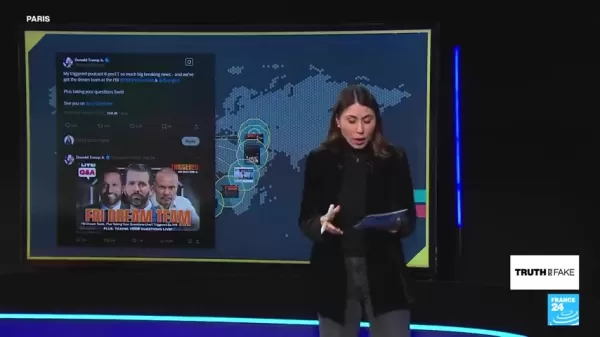
Delving into the mechanics of voice cloning is essential for understanding its potential dangers. AI algorithms sift through extensive audio data to capture the unique elements of someone's voice, such as tone, pitch, rhythm, and pronunciation. Once these traits are mastered, the AI can generate new audio that sounds remarkably like the original speaker. While this technology has beneficial uses, like creating personalized virtual assistants or restoring voices lost to illness or injury, it can also be misused, as seen with the Trump Jr. deepfake, to propagate misinformation, tarnish reputations, or even incite violence.
The sophistication of today's voice cloning technology complicates the detection of deepfakes. Previously, telltale signs like robotic tones or unnatural pauses might have been giveaways, but modern AI algorithms have evolved, producing more lifelike deepfakes. This underscores the importance of combining technical analysis, critical thinking, and media literacy to spot these forgeries.
How the Trump Jr. Deepfake Spread Like Wildfire
The Donald Trump Jr. deepfake serves as a textbook case of how rapidly misinformation can proliferate online. After its creation, the audio was shared across various social media platforms, boosted by algorithms designed to enhance engagement and virality. A network of accounts, some notorious for spreading misinformation, played a crucial role in amplifying the deepfake, reaching millions of users.
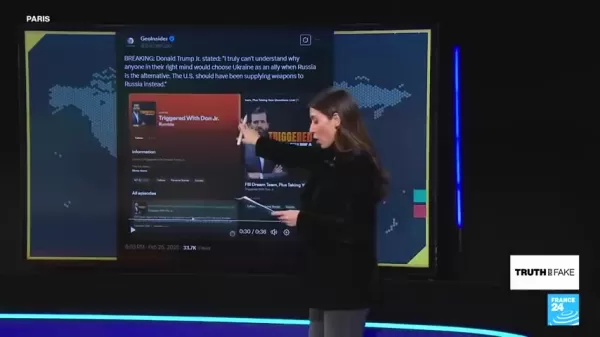
Understanding how social media contributes to the spread of deepfakes is vital. Platforms like X (formerly Twitter), Facebook, and YouTube have become hotbeds for misinformation, as their algorithms prioritize engagement over accuracy. This means that sensational or controversial content, like deepfakes, gains more visibility, regardless of its truthfulness.
In the Trump Jr. deepfake scenario, accounts known for spreading misinformation were instrumental in its spread. These accounts often boast large followings and are adept at manipulating social media algorithms to boost their message. They might employ tactics like creating emotionally charged posts, using misleading hashtags, or targeting specific demographics. It's crucial to scrutinize the source and potential biases of the information before accepting it as fact.
The rapid spread of the Trump Jr. deepfake underscores the urgent need for platforms to take proactive measures against misinformation. This involves refining algorithms to favor accuracy over engagement, investing in fact-checking resources, and collaborating with media literacy organizations to educate users on identifying deepfakes. Without action, misinformation will continue to spread unchecked.
Fact-Checkers to the Rescue: Exposing the Artificial Origins
F Fortunately, the Donald Trump Jr. deepfake was swiftly debunked by fact-checkers and media forensic experts. These professionals are crucial in verifying the authenticity of online content and exposing misinformation. They employed a mix of technical analysis and critical thinking to confirm the audio as an AI-generated forgery.
Technical analysis involves scrutinizing the audio for signs of manipulation, such as inconsistencies in the voice, unnatural pauses, or artifacts from the AI algorithm. Media forensic experts are trained to spot these signs and can often pinpoint the source of a deepfake with high accuracy. These analyses are key to debunking deepfakes.
In the Trump Jr. deepfake case, fact-checkers and media forensic experts compared the audio to known recordings of Trump Jr.'s voice and identified discrepancies. They also used AI-detection tools to analyze the audio for artificial generation. These tools are continually being refined to match the pace of deepfake technology.
Despite the efforts of fact-checkers, some users continued to circulate the deepfake, either unaware of its artificial origin or choosing to believe it despite the evidence. This highlights the importance of critical thinking and media literacy in combating misinformation. Individuals must evaluate the credibility of sources, identify potential biases, and resist the urge to share unverified content.
The Role of Russian News Websites in Amplifying the Deepfake
Adding another layer of complexity, some Russian news websites also amplified the deepfake. This raises concerns about potential foreign interference in democratic processes and the use of deepfakes for propaganda.
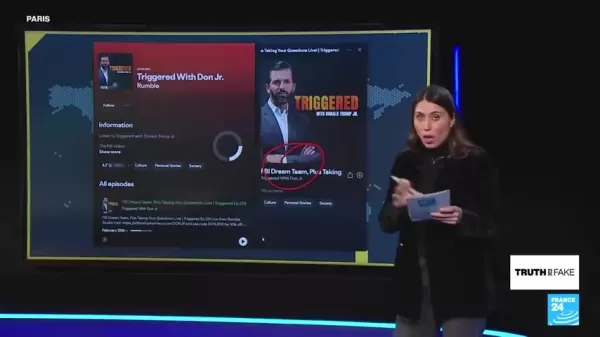
When evaluating the truthfulness of information, it's essential to consider the source and their motivations. Be critical of the content you encounter and seek out multiple perspectives.
The involvement of Russian news websites in amplifying the Trump Jr. deepfake raises alarms about the potential for foreign actors to use this technology to meddle in democratic processes. Deepfakes could be employed to spread propaganda, sow discord, or influence elections. This highlights the need for vigilance from governments, social media platforms, and individuals in countering foreign interference. Here are some ways to combat foreign interference:
- Improve Cybersecurity Infrastructure.
- Promote Media Literacy.
- Increase Public Awareness.
Identifying Deepfakes: Tools and Techniques
Tips for Detecting AI-Generated Content
Despite the growing sophistication of AI deepfakes, there are steps you can take to identify them:
- Examine the source: Is the content from a reputable news organization or a social media account known for spreading misinformation? Be cautious of anonymous sources or those with clear biases.
- Look for inconsistencies: Check for unnatural pauses, glitches, or distortions in the audio or video. Do the speaker's lip movements match the audio? These could indicate manipulation.
- Cross-reference the information: Does the content align with other credible sources? If it seems too sensational or unbelievable, fact-check it with multiple sources.
- Use AI-detection tools: Tools like GetReal or Logically Facts can analyze audio and video for signs of AI generation. While not foolproof, they offer valuable insights.
- Trust your instincts: If something feels off, do more research and verify it with other sources.
The Rise of AI-Detection Tools: A Technological Arms Race
As AI deepfakes become more advanced, so do the tools designed to detect them. AI-detection tools are continually developed and refined to spot the telltale signs of artificial generation. These tools analyze facial expressions, lip movements, and audio patterns to determine content authenticity.
Tools like GetReal and BBC Verify are used to analyze viral audio and fact-check content for signs of AI generation. While these tools aren't perfect, they're vital in the fight against misinformation. However, the ongoing technological arms race between deepfake creators and detection tool developers means that distinguishing between real and fake content will only become more challenging. A multi-faceted approach, combining technical analysis, critical thinking, and media literacy, is essential in combating deepfakes.
The Importance of Media Literacy: Combating Misinformation in the Digital Age
Alongside technical tools and fact-checking resources, media literacy is crucial in combating misinformation. Media literacy involves the ability to access, analyze, evaluate, and create media in various forms. It empowers individuals to critically consume information and resist sharing unverified content.
Cultivating media literacy skills is vital for navigating the digital age's complex information landscape. This includes:
- Understanding different types of media: Be aware of formats like news articles, social media posts, videos, and audio recordings.
- Evaluating source credibility: Consider the reputation, expertise, and potential biases of your information sources.
- Identifying misinformation techniques: Recognize tactics like emotionally charged language, misleading headlines, and fabricated evidence.
- Seeking multiple perspectives: Consult various sources before forming an opinion.
- Being skeptical of sensational content: If something seems too good to be true, verify it with credible sources before sharing.
By honing these skills, individuals can become more discerning consumers of information and help prevent the spread of misinformation. Media literacy education should be integrated into school curricula and community programs to equip all citizens with the tools to navigate the digital age responsibly.
Protecting Yourself From Deepfakes: A Proactive Approach
Individual Actions: Be a Critical Consumer
As an individual, you can take several steps to protect yourself from deepfakes and other misinformation:
- Be skeptical: Question everything you encounter online, especially if it seems too good to be true or aligns with your biases.
- Verify the source: Check the reputation and credibility of the source before accepting the information as true.
- Cross-reference: Look for the same information from multiple credible sources.
- Use fact-checking resources: Consult fact-checking websites and organizations to verify questionable content.
- Report misinformation: If you encounter a deepfake or misinformation on social media, report it to the platform.
- Promote media literacy: Share your knowledge and skills to help others become more discerning consumers of information.
Platform Accountability: Holding Social Media Responsible
Social media platforms have a responsibility to combat the spread of deepfakes and other misinformation:
- Improve algorithms: Develop algorithms that prioritize accuracy over engagement and are less susceptible to manipulation.
- Invest in fact-checking resources: Partner with fact-checking organizations to verify content and label or remove misinformation.
- Enforce clear policies: Implement transparent policies against the spread of deepfakes and other misinformation.
- Provide media literacy education: Educate users on identifying deepfakes and other misinformation.
- Collaborate with researchers: Work with researchers to understand deepfake technology and develop effective countermeasures.
Government Regulation: Striking a Balance Between Security and Freedom
Governments also have a role in combating deepfakes:
- Invest in research and development: Support efforts to develop tools and techniques for detecting and combating deepfakes.
- Enact legislation: Consider laws to criminalize the creation and distribution of malicious deepfakes.
- Promote international cooperation: Collaborate with other countries to share information and best practices.
- Balance security and freedom: Ensure that regulations do not infringe on freedom of speech or other fundamental rights.
Striking a balance between protecting society from deepfake harms and preserving fundamental rights is crucial.
Related article
 Suno to Watermark Songs Amid Legal Battles
Suno, the platform enabling users to generate AI-created music, has unveiled new features to label platform-produced tracks, restrict downloads, and update community standards to curb unauthorized replicas. These updates arrive as Suno confronts mult
Musk Admits Grok Build Leaked User Code, Promises to Erase All Historical Data
Elon Musk directly addressed the privacy controversy surrounding Grok Build, beginning with a simple "True" to confirm the incident's validity. He pledged that all user data previously uploaded to SpaceXAI would be permanently erased, stating, "not a
U.S. Stocks Hit Historic Milestone as AI and Aerospace Giants Prepare for Trillion-Dollar Debut
Elon Musk, Sam Altman, and Dario Amodei, three titans of the technology sector, are advancing toward initial public offerings for their respective ventures. With SpaceX, OpenAI, and Anthropic—three industry behemoths nearing trillion-dollar valuation
Related Special Topic Recommendations
SEO
Suno to Watermark Songs Amid Legal Battles
Suno, the platform enabling users to generate AI-created music, has unveiled new features to label platform-produced tracks, restrict downloads, and update community standards to curb unauthorized replicas. These updates arrive as Suno confronts mult
Musk Admits Grok Build Leaked User Code, Promises to Erase All Historical Data
Elon Musk directly addressed the privacy controversy surrounding Grok Build, beginning with a simple "True" to confirm the incident's validity. He pledged that all user data previously uploaded to SpaceXAI would be permanently erased, stating, "not a
U.S. Stocks Hit Historic Milestone as AI and Aerospace Giants Prepare for Trillion-Dollar Debut
Elon Musk, Sam Altman, and Dario Amodei, three titans of the technology sector, are advancing toward initial public offerings for their respective ventures. With SpaceX, OpenAI, and Anthropic—three industry behemoths nearing trillion-dollar valuation
Related Special Topic Recommendations
SEO
 Best AI SERP Analysis Tools for Search Strategy
2026 Latest Best Top-rated AI SERP Analysis Tools for Search Strategy are curated by XIX.AI through rigorous real-world tests and weekly updated rankings. These powerful tools help you unlock hidden optimization opportunities, boost content performance, and gain a competitive edge in search. Discover your perfect tool to elevate your search strategy today. Explore now!
 13 tools
 xix.ai
Data Analysis
Best AI Anomaly Detection Tools for KPI Monitoring across SaaS and Ecommerce Teams
xix.ai
Data Analysis
Best AI Anomaly Detection Tools for KPI Monitoring across SaaS and Ecommerce Teams
2026 Latest Best Top-rated AI Anomaly Detection Tools for KPI Monitoring in SaaS and Ecommerce teams! XIX.AI has curated a powerful, game-changing collection based on rigorous real-world tests and weekly updated rankings. You’ll find detailed free vs paid comparison insights to help you identify the must-try solution that boosts productivity and unlocks your AI edge. Explore now!
10 tools
xix.ai
writing
Best AI Outline Generators for Long-Form SEO Articles
2026 Latest Best Top-Rated AI Outline Generators for Long-Form SEO Articles, meticulously curated by XIX.AI. These powerful tools offer game-changing assistance in creating high-quality content quickly, boosting writing efficiency significantly. Get a free vs paid comparison along with real-world tests and detailed rankings to help you find the must-try option that suits your needs. Explore now to unlock your AI edge.
8 tools
xix.ai
Education and Learning
AI Study Tools for Homework and Exam Prep
2026 Latest Best AI Study Tools for Homework and Exam Prep! XIX.AI curates a top-rated list of powerful, game-changing tools that help students boost productivity, streamline homework completion, and ace exams through real-world tests. Get a free vs paid comparison, detailed rankings, and must-try options to unlock your AI edge. Explore now!
10 tools
xix.ai
Music composition
AI Vocal Demo Tools for Songwriters, Hooks, Toplines, and Multilingual Draft Sessions
2026 Latest Best AI Vocal Demo Tools for Songwriters, Hook Creators, and Multi-Language Content Teams! XIX.AI has curated a top-rated list of powerful game-changing tools that go through rigorous real-world tests. You’ll find detailed free vs paid comparison data, comprehensive rankings, and must-try options to help you boost writing efficiency and unlock your creative potential. Explore now to discover your perfect tool for all your content needs!
9 tools
xix.ai
Business
Best AI Competitive Research Tools for Small Businesses
2026 Latest Best Top-rated AI Competitive Research Tools for Small Businesses! XIX.AI has curated a highly powerful game-changing collection, updated weekly with rigorous real-world tests and detailed rankings. You can find a comprehensive free vs paid comparison to help you identify the must-try tools that boost your productivity and give you a competitive edge. Explore now to discover your perfect tool!
9 tools
xix.ai

 Comments (10)
0/500
Comments (10)
0/500
![JuanAdams]()
Franchement, ces audios de deepfake sont de plus en plus effrayants. Après cette histoire de Trump Jr., je me demande si on doit douter de tout ce qu'on entend maintenant. Les politiciens pourraient vraiment utiliser ça pour semer la discorde, non ? 😨
![MiaWalker]()
原来那段音频是AI伪造的啊?现在技术已经这么逼真了,以后我们普通人该怎么分辨真假信息呢...😰 我有点担心这种技术被恶意利用。
![TimothyWilliams]()
Wait, so that viral audio everyone was debating turned out to be AI-generated? That's both impressive and terrifying. Tech is moving faster than our ability to fact-check. Feels like we're headed for a world where you can't trust your own ears anymore. 😬
![JackSanchez]()
這段Trump Jr.的音頻事件真的讓人背脊發涼😰 AI偽造技術已經可以這麼逼真了嗎?以後我們還能相信聽到的東西嗎?建議媒體應該強制標註AI生成內容,不然社會真的要亂套了...
![LarryAdams]()
This AI deepfake stuff is wild! That Trump Jr. audio had me fooled for a sec—scary how real it sounded. Tech’s moving fast, but I’m worried about how easy it’s getting to trick people. 😬
![CarlTaylor]()
O áudio falso do Trump Jr. é impressionante! É assustador o quão realistas essas criações de IA podem ser. Faz com que eu questione tudo o que ouço online agora. Precisamos de melhores maneiras de detectar esses falsos, rápido! 😱
In the digital era, the boundary between reality and fabrication is becoming increasingly indistinct, largely due to advancements in AI technology. A striking example is the recent circulation of an audio clip purportedly featuring Donald Trump Jr. endorsing Russia, which was later revealed to be an AI-generated deepfake. This incident sheds light on the perils of AI-driven misinformation, prompting a closer examination of the deepfake's creation, dissemination, and the countermeasures we can adopt to safeguard against such deception.
The AI Deepfake Debacle: Unpacking the Donald Trump Jr. Audio
The Anatomy of a Deepfake: How AI Clones Voices
The emergence of AI deepfakes poses a significant challenge to our grasp on reality. These advanced forgeries harness AI to replicate a person's voice, mannerisms, or appearance with alarming precision, often for nefarious purposes. The case of the supposed Donald Trump Jr. audio is a prime example, where AI was utilized to mimic his voice, creating a convincing illusion that he was supporting Russia over Ukraine. This audio went viral on social media, potentially swaying public opinion and sparking controversy.
Delving into the mechanics of voice cloning is essential for understanding its potential dangers. AI algorithms sift through extensive audio data to capture the unique elements of someone's voice, such as tone, pitch, rhythm, and pronunciation. Once these traits are mastered, the AI can generate new audio that sounds remarkably like the original speaker. While this technology has beneficial uses, like creating personalized virtual assistants or restoring voices lost to illness or injury, it can also be misused, as seen with the Trump Jr. deepfake, to propagate misinformation, tarnish reputations, or even incite violence.
The sophistication of today's voice cloning technology complicates the detection of deepfakes. Previously, telltale signs like robotic tones or unnatural pauses might have been giveaways, but modern AI algorithms have evolved, producing more lifelike deepfakes. This underscores the importance of combining technical analysis, critical thinking, and media literacy to spot these forgeries.
How the Trump Jr. Deepfake Spread Like Wildfire
The Donald Trump Jr. deepfake serves as a textbook case of how rapidly misinformation can proliferate online. After its creation, the audio was shared across various social media platforms, boosted by algorithms designed to enhance engagement and virality. A network of accounts, some notorious for spreading misinformation, played a crucial role in amplifying the deepfake, reaching millions of users.
Understanding how social media contributes to the spread of deepfakes is vital. Platforms like X (formerly Twitter), Facebook, and YouTube have become hotbeds for misinformation, as their algorithms prioritize engagement over accuracy. This means that sensational or controversial content, like deepfakes, gains more visibility, regardless of its truthfulness.
In the Trump Jr. deepfake scenario, accounts known for spreading misinformation were instrumental in its spread. These accounts often boast large followings and are adept at manipulating social media algorithms to boost their message. They might employ tactics like creating emotionally charged posts, using misleading hashtags, or targeting specific demographics. It's crucial to scrutinize the source and potential biases of the information before accepting it as fact.
The rapid spread of the Trump Jr. deepfake underscores the urgent need for platforms to take proactive measures against misinformation. This involves refining algorithms to favor accuracy over engagement, investing in fact-checking resources, and collaborating with media literacy organizations to educate users on identifying deepfakes. Without action, misinformation will continue to spread unchecked.
Fact-Checkers to the Rescue: Exposing the Artificial Origins
F Fortunately, the Donald Trump Jr. deepfake was swiftly debunked by fact-checkers and media forensic experts. These professionals are crucial in verifying the authenticity of online content and exposing misinformation. They employed a mix of technical analysis and critical thinking to confirm the audio as an AI-generated forgery.
Technical analysis involves scrutinizing the audio for signs of manipulation, such as inconsistencies in the voice, unnatural pauses, or artifacts from the AI algorithm. Media forensic experts are trained to spot these signs and can often pinpoint the source of a deepfake with high accuracy. These analyses are key to debunking deepfakes.
In the Trump Jr. deepfake case, fact-checkers and media forensic experts compared the audio to known recordings of Trump Jr.'s voice and identified discrepancies. They also used AI-detection tools to analyze the audio for artificial generation. These tools are continually being refined to match the pace of deepfake technology.
Despite the efforts of fact-checkers, some users continued to circulate the deepfake, either unaware of its artificial origin or choosing to believe it despite the evidence. This highlights the importance of critical thinking and media literacy in combating misinformation. Individuals must evaluate the credibility of sources, identify potential biases, and resist the urge to share unverified content.
The Role of Russian News Websites in Amplifying the Deepfake
Adding another layer of complexity, some Russian news websites also amplified the deepfake. This raises concerns about potential foreign interference in democratic processes and the use of deepfakes for propaganda.
When evaluating the truthfulness of information, it's essential to consider the source and their motivations. Be critical of the content you encounter and seek out multiple perspectives.
The involvement of Russian news websites in amplifying the Trump Jr. deepfake raises alarms about the potential for foreign actors to use this technology to meddle in democratic processes. Deepfakes could be employed to spread propaganda, sow discord, or influence elections. This highlights the need for vigilance from governments, social media platforms, and individuals in countering foreign interference. Here are some ways to combat foreign interference:
- Improve Cybersecurity Infrastructure.
- Promote Media Literacy.
- Increase Public Awareness.
Identifying Deepfakes: Tools and Techniques
Tips for Detecting AI-Generated Content
Despite the growing sophistication of AI deepfakes, there are steps you can take to identify them:
- Examine the source: Is the content from a reputable news organization or a social media account known for spreading misinformation? Be cautious of anonymous sources or those with clear biases.
- Look for inconsistencies: Check for unnatural pauses, glitches, or distortions in the audio or video. Do the speaker's lip movements match the audio? These could indicate manipulation.
- Cross-reference the information: Does the content align with other credible sources? If it seems too sensational or unbelievable, fact-check it with multiple sources.
- Use AI-detection tools: Tools like GetReal or Logically Facts can analyze audio and video for signs of AI generation. While not foolproof, they offer valuable insights.
- Trust your instincts: If something feels off, do more research and verify it with other sources.
The Rise of AI-Detection Tools: A Technological Arms Race
As AI deepfakes become more advanced, so do the tools designed to detect them. AI-detection tools are continually developed and refined to spot the telltale signs of artificial generation. These tools analyze facial expressions, lip movements, and audio patterns to determine content authenticity.
Tools like GetReal and BBC Verify are used to analyze viral audio and fact-check content for signs of AI generation. While these tools aren't perfect, they're vital in the fight against misinformation. However, the ongoing technological arms race between deepfake creators and detection tool developers means that distinguishing between real and fake content will only become more challenging. A multi-faceted approach, combining technical analysis, critical thinking, and media literacy, is essential in combating deepfakes.
The Importance of Media Literacy: Combating Misinformation in the Digital Age
Alongside technical tools and fact-checking resources, media literacy is crucial in combating misinformation. Media literacy involves the ability to access, analyze, evaluate, and create media in various forms. It empowers individuals to critically consume information and resist sharing unverified content.
Cultivating media literacy skills is vital for navigating the digital age's complex information landscape. This includes:
- Understanding different types of media: Be aware of formats like news articles, social media posts, videos, and audio recordings.
- Evaluating source credibility: Consider the reputation, expertise, and potential biases of your information sources.
- Identifying misinformation techniques: Recognize tactics like emotionally charged language, misleading headlines, and fabricated evidence.
- Seeking multiple perspectives: Consult various sources before forming an opinion.
- Being skeptical of sensational content: If something seems too good to be true, verify it with credible sources before sharing.
By honing these skills, individuals can become more discerning consumers of information and help prevent the spread of misinformation. Media literacy education should be integrated into school curricula and community programs to equip all citizens with the tools to navigate the digital age responsibly.
Protecting Yourself From Deepfakes: A Proactive Approach
Individual Actions: Be a Critical Consumer
As an individual, you can take several steps to protect yourself from deepfakes and other misinformation:
- Be skeptical: Question everything you encounter online, especially if it seems too good to be true or aligns with your biases.
- Verify the source: Check the reputation and credibility of the source before accepting the information as true.
- Cross-reference: Look for the same information from multiple credible sources.
- Use fact-checking resources: Consult fact-checking websites and organizations to verify questionable content.
- Report misinformation: If you encounter a deepfake or misinformation on social media, report it to the platform.
- Promote media literacy: Share your knowledge and skills to help others become more discerning consumers of information.
Platform Accountability: Holding Social Media Responsible
Social media platforms have a responsibility to combat the spread of deepfakes and other misinformation:
- Improve algorithms: Develop algorithms that prioritize accuracy over engagement and are less susceptible to manipulation.
- Invest in fact-checking resources: Partner with fact-checking organizations to verify content and label or remove misinformation.
- Enforce clear policies: Implement transparent policies against the spread of deepfakes and other misinformation.
- Provide media literacy education: Educate users on identifying deepfakes and other misinformation.
- Collaborate with researchers: Work with researchers to understand deepfake technology and develop effective countermeasures.
Government Regulation: Striking a Balance Between Security and Freedom
Governments also have a role in combating deepfakes:
- Invest in research and development: Support efforts to develop tools and techniques for detecting and combating deepfakes.
- Enact legislation: Consider laws to criminalize the creation and distribution of malicious deepfakes.
- Promote international cooperation: Collaborate with other countries to share information and best practices.
- Balance security and freedom: Ensure that regulations do not infringe on freedom of speech or other fundamental rights.
Striking a balance between protecting society from deepfake harms and preserving fundamental rights is crucial.








 Suno to Watermark Songs Amid Legal Battles
Suno, the platform enabling users to generate AI-created music, has unveiled new features to label platform-produced tracks, restrict downloads, and update community standards to curb unauthorized replicas. These updates arrive as Suno confronts mult
Suno to Watermark Songs Amid Legal Battles
Suno, the platform enabling users to generate AI-created music, has unveiled new features to label platform-produced tracks, restrict downloads, and update community standards to curb unauthorized replicas. These updates arrive as Suno confronts mult
 Musk Admits Grok Build Leaked User Code, Promises to Erase All Historical Data
Elon Musk directly addressed the privacy controversy surrounding Grok Build, beginning with a simple "True" to confirm the incident's validity. He pledged that all user data previously uploaded to SpaceXAI would be permanently erased, stating, "not a
Musk Admits Grok Build Leaked User Code, Promises to Erase All Historical Data
Elon Musk directly addressed the privacy controversy surrounding Grok Build, beginning with a simple "True" to confirm the incident's validity. He pledged that all user data previously uploaded to SpaceXAI would be permanently erased, stating, "not a
 U.S. Stocks Hit Historic Milestone as AI and Aerospace Giants Prepare for Trillion-Dollar Debut
Elon Musk, Sam Altman, and Dario Amodei, three titans of the technology sector, are advancing toward initial public offerings for their respective ventures. With SpaceX, OpenAI, and Anthropic—three industry behemoths nearing trillion-dollar valuation
U.S. Stocks Hit Historic Milestone as AI and Aerospace Giants Prepare for Trillion-Dollar Debut
Elon Musk, Sam Altman, and Dario Amodei, three titans of the technology sector, are advancing toward initial public offerings for their respective ventures. With SpaceX, OpenAI, and Anthropic—three industry behemoths nearing trillion-dollar valuation

2026 Latest Best Top-rated AI SERP Analysis Tools for Search Strategy are curated by XIX.AI through rigorous real-world tests and weekly updated rankings. These powerful tools help you unlock hidden optimization opportunities, boost content performance, and gain a competitive edge in search. Discover your perfect tool to elevate your search strategy today. Explore now!
13 tools
xix.ai

2026 Latest Best Top-rated AI Anomaly Detection Tools for KPI Monitoring in SaaS and Ecommerce teams! XIX.AI has curated a powerful, game-changing collection based on rigorous real-world tests and weekly updated rankings. You’ll find detailed free vs paid comparison insights to help you identify the must-try solution that boosts productivity and unlocks your AI edge. Explore now!
10 tools
xix.ai

2026 Latest Best Top-Rated AI Outline Generators for Long-Form SEO Articles, meticulously curated by XIX.AI. These powerful tools offer game-changing assistance in creating high-quality content quickly, boosting writing efficiency significantly. Get a free vs paid comparison along with real-world tests and detailed rankings to help you find the must-try option that suits your needs. Explore now to unlock your AI edge.
8 tools
xix.ai

2026 Latest Best AI Study Tools for Homework and Exam Prep! XIX.AI curates a top-rated list of powerful, game-changing tools that help students boost productivity, streamline homework completion, and ace exams through real-world tests. Get a free vs paid comparison, detailed rankings, and must-try options to unlock your AI edge. Explore now!
10 tools
xix.ai

2026 Latest Best AI Vocal Demo Tools for Songwriters, Hook Creators, and Multi-Language Content Teams! XIX.AI has curated a top-rated list of powerful game-changing tools that go through rigorous real-world tests. You’ll find detailed free vs paid comparison data, comprehensive rankings, and must-try options to help you boost writing efficiency and unlock your creative potential. Explore now to discover your perfect tool for all your content needs!
9 tools
xix.ai

2026 Latest Best Top-rated AI Competitive Research Tools for Small Businesses! XIX.AI has curated a highly powerful game-changing collection, updated weekly with rigorous real-world tests and detailed rankings. You can find a comprehensive free vs paid comparison to help you identify the must-try tools that boost your productivity and give you a competitive edge. Explore now to discover your perfect tool!
9 tools
xix.ai

Franchement, ces audios de deepfake sont de plus en plus effrayants. Après cette histoire de Trump Jr., je me demande si on doit douter de tout ce qu'on entend maintenant. Les politiciens pourraient vraiment utiliser ça pour semer la discorde, non ? 😨
原来那段音频是AI伪造的啊?现在技术已经这么逼真了,以后我们普通人该怎么分辨真假信息呢...😰 我有点担心这种技术被恶意利用。
Wait, so that viral audio everyone was debating turned out to be AI-generated? That's both impressive and terrifying. Tech is moving faster than our ability to fact-check. Feels like we're headed for a world where you can't trust your own ears anymore. 😬
這段Trump Jr.的音頻事件真的讓人背脊發涼😰 AI偽造技術已經可以這麼逼真了嗎?以後我們還能相信聽到的東西嗎?建議媒體應該強制標註AI生成內容,不然社會真的要亂套了...
This AI deepfake stuff is wild! That Trump Jr. audio had me fooled for a sec—scary how real it sounded. Tech’s moving fast, but I’m worried about how easy it’s getting to trick people. 😬
O áudio falso do Trump Jr. é impressionante! É assustador o quão realistas essas criações de IA podem ser. Faz com que eu questione tudo o que ouço online agora. Precisamos de melhores maneiras de detectar esses falsos, rápido! 😱












