


 Home
HomeAI Transforms Hematology Diagnostics with Revolutionary Breakthroughs
Artificial intelligence is reshaping hematology by automating complex procedures, boosting diagnostic precision, and streamlining workflows. This revolutionary technology spans the entire diagnostic spectrum - from initial case assignments to advanced cell classification using deep learning models. Our exploration reveals how AI-driven hematology delivers improved patient outcomes while transforming traditional diagnostic paradigms.
Key Points
AI enhances hematology diagnostics through superior accuracy and operational efficiency.
From sample preparation to final reporting, AI optimizes every diagnostic phase.
Advanced algorithms refine cell classification and differential disease diagnosis.
Digital pathology creates machine-readable images for AI analysis.
AI introduces standardization in manual differentials while improving documentation.
Diagnostic connectivity between healthcare providers strengthens through AI solutions.
AI accelerates pathology's transition from subjective assessment to quantitative analysis.
The Dawn of AI in Hematology: A Transformative Shift
What is AI in Hematology?
In hematology, AI applies computational algorithms to blood and bone marrow analysis. These intelligent systems range from automating routine processes to providing advanced diagnostic support. AI empowers hematologists with greater consistency, faster results, and standardized diagnostic methodologies.
AI's Role:
- Automation: Handles repetitive tasks like cell counting and morphological evaluation
- Accuracy: Minimizes diagnostic variability and human error
- Efficiency: Accelerates diagnostic timelines for timely clinical interventions
- Standardization: Ensures uniform diagnostic criteria across laboratories
This evolution represents hematology's transition from subjective interpretation to data-driven quantification.
Historical Perspective: The Evolution of Digital Pathology
Understanding AI's impact requires examining digital pathology's progression.
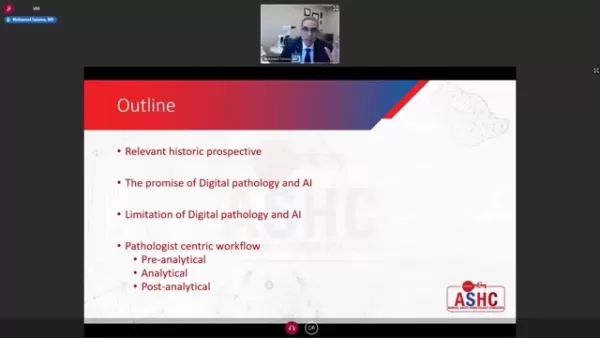
While AI applications are recent, digital pathology foundations were laid decades earlier.
Key Milestones:
- Early 1900s: Establishment of pathology as medical specialty
- 1953: Landmark DNA structure discovery
- 1980: Introduction of immunohistochemistry techniques
- 2004: Emergence of mutational assays for tailored therapies
- 2010: Widespread adoption of next-generation sequencing
- 2017: FDA approval of digital scanners for primary diagnosis
- 2018: Commercial release of AI-powered pathology solutions
These advancements created the digital infrastructure enabling AI's hematology applications. By transforming qualitative observations into quantitative measurements, AI provides novel biological insights that drive diagnostic innovation.
The Promise of Digital Pathology and AI
Digital pathology coupled with AI unlocks transformative diagnostic capabilities. Quantitative imaging enables precise, objective hematological assessments.
Key Promises:
Future integration of computer-assisted tools in routine pathology practice
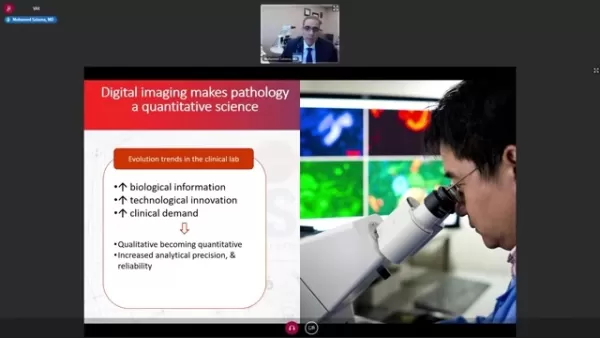
AI extends digital pathology beyond imaging applications
Enhanced pathology integration with electronic management systems
Quantifiable data reduces diagnostic variability
Accelerated result-to-treatment timelines
Beyond Imaging: AI in Flow Cytometry and Molecular Testing
AI's hematology applications transcend image analysis, impacting flow cytometry and molecular diagnostics. Intelligent algorithms decode complex cytometry data, improving rare cell detection and population analysis. For molecular testing, AI enhances variant interpretation and therapeutic response prediction.
Flow Cytometry Enhancements:
- Automated population gating and analysis
- Detection of subtle data patterns
Molecular Testing Applications:
- Precision variant identification
- Therapeutic response forecasting
These diverse applications demonstrate AI's versatility across hematological diagnostics.
Understanding the Workflow: Pathologist-Centric Approach
AI implementation maintains pathologists at the diagnostic core while enhancing their capabilities.
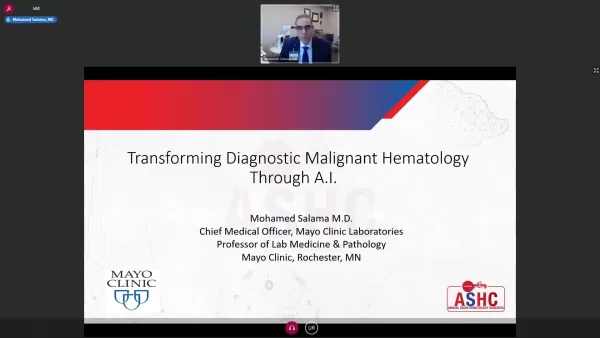
The AI-assisted workflow operates across three phases:
Stages:
- Pre-analysis: Case prioritization and automated screening
- Analysis: Diagnostic support through automated classification
- Post-analysis: AI-powered report generation
This model ensures AI augments rather than replaces pathological expertise.
Navigating AI Implementation: A Pathologist’s Guide
Machine Learning vs Deep Learning: Core Differences
Effective AI utilization requires distinguishing machine learning from deep learning approaches.
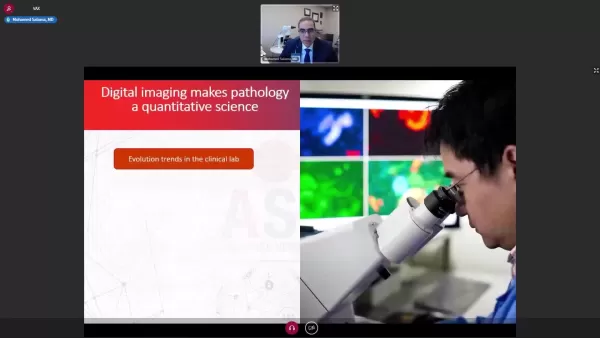
Machine learning relies on programmed feature identification, while deep learning autonomously extracts patterns from raw data.
How it Works:
- Machine Learning: Image processing → Feature extraction → Classification → Results
- Deep Learning: Direct pattern recognition via neural networks → Results
Conquering the Challenges
AI adoption presents technical and operational hurdles requiring proactive management.
Challenges:
- Performance degradation risks
- Need for strategic implementation planning
- Extended digital scanning durations
Typical Scanning Times:
- 2×2 area: 8.4 minutes
- 5×5 area: 11 minutes
- 7×7 area: 13.5 minutes
- 9×9 area: 16.6 minutes
What are the key considerations for integrating AI into hematology diagnostics?
Pros
Enhanced precision in cell identification and classification
Shortened diagnostic reporting timelines
Uniform diagnostic standards across institutions
Improved high-volume sample processing
Superior detection of subtle cellular abnormalities
Seamless genomic-clinical data integration
Cons
Substantial initial technology investment
Dependence on comprehensive training datasets
Potential algorithmic bias risks
Specialized maintenance requirements
Data privacy and ethical considerations
Frequently Asked Questions (FAQ)
How does AI improve the workflow in a hematology lab?
AI optimizes workflows by automating case triage, slide evaluation, and reagent preparation. This redistribution allows staff to concentrate on interpretive tasks, enhancing productivity and reducing processing times.
What are some real-world applications of AI in hematology?
Practical AI applications include:
Automated blood smear analysis
Bone marrow blast detection
Genomic-based treatment prediction
AI-generated diagnostic reports
Early acute promyelocytic leukemia identification
How can medical laboratories use AI for APL cases?
AI enables early APL detection preceding traditional diagnostic methods, accelerating therapeutic decisions while maintaining diagnostic quality standards.
How can AI help save costs with diagnostic testing?
AI-driven predictive staining reduces unnecessary testing through precision reagent ordering, creating substantial cost savings while maintaining diagnostic quality.
Related Questions
What are the implications of switching manual cell differentiating procedures to AI diagnostics?
Transitioning to AI presents both challenges and advantages:
FeatureManual ProceduresAI Diagnostics
Labor IntensityHighLow
StandardizationVariableConsistent
Training RequirementsExtensiveScalable
Historical RecordsLimitedComprehensive
Consultation LimitationsPhysical access requiredRemote collaboration enabled
DocumentationBasicDetailed audit trails
Traditional manual counting proves labor-intensive and inconsistent, while AI solutions offer scalability, traceability, and collaborative potential.
Related article
 AIR Raises $50M to Help Companies Vet Skills and Add-Ons Used by AI Agents
As organizations increasingly grant AI agents access to their internal systems, a new software supply chain is emerging around the tools these agents rely on: skills, plugins, MCP servers, and add-ons that enable internet interaction.AI security star
Ex-Ramp Engineers Raise $20M for Melius Platform After Pivoting From First Product
Melius, an AI-driven platform for creating ad campaigns, images, and videos, announced on Tuesday that it has secured $25 million in total funding. This includes a $20 million Series A round led by CRV and a $5 million seed round backed by General Ca
WeRide Unveils WIIT, a Physical AI Perception Model to Decode the Real World
At the 2026 World Artificial Intelligence Conference (WAIC), WeRide unveiled WIIT, a physical AI cognitive foundation model that charts a new course for artificial intelligence, shifting the focus from data interpretation to real-world cognition.WIIT
Related Special Topic Recommendations
Video creation
AIR Raises $50M to Help Companies Vet Skills and Add-Ons Used by AI Agents
As organizations increasingly grant AI agents access to their internal systems, a new software supply chain is emerging around the tools these agents rely on: skills, plugins, MCP servers, and add-ons that enable internet interaction.AI security star
Ex-Ramp Engineers Raise $20M for Melius Platform After Pivoting From First Product
Melius, an AI-driven platform for creating ad campaigns, images, and videos, announced on Tuesday that it has secured $25 million in total funding. This includes a $20 million Series A round led by CRV and a $5 million seed round backed by General Ca
WeRide Unveils WIIT, a Physical AI Perception Model to Decode the Real World
At the 2026 World Artificial Intelligence Conference (WAIC), WeRide unveiled WIIT, a physical AI cognitive foundation model that charts a new course for artificial intelligence, shifting the focus from data interpretation to real-world cognition.WIIT
Related Special Topic Recommendations
Video creation
 AI Subtitle and Dubbing Tools: Localize Video for Global Audiences
2026 Latest Best Top-rated AI Subtitle and Dubbing Tools Curated for Localizing Video for Global Audiences Powerfully boost content reach across language barriers with game-changing accuracy Real-world tests prove these must-try solutions offer free vs paid comparison and reliable rankings to maximize productivity Explore now to Discover your perfect tool for global content delivery
 10 tools
 xix.ai
automation
AI Invoice Processing Tools for AP Automation, Approval Routing, and ERP Sync Workflows
xix.ai
automation
AI Invoice Processing Tools for AP Automation, Approval Routing, and ERP Sync Workflows
2026 Latest Best AI Invoice Processing Tools for AP Automation, Approval Routing, and ERP Sync Workflows! XIX.AI curates top-rated, powerful solutions that pass rigorous real-world tests to boost productivity dramatically. Get a free vs paid comparison, see detailed rankings, and discover must-try options to streamline your finance operations. Explore now to unlock your AI edge!
9 tools
xix.ai
writing
AI Technical Documentation Tools for Developer Teams
2026 Latest Best Top-rated AI Technical Documentation Tools for Developer Teams! XIX.AI has curated a powerful, game-changing collection of must-try tools that go through rigorous real-world tests and weekly updated rankings. These top-rated solutions help teams boost productivity dramatically by streamlining content creation, fixing documentation errors, and accelerating coding workflows across all projects. Explore now to Discover your perfect tool for unlocking your AI edge!
13 tools
xix.ai
Software Development
AI Bug Triage Assistants: Rank Issues by Severity and User Impact
2026 Latest Best Top-rated AI Bug Triage Assistants Ranked! This curated collection showcases powerful game-changing tools that help teams quickly sort bugs by severity and user impact, saving valuable time. XIX.AI offers a free vs paid comparison along with real-world tests to help you find the must-try solution that boosts productivity significantly. Explore now to Discover your perfect tool for streamlining development workflows!
10 tools
xix.ai
code
Best AI Coding Tools for Python and JavaScript
2026 Latest Best Top-Rated AI Coding Tools for Python and JavaScript are here on XIX.AI’s curated list. These powerful game-changing tools have undergone rigorous real-world tests to deliver exceptional results for writing efficient code, fixing bugs, and boosting productivity. Get a free vs paid comparison and see which options suit your needs. Explore now to Discover your perfect coding tool and Unlock your AI edge.
10 tools
xix.ai
Academic Research
Best AI Citation Mapping Tools for Research Discovery
2026 Latest Best Top-Rated AI Citation Mapping Tools for Research Discovery! XIX.AI has curated a powerful, game-changing collection of must-try tools that go through rigorous real-world tests to deliver accurate results. You’ll find detailed free vs paid comparisons, weekly updated rankings, and insights to help you boost your research efficiency and uncover valuable data faster. Explore now to discover your perfect tool for academic work! 238 characters
11 tools
xix.ai

 Comments (0)
0/500
Comments (0)
0/500
Artificial intelligence is reshaping hematology by automating complex procedures, boosting diagnostic precision, and streamlining workflows. This revolutionary technology spans the entire diagnostic spectrum - from initial case assignments to advanced cell classification using deep learning models. Our exploration reveals how AI-driven hematology delivers improved patient outcomes while transforming traditional diagnostic paradigms.
Key Points
AI enhances hematology diagnostics through superior accuracy and operational efficiency.
From sample preparation to final reporting, AI optimizes every diagnostic phase.
Advanced algorithms refine cell classification and differential disease diagnosis.
Digital pathology creates machine-readable images for AI analysis.
AI introduces standardization in manual differentials while improving documentation.
Diagnostic connectivity between healthcare providers strengthens through AI solutions.
AI accelerates pathology's transition from subjective assessment to quantitative analysis.
The Dawn of AI in Hematology: A Transformative Shift
What is AI in Hematology?
In hematology, AI applies computational algorithms to blood and bone marrow analysis. These intelligent systems range from automating routine processes to providing advanced diagnostic support. AI empowers hematologists with greater consistency, faster results, and standardized diagnostic methodologies.
AI's Role:
- Automation: Handles repetitive tasks like cell counting and morphological evaluation
- Accuracy: Minimizes diagnostic variability and human error
- Efficiency: Accelerates diagnostic timelines for timely clinical interventions
- Standardization: Ensures uniform diagnostic criteria across laboratories
This evolution represents hematology's transition from subjective interpretation to data-driven quantification.
Historical Perspective: The Evolution of Digital Pathology
Understanding AI's impact requires examining digital pathology's progression.
While AI applications are recent, digital pathology foundations were laid decades earlier.
Key Milestones:
- Early 1900s: Establishment of pathology as medical specialty
- 1953: Landmark DNA structure discovery
- 1980: Introduction of immunohistochemistry techniques
- 2004: Emergence of mutational assays for tailored therapies
- 2010: Widespread adoption of next-generation sequencing
- 2017: FDA approval of digital scanners for primary diagnosis
- 2018: Commercial release of AI-powered pathology solutions
These advancements created the digital infrastructure enabling AI's hematology applications. By transforming qualitative observations into quantitative measurements, AI provides novel biological insights that drive diagnostic innovation.
The Promise of Digital Pathology and AI
Digital pathology coupled with AI unlocks transformative diagnostic capabilities. Quantitative imaging enables precise, objective hematological assessments.
Key Promises:
Future integration of computer-assisted tools in routine pathology practice
AI extends digital pathology beyond imaging applications
Enhanced pathology integration with electronic management systems
Quantifiable data reduces diagnostic variability
Accelerated result-to-treatment timelines
Beyond Imaging: AI in Flow Cytometry and Molecular Testing
AI's hematology applications transcend image analysis, impacting flow cytometry and molecular diagnostics. Intelligent algorithms decode complex cytometry data, improving rare cell detection and population analysis. For molecular testing, AI enhances variant interpretation and therapeutic response prediction.
Flow Cytometry Enhancements:
- Automated population gating and analysis
- Detection of subtle data patterns
Molecular Testing Applications:
- Precision variant identification
- Therapeutic response forecasting
These diverse applications demonstrate AI's versatility across hematological diagnostics.
Understanding the Workflow: Pathologist-Centric Approach
AI implementation maintains pathologists at the diagnostic core while enhancing their capabilities.
The AI-assisted workflow operates across three phases:
Stages:
- Pre-analysis: Case prioritization and automated screening
- Analysis: Diagnostic support through automated classification
- Post-analysis: AI-powered report generation
This model ensures AI augments rather than replaces pathological expertise.
Navigating AI Implementation: A Pathologist’s Guide
Machine Learning vs Deep Learning: Core Differences
Effective AI utilization requires distinguishing machine learning from deep learning approaches.
Machine learning relies on programmed feature identification, while deep learning autonomously extracts patterns from raw data.
How it Works:
- Machine Learning: Image processing → Feature extraction → Classification → Results
- Deep Learning: Direct pattern recognition via neural networks → Results
Conquering the Challenges
AI adoption presents technical and operational hurdles requiring proactive management.
Challenges:
- Performance degradation risks
- Need for strategic implementation planning
- Extended digital scanning durations
Typical Scanning Times:
- 2×2 area: 8.4 minutes
- 5×5 area: 11 minutes
- 7×7 area: 13.5 minutes
- 9×9 area: 16.6 minutes
What are the key considerations for integrating AI into hematology diagnostics?
Pros
Enhanced precision in cell identification and classification
Shortened diagnostic reporting timelines
Uniform diagnostic standards across institutions
Improved high-volume sample processing
Superior detection of subtle cellular abnormalities
Seamless genomic-clinical data integration
Cons
Substantial initial technology investment
Dependence on comprehensive training datasets
Potential algorithmic bias risks
Specialized maintenance requirements
Data privacy and ethical considerations
Frequently Asked Questions (FAQ)
How does AI improve the workflow in a hematology lab?
AI optimizes workflows by automating case triage, slide evaluation, and reagent preparation. This redistribution allows staff to concentrate on interpretive tasks, enhancing productivity and reducing processing times.
What are some real-world applications of AI in hematology?
Practical AI applications include: Automated blood smear analysis Bone marrow blast detection Genomic-based treatment prediction AI-generated diagnostic reports Early acute promyelocytic leukemia identification
How can medical laboratories use AI for APL cases?
AI enables early APL detection preceding traditional diagnostic methods, accelerating therapeutic decisions while maintaining diagnostic quality standards.
How can AI help save costs with diagnostic testing?
AI-driven predictive staining reduces unnecessary testing through precision reagent ordering, creating substantial cost savings while maintaining diagnostic quality.
Related Questions
What are the implications of switching manual cell differentiating procedures to AI diagnostics?
Transitioning to AI presents both challenges and advantages:
FeatureManual ProceduresAI Diagnostics
Labor IntensityHighLow
StandardizationVariableConsistent
Training RequirementsExtensiveScalable
Historical RecordsLimitedComprehensive
Consultation LimitationsPhysical access requiredRemote collaboration enabled
DocumentationBasicDetailed audit trails
Traditional manual counting proves labor-intensive and inconsistent, while AI solutions offer scalability, traceability, and collaborative potential.








 AIR Raises $50M to Help Companies Vet Skills and Add-Ons Used by AI Agents
As organizations increasingly grant AI agents access to their internal systems, a new software supply chain is emerging around the tools these agents rely on: skills, plugins, MCP servers, and add-ons that enable internet interaction.AI security star
AIR Raises $50M to Help Companies Vet Skills and Add-Ons Used by AI Agents
As organizations increasingly grant AI agents access to their internal systems, a new software supply chain is emerging around the tools these agents rely on: skills, plugins, MCP servers, and add-ons that enable internet interaction.AI security star
 Ex-Ramp Engineers Raise $20M for Melius Platform After Pivoting From First Product
Melius, an AI-driven platform for creating ad campaigns, images, and videos, announced on Tuesday that it has secured $25 million in total funding. This includes a $20 million Series A round led by CRV and a $5 million seed round backed by General Ca
Ex-Ramp Engineers Raise $20M for Melius Platform After Pivoting From First Product
Melius, an AI-driven platform for creating ad campaigns, images, and videos, announced on Tuesday that it has secured $25 million in total funding. This includes a $20 million Series A round led by CRV and a $5 million seed round backed by General Ca
 WeRide Unveils WIIT, a Physical AI Perception Model to Decode the Real World
At the 2026 World Artificial Intelligence Conference (WAIC), WeRide unveiled WIIT, a physical AI cognitive foundation model that charts a new course for artificial intelligence, shifting the focus from data interpretation to real-world cognition.WIIT
WeRide Unveils WIIT, a Physical AI Perception Model to Decode the Real World
At the 2026 World Artificial Intelligence Conference (WAIC), WeRide unveiled WIIT, a physical AI cognitive foundation model that charts a new course for artificial intelligence, shifting the focus from data interpretation to real-world cognition.WIIT

2026 Latest Best Top-rated AI Subtitle and Dubbing Tools Curated for Localizing Video for Global Audiences Powerfully boost content reach across language barriers with game-changing accuracy Real-world tests prove these must-try solutions offer free vs paid comparison and reliable rankings to maximize productivity Explore now to Discover your perfect tool for global content delivery
10 tools
xix.ai

2026 Latest Best AI Invoice Processing Tools for AP Automation, Approval Routing, and ERP Sync Workflows! XIX.AI curates top-rated, powerful solutions that pass rigorous real-world tests to boost productivity dramatically. Get a free vs paid comparison, see detailed rankings, and discover must-try options to streamline your finance operations. Explore now to unlock your AI edge!
9 tools
xix.ai

2026 Latest Best Top-rated AI Technical Documentation Tools for Developer Teams! XIX.AI has curated a powerful, game-changing collection of must-try tools that go through rigorous real-world tests and weekly updated rankings. These top-rated solutions help teams boost productivity dramatically by streamlining content creation, fixing documentation errors, and accelerating coding workflows across all projects. Explore now to Discover your perfect tool for unlocking your AI edge!
13 tools
xix.ai

2026 Latest Best Top-rated AI Bug Triage Assistants Ranked! This curated collection showcases powerful game-changing tools that help teams quickly sort bugs by severity and user impact, saving valuable time. XIX.AI offers a free vs paid comparison along with real-world tests to help you find the must-try solution that boosts productivity significantly. Explore now to Discover your perfect tool for streamlining development workflows!
10 tools
xix.ai

2026 Latest Best Top-Rated AI Coding Tools for Python and JavaScript are here on XIX.AI’s curated list. These powerful game-changing tools have undergone rigorous real-world tests to deliver exceptional results for writing efficient code, fixing bugs, and boosting productivity. Get a free vs paid comparison and see which options suit your needs. Explore now to Discover your perfect coding tool and Unlock your AI edge.
10 tools
xix.ai

2026 Latest Best Top-Rated AI Citation Mapping Tools for Research Discovery! XIX.AI has curated a powerful, game-changing collection of must-try tools that go through rigorous real-world tests to deliver accurate results. You’ll find detailed free vs paid comparisons, weekly updated rankings, and insights to help you boost your research efficiency and uncover valuable data faster. Explore now to discover your perfect tool for academic work! 238 characters
11 tools
xix.ai












