


 Home
HomeTop 3 Secure Container Images for Modern Applications
The reliability, integrity, and security of container images are essential for modern software delivery. As organizations shift to microservices, automated CI/CD pipelines, and multi-cloud architectures, the container image becomes more than just a packaging mechanism — it becomes a security boundary. A single vulnerability embedded in an image can propagate across clusters, environments, and deployments, creating widespread risk for applications that depend on speed and repeatability.
Security-forward organizations are increasingly moving from general-purpose base images to those that are secure-by-design, minimal, or enterprise-maintained, offering strong guarantees around trust, provenance, and vulnerability management. The industry has seen a significant rise in attacks targeting software supply chains, open-source dependencies, or compromised image registries. As a result, engineering teams are prioritizing container security earlier in the build process, choosing image foundations that minimize the need for downstream remediation and maximize confidence before deployment.
The 3 Best Secure Container Images for Modern Applications
The landscape of secure container images has evolved quickly, and today's development teams look for images that minimize vulnerabilities, improve performance, and enable predictable operations. The three platforms below represent the strongest choices in 2025, each offering a distinct approach to security: source-level reconstruction, extreme minimalism, and long-term stability.
1. Echo
Echo represents one of the most advanced approaches to secure container images. Rather than scanning, patching, or incrementally improving existing base images, Echo rebuilds them entirely from source, producing images that start free of known vulnerabilities. This zero-CVE image model lets organizations begin each deployment with a verified clean foundation, reducing the remediation burden of container maintenance.
What sets Echo apart is its AI-driven automated lifecycle management. When new vulnerabilities are disclosed, Echo's purpose-built AI agents detect affected dependencies, regenerate the impacted images, and deliver updated versions back to the organization's registry without manual intervention. This dramatically reduces exposure windows and ensures continuous compliance with security benchmarks, even in highly dynamic environments.
Echo is ideal for enterprises that cannot afford prolonged CVE exposure, such as financial platforms, healthcare providers, SaaS vendors, and critical infrastructure operators. It shifts container image security from a reactive process to a proactive, automated practice.
Key Features
Source-level reconstruction removes vulnerabilities entirely.
- Automated patch regeneration backed by strict SLAs
- Strong governance and policy controls
- Broad support for runtimes and languages
- Seamless pipeline integration for easy adoption
2. Google Distroless
Google Distroless is built on extreme minimalism. While traditional images include shells, package managers, and utility libraries, Distroless images contain only the dependencies needed for an application to run — nothing more. This design philosophy greatly reduces the attack surface and limits the number of components that could be compromised.
Distroless also aligns well with modern DevOps and SRE practices. By eliminating unnecessary system-level functionality, it encourages clean application packaging and ensures teams explicitly define the dependencies needed for execution. This reduces ambiguity and improves reliability when reproducing builds across environments.
Key Features
- Minimal composition removes unnecessary libraries and utilities
- Reduced attack surface relative to traditional images
- Immutable-by-design infrastructure for safer deployments
- Performance gains from smaller image sizes
- Clearer dependency definitions in application packaging
3. Ubuntu Containers
Ubuntu Containers emphasize stability, predictability, and long-term maintenance. Canonical's Ubuntu distributions have long been valued for balancing usability and robustness, and their containerized versions offer a similarly compelling solution for teams needing reliable, well-supported base images.
Unlike minimalist images that strip away functionality, Ubuntu provides a complete, fully featured environment that supports a wide range of software ecosystems. This compatibility makes it easier for teams to run applications with complex dependencies without major adjustments to package configurations.
Key Features
- Long-term, predictable security updates via Canonical LTS
- Broad compatibility with languages, libraries, and frameworks
- Enterprise-focused security enhancements, including compliance alignment
- Extensive community and vendor support
- Stable and reliable behavior in heterogeneous environments
Broader Considerations When Evaluating Secure Container Images
Choosing the right secure container image is not just a technical preference — it's a strategic decision that affects every stage of the software lifecycle. Modern organizations should evaluate images based on several broader criteria beyond immediate functionality.
Security Posture and Vulnerability Management
Organizations should assess whether an image requires reactive patching or offers proactive vulnerability elimination. Images with automated security maintenance reduce operational overhead and lower exposure risk.
Minimalism vs. Completeness
Minimal images reduce the attack surface but may require application adjustments. Full-featured images simplify compatibility but introduce more dependencies. The right choice depends on workload complexity and team expertise.
Operational Consistency
A secure image should behave reliably across testing, staging, and production environments. Stability provides a foundation for predictable deployments and less debugging time.
Compliance Alignment
Security teams must ensure base images support compliance frameworks, especially in regulated industries. Vendor-backed images often provide stronger audit trails and lifecycle guarantees.
Ecosystem Compatibility
Base images should integrate well with Kubernetes, CI/CD pipelines, observability tools, and automation systems.
Maintainability Over Time
Modern applications evolve continuously, so image choices should support sustainable upgrades, long-term support timelines, and clear documentation.
These evaluative principles help ensure organizations select the image foundation that best aligns with their strategic goals.
Final Thoughts
Secure container images are essential for resilience in cloud-native architectures. While Bitnami and other curated image providers offer convenience, modern applications need a deeper focus on image integrity, vulnerability management, and runtime safety.
Echo, Google Distroless, and Ubuntu Containers represent three powerful approaches to secure container design, each suited to different organizational needs.
Together, these three platforms form a robust foundation for teams building secure, scalable, and reliable modern applications.
Image source: Unsplash
Related article
 Slackbot Becomes an AI Agent
Slackbot, the automated assistant embedded in Salesforce’s corporate messaging platform Slack, is evolving into an AI agent. Salesforce CTO Parker Harris envisions it achieving viral status comparable to OpenAI’s ChatGPT.The cloud software giant laun
ByteDance Boosts Core AI Incentives as Doubao Surges 14.6%
ByteDance recently convened a DouBao equity briefing to unveil fresh incentive policies for staff involved in the DouBao division. The strike price for DouBao shares has been lifted from $14.85 in June 2026 to $17.02, marking an approximate 14.6% inc
MiniMax Unveils 10x Team Program to Incentivize Global AI Experts
MiniMax (Xiyu Technology), the General Artificial Intelligence Lab, has officially launched "10x Team," a global talent collaboration initiative. This program aims to recruit top experts across industries to explore the deep application of large mode
Related Special Topic Recommendations
Education and Learning
Slackbot Becomes an AI Agent
Slackbot, the automated assistant embedded in Salesforce’s corporate messaging platform Slack, is evolving into an AI agent. Salesforce CTO Parker Harris envisions it achieving viral status comparable to OpenAI’s ChatGPT.The cloud software giant laun
ByteDance Boosts Core AI Incentives as Doubao Surges 14.6%
ByteDance recently convened a DouBao equity briefing to unveil fresh incentive policies for staff involved in the DouBao division. The strike price for DouBao shares has been lifted from $14.85 in June 2026 to $17.02, marking an approximate 14.6% inc
MiniMax Unveils 10x Team Program to Incentivize Global AI Experts
MiniMax (Xiyu Technology), the General Artificial Intelligence Lab, has officially launched "10x Team," a global talent collaboration initiative. This program aims to recruit top experts across industries to explore the deep application of large mode
Related Special Topic Recommendations
Education and Learning
 AI Study Tools for Homework and Exam Prep
2026 Latest Best AI Study Tools for Homework and Exam Prep! XIX.AI curates a top-rated list of powerful, game-changing tools that help students boost productivity, streamline homework completion, and ace exams through real-world tests. Get a free vs paid comparison, detailed rankings, and must-try options to unlock your AI edge. Explore now!
 10 tools
 xix.ai
Music composition
AI Vocal Demo Tools for Songwriters, Hooks, Toplines, and Multilingual Draft Sessions
xix.ai
Music composition
AI Vocal Demo Tools for Songwriters, Hooks, Toplines, and Multilingual Draft Sessions
2026 Latest Best AI Vocal Demo Tools for Songwriters, Hook Creators, and Multi-Language Content Teams! XIX.AI has curated a top-rated list of powerful game-changing tools that go through rigorous real-world tests. You’ll find detailed free vs paid comparison data, comprehensive rankings, and must-try options to help you boost writing efficiency and unlock your creative potential. Explore now to discover your perfect tool for all your content needs!
9 tools
xix.ai
Business
Best AI Competitive Research Tools for Small Businesses
2026 Latest Best Top-rated AI Competitive Research Tools for Small Businesses! XIX.AI has curated a highly powerful game-changing collection, updated weekly with rigorous real-world tests and detailed rankings. You can find a comprehensive free vs paid comparison to help you identify the must-try tools that boost your productivity and give you a competitive edge. Explore now to discover your perfect tool!
9 tools
xix.ai
Image editing
Photoshop AI Retouch Tools for Ecommerce Apparel, Skin Cleanup, and Color Consistency
2026 Latest Best Photoshop AI retouch tools for ecommerce apparel, skin cleanup, and color consistency! This top-rated curated list features powerful game-changing solutions that help you boost writing efficiency, streamline content creation, and achieve perfect visual results effortlessly. Each tool has undergone real-world tests through weekly updated rankings, complete with free vs paid comparison details. Backed by XIX.AI, it’s the must-try guide for anyone aiming to unlock your AI edge. Explore now!
10 tools
xix.ai
Prompt
Best AI Prompt Libraries for ChatGPT Workflows
2026 Latest Best Top-Rated AI Prompt Libraries for optimizing all types of ChatGPT workflows. XIX.AI has curated a powerful, game-changing collection that goes through rigorous real-world tests to ensure top performance. You can find detailed free vs paid comparisons and expert rankings to help you choose the must-try tools that boost your productivity and unlock your AI edge. Explore now!
11 tools
xix.ai
Education and Learning
AI Quiz Builder Platforms for Teachers, Tutors, and Cohort-Based Learning Programs
2026 Latest Best AI Quiz Builder Platforms for Teachers, Tutors, and Cohort-Based Learning Programs! XIX.AI has curated a top-rated list of powerful game-changing tools that go through real-world tests to deliver accurate rankings. These must-try platforms help boost writing efficiency, streamline content creation, and simplify quiz design across all learning scenarios. Explore now to discover your perfect tool for unlocking your AI edge in teaching!
13 tools
xix.ai

 Comments (1)
0/500
Comments (1)
0/500
![RonaldLee]()
Finally someone talks about security beyond just scanning! 🛡️ We’ve been burned by bad base images before. Does this include SBOM generation? That’s what we really need for compliance these days. Thanks for the roundup!
The reliability, integrity, and security of container images are essential for modern software delivery. As organizations shift to microservices, automated CI/CD pipelines, and multi-cloud architectures, the container image becomes more than just a packaging mechanism — it becomes a security boundary. A single vulnerability embedded in an image can propagate across clusters, environments, and deployments, creating widespread risk for applications that depend on speed and repeatability.
Security-forward organizations are increasingly moving from general-purpose base images to those that are secure-by-design, minimal, or enterprise-maintained, offering strong guarantees around trust, provenance, and vulnerability management. The industry has seen a significant rise in attacks targeting software supply chains, open-source dependencies, or compromised image registries. As a result, engineering teams are prioritizing container security earlier in the build process, choosing image foundations that minimize the need for downstream remediation and maximize confidence before deployment.
The 3 Best Secure Container Images for Modern Applications
The landscape of secure container images has evolved quickly, and today's development teams look for images that minimize vulnerabilities, improve performance, and enable predictable operations. The three platforms below represent the strongest choices in 2025, each offering a distinct approach to security: source-level reconstruction, extreme minimalism, and long-term stability.
1. Echo
Echo represents one of the most advanced approaches to secure container images. Rather than scanning, patching, or incrementally improving existing base images, Echo rebuilds them entirely from source, producing images that start free of known vulnerabilities. This zero-CVE image model lets organizations begin each deployment with a verified clean foundation, reducing the remediation burden of container maintenance.
What sets Echo apart is its AI-driven automated lifecycle management. When new vulnerabilities are disclosed, Echo's purpose-built AI agents detect affected dependencies, regenerate the impacted images, and deliver updated versions back to the organization's registry without manual intervention. This dramatically reduces exposure windows and ensures continuous compliance with security benchmarks, even in highly dynamic environments.
Echo is ideal for enterprises that cannot afford prolonged CVE exposure, such as financial platforms, healthcare providers, SaaS vendors, and critical infrastructure operators. It shifts container image security from a reactive process to a proactive, automated practice.
Key Features
Source-level reconstruction removes vulnerabilities entirely.
- Automated patch regeneration backed by strict SLAs
- Strong governance and policy controls
- Broad support for runtimes and languages
- Seamless pipeline integration for easy adoption
2. Google Distroless
Google Distroless is built on extreme minimalism. While traditional images include shells, package managers, and utility libraries, Distroless images contain only the dependencies needed for an application to run — nothing more. This design philosophy greatly reduces the attack surface and limits the number of components that could be compromised.
Distroless also aligns well with modern DevOps and SRE practices. By eliminating unnecessary system-level functionality, it encourages clean application packaging and ensures teams explicitly define the dependencies needed for execution. This reduces ambiguity and improves reliability when reproducing builds across environments.
Key Features
- Minimal composition removes unnecessary libraries and utilities
- Reduced attack surface relative to traditional images
- Immutable-by-design infrastructure for safer deployments
- Performance gains from smaller image sizes
- Clearer dependency definitions in application packaging
3. Ubuntu Containers
Ubuntu Containers emphasize stability, predictability, and long-term maintenance. Canonical's Ubuntu distributions have long been valued for balancing usability and robustness, and their containerized versions offer a similarly compelling solution for teams needing reliable, well-supported base images.
Unlike minimalist images that strip away functionality, Ubuntu provides a complete, fully featured environment that supports a wide range of software ecosystems. This compatibility makes it easier for teams to run applications with complex dependencies without major adjustments to package configurations.
Key Features
- Long-term, predictable security updates via Canonical LTS
- Broad compatibility with languages, libraries, and frameworks
- Enterprise-focused security enhancements, including compliance alignment
- Extensive community and vendor support
- Stable and reliable behavior in heterogeneous environments
Broader Considerations When Evaluating Secure Container Images
Choosing the right secure container image is not just a technical preference — it's a strategic decision that affects every stage of the software lifecycle. Modern organizations should evaluate images based on several broader criteria beyond immediate functionality.
Security Posture and Vulnerability Management
Organizations should assess whether an image requires reactive patching or offers proactive vulnerability elimination. Images with automated security maintenance reduce operational overhead and lower exposure risk.
Minimalism vs. Completeness
Minimal images reduce the attack surface but may require application adjustments. Full-featured images simplify compatibility but introduce more dependencies. The right choice depends on workload complexity and team expertise.
Operational Consistency
A secure image should behave reliably across testing, staging, and production environments. Stability provides a foundation for predictable deployments and less debugging time.
Compliance Alignment
Security teams must ensure base images support compliance frameworks, especially in regulated industries. Vendor-backed images often provide stronger audit trails and lifecycle guarantees.
Ecosystem Compatibility
Base images should integrate well with Kubernetes, CI/CD pipelines, observability tools, and automation systems.
Maintainability Over Time
Modern applications evolve continuously, so image choices should support sustainable upgrades, long-term support timelines, and clear documentation.
These evaluative principles help ensure organizations select the image foundation that best aligns with their strategic goals.
Final Thoughts
Secure container images are essential for resilience in cloud-native architectures. While Bitnami and other curated image providers offer convenience, modern applications need a deeper focus on image integrity, vulnerability management, and runtime safety.
Echo, Google Distroless, and Ubuntu Containers represent three powerful approaches to secure container design, each suited to different organizational needs.
Together, these three platforms form a robust foundation for teams building secure, scalable, and reliable modern applications.
Image source: Unsplash








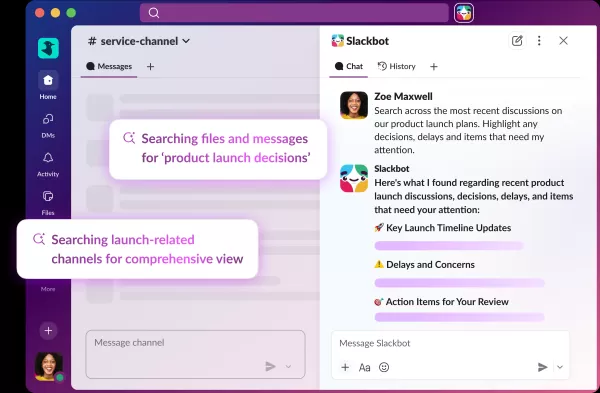 Slackbot Becomes an AI Agent
Slackbot, the automated assistant embedded in Salesforce’s corporate messaging platform Slack, is evolving into an AI agent. Salesforce CTO Parker Harris envisions it achieving viral status comparable to OpenAI’s ChatGPT.The cloud software giant laun
Slackbot Becomes an AI Agent
Slackbot, the automated assistant embedded in Salesforce’s corporate messaging platform Slack, is evolving into an AI agent. Salesforce CTO Parker Harris envisions it achieving viral status comparable to OpenAI’s ChatGPT.The cloud software giant laun
 ByteDance Boosts Core AI Incentives as Doubao Surges 14.6%
ByteDance recently convened a DouBao equity briefing to unveil fresh incentive policies for staff involved in the DouBao division. The strike price for DouBao shares has been lifted from $14.85 in June 2026 to $17.02, marking an approximate 14.6% inc
ByteDance Boosts Core AI Incentives as Doubao Surges 14.6%
ByteDance recently convened a DouBao equity briefing to unveil fresh incentive policies for staff involved in the DouBao division. The strike price for DouBao shares has been lifted from $14.85 in June 2026 to $17.02, marking an approximate 14.6% inc
 MiniMax Unveils 10x Team Program to Incentivize Global AI Experts
MiniMax (Xiyu Technology), the General Artificial Intelligence Lab, has officially launched "10x Team," a global talent collaboration initiative. This program aims to recruit top experts across industries to explore the deep application of large mode
MiniMax Unveils 10x Team Program to Incentivize Global AI Experts
MiniMax (Xiyu Technology), the General Artificial Intelligence Lab, has officially launched "10x Team," a global talent collaboration initiative. This program aims to recruit top experts across industries to explore the deep application of large mode

2026 Latest Best AI Study Tools for Homework and Exam Prep! XIX.AI curates a top-rated list of powerful, game-changing tools that help students boost productivity, streamline homework completion, and ace exams through real-world tests. Get a free vs paid comparison, detailed rankings, and must-try options to unlock your AI edge. Explore now!
10 tools
xix.ai

2026 Latest Best AI Vocal Demo Tools for Songwriters, Hook Creators, and Multi-Language Content Teams! XIX.AI has curated a top-rated list of powerful game-changing tools that go through rigorous real-world tests. You’ll find detailed free vs paid comparison data, comprehensive rankings, and must-try options to help you boost writing efficiency and unlock your creative potential. Explore now to discover your perfect tool for all your content needs!
9 tools
xix.ai

2026 Latest Best Top-rated AI Competitive Research Tools for Small Businesses! XIX.AI has curated a highly powerful game-changing collection, updated weekly with rigorous real-world tests and detailed rankings. You can find a comprehensive free vs paid comparison to help you identify the must-try tools that boost your productivity and give you a competitive edge. Explore now to discover your perfect tool!
9 tools
xix.ai

2026 Latest Best Photoshop AI retouch tools for ecommerce apparel, skin cleanup, and color consistency! This top-rated curated list features powerful game-changing solutions that help you boost writing efficiency, streamline content creation, and achieve perfect visual results effortlessly. Each tool has undergone real-world tests through weekly updated rankings, complete with free vs paid comparison details. Backed by XIX.AI, it’s the must-try guide for anyone aiming to unlock your AI edge. Explore now!
10 tools
xix.ai
2026 Latest Best Top-Rated AI Prompt Libraries for optimizing all types of ChatGPT workflows. XIX.AI has curated a powerful, game-changing collection that goes through rigorous real-world tests to ensure top performance. You can find detailed free vs paid comparisons and expert rankings to help you choose the must-try tools that boost your productivity and unlock your AI edge. Explore now!
11 tools
xix.ai

2026 Latest Best AI Quiz Builder Platforms for Teachers, Tutors, and Cohort-Based Learning Programs! XIX.AI has curated a top-rated list of powerful game-changing tools that go through real-world tests to deliver accurate rankings. These must-try platforms help boost writing efficiency, streamline content creation, and simplify quiz design across all learning scenarios. Explore now to discover your perfect tool for unlocking your AI edge in teaching!
13 tools
xix.ai

Finally someone talks about security beyond just scanning! 🛡️ We’ve been burned by bad base images before. Does this include SBOM generation? That’s what we really need for compliance these days. Thanks for the roundup!












