


 Home
HomeSundar Pichai Admits Google Lags in Programming, Vows Steady AI Search Shift

Following Google I/O, CEO Sundar Pichai joined the popular tech podcast "Hard Fork" for a deep discussion on key topics like large model competition, shifts in search, and AI safety. This unusually candid conversation came as Google faces mounting pressure in the AI race.
Key Takeaways
Model Evaluation: Google leads in overall intelligence and multimodal capabilities, but currently trails competitors in agentic coding and managing complex, long-horizon tasks.
Search Transformation: Google will not make a sudden, full shift to an AI-only model. Search links and sourced content will remain for the foreseeable future, and the subscription-plus-advertising business model will stay robust in the AI era.
Intelligent Agent Promotion: AI agents (like the upcoming Spark) will roll out gradually, with strict safeguards against boundary violations and overreach to prevent users from developing a "retreat mentality."
Compute Logic: Google continues to open TPU access to competitors, aiming to maintain hardware leadership through economies of scale and ecosystem collaboration.
AGI Warning: Rapid technological progress in recent years is accelerating the expected timeline for AGI. Even if not achieved soon, capabilities will see a generational leap within three years, and society must prepare now.
Interview Highlights: On Competition, Anxiety, and the Future
1. Honest Admission on "Lagging Behind": Acknowledging the Programming Gap
Responding to criticism, Pichai openly acknowledged, "Our models are highly competitive in text, audio, and general reasoning, but we are slightly behind in agentic coding and following instructions." He called programming a "core frontier" Google must hold, and revealed the team is rapidly fixing performance issues in Gemini 3.5 Flash through post-training. He noted that "30 to 60 days now feel like five years," reflecting how fast the competitive landscape is shifting.
2. On Search: Not "Removing the Band-Aid"
Asked about when the classic search interface might go, Pichai stressed the importance of "guiding users." He said Google will take a gradual, careful approach rather than a radical overhaul. He pointed out that users still rely on search links as an efficient way to navigate, not just out of habit but also for verifying information.
3. On Anxiety: The Inevitable Pain of Technological Change
Discussing public resistance to AI, Pichai showed a manager's caution. He believes human evolution can't keep pace with the astonishing speed of tech progress, making anxiety "natural and reasonable." However, he argued that AI's positive impacts—such as improved efficiency in medical radiology—are often overlooked, and he disagrees with overly pessimistic forecasts. Still, he emphasized that society must engage and voice its preferences to steer technology in the right direction.
4. On AGI: At a Critical Stage of Evolution
On whether the "singularity" has arrived, Pichai said moving toward AGI is inevitable. While avoiding a specific date, he admitted that tech progress in the past year or two has exceeded his expectations, and AGI is closer than anticipated. He stressed, "The public should not let their guard down just because AGI seems far off."
Market Interpretation: Google’s Conservative Stance and Initiative
Pichai’s interview sent a clear signal: Google is shifting from being a "versatile player" to focusing on differentiated competition.
On the Hardware Side: Google maintains its role as an AI computing "arms supplier," opening TPU access to control the pace of technological iteration.
On the Product Side: Facing the early lead of Anthropic and OpenAI in programming tools (like Cursor integration), Google is showing strong self-reflection and a drive to catch up.
On Trust: Google's "transparency" strategy around agent products reveals its deep understanding that the biggest obstacle to AI adoption isn't technical bottlenecks, but users' "lack of trust."
This interview not only addresses external doubts but also serves as a reminder to the entire industry: in this profound AI transformation, no company can stay ahead forever. Only through continuous technological iteration and deep societal engagement can companies remain competitive in the next three years.
Related article
 Suno to Watermark Songs Amid Legal Battles
Suno, the platform enabling users to generate AI-created music, has unveiled new features to label platform-produced tracks, restrict downloads, and update community standards to curb unauthorized replicas. These updates arrive as Suno confronts mult
Musk Admits Grok Build Leaked User Code, Promises to Erase All Historical Data
Elon Musk directly addressed the privacy controversy surrounding Grok Build, beginning with a simple "True" to confirm the incident's validity. He pledged that all user data previously uploaded to SpaceXAI would be permanently erased, stating, "not a
U.S. Stocks Hit Historic Milestone as AI and Aerospace Giants Prepare for Trillion-Dollar Debut
Elon Musk, Sam Altman, and Dario Amodei, three titans of the technology sector, are advancing toward initial public offerings for their respective ventures. With SpaceX, OpenAI, and Anthropic—three industry behemoths nearing trillion-dollar valuation
Related Special Topic Recommendations
SEO
Suno to Watermark Songs Amid Legal Battles
Suno, the platform enabling users to generate AI-created music, has unveiled new features to label platform-produced tracks, restrict downloads, and update community standards to curb unauthorized replicas. These updates arrive as Suno confronts mult
Musk Admits Grok Build Leaked User Code, Promises to Erase All Historical Data
Elon Musk directly addressed the privacy controversy surrounding Grok Build, beginning with a simple "True" to confirm the incident's validity. He pledged that all user data previously uploaded to SpaceXAI would be permanently erased, stating, "not a
U.S. Stocks Hit Historic Milestone as AI and Aerospace Giants Prepare for Trillion-Dollar Debut
Elon Musk, Sam Altman, and Dario Amodei, three titans of the technology sector, are advancing toward initial public offerings for their respective ventures. With SpaceX, OpenAI, and Anthropic—three industry behemoths nearing trillion-dollar valuation
Related Special Topic Recommendations
SEO
 Best AI SERP Analysis Tools for Search Strategy
2026 Latest Best Top-rated AI SERP Analysis Tools for Search Strategy are curated by XIX.AI through rigorous real-world tests and weekly updated rankings. These powerful tools help you unlock hidden optimization opportunities, boost content performance, and gain a competitive edge in search. Discover your perfect tool to elevate your search strategy today. Explore now!
 13 tools
 xix.ai
Data Analysis
Best AI Anomaly Detection Tools for KPI Monitoring across SaaS and Ecommerce Teams
xix.ai
Data Analysis
Best AI Anomaly Detection Tools for KPI Monitoring across SaaS and Ecommerce Teams
2026 Latest Best Top-rated AI Anomaly Detection Tools for KPI Monitoring in SaaS and Ecommerce teams! XIX.AI has curated a powerful, game-changing collection based on rigorous real-world tests and weekly updated rankings. You’ll find detailed free vs paid comparison insights to help you identify the must-try solution that boosts productivity and unlocks your AI edge. Explore now!
10 tools
xix.ai
writing
Best AI Outline Generators for Long-Form SEO Articles
2026 Latest Best Top-Rated AI Outline Generators for Long-Form SEO Articles, meticulously curated by XIX.AI. These powerful tools offer game-changing assistance in creating high-quality content quickly, boosting writing efficiency significantly. Get a free vs paid comparison along with real-world tests and detailed rankings to help you find the must-try option that suits your needs. Explore now to unlock your AI edge.
8 tools
xix.ai
Education and Learning
AI Study Tools for Homework and Exam Prep
2026 Latest Best AI Study Tools for Homework and Exam Prep! XIX.AI curates a top-rated list of powerful, game-changing tools that help students boost productivity, streamline homework completion, and ace exams through real-world tests. Get a free vs paid comparison, detailed rankings, and must-try options to unlock your AI edge. Explore now!
10 tools
xix.ai
Music composition
AI Vocal Demo Tools for Songwriters, Hooks, Toplines, and Multilingual Draft Sessions
2026 Latest Best AI Vocal Demo Tools for Songwriters, Hook Creators, and Multi-Language Content Teams! XIX.AI has curated a top-rated list of powerful game-changing tools that go through rigorous real-world tests. You’ll find detailed free vs paid comparison data, comprehensive rankings, and must-try options to help you boost writing efficiency and unlock your creative potential. Explore now to discover your perfect tool for all your content needs!
9 tools
xix.ai
Business
Best AI Competitive Research Tools for Small Businesses
2026 Latest Best Top-rated AI Competitive Research Tools for Small Businesses! XIX.AI has curated a highly powerful game-changing collection, updated weekly with rigorous real-world tests and detailed rankings. You can find a comprehensive free vs paid comparison to help you identify the must-try tools that boost your productivity and give you a competitive edge. Explore now to discover your perfect tool!
9 tools
xix.ai

 Comments (0)
0/500
Comments (0)
0/500
Following Google I/O, CEO Sundar Pichai joined the popular tech podcast "Hard Fork" for a deep discussion on key topics like large model competition, shifts in search, and AI safety. This unusually candid conversation came as Google faces mounting pressure in the AI race.
Key Takeaways
Model Evaluation: Google leads in overall intelligence and multimodal capabilities, but currently trails competitors in agentic coding and managing complex, long-horizon tasks.
Search Transformation: Google will not make a sudden, full shift to an AI-only model. Search links and sourced content will remain for the foreseeable future, and the subscription-plus-advertising business model will stay robust in the AI era.
Intelligent Agent Promotion: AI agents (like the upcoming Spark) will roll out gradually, with strict safeguards against boundary violations and overreach to prevent users from developing a "retreat mentality."
Compute Logic: Google continues to open TPU access to competitors, aiming to maintain hardware leadership through economies of scale and ecosystem collaboration.
AGI Warning: Rapid technological progress in recent years is accelerating the expected timeline for AGI. Even if not achieved soon, capabilities will see a generational leap within three years, and society must prepare now.
Interview Highlights: On Competition, Anxiety, and the Future
1. Honest Admission on "Lagging Behind": Acknowledging the Programming Gap
Responding to criticism, Pichai openly acknowledged, "Our models are highly competitive in text, audio, and general reasoning, but we are slightly behind in agentic coding and following instructions." He called programming a "core frontier" Google must hold, and revealed the team is rapidly fixing performance issues in Gemini 3.5 Flash through post-training. He noted that "30 to 60 days now feel like five years," reflecting how fast the competitive landscape is shifting.
2. On Search: Not "Removing the Band-Aid"
Asked about when the classic search interface might go, Pichai stressed the importance of "guiding users." He said Google will take a gradual, careful approach rather than a radical overhaul. He pointed out that users still rely on search links as an efficient way to navigate, not just out of habit but also for verifying information.
3. On Anxiety: The Inevitable Pain of Technological Change
Discussing public resistance to AI, Pichai showed a manager's caution. He believes human evolution can't keep pace with the astonishing speed of tech progress, making anxiety "natural and reasonable." However, he argued that AI's positive impacts—such as improved efficiency in medical radiology—are often overlooked, and he disagrees with overly pessimistic forecasts. Still, he emphasized that society must engage and voice its preferences to steer technology in the right direction.
4. On AGI: At a Critical Stage of Evolution
On whether the "singularity" has arrived, Pichai said moving toward AGI is inevitable. While avoiding a specific date, he admitted that tech progress in the past year or two has exceeded his expectations, and AGI is closer than anticipated. He stressed, "The public should not let their guard down just because AGI seems far off."
Market Interpretation: Google’s Conservative Stance and Initiative
Pichai’s interview sent a clear signal: Google is shifting from being a "versatile player" to focusing on differentiated competition.
On the Hardware Side: Google maintains its role as an AI computing "arms supplier," opening TPU access to control the pace of technological iteration.
On the Product Side: Facing the early lead of Anthropic and OpenAI in programming tools (like Cursor integration), Google is showing strong self-reflection and a drive to catch up.
On Trust: Google's "transparency" strategy around agent products reveals its deep understanding that the biggest obstacle to AI adoption isn't technical bottlenecks, but users' "lack of trust."
This interview not only addresses external doubts but also serves as a reminder to the entire industry: in this profound AI transformation, no company can stay ahead forever. Only through continuous technological iteration and deep societal engagement can companies remain competitive in the next three years.








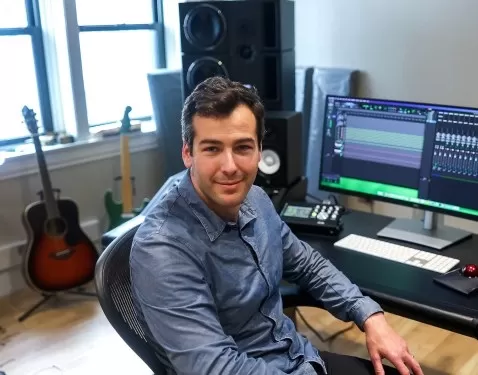 Suno to Watermark Songs Amid Legal Battles
Suno, the platform enabling users to generate AI-created music, has unveiled new features to label platform-produced tracks, restrict downloads, and update community standards to curb unauthorized replicas. These updates arrive as Suno confronts mult
Suno to Watermark Songs Amid Legal Battles
Suno, the platform enabling users to generate AI-created music, has unveiled new features to label platform-produced tracks, restrict downloads, and update community standards to curb unauthorized replicas. These updates arrive as Suno confronts mult
 Musk Admits Grok Build Leaked User Code, Promises to Erase All Historical Data
Elon Musk directly addressed the privacy controversy surrounding Grok Build, beginning with a simple "True" to confirm the incident's validity. He pledged that all user data previously uploaded to SpaceXAI would be permanently erased, stating, "not a
Musk Admits Grok Build Leaked User Code, Promises to Erase All Historical Data
Elon Musk directly addressed the privacy controversy surrounding Grok Build, beginning with a simple "True" to confirm the incident's validity. He pledged that all user data previously uploaded to SpaceXAI would be permanently erased, stating, "not a
 U.S. Stocks Hit Historic Milestone as AI and Aerospace Giants Prepare for Trillion-Dollar Debut
Elon Musk, Sam Altman, and Dario Amodei, three titans of the technology sector, are advancing toward initial public offerings for their respective ventures. With SpaceX, OpenAI, and Anthropic—three industry behemoths nearing trillion-dollar valuation
U.S. Stocks Hit Historic Milestone as AI and Aerospace Giants Prepare for Trillion-Dollar Debut
Elon Musk, Sam Altman, and Dario Amodei, three titans of the technology sector, are advancing toward initial public offerings for their respective ventures. With SpaceX, OpenAI, and Anthropic—three industry behemoths nearing trillion-dollar valuation

2026 Latest Best Top-rated AI SERP Analysis Tools for Search Strategy are curated by XIX.AI through rigorous real-world tests and weekly updated rankings. These powerful tools help you unlock hidden optimization opportunities, boost content performance, and gain a competitive edge in search. Discover your perfect tool to elevate your search strategy today. Explore now!
13 tools
xix.ai

2026 Latest Best Top-rated AI Anomaly Detection Tools for KPI Monitoring in SaaS and Ecommerce teams! XIX.AI has curated a powerful, game-changing collection based on rigorous real-world tests and weekly updated rankings. You’ll find detailed free vs paid comparison insights to help you identify the must-try solution that boosts productivity and unlocks your AI edge. Explore now!
10 tools
xix.ai

2026 Latest Best Top-Rated AI Outline Generators for Long-Form SEO Articles, meticulously curated by XIX.AI. These powerful tools offer game-changing assistance in creating high-quality content quickly, boosting writing efficiency significantly. Get a free vs paid comparison along with real-world tests and detailed rankings to help you find the must-try option that suits your needs. Explore now to unlock your AI edge.
8 tools
xix.ai

2026 Latest Best AI Study Tools for Homework and Exam Prep! XIX.AI curates a top-rated list of powerful, game-changing tools that help students boost productivity, streamline homework completion, and ace exams through real-world tests. Get a free vs paid comparison, detailed rankings, and must-try options to unlock your AI edge. Explore now!
10 tools
xix.ai

2026 Latest Best AI Vocal Demo Tools for Songwriters, Hook Creators, and Multi-Language Content Teams! XIX.AI has curated a top-rated list of powerful game-changing tools that go through rigorous real-world tests. You’ll find detailed free vs paid comparison data, comprehensive rankings, and must-try options to help you boost writing efficiency and unlock your creative potential. Explore now to discover your perfect tool for all your content needs!
9 tools
xix.ai

2026 Latest Best Top-rated AI Competitive Research Tools for Small Businesses! XIX.AI has curated a highly powerful game-changing collection, updated weekly with rigorous real-world tests and detailed rankings. You can find a comprehensive free vs paid comparison to help you identify the must-try tools that boost your productivity and give you a competitive edge. Explore now to discover your perfect tool!
9 tools
xix.ai












