


 Home
HomeNew Study Reveals How Much Data LLMs Actually Memorize

How Much Do AI Models Actually Memorize? New Research Reveals Surprising Insights
We all know that large language models (LLMs) like ChatGPT, Claude, and Gemini are trained on enormous datasets—trillions of words from books, websites, code, and even multimedia like images and audio. But what exactly happens to all that data? Do these models truly understand language, or are they just regurgitating memorized snippets?
A groundbreaking new study from Meta, Google DeepMind, Cornell, and NVIDIA finally gives us some concrete answers—and the results might surprise you.
The Big Question: Memorization vs. Generalization
At their core, LLMs work by detecting statistical patterns in language. When you ask ChatGPT about apples, it doesn’t "know" what an apple is in the human sense—instead, it recognizes that the word "apple" frequently appears alongside terms like "fruit," "red," "orchard," or even "iPhone." This statistical understanding is encoded in billions of parameters (essentially adjustable settings in the AI’s neural network).
But here’s the million-dollar question: How much of an LLM’s knowledge comes from generalized learning, and how much is just verbatim memorization?
This isn’t just academic—it has real-world legal implications. If AI models are found to be copying large chunks of copyrighted text, lawsuits from artists, authors, and publishers could gain traction. But if they’re truly learning patterns rather than exact content, AI companies might have stronger fair use defenses.
The Answer: 3.6 Bits Per Parameter
The study found that LLMs have a fixed memorization capacity of about 3.6 bits per parameter. What does that mean in practical terms?
- A single bit is the smallest digital unit (0 or 1).
- 3.6 bits can store about 12 distinct values—like picking a month of the year or rolling a 12-sided die.
- It’s not enough to store a full English letter (which needs ~4.7 bits), but it could encode a character from a reduced set of 10 common letters.
- In bytes, 3.6 bits is just 0.45 bytes—less than half a standard ASCII character.
Crucially, this number held steady across different model sizes, architectures, and even precision levels (though full-precision models reached slightly higher at 3.83 bits/parameter).
The Big Surprise: More Data = Less Memorization
Here’s where things get really interesting: Training on more data doesn’t increase memorization—it actually reduces it.
As lead researcher Jack Morris explained:
"Training on more data forces models to memorize less per sample."
Think of it like this: If an AI has a fixed "memory budget," spreading it across a larger dataset means each individual piece gets less dedicated storage. So, bigger datasets encourage generalization over rote copying—which could ease concerns about AI regurgitating copyrighted or sensitive content.
How Did Researchers Measure This?
To isolate memorization from generalization, the team trained models on completely random bitstrings—data with no patterns or structure.
Why? Because if a model reconstructs a random string, it must have memorized it—there’s no underlying logic to infer.
This approach allowed them to:
✔ Measure pure memorization, separate from learned patterns.
✔ Confirm that memorization scales predictably with model size.
✔ Show that generalization kicks in as datasets grow larger.
Real-World Implications
- Smaller datasets lead to more memorization.
- Larger datasets push models toward generalization (with a temporary "double descent" dip in performance).
- Higher precision (e.g., float32 vs. bfloat16) slightly increases memorization capacity (from 3.51 to 3.83 bits/parameter).
Unique Data Is More Likely to Be Memorized
While the study focuses on averages, highly unique or stylized content (like rare code snippets or distinctive writing) may still be more vulnerable to memorization.
However, membership inference attacks (trying to detect if specific data was in the training set) become unreliable as datasets grow—supporting the idea that large-scale training reduces privacy risks.
Putting It Into Perspective
- A 500K-parameter model can memorize ~225 KB of data.
- A 1.5B-parameter model can store ~675 MB.
- That’s not enough to reproduce entire books or images, but it does account for distributed textual patterns.
Legal Ramifications?
This research could play a key role in ongoing AI copyright lawsuits. If courts see that LLMs primarily generalize rather than copy, AI companies may have stronger fair use arguments.
The Bottom Line
More data = safer, more generalized AI. Instead of fearing massive datasets, we might actually want them—because they push models toward understanding rather than memorizing.
This study doesn’t just deepen our grasp of AI—it could reshape how we regulate, develop, and trust these powerful systems moving forward.
Related article
 Sam Altman Sparks Debate Over AI's Deceleration
Listen onApple PodcastsListen onSpotifyOpenAI CEO Sam Altman recently suggested that it may be time to “pace the rate of AI development” to allow society to “harden around some of these new capability levels.”On the latest episode of TechCrunch’s Equ
OpenAI fights Apple trade secret lawsuit
OpenAI rebutted Apple’s trade secret allegations on Tuesday, arguing the lawsuit is unfounded.“We take these claims seriously but see no evidence supporting them,” OpenAI stated, as reported by Bloomberg’s Ed Ludlow on X. “We support fair competition
OpenAI robotics head Caitlin Kalinowski resigns over Pentagon partnership
OpenAI robotics leader Caitlin Kalinowski has stepped down following the company’s controversial partnership with the Department of Defense.“This wasn’t an easy call,” Kalinowski explained in a social media statement. “While AI plays a vital role in
Related Special Topic Recommendations
Business
Sam Altman Sparks Debate Over AI's Deceleration
Listen onApple PodcastsListen onSpotifyOpenAI CEO Sam Altman recently suggested that it may be time to “pace the rate of AI development” to allow society to “harden around some of these new capability levels.”On the latest episode of TechCrunch’s Equ
OpenAI fights Apple trade secret lawsuit
OpenAI rebutted Apple’s trade secret allegations on Tuesday, arguing the lawsuit is unfounded.“We take these claims seriously but see no evidence supporting them,” OpenAI stated, as reported by Bloomberg’s Ed Ludlow on X. “We support fair competition
OpenAI robotics head Caitlin Kalinowski resigns over Pentagon partnership
OpenAI robotics leader Caitlin Kalinowski has stepped down following the company’s controversial partnership with the Department of Defense.“This wasn’t an easy call,” Kalinowski explained in a social media statement. “While AI plays a vital role in
Related Special Topic Recommendations
Business
 Best AI Competitive Research Tools for Small Businesses
2026 Latest Best Top-rated AI Competitive Research Tools for Small Businesses! XIX.AI has curated a highly powerful game-changing collection, updated weekly with rigorous real-world tests and detailed rankings. You can find a comprehensive free vs paid comparison to help you identify the must-try tools that boost your productivity and give you a competitive edge. Explore now to discover your perfect tool!
 9 tools
 xix.ai
Image editing
Photoshop AI Retouch Tools for Ecommerce Apparel, Skin Cleanup, and Color Consistency
xix.ai
Image editing
Photoshop AI Retouch Tools for Ecommerce Apparel, Skin Cleanup, and Color Consistency
2026 Latest Best Photoshop AI retouch tools for ecommerce apparel, skin cleanup, and color consistency! This top-rated curated list features powerful game-changing solutions that help you boost writing efficiency, streamline content creation, and achieve perfect visual results effortlessly. Each tool has undergone real-world tests through weekly updated rankings, complete with free vs paid comparison details. Backed by XIX.AI, it’s the must-try guide for anyone aiming to unlock your AI edge. Explore now!
10 tools
xix.ai
Prompt
Best AI Prompt Libraries for ChatGPT Workflows
2026 Latest Best Top-Rated AI Prompt Libraries for optimizing all types of ChatGPT workflows. XIX.AI has curated a powerful, game-changing collection that goes through rigorous real-world tests to ensure top performance. You can find detailed free vs paid comparisons and expert rankings to help you choose the must-try tools that boost your productivity and unlock your AI edge. Explore now!
11 tools
xix.ai
Education and Learning
AI Quiz Builder Platforms for Teachers, Tutors, and Cohort-Based Learning Programs
2026 Latest Best AI Quiz Builder Platforms for Teachers, Tutors, and Cohort-Based Learning Programs! XIX.AI has curated a top-rated list of powerful game-changing tools that go through real-world tests to deliver accurate rankings. These must-try platforms help boost writing efficiency, streamline content creation, and simplify quiz design across all learning scenarios. Explore now to discover your perfect tool for unlocking your AI edge in teaching!
13 tools
xix.ai
code
AI Pull Request Review Tools for GitHub Teams Handling Refactors, Bugs, and Security Gaps
2026 Latest Best AI Pull Request Review Tools for GitHub Teams are here on XIX.AI! This top-rated curated list showcases powerful game-changing solutions that streamline refactoring, bug fixing, and security gap detection across all team workflows. Enjoy a free vs paid comparison along with real-world tests and detailed rankings to help you find the perfect tool that boosts productivity significantly. Explore now to unlock your AI edge!
12 tools
xix.ai
Text-to-speech
Best AI Text to Speech Tools for Natural Voiceovers
2026 Latest Best Top-rated AI Text to Speech Tools for Natural Voiceovers are here on XIX.AI! This curated list features powerful, game-changing options that deliver crystal-clear voices for every use case, backed by real-world tests and weekly updated rankings. Get a free vs paid comparison to find the must-try solution that boosts your productivity instantly. Explore now to Unlock your AI edge!
11 tools
xix.ai

 Comments (2)
0/500
Comments (2)
0/500
![LawrenceWilliams]()
This study on LLMs memorizing data is wild! 🤯 I’m kinda spooked thinking about how much these models might 'remember' from the web. Could they accidentally spill sensitive info one day?
![EdwardYoung]()
This study on LLMs memorizing data is wild! 😮 I wonder how much of my old Reddit posts are stuck in these models’ brains. Kinda creepy but fascinating!
How Much Do AI Models Actually Memorize? New Research Reveals Surprising Insights
We all know that large language models (LLMs) like ChatGPT, Claude, and Gemini are trained on enormous datasets—trillions of words from books, websites, code, and even multimedia like images and audio. But what exactly happens to all that data? Do these models truly understand language, or are they just regurgitating memorized snippets?
A groundbreaking new study from Meta, Google DeepMind, Cornell, and NVIDIA finally gives us some concrete answers—and the results might surprise you.
The Big Question: Memorization vs. Generalization
At their core, LLMs work by detecting statistical patterns in language. When you ask ChatGPT about apples, it doesn’t "know" what an apple is in the human sense—instead, it recognizes that the word "apple" frequently appears alongside terms like "fruit," "red," "orchard," or even "iPhone." This statistical understanding is encoded in billions of parameters (essentially adjustable settings in the AI’s neural network).
But here’s the million-dollar question: How much of an LLM’s knowledge comes from generalized learning, and how much is just verbatim memorization?
This isn’t just academic—it has real-world legal implications. If AI models are found to be copying large chunks of copyrighted text, lawsuits from artists, authors, and publishers could gain traction. But if they’re truly learning patterns rather than exact content, AI companies might have stronger fair use defenses.
The Answer: 3.6 Bits Per Parameter
The study found that LLMs have a fixed memorization capacity of about 3.6 bits per parameter. What does that mean in practical terms?
- A single bit is the smallest digital unit (0 or 1).
- 3.6 bits can store about 12 distinct values—like picking a month of the year or rolling a 12-sided die.
- It’s not enough to store a full English letter (which needs ~4.7 bits), but it could encode a character from a reduced set of 10 common letters.
- In bytes, 3.6 bits is just 0.45 bytes—less than half a standard ASCII character.
Crucially, this number held steady across different model sizes, architectures, and even precision levels (though full-precision models reached slightly higher at 3.83 bits/parameter).
The Big Surprise: More Data = Less Memorization
Here’s where things get really interesting: Training on more data doesn’t increase memorization—it actually reduces it.
As lead researcher Jack Morris explained:
"Training on more data forces models to memorize less per sample."
Think of it like this: If an AI has a fixed "memory budget," spreading it across a larger dataset means each individual piece gets less dedicated storage. So, bigger datasets encourage generalization over rote copying—which could ease concerns about AI regurgitating copyrighted or sensitive content.
How Did Researchers Measure This?
To isolate memorization from generalization, the team trained models on completely random bitstrings—data with no patterns or structure.
Why? Because if a model reconstructs a random string, it must have memorized it—there’s no underlying logic to infer.
This approach allowed them to:
✔ Measure pure memorization, separate from learned patterns.
✔ Confirm that memorization scales predictably with model size.
✔ Show that generalization kicks in as datasets grow larger.
Real-World Implications
- Smaller datasets lead to more memorization.
- Larger datasets push models toward generalization (with a temporary "double descent" dip in performance).
- Higher precision (e.g., float32 vs. bfloat16) slightly increases memorization capacity (from 3.51 to 3.83 bits/parameter).
Unique Data Is More Likely to Be Memorized
While the study focuses on averages, highly unique or stylized content (like rare code snippets or distinctive writing) may still be more vulnerable to memorization.
However, membership inference attacks (trying to detect if specific data was in the training set) become unreliable as datasets grow—supporting the idea that large-scale training reduces privacy risks.
Putting It Into Perspective
- A 500K-parameter model can memorize ~225 KB of data.
- A 1.5B-parameter model can store ~675 MB.
- That’s not enough to reproduce entire books or images, but it does account for distributed textual patterns.
Legal Ramifications?
This research could play a key role in ongoing AI copyright lawsuits. If courts see that LLMs primarily generalize rather than copy, AI companies may have stronger fair use arguments.
The Bottom Line
More data = safer, more generalized AI. Instead of fearing massive datasets, we might actually want them—because they push models toward understanding rather than memorizing.
This study doesn’t just deepen our grasp of AI—it could reshape how we regulate, develop, and trust these powerful systems moving forward.








 Sam Altman Sparks Debate Over AI's Deceleration
Listen onApple PodcastsListen onSpotifyOpenAI CEO Sam Altman recently suggested that it may be time to “pace the rate of AI development” to allow society to “harden around some of these new capability levels.”On the latest episode of TechCrunch’s Equ
Sam Altman Sparks Debate Over AI's Deceleration
Listen onApple PodcastsListen onSpotifyOpenAI CEO Sam Altman recently suggested that it may be time to “pace the rate of AI development” to allow society to “harden around some of these new capability levels.”On the latest episode of TechCrunch’s Equ
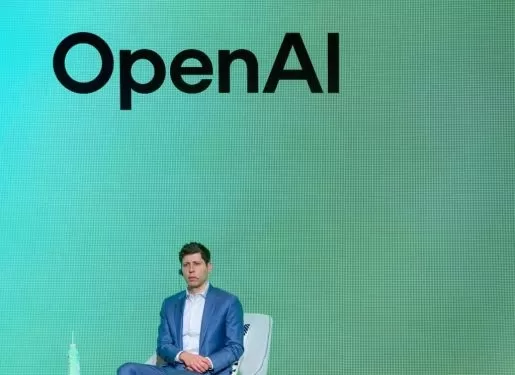 OpenAI fights Apple trade secret lawsuit
OpenAI rebutted Apple’s trade secret allegations on Tuesday, arguing the lawsuit is unfounded.“We take these claims seriously but see no evidence supporting them,” OpenAI stated, as reported by Bloomberg’s Ed Ludlow on X. “We support fair competition
OpenAI fights Apple trade secret lawsuit
OpenAI rebutted Apple’s trade secret allegations on Tuesday, arguing the lawsuit is unfounded.“We take these claims seriously but see no evidence supporting them,” OpenAI stated, as reported by Bloomberg’s Ed Ludlow on X. “We support fair competition
 OpenAI robotics head Caitlin Kalinowski resigns over Pentagon partnership
OpenAI robotics leader Caitlin Kalinowski has stepped down following the company’s controversial partnership with the Department of Defense.“This wasn’t an easy call,” Kalinowski explained in a social media statement. “While AI plays a vital role in
OpenAI robotics head Caitlin Kalinowski resigns over Pentagon partnership
OpenAI robotics leader Caitlin Kalinowski has stepped down following the company’s controversial partnership with the Department of Defense.“This wasn’t an easy call,” Kalinowski explained in a social media statement. “While AI plays a vital role in

2026 Latest Best Top-rated AI Competitive Research Tools for Small Businesses! XIX.AI has curated a highly powerful game-changing collection, updated weekly with rigorous real-world tests and detailed rankings. You can find a comprehensive free vs paid comparison to help you identify the must-try tools that boost your productivity and give you a competitive edge. Explore now to discover your perfect tool!
9 tools
xix.ai

2026 Latest Best Photoshop AI retouch tools for ecommerce apparel, skin cleanup, and color consistency! This top-rated curated list features powerful game-changing solutions that help you boost writing efficiency, streamline content creation, and achieve perfect visual results effortlessly. Each tool has undergone real-world tests through weekly updated rankings, complete with free vs paid comparison details. Backed by XIX.AI, it’s the must-try guide for anyone aiming to unlock your AI edge. Explore now!
10 tools
xix.ai

2026 Latest Best Top-Rated AI Prompt Libraries for optimizing all types of ChatGPT workflows. XIX.AI has curated a powerful, game-changing collection that goes through rigorous real-world tests to ensure top performance. You can find detailed free vs paid comparisons and expert rankings to help you choose the must-try tools that boost your productivity and unlock your AI edge. Explore now!
11 tools
xix.ai

2026 Latest Best AI Quiz Builder Platforms for Teachers, Tutors, and Cohort-Based Learning Programs! XIX.AI has curated a top-rated list of powerful game-changing tools that go through real-world tests to deliver accurate rankings. These must-try platforms help boost writing efficiency, streamline content creation, and simplify quiz design across all learning scenarios. Explore now to discover your perfect tool for unlocking your AI edge in teaching!
13 tools
xix.ai

2026 Latest Best AI Pull Request Review Tools for GitHub Teams are here on XIX.AI! This top-rated curated list showcases powerful game-changing solutions that streamline refactoring, bug fixing, and security gap detection across all team workflows. Enjoy a free vs paid comparison along with real-world tests and detailed rankings to help you find the perfect tool that boosts productivity significantly. Explore now to unlock your AI edge!
12 tools
xix.ai

2026 Latest Best Top-rated AI Text to Speech Tools for Natural Voiceovers are here on XIX.AI! This curated list features powerful, game-changing options that deliver crystal-clear voices for every use case, backed by real-world tests and weekly updated rankings. Get a free vs paid comparison to find the must-try solution that boosts your productivity instantly. Explore now to Unlock your AI edge!
11 tools
xix.ai

This study on LLMs memorizing data is wild! 🤯 I’m kinda spooked thinking about how much these models might 'remember' from the web. Could they accidentally spill sensitive info one day?
This study on LLMs memorizing data is wild! 😮 I wonder how much of my old Reddit posts are stuck in these models’ brains. Kinda creepy but fascinating!












