


 Home
HomeAI SEO Writers Replaced By Human-Crafted Content Strategy
In today's fast-paced digital marketing world, AI SEO writers present a tempting shortcut for content creation. Yet, relying exclusively on them can lead to lackluster outcomes. I'll explain why I moved away from AI SEO writers and what I use now to achieve lasting and comprehensive SEO success.
Key Points
Writing alone isn't sufficient: Content creation is just one part of the broader SEO equation. A successful strategy must also include on-page, off-page, and technical SEO.
Many AI SEO Writers fall short: They frequently lack contextual understanding and fail to contribute unique value.
AI SEO Writers are merely writers: They often miss crucial follow-up steps like editing, updating, and promoting content.
My current approach uses AI as a supportive tool for writing, editing, and optimizing across all SEO areas.
Why I Stopped Relying on AI SEO Writers
Just Writing Isn't Enough for SEO
A common misconception is that mass-producing articles with AI will automatically improve search rankings. In reality, SEO is far more intricate. Creating content, whether by AI or a person, is merely one component of a larger strategy. Sustainable SEO success requires a holistic approach that integrates several key elements. These are widely recognized as the three core pillars of SEO, and all must work in concert for a website to rank well and attract meaningful traffic.
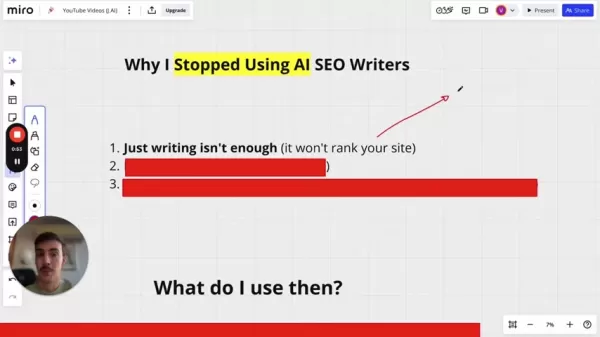
The three pillars are:
- On-Page SEO: Optimizing your website's content, including keyword usage, structure, and user experience.
- Off-Page SEO: Building your site's authority through methods like link building and social engagement.
- Technical SEO: Ensuring your website is technically sound, with fast loading speeds, mobile responsiveness, and proper code structure.
Neglecting any of these areas will undermine your overall SEO efforts. Most AI SEO writers focus almost entirely on on-page content, leaving the other two critical pillars untouched. This imbalanced approach is rarely enough to deliver significant, lasting results.
The Limited Context and Value of AI SEO Content
A major limitation of many AI SEO tools is their narrow context and derivative output. They often recycle existing information without introducing new perspectives or genuine insight. Google prioritizes original, high-quality content that offers unique value to searchers. Content that merely repackages what's already online is unlikely to rank highly and may even be penalized. I've identified three primary issues that restrict the effectiveness of AI SEO writers.
- Originality: They typically lack originality, producing variations of commonly available information.
- Expertise: They cannot provide the specific, practical expertise that comes from real-world experience.
- Creativity: They are incapable of the original creativity that captures and retains reader interest.
To overcome these limitations, you must use AI in a way that allows you to infuse the content with your own knowledge and creative flair. This could involve training the AI on your proprietary materials or providing exceptionally detailed prompts and context.
Beyond Writing: The Unseen Work of SEO
AI SEO writers often stop at content generation. They don't handle the other vital tasks necessary for SEO success, which include:
- Editing and Proofreading: Refining content for clarity, accuracy, tone, and flow.
- Updating and Optimizing: Keeping content current with new information and refreshed keywords.
- Syndicating and Promoting: Distributing content across various channels to expand its reach.
Without these ongoing efforts, even well-crafted content may never reach its full potential. A robust SEO strategy demands continuous maintenance and promotion, not just an initial publishing effort. The holistic nature of SEO must always be remembered.
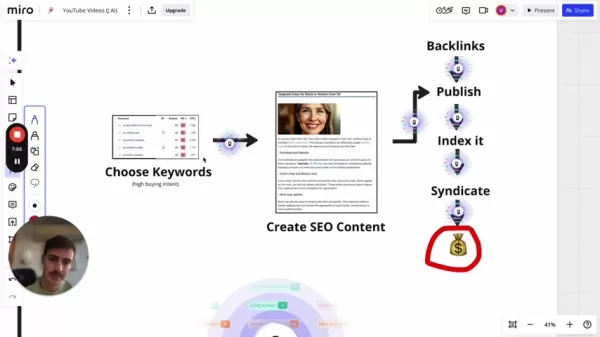
By combining AI's capabilities with all the components mentioned above, you significantly increase your odds of achieving SEO success.
Creating SEO-Optimized Content
Keyword Research with High Buying Intent
Thorough keyword research is the essential first step in any effective SEO plan. The objective is to find keywords with not only high search volume but also strong commercial intent. These keywords are valuable because they attract users who are actively ready to make a purchase or commit to a service.
Start by using tools like Google Keyword Planner, Ahrefs, or SEMrush to discover relevant keywords in your niche. Evaluate each for search volume, competition level, and cost-per-click (CPC). High search volume indicates popularity, while a high CPC often signals strong commercial intent. SEMrush also provides a keyword difficulty score, helping you assess the ranking effort required.
When selecting keywords, consider their alignment with your audience's specific needs and challenges. For example, if you sell online courses, high-intent keywords might be 'best project management certification online' or 'affordable graphic design course.' Such phrases suggest the searcher is prepared to invest. Keywords with high buyer intent are exceptionally valuable for search engine optimization.
Creating SEO content
Using the proper structure for your SEO content is crucial. Poor structure can negatively impact both user engagement and search performance. Effective SEO content structure includes the following elements:
- Title tag: The clickable headline shown in search results.
- Meta description: A concise, compelling summary of 135-160 characters beneath the title.
- H1 Tag: The primary headline of the page content.
- H2, H3 tags: Subheadings that organize the content.
- Content (high-quality): Original, informative text optimized for target keywords.
Following these straightforward guidelines can help optimize your SEO writing for better results.
Leveraging AI for Holistic SEO
Generate High-Quality Content
AI excels at producing SEO-optimized content drafts quickly and efficiently. The key is to use it effectively by actively editing and enhancing the output. AI provides a strong starting point, saving considerable time that you can then dedicate to refinement and polish.
Technical SEO
While AI cannot directly implement technical tasks like adding schema markup or improving site speed, it can offer clear, step-by-step guidance on how to perform these actions yourself. This empowers you to handle technical improvements with AI-provided instructions.
Off-Page SEO
AI cannot build backlinks, but it can efficiently analyze and identify where your competitors are acquiring their links. This research saves you significant time, allowing you to focus your outreach efforts on the most promising opportunities.
Journalist.ai Pricing Options
Various journalist.ai Pricing Plans
Journalist.ai offers two main pricing tiers: Basic and Journalist.
Feature Basic Journalist Monthly price $29 $199 Article per month 10 Unlimited AI Image Gen/month 10 Unlimited Custom Templates Yes Yes All Integrations Yes Yes
The Basic plan provides 10 articles and AI-generated images per month. The Journalist plan offers unlimited access to these services. Your choice should depend on your business's monthly content production needs.
Advantages and Disadvantages of Journalist AI
Pros
Includes ready-to-use SEO templates.
Functions as an all-in-one SEO content solution.
Helps beginners initiate their SEO efforts.
Cons
Over-reliance on AI alone will not produce outstanding results.
AI is a tool for executing SEO tasks more quickly, not a replacement for human strategy and effort.
The starting price of $29 per month may be prohibitive for some beginners.
Core Features of journalist.ai
journalist.ai SEO Editor
The journalist.ai editor is built to simplify SEO optimizations. It features robust integrations that enable automated article generation, publishing, and syndication.
- Generate articles
- Publish articles
- Syndicate articles
- Update articles
How journalist.ai Can be Used
Generate SEO articles
A primary use for journalist.ai is creating SEO-optimized articles. Its intuitive dashboard allows for quick adjustments, and the editor facilitates generating, rewriting, and keyword optimization through seamless integrations.
Find link building Opportunities
Leveraging AI, you can research competitor content to uncover potential link-building prospects. This streamlines the process, allowing you to efficiently reach out to relevant sites to build backlinks and increase traffic.
Frequently Asked Questions About SEO
What is on-page SEO?
On-page SEO involves optimizing the elements on your individual web pages to improve their search engine rankings and attract relevant traffic. This includes optimizing title tags, meta descriptions, headings, content, images, and internal linking structure.
What is off-page SEO?
Off-page SEO refers to activities conducted outside your own website to boost its search ranking authority. This primarily focuses on acquiring backlinks from other reputable sites and promoting your content through social media and other channels.
What is technical SEO?
Technical SEO focuses on optimizing the backend infrastructure and performance of your website to enhance its crawlability, indexability, and user experience for search engines. Key areas include site speed, mobile-friendliness, structured data markup, and site architecture.
Related Questions
What's the difference between white hat, black hat, and gray hat SEO?
Search Engine Optimization tactics are often categorized as White Hat, Black Hat, or Grey Hat. White hat SEO uses ethical strategies focused on human users, strictly following search engine guidelines. Black hat SEO employs deceptive techniques to exploit search engine algorithms for quick gains. Grey hat SEO falls in between, combining some approved methods with riskier, borderline practices.
Related article
 Suno to Watermark Songs Amid Legal Battles
Suno, the platform enabling users to generate AI-created music, has unveiled new features to label platform-produced tracks, restrict downloads, and update community standards to curb unauthorized replicas. These updates arrive as Suno confronts mult
Musk Admits Grok Build Leaked User Code, Promises to Erase All Historical Data
Elon Musk directly addressed the privacy controversy surrounding Grok Build, beginning with a simple "True" to confirm the incident's validity. He pledged that all user data previously uploaded to SpaceXAI would be permanently erased, stating, "not a
U.S. Stocks Hit Historic Milestone as AI and Aerospace Giants Prepare for Trillion-Dollar Debut
Elon Musk, Sam Altman, and Dario Amodei, three titans of the technology sector, are advancing toward initial public offerings for their respective ventures. With SpaceX, OpenAI, and Anthropic—three industry behemoths nearing trillion-dollar valuation
Related Special Topic Recommendations
SEO
Suno to Watermark Songs Amid Legal Battles
Suno, the platform enabling users to generate AI-created music, has unveiled new features to label platform-produced tracks, restrict downloads, and update community standards to curb unauthorized replicas. These updates arrive as Suno confronts mult
Musk Admits Grok Build Leaked User Code, Promises to Erase All Historical Data
Elon Musk directly addressed the privacy controversy surrounding Grok Build, beginning with a simple "True" to confirm the incident's validity. He pledged that all user data previously uploaded to SpaceXAI would be permanently erased, stating, "not a
U.S. Stocks Hit Historic Milestone as AI and Aerospace Giants Prepare for Trillion-Dollar Debut
Elon Musk, Sam Altman, and Dario Amodei, three titans of the technology sector, are advancing toward initial public offerings for their respective ventures. With SpaceX, OpenAI, and Anthropic—three industry behemoths nearing trillion-dollar valuation
Related Special Topic Recommendations
SEO
 Best AI SERP Analysis Tools for Search Strategy
2026 Latest Best Top-rated AI SERP Analysis Tools for Search Strategy are curated by XIX.AI through rigorous real-world tests and weekly updated rankings. These powerful tools help you unlock hidden optimization opportunities, boost content performance, and gain a competitive edge in search. Discover your perfect tool to elevate your search strategy today. Explore now!
 13 tools
 xix.ai
Data Analysis
Best AI Anomaly Detection Tools for KPI Monitoring across SaaS and Ecommerce Teams
xix.ai
Data Analysis
Best AI Anomaly Detection Tools for KPI Monitoring across SaaS and Ecommerce Teams
2026 Latest Best Top-rated AI Anomaly Detection Tools for KPI Monitoring in SaaS and Ecommerce teams! XIX.AI has curated a powerful, game-changing collection based on rigorous real-world tests and weekly updated rankings. You’ll find detailed free vs paid comparison insights to help you identify the must-try solution that boosts productivity and unlocks your AI edge. Explore now!
10 tools
xix.ai
writing
Best AI Outline Generators for Long-Form SEO Articles
2026 Latest Best Top-Rated AI Outline Generators for Long-Form SEO Articles, meticulously curated by XIX.AI. These powerful tools offer game-changing assistance in creating high-quality content quickly, boosting writing efficiency significantly. Get a free vs paid comparison along with real-world tests and detailed rankings to help you find the must-try option that suits your needs. Explore now to unlock your AI edge.
8 tools
xix.ai
Education and Learning
AI Study Tools for Homework and Exam Prep
2026 Latest Best AI Study Tools for Homework and Exam Prep! XIX.AI curates a top-rated list of powerful, game-changing tools that help students boost productivity, streamline homework completion, and ace exams through real-world tests. Get a free vs paid comparison, detailed rankings, and must-try options to unlock your AI edge. Explore now!
10 tools
xix.ai
Music composition
AI Vocal Demo Tools for Songwriters, Hooks, Toplines, and Multilingual Draft Sessions
2026 Latest Best AI Vocal Demo Tools for Songwriters, Hook Creators, and Multi-Language Content Teams! XIX.AI has curated a top-rated list of powerful game-changing tools that go through rigorous real-world tests. You’ll find detailed free vs paid comparison data, comprehensive rankings, and must-try options to help you boost writing efficiency and unlock your creative potential. Explore now to discover your perfect tool for all your content needs!
9 tools
xix.ai
Business
Best AI Competitive Research Tools for Small Businesses
2026 Latest Best Top-rated AI Competitive Research Tools for Small Businesses! XIX.AI has curated a highly powerful game-changing collection, updated weekly with rigorous real-world tests and detailed rankings. You can find a comprehensive free vs paid comparison to help you identify the must-try tools that boost your productivity and give you a competitive edge. Explore now to discover your perfect tool!
9 tools
xix.ai

 Comments (1)
0/500
Comments (1)
0/500
![ThomasLewis]()
AIに頼りすぎると、どうしても内容が画一的になるよね。この記事を読んで、結局は人間のクリエイティビティが大事だと改めて感じた。SEO対策ももちろんだけど、読んでいて面白いかどうかが一番じゃないかな。最近はAI生成コンテンツが溢れているし、差別化がますます難しくなっている気がする😅
In today's fast-paced digital marketing world, AI SEO writers present a tempting shortcut for content creation. Yet, relying exclusively on them can lead to lackluster outcomes. I'll explain why I moved away from AI SEO writers and what I use now to achieve lasting and comprehensive SEO success.
Key Points
Writing alone isn't sufficient: Content creation is just one part of the broader SEO equation. A successful strategy must also include on-page, off-page, and technical SEO.
Many AI SEO Writers fall short: They frequently lack contextual understanding and fail to contribute unique value.
AI SEO Writers are merely writers: They often miss crucial follow-up steps like editing, updating, and promoting content.
My current approach uses AI as a supportive tool for writing, editing, and optimizing across all SEO areas.
Why I Stopped Relying on AI SEO Writers
Just Writing Isn't Enough for SEO
A common misconception is that mass-producing articles with AI will automatically improve search rankings. In reality, SEO is far more intricate. Creating content, whether by AI or a person, is merely one component of a larger strategy. Sustainable SEO success requires a holistic approach that integrates several key elements. These are widely recognized as the three core pillars of SEO, and all must work in concert for a website to rank well and attract meaningful traffic.
The three pillars are:
- On-Page SEO: Optimizing your website's content, including keyword usage, structure, and user experience.
- Off-Page SEO: Building your site's authority through methods like link building and social engagement.
- Technical SEO: Ensuring your website is technically sound, with fast loading speeds, mobile responsiveness, and proper code structure.
Neglecting any of these areas will undermine your overall SEO efforts. Most AI SEO writers focus almost entirely on on-page content, leaving the other two critical pillars untouched. This imbalanced approach is rarely enough to deliver significant, lasting results.
The Limited Context and Value of AI SEO Content
A major limitation of many AI SEO tools is their narrow context and derivative output. They often recycle existing information without introducing new perspectives or genuine insight. Google prioritizes original, high-quality content that offers unique value to searchers. Content that merely repackages what's already online is unlikely to rank highly and may even be penalized. I've identified three primary issues that restrict the effectiveness of AI SEO writers.
- Originality: They typically lack originality, producing variations of commonly available information.
- Expertise: They cannot provide the specific, practical expertise that comes from real-world experience.
- Creativity: They are incapable of the original creativity that captures and retains reader interest.
To overcome these limitations, you must use AI in a way that allows you to infuse the content with your own knowledge and creative flair. This could involve training the AI on your proprietary materials or providing exceptionally detailed prompts and context.
Beyond Writing: The Unseen Work of SEO
AI SEO writers often stop at content generation. They don't handle the other vital tasks necessary for SEO success, which include:
- Editing and Proofreading: Refining content for clarity, accuracy, tone, and flow.
- Updating and Optimizing: Keeping content current with new information and refreshed keywords.
- Syndicating and Promoting: Distributing content across various channels to expand its reach.
Without these ongoing efforts, even well-crafted content may never reach its full potential. A robust SEO strategy demands continuous maintenance and promotion, not just an initial publishing effort. The holistic nature of SEO must always be remembered.
By combining AI's capabilities with all the components mentioned above, you significantly increase your odds of achieving SEO success.
Creating SEO-Optimized Content
Keyword Research with High Buying Intent
Thorough keyword research is the essential first step in any effective SEO plan. The objective is to find keywords with not only high search volume but also strong commercial intent. These keywords are valuable because they attract users who are actively ready to make a purchase or commit to a service.
Start by using tools like Google Keyword Planner, Ahrefs, or SEMrush to discover relevant keywords in your niche. Evaluate each for search volume, competition level, and cost-per-click (CPC). High search volume indicates popularity, while a high CPC often signals strong commercial intent. SEMrush also provides a keyword difficulty score, helping you assess the ranking effort required.
When selecting keywords, consider their alignment with your audience's specific needs and challenges. For example, if you sell online courses, high-intent keywords might be 'best project management certification online' or 'affordable graphic design course.' Such phrases suggest the searcher is prepared to invest. Keywords with high buyer intent are exceptionally valuable for search engine optimization.
Creating SEO content
Using the proper structure for your SEO content is crucial. Poor structure can negatively impact both user engagement and search performance. Effective SEO content structure includes the following elements:
- Title tag: The clickable headline shown in search results.
- Meta description: A concise, compelling summary of 135-160 characters beneath the title.
- H1 Tag: The primary headline of the page content.
- H2, H3 tags: Subheadings that organize the content.
- Content (high-quality): Original, informative text optimized for target keywords.
Following these straightforward guidelines can help optimize your SEO writing for better results.
Leveraging AI for Holistic SEO
Generate High-Quality Content
AI excels at producing SEO-optimized content drafts quickly and efficiently. The key is to use it effectively by actively editing and enhancing the output. AI provides a strong starting point, saving considerable time that you can then dedicate to refinement and polish.
Technical SEO
While AI cannot directly implement technical tasks like adding schema markup or improving site speed, it can offer clear, step-by-step guidance on how to perform these actions yourself. This empowers you to handle technical improvements with AI-provided instructions.
Off-Page SEO
AI cannot build backlinks, but it can efficiently analyze and identify where your competitors are acquiring their links. This research saves you significant time, allowing you to focus your outreach efforts on the most promising opportunities.
Journalist.ai Pricing Options
Various journalist.ai Pricing Plans
Journalist.ai offers two main pricing tiers: Basic and Journalist.
| Feature | Basic | Journalist |
|---|---|---|
| Monthly price | $29 | $199 |
| Article per month | 10 | Unlimited |
| AI Image Gen/month | 10 | Unlimited |
| Custom Templates | Yes | Yes |
| All Integrations | Yes | Yes |
The Basic plan provides 10 articles and AI-generated images per month. The Journalist plan offers unlimited access to these services. Your choice should depend on your business's monthly content production needs.
Advantages and Disadvantages of Journalist AI
Pros
Includes ready-to-use SEO templates.
Functions as an all-in-one SEO content solution.
Helps beginners initiate their SEO efforts.
Cons
Over-reliance on AI alone will not produce outstanding results.
AI is a tool for executing SEO tasks more quickly, not a replacement for human strategy and effort.
The starting price of $29 per month may be prohibitive for some beginners.
Core Features of journalist.ai
journalist.ai SEO Editor
The journalist.ai editor is built to simplify SEO optimizations. It features robust integrations that enable automated article generation, publishing, and syndication.
- Generate articles
- Publish articles
- Syndicate articles
- Update articles
How journalist.ai Can be Used
Generate SEO articles
A primary use for journalist.ai is creating SEO-optimized articles. Its intuitive dashboard allows for quick adjustments, and the editor facilitates generating, rewriting, and keyword optimization through seamless integrations.
Find link building Opportunities
Leveraging AI, you can research competitor content to uncover potential link-building prospects. This streamlines the process, allowing you to efficiently reach out to relevant sites to build backlinks and increase traffic.
Frequently Asked Questions About SEO
What is on-page SEO?
On-page SEO involves optimizing the elements on your individual web pages to improve their search engine rankings and attract relevant traffic. This includes optimizing title tags, meta descriptions, headings, content, images, and internal linking structure.
What is off-page SEO?
Off-page SEO refers to activities conducted outside your own website to boost its search ranking authority. This primarily focuses on acquiring backlinks from other reputable sites and promoting your content through social media and other channels.
What is technical SEO?
Technical SEO focuses on optimizing the backend infrastructure and performance of your website to enhance its crawlability, indexability, and user experience for search engines. Key areas include site speed, mobile-friendliness, structured data markup, and site architecture.
Related Questions
What's the difference between white hat, black hat, and gray hat SEO?
Search Engine Optimization tactics are often categorized as White Hat, Black Hat, or Grey Hat. White hat SEO uses ethical strategies focused on human users, strictly following search engine guidelines. Black hat SEO employs deceptive techniques to exploit search engine algorithms for quick gains. Grey hat SEO falls in between, combining some approved methods with riskier, borderline practices.








 Suno to Watermark Songs Amid Legal Battles
Suno, the platform enabling users to generate AI-created music, has unveiled new features to label platform-produced tracks, restrict downloads, and update community standards to curb unauthorized replicas. These updates arrive as Suno confronts mult
Suno to Watermark Songs Amid Legal Battles
Suno, the platform enabling users to generate AI-created music, has unveiled new features to label platform-produced tracks, restrict downloads, and update community standards to curb unauthorized replicas. These updates arrive as Suno confronts mult
 Musk Admits Grok Build Leaked User Code, Promises to Erase All Historical Data
Elon Musk directly addressed the privacy controversy surrounding Grok Build, beginning with a simple "True" to confirm the incident's validity. He pledged that all user data previously uploaded to SpaceXAI would be permanently erased, stating, "not a
Musk Admits Grok Build Leaked User Code, Promises to Erase All Historical Data
Elon Musk directly addressed the privacy controversy surrounding Grok Build, beginning with a simple "True" to confirm the incident's validity. He pledged that all user data previously uploaded to SpaceXAI would be permanently erased, stating, "not a
 U.S. Stocks Hit Historic Milestone as AI and Aerospace Giants Prepare for Trillion-Dollar Debut
Elon Musk, Sam Altman, and Dario Amodei, three titans of the technology sector, are advancing toward initial public offerings for their respective ventures. With SpaceX, OpenAI, and Anthropic—three industry behemoths nearing trillion-dollar valuation
U.S. Stocks Hit Historic Milestone as AI and Aerospace Giants Prepare for Trillion-Dollar Debut
Elon Musk, Sam Altman, and Dario Amodei, three titans of the technology sector, are advancing toward initial public offerings for their respective ventures. With SpaceX, OpenAI, and Anthropic—three industry behemoths nearing trillion-dollar valuation

2026 Latest Best Top-rated AI SERP Analysis Tools for Search Strategy are curated by XIX.AI through rigorous real-world tests and weekly updated rankings. These powerful tools help you unlock hidden optimization opportunities, boost content performance, and gain a competitive edge in search. Discover your perfect tool to elevate your search strategy today. Explore now!
13 tools
xix.ai

2026 Latest Best Top-rated AI Anomaly Detection Tools for KPI Monitoring in SaaS and Ecommerce teams! XIX.AI has curated a powerful, game-changing collection based on rigorous real-world tests and weekly updated rankings. You’ll find detailed free vs paid comparison insights to help you identify the must-try solution that boosts productivity and unlocks your AI edge. Explore now!
10 tools
xix.ai

2026 Latest Best Top-Rated AI Outline Generators for Long-Form SEO Articles, meticulously curated by XIX.AI. These powerful tools offer game-changing assistance in creating high-quality content quickly, boosting writing efficiency significantly. Get a free vs paid comparison along with real-world tests and detailed rankings to help you find the must-try option that suits your needs. Explore now to unlock your AI edge.
8 tools
xix.ai

2026 Latest Best AI Study Tools for Homework and Exam Prep! XIX.AI curates a top-rated list of powerful, game-changing tools that help students boost productivity, streamline homework completion, and ace exams through real-world tests. Get a free vs paid comparison, detailed rankings, and must-try options to unlock your AI edge. Explore now!
10 tools
xix.ai

2026 Latest Best AI Vocal Demo Tools for Songwriters, Hook Creators, and Multi-Language Content Teams! XIX.AI has curated a top-rated list of powerful game-changing tools that go through rigorous real-world tests. You’ll find detailed free vs paid comparison data, comprehensive rankings, and must-try options to help you boost writing efficiency and unlock your creative potential. Explore now to discover your perfect tool for all your content needs!
9 tools
xix.ai

2026 Latest Best Top-rated AI Competitive Research Tools for Small Businesses! XIX.AI has curated a highly powerful game-changing collection, updated weekly with rigorous real-world tests and detailed rankings. You can find a comprehensive free vs paid comparison to help you identify the must-try tools that boost your productivity and give you a competitive edge. Explore now to discover your perfect tool!
9 tools
xix.ai

AIに頼りすぎると、どうしても内容が画一的になるよね。この記事を読んで、結局は人間のクリエイティビティが大事だと改めて感じた。SEO対策ももちろんだけど、読んでいて面白いかどうかが一番じゃないかな。最近はAI生成コンテンツが溢れているし、差別化がますます難しくなっている気がする😅












