


 Home
HomeSriram Krishnan to step down as White House AI advisor
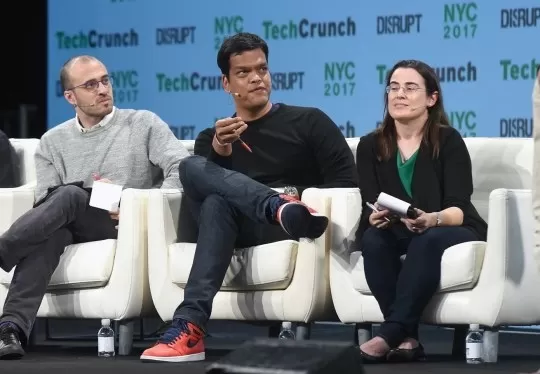
Sriram Krishnan, a former tech executive and venture capitalist, will leave the Trump administration at the end of June.
“It’s hard to fully express the privilege of serving the American people and how grateful I am for the opportunity,” Krishnan said in a post on X. “Above all, it has been an honor to serve under President [Donald Trump]. Without his leadership, we wouldn’t be leading the AI race.”
Krishnan, who served as a senior policy advisor on artificial intelligence at the White House, was among several tech industry figures who joined the second Trump administration. He has led product teams at Microsoft, Twitter, Yahoo, Facebook, and Snap, and was most recently a partner at Andreessen Horowitz, a firm whose founders backed Trump during the 2024 election.
In his post, Krishnan pointed to several “key public accomplishments,” beginning with the administration’s AI Action Plan, which prioritized building data centers over regulation and safety. Since then, Trump has signed multiple executive orders on AI, including one aimed at challenging state-level AI regulations and another focused on oversight that was delayed and narrowed following industry pushback.
Trump has also supported the idea of the government taking an equity stake in major AI companies.
Krishnan noted that the person he “worked [most] closely with over the last 18 months” was David Sacks, the investor and podcaster who stepped down as AI and crypto czar earlier this year and became co-chair of the President’s Council of Advisors on Science and Technology.
“Sacks’ ongoing advocacy for America’s success in AI has been and remains crucial,” Krishnan said.
Next, Krishnan said he will be “building institutions” that address major challenges for “America and its allies.” According to The Washington Post, he plans to start an outside institution that will still allow him to influence Trump’s AI policy.
“Whether it’s energy, data centers, or a clear path for Americans to experience the benefits of AI, there are many difficult issues we need to navigate together,” Krishnan said.
Related article
![Nvidia CEO Jensen Huang tells Trump ‘we’re not going to let [an AI slowdown] happen’](data:image/gif;base64,R0lGODlhAQABAIAAAAAAAP///yH5BAEAAAAALAAAAAABAAEAAAIBRAA7) Nvidia CEO Jensen Huang tells Trump ‘we’re not going to let [an AI slowdown] happen’
During his appearance at the All-In Summit in Los Angeles on Monday, Nvidia CEO Jensen Huang received an unexpected call from President Donald Trump, one he couldn’t simply ignore.“I’m on stage with the besties,” Huang explained to Trump, referencing
White House Calls on AI Firms to Commit to Price Transparency Amid Industry Pledges.
The rapid expansion of AI data centers connecting to the national power grid has contributed to rising electricity costs for consumers, pushing the average national electricity price up by over 6% in the past year.This trend presents a political chal
Swedish AI Startup Lovable Eyes $13.2 Billion Valuation After Major Funding Round
As AI-driven coding tools gain traction, Swedish startup Lovable has secured a major funding round. The company aims to raise $3 billion, potentially boosting its valuation to $13.2 billion—double the $6.6 billion recorded last December. Menlo Ventur
Related Special Topic Recommendations
writing
Nvidia CEO Jensen Huang tells Trump ‘we’re not going to let [an AI slowdown] happen’
During his appearance at the All-In Summit in Los Angeles on Monday, Nvidia CEO Jensen Huang received an unexpected call from President Donald Trump, one he couldn’t simply ignore.“I’m on stage with the besties,” Huang explained to Trump, referencing
White House Calls on AI Firms to Commit to Price Transparency Amid Industry Pledges.
The rapid expansion of AI data centers connecting to the national power grid has contributed to rising electricity costs for consumers, pushing the average national electricity price up by over 6% in the past year.This trend presents a political chal
Swedish AI Startup Lovable Eyes $13.2 Billion Valuation After Major Funding Round
As AI-driven coding tools gain traction, Swedish startup Lovable has secured a major funding round. The company aims to raise $3 billion, potentially boosting its valuation to $13.2 billion—double the $6.6 billion recorded last December. Menlo Ventur
Related Special Topic Recommendations
writing
 Best AI Outline Generators for Long-Form SEO Articles
2026 Latest Best Top-Rated AI Outline Generators for Long-Form SEO Articles, meticulously curated by XIX.AI. These powerful tools offer game-changing assistance in creating high-quality content quickly, boosting writing efficiency significantly. Get a free vs paid comparison along with real-world tests and detailed rankings to help you find the must-try option that suits your needs. Explore now to unlock your AI edge.
 8 tools
 xix.ai
Education and Learning
AI Study Tools for Homework and Exam Prep
xix.ai
Education and Learning
AI Study Tools for Homework and Exam Prep
2026 Latest Best AI Study Tools for Homework and Exam Prep! XIX.AI curates a top-rated list of powerful, game-changing tools that help students boost productivity, streamline homework completion, and ace exams through real-world tests. Get a free vs paid comparison, detailed rankings, and must-try options to unlock your AI edge. Explore now!
10 tools
xix.ai
Music composition
AI Vocal Demo Tools for Songwriters, Hooks, Toplines, and Multilingual Draft Sessions
2026 Latest Best AI Vocal Demo Tools for Songwriters, Hook Creators, and Multi-Language Content Teams! XIX.AI has curated a top-rated list of powerful game-changing tools that go through rigorous real-world tests. You’ll find detailed free vs paid comparison data, comprehensive rankings, and must-try options to help you boost writing efficiency and unlock your creative potential. Explore now to discover your perfect tool for all your content needs!
9 tools
xix.ai
Business
Best AI Competitive Research Tools for Small Businesses
2026 Latest Best Top-rated AI Competitive Research Tools for Small Businesses! XIX.AI has curated a highly powerful game-changing collection, updated weekly with rigorous real-world tests and detailed rankings. You can find a comprehensive free vs paid comparison to help you identify the must-try tools that boost your productivity and give you a competitive edge. Explore now to discover your perfect tool!
9 tools
xix.ai
Image editing
Photoshop AI Retouch Tools for Ecommerce Apparel, Skin Cleanup, and Color Consistency
2026 Latest Best Photoshop AI retouch tools for ecommerce apparel, skin cleanup, and color consistency! This top-rated curated list features powerful game-changing solutions that help you boost writing efficiency, streamline content creation, and achieve perfect visual results effortlessly. Each tool has undergone real-world tests through weekly updated rankings, complete with free vs paid comparison details. Backed by XIX.AI, it’s the must-try guide for anyone aiming to unlock your AI edge. Explore now!
10 tools
xix.ai
Prompt
Best AI Prompt Libraries for ChatGPT Workflows
2026 Latest Best Top-Rated AI Prompt Libraries for optimizing all types of ChatGPT workflows. XIX.AI has curated a powerful, game-changing collection that goes through rigorous real-world tests to ensure top performance. You can find detailed free vs paid comparisons and expert rankings to help you choose the must-try tools that boost your productivity and unlock your AI edge. Explore now!
11 tools
xix.ai

 Comments (0)
0/500
Comments (0)
0/500
Sriram Krishnan, a former tech executive and venture capitalist, will leave the Trump administration at the end of June.
“It’s hard to fully express the privilege of serving the American people and how grateful I am for the opportunity,” Krishnan said in a post on X. “Above all, it has been an honor to serve under President [Donald Trump]. Without his leadership, we wouldn’t be leading the AI race.”
Krishnan, who served as a senior policy advisor on artificial intelligence at the White House, was among several tech industry figures who joined the second Trump administration. He has led product teams at Microsoft, Twitter, Yahoo, Facebook, and Snap, and was most recently a partner at Andreessen Horowitz, a firm whose founders backed Trump during the 2024 election.
In his post, Krishnan pointed to several “key public accomplishments,” beginning with the administration’s AI Action Plan, which prioritized building data centers over regulation and safety. Since then, Trump has signed multiple executive orders on AI, including one aimed at challenging state-level AI regulations and another focused on oversight that was delayed and narrowed following industry pushback.
Trump has also supported the idea of the government taking an equity stake in major AI companies.
Krishnan noted that the person he “worked [most] closely with over the last 18 months” was David Sacks, the investor and podcaster who stepped down as AI and crypto czar earlier this year and became co-chair of the President’s Council of Advisors on Science and Technology.
“Sacks’ ongoing advocacy for America’s success in AI has been and remains crucial,” Krishnan said.
Next, Krishnan said he will be “building institutions” that address major challenges for “America and its allies.” According to The Washington Post, he plans to start an outside institution that will still allow him to influence Trump’s AI policy.
“Whether it’s energy, data centers, or a clear path for Americans to experience the benefits of AI, there are many difficult issues we need to navigate together,” Krishnan said.








![Nvidia CEO Jensen Huang tells Trump ‘we’re not going to let [an AI slowdown] happen’](https://img.xix.ai/uploads/79/6aa87327d0e12.webp) Nvidia CEO Jensen Huang tells Trump ‘we’re not going to let [an AI slowdown] happen’
During his appearance at the All-In Summit in Los Angeles on Monday, Nvidia CEO Jensen Huang received an unexpected call from President Donald Trump, one he couldn’t simply ignore.“I’m on stage with the besties,” Huang explained to Trump, referencing
Nvidia CEO Jensen Huang tells Trump ‘we’re not going to let [an AI slowdown] happen’
During his appearance at the All-In Summit in Los Angeles on Monday, Nvidia CEO Jensen Huang received an unexpected call from President Donald Trump, one he couldn’t simply ignore.“I’m on stage with the besties,” Huang explained to Trump, referencing
 White House Calls on AI Firms to Commit to Price Transparency Amid Industry Pledges.
The rapid expansion of AI data centers connecting to the national power grid has contributed to rising electricity costs for consumers, pushing the average national electricity price up by over 6% in the past year.This trend presents a political chal
White House Calls on AI Firms to Commit to Price Transparency Amid Industry Pledges.
The rapid expansion of AI data centers connecting to the national power grid has contributed to rising electricity costs for consumers, pushing the average national electricity price up by over 6% in the past year.This trend presents a political chal
 Swedish AI Startup Lovable Eyes $13.2 Billion Valuation After Major Funding Round
As AI-driven coding tools gain traction, Swedish startup Lovable has secured a major funding round. The company aims to raise $3 billion, potentially boosting its valuation to $13.2 billion—double the $6.6 billion recorded last December. Menlo Ventur
Swedish AI Startup Lovable Eyes $13.2 Billion Valuation After Major Funding Round
As AI-driven coding tools gain traction, Swedish startup Lovable has secured a major funding round. The company aims to raise $3 billion, potentially boosting its valuation to $13.2 billion—double the $6.6 billion recorded last December. Menlo Ventur

2026 Latest Best Top-Rated AI Outline Generators for Long-Form SEO Articles, meticulously curated by XIX.AI. These powerful tools offer game-changing assistance in creating high-quality content quickly, boosting writing efficiency significantly. Get a free vs paid comparison along with real-world tests and detailed rankings to help you find the must-try option that suits your needs. Explore now to unlock your AI edge.
8 tools
xix.ai

2026 Latest Best AI Study Tools for Homework and Exam Prep! XIX.AI curates a top-rated list of powerful, game-changing tools that help students boost productivity, streamline homework completion, and ace exams through real-world tests. Get a free vs paid comparison, detailed rankings, and must-try options to unlock your AI edge. Explore now!
10 tools
xix.ai

2026 Latest Best AI Vocal Demo Tools for Songwriters, Hook Creators, and Multi-Language Content Teams! XIX.AI has curated a top-rated list of powerful game-changing tools that go through rigorous real-world tests. You’ll find detailed free vs paid comparison data, comprehensive rankings, and must-try options to help you boost writing efficiency and unlock your creative potential. Explore now to discover your perfect tool for all your content needs!
9 tools
xix.ai

2026 Latest Best Top-rated AI Competitive Research Tools for Small Businesses! XIX.AI has curated a highly powerful game-changing collection, updated weekly with rigorous real-world tests and detailed rankings. You can find a comprehensive free vs paid comparison to help you identify the must-try tools that boost your productivity and give you a competitive edge. Explore now to discover your perfect tool!
9 tools
xix.ai

2026 Latest Best Photoshop AI retouch tools for ecommerce apparel, skin cleanup, and color consistency! This top-rated curated list features powerful game-changing solutions that help you boost writing efficiency, streamline content creation, and achieve perfect visual results effortlessly. Each tool has undergone real-world tests through weekly updated rankings, complete with free vs paid comparison details. Backed by XIX.AI, it’s the must-try guide for anyone aiming to unlock your AI edge. Explore now!
10 tools
xix.ai

2026 Latest Best Top-Rated AI Prompt Libraries for optimizing all types of ChatGPT workflows. XIX.AI has curated a powerful, game-changing collection that goes through rigorous real-world tests to ensure top performance. You can find detailed free vs paid comparisons and expert rankings to help you choose the must-try tools that boost your productivity and unlock your AI edge. Explore now!
11 tools
xix.ai












