


 Home
Home
Sohu Outlines AI Strategy for Mid-sized Tech Firms to Differentiate Themselves from Industry Giants

As major corporations engage in a cutthroat competition for "trillion-parameter" models, Sohu has opted for a more pragmatic approach.
During the 2026 Sohu Technology Annual Forum, CEO Zhang Chaoyang articulated the company's AI strategy: rather than chasing the prestige of joining the "first-tier" large model ranks, Sohu will concentrate its limited resources on practical, revenue-generating applications. Essentially, Sohu aims not to build models, but to utilize them with maximum intelligence.
How is this strategy executed? Sohu's AI initiatives target two key areas:
✅ Efficiency and cost optimization: Leveraging mature large models from top vendors to streamline core processes like content creation, review, and distribution, thereby reducing operational weight and boosting productivity;
✅ Content neutrality: Maintaining objectivity in algorithmic recommendations and AI-generated content, avoiding the relentless pursuit of traffic, and preserving the platform's media credibility.
This strategy represents a "precision positioning" for mid-sized tech firms operating under resource constraints. Instead of competing on computing power and parameters, Sohu focuses on vertical scenarios, converting general AI capabilities into tangible business value. Examples include semantic analysis for news, intelligent video editing, and personalized user interactions—refining "small but impactful" entry points.
However, pragmatism does not guarantee ease. This approach faces dual challenges: relying on external large models introduces risks such as dependency on third-party technology cycles and difficulties in establishing proprietary data loops. Additionally, in an AI-saturated media landscape, demonstrating Sohu's unique value to users—rather than being perceived as just another API-driven content platform—requires continuous effort.
Sohu's choice may provide a valuable industry reference: as large models mature, "knowing how to use" them effectively may ultimately prove more difficult than "knowing how to build" them.
Related article
 Enovis acquires eCential Robotics for $180M
eCential’s open, modular architecture enables partnerships with technology firms and implant makers. | Source: eCential RoboticsMedical technology firm Enovis Corp. announced a binding offer to acquire eCential Robotics for €155 million (over $180 mi
OpenAI Unveils Codex Cloud Environments for Seamless Cross-Device Use
OpenAI has expanded its software engineering agent, Codex, with new capabilities that extend its utility beyond individual laptops. These updates introduce reusable cloud development environments, enabling access from any device.Announced during Open
Tencent WorkBuddy Launches on HarmonyOS PC App Market
On July 27, Zhang Jun, Tencent’s public relations director, announced the official launch of the company’s AI office assistant, WorkBuddy, on the HarmonyOS PC app market. This marks the debut of the first desktop AI agent within the HarmonyOS ecosyst
Related Special Topic Recommendations
Software Development
Enovis acquires eCential Robotics for $180M
eCential’s open, modular architecture enables partnerships with technology firms and implant makers. | Source: eCential RoboticsMedical technology firm Enovis Corp. announced a binding offer to acquire eCential Robotics for €155 million (over $180 mi
OpenAI Unveils Codex Cloud Environments for Seamless Cross-Device Use
OpenAI has expanded its software engineering agent, Codex, with new capabilities that extend its utility beyond individual laptops. These updates introduce reusable cloud development environments, enabling access from any device.Announced during Open
Tencent WorkBuddy Launches on HarmonyOS PC App Market
On July 27, Zhang Jun, Tencent’s public relations director, announced the official launch of the company’s AI office assistant, WorkBuddy, on the HarmonyOS PC app market. This marks the debut of the first desktop AI agent within the HarmonyOS ecosyst
Related Special Topic Recommendations
Software Development
 AI Bug Triage Assistants: Rank Issues by Severity and User Impact
2026 Latest Best Top-rated AI Bug Triage Assistants Ranked! This curated collection showcases powerful game-changing tools that help teams quickly sort bugs by severity and user impact, saving valuable time. XIX.AI offers a free vs paid comparison along with real-world tests to help you find the must-try solution that boosts productivity significantly. Explore now to Discover your perfect tool for streamlining development workflows!
 10 tools
 xix.ai
code
Best AI Coding Tools for Python and JavaScript
xix.ai
code
Best AI Coding Tools for Python and JavaScript
2026 Latest Best Top-Rated AI Coding Tools for Python and JavaScript are here on XIX.AI’s curated list. These powerful game-changing tools have undergone rigorous real-world tests to deliver exceptional results for writing efficient code, fixing bugs, and boosting productivity. Get a free vs paid comparison and see which options suit your needs. Explore now to Discover your perfect coding tool and Unlock your AI edge.
10 tools
xix.ai
Academic Research
Best AI Citation Mapping Tools for Research Discovery
2026 Latest Best Top-Rated AI Citation Mapping Tools for Research Discovery! XIX.AI has curated a powerful, game-changing collection of must-try tools that go through rigorous real-world tests to deliver accurate results. You’ll find detailed free vs paid comparisons, weekly updated rankings, and insights to help you boost your research efficiency and uncover valuable data faster. Explore now to discover your perfect tool for academic work! 238 characters
11 tools
xix.ai
SEO
AI Meta Tag Tools for Faster On Page SEO
2026 Latest Best Top-rated AI Meta Tag Tools for Faster On Page SEO! XIX.AI has curated a powerful, game-changing collection of highly reliable tools that undergo rigorous real-world tests. You’ll find a free vs paid comparison along with detailed rankings to help you choose the perfect option for boosting your content’s search visibility and improving writing efficiency. Explore now to Unlock your AI edge!
9 tools
xix.ai
Health & Wellness
AI Habit Tracking Tools for Personal Health Goals
2026 Latest Best AI Habit Tracking Tools for Personal Health Goals are here on XIX.AI! Our curated top-rated list includes powerful, game-changing solutions that help you stay consistent with your goals through real-world tests and strict rankings. We also offer a free vs paid comparison to help you choose the perfect fit. Explore now to Unlock your AI edge in achieving better health outcomes.
10 tools
xix.ai
Data Analysis
Best AI Anomaly Detection Tools for Dashboard Monitoring
2026 Latest Best Top-rated AI Anomaly Detection Tools for Dashboard Monitoring are here on XIX.AI! This curated list features powerful, game-changing solutions that deliver accurate real-world tests through weekly updated rankings. You’ll find a free vs paid comparison and insights into how these tools boost productivity by helping users spot issues fast, streamlining workflow efficiency. Discover your perfect tool to unlock your AI edge today. Explore now!
9 tools
xix.ai

 Comments (0)
0/500
Comments (0)
0/500
As major corporations engage in a cutthroat competition for "trillion-parameter" models, Sohu has opted for a more pragmatic approach.
During the 2026 Sohu Technology Annual Forum, CEO Zhang Chaoyang articulated the company's AI strategy: rather than chasing the prestige of joining the "first-tier" large model ranks, Sohu will concentrate its limited resources on practical, revenue-generating applications. Essentially, Sohu aims not to build models, but to utilize them with maximum intelligence.
How is this strategy executed? Sohu's AI initiatives target two key areas:
✅ Efficiency and cost optimization: Leveraging mature large models from top vendors to streamline core processes like content creation, review, and distribution, thereby reducing operational weight and boosting productivity;
✅ Content neutrality: Maintaining objectivity in algorithmic recommendations and AI-generated content, avoiding the relentless pursuit of traffic, and preserving the platform's media credibility.
This strategy represents a "precision positioning" for mid-sized tech firms operating under resource constraints. Instead of competing on computing power and parameters, Sohu focuses on vertical scenarios, converting general AI capabilities into tangible business value. Examples include semantic analysis for news, intelligent video editing, and personalized user interactions—refining "small but impactful" entry points.
However, pragmatism does not guarantee ease. This approach faces dual challenges: relying on external large models introduces risks such as dependency on third-party technology cycles and difficulties in establishing proprietary data loops. Additionally, in an AI-saturated media landscape, demonstrating Sohu's unique value to users—rather than being perceived as just another API-driven content platform—requires continuous effort.
Sohu's choice may provide a valuable industry reference: as large models mature, "knowing how to use" them effectively may ultimately prove more difficult than "knowing how to build" them.








 Enovis acquires eCential Robotics for $180M
eCential’s open, modular architecture enables partnerships with technology firms and implant makers. | Source: eCential RoboticsMedical technology firm Enovis Corp. announced a binding offer to acquire eCential Robotics for €155 million (over $180 mi
Enovis acquires eCential Robotics for $180M
eCential’s open, modular architecture enables partnerships with technology firms and implant makers. | Source: eCential RoboticsMedical technology firm Enovis Corp. announced a binding offer to acquire eCential Robotics for €155 million (over $180 mi
 OpenAI Unveils Codex Cloud Environments for Seamless Cross-Device Use
OpenAI has expanded its software engineering agent, Codex, with new capabilities that extend its utility beyond individual laptops. These updates introduce reusable cloud development environments, enabling access from any device.Announced during Open
OpenAI Unveils Codex Cloud Environments for Seamless Cross-Device Use
OpenAI has expanded its software engineering agent, Codex, with new capabilities that extend its utility beyond individual laptops. These updates introduce reusable cloud development environments, enabling access from any device.Announced during Open
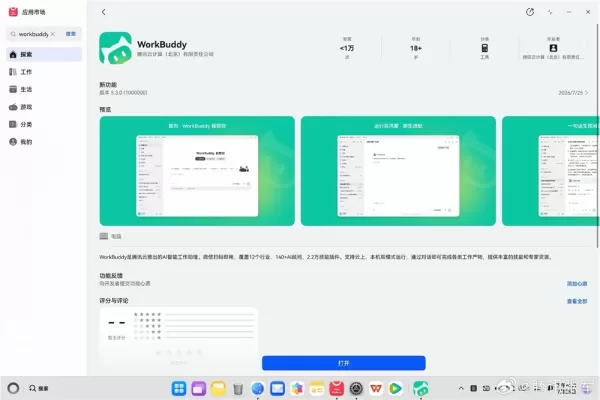 Tencent WorkBuddy Launches on HarmonyOS PC App Market
On July 27, Zhang Jun, Tencent’s public relations director, announced the official launch of the company’s AI office assistant, WorkBuddy, on the HarmonyOS PC app market. This marks the debut of the first desktop AI agent within the HarmonyOS ecosyst
Tencent WorkBuddy Launches on HarmonyOS PC App Market
On July 27, Zhang Jun, Tencent’s public relations director, announced the official launch of the company’s AI office assistant, WorkBuddy, on the HarmonyOS PC app market. This marks the debut of the first desktop AI agent within the HarmonyOS ecosyst
2026 Latest Best Top-rated AI Bug Triage Assistants Ranked! This curated collection showcases powerful game-changing tools that help teams quickly sort bugs by severity and user impact, saving valuable time. XIX.AI offers a free vs paid comparison along with real-world tests to help you find the must-try solution that boosts productivity significantly. Explore now to Discover your perfect tool for streamlining development workflows!
10 tools
xix.ai

2026 Latest Best Top-Rated AI Coding Tools for Python and JavaScript are here on XIX.AI’s curated list. These powerful game-changing tools have undergone rigorous real-world tests to deliver exceptional results for writing efficient code, fixing bugs, and boosting productivity. Get a free vs paid comparison and see which options suit your needs. Explore now to Discover your perfect coding tool and Unlock your AI edge.
10 tools
xix.ai

2026 Latest Best Top-Rated AI Citation Mapping Tools for Research Discovery! XIX.AI has curated a powerful, game-changing collection of must-try tools that go through rigorous real-world tests to deliver accurate results. You’ll find detailed free vs paid comparisons, weekly updated rankings, and insights to help you boost your research efficiency and uncover valuable data faster. Explore now to discover your perfect tool for academic work! 238 characters
11 tools
xix.ai

2026 Latest Best Top-rated AI Meta Tag Tools for Faster On Page SEO! XIX.AI has curated a powerful, game-changing collection of highly reliable tools that undergo rigorous real-world tests. You’ll find a free vs paid comparison along with detailed rankings to help you choose the perfect option for boosting your content’s search visibility and improving writing efficiency. Explore now to Unlock your AI edge!
9 tools
xix.ai

2026 Latest Best AI Habit Tracking Tools for Personal Health Goals are here on XIX.AI! Our curated top-rated list includes powerful, game-changing solutions that help you stay consistent with your goals through real-world tests and strict rankings. We also offer a free vs paid comparison to help you choose the perfect fit. Explore now to Unlock your AI edge in achieving better health outcomes.
10 tools
xix.ai

2026 Latest Best Top-rated AI Anomaly Detection Tools for Dashboard Monitoring are here on XIX.AI! This curated list features powerful, game-changing solutions that deliver accurate real-world tests through weekly updated rankings. You’ll find a free vs paid comparison and insights into how these tools boost productivity by helping users spot issues fast, streamlining workflow efficiency. Discover your perfect tool to unlock your AI edge today. Explore now!
9 tools
xix.ai












