


 Home
HomeReplit CEO Predicts Software Future: 'Agents All the Way Down'

Could collaborative AI development platforms enable enterprises to break free from costly SaaS subscriptions? Replit's visionary CEO Amjad Masad believes this transformation is already underway, describing an ecosystem where "agents handle everything recursively."
During his VB Transform keynote, Masad demonstrated how Replit's AI agents empowered a non-technical user to develop a fully functional polling application in just 15 minutes - automatically generating databases, authentication systems, and quality assurance protocols from a simple text prompt.
"Imagine a semi-autonomous development partner," Masad explained. "You can either supervise in real-time or step away momentarily - the system proactively notifies you when solutions are ready for review."
Democratizing Digital Development
While polling apps represent a basic use case, Masad emphasized how this approach revolutionizes enterprise software development. Teams can now rapidly prototype, iterate, and scale applications without specialized coding expertise - potentially reducing reliance on external vendors and accelerating development cycles by orders of magnitude.
Replit's strategic roadmap focuses on expanding API capabilities and abstracting fundamental building blocks, enabling AI agents to autonomously configure databases, payment processors, and other critical infrastructure components. The upcoming v3 release will introduce groundbreaking features including native generative model integration and automated AI application testing frameworks.
The Emergence of Agentic Development
The "vibe coding" movement - where natural language prompts replace traditional programming - has gained remarkable traction across the tech industry. Major players like Anthropic and Google have introduced competing solutions, while innovative startups secure significant funding. Replit distinguishes itself through deep enterprise integrations, notably powering over 100,000 applications through its Anthropic/Vertex AI partnership with military-grade security protocols.
Masad predicts this paradigm shift will dramatically reduce software development costs, citing a customer who replicated $150,000 ERP functionality for just $400 using Replit's platform. "Modern developers aren't just coding - they're directing AI agents to architect solutions while focusing on higher-order problem solving," he observed.
Balancing Innovation With Governance
While celebrating these advancements, Masad cautioned about potential security risks from unvetted AI-generated code. Replit addresses these concerns through cloud-native architecture, isolated testing sandboxes, and automated vulnerability scanning - creating a controlled environment for agentic development.
The platform's differentiator lies in its comprehensive approach to creating autonomous software engineering capabilities. Looking ahead, Masad envisions dynamic UI adaptation across devices and the evolution of new interaction paradigms that bridge natural language and traditional programming.
Redefining Engineering Expertise
As the discussion turned to skills development, Masad proposed that junior engineers may evolve into subject matter experts who validate and interpret AI outputs rather than writing code manually. Replit's contextual explanation features help bridge knowledge gaps, though Masad anticipates a future where "we interact with software through abstracted language constructs beyond current programming paradigms."
Since restructuring in mid-2024, Replit has achieved explosive growth - surpassing $100M ARR and enabling what Masad describes as "engineering team multiplication," where individual developers coordinate fleets of specialized AI agents. "We've moved beyond the 10x engineer concept," he concluded. "Today's developers are becoming architects of algorithmic workforces."
Related article
 TechCrunch Disrupt 2026 to showcase leaders from Amazon, Replit and Tether
TechCrunch Disrupt has long been the epicenter of technology’s most critical dialogues, with a legacy spanning over a decade. The speakers who have graced this stage are icons of both the startup era and the current AI revolution, including Zuckerber
Visa invests in Replit to enable agentic payments for developers
Visa has announced an undisclosed investment in the AI coding platform Replit. The two companies are also exploring how to integrate Visa's payment products into Replit, enabling developers—and the AI agents they build—to accept payments directly fro
StrictlyVC San Francisco to Convene Leaders from TDK Ventures, Replit and More
The first StrictlyVC event of the year is coming to San Francisco sooner than you think. Tickets are still available for our April 30 gathering at the Sentro Filipino Cultural Center, featuring an impressive lineup of speakers. In addition to the net
Related Special Topic Recommendations
code
TechCrunch Disrupt 2026 to showcase leaders from Amazon, Replit and Tether
TechCrunch Disrupt has long been the epicenter of technology’s most critical dialogues, with a legacy spanning over a decade. The speakers who have graced this stage are icons of both the startup era and the current AI revolution, including Zuckerber
Visa invests in Replit to enable agentic payments for developers
Visa has announced an undisclosed investment in the AI coding platform Replit. The two companies are also exploring how to integrate Visa's payment products into Replit, enabling developers—and the AI agents they build—to accept payments directly fro
StrictlyVC San Francisco to Convene Leaders from TDK Ventures, Replit and More
The first StrictlyVC event of the year is coming to San Francisco sooner than you think. Tickets are still available for our April 30 gathering at the Sentro Filipino Cultural Center, featuring an impressive lineup of speakers. In addition to the net
Related Special Topic Recommendations
code
 AI Pull Request Review Tools for GitHub Teams Handling Refactors, Bugs, and Security Gaps
2026 Latest Best AI Pull Request Review Tools for GitHub Teams are here on XIX.AI! This top-rated curated list showcases powerful game-changing solutions that streamline refactoring, bug fixing, and security gap detection across all team workflows. Enjoy a free vs paid comparison along with real-world tests and detailed rankings to help you find the perfect tool that boosts productivity significantly. Explore now to unlock your AI edge!
 12 tools
 xix.ai
Text-to-speech
Best AI Text to Speech Tools for Natural Voiceovers
xix.ai
Text-to-speech
Best AI Text to Speech Tools for Natural Voiceovers
2026 Latest Best Top-rated AI Text to Speech Tools for Natural Voiceovers are here on XIX.AI! This curated list features powerful, game-changing options that deliver crystal-clear voices for every use case, backed by real-world tests and weekly updated rankings. Get a free vs paid comparison to find the must-try solution that boosts your productivity instantly. Explore now to Unlock your AI edge!
11 tools
xix.ai
Comic Creation
Manga AI Background Generators for Serialized Chapters, Covers, and Promo Art
2026 Latest Best Manga AI Background Generators Ranked Top-Rated! This curated collection showcases powerful game-changing tools perfect for creating high-quality chapter backgrounds, book covers, and promotional art. Every option has undergone rigorous real-world tests to ensure reliability. Get a free vs paid comparison along with detailed insights. Explore now to discover your perfect tool and unlock your AI edge in manga creation.
6 tools
xix.ai
Image editing
AI Object Removal Editors: Clean Up Portraits, Travel, and Product Shots
2026 Latest Best Top-rated AI Object Removal Editors for portraits travel product shots! XIX.AI curates a powerful game-changing collection regularly updated with weekly rankings. These tools offer real-world tests to help you quickly remove unwanted elements, boost content quality, and save tons of time without compromising results. Must-try for anyone aiming to unlock their AI creation edge. Explore now!
10 tools
xix.ai
Text-to-speech
Best AI Text to Speech Tools for Online Courses
2026 Latest Best Top-rated AI Text to Speech Tools for Online Courses are curated by XIX.AI based on rigorous real-world tests and weekly updated rankings. These powerful tools help creators deliver crystal-clear audio content effortlessly, boosting writing efficiency and streamlining course production. Check out the free vs paid comparison to find your perfect fit. Explore now to unlock your AI edge in online education.
10 tools
xix.ai
writing
AI Blog Title Tools for Higher Click Through Rates
2026 Latest Best Top-Rated AI Blog Title Tools for Higher Click Through Rates! XIX.AI has carefully curated a powerful, game-changing collection of top tools that go through rigorous real-world tests. You’ll find a free vs paid comparison, weekly updated rankings, and detailed insights to help you boost your blog’s traffic efficiently. Must-try options are highlighted to help you unlock your AI edge. Explore now!
10 tools
xix.ai

 Comments (1)
0/500
Comments (1)
0/500
![PeterSanchez]()
Est-ce que ces 'agents IA' vont vraiment nous libérer des abonnements coûteux ? J'ai plutôt l'impression qu'on va juste changer de geôlier... 😅 En tout cas l'idée d'une plateforme collaborative m'intrigue, mais je me demande comment ils comptent gérer la sécurité des données.
Could collaborative AI development platforms enable enterprises to break free from costly SaaS subscriptions? Replit's visionary CEO Amjad Masad believes this transformation is already underway, describing an ecosystem where "agents handle everything recursively."
During his VB Transform keynote, Masad demonstrated how Replit's AI agents empowered a non-technical user to develop a fully functional polling application in just 15 minutes - automatically generating databases, authentication systems, and quality assurance protocols from a simple text prompt.
"Imagine a semi-autonomous development partner," Masad explained. "You can either supervise in real-time or step away momentarily - the system proactively notifies you when solutions are ready for review."
Democratizing Digital Development
While polling apps represent a basic use case, Masad emphasized how this approach revolutionizes enterprise software development. Teams can now rapidly prototype, iterate, and scale applications without specialized coding expertise - potentially reducing reliance on external vendors and accelerating development cycles by orders of magnitude.
Replit's strategic roadmap focuses on expanding API capabilities and abstracting fundamental building blocks, enabling AI agents to autonomously configure databases, payment processors, and other critical infrastructure components. The upcoming v3 release will introduce groundbreaking features including native generative model integration and automated AI application testing frameworks.
The Emergence of Agentic Development
The "vibe coding" movement - where natural language prompts replace traditional programming - has gained remarkable traction across the tech industry. Major players like Anthropic and Google have introduced competing solutions, while innovative startups secure significant funding. Replit distinguishes itself through deep enterprise integrations, notably powering over 100,000 applications through its Anthropic/Vertex AI partnership with military-grade security protocols.
Masad predicts this paradigm shift will dramatically reduce software development costs, citing a customer who replicated $150,000 ERP functionality for just $400 using Replit's platform. "Modern developers aren't just coding - they're directing AI agents to architect solutions while focusing on higher-order problem solving," he observed.
Balancing Innovation With Governance
While celebrating these advancements, Masad cautioned about potential security risks from unvetted AI-generated code. Replit addresses these concerns through cloud-native architecture, isolated testing sandboxes, and automated vulnerability scanning - creating a controlled environment for agentic development.
The platform's differentiator lies in its comprehensive approach to creating autonomous software engineering capabilities. Looking ahead, Masad envisions dynamic UI adaptation across devices and the evolution of new interaction paradigms that bridge natural language and traditional programming.
Redefining Engineering Expertise
As the discussion turned to skills development, Masad proposed that junior engineers may evolve into subject matter experts who validate and interpret AI outputs rather than writing code manually. Replit's contextual explanation features help bridge knowledge gaps, though Masad anticipates a future where "we interact with software through abstracted language constructs beyond current programming paradigms."
Since restructuring in mid-2024, Replit has achieved explosive growth - surpassing $100M ARR and enabling what Masad describes as "engineering team multiplication," where individual developers coordinate fleets of specialized AI agents. "We've moved beyond the 10x engineer concept," he concluded. "Today's developers are becoming architects of algorithmic workforces."








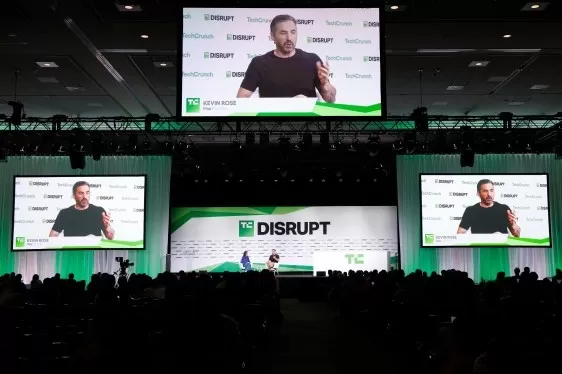 TechCrunch Disrupt 2026 to showcase leaders from Amazon, Replit and Tether
TechCrunch Disrupt has long been the epicenter of technology’s most critical dialogues, with a legacy spanning over a decade. The speakers who have graced this stage are icons of both the startup era and the current AI revolution, including Zuckerber
TechCrunch Disrupt 2026 to showcase leaders from Amazon, Replit and Tether
TechCrunch Disrupt has long been the epicenter of technology’s most critical dialogues, with a legacy spanning over a decade. The speakers who have graced this stage are icons of both the startup era and the current AI revolution, including Zuckerber
 Visa invests in Replit to enable agentic payments for developers
Visa has announced an undisclosed investment in the AI coding platform Replit. The two companies are also exploring how to integrate Visa's payment products into Replit, enabling developers—and the AI agents they build—to accept payments directly fro
Visa invests in Replit to enable agentic payments for developers
Visa has announced an undisclosed investment in the AI coding platform Replit. The two companies are also exploring how to integrate Visa's payment products into Replit, enabling developers—and the AI agents they build—to accept payments directly fro
 StrictlyVC San Francisco to Convene Leaders from TDK Ventures, Replit and More
The first StrictlyVC event of the year is coming to San Francisco sooner than you think. Tickets are still available for our April 30 gathering at the Sentro Filipino Cultural Center, featuring an impressive lineup of speakers. In addition to the net
StrictlyVC San Francisco to Convene Leaders from TDK Ventures, Replit and More
The first StrictlyVC event of the year is coming to San Francisco sooner than you think. Tickets are still available for our April 30 gathering at the Sentro Filipino Cultural Center, featuring an impressive lineup of speakers. In addition to the net
2026 Latest Best AI Pull Request Review Tools for GitHub Teams are here on XIX.AI! This top-rated curated list showcases powerful game-changing solutions that streamline refactoring, bug fixing, and security gap detection across all team workflows. Enjoy a free vs paid comparison along with real-world tests and detailed rankings to help you find the perfect tool that boosts productivity significantly. Explore now to unlock your AI edge!
12 tools
xix.ai

2026 Latest Best Top-rated AI Text to Speech Tools for Natural Voiceovers are here on XIX.AI! This curated list features powerful, game-changing options that deliver crystal-clear voices for every use case, backed by real-world tests and weekly updated rankings. Get a free vs paid comparison to find the must-try solution that boosts your productivity instantly. Explore now to Unlock your AI edge!
11 tools
xix.ai

2026 Latest Best Manga AI Background Generators Ranked Top-Rated! This curated collection showcases powerful game-changing tools perfect for creating high-quality chapter backgrounds, book covers, and promotional art. Every option has undergone rigorous real-world tests to ensure reliability. Get a free vs paid comparison along with detailed insights. Explore now to discover your perfect tool and unlock your AI edge in manga creation.
6 tools
xix.ai

2026 Latest Best Top-rated AI Object Removal Editors for portraits travel product shots! XIX.AI curates a powerful game-changing collection regularly updated with weekly rankings. These tools offer real-world tests to help you quickly remove unwanted elements, boost content quality, and save tons of time without compromising results. Must-try for anyone aiming to unlock their AI creation edge. Explore now!
10 tools
xix.ai

2026 Latest Best Top-rated AI Text to Speech Tools for Online Courses are curated by XIX.AI based on rigorous real-world tests and weekly updated rankings. These powerful tools help creators deliver crystal-clear audio content effortlessly, boosting writing efficiency and streamlining course production. Check out the free vs paid comparison to find your perfect fit. Explore now to unlock your AI edge in online education.
10 tools
xix.ai

2026 Latest Best Top-Rated AI Blog Title Tools for Higher Click Through Rates! XIX.AI has carefully curated a powerful, game-changing collection of top tools that go through rigorous real-world tests. You’ll find a free vs paid comparison, weekly updated rankings, and detailed insights to help you boost your blog’s traffic efficiently. Must-try options are highlighted to help you unlock your AI edge. Explore now!
10 tools
xix.ai

Est-ce que ces 'agents IA' vont vraiment nous libérer des abonnements coûteux ? J'ai plutôt l'impression qu'on va juste changer de geôlier... 😅 En tout cas l'idée d'une plateforme collaborative m'intrigue, mais je me demande comment ils comptent gérer la sécurité des données.












