


 Home
HomePentagon signs deals with Nvidia, Microsoft, AWS to deploy AI on classified networks

After previously reaching agreements with Google, SpaceX, and OpenAI, the U.S. Defense Department announced Friday that it has now signed deals with Nvidia, Microsoft, Amazon Web Services, and Reflection AI to deploy their AI technologies and models on classified networks for "lawful operational use."
The statement adds, "These agreements accelerate the transformation toward establishing the United States military as an AI-first fighting force and will strengthen our warfighters’ ability to maintain decision superiority across all domains of warfare."
These deals come amid the Pentagon's push to diversify its AI vendors after a contentious dispute with Anthropic over usage terms. The Pentagon wanted unrestricted access to Anthropic's AI tools, but the AI lab demanded safeguards to prevent its technology from being used for domestic mass surveillance and autonomous weapons.
The two sides are currently in court, with Anthropic securing an injunction in March against the Pentagon's attempt to brand it a "supply-chain risk."
The statement continues: "The Department will continue to build an architecture that prevents AI vendor lock-in and ensures long-term flexibility for the Joint Force. Access to a diverse suite of AI capabilities from across the resilient American technology stack will give warfighters the tools they need to act with confidence and safeguard the nation against any threat."
The DOD stated that the companies' AI hardware and models will be deployed in Impact Level 6 (IL6) and Impact Level 7 (IL7) environments to "streamline data synthesis, elevate situational understanding, and augment warfighter decision-making." These high-level security classifications apply to data and information systems critical to national security, requiring physical protection, strict access controls, and audits.
The Pentagon reported that more than 1.3 million DOD personnel have used its secure generative AI platform, GenAI.mil, which provides access to large language models (LLMs) and other AI tools within government-approved cloud environments. It is primarily designed for unclassified tasks like research, document drafting, and data analysis.
Related article
 Sam Altman Sparks Debate Over AI's Deceleration
Listen onApple PodcastsListen onSpotifyOpenAI CEO Sam Altman recently suggested that it may be time to “pace the rate of AI development” to allow society to “harden around some of these new capability levels.”On the latest episode of TechCrunch’s Equ
OpenAI fights Apple trade secret lawsuit
OpenAI rebutted Apple’s trade secret allegations on Tuesday, arguing the lawsuit is unfounded.“We take these claims seriously but see no evidence supporting them,” OpenAI stated, as reported by Bloomberg’s Ed Ludlow on X. “We support fair competition
Cognition CEO dismisses reports of SpaceX acquisition bid
SpaceX, led by Elon Musk, explored purchasing AI coding firm Cognition to close the gap with rivals OpenAI, Anthropic, and Google, according to a Wednesday Bloomberg report citing informed sources.Cognition CEO Scott Wu quickly refuted the claim on X
Related Special Topic Recommendations
SEO
Sam Altman Sparks Debate Over AI's Deceleration
Listen onApple PodcastsListen onSpotifyOpenAI CEO Sam Altman recently suggested that it may be time to “pace the rate of AI development” to allow society to “harden around some of these new capability levels.”On the latest episode of TechCrunch’s Equ
OpenAI fights Apple trade secret lawsuit
OpenAI rebutted Apple’s trade secret allegations on Tuesday, arguing the lawsuit is unfounded.“We take these claims seriously but see no evidence supporting them,” OpenAI stated, as reported by Bloomberg’s Ed Ludlow on X. “We support fair competition
Cognition CEO dismisses reports of SpaceX acquisition bid
SpaceX, led by Elon Musk, explored purchasing AI coding firm Cognition to close the gap with rivals OpenAI, Anthropic, and Google, according to a Wednesday Bloomberg report citing informed sources.Cognition CEO Scott Wu quickly refuted the claim on X
Related Special Topic Recommendations
SEO
 Best AI SERP Analysis Tools for Search Strategy
2026 Latest Best Top-rated AI SERP Analysis Tools for Search Strategy are curated by XIX.AI through rigorous real-world tests and weekly updated rankings. These powerful tools help you unlock hidden optimization opportunities, boost content performance, and gain a competitive edge in search. Discover your perfect tool to elevate your search strategy today. Explore now!
 13 tools
 xix.ai
Data Analysis
Best AI Anomaly Detection Tools for KPI Monitoring across SaaS and Ecommerce Teams
xix.ai
Data Analysis
Best AI Anomaly Detection Tools for KPI Monitoring across SaaS and Ecommerce Teams
2026 Latest Best Top-rated AI Anomaly Detection Tools for KPI Monitoring in SaaS and Ecommerce teams! XIX.AI has curated a powerful, game-changing collection based on rigorous real-world tests and weekly updated rankings. You’ll find detailed free vs paid comparison insights to help you identify the must-try solution that boosts productivity and unlocks your AI edge. Explore now!
10 tools
xix.ai
writing
Best AI Outline Generators for Long-Form SEO Articles
2026 Latest Best Top-Rated AI Outline Generators for Long-Form SEO Articles, meticulously curated by XIX.AI. These powerful tools offer game-changing assistance in creating high-quality content quickly, boosting writing efficiency significantly. Get a free vs paid comparison along with real-world tests and detailed rankings to help you find the must-try option that suits your needs. Explore now to unlock your AI edge.
8 tools
xix.ai
Education and Learning
AI Study Tools for Homework and Exam Prep
2026 Latest Best AI Study Tools for Homework and Exam Prep! XIX.AI curates a top-rated list of powerful, game-changing tools that help students boost productivity, streamline homework completion, and ace exams through real-world tests. Get a free vs paid comparison, detailed rankings, and must-try options to unlock your AI edge. Explore now!
10 tools
xix.ai
Music composition
AI Vocal Demo Tools for Songwriters, Hooks, Toplines, and Multilingual Draft Sessions
2026 Latest Best AI Vocal Demo Tools for Songwriters, Hook Creators, and Multi-Language Content Teams! XIX.AI has curated a top-rated list of powerful game-changing tools that go through rigorous real-world tests. You’ll find detailed free vs paid comparison data, comprehensive rankings, and must-try options to help you boost writing efficiency and unlock your creative potential. Explore now to discover your perfect tool for all your content needs!
9 tools
xix.ai
Business
Best AI Competitive Research Tools for Small Businesses
2026 Latest Best Top-rated AI Competitive Research Tools for Small Businesses! XIX.AI has curated a highly powerful game-changing collection, updated weekly with rigorous real-world tests and detailed rankings. You can find a comprehensive free vs paid comparison to help you identify the must-try tools that boost your productivity and give you a competitive edge. Explore now to discover your perfect tool!
9 tools
xix.ai

 Comments (0)
0/500
Comments (0)
0/500
After previously reaching agreements with Google, SpaceX, and OpenAI, the U.S. Defense Department announced Friday that it has now signed deals with Nvidia, Microsoft, Amazon Web Services, and Reflection AI to deploy their AI technologies and models on classified networks for "lawful operational use."
The statement adds, "These agreements accelerate the transformation toward establishing the United States military as an AI-first fighting force and will strengthen our warfighters’ ability to maintain decision superiority across all domains of warfare."
These deals come amid the Pentagon's push to diversify its AI vendors after a contentious dispute with Anthropic over usage terms. The Pentagon wanted unrestricted access to Anthropic's AI tools, but the AI lab demanded safeguards to prevent its technology from being used for domestic mass surveillance and autonomous weapons.
The two sides are currently in court, with Anthropic securing an injunction in March against the Pentagon's attempt to brand it a "supply-chain risk."
The statement continues: "The Department will continue to build an architecture that prevents AI vendor lock-in and ensures long-term flexibility for the Joint Force. Access to a diverse suite of AI capabilities from across the resilient American technology stack will give warfighters the tools they need to act with confidence and safeguard the nation against any threat."
The DOD stated that the companies' AI hardware and models will be deployed in Impact Level 6 (IL6) and Impact Level 7 (IL7) environments to "streamline data synthesis, elevate situational understanding, and augment warfighter decision-making." These high-level security classifications apply to data and information systems critical to national security, requiring physical protection, strict access controls, and audits.
The Pentagon reported that more than 1.3 million DOD personnel have used its secure generative AI platform, GenAI.mil, which provides access to large language models (LLMs) and other AI tools within government-approved cloud environments. It is primarily designed for unclassified tasks like research, document drafting, and data analysis.








 Sam Altman Sparks Debate Over AI's Deceleration
Listen onApple PodcastsListen onSpotifyOpenAI CEO Sam Altman recently suggested that it may be time to “pace the rate of AI development” to allow society to “harden around some of these new capability levels.”On the latest episode of TechCrunch’s Equ
Sam Altman Sparks Debate Over AI's Deceleration
Listen onApple PodcastsListen onSpotifyOpenAI CEO Sam Altman recently suggested that it may be time to “pace the rate of AI development” to allow society to “harden around some of these new capability levels.”On the latest episode of TechCrunch’s Equ
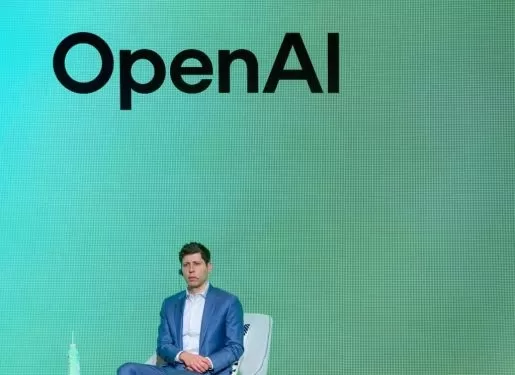 OpenAI fights Apple trade secret lawsuit
OpenAI rebutted Apple’s trade secret allegations on Tuesday, arguing the lawsuit is unfounded.“We take these claims seriously but see no evidence supporting them,” OpenAI stated, as reported by Bloomberg’s Ed Ludlow on X. “We support fair competition
OpenAI fights Apple trade secret lawsuit
OpenAI rebutted Apple’s trade secret allegations on Tuesday, arguing the lawsuit is unfounded.“We take these claims seriously but see no evidence supporting them,” OpenAI stated, as reported by Bloomberg’s Ed Ludlow on X. “We support fair competition
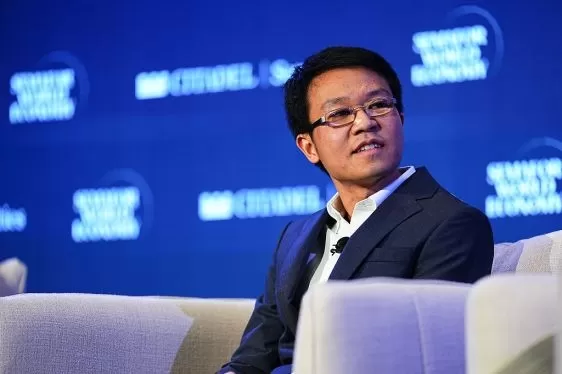 Cognition CEO dismisses reports of SpaceX acquisition bid
SpaceX, led by Elon Musk, explored purchasing AI coding firm Cognition to close the gap with rivals OpenAI, Anthropic, and Google, according to a Wednesday Bloomberg report citing informed sources.Cognition CEO Scott Wu quickly refuted the claim on X
Cognition CEO dismisses reports of SpaceX acquisition bid
SpaceX, led by Elon Musk, explored purchasing AI coding firm Cognition to close the gap with rivals OpenAI, Anthropic, and Google, according to a Wednesday Bloomberg report citing informed sources.Cognition CEO Scott Wu quickly refuted the claim on X

2026 Latest Best Top-rated AI SERP Analysis Tools for Search Strategy are curated by XIX.AI through rigorous real-world tests and weekly updated rankings. These powerful tools help you unlock hidden optimization opportunities, boost content performance, and gain a competitive edge in search. Discover your perfect tool to elevate your search strategy today. Explore now!
13 tools
xix.ai

2026 Latest Best Top-rated AI Anomaly Detection Tools for KPI Monitoring in SaaS and Ecommerce teams! XIX.AI has curated a powerful, game-changing collection based on rigorous real-world tests and weekly updated rankings. You’ll find detailed free vs paid comparison insights to help you identify the must-try solution that boosts productivity and unlocks your AI edge. Explore now!
10 tools
xix.ai

2026 Latest Best Top-Rated AI Outline Generators for Long-Form SEO Articles, meticulously curated by XIX.AI. These powerful tools offer game-changing assistance in creating high-quality content quickly, boosting writing efficiency significantly. Get a free vs paid comparison along with real-world tests and detailed rankings to help you find the must-try option that suits your needs. Explore now to unlock your AI edge.
8 tools
xix.ai

2026 Latest Best AI Study Tools for Homework and Exam Prep! XIX.AI curates a top-rated list of powerful, game-changing tools that help students boost productivity, streamline homework completion, and ace exams through real-world tests. Get a free vs paid comparison, detailed rankings, and must-try options to unlock your AI edge. Explore now!
10 tools
xix.ai

2026 Latest Best AI Vocal Demo Tools for Songwriters, Hook Creators, and Multi-Language Content Teams! XIX.AI has curated a top-rated list of powerful game-changing tools that go through rigorous real-world tests. You’ll find detailed free vs paid comparison data, comprehensive rankings, and must-try options to help you boost writing efficiency and unlock your creative potential. Explore now to discover your perfect tool for all your content needs!
9 tools
xix.ai

2026 Latest Best Top-rated AI Competitive Research Tools for Small Businesses! XIX.AI has curated a highly powerful game-changing collection, updated weekly with rigorous real-world tests and detailed rankings. You can find a comprehensive free vs paid comparison to help you identify the must-try tools that boost your productivity and give you a competitive edge. Explore now to discover your perfect tool!
9 tools
xix.ai












