


 Home
HomePatronus AI secures $50M to build digital worlds that stress-test AI agents
AI agents are growing increasingly sophisticated, shifting from answering questions to independently carrying out complex, multi-step tasks.
However, before these agents can be trusted to book travel or handle financial analysis on behalf of users, model providers and the startups developing them need to ensure reliable performance across a wide range of scenarios.
AI labs frequently rely on benchmarks to demonstrate their models' capabilities, yet a high score—even on an agent-specific benchmark—does not guarantee that an AI can correctly complete diverse, real-world tasks.
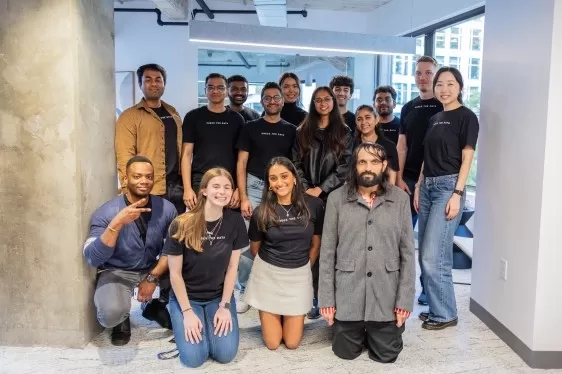
Patronus AI, a 2023 startup founded by ex-Meta AI researchers Anand Kannappan and Rebecca Qian, assists model makers and companies in fine-tuning models to achieve this by creating simulated digital environments that evaluate agent performance.
This San Francisco-based startup is clearly addressing a critical need. According to Glenn Solomon, a managing director at Notable Capital, virtually every frontier AI lab and many emerging startups have become customers, with demand for the company's simulated environments described as nearly insatiable.
Patronus's revenue has surged 15-fold over the past year, sparking strong investor interest. On Thursday, the company announced a $50 million Series B round led by Greenfield Partners, with participation from Notable Capital, Lightspeed, Datadog, and Samsung. This brings total funding to $70 million.
Patronus employs what it calls "digital world models" to build replicas of websites and internal systems. In these environments, agents undergo stress testing after training via reinforcement learning, which iteratively rewards successful task completion and penalizes mistakes.
AI labs find these digital simulations highly valuable because they allow agents to experiment with various, sometimes unpredictable, scenarios. The company likens its approach to how Waymo trained autonomous cars—by first constructing synthetic worlds to test vehicles against rare hazards like severe weather or a child chasing a ball.
The difference with AI agents is that they often take shortcuts, leading to incorrect task completion. "Patronus is really good at spotting these hacks and ensuring the models are held accountable," Solomon said.
Patronus currently offers its simulated digital worlds for software engineering and finance, but according to Kannappan, these are only the beginning.
"Today we're very focused on verifiable problems—those that can be immediately checked and verified—but there are many more areas that are non-verifiable or extremely difficult to verify," he said.
Just because these processes are verifiable doesn't mean they are simple. "We want to be able to create an environment where you can operate an agent that can run for 10 hours, 10 days, or even 10 weeks," Kannappan said.
As for competitors, Patronus believes it mainly competes against the internal teams that AI labs have already established to evaluate agent behavior. While human-data firms like Mercor and Surge assist model makers with reinforcement learning, Patronus takes a different approach by evaluating agent behavior without any human involvement.
Related article
 Sarvam secures $234M from HCLTech to become India's newest AI unicorn
Sarvam announced on Monday that it has raised $234 million at a valuation of $1.5 billion. The Bengaluru-based startup is now India’s newest AI unicorn, as governments and companies increasingly seek greater control over critical artificial intellige
Teen hacker turned Iron Dome researcher raises $28M to fight AI phishing
Shay Shwartz knows email phishing attacks inside and out. As a teenager, he earned money as a hacker, but after being caught at 16, he realized he could use his cybersecurity skills to stop attacks instead of launching them.He went on to spend nearly
Meta's AI model excels but open-source identity erodes
The open-source AI landscape has always offered plenty of choices. For years, developers could access models like Mistral, Falcon, and a growing number of open-weight alternatives. But Meta's entry with Llama changed the game. A company with three bi
Related Special Topic Recommendations
Data Analysis
Sarvam secures $234M from HCLTech to become India's newest AI unicorn
Sarvam announced on Monday that it has raised $234 million at a valuation of $1.5 billion. The Bengaluru-based startup is now India’s newest AI unicorn, as governments and companies increasingly seek greater control over critical artificial intellige
Teen hacker turned Iron Dome researcher raises $28M to fight AI phishing
Shay Shwartz knows email phishing attacks inside and out. As a teenager, he earned money as a hacker, but after being caught at 16, he realized he could use his cybersecurity skills to stop attacks instead of launching them.He went on to spend nearly
Meta's AI model excels but open-source identity erodes
The open-source AI landscape has always offered plenty of choices. For years, developers could access models like Mistral, Falcon, and a growing number of open-weight alternatives. But Meta's entry with Llama changed the game. A company with three bi
Related Special Topic Recommendations
Data Analysis
 Best AI Anomaly Detection Tools for KPI Monitoring across SaaS and Ecommerce Teams
2026 Latest Best Top-rated AI Anomaly Detection Tools for KPI Monitoring in SaaS and Ecommerce teams! XIX.AI has curated a powerful, game-changing collection based on rigorous real-world tests and weekly updated rankings. You’ll find detailed free vs paid comparison insights to help you identify the must-try solution that boosts productivity and unlocks your AI edge. Explore now!
 10 tools
 xix.ai
writing
Best AI Outline Generators for Long-Form SEO Articles
xix.ai
writing
Best AI Outline Generators for Long-Form SEO Articles
2026 Latest Best Top-Rated AI Outline Generators for Long-Form SEO Articles, meticulously curated by XIX.AI. These powerful tools offer game-changing assistance in creating high-quality content quickly, boosting writing efficiency significantly. Get a free vs paid comparison along with real-world tests and detailed rankings to help you find the must-try option that suits your needs. Explore now to unlock your AI edge.
8 tools
xix.ai
Education and Learning
AI Study Tools for Homework and Exam Prep
2026 Latest Best AI Study Tools for Homework and Exam Prep! XIX.AI curates a top-rated list of powerful, game-changing tools that help students boost productivity, streamline homework completion, and ace exams through real-world tests. Get a free vs paid comparison, detailed rankings, and must-try options to unlock your AI edge. Explore now!
10 tools
xix.ai
Music composition
AI Vocal Demo Tools for Songwriters, Hooks, Toplines, and Multilingual Draft Sessions
2026 Latest Best AI Vocal Demo Tools for Songwriters, Hook Creators, and Multi-Language Content Teams! XIX.AI has curated a top-rated list of powerful game-changing tools that go through rigorous real-world tests. You’ll find detailed free vs paid comparison data, comprehensive rankings, and must-try options to help you boost writing efficiency and unlock your creative potential. Explore now to discover your perfect tool for all your content needs!
9 tools
xix.ai
Business
Best AI Competitive Research Tools for Small Businesses
2026 Latest Best Top-rated AI Competitive Research Tools for Small Businesses! XIX.AI has curated a highly powerful game-changing collection, updated weekly with rigorous real-world tests and detailed rankings. You can find a comprehensive free vs paid comparison to help you identify the must-try tools that boost your productivity and give you a competitive edge. Explore now to discover your perfect tool!
9 tools
xix.ai
Image editing
Photoshop AI Retouch Tools for Ecommerce Apparel, Skin Cleanup, and Color Consistency
2026 Latest Best Photoshop AI retouch tools for ecommerce apparel, skin cleanup, and color consistency! This top-rated curated list features powerful game-changing solutions that help you boost writing efficiency, streamline content creation, and achieve perfect visual results effortlessly. Each tool has undergone real-world tests through weekly updated rankings, complete with free vs paid comparison details. Backed by XIX.AI, it’s the must-try guide for anyone aiming to unlock your AI edge. Explore now!
10 tools
xix.ai

 Comments (0)
0/500
Comments (0)
0/500
AI agents are growing increasingly sophisticated, shifting from answering questions to independently carrying out complex, multi-step tasks.
However, before these agents can be trusted to book travel or handle financial analysis on behalf of users, model providers and the startups developing them need to ensure reliable performance across a wide range of scenarios.
AI labs frequently rely on benchmarks to demonstrate their models' capabilities, yet a high score—even on an agent-specific benchmark—does not guarantee that an AI can correctly complete diverse, real-world tasks.
Patronus AI, a 2023 startup founded by ex-Meta AI researchers Anand Kannappan and Rebecca Qian, assists model makers and companies in fine-tuning models to achieve this by creating simulated digital environments that evaluate agent performance.
This San Francisco-based startup is clearly addressing a critical need. According to Glenn Solomon, a managing director at Notable Capital, virtually every frontier AI lab and many emerging startups have become customers, with demand for the company's simulated environments described as nearly insatiable.
Patronus's revenue has surged 15-fold over the past year, sparking strong investor interest. On Thursday, the company announced a $50 million Series B round led by Greenfield Partners, with participation from Notable Capital, Lightspeed, Datadog, and Samsung. This brings total funding to $70 million.
Patronus employs what it calls "digital world models" to build replicas of websites and internal systems. In these environments, agents undergo stress testing after training via reinforcement learning, which iteratively rewards successful task completion and penalizes mistakes.
AI labs find these digital simulations highly valuable because they allow agents to experiment with various, sometimes unpredictable, scenarios. The company likens its approach to how Waymo trained autonomous cars—by first constructing synthetic worlds to test vehicles against rare hazards like severe weather or a child chasing a ball.
The difference with AI agents is that they often take shortcuts, leading to incorrect task completion. "Patronus is really good at spotting these hacks and ensuring the models are held accountable," Solomon said.
Patronus currently offers its simulated digital worlds for software engineering and finance, but according to Kannappan, these are only the beginning.
"Today we're very focused on verifiable problems—those that can be immediately checked and verified—but there are many more areas that are non-verifiable or extremely difficult to verify," he said.
Just because these processes are verifiable doesn't mean they are simple. "We want to be able to create an environment where you can operate an agent that can run for 10 hours, 10 days, or even 10 weeks," Kannappan said.
As for competitors, Patronus believes it mainly competes against the internal teams that AI labs have already established to evaluate agent behavior. While human-data firms like Mercor and Surge assist model makers with reinforcement learning, Patronus takes a different approach by evaluating agent behavior without any human involvement.








 Sarvam secures $234M from HCLTech to become India's newest AI unicorn
Sarvam announced on Monday that it has raised $234 million at a valuation of $1.5 billion. The Bengaluru-based startup is now India’s newest AI unicorn, as governments and companies increasingly seek greater control over critical artificial intellige
Sarvam secures $234M from HCLTech to become India's newest AI unicorn
Sarvam announced on Monday that it has raised $234 million at a valuation of $1.5 billion. The Bengaluru-based startup is now India’s newest AI unicorn, as governments and companies increasingly seek greater control over critical artificial intellige
 Teen hacker turned Iron Dome researcher raises $28M to fight AI phishing
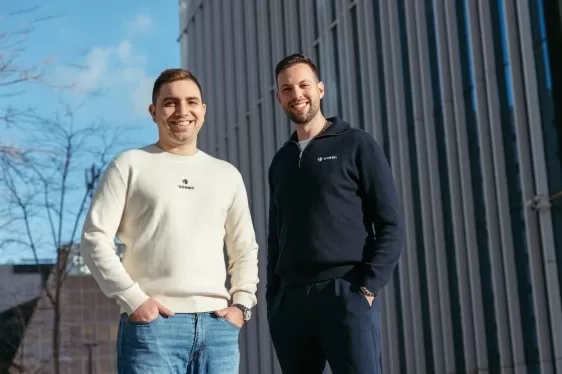
Shay Shwartz knows email phishing attacks inside and out. As a teenager, he earned money as a hacker, but after being caught at 16, he realized he could use his cybersecurity skills to stop attacks instead of launching them.He went on to spend nearly
Teen hacker turned Iron Dome researcher raises $28M to fight AI phishing
Shay Shwartz knows email phishing attacks inside and out. As a teenager, he earned money as a hacker, but after being caught at 16, he realized he could use his cybersecurity skills to stop attacks instead of launching them.He went on to spend nearly
 Meta's AI model excels but open-source identity erodes
The open-source AI landscape has always offered plenty of choices. For years, developers could access models like Mistral, Falcon, and a growing number of open-weight alternatives. But Meta's entry with Llama changed the game. A company with three bi
Meta's AI model excels but open-source identity erodes
The open-source AI landscape has always offered plenty of choices. For years, developers could access models like Mistral, Falcon, and a growing number of open-weight alternatives. But Meta's entry with Llama changed the game. A company with three bi

2026 Latest Best Top-rated AI Anomaly Detection Tools for KPI Monitoring in SaaS and Ecommerce teams! XIX.AI has curated a powerful, game-changing collection based on rigorous real-world tests and weekly updated rankings. You’ll find detailed free vs paid comparison insights to help you identify the must-try solution that boosts productivity and unlocks your AI edge. Explore now!
10 tools
xix.ai

2026 Latest Best Top-Rated AI Outline Generators for Long-Form SEO Articles, meticulously curated by XIX.AI. These powerful tools offer game-changing assistance in creating high-quality content quickly, boosting writing efficiency significantly. Get a free vs paid comparison along with real-world tests and detailed rankings to help you find the must-try option that suits your needs. Explore now to unlock your AI edge.
8 tools
xix.ai

2026 Latest Best AI Study Tools for Homework and Exam Prep! XIX.AI curates a top-rated list of powerful, game-changing tools that help students boost productivity, streamline homework completion, and ace exams through real-world tests. Get a free vs paid comparison, detailed rankings, and must-try options to unlock your AI edge. Explore now!
10 tools
xix.ai

2026 Latest Best AI Vocal Demo Tools for Songwriters, Hook Creators, and Multi-Language Content Teams! XIX.AI has curated a top-rated list of powerful game-changing tools that go through rigorous real-world tests. You’ll find detailed free vs paid comparison data, comprehensive rankings, and must-try options to help you boost writing efficiency and unlock your creative potential. Explore now to discover your perfect tool for all your content needs!
9 tools
xix.ai

2026 Latest Best Top-rated AI Competitive Research Tools for Small Businesses! XIX.AI has curated a highly powerful game-changing collection, updated weekly with rigorous real-world tests and detailed rankings. You can find a comprehensive free vs paid comparison to help you identify the must-try tools that boost your productivity and give you a competitive edge. Explore now to discover your perfect tool!
9 tools
xix.ai

2026 Latest Best Photoshop AI retouch tools for ecommerce apparel, skin cleanup, and color consistency! This top-rated curated list features powerful game-changing solutions that help you boost writing efficiency, streamline content creation, and achieve perfect visual results effortlessly. Each tool has undergone real-world tests through weekly updated rankings, complete with free vs paid comparison details. Backed by XIX.AI, it’s the must-try guide for anyone aiming to unlock your AI edge. Explore now!
10 tools
xix.ai












