


 Home
HomeOpenClaw Creator Urges AI Developers to Embrace Playfulness and Iterative Growth

Peter Steinberger, the creator behind the viral AI agent OpenClaw who now works at OpenAI, offers guidance for those diving into AI technology and agent development. His key takeaway? The most effective approach right now is to explore, experiment playfully, and avoid putting pressure on yourself to become an expert immediately.
“I wish I could claim I had a master plan from the start, but much of it was simply exploration,” Steinberger shared. “I envisioned tools that didn’t exist yet, and… well, I prompted them into reality.”
The developer discussed this during a conversation with Romain Huet, OpenAI’s Head of Developer Experience, on the debut episode of the company’s "Builders Unscripted" podcast. He reflected on OpenClaw's humble beginnings and his initial lack of a concrete roadmap.
Steinberger explained that he first built a tool for WhatsApp integration but temporarily shelved it to focus on other projects, assuming major AI labs would soon develop similar solutions.
“I was just experimenting a lot. My goal was essentially to have fun and inspire others,” Steinberger noted. However, by last November, he was surprised that no AI lab had built what he envisioned. This realization spurred him to create the first prototype of what became OpenClaw.
“The moment it truly clicked was during a weekend trip to Marrakesh. I found myself relying on it constantly because it was so convenient… The internet there wasn't great, but WhatsApp just works everywhere,” he said. The tool effortlessly helped him find restaurants, look up information, message friends, and more.
The more he engaged with the technology, the more Steinberger recognized the advanced problem-solving capabilities of modern AI models, drawing parallels to skilled coders.
“Now, they can essentially devise solutions independently, even without explicit programming,” he observed.
Throughout his development journey, Steinberger's workflow continuously improved. He emphasizes to fellow developers that this progression takes time and encourages persistence.
“There are developers who… write software the traditional way, but that approach is becoming obsolete,” he pointed out. He noted that some try AI-assisted ‘vibe coding’ but become frustrated with the initial results.
“I think ‘vibe coding’ is a bit of a misnomer,” Steinberger suggested, indicating the process isn't as effortless as the term implies. “People try AI but don't realize it's a skill to be developed,” he said, comparing learning to code with AI to learning an instrument like guitar.
“You won't be a guitar expert on day one,” he remarked. Instead, he advocates for a playful, exploratory mindset. Now, when crafting a prompt, he has an intuitive sense of how long it should take. If it takes longer, he analyzes what might have gone wrong and adjusts accordingly.
“My… advice is always to approach it playfully. Build something you've always wanted to build. If you have even a slight builder's mentality, there's likely an idea in the back of your mind. Just play with it.”
This spirit of experimentation and enjoyment is crucial, especially when many fear AI might replace their roles.
“If your core identity is ‘I want to create things, I want to solve problems,’ and if you're proactive and resourceful, you'll be in higher demand than ever,” Steinberger concluded.
Related article
 Some AI Experts Unimpressed by OpenClaw Despite Hype
For a brief, disorienting moment, it seemed our robot overlords were about to take over.After Moltbook launched—a Reddit clone where AI agents powered by OpenClaw could chat with each other—some people were tricked into believing computers had starte
The Year's Biggest AI Stories So Far
You can track a year by product launches, but the bigger moments that reshape our understanding of AI matter more. The AI industry keeps generating headlines—major acquisitions, indie developer wins, backlash against questionable products, and high-s
App Store resurgence powered by AI
Many predicted AI would kill apps. In reality, new app launches are soaring.According to a new analysis from market intelligence provider Appfigures, worldwide app releases in the first quarter of 2026 rose 60% year-over-year across both Apple’s App
Related Special Topic Recommendations
Image editing
Some AI Experts Unimpressed by OpenClaw Despite Hype
For a brief, disorienting moment, it seemed our robot overlords were about to take over.After Moltbook launched—a Reddit clone where AI agents powered by OpenClaw could chat with each other—some people were tricked into believing computers had starte
The Year's Biggest AI Stories So Far
You can track a year by product launches, but the bigger moments that reshape our understanding of AI matter more. The AI industry keeps generating headlines—major acquisitions, indie developer wins, backlash against questionable products, and high-s
App Store resurgence powered by AI
Many predicted AI would kill apps. In reality, new app launches are soaring.According to a new analysis from market intelligence provider Appfigures, worldwide app releases in the first quarter of 2026 rose 60% year-over-year across both Apple’s App
Related Special Topic Recommendations
Image editing
 AI Object Removal Editors: Clean Up Portraits, Travel, and Product Shots
2026 Latest Best Top-rated AI Object Removal Editors for portraits travel product shots! XIX.AI curates a powerful game-changing collection regularly updated with weekly rankings. These tools offer real-world tests to help you quickly remove unwanted elements, boost content quality, and save tons of time without compromising results. Must-try for anyone aiming to unlock their AI creation edge. Explore now!
 10 tools
 xix.ai
Text-to-speech
Best AI Text to Speech Tools for Online Courses
xix.ai
Text-to-speech
Best AI Text to Speech Tools for Online Courses
2026 Latest Best Top-rated AI Text to Speech Tools for Online Courses are curated by XIX.AI based on rigorous real-world tests and weekly updated rankings. These powerful tools help creators deliver crystal-clear audio content effortlessly, boosting writing efficiency and streamlining course production. Check out the free vs paid comparison to find your perfect fit. Explore now to unlock your AI edge in online education.
10 tools
xix.ai
writing
AI Blog Title Tools for Higher Click Through Rates
2026 Latest Best Top-Rated AI Blog Title Tools for Higher Click Through Rates! XIX.AI has carefully curated a powerful, game-changing collection of top tools that go through rigorous real-world tests. You’ll find a free vs paid comparison, weekly updated rankings, and detailed insights to help you boost your blog’s traffic efficiently. Must-try options are highlighted to help you unlock your AI edge. Explore now!
10 tools
xix.ai
automation
Best AI Task Routing Tools for Support Workflows
2026 Latest Best Top-rated AI Task Routing Tools for Support Workflows! XIX.AI has curated a highly powerful game-changing collection of must-try solutions, all undergoing rigorous real-world tests and updated weekly. These tools streamline workflows, boost productivity, and help teams deliver faster, more efficient support. Explore now to discover your perfect tool and unlock your AI edge!
17 tools
xix.ai
Academic Research
AI Citation and Paper Summary Tools
2026 Latest Best Top-Rated AI Citation and Paper Summary Tools Curated by XIX.AI. Get powerful game-changing solutions for quick content creation, improved writing efficiency, and boosting productivity. We offer a free vs paid comparison along with real-world tests and weekly updated rankings to help you find the must-try tool that fits your needs perfectly. Explore now to Unlock your AI edge.
10 tools
xix.ai
Productivity
Best AI Productivity Tools for Daily Work
2026 Latest Best Top-Rated AI Productivity Tools for Daily Work! XIX.AI has curated a powerful, game-changing selection based on rigorous weekly updated rankings and real-world tests. You’ll find must-try options that boost writing efficiency, streamline content creation, and help you overcome daily work challenges. Get a free vs paid comparison to find the perfect fit for your needs. Explore now to unlock your AI edge!
9 tools
xix.ai

 Comments (0)
0/500
Comments (0)
0/500
Peter Steinberger, the creator behind the viral AI agent OpenClaw who now works at OpenAI, offers guidance for those diving into AI technology and agent development. His key takeaway? The most effective approach right now is to explore, experiment playfully, and avoid putting pressure on yourself to become an expert immediately.
“I wish I could claim I had a master plan from the start, but much of it was simply exploration,” Steinberger shared. “I envisioned tools that didn’t exist yet, and… well, I prompted them into reality.”
The developer discussed this during a conversation with Romain Huet, OpenAI’s Head of Developer Experience, on the debut episode of the company’s "Builders Unscripted" podcast. He reflected on OpenClaw's humble beginnings and his initial lack of a concrete roadmap.
Steinberger explained that he first built a tool for WhatsApp integration but temporarily shelved it to focus on other projects, assuming major AI labs would soon develop similar solutions.
“I was just experimenting a lot. My goal was essentially to have fun and inspire others,” Steinberger noted. However, by last November, he was surprised that no AI lab had built what he envisioned. This realization spurred him to create the first prototype of what became OpenClaw.
“The moment it truly clicked was during a weekend trip to Marrakesh. I found myself relying on it constantly because it was so convenient… The internet there wasn't great, but WhatsApp just works everywhere,” he said. The tool effortlessly helped him find restaurants, look up information, message friends, and more.
The more he engaged with the technology, the more Steinberger recognized the advanced problem-solving capabilities of modern AI models, drawing parallels to skilled coders.
“Now, they can essentially devise solutions independently, even without explicit programming,” he observed.
Throughout his development journey, Steinberger's workflow continuously improved. He emphasizes to fellow developers that this progression takes time and encourages persistence.
“There are developers who… write software the traditional way, but that approach is becoming obsolete,” he pointed out. He noted that some try AI-assisted ‘vibe coding’ but become frustrated with the initial results.
“I think ‘vibe coding’ is a bit of a misnomer,” Steinberger suggested, indicating the process isn't as effortless as the term implies. “People try AI but don't realize it's a skill to be developed,” he said, comparing learning to code with AI to learning an instrument like guitar.
“You won't be a guitar expert on day one,” he remarked. Instead, he advocates for a playful, exploratory mindset. Now, when crafting a prompt, he has an intuitive sense of how long it should take. If it takes longer, he analyzes what might have gone wrong and adjusts accordingly.
“My… advice is always to approach it playfully. Build something you've always wanted to build. If you have even a slight builder's mentality, there's likely an idea in the back of your mind. Just play with it.”
This spirit of experimentation and enjoyment is crucial, especially when many fear AI might replace their roles.
“If your core identity is ‘I want to create things, I want to solve problems,’ and if you're proactive and resourceful, you'll be in higher demand than ever,” Steinberger concluded.








 Some AI Experts Unimpressed by OpenClaw Despite Hype
For a brief, disorienting moment, it seemed our robot overlords were about to take over.After Moltbook launched—a Reddit clone where AI agents powered by OpenClaw could chat with each other—some people were tricked into believing computers had starte
Some AI Experts Unimpressed by OpenClaw Despite Hype
For a brief, disorienting moment, it seemed our robot overlords were about to take over.After Moltbook launched—a Reddit clone where AI agents powered by OpenClaw could chat with each other—some people were tricked into believing computers had starte
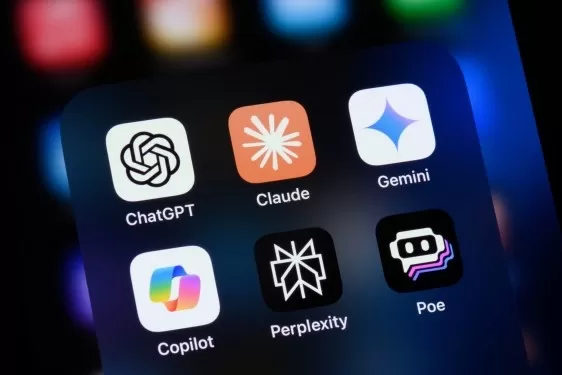 The Year's Biggest AI Stories So Far
You can track a year by product launches, but the bigger moments that reshape our understanding of AI matter more. The AI industry keeps generating headlines—major acquisitions, indie developer wins, backlash against questionable products, and high-s
The Year's Biggest AI Stories So Far
You can track a year by product launches, but the bigger moments that reshape our understanding of AI matter more. The AI industry keeps generating headlines—major acquisitions, indie developer wins, backlash against questionable products, and high-s
 App Store resurgence powered by AI
Many predicted AI would kill apps. In reality, new app launches are soaring.According to a new analysis from market intelligence provider Appfigures, worldwide app releases in the first quarter of 2026 rose 60% year-over-year across both Apple’s App
App Store resurgence powered by AI
Many predicted AI would kill apps. In reality, new app launches are soaring.According to a new analysis from market intelligence provider Appfigures, worldwide app releases in the first quarter of 2026 rose 60% year-over-year across both Apple’s App

2026 Latest Best Top-rated AI Object Removal Editors for portraits travel product shots! XIX.AI curates a powerful game-changing collection regularly updated with weekly rankings. These tools offer real-world tests to help you quickly remove unwanted elements, boost content quality, and save tons of time without compromising results. Must-try for anyone aiming to unlock their AI creation edge. Explore now!
10 tools
xix.ai

2026 Latest Best Top-rated AI Text to Speech Tools for Online Courses are curated by XIX.AI based on rigorous real-world tests and weekly updated rankings. These powerful tools help creators deliver crystal-clear audio content effortlessly, boosting writing efficiency and streamlining course production. Check out the free vs paid comparison to find your perfect fit. Explore now to unlock your AI edge in online education.
10 tools
xix.ai

2026 Latest Best Top-Rated AI Blog Title Tools for Higher Click Through Rates! XIX.AI has carefully curated a powerful, game-changing collection of top tools that go through rigorous real-world tests. You’ll find a free vs paid comparison, weekly updated rankings, and detailed insights to help you boost your blog’s traffic efficiently. Must-try options are highlighted to help you unlock your AI edge. Explore now!
10 tools
xix.ai

2026 Latest Best Top-rated AI Task Routing Tools for Support Workflows! XIX.AI has curated a highly powerful game-changing collection of must-try solutions, all undergoing rigorous real-world tests and updated weekly. These tools streamline workflows, boost productivity, and help teams deliver faster, more efficient support. Explore now to discover your perfect tool and unlock your AI edge!
17 tools
xix.ai
2026 Latest Best Top-Rated AI Citation and Paper Summary Tools Curated by XIX.AI. Get powerful game-changing solutions for quick content creation, improved writing efficiency, and boosting productivity. We offer a free vs paid comparison along with real-world tests and weekly updated rankings to help you find the must-try tool that fits your needs perfectly. Explore now to Unlock your AI edge.
10 tools
xix.ai

2026 Latest Best Top-Rated AI Productivity Tools for Daily Work! XIX.AI has curated a powerful, game-changing selection based on rigorous weekly updated rankings and real-world tests. You’ll find must-try options that boost writing efficiency, streamline content creation, and help you overcome daily work challenges. Get a free vs paid comparison to find the perfect fit for your needs. Explore now to unlock your AI edge!
9 tools
xix.ai












