


 Home
HomeOpenAI's ChatGPT Expands into Finance with 12,000 Institution Links

AI assistants are evolving beyond writing code and translation to analyzing bills and planning home purchases, shifting the boundaries of artificial intelligence from "general capabilities" to "vertical expertise." Recently, OpenAI introduced a personal finance tool for ChatGPT Pro users in the U.S., enabling connections to over 12,000 financial institutions via Plaid. Users can directly query spending analysis, investment portfolios, subscription management, and even long-term financial planning within conversations—marking OpenAI's official expansion of AI into high-value, sensitive financial decision-making.
Core Features: Manage Finances Like a Chat
The core experience of the new financial tool is "Connect - Insight - Plan":
Feature Module Specific Capabilities Typical Scenarios Account ConnectionIntegrated with 12,000+ institutions via Plaid, including Schwab, Fidelity, Chase, Robinhood, Amex, etc.Synchronize bank cards, brokerage accounts, and credit card data with one clickFinancial DashboardVisualize asset performance, spending trends, subscription expenses, and pending billsQuickly understand where your money is going and how much you have leftSmart Q&ASupports natural language questions like "Have I been spending more recently?" or "Help me create a 5-year home buying plan"No need for technical jargon—ask financial questions like talking to a friendPrivacy ControlsAccounts can be disconnected at any time, and synchronized data will be automatically deleted within 30 days; manual deletion of "financial memories" is supportedUsers have full control over data retentionUsers can access the feature via the sidebar "Finances" section or by typing @Finances in a conversation to start connecting accounts. The system guides them through the Plaid authorization process.
Strategic Background: Acquisition of the Hiro Team + GPT-5.5 Capabilities
This release is not an isolated action but the culmination of OpenAI's financial strategy:
Talent Reserves: In April 2026, OpenAI acquired the core team of personal finance startup Hiro, which had backing from top-tier VCs like Ribbit and General Catalyst. OpenAI stated that the Hiro team's expertise in financial product design and compliance was key to launching this tool;Technical Foundation: The tool relies on GPT-5.5's contextual reasoning—financial questions often involve multiple accounts, cross-cycle scenarios, and complex conditions (e.g., "If I sell stocks, what impact will it have on my taxes and mortgage?"), requiring the model to accurately understand implicit logic;Professional Validation: OpenAI collaborated with financial experts to build a dedicated evaluation benchmark, optimizing the model's accuracy and compliance in financial scenarios.Privacy Design: The "Minimization Principle" for Sensitive Data
In the high-sensitivity field of finance, privacy protection is the top priority:
Data Isolation: Financial data is stored separately from regular chat history to prevent cross-contamination;User Control: Supports disconnecting connections by institution, with data completely removed from the cloud within 30 days after deletion;Transparent Audit: Users can view and manage all "financial memories" (e.g., "User plans to retire in 2030") on the "Finances" page.This design addresses regulatory requirements (such as U.S. CFPB data rules and the EU Open Banking Directive) and aims to alleviate user concerns about "AI holding financial privacy."
Industry Trends: General Large Models Accelerating "Verticalization"
OpenAI's financial tool reflects a broader industry consensus:
Real Demand: Over 200 million users ask ChatGPT financial questions monthly, proving general models already act as "informal financial advisors";Competitor Follow-up: Anthropic launched a health consultation tool, Perplexity introduced a financial research product based on Computer Agent, and vertical market competition is intensifying;Capability Boundaries: When users ask "Which stock should I buy?", the "disclaimer-style" responses of general chatbots fall short, making specialized, traceable, and reasoning-based vertical tools an inevitable development direction.Challenges and Outlook
Despite its promise, the tool faces multiple challenges:
Compliance Risks: The U.S. SEC has strict definitions for "investment advice." If the model's output is deemed "stock recommendations," it may trigger licensing requirements;Liability Clarification: If users make loss-making decisions based on AI advice, who bears responsibility?Data Dependency: The tool's value depends heavily on the breadth of account connections. If banks limit API access due to security concerns, the user experience could significantly deteriorate.
Related article
 Why Cognition Bought Poke: AI Personality Is Becoming a Competitive Advantage
Poke, the AI assistant designed to chat like a friend, is taking its next major step. The Interaction Company of California, the startup behind Poke, has been acquired by AI coding firm Cognition in a transaction valuing the company in the low nine f
IDC Releases China Generative AI Security Evaluation Platform Report; Ant Digital Ranks as a Leader
As enterprises increasingly integrate AI into core operations like customer service and management, security risks have grown more complex. Beyond traditional threats such as model jailbreaks and data leaks, new challenges like tool abuse, agent priv
Meta Tests AI Bedtime Story App StoryKit to Solve Parents’ Storytelling Challenges
Designed to support busy parents, Meta is testing StoryKit, an AI-powered app that generates personalized bedtime stories for kids, complete with custom characters, scenes, and music.Parents simply upload photos of their child’s favorite toys to crea
Related Special Topic Recommendations
code
Why Cognition Bought Poke: AI Personality Is Becoming a Competitive Advantage
Poke, the AI assistant designed to chat like a friend, is taking its next major step. The Interaction Company of California, the startup behind Poke, has been acquired by AI coding firm Cognition in a transaction valuing the company in the low nine f
IDC Releases China Generative AI Security Evaluation Platform Report; Ant Digital Ranks as a Leader
As enterprises increasingly integrate AI into core operations like customer service and management, security risks have grown more complex. Beyond traditional threats such as model jailbreaks and data leaks, new challenges like tool abuse, agent priv
Meta Tests AI Bedtime Story App StoryKit to Solve Parents’ Storytelling Challenges
Designed to support busy parents, Meta is testing StoryKit, an AI-powered app that generates personalized bedtime stories for kids, complete with custom characters, scenes, and music.Parents simply upload photos of their child’s favorite toys to crea
Related Special Topic Recommendations
code
 ChatGPT Debugging Tools for Python Errors, API Logs, and Stack Trace Triage
2026 Latest Best ChatGPT debugging tools for Python errors, API logs, and stack trace triage are here on XIX.AI. This curated list of top-rated solutions offers a free vs paid comparison, real-world tests, and detailed rankings to help you find the most powerful tool that can significantly boost your productivity and help you solve complex technical issues faster. Explore now to discover your perfect solution!
 9 tools
 xix.ai
Text-to-speech
AI Voiceover Tools for Product Demo Videos
xix.ai
Text-to-speech
AI Voiceover Tools for Product Demo Videos
2026 Latest Best Top-Rated AI Voiceover Tools for Product Demo Videos are here on XIX.AI! This curated list features powerful, game-changing options that help you create professional-quality audio content fast, boosting your demo efficiency significantly. We conduct real-world tests and provide a free vs paid comparison along with weekly updated rankings to help you find the perfect fit. Explore now to Unlock your AI edge!
10 tools
xix.ai
Business
AI Business Plan Tools for Startup Validation
2026 Latest Best AI Business Plan Tools for Startup Validation! XIX.AI has curated a top-rated list of powerful game-changing tools that go through real-world tests to deliver accurate results. You’ll find a free vs paid comparison, detailed rankings, and easy-to-understand insights to help you choose the perfect solution and boost your startup’s success rate. Explore now to Unlock your AI edge!
9 tools
xix.ai
chatbot
AI Chat Apps for Roleplay and Conversation Practice
2026 Latest Best AI Chat Apps for Roleplay and Conversation Practice! XIX.AI curates a top-rated list of powerful must-try tools that go through rigorous real-world tests to deliver exceptional results. You’ll find detailed free vs paid comparison, comprehensive rankings, and insights into how these apps can boost your language skills and communication confidence effectively. Explore now to discover your perfect tool for practice!
10 tools
xix.ai
design
Best AI Wireframe Tools for Product Teams
2026 Latest Best Top-rated AI Wireframe Tools for Product Teams! This curated list showcases powerful, game-changing solutions that significantly boost productivity through real-world tests and rigorous rankings. It includes a detailed free vs paid comparison to help you find the perfect fit. XIX.AI provides expert insights to guide your decision. Explore now to Discover your perfect tool and Unlock your AI edge in product development!
8 tools
xix.ai
Software Development
Best AI DevOps Tools for Deployment Monitoring
2026 Latest Best Top-Rated AI DevOps Tools for Deployment Monitoring are featured here in our carefully curated list. These powerful tools help teams boost productivity significantly through real-world tests and rigorous rankings. Get a free vs paid comparison to find the perfect option that suits your needs. Explore now to unlock your AI edge!
11 tools
xix.ai

 Comments (2)
0/500
Comments (2)
0/500
![JuanEvans]()
Finally, AI that understands my bank statements! 🏦 OpenAI is really pushing boundaries here. I've been waiting for tools that can actually help with mortgage planning instead of just writing bad poetry. This feels like a game-changer for personal finance management, though I'm slightly worried about data privacy. Still, if it can analyze bills accurately, I'm all in. Let's see how it handles my chaotic spending habits! 😅
![NicholasRoberts]()
Finally! ChatGPT moving into finance? 😅 I'd be nervous having an AI analyze my bills—what if it 'hallucinates' a mortgage payment? Still, 12,000 institutions is wild. Hope OpenAI trained it on more than just generic tips, otherwise my bank's chatbot might still be smarter. 🤷
AI assistants are evolving beyond writing code and translation to analyzing bills and planning home purchases, shifting the boundaries of artificial intelligence from "general capabilities" to "vertical expertise." Recently, OpenAI introduced a personal finance tool for ChatGPT Pro users in the U.S., enabling connections to over 12,000 financial institutions via Plaid. Users can directly query spending analysis, investment portfolios, subscription management, and even long-term financial planning within conversations—marking OpenAI's official expansion of AI into high-value, sensitive financial decision-making.
Core Features: Manage Finances Like a Chat
The core experience of the new financial tool is "Connect - Insight - Plan":
Users can access the feature via the sidebar "Finances" section or by typing @Finances in a conversation to start connecting accounts. The system guides them through the Plaid authorization process.
Strategic Background: Acquisition of the Hiro Team + GPT-5.5 Capabilities
This release is not an isolated action but the culmination of OpenAI's financial strategy:
Talent Reserves: In April 2026, OpenAI acquired the core team of personal finance startup Hiro, which had backing from top-tier VCs like Ribbit and General Catalyst. OpenAI stated that the Hiro team's expertise in financial product design and compliance was key to launching this tool;Technical Foundation: The tool relies on GPT-5.5's contextual reasoning—financial questions often involve multiple accounts, cross-cycle scenarios, and complex conditions (e.g., "If I sell stocks, what impact will it have on my taxes and mortgage?"), requiring the model to accurately understand implicit logic;Professional Validation: OpenAI collaborated with financial experts to build a dedicated evaluation benchmark, optimizing the model's accuracy and compliance in financial scenarios.Privacy Design: The "Minimization Principle" for Sensitive Data
In the high-sensitivity field of finance, privacy protection is the top priority:
Data Isolation: Financial data is stored separately from regular chat history to prevent cross-contamination;User Control: Supports disconnecting connections by institution, with data completely removed from the cloud within 30 days after deletion;Transparent Audit: Users can view and manage all "financial memories" (e.g., "User plans to retire in 2030") on the "Finances" page.This design addresses regulatory requirements (such as U.S. CFPB data rules and the EU Open Banking Directive) and aims to alleviate user concerns about "AI holding financial privacy."
Industry Trends: General Large Models Accelerating "Verticalization"
OpenAI's financial tool reflects a broader industry consensus:
Real Demand: Over 200 million users ask ChatGPT financial questions monthly, proving general models already act as "informal financial advisors";Competitor Follow-up: Anthropic launched a health consultation tool, Perplexity introduced a financial research product based on Computer Agent, and vertical market competition is intensifying;Capability Boundaries: When users ask "Which stock should I buy?", the "disclaimer-style" responses of general chatbots fall short, making specialized, traceable, and reasoning-based vertical tools an inevitable development direction.Challenges and Outlook
Despite its promise, the tool faces multiple challenges:
Compliance Risks: The U.S. SEC has strict definitions for "investment advice." If the model's output is deemed "stock recommendations," it may trigger licensing requirements;Liability Clarification: If users make loss-making decisions based on AI advice, who bears responsibility?Data Dependency: The tool's value depends heavily on the breadth of account connections. If banks limit API access due to security concerns, the user experience could significantly deteriorate.








 Why Cognition Bought Poke: AI Personality Is Becoming a Competitive Advantage
Poke, the AI assistant designed to chat like a friend, is taking its next major step. The Interaction Company of California, the startup behind Poke, has been acquired by AI coding firm Cognition in a transaction valuing the company in the low nine f
Why Cognition Bought Poke: AI Personality Is Becoming a Competitive Advantage
Poke, the AI assistant designed to chat like a friend, is taking its next major step. The Interaction Company of California, the startup behind Poke, has been acquired by AI coding firm Cognition in a transaction valuing the company in the low nine f
 IDC Releases China Generative AI Security Evaluation Platform Report; Ant Digital Ranks as a Leader
As enterprises increasingly integrate AI into core operations like customer service and management, security risks have grown more complex. Beyond traditional threats such as model jailbreaks and data leaks, new challenges like tool abuse, agent priv
IDC Releases China Generative AI Security Evaluation Platform Report; Ant Digital Ranks as a Leader
As enterprises increasingly integrate AI into core operations like customer service and management, security risks have grown more complex. Beyond traditional threats such as model jailbreaks and data leaks, new challenges like tool abuse, agent priv
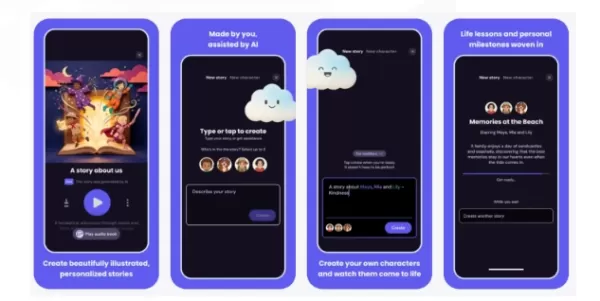 Meta Tests AI Bedtime Story App StoryKit to Solve Parents’ Storytelling Challenges
Designed to support busy parents, Meta is testing StoryKit, an AI-powered app that generates personalized bedtime stories for kids, complete with custom characters, scenes, and music.Parents simply upload photos of their child’s favorite toys to crea
Meta Tests AI Bedtime Story App StoryKit to Solve Parents’ Storytelling Challenges
Designed to support busy parents, Meta is testing StoryKit, an AI-powered app that generates personalized bedtime stories for kids, complete with custom characters, scenes, and music.Parents simply upload photos of their child’s favorite toys to crea

2026 Latest Best ChatGPT debugging tools for Python errors, API logs, and stack trace triage are here on XIX.AI. This curated list of top-rated solutions offers a free vs paid comparison, real-world tests, and detailed rankings to help you find the most powerful tool that can significantly boost your productivity and help you solve complex technical issues faster. Explore now to discover your perfect solution!
9 tools
xix.ai

2026 Latest Best Top-Rated AI Voiceover Tools for Product Demo Videos are here on XIX.AI! This curated list features powerful, game-changing options that help you create professional-quality audio content fast, boosting your demo efficiency significantly. We conduct real-world tests and provide a free vs paid comparison along with weekly updated rankings to help you find the perfect fit. Explore now to Unlock your AI edge!
10 tools
xix.ai

2026 Latest Best AI Business Plan Tools for Startup Validation! XIX.AI has curated a top-rated list of powerful game-changing tools that go through real-world tests to deliver accurate results. You’ll find a free vs paid comparison, detailed rankings, and easy-to-understand insights to help you choose the perfect solution and boost your startup’s success rate. Explore now to Unlock your AI edge!
9 tools
xix.ai

2026 Latest Best AI Chat Apps for Roleplay and Conversation Practice! XIX.AI curates a top-rated list of powerful must-try tools that go through rigorous real-world tests to deliver exceptional results. You’ll find detailed free vs paid comparison, comprehensive rankings, and insights into how these apps can boost your language skills and communication confidence effectively. Explore now to discover your perfect tool for practice!
10 tools
xix.ai

2026 Latest Best Top-rated AI Wireframe Tools for Product Teams! This curated list showcases powerful, game-changing solutions that significantly boost productivity through real-world tests and rigorous rankings. It includes a detailed free vs paid comparison to help you find the perfect fit. XIX.AI provides expert insights to guide your decision. Explore now to Discover your perfect tool and Unlock your AI edge in product development!
8 tools
xix.ai
2026 Latest Best Top-Rated AI DevOps Tools for Deployment Monitoring are featured here in our carefully curated list. These powerful tools help teams boost productivity significantly through real-world tests and rigorous rankings. Get a free vs paid comparison to find the perfect option that suits your needs. Explore now to unlock your AI edge!
11 tools
xix.ai

Finally, AI that understands my bank statements! 🏦 OpenAI is really pushing boundaries here. I've been waiting for tools that can actually help with mortgage planning instead of just writing bad poetry. This feels like a game-changer for personal finance management, though I'm slightly worried about data privacy. Still, if it can analyze bills accurately, I'm all in. Let's see how it handles my chaotic spending habits! 😅
Finally! ChatGPT moving into finance? 😅 I'd be nervous having an AI analyze my bills—what if it 'hallucinates' a mortgage payment? Still, 12,000 institutions is wild. Hope OpenAI trained it on more than just generic tips, otherwise my bank's chatbot might still be smarter. 🤷












