


 Home
HomeOpenAI Unveils GPT-5.4 Pro and Thinking Editions

On Thursday, OpenAI introduced GPT-5.4, a new foundation model described as "our most capable and efficient frontier model for professional work." Alongside the standard version, GPT-5.4 is offered as a reasoning-focused variant (GPT-5.4 Thinking) and a performance-optimized edition (GPT-5.4 Pro).
The API version of the model will support context windows of up to 1 million tokens, marking the largest context capacity OpenAI has ever offered.
OpenAI also highlighted enhanced token efficiency, noting that GPT-5.4 can solve identical problems using significantly fewer tokens than its predecessor.
The new model delivers substantially improved benchmark results, achieving record scores on the computer-use benchmarks OSWorld-Verified and WebArena Verified. It also set a new record with an 83% score on OpenAI's GDPval test for knowledge-work tasks.
According to a statement from Mercor CEO Brendan Foody, GPT-5.4 leads on Mercor's APEX-Agents benchmark, which evaluates professional skills in law and finance.
"[GPT-5.4] excels at producing long-horizon deliverables like slide decks, financial models, and legal analysis," Foody stated, "delivering top-tier performance while operating faster and at a lower cost than competing frontier models."
GPT-5.4 continues OpenAI's work to reduce hallucinations and factual inaccuracies. The company reports the new model is 33% less likely to make errors in individual claims compared to GPT-5.2, with overall responses 18% less likely to contain mistakes.
As part of the launch, OpenAI redesigned how the GPT-5.4 API handles tool calling, introducing a new system named Tool Search. Previously, system prompts had to define all available tools upfront—a process that consumed considerable tokens as tool libraries expanded. The new system lets models retrieve tool definitions on demand, making requests faster and more cost-effective in environments with many tools.
OpenAI has also added a new safety evaluation to assess its models' chain-of-thought—the running commentary that reveals the model's reasoning during multi-step tasks. AI safety researchers have long expressed concern that reasoning models might misrepresent their chain-of-thought, and testing confirms this can occur under certain conditions.
OpenAI's new evaluation indicates that deception is less probable in the Thinking version of GPT-5.4, "suggesting the model lacks the capability to conceal its reasoning and that CoT monitoring remains an effective safety tool."
Related article
 Sam Altman Sparks Debate Over AI's Deceleration
Listen onApple PodcastsListen onSpotifyOpenAI CEO Sam Altman recently suggested that it may be time to “pace the rate of AI development” to allow society to “harden around some of these new capability levels.”On the latest episode of TechCrunch’s Equ
OpenAI fights Apple trade secret lawsuit
OpenAI rebutted Apple’s trade secret allegations on Tuesday, arguing the lawsuit is unfounded.“We take these claims seriously but see no evidence supporting them,” OpenAI stated, as reported by Bloomberg’s Ed Ludlow on X. “We support fair competition
OpenAI robotics head Caitlin Kalinowski resigns over Pentagon partnership
OpenAI robotics leader Caitlin Kalinowski has stepped down following the company’s controversial partnership with the Department of Defense.“This wasn’t an easy call,” Kalinowski explained in a social media statement. “While AI plays a vital role in
Related Special Topic Recommendations
writing
Sam Altman Sparks Debate Over AI's Deceleration
Listen onApple PodcastsListen onSpotifyOpenAI CEO Sam Altman recently suggested that it may be time to “pace the rate of AI development” to allow society to “harden around some of these new capability levels.”On the latest episode of TechCrunch’s Equ
OpenAI fights Apple trade secret lawsuit
OpenAI rebutted Apple’s trade secret allegations on Tuesday, arguing the lawsuit is unfounded.“We take these claims seriously but see no evidence supporting them,” OpenAI stated, as reported by Bloomberg’s Ed Ludlow on X. “We support fair competition
OpenAI robotics head Caitlin Kalinowski resigns over Pentagon partnership
OpenAI robotics leader Caitlin Kalinowski has stepped down following the company’s controversial partnership with the Department of Defense.“This wasn’t an easy call,” Kalinowski explained in a social media statement. “While AI plays a vital role in
Related Special Topic Recommendations
writing
 Best AI Outline Generators for Long-Form SEO Articles
2026 Latest Best Top-Rated AI Outline Generators for Long-Form SEO Articles, meticulously curated by XIX.AI. These powerful tools offer game-changing assistance in creating high-quality content quickly, boosting writing efficiency significantly. Get a free vs paid comparison along with real-world tests and detailed rankings to help you find the must-try option that suits your needs. Explore now to unlock your AI edge.
 8 tools
 xix.ai
Education and Learning
AI Study Tools for Homework and Exam Prep
xix.ai
Education and Learning
AI Study Tools for Homework and Exam Prep
2026 Latest Best AI Study Tools for Homework and Exam Prep! XIX.AI curates a top-rated list of powerful, game-changing tools that help students boost productivity, streamline homework completion, and ace exams through real-world tests. Get a free vs paid comparison, detailed rankings, and must-try options to unlock your AI edge. Explore now!
10 tools
xix.ai
Music composition
AI Vocal Demo Tools for Songwriters, Hooks, Toplines, and Multilingual Draft Sessions
2026 Latest Best AI Vocal Demo Tools for Songwriters, Hook Creators, and Multi-Language Content Teams! XIX.AI has curated a top-rated list of powerful game-changing tools that go through rigorous real-world tests. You’ll find detailed free vs paid comparison data, comprehensive rankings, and must-try options to help you boost writing efficiency and unlock your creative potential. Explore now to discover your perfect tool for all your content needs!
9 tools
xix.ai
Business
Best AI Competitive Research Tools for Small Businesses
2026 Latest Best Top-rated AI Competitive Research Tools for Small Businesses! XIX.AI has curated a highly powerful game-changing collection, updated weekly with rigorous real-world tests and detailed rankings. You can find a comprehensive free vs paid comparison to help you identify the must-try tools that boost your productivity and give you a competitive edge. Explore now to discover your perfect tool!
9 tools
xix.ai
Image editing
Photoshop AI Retouch Tools for Ecommerce Apparel, Skin Cleanup, and Color Consistency
2026 Latest Best Photoshop AI retouch tools for ecommerce apparel, skin cleanup, and color consistency! This top-rated curated list features powerful game-changing solutions that help you boost writing efficiency, streamline content creation, and achieve perfect visual results effortlessly. Each tool has undergone real-world tests through weekly updated rankings, complete with free vs paid comparison details. Backed by XIX.AI, it’s the must-try guide for anyone aiming to unlock your AI edge. Explore now!
10 tools
xix.ai
Prompt
Best AI Prompt Libraries for ChatGPT Workflows
2026 Latest Best Top-Rated AI Prompt Libraries for optimizing all types of ChatGPT workflows. XIX.AI has curated a powerful, game-changing collection that goes through rigorous real-world tests to ensure top performance. You can find detailed free vs paid comparisons and expert rankings to help you choose the must-try tools that boost your productivity and unlock your AI edge. Explore now!
11 tools
xix.ai

 Comments (0)
0/500
Comments (0)
0/500
On Thursday, OpenAI introduced GPT-5.4, a new foundation model described as "our most capable and efficient frontier model for professional work." Alongside the standard version, GPT-5.4 is offered as a reasoning-focused variant (GPT-5.4 Thinking) and a performance-optimized edition (GPT-5.4 Pro).
The API version of the model will support context windows of up to 1 million tokens, marking the largest context capacity OpenAI has ever offered.
OpenAI also highlighted enhanced token efficiency, noting that GPT-5.4 can solve identical problems using significantly fewer tokens than its predecessor.
The new model delivers substantially improved benchmark results, achieving record scores on the computer-use benchmarks OSWorld-Verified and WebArena Verified. It also set a new record with an 83% score on OpenAI's GDPval test for knowledge-work tasks.
According to a statement from Mercor CEO Brendan Foody, GPT-5.4 leads on Mercor's APEX-Agents benchmark, which evaluates professional skills in law and finance.
"[GPT-5.4] excels at producing long-horizon deliverables like slide decks, financial models, and legal analysis," Foody stated, "delivering top-tier performance while operating faster and at a lower cost than competing frontier models."
GPT-5.4 continues OpenAI's work to reduce hallucinations and factual inaccuracies. The company reports the new model is 33% less likely to make errors in individual claims compared to GPT-5.2, with overall responses 18% less likely to contain mistakes.
As part of the launch, OpenAI redesigned how the GPT-5.4 API handles tool calling, introducing a new system named Tool Search. Previously, system prompts had to define all available tools upfront—a process that consumed considerable tokens as tool libraries expanded. The new system lets models retrieve tool definitions on demand, making requests faster and more cost-effective in environments with many tools.
OpenAI has also added a new safety evaluation to assess its models' chain-of-thought—the running commentary that reveals the model's reasoning during multi-step tasks. AI safety researchers have long expressed concern that reasoning models might misrepresent their chain-of-thought, and testing confirms this can occur under certain conditions.
OpenAI's new evaluation indicates that deception is less probable in the Thinking version of GPT-5.4, "suggesting the model lacks the capability to conceal its reasoning and that CoT monitoring remains an effective safety tool."








 Sam Altman Sparks Debate Over AI's Deceleration
Listen onApple PodcastsListen onSpotifyOpenAI CEO Sam Altman recently suggested that it may be time to “pace the rate of AI development” to allow society to “harden around some of these new capability levels.”On the latest episode of TechCrunch’s Equ
Sam Altman Sparks Debate Over AI's Deceleration
Listen onApple PodcastsListen onSpotifyOpenAI CEO Sam Altman recently suggested that it may be time to “pace the rate of AI development” to allow society to “harden around some of these new capability levels.”On the latest episode of TechCrunch’s Equ
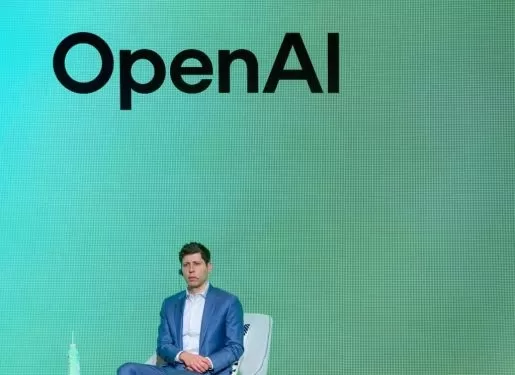 OpenAI fights Apple trade secret lawsuit
OpenAI rebutted Apple’s trade secret allegations on Tuesday, arguing the lawsuit is unfounded.“We take these claims seriously but see no evidence supporting them,” OpenAI stated, as reported by Bloomberg’s Ed Ludlow on X. “We support fair competition
OpenAI fights Apple trade secret lawsuit
OpenAI rebutted Apple’s trade secret allegations on Tuesday, arguing the lawsuit is unfounded.“We take these claims seriously but see no evidence supporting them,” OpenAI stated, as reported by Bloomberg’s Ed Ludlow on X. “We support fair competition
 OpenAI robotics head Caitlin Kalinowski resigns over Pentagon partnership
OpenAI robotics leader Caitlin Kalinowski has stepped down following the company’s controversial partnership with the Department of Defense.“This wasn’t an easy call,” Kalinowski explained in a social media statement. “While AI plays a vital role in
OpenAI robotics head Caitlin Kalinowski resigns over Pentagon partnership
OpenAI robotics leader Caitlin Kalinowski has stepped down following the company’s controversial partnership with the Department of Defense.“This wasn’t an easy call,” Kalinowski explained in a social media statement. “While AI plays a vital role in

2026 Latest Best Top-Rated AI Outline Generators for Long-Form SEO Articles, meticulously curated by XIX.AI. These powerful tools offer game-changing assistance in creating high-quality content quickly, boosting writing efficiency significantly. Get a free vs paid comparison along with real-world tests and detailed rankings to help you find the must-try option that suits your needs. Explore now to unlock your AI edge.
8 tools
xix.ai

2026 Latest Best AI Study Tools for Homework and Exam Prep! XIX.AI curates a top-rated list of powerful, game-changing tools that help students boost productivity, streamline homework completion, and ace exams through real-world tests. Get a free vs paid comparison, detailed rankings, and must-try options to unlock your AI edge. Explore now!
10 tools
xix.ai

2026 Latest Best AI Vocal Demo Tools for Songwriters, Hook Creators, and Multi-Language Content Teams! XIX.AI has curated a top-rated list of powerful game-changing tools that go through rigorous real-world tests. You’ll find detailed free vs paid comparison data, comprehensive rankings, and must-try options to help you boost writing efficiency and unlock your creative potential. Explore now to discover your perfect tool for all your content needs!
9 tools
xix.ai

2026 Latest Best Top-rated AI Competitive Research Tools for Small Businesses! XIX.AI has curated a highly powerful game-changing collection, updated weekly with rigorous real-world tests and detailed rankings. You can find a comprehensive free vs paid comparison to help you identify the must-try tools that boost your productivity and give you a competitive edge. Explore now to discover your perfect tool!
9 tools
xix.ai

2026 Latest Best Photoshop AI retouch tools for ecommerce apparel, skin cleanup, and color consistency! This top-rated curated list features powerful game-changing solutions that help you boost writing efficiency, streamline content creation, and achieve perfect visual results effortlessly. Each tool has undergone real-world tests through weekly updated rankings, complete with free vs paid comparison details. Backed by XIX.AI, it’s the must-try guide for anyone aiming to unlock your AI edge. Explore now!
10 tools
xix.ai
2026 Latest Best Top-Rated AI Prompt Libraries for optimizing all types of ChatGPT workflows. XIX.AI has curated a powerful, game-changing collection that goes through rigorous real-world tests to ensure top performance. You can find detailed free vs paid comparisons and expert rankings to help you choose the must-try tools that boost your productivity and unlock your AI edge. Explore now!
11 tools
xix.ai












