


 Home
Home
OpenAI Unveils Agent Plugins Standard on GPT-5 Anniversary to End Fragmentation and Define Cross-Client Interoperability
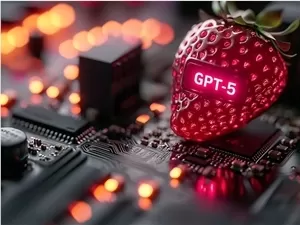
Marking the first anniversary of the GPT-5 series release, OpenAI has introduced Agent Plugins, a new standard for AI agents. Designed as an open, vendor-neutral specification, this initiative packages reusable components into portable plugins to unify how AI agent capabilities are expanded. The official release of version 1.0.0 defines a shared format for Agent Skills and MCP Servers, enabling clients to discover and load components using consistent rules without requiring platform-specific adaptations.
OpenAI highlights a critical issue in the current AI agent ecosystem: fragmented plugin formats across different clients. Even when plugins share underlying components, developers frequently must rearrange or duplicate code for various platforms. A plugin built for one client often requires significant adaptation to function on another, resulting in low development efficiency and substantial redundancy. Agent Plugins address this by establishing a lightweight interoperability layer for transferable components. While shared components follow a predictable directory structure, client-specific features like distribution, installation, permissions, and user experience remain under individual client control.
Simplified development through a unified directory structure
The specification mandates that each Agent Plugin directory includes a manifest file, plugin.json, which identifies the plugin and its target version. The skills directory houses components defined by the Agent Skills specification, while mcp.json describes MCP servers, supporting types such as stdio, Streamable HTTP, or traditional HTTP+SSE. Additionally, a client-specific hooks directory allows for customized extensions. This structured approach enables developers to write components once and have them discovered and loaded by all compatible clients, significantly reducing cross-platform development and maintenance costs.
The introduction of Agent Plugins signals a shift in the AI agent ecosystem from isolated efforts to standardized collaboration. As more manufacturers adopt the MCP protocol, tool calling and capability sharing between agents have become industry consensus, making the unification of plugin formats a natural progression. OpenAI’s decision to release this specification on the GPT-5 anniversary not only acknowledges the rapid growth of the agent ecosystem over the past year but also positions the company as a standard-setter in the next phase of competition. Widespread adoption of this specification could trigger a boom in the AI agent plugin ecosystem, akin to the expansion of browser extension stores, benefiting both developers and businesses.
Related article
 Suno to Watermark Songs Amid Legal Battles
Suno, the platform enabling users to generate AI-created music, has unveiled new features to label platform-produced tracks, restrict downloads, and update community standards to curb unauthorized replicas. These updates arrive as Suno confronts mult
Musk Admits Grok Build Leaked User Code, Promises to Erase All Historical Data
Elon Musk directly addressed the privacy controversy surrounding Grok Build, beginning with a simple "True" to confirm the incident's validity. He pledged that all user data previously uploaded to SpaceXAI would be permanently erased, stating, "not a
U.S. Stocks Hit Historic Milestone as AI and Aerospace Giants Prepare for Trillion-Dollar Debut
Elon Musk, Sam Altman, and Dario Amodei, three titans of the technology sector, are advancing toward initial public offerings for their respective ventures. With SpaceX, OpenAI, and Anthropic—three industry behemoths nearing trillion-dollar valuation
Related Special Topic Recommendations
SEO
Suno to Watermark Songs Amid Legal Battles
Suno, the platform enabling users to generate AI-created music, has unveiled new features to label platform-produced tracks, restrict downloads, and update community standards to curb unauthorized replicas. These updates arrive as Suno confronts mult
Musk Admits Grok Build Leaked User Code, Promises to Erase All Historical Data
Elon Musk directly addressed the privacy controversy surrounding Grok Build, beginning with a simple "True" to confirm the incident's validity. He pledged that all user data previously uploaded to SpaceXAI would be permanently erased, stating, "not a
U.S. Stocks Hit Historic Milestone as AI and Aerospace Giants Prepare for Trillion-Dollar Debut
Elon Musk, Sam Altman, and Dario Amodei, three titans of the technology sector, are advancing toward initial public offerings for their respective ventures. With SpaceX, OpenAI, and Anthropic—three industry behemoths nearing trillion-dollar valuation
Related Special Topic Recommendations
SEO
 Best AI SERP Analysis Tools for Search Strategy
2026 Latest Best Top-rated AI SERP Analysis Tools for Search Strategy are curated by XIX.AI through rigorous real-world tests and weekly updated rankings. These powerful tools help you unlock hidden optimization opportunities, boost content performance, and gain a competitive edge in search. Discover your perfect tool to elevate your search strategy today. Explore now!
 13 tools
 xix.ai
Data Analysis
Best AI Anomaly Detection Tools for KPI Monitoring across SaaS and Ecommerce Teams
xix.ai
Data Analysis
Best AI Anomaly Detection Tools for KPI Monitoring across SaaS and Ecommerce Teams
2026 Latest Best Top-rated AI Anomaly Detection Tools for KPI Monitoring in SaaS and Ecommerce teams! XIX.AI has curated a powerful, game-changing collection based on rigorous real-world tests and weekly updated rankings. You’ll find detailed free vs paid comparison insights to help you identify the must-try solution that boosts productivity and unlocks your AI edge. Explore now!
10 tools
xix.ai
writing
Best AI Outline Generators for Long-Form SEO Articles
2026 Latest Best Top-Rated AI Outline Generators for Long-Form SEO Articles, meticulously curated by XIX.AI. These powerful tools offer game-changing assistance in creating high-quality content quickly, boosting writing efficiency significantly. Get a free vs paid comparison along with real-world tests and detailed rankings to help you find the must-try option that suits your needs. Explore now to unlock your AI edge.
8 tools
xix.ai
Education and Learning
AI Study Tools for Homework and Exam Prep
2026 Latest Best AI Study Tools for Homework and Exam Prep! XIX.AI curates a top-rated list of powerful, game-changing tools that help students boost productivity, streamline homework completion, and ace exams through real-world tests. Get a free vs paid comparison, detailed rankings, and must-try options to unlock your AI edge. Explore now!
10 tools
xix.ai
Music composition
AI Vocal Demo Tools for Songwriters, Hooks, Toplines, and Multilingual Draft Sessions
2026 Latest Best AI Vocal Demo Tools for Songwriters, Hook Creators, and Multi-Language Content Teams! XIX.AI has curated a top-rated list of powerful game-changing tools that go through rigorous real-world tests. You’ll find detailed free vs paid comparison data, comprehensive rankings, and must-try options to help you boost writing efficiency and unlock your creative potential. Explore now to discover your perfect tool for all your content needs!
9 tools
xix.ai
Business
Best AI Competitive Research Tools for Small Businesses
2026 Latest Best Top-rated AI Competitive Research Tools for Small Businesses! XIX.AI has curated a highly powerful game-changing collection, updated weekly with rigorous real-world tests and detailed rankings. You can find a comprehensive free vs paid comparison to help you identify the must-try tools that boost your productivity and give you a competitive edge. Explore now to discover your perfect tool!
9 tools
xix.ai

 Comments (0)
0/500
Comments (0)
0/500
Marking the first anniversary of the GPT-5 series release, OpenAI has introduced Agent Plugins, a new standard for AI agents. Designed as an open, vendor-neutral specification, this initiative packages reusable components into portable plugins to unify how AI agent capabilities are expanded. The official release of version 1.0.0 defines a shared format for Agent Skills and MCP Servers, enabling clients to discover and load components using consistent rules without requiring platform-specific adaptations.
OpenAI highlights a critical issue in the current AI agent ecosystem: fragmented plugin formats across different clients. Even when plugins share underlying components, developers frequently must rearrange or duplicate code for various platforms. A plugin built for one client often requires significant adaptation to function on another, resulting in low development efficiency and substantial redundancy. Agent Plugins address this by establishing a lightweight interoperability layer for transferable components. While shared components follow a predictable directory structure, client-specific features like distribution, installation, permissions, and user experience remain under individual client control.
Simplified development through a unified directory structure
The specification mandates that each Agent Plugin directory includes a manifest file, plugin.json, which identifies the plugin and its target version. The skills directory houses components defined by the Agent Skills specification, while mcp.json describes MCP servers, supporting types such as stdio, Streamable HTTP, or traditional HTTP+SSE. Additionally, a client-specific hooks directory allows for customized extensions. This structured approach enables developers to write components once and have them discovered and loaded by all compatible clients, significantly reducing cross-platform development and maintenance costs.
The introduction of Agent Plugins signals a shift in the AI agent ecosystem from isolated efforts to standardized collaboration. As more manufacturers adopt the MCP protocol, tool calling and capability sharing between agents have become industry consensus, making the unification of plugin formats a natural progression. OpenAI’s decision to release this specification on the GPT-5 anniversary not only acknowledges the rapid growth of the agent ecosystem over the past year but also positions the company as a standard-setter in the next phase of competition. Widespread adoption of this specification could trigger a boom in the AI agent plugin ecosystem, akin to the expansion of browser extension stores, benefiting both developers and businesses.








 Suno to Watermark Songs Amid Legal Battles
Suno, the platform enabling users to generate AI-created music, has unveiled new features to label platform-produced tracks, restrict downloads, and update community standards to curb unauthorized replicas. These updates arrive as Suno confronts mult
Suno to Watermark Songs Amid Legal Battles
Suno, the platform enabling users to generate AI-created music, has unveiled new features to label platform-produced tracks, restrict downloads, and update community standards to curb unauthorized replicas. These updates arrive as Suno confronts mult
 Musk Admits Grok Build Leaked User Code, Promises to Erase All Historical Data
Elon Musk directly addressed the privacy controversy surrounding Grok Build, beginning with a simple "True" to confirm the incident's validity. He pledged that all user data previously uploaded to SpaceXAI would be permanently erased, stating, "not a
Musk Admits Grok Build Leaked User Code, Promises to Erase All Historical Data
Elon Musk directly addressed the privacy controversy surrounding Grok Build, beginning with a simple "True" to confirm the incident's validity. He pledged that all user data previously uploaded to SpaceXAI would be permanently erased, stating, "not a
 U.S. Stocks Hit Historic Milestone as AI and Aerospace Giants Prepare for Trillion-Dollar Debut
Elon Musk, Sam Altman, and Dario Amodei, three titans of the technology sector, are advancing toward initial public offerings for their respective ventures. With SpaceX, OpenAI, and Anthropic—three industry behemoths nearing trillion-dollar valuation
U.S. Stocks Hit Historic Milestone as AI and Aerospace Giants Prepare for Trillion-Dollar Debut
Elon Musk, Sam Altman, and Dario Amodei, three titans of the technology sector, are advancing toward initial public offerings for their respective ventures. With SpaceX, OpenAI, and Anthropic—three industry behemoths nearing trillion-dollar valuation

2026 Latest Best Top-rated AI SERP Analysis Tools for Search Strategy are curated by XIX.AI through rigorous real-world tests and weekly updated rankings. These powerful tools help you unlock hidden optimization opportunities, boost content performance, and gain a competitive edge in search. Discover your perfect tool to elevate your search strategy today. Explore now!
13 tools
xix.ai
2026 Latest Best Top-rated AI Anomaly Detection Tools for KPI Monitoring in SaaS and Ecommerce teams! XIX.AI has curated a powerful, game-changing collection based on rigorous real-world tests and weekly updated rankings. You’ll find detailed free vs paid comparison insights to help you identify the must-try solution that boosts productivity and unlocks your AI edge. Explore now!
10 tools
xix.ai

2026 Latest Best Top-Rated AI Outline Generators for Long-Form SEO Articles, meticulously curated by XIX.AI. These powerful tools offer game-changing assistance in creating high-quality content quickly, boosting writing efficiency significantly. Get a free vs paid comparison along with real-world tests and detailed rankings to help you find the must-try option that suits your needs. Explore now to unlock your AI edge.
8 tools
xix.ai

2026 Latest Best AI Study Tools for Homework and Exam Prep! XIX.AI curates a top-rated list of powerful, game-changing tools that help students boost productivity, streamline homework completion, and ace exams through real-world tests. Get a free vs paid comparison, detailed rankings, and must-try options to unlock your AI edge. Explore now!
10 tools
xix.ai

2026 Latest Best AI Vocal Demo Tools for Songwriters, Hook Creators, and Multi-Language Content Teams! XIX.AI has curated a top-rated list of powerful game-changing tools that go through rigorous real-world tests. You’ll find detailed free vs paid comparison data, comprehensive rankings, and must-try options to help you boost writing efficiency and unlock your creative potential. Explore now to discover your perfect tool for all your content needs!
9 tools
xix.ai

2026 Latest Best Top-rated AI Competitive Research Tools for Small Businesses! XIX.AI has curated a highly powerful game-changing collection, updated weekly with rigorous real-world tests and detailed rankings. You can find a comprehensive free vs paid comparison to help you identify the must-try tools that boost your productivity and give you a competitive edge. Explore now to discover your perfect tool!
9 tools
xix.ai












