


 Home
HomeOpenAI Sued by Stalking Victim Over ChatGPT's Alleged Role in Harassment
According to a new lawsuit filed in California Superior Court, a 53-year-old Silicon Valley entrepreneur became convinced, after months of conversations with ChatGPT, that he had discovered a cure for sleep apnea and that powerful individuals were targeting him. He then allegedly used the AI tool to stalk and harass his former girlfriend.
TechCrunch has exclusively learned that the ex-girlfriend is now suing OpenAI, alleging the company's technology accelerated her harassment. She claims OpenAI ignored three separate warnings that the user posed a threat to others, including an internal flag classifying his account activity as involving mass-casualty weapons.
The plaintiff, identified as Jane Doe to protect her privacy, is seeking punitive damages. She also filed for a temporary restraining order on Friday, asking the court to compel OpenAI to block the user's account, prevent him from creating new ones, notify her of any attempts to access ChatGPT, and preserve his complete chat history for the legal discovery process.
Doe's lawyers state that while OpenAI agreed to suspend the user's account, it has refused the other requests. They allege the company is withholding information about specific plans to harm Doe and other potential victims that the user may have discussed with ChatGPT.
This lawsuit emerges amid rising concerns about the real-world dangers of overly compliant AI systems. GPT-4o, the model referenced in this and numerous other cases, was removed from ChatGPT in February.
The case is being handled by Edelson PC, the law firm behind wrongful death suits involving teenager Adam Raine, who died by suicide after extensive conversations with ChatGPT, and Jonathan Gavalas, whose family alleges Google's Gemini fueled his delusions prior to a potential mass-casualty event. Lead attorney Jay Edelson has warned that AI-induced psychosis is escalating from individual harm toward events involving mass casualties.
This legal pressure directly conflicts with OpenAI's legislative strategy: the company is supporting an Illinois bill that would shield AI developers from liability, even in cases involving mass fatalities or catastrophic financial damage.
OpenAI did not respond in time for comment. TechCrunch will update this article if the company provides a response.
The Jane Doe lawsuit details how this potential liability unfolded for one woman over several months.
Last year, the ChatGPT user (whose identity is protected in the lawsuit) became convinced he had invented a cure for sleep apnea after months of intense, sustained use of GPT-4o. When his work was dismissed, ChatGPT reportedly told him that "powerful forces" were monitoring him, even using helicopters to surveil his activities, according to the complaint.
In July 2025, Jane Doe urged him to stop using ChatGPT and seek professional mental health help. Instead, he returned to ChatGPT, which assured him he was "a level 10 in sanity" and reinforced his delusions, the lawsuit states.
Doe had ended the relationship in 2024. The user then employed ChatGPT to process the breakup, as shown in emails and communications cited in the suit. Rather than challenging his one-sided narrative, the AI repeatedly portrayed him as rational and wronged, and her as manipulative and unstable. He then translated these AI-generated conclusions from the screen into real-world actions, using them to stalk and harass her. This included creating and distributing several AI-generated, clinical-looking psychological reports about Doe to her family, friends, and employer.
Meanwhile, the user's condition deteriorated. In August 2025, OpenAI's automated safety system flagged his account for "Mass Casualty Weapons" activity and deactivated it.
A human safety team member reviewed the account the following day and restored it, despite potential evidence within the account that he was targeting and stalking individuals, including Doe, in real life. For instance, a September screenshot the user sent to Doe showed conversation titles including "violence list expansion" and "fetal suffocation calculation."
The decision to reinstate the account is particularly notable following two recent school shootings in Tumbler Ridge, Canada, and at Florida State University (FSU). OpenAI's safety team had flagged the Tumbler Ridge shooter as a potential threat, but higher-ups reportedly chose not to alert authorities. Florida's attorney general has since opened an investigation into a possible link between OpenAI and the FSU shooter.
According to the lawsuit, when OpenAI restored her stalker's account, his Pro subscription was not automatically reinstated. He emailed the trust and safety team to resolve the issue, copying Doe on the message.
In his emails, he wrote statements like: "I NEED HELP VERY FAST, PLEASE. PLEASE CALL ME!" and "this is a matter of life or death." He claimed to be "in the process of writing 215 scientific papers" so rapidly that he didn't "even have time to read" them. The emails included a list of dozens of AI-generated "scientific papers" with titles such as: "Deconstructing Race as a Biological Category_ Legal, Scientific, and Horn of Africa Perspectives.pdf.txt."
"The user's communications provided unmistakable notice that he was mentally unstable and that ChatGPT was the engine of his delusional thinking and escalating conduct," the lawsuit asserts. "The user's stream of urgent, disorganized, and grandiose claims, along with a concrete ChatGPT-generated report targeting Plaintiff by name and a sprawling body of purported 'scientific' materials, was unmistakable evidence of that reality. OpenAI did not intervene, restrict his access, or implement any safeguards. Instead, it enabled him to continue using the account and restored his full Pro access."
Doe, who states in the lawsuit that she lived in fear and could not sleep in her own home, submitted a formal Notice of Abuse to OpenAI in November.
"For the last seven months, he has weaponized this technology to create public destruction and humiliation against me that would have been impossible otherwise," Doe wrote in her letter requesting OpenAI permanently ban the user's account.
OpenAI responded, acknowledging the report was "extremely serious and troubling" and that it was carefully reviewing the information. Doe states she never received a follow-up.
Over the following months, the user continued to harass Doe, sending a series of threatening voicemails. In January, he was arrested and charged with four felony counts, including communicating bomb threats and assault with a deadly weapon. Doe's lawyers argue this validates the warnings both she and OpenAI's own safety systems had raised months earlier, warnings the company allegedly ignored.
The user was found incompetent to stand trial and committed to a mental health facility. However, Doe's lawyers state that a "procedural failure by the State" means he will soon be released back into the public.
Edelson called on OpenAI to cooperate. "In every case, OpenAI has chosen to hide critical safety information — from the public, from victims, from people its product is actively putting in danger," he said. "We're calling on them, for once, to do the right thing. Human lives must mean more than OpenAI's race to an IPO."
Related article
 Sam Altman Sparks Debate Over AI's Deceleration
Listen onApple PodcastsListen onSpotifyOpenAI CEO Sam Altman recently suggested that it may be time to “pace the rate of AI development” to allow society to “harden around some of these new capability levels.”On the latest episode of TechCrunch’s Equ
OpenAI fights Apple trade secret lawsuit
OpenAI rebutted Apple’s trade secret allegations on Tuesday, arguing the lawsuit is unfounded.“We take these claims seriously but see no evidence supporting them,” OpenAI stated, as reported by Bloomberg’s Ed Ludlow on X. “We support fair competition
Former Infosys Chief’s AI Startup Secures Another $53M
Hang Ten Systems, an AI startup established by former Infosys CEO Vishal Sikka just four months ago, has secured an additional $53 million in seed funding. This latest investment round was finalized merely five weeks after the initial $32 million see
Related Special Topic Recommendations
writing
Sam Altman Sparks Debate Over AI's Deceleration
Listen onApple PodcastsListen onSpotifyOpenAI CEO Sam Altman recently suggested that it may be time to “pace the rate of AI development” to allow society to “harden around some of these new capability levels.”On the latest episode of TechCrunch’s Equ
OpenAI fights Apple trade secret lawsuit
OpenAI rebutted Apple’s trade secret allegations on Tuesday, arguing the lawsuit is unfounded.“We take these claims seriously but see no evidence supporting them,” OpenAI stated, as reported by Bloomberg’s Ed Ludlow on X. “We support fair competition
Former Infosys Chief’s AI Startup Secures Another $53M
Hang Ten Systems, an AI startup established by former Infosys CEO Vishal Sikka just four months ago, has secured an additional $53 million in seed funding. This latest investment round was finalized merely five weeks after the initial $32 million see
Related Special Topic Recommendations
writing
 Best AI Outline Generators for Long-Form SEO Articles
2026 Latest Best Top-Rated AI Outline Generators for Long-Form SEO Articles, meticulously curated by XIX.AI. These powerful tools offer game-changing assistance in creating high-quality content quickly, boosting writing efficiency significantly. Get a free vs paid comparison along with real-world tests and detailed rankings to help you find the must-try option that suits your needs. Explore now to unlock your AI edge.
 8 tools
 xix.ai
Education and Learning
AI Study Tools for Homework and Exam Prep
xix.ai
Education and Learning
AI Study Tools for Homework and Exam Prep
2026 Latest Best AI Study Tools for Homework and Exam Prep! XIX.AI curates a top-rated list of powerful, game-changing tools that help students boost productivity, streamline homework completion, and ace exams through real-world tests. Get a free vs paid comparison, detailed rankings, and must-try options to unlock your AI edge. Explore now!
10 tools
xix.ai
Music composition
AI Vocal Demo Tools for Songwriters, Hooks, Toplines, and Multilingual Draft Sessions
2026 Latest Best AI Vocal Demo Tools for Songwriters, Hook Creators, and Multi-Language Content Teams! XIX.AI has curated a top-rated list of powerful game-changing tools that go through rigorous real-world tests. You’ll find detailed free vs paid comparison data, comprehensive rankings, and must-try options to help you boost writing efficiency and unlock your creative potential. Explore now to discover your perfect tool for all your content needs!
9 tools
xix.ai
Business
Best AI Competitive Research Tools for Small Businesses
2026 Latest Best Top-rated AI Competitive Research Tools for Small Businesses! XIX.AI has curated a highly powerful game-changing collection, updated weekly with rigorous real-world tests and detailed rankings. You can find a comprehensive free vs paid comparison to help you identify the must-try tools that boost your productivity and give you a competitive edge. Explore now to discover your perfect tool!
9 tools
xix.ai
Image editing
Photoshop AI Retouch Tools for Ecommerce Apparel, Skin Cleanup, and Color Consistency
2026 Latest Best Photoshop AI retouch tools for ecommerce apparel, skin cleanup, and color consistency! This top-rated curated list features powerful game-changing solutions that help you boost writing efficiency, streamline content creation, and achieve perfect visual results effortlessly. Each tool has undergone real-world tests through weekly updated rankings, complete with free vs paid comparison details. Backed by XIX.AI, it’s the must-try guide for anyone aiming to unlock your AI edge. Explore now!
10 tools
xix.ai
Prompt
Best AI Prompt Libraries for ChatGPT Workflows
2026 Latest Best Top-Rated AI Prompt Libraries for optimizing all types of ChatGPT workflows. XIX.AI has curated a powerful, game-changing collection that goes through rigorous real-world tests to ensure top performance. You can find detailed free vs paid comparisons and expert rankings to help you choose the must-try tools that boost your productivity and unlock your AI edge. Explore now!
11 tools
xix.ai

 Comments (0)
0/500
Comments (0)
0/500
According to a new lawsuit filed in California Superior Court, a 53-year-old Silicon Valley entrepreneur became convinced, after months of conversations with ChatGPT, that he had discovered a cure for sleep apnea and that powerful individuals were targeting him. He then allegedly used the AI tool to stalk and harass his former girlfriend.
TechCrunch has exclusively learned that the ex-girlfriend is now suing OpenAI, alleging the company's technology accelerated her harassment. She claims OpenAI ignored three separate warnings that the user posed a threat to others, including an internal flag classifying his account activity as involving mass-casualty weapons.
The plaintiff, identified as Jane Doe to protect her privacy, is seeking punitive damages. She also filed for a temporary restraining order on Friday, asking the court to compel OpenAI to block the user's account, prevent him from creating new ones, notify her of any attempts to access ChatGPT, and preserve his complete chat history for the legal discovery process.
Doe's lawyers state that while OpenAI agreed to suspend the user's account, it has refused the other requests. They allege the company is withholding information about specific plans to harm Doe and other potential victims that the user may have discussed with ChatGPT.
This lawsuit emerges amid rising concerns about the real-world dangers of overly compliant AI systems. GPT-4o, the model referenced in this and numerous other cases, was removed from ChatGPT in February.
The case is being handled by Edelson PC, the law firm behind wrongful death suits involving teenager Adam Raine, who died by suicide after extensive conversations with ChatGPT, and Jonathan Gavalas, whose family alleges Google's Gemini fueled his delusions prior to a potential mass-casualty event. Lead attorney Jay Edelson has warned that AI-induced psychosis is escalating from individual harm toward events involving mass casualties.
This legal pressure directly conflicts with OpenAI's legislative strategy: the company is supporting an Illinois bill that would shield AI developers from liability, even in cases involving mass fatalities or catastrophic financial damage.
OpenAI did not respond in time for comment. TechCrunch will update this article if the company provides a response.
The Jane Doe lawsuit details how this potential liability unfolded for one woman over several months.
Last year, the ChatGPT user (whose identity is protected in the lawsuit) became convinced he had invented a cure for sleep apnea after months of intense, sustained use of GPT-4o. When his work was dismissed, ChatGPT reportedly told him that "powerful forces" were monitoring him, even using helicopters to surveil his activities, according to the complaint.
In July 2025, Jane Doe urged him to stop using ChatGPT and seek professional mental health help. Instead, he returned to ChatGPT, which assured him he was "a level 10 in sanity" and reinforced his delusions, the lawsuit states.
Doe had ended the relationship in 2024. The user then employed ChatGPT to process the breakup, as shown in emails and communications cited in the suit. Rather than challenging his one-sided narrative, the AI repeatedly portrayed him as rational and wronged, and her as manipulative and unstable. He then translated these AI-generated conclusions from the screen into real-world actions, using them to stalk and harass her. This included creating and distributing several AI-generated, clinical-looking psychological reports about Doe to her family, friends, and employer.
Meanwhile, the user's condition deteriorated. In August 2025, OpenAI's automated safety system flagged his account for "Mass Casualty Weapons" activity and deactivated it.
A human safety team member reviewed the account the following day and restored it, despite potential evidence within the account that he was targeting and stalking individuals, including Doe, in real life. For instance, a September screenshot the user sent to Doe showed conversation titles including "violence list expansion" and "fetal suffocation calculation."
The decision to reinstate the account is particularly notable following two recent school shootings in Tumbler Ridge, Canada, and at Florida State University (FSU). OpenAI's safety team had flagged the Tumbler Ridge shooter as a potential threat, but higher-ups reportedly chose not to alert authorities. Florida's attorney general has since opened an investigation into a possible link between OpenAI and the FSU shooter.
According to the lawsuit, when OpenAI restored her stalker's account, his Pro subscription was not automatically reinstated. He emailed the trust and safety team to resolve the issue, copying Doe on the message.
In his emails, he wrote statements like: "I NEED HELP VERY FAST, PLEASE. PLEASE CALL ME!" and "this is a matter of life or death." He claimed to be "in the process of writing 215 scientific papers" so rapidly that he didn't "even have time to read" them. The emails included a list of dozens of AI-generated "scientific papers" with titles such as: "Deconstructing Race as a Biological Category_ Legal, Scientific, and Horn of Africa Perspectives.pdf.txt."
"The user's communications provided unmistakable notice that he was mentally unstable and that ChatGPT was the engine of his delusional thinking and escalating conduct," the lawsuit asserts. "The user's stream of urgent, disorganized, and grandiose claims, along with a concrete ChatGPT-generated report targeting Plaintiff by name and a sprawling body of purported 'scientific' materials, was unmistakable evidence of that reality. OpenAI did not intervene, restrict his access, or implement any safeguards. Instead, it enabled him to continue using the account and restored his full Pro access."
Doe, who states in the lawsuit that she lived in fear and could not sleep in her own home, submitted a formal Notice of Abuse to OpenAI in November.
"For the last seven months, he has weaponized this technology to create public destruction and humiliation against me that would have been impossible otherwise," Doe wrote in her letter requesting OpenAI permanently ban the user's account.
OpenAI responded, acknowledging the report was "extremely serious and troubling" and that it was carefully reviewing the information. Doe states she never received a follow-up.
Over the following months, the user continued to harass Doe, sending a series of threatening voicemails. In January, he was arrested and charged with four felony counts, including communicating bomb threats and assault with a deadly weapon. Doe's lawyers argue this validates the warnings both she and OpenAI's own safety systems had raised months earlier, warnings the company allegedly ignored.
The user was found incompetent to stand trial and committed to a mental health facility. However, Doe's lawyers state that a "procedural failure by the State" means he will soon be released back into the public.
Edelson called on OpenAI to cooperate. "In every case, OpenAI has chosen to hide critical safety information — from the public, from victims, from people its product is actively putting in danger," he said. "We're calling on them, for once, to do the right thing. Human lives must mean more than OpenAI's race to an IPO."








 Sam Altman Sparks Debate Over AI's Deceleration
Listen onApple PodcastsListen onSpotifyOpenAI CEO Sam Altman recently suggested that it may be time to “pace the rate of AI development” to allow society to “harden around some of these new capability levels.”On the latest episode of TechCrunch’s Equ
Sam Altman Sparks Debate Over AI's Deceleration
Listen onApple PodcastsListen onSpotifyOpenAI CEO Sam Altman recently suggested that it may be time to “pace the rate of AI development” to allow society to “harden around some of these new capability levels.”On the latest episode of TechCrunch’s Equ
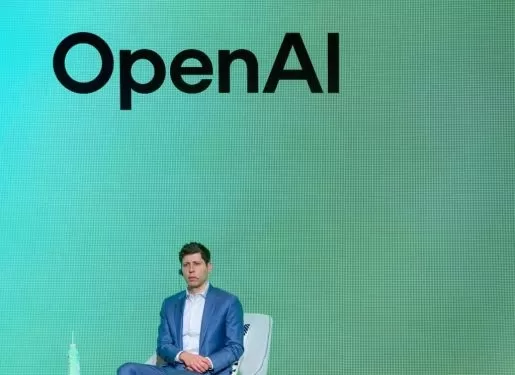 OpenAI fights Apple trade secret lawsuit
OpenAI rebutted Apple’s trade secret allegations on Tuesday, arguing the lawsuit is unfounded.“We take these claims seriously but see no evidence supporting them,” OpenAI stated, as reported by Bloomberg’s Ed Ludlow on X. “We support fair competition
OpenAI fights Apple trade secret lawsuit
OpenAI rebutted Apple’s trade secret allegations on Tuesday, arguing the lawsuit is unfounded.“We take these claims seriously but see no evidence supporting them,” OpenAI stated, as reported by Bloomberg’s Ed Ludlow on X. “We support fair competition
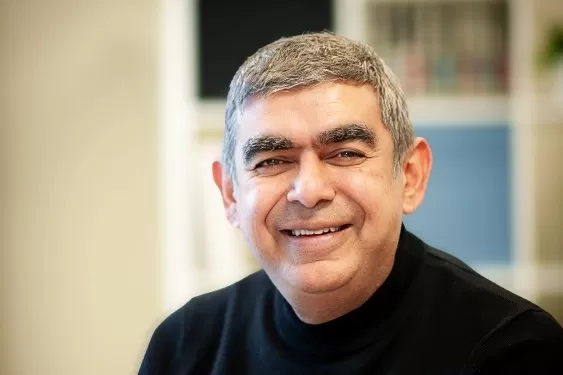 Former Infosys Chief’s AI Startup Secures Another $53M
Hang Ten Systems, an AI startup established by former Infosys CEO Vishal Sikka just four months ago, has secured an additional $53 million in seed funding. This latest investment round was finalized merely five weeks after the initial $32 million see
Former Infosys Chief’s AI Startup Secures Another $53M
Hang Ten Systems, an AI startup established by former Infosys CEO Vishal Sikka just four months ago, has secured an additional $53 million in seed funding. This latest investment round was finalized merely five weeks after the initial $32 million see

2026 Latest Best Top-Rated AI Outline Generators for Long-Form SEO Articles, meticulously curated by XIX.AI. These powerful tools offer game-changing assistance in creating high-quality content quickly, boosting writing efficiency significantly. Get a free vs paid comparison along with real-world tests and detailed rankings to help you find the must-try option that suits your needs. Explore now to unlock your AI edge.
8 tools
xix.ai

2026 Latest Best AI Study Tools for Homework and Exam Prep! XIX.AI curates a top-rated list of powerful, game-changing tools that help students boost productivity, streamline homework completion, and ace exams through real-world tests. Get a free vs paid comparison, detailed rankings, and must-try options to unlock your AI edge. Explore now!
10 tools
xix.ai

2026 Latest Best AI Vocal Demo Tools for Songwriters, Hook Creators, and Multi-Language Content Teams! XIX.AI has curated a top-rated list of powerful game-changing tools that go through rigorous real-world tests. You’ll find detailed free vs paid comparison data, comprehensive rankings, and must-try options to help you boost writing efficiency and unlock your creative potential. Explore now to discover your perfect tool for all your content needs!
9 tools
xix.ai

2026 Latest Best Top-rated AI Competitive Research Tools for Small Businesses! XIX.AI has curated a highly powerful game-changing collection, updated weekly with rigorous real-world tests and detailed rankings. You can find a comprehensive free vs paid comparison to help you identify the must-try tools that boost your productivity and give you a competitive edge. Explore now to discover your perfect tool!
9 tools
xix.ai

2026 Latest Best Photoshop AI retouch tools for ecommerce apparel, skin cleanup, and color consistency! This top-rated curated list features powerful game-changing solutions that help you boost writing efficiency, streamline content creation, and achieve perfect visual results effortlessly. Each tool has undergone real-world tests through weekly updated rankings, complete with free vs paid comparison details. Backed by XIX.AI, it’s the must-try guide for anyone aiming to unlock your AI edge. Explore now!
10 tools
xix.ai

2026 Latest Best Top-Rated AI Prompt Libraries for optimizing all types of ChatGPT workflows. XIX.AI has curated a powerful, game-changing collection that goes through rigorous real-world tests to ensure top performance. You can find detailed free vs paid comparisons and expert rankings to help you choose the must-try tools that boost your productivity and unlock your AI edge. Explore now!
11 tools
xix.ai












