


 Home
HomeOpenAI Debuts Open-Source Customer Service Framework, Expanding Enterprise Strategy
Editor’s note: Carl will host an editorial roundtable on this topic at VB Transform next week. Register today.
OpenAI has launched a new open-source demo that offers developers a practical look at building intelligent, workflow-aware AI agents using the Agents SDK.
As first highlighted by AI influencer and engineer Tibor Blaho (creator of the third-party ChatGPT browser extension AIPRM), OpenAI’s new Customer Service Agent was published earlier today on the AI code-sharing platform Hugging Face under the permissive MIT License. This means developers and users can freely use, modify, and deploy the code for commercial or experimental projects.
This sample agent illustrates how to route airline-related requests—such as seat booking, flight status, cancellations, and FAQs—between specialized agents while maintaining safety and relevance controls.
The release aims to help teams move beyond theory and begin deploying agents with greater confidence.
This real-world example arrives just before OpenAI’s scheduled presentation at VentureBeat Transform 2025, taking place in San Francisco on June 24–25. There, OpenAI’s Head of Platform, Olivier Godement, will explore the enterprise-level agent architecture that powers solutions for companies like Stripe and Box.

Meet Olivier Godement, OpenAI Head of Product, Platform at VB Transform 2025 A blueprint for routing, guardrails, and specialized agents
Today’s release includes both a Python backend and a Next.js frontend. The backend utilizes the OpenAI Agents SDK to coordinate interactions between specialized agents, while the frontend visualizes these exchanges in a chat interface, displaying how decisions and handoffs occur in real time.
For instance, when a customer requests a seat change, the Triage Agent identifies the request and directs it to the Seat Booking Agent, which handles the booking update interactively. In another case, a flight cancellation request is routed to the Cancellation Agent, which verifies the customer’s confirmation number before finalizing the process.
Notably, the demo also demonstrates how guardrails work in practice: the Relevance Guardrail blocks irrelevant queries such as poetry requests, while the Jailbreak Guardrail prevents prompt injection attempts, like efforts to reveal system instructions.
This setup reflects actual airline support workflows, showing how companies can build focused assistants that are responsive, compliant, and user-aligned. OpenAI has shared the code under an MIT license, encouraging teams to adapt and customize it for their specific needs.
From open source to real world enterprise use cases: read OpenAI’s foundations for building practical AI agents
This open-source release supports OpenAI’s wider effort to help organizations design and deploy agent-based systems at scale.
Earlier this year, the company published “A Practical Guide to Building Agents,” a 32-page handbook for product and engineering teams implementing intelligent automation.
The guide details essential components—LLM model, external tools, and behavioral prompts—and presents strategies for both single-agent and more complex multi-agent systems. It shares design patterns for orchestration, guardrail implementation, and observability, informed by OpenAI’s involvement in large-scale deployments.
Key insights from the guide include:
- Model Selection: Begin with top-tier models to set performance benchmarks, then evaluate smaller models for efficiency and cost savings.
- Tool Integration: Provide agents with access to external APIs or functions for data retrieval and action execution.
- Instruction Crafting: Use clear, actionable language and conditional logic to steer agent behavior.
- Guardrails: Implement layers of safety, relevance, and compliance checks to ensure reliable and secure performance.
- Human Intervention: Establish thresholds and escalation paths for scenarios requiring human review.
The guide recommends starting with simpler systems and progressively increasing agent complexity—an approach reflected in the new demo, which shows how modular, tool-using sub-agents can be cleanly coordinated.
Learn more from OpenAI at VB Transform 2025
Teams seeking to advance from prototype to production can gain deeper insights into OpenAI’s enterprise-ready strategy at Transform 2025, presented by VentureBeat.
Scheduled for Wednesday, June 25th at 3:10 PM PT, the session—titled The Year of Agents: How OpenAI is Powering the Next Wave of Intelligent Automation—will include Olivier Godement, Head of Product for OpenAI’s API platform, in discussion with me, Carl Franzen, Executive Editor at VentureBeat.
The 20-minute session will address:
- Agent architecture models: when to use single loops, sub-agents, or orchestrated workflows.
- Integrated guardrails for regulated industries, including policy refusals, SOC-2 logging, and data residency compliance.
- Cost and ROI benchmarks from Stripe and Box, featuring 35% faster invoice processing and fully automated support triage.
- Roadmap updates: upcoming developments in multimodal actions, agent memory, and cross-cloud orchestration.
Whether you are testing open-source resources like the Customer Service Agent demo or scaling agents across critical workflows, this session offers practical insights into current successes, pitfalls to avoid, and future directions.
Why it matters for enterprises and developers
With the new demo and the principles from A Practical Guide to Building Agents, OpenAI is reinforcing its commitment to helping developers progress beyond single-turn LLM applications toward autonomous systems capable of understanding context, routing tasks intelligently, and operating securely.
By delivering transparent tools and clear implementation examples, OpenAI is helping transition agent-based systems from research environments into daily operations—spanning customer service, internal processes, and governance. For businesses exploring intelligent automation, these tools deliver not just ideas, but a functional framework.
Related article
 Sam Altman Sparks Debate Over AI's Deceleration
Listen onApple PodcastsListen onSpotifyOpenAI CEO Sam Altman recently suggested that it may be time to “pace the rate of AI development” to allow society to “harden around some of these new capability levels.”On the latest episode of TechCrunch’s Equ
OpenAI fights Apple trade secret lawsuit
OpenAI rebutted Apple’s trade secret allegations on Tuesday, arguing the lawsuit is unfounded.“We take these claims seriously but see no evidence supporting them,” OpenAI stated, as reported by Bloomberg’s Ed Ludlow on X. “We support fair competition
OpenAI robotics head Caitlin Kalinowski resigns over Pentagon partnership
OpenAI robotics leader Caitlin Kalinowski has stepped down following the company’s controversial partnership with the Department of Defense.“This wasn’t an easy call,” Kalinowski explained in a social media statement. “While AI plays a vital role in
Related Special Topic Recommendations
Education and Learning
Sam Altman Sparks Debate Over AI's Deceleration
Listen onApple PodcastsListen onSpotifyOpenAI CEO Sam Altman recently suggested that it may be time to “pace the rate of AI development” to allow society to “harden around some of these new capability levels.”On the latest episode of TechCrunch’s Equ
OpenAI fights Apple trade secret lawsuit
OpenAI rebutted Apple’s trade secret allegations on Tuesday, arguing the lawsuit is unfounded.“We take these claims seriously but see no evidence supporting them,” OpenAI stated, as reported by Bloomberg’s Ed Ludlow on X. “We support fair competition
OpenAI robotics head Caitlin Kalinowski resigns over Pentagon partnership
OpenAI robotics leader Caitlin Kalinowski has stepped down following the company’s controversial partnership with the Department of Defense.“This wasn’t an easy call,” Kalinowski explained in a social media statement. “While AI plays a vital role in
Related Special Topic Recommendations
Education and Learning
 AI Study Tools for Homework and Exam Prep
2026 Latest Best AI Study Tools for Homework and Exam Prep! XIX.AI curates a top-rated list of powerful, game-changing tools that help students boost productivity, streamline homework completion, and ace exams through real-world tests. Get a free vs paid comparison, detailed rankings, and must-try options to unlock your AI edge. Explore now!
 10 tools
 xix.ai
Music composition
AI Vocal Demo Tools for Songwriters, Hooks, Toplines, and Multilingual Draft Sessions
xix.ai
Music composition
AI Vocal Demo Tools for Songwriters, Hooks, Toplines, and Multilingual Draft Sessions
2026 Latest Best AI Vocal Demo Tools for Songwriters, Hook Creators, and Multi-Language Content Teams! XIX.AI has curated a top-rated list of powerful game-changing tools that go through rigorous real-world tests. You’ll find detailed free vs paid comparison data, comprehensive rankings, and must-try options to help you boost writing efficiency and unlock your creative potential. Explore now to discover your perfect tool for all your content needs!
9 tools
xix.ai
Business
Best AI Competitive Research Tools for Small Businesses
2026 Latest Best Top-rated AI Competitive Research Tools for Small Businesses! XIX.AI has curated a highly powerful game-changing collection, updated weekly with rigorous real-world tests and detailed rankings. You can find a comprehensive free vs paid comparison to help you identify the must-try tools that boost your productivity and give you a competitive edge. Explore now to discover your perfect tool!
9 tools
xix.ai
Image editing
Photoshop AI Retouch Tools for Ecommerce Apparel, Skin Cleanup, and Color Consistency
2026 Latest Best Photoshop AI retouch tools for ecommerce apparel, skin cleanup, and color consistency! This top-rated curated list features powerful game-changing solutions that help you boost writing efficiency, streamline content creation, and achieve perfect visual results effortlessly. Each tool has undergone real-world tests through weekly updated rankings, complete with free vs paid comparison details. Backed by XIX.AI, it’s the must-try guide for anyone aiming to unlock your AI edge. Explore now!
10 tools
xix.ai
Prompt
Best AI Prompt Libraries for ChatGPT Workflows
2026 Latest Best Top-Rated AI Prompt Libraries for optimizing all types of ChatGPT workflows. XIX.AI has curated a powerful, game-changing collection that goes through rigorous real-world tests to ensure top performance. You can find detailed free vs paid comparisons and expert rankings to help you choose the must-try tools that boost your productivity and unlock your AI edge. Explore now!
11 tools
xix.ai
Education and Learning
AI Quiz Builder Platforms for Teachers, Tutors, and Cohort-Based Learning Programs
2026 Latest Best AI Quiz Builder Platforms for Teachers, Tutors, and Cohort-Based Learning Programs! XIX.AI has curated a top-rated list of powerful game-changing tools that go through real-world tests to deliver accurate rankings. These must-try platforms help boost writing efficiency, streamline content creation, and simplify quiz design across all learning scenarios. Explore now to discover your perfect tool for unlocking your AI edge in teaching!
13 tools
xix.ai

 Comments (1)
0/500
Comments (1)
0/500
![EdwardScott]()
Wait, so OpenAI is open-sourcing this demo while still keeping the core GPT models behind an API? Kinda feels like they're throwing a free bone to devs to keep them hooked on their ecosystem. Clever move, but part of me wonders if this is their answer to the rising wave of open-source alternatives in the agent space. Will be interesting to see what the community builds with it.
Editor’s note: Carl will host an editorial roundtable on this topic at VB Transform next week. Register today.
OpenAI has launched a new open-source demo that offers developers a practical look at building intelligent, workflow-aware AI agents using the Agents SDK.
As first highlighted by AI influencer and engineer Tibor Blaho (creator of the third-party ChatGPT browser extension AIPRM), OpenAI’s new Customer Service Agent was published earlier today on the AI code-sharing platform Hugging Face under the permissive MIT License. This means developers and users can freely use, modify, and deploy the code for commercial or experimental projects.
This sample agent illustrates how to route airline-related requests—such as seat booking, flight status, cancellations, and FAQs—between specialized agents while maintaining safety and relevance controls.
The release aims to help teams move beyond theory and begin deploying agents with greater confidence.
This real-world example arrives just before OpenAI’s scheduled presentation at VentureBeat Transform 2025, taking place in San Francisco on June 24–25. There, OpenAI’s Head of Platform, Olivier Godement, will explore the enterprise-level agent architecture that powers solutions for companies like Stripe and Box.
A blueprint for routing, guardrails, and specialized agents
Today’s release includes both a Python backend and a Next.js frontend. The backend utilizes the OpenAI Agents SDK to coordinate interactions between specialized agents, while the frontend visualizes these exchanges in a chat interface, displaying how decisions and handoffs occur in real time.
For instance, when a customer requests a seat change, the Triage Agent identifies the request and directs it to the Seat Booking Agent, which handles the booking update interactively. In another case, a flight cancellation request is routed to the Cancellation Agent, which verifies the customer’s confirmation number before finalizing the process.
Notably, the demo also demonstrates how guardrails work in practice: the Relevance Guardrail blocks irrelevant queries such as poetry requests, while the Jailbreak Guardrail prevents prompt injection attempts, like efforts to reveal system instructions.
This setup reflects actual airline support workflows, showing how companies can build focused assistants that are responsive, compliant, and user-aligned. OpenAI has shared the code under an MIT license, encouraging teams to adapt and customize it for their specific needs.
From open source to real world enterprise use cases: read OpenAI’s foundations for building practical AI agents
This open-source release supports OpenAI’s wider effort to help organizations design and deploy agent-based systems at scale.
Earlier this year, the company published “A Practical Guide to Building Agents,” a 32-page handbook for product and engineering teams implementing intelligent automation.
The guide details essential components—LLM model, external tools, and behavioral prompts—and presents strategies for both single-agent and more complex multi-agent systems. It shares design patterns for orchestration, guardrail implementation, and observability, informed by OpenAI’s involvement in large-scale deployments.
Key insights from the guide include:
- Model Selection: Begin with top-tier models to set performance benchmarks, then evaluate smaller models for efficiency and cost savings.
- Tool Integration: Provide agents with access to external APIs or functions for data retrieval and action execution.
- Instruction Crafting: Use clear, actionable language and conditional logic to steer agent behavior.
- Guardrails: Implement layers of safety, relevance, and compliance checks to ensure reliable and secure performance.
- Human Intervention: Establish thresholds and escalation paths for scenarios requiring human review.
The guide recommends starting with simpler systems and progressively increasing agent complexity—an approach reflected in the new demo, which shows how modular, tool-using sub-agents can be cleanly coordinated.
Learn more from OpenAI at VB Transform 2025
Teams seeking to advance from prototype to production can gain deeper insights into OpenAI’s enterprise-ready strategy at Transform 2025, presented by VentureBeat.
Scheduled for Wednesday, June 25th at 3:10 PM PT, the session—titled The Year of Agents: How OpenAI is Powering the Next Wave of Intelligent Automation—will include Olivier Godement, Head of Product for OpenAI’s API platform, in discussion with me, Carl Franzen, Executive Editor at VentureBeat.
The 20-minute session will address:
- Agent architecture models: when to use single loops, sub-agents, or orchestrated workflows.
- Integrated guardrails for regulated industries, including policy refusals, SOC-2 logging, and data residency compliance.
- Cost and ROI benchmarks from Stripe and Box, featuring 35% faster invoice processing and fully automated support triage.
- Roadmap updates: upcoming developments in multimodal actions, agent memory, and cross-cloud orchestration.
Whether you are testing open-source resources like the Customer Service Agent demo or scaling agents across critical workflows, this session offers practical insights into current successes, pitfalls to avoid, and future directions.
Why it matters for enterprises and developers
With the new demo and the principles from A Practical Guide to Building Agents, OpenAI is reinforcing its commitment to helping developers progress beyond single-turn LLM applications toward autonomous systems capable of understanding context, routing tasks intelligently, and operating securely.
By delivering transparent tools and clear implementation examples, OpenAI is helping transition agent-based systems from research environments into daily operations—spanning customer service, internal processes, and governance. For businesses exploring intelligent automation, these tools deliver not just ideas, but a functional framework.








 Sam Altman Sparks Debate Over AI's Deceleration
Listen onApple PodcastsListen onSpotifyOpenAI CEO Sam Altman recently suggested that it may be time to “pace the rate of AI development” to allow society to “harden around some of these new capability levels.”On the latest episode of TechCrunch’s Equ
Sam Altman Sparks Debate Over AI's Deceleration
Listen onApple PodcastsListen onSpotifyOpenAI CEO Sam Altman recently suggested that it may be time to “pace the rate of AI development” to allow society to “harden around some of these new capability levels.”On the latest episode of TechCrunch’s Equ
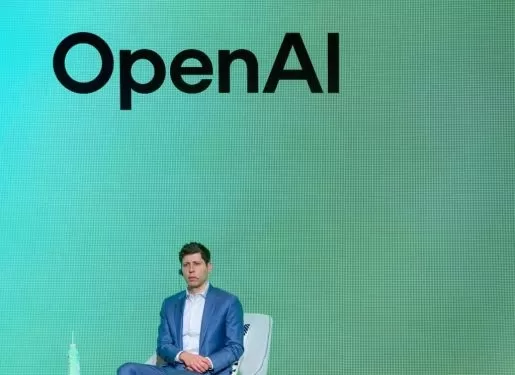 OpenAI fights Apple trade secret lawsuit
OpenAI rebutted Apple’s trade secret allegations on Tuesday, arguing the lawsuit is unfounded.“We take these claims seriously but see no evidence supporting them,” OpenAI stated, as reported by Bloomberg’s Ed Ludlow on X. “We support fair competition
OpenAI fights Apple trade secret lawsuit
OpenAI rebutted Apple’s trade secret allegations on Tuesday, arguing the lawsuit is unfounded.“We take these claims seriously but see no evidence supporting them,” OpenAI stated, as reported by Bloomberg’s Ed Ludlow on X. “We support fair competition
 OpenAI robotics head Caitlin Kalinowski resigns over Pentagon partnership
OpenAI robotics leader Caitlin Kalinowski has stepped down following the company’s controversial partnership with the Department of Defense.“This wasn’t an easy call,” Kalinowski explained in a social media statement. “While AI plays a vital role in
OpenAI robotics head Caitlin Kalinowski resigns over Pentagon partnership
OpenAI robotics leader Caitlin Kalinowski has stepped down following the company’s controversial partnership with the Department of Defense.“This wasn’t an easy call,” Kalinowski explained in a social media statement. “While AI plays a vital role in

2026 Latest Best AI Study Tools for Homework and Exam Prep! XIX.AI curates a top-rated list of powerful, game-changing tools that help students boost productivity, streamline homework completion, and ace exams through real-world tests. Get a free vs paid comparison, detailed rankings, and must-try options to unlock your AI edge. Explore now!
10 tools
xix.ai

2026 Latest Best AI Vocal Demo Tools for Songwriters, Hook Creators, and Multi-Language Content Teams! XIX.AI has curated a top-rated list of powerful game-changing tools that go through rigorous real-world tests. You’ll find detailed free vs paid comparison data, comprehensive rankings, and must-try options to help you boost writing efficiency and unlock your creative potential. Explore now to discover your perfect tool for all your content needs!
9 tools
xix.ai

2026 Latest Best Top-rated AI Competitive Research Tools for Small Businesses! XIX.AI has curated a highly powerful game-changing collection, updated weekly with rigorous real-world tests and detailed rankings. You can find a comprehensive free vs paid comparison to help you identify the must-try tools that boost your productivity and give you a competitive edge. Explore now to discover your perfect tool!
9 tools
xix.ai

2026 Latest Best Photoshop AI retouch tools for ecommerce apparel, skin cleanup, and color consistency! This top-rated curated list features powerful game-changing solutions that help you boost writing efficiency, streamline content creation, and achieve perfect visual results effortlessly. Each tool has undergone real-world tests through weekly updated rankings, complete with free vs paid comparison details. Backed by XIX.AI, it’s the must-try guide for anyone aiming to unlock your AI edge. Explore now!
10 tools
xix.ai

2026 Latest Best Top-Rated AI Prompt Libraries for optimizing all types of ChatGPT workflows. XIX.AI has curated a powerful, game-changing collection that goes through rigorous real-world tests to ensure top performance. You can find detailed free vs paid comparisons and expert rankings to help you choose the must-try tools that boost your productivity and unlock your AI edge. Explore now!
11 tools
xix.ai

2026 Latest Best AI Quiz Builder Platforms for Teachers, Tutors, and Cohort-Based Learning Programs! XIX.AI has curated a top-rated list of powerful game-changing tools that go through real-world tests to deliver accurate rankings. These must-try platforms help boost writing efficiency, streamline content creation, and simplify quiz design across all learning scenarios. Explore now to discover your perfect tool for unlocking your AI edge in teaching!
13 tools
xix.ai

Wait, so OpenAI is open-sourcing this demo while still keeping the core GPT models behind an API? Kinda feels like they're throwing a free bone to devs to keep them hooked on their ecosystem. Clever move, but part of me wonders if this is their answer to the rising wave of open-source alternatives in the agent space. Will be interesting to see what the community builds with it.












