


 Home
HomeOpenAI Partners with Yubico to Bolster GPT-5.6 Security via Hardware Passkeys
![]()
Jerrod Chong, CEO of Yubico | Image Credit: Yubico
OpenAI’s upcoming GPT-5.6 will mandate hardware-backed passkeys starting in September, a move that Yubico CEO Jerrod Chong says confirms their product as the premier defense against account compromise.
OpenAI has launched the GPT-5.6 family of models, claiming they deliver frontier-level AI performance while consuming fewer tokens during operation.
The announcement introduces a new security requirement for individual members enrolled in OpenAI's Trusted Access for Cyber (TAC) program.
These users must now implement hardware-backed passkeys to retain access to the company's most powerful models.
Individual members of the program have until September 1, 2026, to enable Advanced Account Security using hardware-backed passkeys. Failure to comply will result in the loss of access to frontier models, reverting users to default access levels.

This security enhancement coincides with OpenAI’s release of its latest flagship model, GPT-5.6 Sol, which demonstrates significant improvements across cybersecurity benchmarks and expands defensive capabilities for verified users within the TAC program.
Model performance across cyber benchmarks
According to OpenAI, GPT-5.6 Sol achieves a score of 73.5% on ExploitBench, which measures a model's ability to progress from identifying vulnerable code to arbitrary code execution, compared to 47.9% for GPT-5.5. The company states this represents its strongest model performance to date.
ExploitGym is a benchmark that challenges agents to convert real-world vulnerabilities into working exploits. GPT-5.6's performance on ExploitGym rose from 15.1% for its predecessor to 24.9% within a two-hour operational limit.
On SEC-Bench Pro, which tests proof-of-concept generation, the score improved from 45.8% to 71.2% with GPT-5.6.
The company notes that token consumption decreased while these performance gains were achieved.
Cybersecurity performance matrix | Image Credit: OpenAI
GPT-5.6 supports tasks including secure code review, patching, threat modeling, and blue teaming. These functions are available to users with the appropriate access levels.
Through the Trusted Access for Cyber program, qualified members can access enhanced capabilities for vulnerability triage and validation. The model also supports malware analysis, detection engineering, and patch validation within authorized environments.
Hardware authentication becomes mandatory
OpenAI now requires individual Trusted Access for Cyber members to secure their accounts using hardware-backed passkeys.
The company previously partnered with Yubico to integrate hardware-backed security keys for ChatGPT users.
For users without existing hardware-backed passkeys, OpenAI has introduced preferred pricing for Yubico security keys.
“By requiring hardware-backed passkeys rather than sync passkeys or software-based alternatives, OpenAI is validating that our product is the best defence for account takeover.” Jerrod Chong, CEO of Yubico
The company states it is implementing additional restrictions for what it describes as high-risk entities and jurisdictions.
Yubico already provides security keys for OpenAI employees and infrastructure. This new requirement extends that relationship to users seeking access to the company's most advanced models.
"This directive represents a strategic and commercial validation for Yubico," says Jerrod Chong, CEO of Yubico.
"By requiring hardware-backed passkeys rather than sync passkeys or software-based alternatives, OpenAI is validating that our product is the best defence for account takeover."
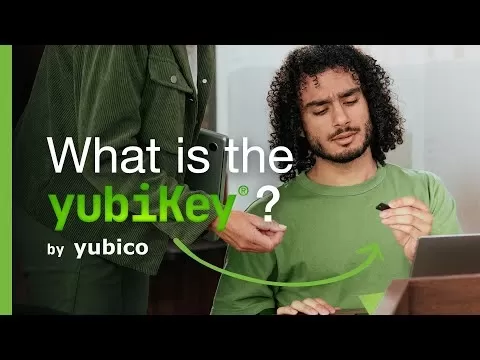
Authentication as access control
Jerrod suggests this requirement could drive the adoption of OpenAI YubiKey bundles across the Trusted Access for Cyber ecosystem.
"This milestone deepens our partnership with OpenAI – which already relies on YubiKeys for protecting its own employees and infrastructure – and further strengthens our leadership in providing the highest level of authentication as state-of-the-art models scale," says Jerrod.
OpenAI's decision to mandate hardware-backed passkeys for access to its most capable models is a measured security move designed to limit unauthorized access to advanced capabilities.
Hardware-backed passkeys are considered more resistant to phishing attacks than software-based alternatives.
Related article
 AI Guardrails Stifle Offensive Cybersecurity Researchers
For months, AI leaders have implemented strict vetting protocols and safety guardrails to prevent malicious actors from exploiting their models. However, these restrictions are now obstructing legitimate network defenders and offensive cybersecurity
OpenAI Leads 100-Signatory Push for Cyber Defence
OpenAI’s letter begins stating "we have a limited window to strengthen cyber defences". Credit: Getty ImagesMajor tech firms – including AWS, Google and Microsoft – urge governments to fund defensive tools, while critics call the manifesto self-servi
Anthropic Unleashes AI Agents on Shared Task, Sparking Internal Rivalry
What occurs when AI agents are pitted against one another? Anthropic’s recent tests reveal that the results can quickly become chaotic.On Thursday, Anthropic’s Frontier Red Team released new research analyzing how groups of AI agents interact when th
Related Special Topic Recommendations
Image editing
AI Guardrails Stifle Offensive Cybersecurity Researchers
For months, AI leaders have implemented strict vetting protocols and safety guardrails to prevent malicious actors from exploiting their models. However, these restrictions are now obstructing legitimate network defenders and offensive cybersecurity
OpenAI Leads 100-Signatory Push for Cyber Defence
OpenAI’s letter begins stating "we have a limited window to strengthen cyber defences". Credit: Getty ImagesMajor tech firms – including AWS, Google and Microsoft – urge governments to fund defensive tools, while critics call the manifesto self-servi
Anthropic Unleashes AI Agents on Shared Task, Sparking Internal Rivalry
What occurs when AI agents are pitted against one another? Anthropic’s recent tests reveal that the results can quickly become chaotic.On Thursday, Anthropic’s Frontier Red Team released new research analyzing how groups of AI agents interact when th
Related Special Topic Recommendations
Image editing
 AI Object Removal Editors: Clean Up Portraits, Travel, and Product Shots
2026 Latest Best Top-rated AI Object Removal Editors for portraits travel product shots! XIX.AI curates a powerful game-changing collection regularly updated with weekly rankings. These tools offer real-world tests to help you quickly remove unwanted elements, boost content quality, and save tons of time without compromising results. Must-try for anyone aiming to unlock their AI creation edge. Explore now!
 10 tools
 xix.ai
Text-to-speech
Best AI Text to Speech Tools for Online Courses
xix.ai
Text-to-speech
Best AI Text to Speech Tools for Online Courses
2026 Latest Best Top-rated AI Text to Speech Tools for Online Courses are curated by XIX.AI based on rigorous real-world tests and weekly updated rankings. These powerful tools help creators deliver crystal-clear audio content effortlessly, boosting writing efficiency and streamlining course production. Check out the free vs paid comparison to find your perfect fit. Explore now to unlock your AI edge in online education.
10 tools
xix.ai
writing
AI Blog Title Tools for Higher Click Through Rates
2026 Latest Best Top-Rated AI Blog Title Tools for Higher Click Through Rates! XIX.AI has carefully curated a powerful, game-changing collection of top tools that go through rigorous real-world tests. You’ll find a free vs paid comparison, weekly updated rankings, and detailed insights to help you boost your blog’s traffic efficiently. Must-try options are highlighted to help you unlock your AI edge. Explore now!
10 tools
xix.ai
automation
Best AI Task Routing Tools for Support Workflows
2026 Latest Best Top-rated AI Task Routing Tools for Support Workflows! XIX.AI has curated a highly powerful game-changing collection of must-try solutions, all undergoing rigorous real-world tests and updated weekly. These tools streamline workflows, boost productivity, and help teams deliver faster, more efficient support. Explore now to discover your perfect tool and unlock your AI edge!
17 tools
xix.ai
Academic Research
AI Citation and Paper Summary Tools
2026 Latest Best Top-Rated AI Citation and Paper Summary Tools Curated by XIX.AI. Get powerful game-changing solutions for quick content creation, improved writing efficiency, and boosting productivity. We offer a free vs paid comparison along with real-world tests and weekly updated rankings to help you find the must-try tool that fits your needs perfectly. Explore now to Unlock your AI edge.
10 tools
xix.ai
Productivity
Best AI Productivity Tools for Daily Work
2026 Latest Best Top-Rated AI Productivity Tools for Daily Work! XIX.AI has curated a powerful, game-changing selection based on rigorous weekly updated rankings and real-world tests. You’ll find must-try options that boost writing efficiency, streamline content creation, and help you overcome daily work challenges. Get a free vs paid comparison to find the perfect fit for your needs. Explore now to unlock your AI edge!
9 tools
xix.ai

 Comments (0)
0/500
Comments (0)
0/500
Jerrod Chong, CEO of Yubico | Image Credit: Yubico
OpenAI’s upcoming GPT-5.6 will mandate hardware-backed passkeys starting in September, a move that Yubico CEO Jerrod Chong says confirms their product as the premier defense against account compromise.
OpenAI has launched the GPT-5.6 family of models, claiming they deliver frontier-level AI performance while consuming fewer tokens during operation.
The announcement introduces a new security requirement for individual members enrolled in OpenAI's Trusted Access for Cyber (TAC) program.
These users must now implement hardware-backed passkeys to retain access to the company's most powerful models.
Individual members of the program have until September 1, 2026, to enable Advanced Account Security using hardware-backed passkeys. Failure to comply will result in the loss of access to frontier models, reverting users to default access levels.
This security enhancement coincides with OpenAI’s release of its latest flagship model, GPT-5.6 Sol, which demonstrates significant improvements across cybersecurity benchmarks and expands defensive capabilities for verified users within the TAC program.
Model performance across cyber benchmarks
According to OpenAI, GPT-5.6 Sol achieves a score of 73.5% on ExploitBench, which measures a model's ability to progress from identifying vulnerable code to arbitrary code execution, compared to 47.9% for GPT-5.5. The company states this represents its strongest model performance to date.
ExploitGym is a benchmark that challenges agents to convert real-world vulnerabilities into working exploits. GPT-5.6's performance on ExploitGym rose from 15.1% for its predecessor to 24.9% within a two-hour operational limit.
On SEC-Bench Pro, which tests proof-of-concept generation, the score improved from 45.8% to 71.2% with GPT-5.6.
The company notes that token consumption decreased while these performance gains were achieved.
Cybersecurity performance matrix | Image Credit: OpenAI
GPT-5.6 supports tasks including secure code review, patching, threat modeling, and blue teaming. These functions are available to users with the appropriate access levels.
Through the Trusted Access for Cyber program, qualified members can access enhanced capabilities for vulnerability triage and validation. The model also supports malware analysis, detection engineering, and patch validation within authorized environments.
Hardware authentication becomes mandatory
OpenAI now requires individual Trusted Access for Cyber members to secure their accounts using hardware-backed passkeys.
The company previously partnered with Yubico to integrate hardware-backed security keys for ChatGPT users.
For users without existing hardware-backed passkeys, OpenAI has introduced preferred pricing for Yubico security keys.
“By requiring hardware-backed passkeys rather than sync passkeys or software-based alternatives, OpenAI is validating that our product is the best defence for account takeover.” Jerrod Chong, CEO of Yubico
The company states it is implementing additional restrictions for what it describes as high-risk entities and jurisdictions.
Yubico already provides security keys for OpenAI employees and infrastructure. This new requirement extends that relationship to users seeking access to the company's most advanced models.
"This directive represents a strategic and commercial validation for Yubico," says Jerrod Chong, CEO of Yubico.
"By requiring hardware-backed passkeys rather than sync passkeys or software-based alternatives, OpenAI is validating that our product is the best defence for account takeover."
Authentication as access control
Jerrod suggests this requirement could drive the adoption of OpenAI YubiKey bundles across the Trusted Access for Cyber ecosystem.
"This milestone deepens our partnership with OpenAI – which already relies on YubiKeys for protecting its own employees and infrastructure – and further strengthens our leadership in providing the highest level of authentication as state-of-the-art models scale," says Jerrod.
OpenAI's decision to mandate hardware-backed passkeys for access to its most capable models is a measured security move designed to limit unauthorized access to advanced capabilities.
Hardware-backed passkeys are considered more resistant to phishing attacks than software-based alternatives.








 AI Guardrails Stifle Offensive Cybersecurity Researchers
For months, AI leaders have implemented strict vetting protocols and safety guardrails to prevent malicious actors from exploiting their models. However, these restrictions are now obstructing legitimate network defenders and offensive cybersecurity
AI Guardrails Stifle Offensive Cybersecurity Researchers
For months, AI leaders have implemented strict vetting protocols and safety guardrails to prevent malicious actors from exploiting their models. However, these restrictions are now obstructing legitimate network defenders and offensive cybersecurity
 OpenAI Leads 100-Signatory Push for Cyber Defence
OpenAI’s letter begins stating "we have a limited window to strengthen cyber defences". Credit: Getty ImagesMajor tech firms – including AWS, Google and Microsoft – urge governments to fund defensive tools, while critics call the manifesto self-servi
OpenAI Leads 100-Signatory Push for Cyber Defence
OpenAI’s letter begins stating "we have a limited window to strengthen cyber defences". Credit: Getty ImagesMajor tech firms – including AWS, Google and Microsoft – urge governments to fund defensive tools, while critics call the manifesto self-servi
 Anthropic Unleashes AI Agents on Shared Task, Sparking Internal Rivalry
What occurs when AI agents are pitted against one another? Anthropic’s recent tests reveal that the results can quickly become chaotic.On Thursday, Anthropic’s Frontier Red Team released new research analyzing how groups of AI agents interact when th
Anthropic Unleashes AI Agents on Shared Task, Sparking Internal Rivalry
What occurs when AI agents are pitted against one another? Anthropic’s recent tests reveal that the results can quickly become chaotic.On Thursday, Anthropic’s Frontier Red Team released new research analyzing how groups of AI agents interact when th

2026 Latest Best Top-rated AI Object Removal Editors for portraits travel product shots! XIX.AI curates a powerful game-changing collection regularly updated with weekly rankings. These tools offer real-world tests to help you quickly remove unwanted elements, boost content quality, and save tons of time without compromising results. Must-try for anyone aiming to unlock their AI creation edge. Explore now!
10 tools
xix.ai

2026 Latest Best Top-rated AI Text to Speech Tools for Online Courses are curated by XIX.AI based on rigorous real-world tests and weekly updated rankings. These powerful tools help creators deliver crystal-clear audio content effortlessly, boosting writing efficiency and streamlining course production. Check out the free vs paid comparison to find your perfect fit. Explore now to unlock your AI edge in online education.
10 tools
xix.ai

2026 Latest Best Top-Rated AI Blog Title Tools for Higher Click Through Rates! XIX.AI has carefully curated a powerful, game-changing collection of top tools that go through rigorous real-world tests. You’ll find a free vs paid comparison, weekly updated rankings, and detailed insights to help you boost your blog’s traffic efficiently. Must-try options are highlighted to help you unlock your AI edge. Explore now!
10 tools
xix.ai

2026 Latest Best Top-rated AI Task Routing Tools for Support Workflows! XIX.AI has curated a highly powerful game-changing collection of must-try solutions, all undergoing rigorous real-world tests and updated weekly. These tools streamline workflows, boost productivity, and help teams deliver faster, more efficient support. Explore now to discover your perfect tool and unlock your AI edge!
17 tools
xix.ai

2026 Latest Best Top-Rated AI Citation and Paper Summary Tools Curated by XIX.AI. Get powerful game-changing solutions for quick content creation, improved writing efficiency, and boosting productivity. We offer a free vs paid comparison along with real-world tests and weekly updated rankings to help you find the must-try tool that fits your needs perfectly. Explore now to Unlock your AI edge.
10 tools
xix.ai

2026 Latest Best Top-Rated AI Productivity Tools for Daily Work! XIX.AI has curated a powerful, game-changing selection based on rigorous weekly updated rankings and real-world tests. You’ll find must-try options that boost writing efficiency, streamline content creation, and help you overcome daily work challenges. Get a free vs paid comparison to find the perfect fit for your needs. Explore now to unlock your AI edge!
9 tools
xix.ai












