


 Home
HomeOpenAI bolsters ChatGPT security with Yubico partnership for enhanced account protection
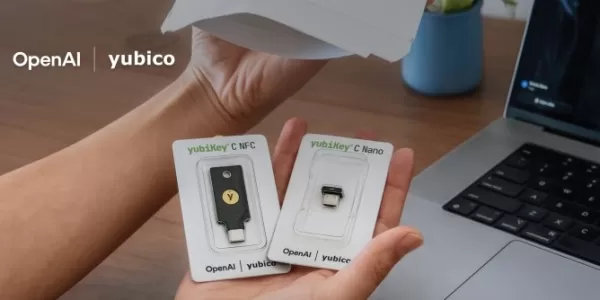
OpenAI is taking significant steps to enhance account security.
On Thursday, the company introduced Advanced Account Security, a suite of optional protections for ChatGPT users. While designed for high-profile individuals, these features are available to anyone seeking stronger safeguards.
As part of this initiative, digital security firm Yubico announced a partnership with OpenAI to integrate two new security key products with ChatGPT accounts. This collaboration aims to shield users from the escalating threat of phishing attacks targeting chatbot platforms.
The two companies are launching a pair of co-branded YubiKeys: the YubiKey C NFC and the YubiKey C Nano.
OpenAI indicates that Advanced Account Security is particularly suitable for political dissidents, journalists, researchers, and elected officials—individuals involved in high-risk, politically sensitive work. It also appears to be a logical choice for enterprise users who may store confidential corporate information within ChatGPT sessions.
“Our ultimate goal is to significantly reduce the risk of unauthorized access to sensitive data in OpenAI accounts globally,” stated Yubico CEO Jerrod Chong in a press release announcing the partnership.
Security keys are compact hardware devices that connect to a computer's USB port and link to digital accounts. Each key contains a unique cryptographic identifier, ensuring that only the person physically possessing it can access the associated account.
While the danger of compromised ChatGPT accounts might seem theoretical, growing evidence indicates that malicious actors are increasingly targeting chatbot users. Cybercriminals actively seek information for extortion, and given the often personal nature of chatbot conversations, both enterprise and individual users provide ample material for exploitation.
Digital security is also rising as a priority within the AI industry. Several weeks ago, Anthropic unveiled a new cybersecurity model named Mythos. Perhaps aiming to counter its competitor's momentum, OpenAI has made several security-related announcements. The Yubico partnership follows OpenAI's recent introduction of a new framework for digital defense.
While an account secured with a physical key offers robust protection, it involves a trade-off: if the key is lost, OpenAI cannot assist in recovering account access. In practical terms, this could result in the permanent loss of stored conversations.
Related article
 Google Tests Remy AI Agent for Gemini as Focus Shifts to User Control
According to Business Insider, Google is testing Remy, a new AI personal agent for Gemini. This tool aims to execute tasks on behalf of users, streamlining both professional workflows and daily routines.Currently, Remy is undergoing testing in an int
Sam Altman Sparks Debate Over AI's Deceleration
Listen onApple PodcastsListen onSpotifyOpenAI CEO Sam Altman recently suggested that it may be time to “pace the rate of AI development” to allow society to “harden around some of these new capability levels.”On the latest episode of TechCrunch’s Equ
OpenAI fights Apple trade secret lawsuit
OpenAI rebutted Apple’s trade secret allegations on Tuesday, arguing the lawsuit is unfounded.“We take these claims seriously but see no evidence supporting them,” OpenAI stated, as reported by Bloomberg’s Ed Ludlow on X. “We support fair competition
Related Special Topic Recommendations
SEO
Google Tests Remy AI Agent for Gemini as Focus Shifts to User Control
According to Business Insider, Google is testing Remy, a new AI personal agent for Gemini. This tool aims to execute tasks on behalf of users, streamlining both professional workflows and daily routines.Currently, Remy is undergoing testing in an int
Sam Altman Sparks Debate Over AI's Deceleration
Listen onApple PodcastsListen onSpotifyOpenAI CEO Sam Altman recently suggested that it may be time to “pace the rate of AI development” to allow society to “harden around some of these new capability levels.”On the latest episode of TechCrunch’s Equ
OpenAI fights Apple trade secret lawsuit
OpenAI rebutted Apple’s trade secret allegations on Tuesday, arguing the lawsuit is unfounded.“We take these claims seriously but see no evidence supporting them,” OpenAI stated, as reported by Bloomberg’s Ed Ludlow on X. “We support fair competition
Related Special Topic Recommendations
SEO
 Best AI SERP Analysis Tools for Search Strategy
2026 Latest Best Top-rated AI SERP Analysis Tools for Search Strategy are curated by XIX.AI through rigorous real-world tests and weekly updated rankings. These powerful tools help you unlock hidden optimization opportunities, boost content performance, and gain a competitive edge in search. Discover your perfect tool to elevate your search strategy today. Explore now!
 13 tools
 xix.ai
Data Analysis
Best AI Anomaly Detection Tools for KPI Monitoring across SaaS and Ecommerce Teams
xix.ai
Data Analysis
Best AI Anomaly Detection Tools for KPI Monitoring across SaaS and Ecommerce Teams
2026 Latest Best Top-rated AI Anomaly Detection Tools for KPI Monitoring in SaaS and Ecommerce teams! XIX.AI has curated a powerful, game-changing collection based on rigorous real-world tests and weekly updated rankings. You’ll find detailed free vs paid comparison insights to help you identify the must-try solution that boosts productivity and unlocks your AI edge. Explore now!
10 tools
xix.ai
writing
Best AI Outline Generators for Long-Form SEO Articles
2026 Latest Best Top-Rated AI Outline Generators for Long-Form SEO Articles, meticulously curated by XIX.AI. These powerful tools offer game-changing assistance in creating high-quality content quickly, boosting writing efficiency significantly. Get a free vs paid comparison along with real-world tests and detailed rankings to help you find the must-try option that suits your needs. Explore now to unlock your AI edge.
8 tools
xix.ai
Education and Learning
AI Study Tools for Homework and Exam Prep
2026 Latest Best AI Study Tools for Homework and Exam Prep! XIX.AI curates a top-rated list of powerful, game-changing tools that help students boost productivity, streamline homework completion, and ace exams through real-world tests. Get a free vs paid comparison, detailed rankings, and must-try options to unlock your AI edge. Explore now!
10 tools
xix.ai
Music composition
AI Vocal Demo Tools for Songwriters, Hooks, Toplines, and Multilingual Draft Sessions
2026 Latest Best AI Vocal Demo Tools for Songwriters, Hook Creators, and Multi-Language Content Teams! XIX.AI has curated a top-rated list of powerful game-changing tools that go through rigorous real-world tests. You’ll find detailed free vs paid comparison data, comprehensive rankings, and must-try options to help you boost writing efficiency and unlock your creative potential. Explore now to discover your perfect tool for all your content needs!
9 tools
xix.ai
Business
Best AI Competitive Research Tools for Small Businesses
2026 Latest Best Top-rated AI Competitive Research Tools for Small Businesses! XIX.AI has curated a highly powerful game-changing collection, updated weekly with rigorous real-world tests and detailed rankings. You can find a comprehensive free vs paid comparison to help you identify the must-try tools that boost your productivity and give you a competitive edge. Explore now to discover your perfect tool!
9 tools
xix.ai

 Comments (0)
0/500
Comments (0)
0/500
OpenAI is taking significant steps to enhance account security.
On Thursday, the company introduced Advanced Account Security, a suite of optional protections for ChatGPT users. While designed for high-profile individuals, these features are available to anyone seeking stronger safeguards.
As part of this initiative, digital security firm Yubico announced a partnership with OpenAI to integrate two new security key products with ChatGPT accounts. This collaboration aims to shield users from the escalating threat of phishing attacks targeting chatbot platforms.
The two companies are launching a pair of co-branded YubiKeys: the YubiKey C NFC and the YubiKey C Nano.
OpenAI indicates that Advanced Account Security is particularly suitable for political dissidents, journalists, researchers, and elected officials—individuals involved in high-risk, politically sensitive work. It also appears to be a logical choice for enterprise users who may store confidential corporate information within ChatGPT sessions.
“Our ultimate goal is to significantly reduce the risk of unauthorized access to sensitive data in OpenAI accounts globally,” stated Yubico CEO Jerrod Chong in a press release announcing the partnership.
Security keys are compact hardware devices that connect to a computer's USB port and link to digital accounts. Each key contains a unique cryptographic identifier, ensuring that only the person physically possessing it can access the associated account.
While the danger of compromised ChatGPT accounts might seem theoretical, growing evidence indicates that malicious actors are increasingly targeting chatbot users. Cybercriminals actively seek information for extortion, and given the often personal nature of chatbot conversations, both enterprise and individual users provide ample material for exploitation.
Digital security is also rising as a priority within the AI industry. Several weeks ago, Anthropic unveiled a new cybersecurity model named Mythos. Perhaps aiming to counter its competitor's momentum, OpenAI has made several security-related announcements. The Yubico partnership follows OpenAI's recent introduction of a new framework for digital defense.
While an account secured with a physical key offers robust protection, it involves a trade-off: if the key is lost, OpenAI cannot assist in recovering account access. In practical terms, this could result in the permanent loss of stored conversations.







 Google Tests Remy AI Agent for Gemini as Focus Shifts to User Control
According to Business Insider, Google is testing Remy, a new AI personal agent for Gemini. This tool aims to execute tasks on behalf of users, streamlining both professional workflows and daily routines.Currently, Remy is undergoing testing in an int
Google Tests Remy AI Agent for Gemini as Focus Shifts to User Control
According to Business Insider, Google is testing Remy, a new AI personal agent for Gemini. This tool aims to execute tasks on behalf of users, streamlining both professional workflows and daily routines.Currently, Remy is undergoing testing in an int
 Sam Altman Sparks Debate Over AI's Deceleration
Listen onApple PodcastsListen onSpotifyOpenAI CEO Sam Altman recently suggested that it may be time to “pace the rate of AI development” to allow society to “harden around some of these new capability levels.”On the latest episode of TechCrunch’s Equ
Sam Altman Sparks Debate Over AI's Deceleration
Listen onApple PodcastsListen onSpotifyOpenAI CEO Sam Altman recently suggested that it may be time to “pace the rate of AI development” to allow society to “harden around some of these new capability levels.”On the latest episode of TechCrunch’s Equ
 OpenAI fights Apple trade secret lawsuit
OpenAI rebutted Apple’s trade secret allegations on Tuesday, arguing the lawsuit is unfounded.“We take these claims seriously but see no evidence supporting them,” OpenAI stated, as reported by Bloomberg’s Ed Ludlow on X. “We support fair competition
OpenAI fights Apple trade secret lawsuit
OpenAI rebutted Apple’s trade secret allegations on Tuesday, arguing the lawsuit is unfounded.“We take these claims seriously but see no evidence supporting them,” OpenAI stated, as reported by Bloomberg’s Ed Ludlow on X. “We support fair competition

2026 Latest Best Top-rated AI SERP Analysis Tools for Search Strategy are curated by XIX.AI through rigorous real-world tests and weekly updated rankings. These powerful tools help you unlock hidden optimization opportunities, boost content performance, and gain a competitive edge in search. Discover your perfect tool to elevate your search strategy today. Explore now!
13 tools
xix.ai

2026 Latest Best Top-rated AI Anomaly Detection Tools for KPI Monitoring in SaaS and Ecommerce teams! XIX.AI has curated a powerful, game-changing collection based on rigorous real-world tests and weekly updated rankings. You’ll find detailed free vs paid comparison insights to help you identify the must-try solution that boosts productivity and unlocks your AI edge. Explore now!
10 tools
xix.ai

2026 Latest Best Top-Rated AI Outline Generators for Long-Form SEO Articles, meticulously curated by XIX.AI. These powerful tools offer game-changing assistance in creating high-quality content quickly, boosting writing efficiency significantly. Get a free vs paid comparison along with real-world tests and detailed rankings to help you find the must-try option that suits your needs. Explore now to unlock your AI edge.
8 tools
xix.ai

2026 Latest Best AI Study Tools for Homework and Exam Prep! XIX.AI curates a top-rated list of powerful, game-changing tools that help students boost productivity, streamline homework completion, and ace exams through real-world tests. Get a free vs paid comparison, detailed rankings, and must-try options to unlock your AI edge. Explore now!
10 tools
xix.ai

2026 Latest Best AI Vocal Demo Tools for Songwriters, Hook Creators, and Multi-Language Content Teams! XIX.AI has curated a top-rated list of powerful game-changing tools that go through rigorous real-world tests. You’ll find detailed free vs paid comparison data, comprehensive rankings, and must-try options to help you boost writing efficiency and unlock your creative potential. Explore now to discover your perfect tool for all your content needs!
9 tools
xix.ai

2026 Latest Best Top-rated AI Competitive Research Tools for Small Businesses! XIX.AI has curated a highly powerful game-changing collection, updated weekly with rigorous real-world tests and detailed rankings. You can find a comprehensive free vs paid comparison to help you identify the must-try tools that boost your productivity and give you a competitive edge. Explore now to discover your perfect tool!
9 tools
xix.ai












