


 Home
HomeOpenAI may loosen safeguards if competitors launch potentially dangerous AI models
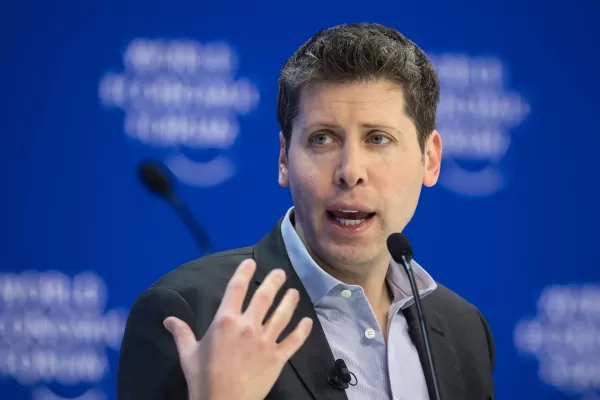
OpenAI Adjusts Safety Protocol Amid Competitive Pressures
OpenAI has revised its Preparedness Framework, the internal mechanism guiding AI model safety assessments and safeguard implementation throughout development cycles. The updated policy notably includes provisions allowing potential relaxation of safety measures if competing firms launch high-risk systems without equivalent protections.
This modification underscores growing market forces compelling AI developers to accelerate deployment timelines. OpenAI faces mounting scrutiny regarding allegedly diminishing safety prioritization to enable swifter releases, including delayed publication of safety assessment documentation. Recent legal proceedings saw 12 former employees supporting Elon Musk's case against OpenAI, warning that planned corporate restructuring could further erode safety standards.
Balancing Competition and Safety
Anticipating criticism, OpenAI emphasized any policy adjustments would maintain rigorous protection levels. "While we may adapt requirements if competitors deploy high-risk systems lacking comparable safeguards," stated Tuesday's blog update, "we commit to thorough risk verification, transparency about modifications, and maintaining superior protective measures."
The revised framework highlights OpenAI's increasing reliance on automated evaluation tools alongside traditional human-led testing. Company representatives assert these automated systems enable maintaining release pace without compromising assessment quality.
Controversial Testing Practices Emerge
Reports contradict OpenAI's official stance, with insider accounts revealing compressed safety review periods. According to Financial Times sources, testers recently received under one week to evaluate an impending model - drastically shorter than previous timelines. Additional concerns emerged regarding safety testing occurring predominantly on pre-release model variants rather than public deployment versions.
OpenAI quietly reducing safety commitments.
Omitted from Framework changes:
• No safety tests required for finetuned models
— Steven Adler (@sjgadler) April 15, 2025
Redefined Risk Classification System
The updated framework introduces streamlined model categorization focusing on two capability thresholds:
- High Capability: Models amplifying existing severe harm vectors
- Critical Capability: Models establishing novel severe harm pathways
"High-capability systems mandate risk-mitigating safeguards pre-deployment," clarified OpenAI. "Critical-capability models require additional developmental phase protections."
This marks the framework's first substantial revision since 2023, reflecting evolving industry dynamics and internal operational changes at OpenAI.
Related article
 Sam Altman Sparks Debate Over AI's Deceleration
Listen onApple PodcastsListen onSpotifyOpenAI CEO Sam Altman recently suggested that it may be time to “pace the rate of AI development” to allow society to “harden around some of these new capability levels.”On the latest episode of TechCrunch’s Equ
OpenAI fights Apple trade secret lawsuit
OpenAI rebutted Apple’s trade secret allegations on Tuesday, arguing the lawsuit is unfounded.“We take these claims seriously but see no evidence supporting them,” OpenAI stated, as reported by Bloomberg’s Ed Ludlow on X. “We support fair competition
OpenAI robotics head Caitlin Kalinowski resigns over Pentagon partnership
OpenAI robotics leader Caitlin Kalinowski has stepped down following the company’s controversial partnership with the Department of Defense.“This wasn’t an easy call,” Kalinowski explained in a social media statement. “While AI plays a vital role in
Related Special Topic Recommendations
SEO
Sam Altman Sparks Debate Over AI's Deceleration
Listen onApple PodcastsListen onSpotifyOpenAI CEO Sam Altman recently suggested that it may be time to “pace the rate of AI development” to allow society to “harden around some of these new capability levels.”On the latest episode of TechCrunch’s Equ
OpenAI fights Apple trade secret lawsuit
OpenAI rebutted Apple’s trade secret allegations on Tuesday, arguing the lawsuit is unfounded.“We take these claims seriously but see no evidence supporting them,” OpenAI stated, as reported by Bloomberg’s Ed Ludlow on X. “We support fair competition
OpenAI robotics head Caitlin Kalinowski resigns over Pentagon partnership
OpenAI robotics leader Caitlin Kalinowski has stepped down following the company’s controversial partnership with the Department of Defense.“This wasn’t an easy call,” Kalinowski explained in a social media statement. “While AI plays a vital role in
Related Special Topic Recommendations
SEO
 Best AI SERP Analysis Tools for Search Strategy
2026 Latest Best Top-rated AI SERP Analysis Tools for Search Strategy are curated by XIX.AI through rigorous real-world tests and weekly updated rankings. These powerful tools help you unlock hidden optimization opportunities, boost content performance, and gain a competitive edge in search. Discover your perfect tool to elevate your search strategy today. Explore now!
 13 tools
 xix.ai
Data Analysis
Best AI Anomaly Detection Tools for KPI Monitoring across SaaS and Ecommerce Teams
xix.ai
Data Analysis
Best AI Anomaly Detection Tools for KPI Monitoring across SaaS and Ecommerce Teams
2026 Latest Best Top-rated AI Anomaly Detection Tools for KPI Monitoring in SaaS and Ecommerce teams! XIX.AI has curated a powerful, game-changing collection based on rigorous real-world tests and weekly updated rankings. You’ll find detailed free vs paid comparison insights to help you identify the must-try solution that boosts productivity and unlocks your AI edge. Explore now!
10 tools
xix.ai
writing
Best AI Outline Generators for Long-Form SEO Articles
2026 Latest Best Top-Rated AI Outline Generators for Long-Form SEO Articles, meticulously curated by XIX.AI. These powerful tools offer game-changing assistance in creating high-quality content quickly, boosting writing efficiency significantly. Get a free vs paid comparison along with real-world tests and detailed rankings to help you find the must-try option that suits your needs. Explore now to unlock your AI edge.
8 tools
xix.ai
Education and Learning
AI Study Tools for Homework and Exam Prep
2026 Latest Best AI Study Tools for Homework and Exam Prep! XIX.AI curates a top-rated list of powerful, game-changing tools that help students boost productivity, streamline homework completion, and ace exams through real-world tests. Get a free vs paid comparison, detailed rankings, and must-try options to unlock your AI edge. Explore now!
10 tools
xix.ai
Music composition
AI Vocal Demo Tools for Songwriters, Hooks, Toplines, and Multilingual Draft Sessions
2026 Latest Best AI Vocal Demo Tools for Songwriters, Hook Creators, and Multi-Language Content Teams! XIX.AI has curated a top-rated list of powerful game-changing tools that go through rigorous real-world tests. You’ll find detailed free vs paid comparison data, comprehensive rankings, and must-try options to help you boost writing efficiency and unlock your creative potential. Explore now to discover your perfect tool for all your content needs!
9 tools
xix.ai
Business
Best AI Competitive Research Tools for Small Businesses
2026 Latest Best Top-rated AI Competitive Research Tools for Small Businesses! XIX.AI has curated a highly powerful game-changing collection, updated weekly with rigorous real-world tests and detailed rankings. You can find a comprehensive free vs paid comparison to help you identify the must-try tools that boost your productivity and give you a competitive edge. Explore now to discover your perfect tool!
9 tools
xix.ai

 Comments (2)
0/500
Comments (2)
0/500
![WillieHernández]()
またOpenAIの方針転換...競争が激化する中、安全性と開発速度のバランスって本当に難しいですよね。個人的には過去のChatGPTの制限が緩和された時みたいに、今回もユーザー体験が向上するなら歓迎だけど、やっぱり倫理的基準は守ってほしいな😅 他の企業が危険なAIを出したら同じ土俵に上がる必要性ある?
![PaulTaylor]()
Interesante cómo la competencia puede influir en los estándares de seguridad 😕 No sé si relajar protocolos sea buena idea, pero entiendo la presión del mercado. ¿Hasta qué punto la carrera por la IA está poniendo en riesgo controles importantes?
OpenAI Adjusts Safety Protocol Amid Competitive Pressures
OpenAI has revised its Preparedness Framework, the internal mechanism guiding AI model safety assessments and safeguard implementation throughout development cycles. The updated policy notably includes provisions allowing potential relaxation of safety measures if competing firms launch high-risk systems without equivalent protections.
This modification underscores growing market forces compelling AI developers to accelerate deployment timelines. OpenAI faces mounting scrutiny regarding allegedly diminishing safety prioritization to enable swifter releases, including delayed publication of safety assessment documentation. Recent legal proceedings saw 12 former employees supporting Elon Musk's case against OpenAI, warning that planned corporate restructuring could further erode safety standards.
Balancing Competition and Safety
Anticipating criticism, OpenAI emphasized any policy adjustments would maintain rigorous protection levels. "While we may adapt requirements if competitors deploy high-risk systems lacking comparable safeguards," stated Tuesday's blog update, "we commit to thorough risk verification, transparency about modifications, and maintaining superior protective measures."
The revised framework highlights OpenAI's increasing reliance on automated evaluation tools alongside traditional human-led testing. Company representatives assert these automated systems enable maintaining release pace without compromising assessment quality.
Controversial Testing Practices Emerge
Reports contradict OpenAI's official stance, with insider accounts revealing compressed safety review periods. According to Financial Times sources, testers recently received under one week to evaluate an impending model - drastically shorter than previous timelines. Additional concerns emerged regarding safety testing occurring predominantly on pre-release model variants rather than public deployment versions.
OpenAI quietly reducing safety commitments.
— Steven Adler (@sjgadler) April 15, 2025
Omitted from Framework changes:
• No safety tests required for finetuned models
Redefined Risk Classification System
The updated framework introduces streamlined model categorization focusing on two capability thresholds:
- High Capability: Models amplifying existing severe harm vectors
- Critical Capability: Models establishing novel severe harm pathways
"High-capability systems mandate risk-mitigating safeguards pre-deployment," clarified OpenAI. "Critical-capability models require additional developmental phase protections."
This marks the framework's first substantial revision since 2023, reflecting evolving industry dynamics and internal operational changes at OpenAI.








 Sam Altman Sparks Debate Over AI's Deceleration
Listen onApple PodcastsListen onSpotifyOpenAI CEO Sam Altman recently suggested that it may be time to “pace the rate of AI development” to allow society to “harden around some of these new capability levels.”On the latest episode of TechCrunch’s Equ
Sam Altman Sparks Debate Over AI's Deceleration
Listen onApple PodcastsListen onSpotifyOpenAI CEO Sam Altman recently suggested that it may be time to “pace the rate of AI development” to allow society to “harden around some of these new capability levels.”On the latest episode of TechCrunch’s Equ
 OpenAI fights Apple trade secret lawsuit
OpenAI rebutted Apple’s trade secret allegations on Tuesday, arguing the lawsuit is unfounded.“We take these claims seriously but see no evidence supporting them,” OpenAI stated, as reported by Bloomberg’s Ed Ludlow on X. “We support fair competition
OpenAI fights Apple trade secret lawsuit
OpenAI rebutted Apple’s trade secret allegations on Tuesday, arguing the lawsuit is unfounded.“We take these claims seriously but see no evidence supporting them,” OpenAI stated, as reported by Bloomberg’s Ed Ludlow on X. “We support fair competition
 OpenAI robotics head Caitlin Kalinowski resigns over Pentagon partnership
OpenAI robotics leader Caitlin Kalinowski has stepped down following the company’s controversial partnership with the Department of Defense.“This wasn’t an easy call,” Kalinowski explained in a social media statement. “While AI plays a vital role in
OpenAI robotics head Caitlin Kalinowski resigns over Pentagon partnership
OpenAI robotics leader Caitlin Kalinowski has stepped down following the company’s controversial partnership with the Department of Defense.“This wasn’t an easy call,” Kalinowski explained in a social media statement. “While AI plays a vital role in

2026 Latest Best Top-rated AI SERP Analysis Tools for Search Strategy are curated by XIX.AI through rigorous real-world tests and weekly updated rankings. These powerful tools help you unlock hidden optimization opportunities, boost content performance, and gain a competitive edge in search. Discover your perfect tool to elevate your search strategy today. Explore now!
13 tools
xix.ai

2026 Latest Best Top-rated AI Anomaly Detection Tools for KPI Monitoring in SaaS and Ecommerce teams! XIX.AI has curated a powerful, game-changing collection based on rigorous real-world tests and weekly updated rankings. You’ll find detailed free vs paid comparison insights to help you identify the must-try solution that boosts productivity and unlocks your AI edge. Explore now!
10 tools
xix.ai

2026 Latest Best Top-Rated AI Outline Generators for Long-Form SEO Articles, meticulously curated by XIX.AI. These powerful tools offer game-changing assistance in creating high-quality content quickly, boosting writing efficiency significantly. Get a free vs paid comparison along with real-world tests and detailed rankings to help you find the must-try option that suits your needs. Explore now to unlock your AI edge.
8 tools
xix.ai

2026 Latest Best AI Study Tools for Homework and Exam Prep! XIX.AI curates a top-rated list of powerful, game-changing tools that help students boost productivity, streamline homework completion, and ace exams through real-world tests. Get a free vs paid comparison, detailed rankings, and must-try options to unlock your AI edge. Explore now!
10 tools
xix.ai

2026 Latest Best AI Vocal Demo Tools for Songwriters, Hook Creators, and Multi-Language Content Teams! XIX.AI has curated a top-rated list of powerful game-changing tools that go through rigorous real-world tests. You’ll find detailed free vs paid comparison data, comprehensive rankings, and must-try options to help you boost writing efficiency and unlock your creative potential. Explore now to discover your perfect tool for all your content needs!
9 tools
xix.ai

2026 Latest Best Top-rated AI Competitive Research Tools for Small Businesses! XIX.AI has curated a highly powerful game-changing collection, updated weekly with rigorous real-world tests and detailed rankings. You can find a comprehensive free vs paid comparison to help you identify the must-try tools that boost your productivity and give you a competitive edge. Explore now to discover your perfect tool!
9 tools
xix.ai

またOpenAIの方針転換...競争が激化する中、安全性と開発速度のバランスって本当に難しいですよね。個人的には過去のChatGPTの制限が緩和された時みたいに、今回もユーザー体験が向上するなら歓迎だけど、やっぱり倫理的基準は守ってほしいな😅 他の企業が危険なAIを出したら同じ土俵に上がる必要性ある?
Interesante cómo la competencia puede influir en los estándares de seguridad 😕 No sé si relajar protocolos sea buena idea, pero entiendo la presión del mercado. ¿Hasta qué punto la carrera por la IA está poniendo en riesgo controles importantes?












