


 Home
HomeNeurosymbolic AI Emerges as Pure LLMs Face Growing Limitations
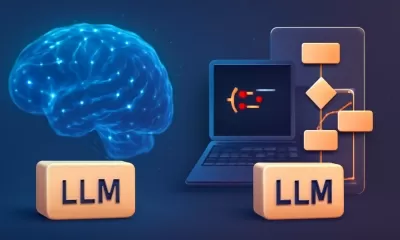
The AI landscape is undergoing a quiet revolution that could redefine how we develop intelligent systems. While conventional large language models still capture most attention, a hybrid approach called Neurosymbolic LLMs is demonstrating surprising effectiveness by blending neural networks with symbolic reasoning. These advanced systems first translate natural language instructions into structured programs, then execute them using symbolic interpreters - merging the pattern recognition strengths of LLMs with the precision of classical AI. This article examines why this emerging hybrid architecture may represent the next evolution in artificial intelligence.
The Scaling Myth Falls Apart
The prevailing assumption that simply increasing model size would continuously improve performance is showing cracks. The case of Grok 4 is telling - despite consuming 100x more computational resources than its predecessor, its gains on rigorous benchmarks like Humanity's Last Exam proved unexpectedly modest. The breakthrough came when researchers introduced symbolic components, suggesting that brute-force scaling alone cannot unlock true intelligence. Neurosymbolic architectures are demonstrating that smarter system design can achieve what raw computing power cannot.
The Limitations of Pure Neural Networks
Traditional LLMs face fundamental constraints rooted in their neural architecture. While exceptional at pattern matching, they struggle with scenarios requiring genuine reasoning. Apple researchers exposed this weakness when adding irrelevant clauses caused state-of-the-art models' mathematical accuracy to plummet 65%. Similar failures emerge in tasks like crossword construction - where ChatGPT would accept nonsense words like "RCRCT" as valid, while symbolic-enhanced systems maintained perfect accuracy. These examples reveal neural networks' inability to reliably perform algorithmic operations or sustain logical consistency across multi-step problems.
The Rise of Symbolic AI: Logical Precision Over Pattern Matching
Symbolic systems bring vital strengths that complement neural networks' weaknesses. Their rule-based nature provides transparency and verifiability lacking in black-box neural models. Efficiency advantages also emerge - the Neuro-Symbolic Concept Learner achieved high accuracy using just 10% of the training data required by conventional networks. In domains requiring accountability, symbolic AI's human-readable decision trails offer crucial advantages. Studies like the Tower of Hanoi experiments demonstrate how symbolic reasoning enables solutions that evade even advanced LLMs.
The Growing Demand for Explainable AI
Global regulations like the EU AI Act are creating strong market incentives for transparent AI systems. Neurosymbolic approaches naturally align with these requirements through their interpretable decision-making processes. Investment patterns reflect this shift, with enterprises prioritizing solutions that balance performance with auditability - particularly in regulated sectors like finance and healthcare where explainability isn't optional.
Improving AI Reliability with Neurosymbolic Integration
Critical applications demand more than statistical plausibility - they require verifiable correctness. Traditional LLMs' probabilistic nature makes them ill-suited for high-stakes domains where errors carry serious consequences. Projects like Microsoft's GraphRAG demonstrate how hybrid neurosymbolic systems can provide both the creativity of neural networks and the reliability of formal systems - a combination essential for deploying AI in mission-critical scenarios.
Neurosymbolic LLMs in Action
Leading research institutions are already demonstrating the power of this hybrid approach. Google DeepMind's Alpha series (AlphaFold, AlphaProof, AlphaGeometry) showcase how combining neural networks with symbolic reasoning achieves breakthrough performance on challenges ranging from protein folding to mathematical proof generation. These systems revive classical AI techniques like search and iteration algorithms, integrating them with modern deep learning in ways that surpass either approach alone.
Challenges and Opportunities
The path forward isn't without obstacles. Current neurosymbolic implementations remain somewhat patchwork - while adding code interpreters to LLMs provides clear benefits, we're still far from seamless neural-symbolic integration. The holy grail remains developing architectures where both components work in fluid harmony, dynamically adapting reasoning strategies to different contexts. Achieving this will require fundamental innovations in AI system design moving beyond today's relatively simple combinations of discrete components.
The Bottom Line
Neurosymbolic AI represents not just an incremental improvement, but a potential paradigm shift in how we build intelligent systems. By combining the pattern recognition power of neural networks with the reasoning capabilities of symbolic AI, this approach addresses critical limitations of current LLMs while meeting growing demands for transparency and reliability. As industries increasingly require AI systems that can explain their decisions and guarantee accuracy, neurosymbolic architectures are emerging as the most promising path forward - even if significant research challenges remain in realizing their full potential.
Related article
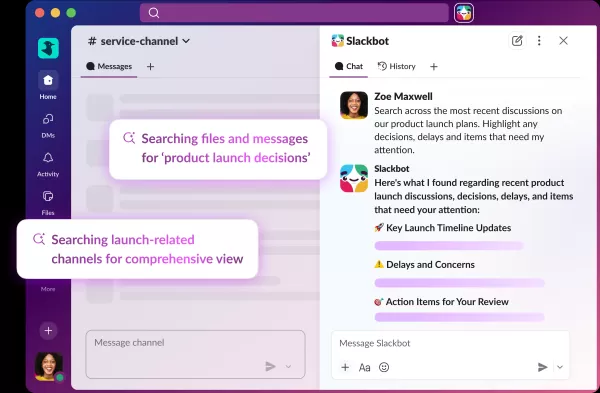
 Slackbot Becomes an AI Agent
Slackbot, the automated assistant embedded in Salesforce’s corporate messaging platform Slack, is evolving into an AI agent. Salesforce CTO Parker Harris envisions it achieving viral status comparable to OpenAI’s ChatGPT.The cloud software giant laun
ByteDance Boosts Core AI Incentives as Doubao Surges 14.6%
ByteDance recently convened a DouBao equity briefing to unveil fresh incentive policies for staff involved in the DouBao division. The strike price for DouBao shares has been lifted from $14.85 in June 2026 to $17.02, marking an approximate 14.6% inc
MiniMax Unveils 10x Team Program to Incentivize Global AI Experts
MiniMax (Xiyu Technology), the General Artificial Intelligence Lab, has officially launched "10x Team," a global talent collaboration initiative. This program aims to recruit top experts across industries to explore the deep application of large mode
Related Special Topic Recommendations
Education and Learning
Slackbot Becomes an AI Agent
Slackbot, the automated assistant embedded in Salesforce’s corporate messaging platform Slack, is evolving into an AI agent. Salesforce CTO Parker Harris envisions it achieving viral status comparable to OpenAI’s ChatGPT.The cloud software giant laun
ByteDance Boosts Core AI Incentives as Doubao Surges 14.6%
ByteDance recently convened a DouBao equity briefing to unveil fresh incentive policies for staff involved in the DouBao division. The strike price for DouBao shares has been lifted from $14.85 in June 2026 to $17.02, marking an approximate 14.6% inc
MiniMax Unveils 10x Team Program to Incentivize Global AI Experts
MiniMax (Xiyu Technology), the General Artificial Intelligence Lab, has officially launched "10x Team," a global talent collaboration initiative. This program aims to recruit top experts across industries to explore the deep application of large mode
Related Special Topic Recommendations
Education and Learning
 AI Study Tools for Homework and Exam Prep
2026 Latest Best AI Study Tools for Homework and Exam Prep! XIX.AI curates a top-rated list of powerful, game-changing tools that help students boost productivity, streamline homework completion, and ace exams through real-world tests. Get a free vs paid comparison, detailed rankings, and must-try options to unlock your AI edge. Explore now!
 10 tools
 xix.ai
Music composition
AI Vocal Demo Tools for Songwriters, Hooks, Toplines, and Multilingual Draft Sessions
xix.ai
Music composition
AI Vocal Demo Tools for Songwriters, Hooks, Toplines, and Multilingual Draft Sessions
2026 Latest Best AI Vocal Demo Tools for Songwriters, Hook Creators, and Multi-Language Content Teams! XIX.AI has curated a top-rated list of powerful game-changing tools that go through rigorous real-world tests. You’ll find detailed free vs paid comparison data, comprehensive rankings, and must-try options to help you boost writing efficiency and unlock your creative potential. Explore now to discover your perfect tool for all your content needs!
9 tools
xix.ai
Business
Best AI Competitive Research Tools for Small Businesses
2026 Latest Best Top-rated AI Competitive Research Tools for Small Businesses! XIX.AI has curated a highly powerful game-changing collection, updated weekly with rigorous real-world tests and detailed rankings. You can find a comprehensive free vs paid comparison to help you identify the must-try tools that boost your productivity and give you a competitive edge. Explore now to discover your perfect tool!
9 tools
xix.ai
Image editing
Photoshop AI Retouch Tools for Ecommerce Apparel, Skin Cleanup, and Color Consistency
2026 Latest Best Photoshop AI retouch tools for ecommerce apparel, skin cleanup, and color consistency! This top-rated curated list features powerful game-changing solutions that help you boost writing efficiency, streamline content creation, and achieve perfect visual results effortlessly. Each tool has undergone real-world tests through weekly updated rankings, complete with free vs paid comparison details. Backed by XIX.AI, it’s the must-try guide for anyone aiming to unlock your AI edge. Explore now!
10 tools
xix.ai
Prompt
Best AI Prompt Libraries for ChatGPT Workflows
2026 Latest Best Top-Rated AI Prompt Libraries for optimizing all types of ChatGPT workflows. XIX.AI has curated a powerful, game-changing collection that goes through rigorous real-world tests to ensure top performance. You can find detailed free vs paid comparisons and expert rankings to help you choose the must-try tools that boost your productivity and unlock your AI edge. Explore now!
11 tools
xix.ai
Education and Learning
AI Quiz Builder Platforms for Teachers, Tutors, and Cohort-Based Learning Programs
2026 Latest Best AI Quiz Builder Platforms for Teachers, Tutors, and Cohort-Based Learning Programs! XIX.AI has curated a top-rated list of powerful game-changing tools that go through real-world tests to deliver accurate rankings. These must-try platforms help boost writing efficiency, streamline content creation, and simplify quiz design across all learning scenarios. Explore now to discover your perfect tool for unlocking your AI edge in teaching!
13 tools
xix.ai

 Comments (1)
0/500
Comments (1)
0/500
![JimmyJohnson]()
Finalmente uma discussão que vai além do hype dos LLMs! Sempre achei que a abordagem 'caixa preta' tinha limites claros, especialmente em tarefas onde a lógica é fundamental. Neuro-simbólico parece promissor para aplicações críticas como diagnósticos médicos ou automação industrial, onde precisamos de transparência e raciocínio confiável 🌱. Será que essa fusão vai popularizar a IA em setores mais conservadores? Aguardando testes práticos!
The AI landscape is undergoing a quiet revolution that could redefine how we develop intelligent systems. While conventional large language models still capture most attention, a hybrid approach called Neurosymbolic LLMs is demonstrating surprising effectiveness by blending neural networks with symbolic reasoning. These advanced systems first translate natural language instructions into structured programs, then execute them using symbolic interpreters - merging the pattern recognition strengths of LLMs with the precision of classical AI. This article examines why this emerging hybrid architecture may represent the next evolution in artificial intelligence.
The Scaling Myth Falls Apart
The prevailing assumption that simply increasing model size would continuously improve performance is showing cracks. The case of Grok 4 is telling - despite consuming 100x more computational resources than its predecessor, its gains on rigorous benchmarks like Humanity's Last Exam proved unexpectedly modest. The breakthrough came when researchers introduced symbolic components, suggesting that brute-force scaling alone cannot unlock true intelligence. Neurosymbolic architectures are demonstrating that smarter system design can achieve what raw computing power cannot.
The Limitations of Pure Neural Networks
Traditional LLMs face fundamental constraints rooted in their neural architecture. While exceptional at pattern matching, they struggle with scenarios requiring genuine reasoning. Apple researchers exposed this weakness when adding irrelevant clauses caused state-of-the-art models' mathematical accuracy to plummet 65%. Similar failures emerge in tasks like crossword construction - where ChatGPT would accept nonsense words like "RCRCT" as valid, while symbolic-enhanced systems maintained perfect accuracy. These examples reveal neural networks' inability to reliably perform algorithmic operations or sustain logical consistency across multi-step problems.
The Rise of Symbolic AI: Logical Precision Over Pattern Matching
Symbolic systems bring vital strengths that complement neural networks' weaknesses. Their rule-based nature provides transparency and verifiability lacking in black-box neural models. Efficiency advantages also emerge - the Neuro-Symbolic Concept Learner achieved high accuracy using just 10% of the training data required by conventional networks. In domains requiring accountability, symbolic AI's human-readable decision trails offer crucial advantages. Studies like the Tower of Hanoi experiments demonstrate how symbolic reasoning enables solutions that evade even advanced LLMs.
The Growing Demand for Explainable AI
Global regulations like the EU AI Act are creating strong market incentives for transparent AI systems. Neurosymbolic approaches naturally align with these requirements through their interpretable decision-making processes. Investment patterns reflect this shift, with enterprises prioritizing solutions that balance performance with auditability - particularly in regulated sectors like finance and healthcare where explainability isn't optional.
Improving AI Reliability with Neurosymbolic Integration
Critical applications demand more than statistical plausibility - they require verifiable correctness. Traditional LLMs' probabilistic nature makes them ill-suited for high-stakes domains where errors carry serious consequences. Projects like Microsoft's GraphRAG demonstrate how hybrid neurosymbolic systems can provide both the creativity of neural networks and the reliability of formal systems - a combination essential for deploying AI in mission-critical scenarios.
Neurosymbolic LLMs in Action
Leading research institutions are already demonstrating the power of this hybrid approach. Google DeepMind's Alpha series (AlphaFold, AlphaProof, AlphaGeometry) showcase how combining neural networks with symbolic reasoning achieves breakthrough performance on challenges ranging from protein folding to mathematical proof generation. These systems revive classical AI techniques like search and iteration algorithms, integrating them with modern deep learning in ways that surpass either approach alone.
Challenges and Opportunities
The path forward isn't without obstacles. Current neurosymbolic implementations remain somewhat patchwork - while adding code interpreters to LLMs provides clear benefits, we're still far from seamless neural-symbolic integration. The holy grail remains developing architectures where both components work in fluid harmony, dynamically adapting reasoning strategies to different contexts. Achieving this will require fundamental innovations in AI system design moving beyond today's relatively simple combinations of discrete components.
The Bottom Line
Neurosymbolic AI represents not just an incremental improvement, but a potential paradigm shift in how we build intelligent systems. By combining the pattern recognition power of neural networks with the reasoning capabilities of symbolic AI, this approach addresses critical limitations of current LLMs while meeting growing demands for transparency and reliability. As industries increasingly require AI systems that can explain their decisions and guarantee accuracy, neurosymbolic architectures are emerging as the most promising path forward - even if significant research challenges remain in realizing their full potential.








 Slackbot Becomes an AI Agent
Slackbot, the automated assistant embedded in Salesforce’s corporate messaging platform Slack, is evolving into an AI agent. Salesforce CTO Parker Harris envisions it achieving viral status comparable to OpenAI’s ChatGPT.The cloud software giant laun
Slackbot Becomes an AI Agent
Slackbot, the automated assistant embedded in Salesforce’s corporate messaging platform Slack, is evolving into an AI agent. Salesforce CTO Parker Harris envisions it achieving viral status comparable to OpenAI’s ChatGPT.The cloud software giant laun
 ByteDance Boosts Core AI Incentives as Doubao Surges 14.6%
ByteDance recently convened a DouBao equity briefing to unveil fresh incentive policies for staff involved in the DouBao division. The strike price for DouBao shares has been lifted from $14.85 in June 2026 to $17.02, marking an approximate 14.6% inc
ByteDance Boosts Core AI Incentives as Doubao Surges 14.6%
ByteDance recently convened a DouBao equity briefing to unveil fresh incentive policies for staff involved in the DouBao division. The strike price for DouBao shares has been lifted from $14.85 in June 2026 to $17.02, marking an approximate 14.6% inc
 MiniMax Unveils 10x Team Program to Incentivize Global AI Experts
MiniMax (Xiyu Technology), the General Artificial Intelligence Lab, has officially launched "10x Team," a global talent collaboration initiative. This program aims to recruit top experts across industries to explore the deep application of large mode
MiniMax Unveils 10x Team Program to Incentivize Global AI Experts
MiniMax (Xiyu Technology), the General Artificial Intelligence Lab, has officially launched "10x Team," a global talent collaboration initiative. This program aims to recruit top experts across industries to explore the deep application of large mode

2026 Latest Best AI Study Tools for Homework and Exam Prep! XIX.AI curates a top-rated list of powerful, game-changing tools that help students boost productivity, streamline homework completion, and ace exams through real-world tests. Get a free vs paid comparison, detailed rankings, and must-try options to unlock your AI edge. Explore now!
10 tools
xix.ai

2026 Latest Best AI Vocal Demo Tools for Songwriters, Hook Creators, and Multi-Language Content Teams! XIX.AI has curated a top-rated list of powerful game-changing tools that go through rigorous real-world tests. You’ll find detailed free vs paid comparison data, comprehensive rankings, and must-try options to help you boost writing efficiency and unlock your creative potential. Explore now to discover your perfect tool for all your content needs!
9 tools
xix.ai

2026 Latest Best Top-rated AI Competitive Research Tools for Small Businesses! XIX.AI has curated a highly powerful game-changing collection, updated weekly with rigorous real-world tests and detailed rankings. You can find a comprehensive free vs paid comparison to help you identify the must-try tools that boost your productivity and give you a competitive edge. Explore now to discover your perfect tool!
9 tools
xix.ai

2026 Latest Best Photoshop AI retouch tools for ecommerce apparel, skin cleanup, and color consistency! This top-rated curated list features powerful game-changing solutions that help you boost writing efficiency, streamline content creation, and achieve perfect visual results effortlessly. Each tool has undergone real-world tests through weekly updated rankings, complete with free vs paid comparison details. Backed by XIX.AI, it’s the must-try guide for anyone aiming to unlock your AI edge. Explore now!
10 tools
xix.ai
2026 Latest Best Top-Rated AI Prompt Libraries for optimizing all types of ChatGPT workflows. XIX.AI has curated a powerful, game-changing collection that goes through rigorous real-world tests to ensure top performance. You can find detailed free vs paid comparisons and expert rankings to help you choose the must-try tools that boost your productivity and unlock your AI edge. Explore now!
11 tools
xix.ai

2026 Latest Best AI Quiz Builder Platforms for Teachers, Tutors, and Cohort-Based Learning Programs! XIX.AI has curated a top-rated list of powerful game-changing tools that go through real-world tests to deliver accurate rankings. These must-try platforms help boost writing efficiency, streamline content creation, and simplify quiz design across all learning scenarios. Explore now to discover your perfect tool for unlocking your AI edge in teaching!
13 tools
xix.ai

Finalmente uma discussão que vai além do hype dos LLMs! Sempre achei que a abordagem 'caixa preta' tinha limites claros, especialmente em tarefas onde a lógica é fundamental. Neuro-simbólico parece promissor para aplicações críticas como diagnósticos médicos ou automação industrial, onde precisamos de transparência e raciocínio confiável 🌱. Será que essa fusão vai popularizar a IA em setores mais conservadores? Aguardando testes práticos!












