


 Home
HomeAI's Coming Wave: How Artificial Intelligence Will Transform Humanity
We find ourselves at a historic inflection point where artificial intelligence is transitioning from emerging technology to foundational force. Mustafa Suleyman's 'The Coming Wave' offers both visionary insight and urgent warning about AI's growing influence across every dimension of human civilization. This review unpacks the book's central arguments while addressing the profound questions we must confront: How will society adapt to AI's total permeation? What safeguards can realistically contain its disruptive potential?
Core Insights
AI as Foundational Infrastructure: Analyzing how AI joins steam power and electricity as a civilization-defining technology class
The Containment Paradox: Exploring why controlling exponentially advancing technologies may prove impossible
Disrupting Traditional Authority: How AI redistributes capability from institutions to individuals at unprecedented scale
Employment Landscape Transformation: Evaluating whether this technological revolution differs fundamentally from prior industrial shifts
Moral Imperatives: Why ethical development frameworks are no longer optional in the AI era
Decoding AI's Civilizational Impact
AI as Civilization's Next Infrastructure Layer
Historical context reveals AI's extraordinary classification among humanity's most transformative innovations. Like metallurgy, printing presses and electrical grids before it, artificial intelligence represents a general-purpose technology—one of only about two dozen in recorded history that fundamentally reshapes how societies organize and operate.
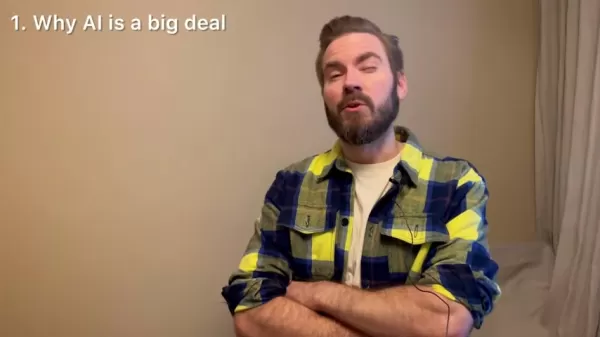
What distinguishes AI is its unique capacity for recursive self-improvement and application across every economic sector simultaneously. Unlike previous advancements that revolutionized specific domains, AI systems display chameleonic adaptability—enhancing medical diagnostics today while optimizing logistics networks tomorrow. This universal utility combined with accelerating capability curves suggests we're not merely adopting another tool, but installing a new operating system for civilization itself.
Suleyman's analysis compels us to consider how foundational technologies historically create winners and losers. The Industrial Revolution's textile mills enriched factory owners while displacing artisan weavers. Similarly, AI's economic redistribution will likely prove both profound and uneven—necessitating thoughtful policy frameworks to smooth transitions and distribute benefits equitably across society.
The Unsolvable Containment Dilemma
'The Coming Wave' presents containment as the defining challenge of our technological age—how to regulate capabilities that become simultaneously more powerful and more accessible. This paradox intensifies with each passing year as cutting-edge AI techniques trickle down into open-source communities and commercial products.
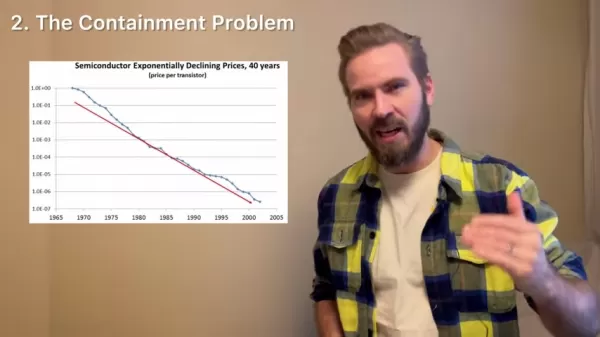
The book's most sobering revelation may be that traditional governance mechanisms are inherently mismatched to control technologies that:
- Require minimal infrastructure (a laptop suffices for many AI applications)
- Enable exponential capability growth (via algorithmic improvements rather than physical constraints)
- Generate irresistible competitive pressures (between corporations and nation-states)
Quantum computing illustrates this perfectly. Once practical quantum systems emerge, they'll break current encryption standards almost incidentally—not through targeted malice but simply by functioning as designed. Similarly, synthetic biology tools now allow garage laboratories to manipulate DNA sequences with precision that required billion-dollar facilities just decades prior. This democratization of destructive potential presents unprecedented governance challenges that existing institutions are ill-equipped to handle.
Power Diffusion in the Algorithmic Age
Suleyman's analysis of technology's equalizing effects carries profound implications for traditional power structures. Where industrial advancements concentrated capability within well-resourced organizations, digital technologies paradoxically distribute power while increasing its potency.

Consider how smartphones erased information asymmetries that previously favored elites. Today, an African farmer accesses weather data rivaling what meteorological agencies provided governments just years ago. AI accelerates this trend by placing capabilities like media generation, data analysis and even scientific research within reach of individuals and small groups.
This empowerment/disruption duality creates complex new challenges:
- The same generative AI that helps activists document human rights abuses could fabricate convincing disinformation
- Biohackers democratizing medical research might accidentally engineer hazardous organisms
- Autonomous systems reducing industrial accidents could enable new forms of automated warfare
Society must develop new resilience strategies recognizing that containment is increasingly implausible—focusing instead on rapid detection, response and adaptation frameworks for when (not if) technologies are misused.
Labor Market Earthquakes
Historical patterns of technological unemployment may offer false comfort in the AI era. While past innovations ultimately created more jobs than they destroyed, Suleyman questions whether this equilibrium will hold when machines can learn and adapt across the cognitive spectrum.
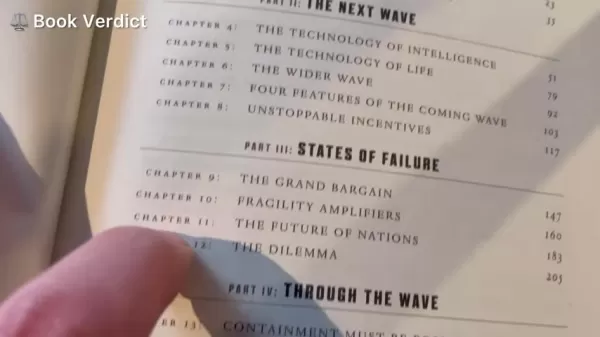
The creative industries provide a concerning preview. AI now handles concept art generation, procedural animation, code completion and synthetic voice acting—tasks spanning the creative/technical spectrum. Unlike industrial machines that replaced physical labor, these systems emulate human judgment and aesthetic sensibility. When creative differentiation (the traditional refuge from automation) becomes algorithmically reproducible, what professional domains remain uniquely human?
This economic recalibration may require reinventing social contracts around:
- Education systems emphasizing uniquely human capabilities (creativity, emotional intelligence, contextual reasoning)
- Alternative value distribution mechanisms (potential exploration of universal basic income models)
- Redefinitions of meaningful contribution beyond traditional employment
The transition promises to be turbulent as societies navigate shifting expectations around work, purpose and economic participation in an age of artificial general intelligence.
Personal Perspectives on AI's Ascendancy
Living Through the Transition
Beyond theoretical analysis, 'The Coming Wave' resonates because we're already experiencing precursor effects in daily life—AI curates our social feeds, filters job applications, and increasingly participates in creative collaborations. This tangible presence makes abstract futurism feel immediate and personal.
The book succeeds most when grounding its grand visions in concrete examples—whether describing how machine learning now predicts protein structures or how recommendation algorithms shape political discourse. These real-world touchpoints help readers comprehend the scope of changes that will soon affect every profession, institution and social convention.
Evaluating 'The Coming Wave'
Strengths
Comprehensive integration of technical, economic and sociological perspectives
Clear-eyed assessment of risks without descending into dystopian sensationalism
Actionable framework for anticipating and navigating coming disruptions
Limitations
Containment solutions may underestimate institutional inertia and competitive pressures
Some technological projections assume linear progression of current trends
Could further explore cultural adaptation strategies beyond governance frameworks
Central Themes and Structural Insights
Systemic Transformation
The book's greatest contribution lies in framing AI not as discrete tools but as societal infrastructure—the pipes and power lines of the digital age that will invisibly undergird every human endeavor. This systems perspective helps explain why incremental regulatory approaches may prove inadequate for challenges of this magnitude.
Foresight Methodology
Suleyman draws on his unique position spanning cutting-edge research and policy discussions to outline plausible developmental trajectories. His scenarios help differentiate between near-term certainties (like workforce disruptions) and longer-term uncertainties (such as artificial general intelligence emergence).
Moral Architecture
By presenting ethical dilemmas not as philosophical abstractions but as imminent design choices, the book makes moral reasoning feel urgently practical. The discussion compels technologists to consider how today's engineering decisions might constrain or enable future societal outcomes.
Intended Readership and Applications
Policy Architects
Provides conceptual models for designing adaptive governance frameworks to complement exponentially advancing technologies
Technology Architects
Offers ethical heuristics for engineering teams building increasingly autonomous systems
Concerned Citizens
Demystifies complex technological trajectories to inform personal and community preparedness strategies
Common Reader Questions
What distinguishes this book from other AI literature?
'The Coming Wave' uniquely integrates deep technical understanding with geopolitical analysis and historical perspective—connecting AI's development arc to broader patterns of technological diffusion and social change.
Who benefits from reading this work?
Anyone seeking comprehensive yet accessible understanding of how AI and synthetic biology will reshape economic, political and cultural systems in coming decades.
Why emphasize containment impossibility?
Recognizing containment's infeasibility focuses attention on more pragmatic strategies—building societal resilience, fail-safes and adaptation mechanisms rather than relying on unenforceable restrictions.
What hopeful perspectives emerge?
The book ultimately argues that while challenges appear daunting, human ingenuity applied cooperatively across disciplines can potentially steer these powerful technologies toward beneficial outcomes.
Recommended Complementary Reading
Expanding the Perspective
For those wishing to extend their exploration, consider Max Tegmark's 'Life 3.0' for deeper dives into AI consciousness scenarios or Nick Bostrom's 'Superintelligence' for rigorous analysis of control problems with advanced AI systems. Mo Gawdat's 'Scary Smart' offers accessible entry points for readers new to these discussions.
Related article
 U.S. Stocks Hit Historic Milestone as AI and Aerospace Giants Prepare for Trillion-Dollar Debut
Elon Musk, Sam Altman, and Dario Amodei, three titans of the technology sector, are advancing toward initial public offerings for their respective ventures. With SpaceX, OpenAI, and Anthropic—three industry behemoths nearing trillion-dollar valuation
Swedish AI Startup Lovable Eyes $13.2 Billion Valuation After Major Funding Round
As AI-driven coding tools gain traction, Swedish startup Lovable has secured a major funding round. The company aims to raise $3 billion, potentially boosting its valuation to $13.2 billion—double the $6.6 billion recorded last December. Menlo Ventur
Google Tests Remy AI Agent for Gemini as Focus Shifts to User Control
According to Business Insider, Google is testing Remy, a new AI personal agent for Gemini. This tool aims to execute tasks on behalf of users, streamlining both professional workflows and daily routines.Currently, Remy is undergoing testing in an int
Related Special Topic Recommendations
writing
U.S. Stocks Hit Historic Milestone as AI and Aerospace Giants Prepare for Trillion-Dollar Debut
Elon Musk, Sam Altman, and Dario Amodei, three titans of the technology sector, are advancing toward initial public offerings for their respective ventures. With SpaceX, OpenAI, and Anthropic—three industry behemoths nearing trillion-dollar valuation
Swedish AI Startup Lovable Eyes $13.2 Billion Valuation After Major Funding Round
As AI-driven coding tools gain traction, Swedish startup Lovable has secured a major funding round. The company aims to raise $3 billion, potentially boosting its valuation to $13.2 billion—double the $6.6 billion recorded last December. Menlo Ventur
Google Tests Remy AI Agent for Gemini as Focus Shifts to User Control
According to Business Insider, Google is testing Remy, a new AI personal agent for Gemini. This tool aims to execute tasks on behalf of users, streamlining both professional workflows and daily routines.Currently, Remy is undergoing testing in an int
Related Special Topic Recommendations
writing
 Best AI Outline Generators for Long-Form SEO Articles
2026 Latest Best Top-Rated AI Outline Generators for Long-Form SEO Articles, meticulously curated by XIX.AI. These powerful tools offer game-changing assistance in creating high-quality content quickly, boosting writing efficiency significantly. Get a free vs paid comparison along with real-world tests and detailed rankings to help you find the must-try option that suits your needs. Explore now to unlock your AI edge.
 8 tools
 xix.ai
Education and Learning
AI Study Tools for Homework and Exam Prep
xix.ai
Education and Learning
AI Study Tools for Homework and Exam Prep
2026 Latest Best AI Study Tools for Homework and Exam Prep! XIX.AI curates a top-rated list of powerful, game-changing tools that help students boost productivity, streamline homework completion, and ace exams through real-world tests. Get a free vs paid comparison, detailed rankings, and must-try options to unlock your AI edge. Explore now!
10 tools
xix.ai
Music composition
AI Vocal Demo Tools for Songwriters, Hooks, Toplines, and Multilingual Draft Sessions
2026 Latest Best AI Vocal Demo Tools for Songwriters, Hook Creators, and Multi-Language Content Teams! XIX.AI has curated a top-rated list of powerful game-changing tools that go through rigorous real-world tests. You’ll find detailed free vs paid comparison data, comprehensive rankings, and must-try options to help you boost writing efficiency and unlock your creative potential. Explore now to discover your perfect tool for all your content needs!
9 tools
xix.ai
Business
Best AI Competitive Research Tools for Small Businesses
2026 Latest Best Top-rated AI Competitive Research Tools for Small Businesses! XIX.AI has curated a highly powerful game-changing collection, updated weekly with rigorous real-world tests and detailed rankings. You can find a comprehensive free vs paid comparison to help you identify the must-try tools that boost your productivity and give you a competitive edge. Explore now to discover your perfect tool!
9 tools
xix.ai
Image editing
Photoshop AI Retouch Tools for Ecommerce Apparel, Skin Cleanup, and Color Consistency
2026 Latest Best Photoshop AI retouch tools for ecommerce apparel, skin cleanup, and color consistency! This top-rated curated list features powerful game-changing solutions that help you boost writing efficiency, streamline content creation, and achieve perfect visual results effortlessly. Each tool has undergone real-world tests through weekly updated rankings, complete with free vs paid comparison details. Backed by XIX.AI, it’s the must-try guide for anyone aiming to unlock your AI edge. Explore now!
10 tools
xix.ai
Prompt
Best AI Prompt Libraries for ChatGPT Workflows
2026 Latest Best Top-Rated AI Prompt Libraries for optimizing all types of ChatGPT workflows. XIX.AI has curated a powerful, game-changing collection that goes through rigorous real-world tests to ensure top performance. You can find detailed free vs paid comparisons and expert rankings to help you choose the must-try tools that boost your productivity and unlock your AI edge. Explore now!
11 tools
xix.ai

 Comments (3)
0/500
Comments (3)
0/500
![NicholasDavis]()
這篇文章的標題讓我想到,AI的發展速度真的快到讓人措手不及。作者提到的『歷史轉折點』這個詞用得真好,我們現在是不是就像站在蒸汽機發明前夜的普通人,完全無法想像未來會變成什麼樣子?🤔 書裡那些警告,比如倫理問題和失控風險,感覺不只是科幻情節,而是我們這代人馬上要面對的現實挑戰了。有點期待又有点怕。
![WillGarcía]()
この記事を読んで、AIが本当に人間社会の基盤になるのか少し不安になった。特に倫理面の警告は重要だと思うけど、日本ではまだ法整備が追いついてない気がする…🤔 個人的には生成AIで作られたアート作品の著作権問題が気になってます。
![AlbertRodriguez]()
這篇文章的觀點也太震撼了吧!原來AI不只是工具,而是可能重塑人類社會的基礎力量。書中提到的『緊急警告』讓我突然有點擔心未來的工作機會會不會被AI大量取代⋯⋯不過說真的,科技發展太快了,我們普通用戶也只能邊學邊適應了,希望倫理規範能跟上啊🤔
We find ourselves at a historic inflection point where artificial intelligence is transitioning from emerging technology to foundational force. Mustafa Suleyman's 'The Coming Wave' offers both visionary insight and urgent warning about AI's growing influence across every dimension of human civilization. This review unpacks the book's central arguments while addressing the profound questions we must confront: How will society adapt to AI's total permeation? What safeguards can realistically contain its disruptive potential?
Core Insights
AI as Foundational Infrastructure: Analyzing how AI joins steam power and electricity as a civilization-defining technology class
The Containment Paradox: Exploring why controlling exponentially advancing technologies may prove impossible
Disrupting Traditional Authority: How AI redistributes capability from institutions to individuals at unprecedented scale
Employment Landscape Transformation: Evaluating whether this technological revolution differs fundamentally from prior industrial shifts
Moral Imperatives: Why ethical development frameworks are no longer optional in the AI era
Decoding AI's Civilizational Impact
AI as Civilization's Next Infrastructure Layer
Historical context reveals AI's extraordinary classification among humanity's most transformative innovations. Like metallurgy, printing presses and electrical grids before it, artificial intelligence represents a general-purpose technology—one of only about two dozen in recorded history that fundamentally reshapes how societies organize and operate.
What distinguishes AI is its unique capacity for recursive self-improvement and application across every economic sector simultaneously. Unlike previous advancements that revolutionized specific domains, AI systems display chameleonic adaptability—enhancing medical diagnostics today while optimizing logistics networks tomorrow. This universal utility combined with accelerating capability curves suggests we're not merely adopting another tool, but installing a new operating system for civilization itself.
Suleyman's analysis compels us to consider how foundational technologies historically create winners and losers. The Industrial Revolution's textile mills enriched factory owners while displacing artisan weavers. Similarly, AI's economic redistribution will likely prove both profound and uneven—necessitating thoughtful policy frameworks to smooth transitions and distribute benefits equitably across society.
The Unsolvable Containment Dilemma
'The Coming Wave' presents containment as the defining challenge of our technological age—how to regulate capabilities that become simultaneously more powerful and more accessible. This paradox intensifies with each passing year as cutting-edge AI techniques trickle down into open-source communities and commercial products.
The book's most sobering revelation may be that traditional governance mechanisms are inherently mismatched to control technologies that:
- Require minimal infrastructure (a laptop suffices for many AI applications)
- Enable exponential capability growth (via algorithmic improvements rather than physical constraints)
- Generate irresistible competitive pressures (between corporations and nation-states)
Quantum computing illustrates this perfectly. Once practical quantum systems emerge, they'll break current encryption standards almost incidentally—not through targeted malice but simply by functioning as designed. Similarly, synthetic biology tools now allow garage laboratories to manipulate DNA sequences with precision that required billion-dollar facilities just decades prior. This democratization of destructive potential presents unprecedented governance challenges that existing institutions are ill-equipped to handle.
Power Diffusion in the Algorithmic Age
Suleyman's analysis of technology's equalizing effects carries profound implications for traditional power structures. Where industrial advancements concentrated capability within well-resourced organizations, digital technologies paradoxically distribute power while increasing its potency.
Consider how smartphones erased information asymmetries that previously favored elites. Today, an African farmer accesses weather data rivaling what meteorological agencies provided governments just years ago. AI accelerates this trend by placing capabilities like media generation, data analysis and even scientific research within reach of individuals and small groups.
This empowerment/disruption duality creates complex new challenges:
- The same generative AI that helps activists document human rights abuses could fabricate convincing disinformation
- Biohackers democratizing medical research might accidentally engineer hazardous organisms
- Autonomous systems reducing industrial accidents could enable new forms of automated warfare
Society must develop new resilience strategies recognizing that containment is increasingly implausible—focusing instead on rapid detection, response and adaptation frameworks for when (not if) technologies are misused.
Labor Market Earthquakes
Historical patterns of technological unemployment may offer false comfort in the AI era. While past innovations ultimately created more jobs than they destroyed, Suleyman questions whether this equilibrium will hold when machines can learn and adapt across the cognitive spectrum.
The creative industries provide a concerning preview. AI now handles concept art generation, procedural animation, code completion and synthetic voice acting—tasks spanning the creative/technical spectrum. Unlike industrial machines that replaced physical labor, these systems emulate human judgment and aesthetic sensibility. When creative differentiation (the traditional refuge from automation) becomes algorithmically reproducible, what professional domains remain uniquely human?
This economic recalibration may require reinventing social contracts around:
- Education systems emphasizing uniquely human capabilities (creativity, emotional intelligence, contextual reasoning)
- Alternative value distribution mechanisms (potential exploration of universal basic income models)
- Redefinitions of meaningful contribution beyond traditional employment
The transition promises to be turbulent as societies navigate shifting expectations around work, purpose and economic participation in an age of artificial general intelligence.
Personal Perspectives on AI's Ascendancy
Living Through the Transition
Beyond theoretical analysis, 'The Coming Wave' resonates because we're already experiencing precursor effects in daily life—AI curates our social feeds, filters job applications, and increasingly participates in creative collaborations. This tangible presence makes abstract futurism feel immediate and personal.
The book succeeds most when grounding its grand visions in concrete examples—whether describing how machine learning now predicts protein structures or how recommendation algorithms shape political discourse. These real-world touchpoints help readers comprehend the scope of changes that will soon affect every profession, institution and social convention.
Evaluating 'The Coming Wave'
Strengths
Comprehensive integration of technical, economic and sociological perspectives
Clear-eyed assessment of risks without descending into dystopian sensationalism
Actionable framework for anticipating and navigating coming disruptions
Limitations
Containment solutions may underestimate institutional inertia and competitive pressures
Some technological projections assume linear progression of current trends
Could further explore cultural adaptation strategies beyond governance frameworks
Central Themes and Structural Insights
Systemic Transformation
The book's greatest contribution lies in framing AI not as discrete tools but as societal infrastructure—the pipes and power lines of the digital age that will invisibly undergird every human endeavor. This systems perspective helps explain why incremental regulatory approaches may prove inadequate for challenges of this magnitude.
Foresight Methodology
Suleyman draws on his unique position spanning cutting-edge research and policy discussions to outline plausible developmental trajectories. His scenarios help differentiate between near-term certainties (like workforce disruptions) and longer-term uncertainties (such as artificial general intelligence emergence).
Moral Architecture
By presenting ethical dilemmas not as philosophical abstractions but as imminent design choices, the book makes moral reasoning feel urgently practical. The discussion compels technologists to consider how today's engineering decisions might constrain or enable future societal outcomes.
Intended Readership and Applications
Policy Architects
Provides conceptual models for designing adaptive governance frameworks to complement exponentially advancing technologies
Technology Architects
Offers ethical heuristics for engineering teams building increasingly autonomous systems
Concerned Citizens
Demystifies complex technological trajectories to inform personal and community preparedness strategies
Common Reader Questions
What distinguishes this book from other AI literature?
'The Coming Wave' uniquely integrates deep technical understanding with geopolitical analysis and historical perspective—connecting AI's development arc to broader patterns of technological diffusion and social change.
Who benefits from reading this work?
Anyone seeking comprehensive yet accessible understanding of how AI and synthetic biology will reshape economic, political and cultural systems in coming decades.
Why emphasize containment impossibility?
Recognizing containment's infeasibility focuses attention on more pragmatic strategies—building societal resilience, fail-safes and adaptation mechanisms rather than relying on unenforceable restrictions.
What hopeful perspectives emerge?
The book ultimately argues that while challenges appear daunting, human ingenuity applied cooperatively across disciplines can potentially steer these powerful technologies toward beneficial outcomes.
Recommended Complementary Reading
Expanding the Perspective
For those wishing to extend their exploration, consider Max Tegmark's 'Life 3.0' for deeper dives into AI consciousness scenarios or Nick Bostrom's 'Superintelligence' for rigorous analysis of control problems with advanced AI systems. Mo Gawdat's 'Scary Smart' offers accessible entry points for readers new to these discussions.








 U.S. Stocks Hit Historic Milestone as AI and Aerospace Giants Prepare for Trillion-Dollar Debut
Elon Musk, Sam Altman, and Dario Amodei, three titans of the technology sector, are advancing toward initial public offerings for their respective ventures. With SpaceX, OpenAI, and Anthropic—three industry behemoths nearing trillion-dollar valuation
U.S. Stocks Hit Historic Milestone as AI and Aerospace Giants Prepare for Trillion-Dollar Debut
Elon Musk, Sam Altman, and Dario Amodei, three titans of the technology sector, are advancing toward initial public offerings for their respective ventures. With SpaceX, OpenAI, and Anthropic—three industry behemoths nearing trillion-dollar valuation
 Swedish AI Startup Lovable Eyes $13.2 Billion Valuation After Major Funding Round
As AI-driven coding tools gain traction, Swedish startup Lovable has secured a major funding round. The company aims to raise $3 billion, potentially boosting its valuation to $13.2 billion—double the $6.6 billion recorded last December. Menlo Ventur
Google Tests Remy AI Agent for Gemini as Focus Shifts to User Control
According to Business Insider, Google is testing Remy, a new AI personal agent for Gemini. This tool aims to execute tasks on behalf of users, streamlining both professional workflows and daily routines.Currently, Remy is undergoing testing in an int
Swedish AI Startup Lovable Eyes $13.2 Billion Valuation After Major Funding Round
As AI-driven coding tools gain traction, Swedish startup Lovable has secured a major funding round. The company aims to raise $3 billion, potentially boosting its valuation to $13.2 billion—double the $6.6 billion recorded last December. Menlo Ventur
Google Tests Remy AI Agent for Gemini as Focus Shifts to User Control
According to Business Insider, Google is testing Remy, a new AI personal agent for Gemini. This tool aims to execute tasks on behalf of users, streamlining both professional workflows and daily routines.Currently, Remy is undergoing testing in an int

2026 Latest Best Top-Rated AI Outline Generators for Long-Form SEO Articles, meticulously curated by XIX.AI. These powerful tools offer game-changing assistance in creating high-quality content quickly, boosting writing efficiency significantly. Get a free vs paid comparison along with real-world tests and detailed rankings to help you find the must-try option that suits your needs. Explore now to unlock your AI edge.
8 tools
xix.ai

2026 Latest Best AI Study Tools for Homework and Exam Prep! XIX.AI curates a top-rated list of powerful, game-changing tools that help students boost productivity, streamline homework completion, and ace exams through real-world tests. Get a free vs paid comparison, detailed rankings, and must-try options to unlock your AI edge. Explore now!
10 tools
xix.ai

2026 Latest Best AI Vocal Demo Tools for Songwriters, Hook Creators, and Multi-Language Content Teams! XIX.AI has curated a top-rated list of powerful game-changing tools that go through rigorous real-world tests. You’ll find detailed free vs paid comparison data, comprehensive rankings, and must-try options to help you boost writing efficiency and unlock your creative potential. Explore now to discover your perfect tool for all your content needs!
9 tools
xix.ai

2026 Latest Best Top-rated AI Competitive Research Tools for Small Businesses! XIX.AI has curated a highly powerful game-changing collection, updated weekly with rigorous real-world tests and detailed rankings. You can find a comprehensive free vs paid comparison to help you identify the must-try tools that boost your productivity and give you a competitive edge. Explore now to discover your perfect tool!
9 tools
xix.ai

2026 Latest Best Photoshop AI retouch tools for ecommerce apparel, skin cleanup, and color consistency! This top-rated curated list features powerful game-changing solutions that help you boost writing efficiency, streamline content creation, and achieve perfect visual results effortlessly. Each tool has undergone real-world tests through weekly updated rankings, complete with free vs paid comparison details. Backed by XIX.AI, it’s the must-try guide for anyone aiming to unlock your AI edge. Explore now!
10 tools
xix.ai
2026 Latest Best Top-Rated AI Prompt Libraries for optimizing all types of ChatGPT workflows. XIX.AI has curated a powerful, game-changing collection that goes through rigorous real-world tests to ensure top performance. You can find detailed free vs paid comparisons and expert rankings to help you choose the must-try tools that boost your productivity and unlock your AI edge. Explore now!
11 tools
xix.ai

這篇文章的標題讓我想到,AI的發展速度真的快到讓人措手不及。作者提到的『歷史轉折點』這個詞用得真好,我們現在是不是就像站在蒸汽機發明前夜的普通人,完全無法想像未來會變成什麼樣子?🤔 書裡那些警告,比如倫理問題和失控風險,感覺不只是科幻情節,而是我們這代人馬上要面對的現實挑戰了。有點期待又有点怕。
この記事を読んで、AIが本当に人間社会の基盤になるのか少し不安になった。特に倫理面の警告は重要だと思うけど、日本ではまだ法整備が追いついてない気がする…🤔 個人的には生成AIで作られたアート作品の著作権問題が気になってます。
這篇文章的觀點也太震撼了吧!原來AI不只是工具,而是可能重塑人類社會的基礎力量。書中提到的『緊急警告』讓我突然有點擔心未來的工作機會會不會被AI大量取代⋯⋯不過說真的,科技發展太快了,我們普通用戶也只能邊學邊適應了,希望倫理規範能跟上啊🤔












