


 Home
HomeMiniMax Surpasses 1 Million Business Clients; Changxiang 3D Eyes Hong Kong IPO
Recently, the tech industry has seen notable advancements in two key areas: MiniMax continues to demonstrate strong performance in AI applications, while Creative 3D has made its public market debut, signaling that consumer-grade 3D printing is entering a phase of broad adoption.
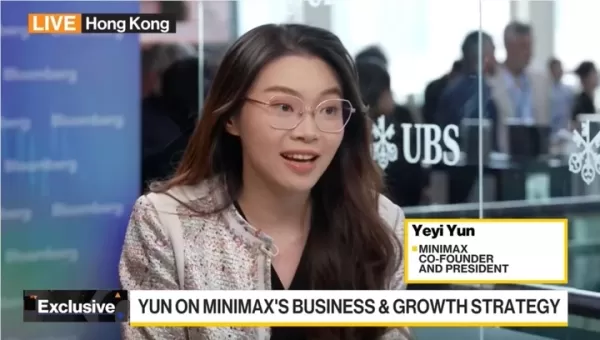
In the large AI model space, MiniMax's latest disclosed business metrics are striking. The company now serves over one million enterprise and developer clients globally—a fivefold increase from six months ago—and its total user base has grown to 300 million. More importantly, MiniMax's business-to-business monetization engine is accelerating rapidly: its annual recurring revenue (ARR) has jumped more than 100% in the past two months alone. At this pace, the time required for ARR to double has shrunk to 60 days, a rate that now rivals that of leading AI companies worldwide.
Turning to hardware manufacturing, the consumer 3D printing sector has achieved a significant milestone. On May 29, Creative 3D was listed on the main board of the Hong Kong Stock Exchange, earning the distinction of being "the first publicly traded company focused on consumer-level 3D printing." To accelerate the technology's adoption into everyday life, Creative 3D has also forged deep strategic partnerships with major e-commerce platforms JD.com and Tmall.
This partnership goes beyond conventional hardware sales: the three parties will create an end-to-end loop covering R&D, manufacturing, multi-channel retail, and after-sales service. By harnessing the supply chain strengths and digital operations of e-commerce platforms, Creative 3D intends to reduce the barriers to using 3D printers, making the technology easier to adopt in homes and schools.
Industry observers note that these trends show AI moving from hype to practical deployment, while 3D printing is making the risky transition from niche enthusiasm to mainstream adoption. Whether it's the surge in computing power demand on the software side or the expansion of distribution channels on the hardware side, all signs point to technology products entering daily life at an unprecedented pace.
Related article
 U.S. Stocks Hit Historic Milestone as AI and Aerospace Giants Prepare for Trillion-Dollar Debut
Elon Musk, Sam Altman, and Dario Amodei, three titans of the technology sector, are advancing toward initial public offerings for their respective ventures. With SpaceX, OpenAI, and Anthropic—three industry behemoths nearing trillion-dollar valuation
Swedish AI Startup Lovable Eyes $13.2 Billion Valuation After Major Funding Round
As AI-driven coding tools gain traction, Swedish startup Lovable has secured a major funding round. The company aims to raise $3 billion, potentially boosting its valuation to $13.2 billion—double the $6.6 billion recorded last December. Menlo Ventur
Google Tests Remy AI Agent for Gemini as Focus Shifts to User Control
According to Business Insider, Google is testing Remy, a new AI personal agent for Gemini. This tool aims to execute tasks on behalf of users, streamlining both professional workflows and daily routines.Currently, Remy is undergoing testing in an int
Related Special Topic Recommendations
Data Analysis
U.S. Stocks Hit Historic Milestone as AI and Aerospace Giants Prepare for Trillion-Dollar Debut
Elon Musk, Sam Altman, and Dario Amodei, three titans of the technology sector, are advancing toward initial public offerings for their respective ventures. With SpaceX, OpenAI, and Anthropic—three industry behemoths nearing trillion-dollar valuation
Swedish AI Startup Lovable Eyes $13.2 Billion Valuation After Major Funding Round
As AI-driven coding tools gain traction, Swedish startup Lovable has secured a major funding round. The company aims to raise $3 billion, potentially boosting its valuation to $13.2 billion—double the $6.6 billion recorded last December. Menlo Ventur
Google Tests Remy AI Agent for Gemini as Focus Shifts to User Control
According to Business Insider, Google is testing Remy, a new AI personal agent for Gemini. This tool aims to execute tasks on behalf of users, streamlining both professional workflows and daily routines.Currently, Remy is undergoing testing in an int
Related Special Topic Recommendations
Data Analysis
 Best AI Anomaly Detection Tools for KPI Monitoring across SaaS and Ecommerce Teams
2026 Latest Best Top-rated AI Anomaly Detection Tools for KPI Monitoring in SaaS and Ecommerce teams! XIX.AI has curated a powerful, game-changing collection based on rigorous real-world tests and weekly updated rankings. You’ll find detailed free vs paid comparison insights to help you identify the must-try solution that boosts productivity and unlocks your AI edge. Explore now!
 10 tools
 xix.ai
writing
Best AI Outline Generators for Long-Form SEO Articles
xix.ai
writing
Best AI Outline Generators for Long-Form SEO Articles
2026 Latest Best Top-Rated AI Outline Generators for Long-Form SEO Articles, meticulously curated by XIX.AI. These powerful tools offer game-changing assistance in creating high-quality content quickly, boosting writing efficiency significantly. Get a free vs paid comparison along with real-world tests and detailed rankings to help you find the must-try option that suits your needs. Explore now to unlock your AI edge.
8 tools
xix.ai
Education and Learning
AI Study Tools for Homework and Exam Prep
2026 Latest Best AI Study Tools for Homework and Exam Prep! XIX.AI curates a top-rated list of powerful, game-changing tools that help students boost productivity, streamline homework completion, and ace exams through real-world tests. Get a free vs paid comparison, detailed rankings, and must-try options to unlock your AI edge. Explore now!
10 tools
xix.ai
Music composition
AI Vocal Demo Tools for Songwriters, Hooks, Toplines, and Multilingual Draft Sessions
2026 Latest Best AI Vocal Demo Tools for Songwriters, Hook Creators, and Multi-Language Content Teams! XIX.AI has curated a top-rated list of powerful game-changing tools that go through rigorous real-world tests. You’ll find detailed free vs paid comparison data, comprehensive rankings, and must-try options to help you boost writing efficiency and unlock your creative potential. Explore now to discover your perfect tool for all your content needs!
9 tools
xix.ai
Business
Best AI Competitive Research Tools for Small Businesses
2026 Latest Best Top-rated AI Competitive Research Tools for Small Businesses! XIX.AI has curated a highly powerful game-changing collection, updated weekly with rigorous real-world tests and detailed rankings. You can find a comprehensive free vs paid comparison to help you identify the must-try tools that boost your productivity and give you a competitive edge. Explore now to discover your perfect tool!
9 tools
xix.ai
Image editing
Photoshop AI Retouch Tools for Ecommerce Apparel, Skin Cleanup, and Color Consistency
2026 Latest Best Photoshop AI retouch tools for ecommerce apparel, skin cleanup, and color consistency! This top-rated curated list features powerful game-changing solutions that help you boost writing efficiency, streamline content creation, and achieve perfect visual results effortlessly. Each tool has undergone real-world tests through weekly updated rankings, complete with free vs paid comparison details. Backed by XIX.AI, it’s the must-try guide for anyone aiming to unlock your AI edge. Explore now!
10 tools
xix.ai

 Comments (2)
0/500
Comments (2)
0/500
![WillieCarter]()
J’admire vraiment l’élan de ces deux entreprises, mais je me demande comment elles vont concurrencer les géants du secteur sans sacrifier la qualité des produits pour attirer plus de clients rapidement.
![FredLee]()
MiniMax hitting 1M business clients is insane growth 🚀, but I'm more curious about Creative 3D's IPO—consumer-grade 3D printing has been a tough market. Will they actually disrupt or just hype? 🤷♂️
Recently, the tech industry has seen notable advancements in two key areas: MiniMax continues to demonstrate strong performance in AI applications, while Creative 3D has made its public market debut, signaling that consumer-grade 3D printing is entering a phase of broad adoption.
In the large AI model space, MiniMax's latest disclosed business metrics are striking. The company now serves over one million enterprise and developer clients globally—a fivefold increase from six months ago—and its total user base has grown to 300 million. More importantly, MiniMax's business-to-business monetization engine is accelerating rapidly: its annual recurring revenue (ARR) has jumped more than 100% in the past two months alone. At this pace, the time required for ARR to double has shrunk to 60 days, a rate that now rivals that of leading AI companies worldwide.
Turning to hardware manufacturing, the consumer 3D printing sector has achieved a significant milestone. On May 29, Creative 3D was listed on the main board of the Hong Kong Stock Exchange, earning the distinction of being "the first publicly traded company focused on consumer-level 3D printing." To accelerate the technology's adoption into everyday life, Creative 3D has also forged deep strategic partnerships with major e-commerce platforms JD.com and Tmall.
This partnership goes beyond conventional hardware sales: the three parties will create an end-to-end loop covering R&D, manufacturing, multi-channel retail, and after-sales service. By harnessing the supply chain strengths and digital operations of e-commerce platforms, Creative 3D intends to reduce the barriers to using 3D printers, making the technology easier to adopt in homes and schools.
Industry observers note that these trends show AI moving from hype to practical deployment, while 3D printing is making the risky transition from niche enthusiasm to mainstream adoption. Whether it's the surge in computing power demand on the software side or the expansion of distribution channels on the hardware side, all signs point to technology products entering daily life at an unprecedented pace.








 U.S. Stocks Hit Historic Milestone as AI and Aerospace Giants Prepare for Trillion-Dollar Debut
Elon Musk, Sam Altman, and Dario Amodei, three titans of the technology sector, are advancing toward initial public offerings for their respective ventures. With SpaceX, OpenAI, and Anthropic—three industry behemoths nearing trillion-dollar valuation
U.S. Stocks Hit Historic Milestone as AI and Aerospace Giants Prepare for Trillion-Dollar Debut
Elon Musk, Sam Altman, and Dario Amodei, three titans of the technology sector, are advancing toward initial public offerings for their respective ventures. With SpaceX, OpenAI, and Anthropic—three industry behemoths nearing trillion-dollar valuation
 Swedish AI Startup Lovable Eyes $13.2 Billion Valuation After Major Funding Round
As AI-driven coding tools gain traction, Swedish startup Lovable has secured a major funding round. The company aims to raise $3 billion, potentially boosting its valuation to $13.2 billion—double the $6.6 billion recorded last December. Menlo Ventur
Google Tests Remy AI Agent for Gemini as Focus Shifts to User Control
According to Business Insider, Google is testing Remy, a new AI personal agent for Gemini. This tool aims to execute tasks on behalf of users, streamlining both professional workflows and daily routines.Currently, Remy is undergoing testing in an int
Swedish AI Startup Lovable Eyes $13.2 Billion Valuation After Major Funding Round
As AI-driven coding tools gain traction, Swedish startup Lovable has secured a major funding round. The company aims to raise $3 billion, potentially boosting its valuation to $13.2 billion—double the $6.6 billion recorded last December. Menlo Ventur
Google Tests Remy AI Agent for Gemini as Focus Shifts to User Control
According to Business Insider, Google is testing Remy, a new AI personal agent for Gemini. This tool aims to execute tasks on behalf of users, streamlining both professional workflows and daily routines.Currently, Remy is undergoing testing in an int

2026 Latest Best Top-rated AI Anomaly Detection Tools for KPI Monitoring in SaaS and Ecommerce teams! XIX.AI has curated a powerful, game-changing collection based on rigorous real-world tests and weekly updated rankings. You’ll find detailed free vs paid comparison insights to help you identify the must-try solution that boosts productivity and unlocks your AI edge. Explore now!
10 tools
xix.ai

2026 Latest Best Top-Rated AI Outline Generators for Long-Form SEO Articles, meticulously curated by XIX.AI. These powerful tools offer game-changing assistance in creating high-quality content quickly, boosting writing efficiency significantly. Get a free vs paid comparison along with real-world tests and detailed rankings to help you find the must-try option that suits your needs. Explore now to unlock your AI edge.
8 tools
xix.ai

2026 Latest Best AI Study Tools for Homework and Exam Prep! XIX.AI curates a top-rated list of powerful, game-changing tools that help students boost productivity, streamline homework completion, and ace exams through real-world tests. Get a free vs paid comparison, detailed rankings, and must-try options to unlock your AI edge. Explore now!
10 tools
xix.ai

2026 Latest Best AI Vocal Demo Tools for Songwriters, Hook Creators, and Multi-Language Content Teams! XIX.AI has curated a top-rated list of powerful game-changing tools that go through rigorous real-world tests. You’ll find detailed free vs paid comparison data, comprehensive rankings, and must-try options to help you boost writing efficiency and unlock your creative potential. Explore now to discover your perfect tool for all your content needs!
9 tools
xix.ai

2026 Latest Best Top-rated AI Competitive Research Tools for Small Businesses! XIX.AI has curated a highly powerful game-changing collection, updated weekly with rigorous real-world tests and detailed rankings. You can find a comprehensive free vs paid comparison to help you identify the must-try tools that boost your productivity and give you a competitive edge. Explore now to discover your perfect tool!
9 tools
xix.ai

2026 Latest Best Photoshop AI retouch tools for ecommerce apparel, skin cleanup, and color consistency! This top-rated curated list features powerful game-changing solutions that help you boost writing efficiency, streamline content creation, and achieve perfect visual results effortlessly. Each tool has undergone real-world tests through weekly updated rankings, complete with free vs paid comparison details. Backed by XIX.AI, it’s the must-try guide for anyone aiming to unlock your AI edge. Explore now!
10 tools
xix.ai

J’admire vraiment l’élan de ces deux entreprises, mais je me demande comment elles vont concurrencer les géants du secteur sans sacrifier la qualité des produits pour attirer plus de clients rapidement.
MiniMax hitting 1M business clients is insane growth 🚀, but I'm more curious about Creative 3D's IPO—consumer-grade 3D printing has been a tough market. Will they actually disrupt or just hype? 🤷♂️












