


 Home
HomeA Comprehensive Guide to Mastering Core AI Competencies
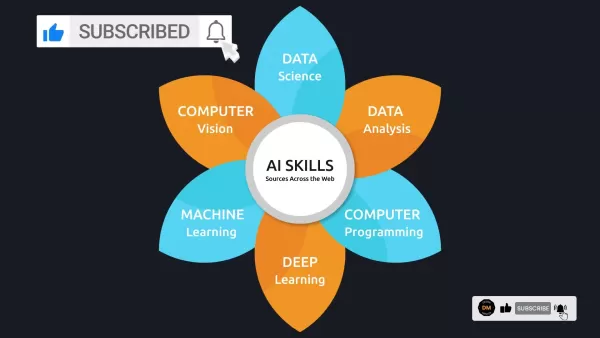
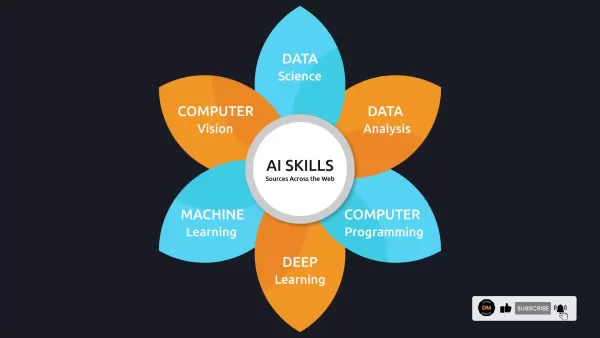
As we navigate the fast-paced technological landscape of 2025, artificial intelligence (AI) expertise has become indispensable. Whether you're launching a career in AI, upgrading your professional capabilities, or aiming to maintain a competitive edge, mastering key competencies is vital. This guide offers an in-depth look at the essential AI skills required to succeed in this dynamic sector. We explore critical domains including machine learning, deep learning, data science, computer vision, programming, and data analysis, providing actionable insights and practical knowledge to help you effectively master the world of AI.
Key Points
AI expertise is fundamental for professional growth in 2025.
Core competencies encompass machine learning, deep learning, and data science.
Specialized fields like computer vision and natural language processing (NLP) are in high demand.
A solid grounding in programming is crucial for applying AI techniques in practice.
Data analysis skills are necessary for interpreting and utilizing AI-generated insights.
Ongoing education and adaptability are essential to keep pace with evolving AI capabilities.
Essential AI Skills for 2025: A Deep Dive
What is Data Science and Why is it Crucial?
Data science forms the backbone of every successful AI initiative. This interdisciplinary field employs scientific methodologies, processes, algorithms, and systems to derive knowledge and insights from both structured and unstructured data.
It covers the entire data lifecycle, from gathering and cleansing to analyzing, interpreting, and presenting findings.
By 2025, data volume and complexity have reached unprecedented levels. Organizations are inundated with information yet often lack actionable intelligence. Data scientists bridge this gap by converting raw data into practical insights. Without robust data science capabilities, companies risk basing decisions on flawed or incomplete information, undermining their innovation and competitive advantage.
Essential Data Science Competencies:
- Statistical Analysis: Proficiency in statistical methods is vital for drawing accurate conclusions from data.
- Data Visualization: Effectively communicating findings through charts, graphs, and other visual tools is key for stakeholder engagement.
- Data Mining: Uncovering patterns and correlations in large datasets using specialized data mining techniques.
- Machine Learning: Implementing machine learning algorithms to create predictive models and automate decision-making.
- Big Data Technologies: Utilizing platforms like Hadoop, Spark, and cloud-based solutions to manage massive datasets.
Machine Learning: The Engine of AI
Machine learning (ML), a subset of AI, enables systems to learn from data without explicit programming. Rather than following predefined rules, ML algorithms detect patterns and relationships within data, allowing them to generate predictions, recommendations, and decisions.
In 2025, machine learning is everywhere—from personalized e-commerce suggestions to financial fraud detection. Its capacity to automate intricate tasks and continuously improve performance makes it a vital asset for businesses across all sectors.
Fundamental Machine Learning Concepts:
- Supervised Learning: Training models on labeled data to predict outcomes for new, unseen information.
- Unsupervised Learning: Identifying hidden patterns and structures in unlabeled data through clustering and dimensionality reduction.
- Reinforcement Learning: Teaching agents to make decisions that maximize rewards in specific environments, commonly used in robotics and gaming.
Widely-Used Machine Learning Algorithms:
- Linear Regression: Predicting continuous values based on linear relationships between variables.
- Logistic Regression: Forecasting categorical outcomes using logistic functions.
- Decision Trees: Creating tree-based models for classification or prediction using decision rules.
- Support Vector Machines (SVM): Establishing optimal boundaries to differentiate data classes.
- Neural Networks: Building interconnected node layers to learn complex patterns, serving as the foundation for deep learning.
Deep Learning: Unlocking Complex Patterns
Deep learning (DL) is an advanced machine learning approach that employs artificial neural networks with multiple layers to analyze data and extract sophisticated patterns.
It has transformed areas like computer vision, natural language processing, and speech recognition, achieving breakthroughs previously thought impossible.
Deep learning excels with high-dimensional data and intricate relationships, such as image recognition, language translation, and autonomous vehicle navigation. By learning hierarchical data representations, deep learning models automatically identify features and patterns that would be challenging to engineer manually.
Key Deep Learning Architectures:
- Convolutional Neural Networks (CNNs): Specialized in image and video processing through convolutional layers that extract spatial features.
- Recurrent Neural Networks (RNNs): Designed for sequential data like text and time series, maintaining internal states to retain past information.
- Transformers: Revolutionizing NLP by processing entire sequences simultaneously, enabling advanced language understanding and generation.
Popular Deep Learning Frameworks:
- TensorFlow: Google's open-source framework, renowned for its flexibility and scalability.
- PyTorch: Facebook's open-source framework, preferred for its dynamic computational graphs and user-friendly design.
- Keras: A high-level API that simplifies deep learning model development, compatible with TensorFlow and other backends.
Computer Vision: Giving Machines the Power of Sight
Computer vision is an AI discipline that enables machines to interpret and understand visual information from images and videos. Through algorithmic analysis of visual data, computer vision systems can identify objects, recognize faces, detect anomalies, and perform numerous other tasks requiring visual comprehension.
In 2025, computer vision is revolutionizing industries including healthcare, manufacturing, and security. Applications range from medical image diagnostics to production line quality control and surveillance systems capable of identifying suspicious activities.
Core Computer Vision Applications:
- Image Classification: Assigning descriptive labels to images based on their content.
- Object Detection: Locating and identifying objects within images.
- Image Segmentation: Partitioning images into meaningful regions based on semantic content.
- Facial Recognition: Identifying and verifying individuals through facial characteristics.
Practical Computer Vision Implementations:
- Autonomous Vehicles: Enabling cars to navigate and avoid obstacles using camera and sensor data.
- Medical Imaging: Assisting healthcare professionals in disease diagnosis and treatment planning using medical images.
- Retail Analytics: Monitoring customer behavior and optimizing store layouts through camera systems and data analysis.
- Security Surveillance: Monitoring public areas and identifying potential threats using video analytics.
Computer Programming: The Foundation for AI Implementation
While specialized AI algorithm knowledge is crucial, strong programming skills are equally important. Programming provides the necessary tools to implement AI models, manipulate data, and develop applications that leverage AI capabilities.
In 2025, proficiency in programming languages like Python, R, and Java is essential for most AI roles. These languages offer comprehensive libraries and frameworks that streamline AI application development and facilitate integration with other systems.
Essential Programming Skills for AI:
- Python: A versatile language valued for its readability and extensive AI libraries including NumPy, Pandas, Scikit-learn, and TensorFlow.
- R: A language specifically designed for statistical computing and data analysis, offering powerful data manipulation and visualization tools.
- Java: A robust, scalable language used for building enterprise-level AI applications and system integrations.
Key Programming Concepts:
- Data Structures and Algorithms: Understanding efficient data storage and manipulation methods is crucial for optimizing AI performance.
- Object-Oriented Programming (OOP): Creating modular, reusable code is essential for managing complex AI projects.
- Version Control: Using tools like Git to track changes and collaborate effectively is vital for team-based development and project management.
Data Analysis: Making Sense of AI-Driven Insights
Data analysis involves examining, cleaning, transforming, and modeling data to uncover useful information, draw conclusions, and support decision-making. It employs various techniques to identify patterns, trends, and anomalies, delivering valuable insights for improving business outcomes.
In 2025, effective data analysis is critical for organizations leveraging AI power. Data analysts collaborate with data scientists and stakeholders to interpret AI results and translate them into actionable recommendations.
Core Data Analysis Skills:
- Data Cleaning and Preprocessing: Preparing data for analysis by addressing missing values, outliers, and inconsistencies.
- Exploratory Data Analysis (EDA): Using statistical and visualization techniques to understand data characteristics and identify potential insights.
- Statistical Modeling: Developing and evaluating statistical models to explain relationships and make predictions.
- Business Intelligence (BI): Utilizing tools like Tableau and Power BI to create dashboards and reports that track KPIs and monitor business performance.
Data Analysis in AI Contexts:
- Model Evaluation: Assessing machine learning model performance and identifying improvement areas.
- Feature Selection: Choosing the most relevant features for training AI models to reduce complexity and enhance accuracy.
- Hypothesis Testing: Formulating and testing data-driven hypotheses to validate assumptions and guide decision-making.
Building a Portfolio of AI Projects
Showcasing Your AI Skills: Practical Project Ideas
Theoretical AI knowledge must be complemented with hands-on experience for true mastery. Developing an AI project portfolio not only reinforces understanding but also demonstrates your capabilities to potential employers.
Consider these practical AI project ideas:
- Image Classification Model: Train a deep learning model to classify images from datasets like CIFAR-10 or ImageNet. This project develops computer vision skills and experience with frameworks like TensorFlow or PyTorch.
- Sentiment Analysis Tool: Create an NLP tool to analyze text sentiment from social media posts or customer reviews. This project requires natural language processing, text preprocessing, and machine learning classification expertise.
- Recommendation System: Build a system that suggests products, movies, or content based on user preferences. This involves data analysis, machine learning, and knowledge of collaborative or content-based filtering algorithms.
- Fraud Detection System: Develop a machine learning model to identify fraudulent transactions using transaction data. This project demands data analysis, feature engineering, and classification algorithm skills, particularly with imbalanced datasets.
- Time Series Forecasting: Create a model to predict future values based on historical time series data like stock prices or weather patterns. This involves time series modeling techniques such as ARIMA or LSTM networks and model evaluation metrics.
- Customer Churn Prediction: Analyze customer data to predict which customers are likely to discontinue service. This project requires data cleaning, feature engineering, and classification algorithms for churn probability prediction.
- Sales Forecasting: Build a model to forecast future sales using historical data and factors like marketing expenditure, seasonality, and economic indicators. This requires time series analysis and regression modeling expertise.
Practical Steps to Acquire Essential AI Skills
Step 1: Laying the Foundation
Before specializing in AI, establish a strong foundation in mathematics, statistics, and programming. Focus on:
- Mathematics: Linear algebra, calculus, probability, and statistics are essential for understanding machine learning algorithms and data analysis methods.
- Statistics: Descriptive statistics, inferential statistics, hypothesis testing, and regression analysis are crucial for deriving valid data conclusions.
- Computer Programming: Python or R proficiency is essential, emphasizing data manipulation, algorithm implementation, and software engineering principles.
Step 2: Mastering Machine Learning Fundamentals
With a solid foundation, explore machine learning fundamentals including:
- Supervised Learning: Study classification, regression, and algorithms like linear regression, logistic regression, decision trees, and support vector machines.
- Unsupervised Learning: Investigate clustering, dimensionality reduction, and anomaly detection techniques.
- Model Evaluation: Learn to assess machine learning model performance using metrics like accuracy, precision, recall, and F1-score.
Step 3: Exploring Deep Learning Architectures
After mastering machine learning basics, advance to deep learning. Focus on:
- Neural Networks: Understand artificial neural network architecture and training processes.
- Convolutional Neural Networks (CNNs): Learn about convolutional layers, pooling layers, and computer vision applications.
- Recurrent Neural Networks (RNNs): Explore recurrent layers, LSTM units, and natural language processing applications.
- Transformers: Study transformer network architecture and attention mechanisms and their NLP impact.
Experiment with TensorFlow and PyTorch to build and train your own models.
Step 4: Specializing in a Niche
With broad AI understanding, specialize in an area matching your interests and career objectives. Popular niches include:
- Computer Vision: Developing algorithms for image recognition, object detection, and video analysis.
- Natural Language Processing (NLP): Creating models for language understanding, text generation, and sentiment analysis.
- Robotics: Integrating AI with robotics to develop intelligent automation and exploration systems.
- Healthcare: Applying AI to medical imaging, drug discovery, and personalized medicine.
- Finance: Implementing AI for fraud detection, risk management, and algorithmic trading.
Step 5: Continuous Learning and Adaptation
Since AI evolves constantly, ongoing learning is essential. This includes:
- Staying Current with Research: Reading papers, attending conferences, and participating in online communities to learn about latest developments.
- Experimenting with New Technologies: Testing new tools, frameworks, and algorithms to expand your skill set.
- Contributing to Open Source Projects: Collaborating on open-source AI projects to gain practical experience and build your reputation.
- Building a Professional Network: Connecting with AI professionals and attending industry events to share knowledge and learn from peers.
Cost-Effective Resources for Learning AI Skills
Online Courses and Platforms
Numerous high-quality resources make learning AI skills affordable. Platforms like Coursera, edX, and Udacity offer diverse AI courses taught by experts from leading universities and companies. Many courses are free, with optional certificates available for purchase.
Websites like Kaggle and Analytics Vidhya provide free tutorials, datasets, and competitions for practicing AI skills and competing with other learners. These resources offer excellent opportunities for hands-on experience and portfolio development.
Books and Publications
Books remain valuable AI learning resources. Popular titles include "Hands-On Machine Learning with Scikit-Learn, Keras & TensorFlow" by Aurélien Géron, "Python Machine Learning" by Sebastian Raschka and Vahid Mirjalili, and "Deep Learning" by Ian Goodfellow, Yoshua Bengio, and Aaron Courville.
Research publications and open-source documentation provide detailed information about specific AI algorithms and techniques. Staying current with research helps maintain competitive advantage and deepens field understanding.
Machine Learning Skillset: Evaluating the Advantages and Disadvantages
Pros
High Demand: Skilled professionals are sought after across multiple industries.
Versatile: Applicable to diverse sectors from finance to healthcare.
Problem Solving: Capability to address complex challenges with data-driven solutions.
Lucrative: High earning potential due to specialized knowledge.
Cons
Complexity: Requires strong mathematical and programming foundations.
Time Investment: Mastering skills demands substantial time and effort.
Constant Evolution: The field changes rapidly, necessitating continuous learning.
Ethical Concerns: Raises issues regarding bias and fairness.
Core AI Skills
Detailed breakdown
To summarize, here's an organized overview of core AI skills with their key components:

Skill Key Components Data Science Statistical analysis, data visualization, data mining, machine learning, big data technologies Machine Learning Supervised learning, unsupervised learning, reinforcement learning, linear regression, logistic regression, decision trees, SVMs, neural networks Deep Learning CNNs, RNNs, transformers, TensorFlow, PyTorch, Keras Computer Vision Image classification, object detection, image segmentation, facial recognition Computer Programming Python, R, Java, data structures and algorithms, object-oriented programming, version control Data Analysis Data cleaning, EDA, statistical modeling, BI tools
Frequently Asked Questions About AI Skills
What are the most in-demand AI skills in 2025?
In 2025, the most sought-after AI skills include machine learning, deep learning, data science, computer vision, and natural language processing. Expertise in these areas is highly valued by companies across various sectors.
How can I acquire AI skills?
AI skills can be developed through online courses, bootcamps, university programs, books, and hands-on projects. Establishing a solid foundation in mathematics, statistics, and programming is important before specializing in AI.
What programming languages should I learn for AI?
Python and R are the most popular AI programming languages. Python offers extensive AI libraries and frameworks, while R is specifically designed for statistical computing and data analysis.
How can I stay updated with the latest AI trends and technologies?
Stay current with AI developments by reading research papers, attending conferences, participating in online communities, and experimenting with new tools and frameworks.
Do I need a Ph.D. to work in AI?
While a Ph.D. benefits research-focused positions, it's not always required for AI careers. Many employers prioritize practical experience and a strong AI project portfolio over advanced degrees.
Related Questions
How do I transition into an AI career from a non-technical background?
Moving into an AI career from a non-technical background requires commitment, hard work, and a structured approach. Begin by building strong foundations in mathematics, statistics, and programming. Enroll in online courses or bootcamps to learn machine learning and data science fundamentals. Develop an AI project portfolio demonstrating your skills through projects like image classification, sentiment analysis, or recommendation systems. Network with AI professionals and attend industry events to discover opportunities and gain insights. Consider pursuing graduate studies or certifications in AI to strengthen your credentials and demonstrate dedication to the field.
What are the ethical considerations in AI?
AI ethics is a critical component of responsible AI development and deployment, addressing issues like bias, fairness, transparency, and accountability. Biased AI models can reinforce existing social inequalities, resulting in discriminatory outcomes. Address these concerns by training AI models on diverse, representative datasets. Implement fairness-aware algorithms that reduce bias and promote equitable results. Enhance transparency by explaining AI decision-making processes and providing interpretability tools. Establish clear accountability frameworks for AI systems and create mechanisms for addressing harm. Prioritizing ethics ensures AI benefits society overall while avoiding perpetuation of harmful biases and practices.
Related article
 Suno to Watermark Songs Amid Legal Battles
Suno, the platform enabling users to generate AI-created music, has unveiled new features to label platform-produced tracks, restrict downloads, and update community standards to curb unauthorized replicas. These updates arrive as Suno confronts mult
Musk Admits Grok Build Leaked User Code, Promises to Erase All Historical Data
Elon Musk directly addressed the privacy controversy surrounding Grok Build, beginning with a simple "True" to confirm the incident's validity. He pledged that all user data previously uploaded to SpaceXAI would be permanently erased, stating, "not a
U.S. Stocks Hit Historic Milestone as AI and Aerospace Giants Prepare for Trillion-Dollar Debut
Elon Musk, Sam Altman, and Dario Amodei, three titans of the technology sector, are advancing toward initial public offerings for their respective ventures. With SpaceX, OpenAI, and Anthropic—three industry behemoths nearing trillion-dollar valuation
Related Special Topic Recommendations
Design & Art
Suno to Watermark Songs Amid Legal Battles
Suno, the platform enabling users to generate AI-created music, has unveiled new features to label platform-produced tracks, restrict downloads, and update community standards to curb unauthorized replicas. These updates arrive as Suno confronts mult
Musk Admits Grok Build Leaked User Code, Promises to Erase All Historical Data
Elon Musk directly addressed the privacy controversy surrounding Grok Build, beginning with a simple "True" to confirm the incident's validity. He pledged that all user data previously uploaded to SpaceXAI would be permanently erased, stating, "not a
U.S. Stocks Hit Historic Milestone as AI and Aerospace Giants Prepare for Trillion-Dollar Debut
Elon Musk, Sam Altman, and Dario Amodei, three titans of the technology sector, are advancing toward initial public offerings for their respective ventures. With SpaceX, OpenAI, and Anthropic—three industry behemoths nearing trillion-dollar valuation
Related Special Topic Recommendations
Design & Art
 AI Visual Style Reference Tools for Character Sheets, Moodboards, and Pitch Decks
2026 Latest Best AI Visual Style Reference Tools for Character Sheets, Moodboards, and Pitch Decks are here on XIX.AI! This curated top-rated list features powerful game-changing tools that go through rigorous real-world tests. You’ll find a free vs paid comparison, detailed rankings, and must-try options to help you boost creativity and streamline your workflow. Explore now to discover your perfect tool for boosting productivity!
 11 tools
 xix.ai
SEO
Best AI SERP Analysis Tools for Search Strategy
xix.ai
SEO
Best AI SERP Analysis Tools for Search Strategy
2026 Latest Best Top-rated AI SERP Analysis Tools for Search Strategy are curated by XIX.AI through rigorous real-world tests and weekly updated rankings. These powerful tools help you unlock hidden optimization opportunities, boost content performance, and gain a competitive edge in search. Discover your perfect tool to elevate your search strategy today. Explore now!
13 tools
xix.ai
Data Analysis
Best AI Anomaly Detection Tools for KPI Monitoring across SaaS and Ecommerce Teams
2026 Latest Best Top-rated AI Anomaly Detection Tools for KPI Monitoring in SaaS and Ecommerce teams! XIX.AI has curated a powerful, game-changing collection based on rigorous real-world tests and weekly updated rankings. You’ll find detailed free vs paid comparison insights to help you identify the must-try solution that boosts productivity and unlocks your AI edge. Explore now!
10 tools
xix.ai
writing
Best AI Outline Generators for Long-Form SEO Articles
2026 Latest Best Top-Rated AI Outline Generators for Long-Form SEO Articles, meticulously curated by XIX.AI. These powerful tools offer game-changing assistance in creating high-quality content quickly, boosting writing efficiency significantly. Get a free vs paid comparison along with real-world tests and detailed rankings to help you find the must-try option that suits your needs. Explore now to unlock your AI edge.
8 tools
xix.ai
Education and Learning
AI Study Tools for Homework and Exam Prep
2026 Latest Best AI Study Tools for Homework and Exam Prep! XIX.AI curates a top-rated list of powerful, game-changing tools that help students boost productivity, streamline homework completion, and ace exams through real-world tests. Get a free vs paid comparison, detailed rankings, and must-try options to unlock your AI edge. Explore now!
10 tools
xix.ai
Music composition
AI Vocal Demo Tools for Songwriters, Hooks, Toplines, and Multilingual Draft Sessions
2026 Latest Best AI Vocal Demo Tools for Songwriters, Hook Creators, and Multi-Language Content Teams! XIX.AI has curated a top-rated list of powerful game-changing tools that go through rigorous real-world tests. You’ll find detailed free vs paid comparison data, comprehensive rankings, and must-try options to help you boost writing efficiency and unlock your creative potential. Explore now to discover your perfect tool for all your content needs!
9 tools
xix.ai

 Comments (0)
0/500
Comments (0)
0/500
As we navigate the fast-paced technological landscape of 2025, artificial intelligence (AI) expertise has become indispensable. Whether you're launching a career in AI, upgrading your professional capabilities, or aiming to maintain a competitive edge, mastering key competencies is vital. This guide offers an in-depth look at the essential AI skills required to succeed in this dynamic sector. We explore critical domains including machine learning, deep learning, data science, computer vision, programming, and data analysis, providing actionable insights and practical knowledge to help you effectively master the world of AI.
Key Points
AI expertise is fundamental for professional growth in 2025.
Core competencies encompass machine learning, deep learning, and data science.
Specialized fields like computer vision and natural language processing (NLP) are in high demand.
A solid grounding in programming is crucial for applying AI techniques in practice.
Data analysis skills are necessary for interpreting and utilizing AI-generated insights.
Ongoing education and adaptability are essential to keep pace with evolving AI capabilities.
Essential AI Skills for 2025: A Deep Dive
What is Data Science and Why is it Crucial?
Data science forms the backbone of every successful AI initiative. This interdisciplinary field employs scientific methodologies, processes, algorithms, and systems to derive knowledge and insights from both structured and unstructured data.
It covers the entire data lifecycle, from gathering and cleansing to analyzing, interpreting, and presenting findings.
By 2025, data volume and complexity have reached unprecedented levels. Organizations are inundated with information yet often lack actionable intelligence. Data scientists bridge this gap by converting raw data into practical insights. Without robust data science capabilities, companies risk basing decisions on flawed or incomplete information, undermining their innovation and competitive advantage.
Essential Data Science Competencies:
- Statistical Analysis: Proficiency in statistical methods is vital for drawing accurate conclusions from data.
- Data Visualization: Effectively communicating findings through charts, graphs, and other visual tools is key for stakeholder engagement.
- Data Mining: Uncovering patterns and correlations in large datasets using specialized data mining techniques.
- Machine Learning: Implementing machine learning algorithms to create predictive models and automate decision-making.
- Big Data Technologies: Utilizing platforms like Hadoop, Spark, and cloud-based solutions to manage massive datasets.
Machine Learning: The Engine of AI
Machine learning (ML), a subset of AI, enables systems to learn from data without explicit programming. Rather than following predefined rules, ML algorithms detect patterns and relationships within data, allowing them to generate predictions, recommendations, and decisions.
In 2025, machine learning is everywhere—from personalized e-commerce suggestions to financial fraud detection. Its capacity to automate intricate tasks and continuously improve performance makes it a vital asset for businesses across all sectors.
Fundamental Machine Learning Concepts:
- Supervised Learning: Training models on labeled data to predict outcomes for new, unseen information.
- Unsupervised Learning: Identifying hidden patterns and structures in unlabeled data through clustering and dimensionality reduction.
- Reinforcement Learning: Teaching agents to make decisions that maximize rewards in specific environments, commonly used in robotics and gaming.
Widely-Used Machine Learning Algorithms:
- Linear Regression: Predicting continuous values based on linear relationships between variables.
- Logistic Regression: Forecasting categorical outcomes using logistic functions.
- Decision Trees: Creating tree-based models for classification or prediction using decision rules.
- Support Vector Machines (SVM): Establishing optimal boundaries to differentiate data classes.
- Neural Networks: Building interconnected node layers to learn complex patterns, serving as the foundation for deep learning.
Deep Learning: Unlocking Complex Patterns
Deep learning (DL) is an advanced machine learning approach that employs artificial neural networks with multiple layers to analyze data and extract sophisticated patterns.
It has transformed areas like computer vision, natural language processing, and speech recognition, achieving breakthroughs previously thought impossible.
Deep learning excels with high-dimensional data and intricate relationships, such as image recognition, language translation, and autonomous vehicle navigation. By learning hierarchical data representations, deep learning models automatically identify features and patterns that would be challenging to engineer manually.
Key Deep Learning Architectures:
- Convolutional Neural Networks (CNNs): Specialized in image and video processing through convolutional layers that extract spatial features.
- Recurrent Neural Networks (RNNs): Designed for sequential data like text and time series, maintaining internal states to retain past information.
- Transformers: Revolutionizing NLP by processing entire sequences simultaneously, enabling advanced language understanding and generation.
Popular Deep Learning Frameworks:
- TensorFlow: Google's open-source framework, renowned for its flexibility and scalability.
- PyTorch: Facebook's open-source framework, preferred for its dynamic computational graphs and user-friendly design.
- Keras: A high-level API that simplifies deep learning model development, compatible with TensorFlow and other backends.
Computer Vision: Giving Machines the Power of Sight
Computer vision is an AI discipline that enables machines to interpret and understand visual information from images and videos. Through algorithmic analysis of visual data, computer vision systems can identify objects, recognize faces, detect anomalies, and perform numerous other tasks requiring visual comprehension.
In 2025, computer vision is revolutionizing industries including healthcare, manufacturing, and security. Applications range from medical image diagnostics to production line quality control and surveillance systems capable of identifying suspicious activities.
Core Computer Vision Applications:
- Image Classification: Assigning descriptive labels to images based on their content.
- Object Detection: Locating and identifying objects within images.
- Image Segmentation: Partitioning images into meaningful regions based on semantic content.
- Facial Recognition: Identifying and verifying individuals through facial characteristics.
Practical Computer Vision Implementations:
- Autonomous Vehicles: Enabling cars to navigate and avoid obstacles using camera and sensor data.
- Medical Imaging: Assisting healthcare professionals in disease diagnosis and treatment planning using medical images.
- Retail Analytics: Monitoring customer behavior and optimizing store layouts through camera systems and data analysis.
- Security Surveillance: Monitoring public areas and identifying potential threats using video analytics.
Computer Programming: The Foundation for AI Implementation
While specialized AI algorithm knowledge is crucial, strong programming skills are equally important. Programming provides the necessary tools to implement AI models, manipulate data, and develop applications that leverage AI capabilities.
In 2025, proficiency in programming languages like Python, R, and Java is essential for most AI roles. These languages offer comprehensive libraries and frameworks that streamline AI application development and facilitate integration with other systems.
Essential Programming Skills for AI:
- Python: A versatile language valued for its readability and extensive AI libraries including NumPy, Pandas, Scikit-learn, and TensorFlow.
- R: A language specifically designed for statistical computing and data analysis, offering powerful data manipulation and visualization tools.
- Java: A robust, scalable language used for building enterprise-level AI applications and system integrations.
Key Programming Concepts:
- Data Structures and Algorithms: Understanding efficient data storage and manipulation methods is crucial for optimizing AI performance.
- Object-Oriented Programming (OOP): Creating modular, reusable code is essential for managing complex AI projects.
- Version Control: Using tools like Git to track changes and collaborate effectively is vital for team-based development and project management.
Data Analysis: Making Sense of AI-Driven Insights
Data analysis involves examining, cleaning, transforming, and modeling data to uncover useful information, draw conclusions, and support decision-making. It employs various techniques to identify patterns, trends, and anomalies, delivering valuable insights for improving business outcomes.
In 2025, effective data analysis is critical for organizations leveraging AI power. Data analysts collaborate with data scientists and stakeholders to interpret AI results and translate them into actionable recommendations.
Core Data Analysis Skills:
- Data Cleaning and Preprocessing: Preparing data for analysis by addressing missing values, outliers, and inconsistencies.
- Exploratory Data Analysis (EDA): Using statistical and visualization techniques to understand data characteristics and identify potential insights.
- Statistical Modeling: Developing and evaluating statistical models to explain relationships and make predictions.
- Business Intelligence (BI): Utilizing tools like Tableau and Power BI to create dashboards and reports that track KPIs and monitor business performance.
Data Analysis in AI Contexts:
- Model Evaluation: Assessing machine learning model performance and identifying improvement areas.
- Feature Selection: Choosing the most relevant features for training AI models to reduce complexity and enhance accuracy.
- Hypothesis Testing: Formulating and testing data-driven hypotheses to validate assumptions and guide decision-making.
Building a Portfolio of AI Projects
Showcasing Your AI Skills: Practical Project Ideas
Theoretical AI knowledge must be complemented with hands-on experience for true mastery. Developing an AI project portfolio not only reinforces understanding but also demonstrates your capabilities to potential employers.
Consider these practical AI project ideas:
- Image Classification Model: Train a deep learning model to classify images from datasets like CIFAR-10 or ImageNet. This project develops computer vision skills and experience with frameworks like TensorFlow or PyTorch.
- Sentiment Analysis Tool: Create an NLP tool to analyze text sentiment from social media posts or customer reviews. This project requires natural language processing, text preprocessing, and machine learning classification expertise.
- Recommendation System: Build a system that suggests products, movies, or content based on user preferences. This involves data analysis, machine learning, and knowledge of collaborative or content-based filtering algorithms.
- Fraud Detection System: Develop a machine learning model to identify fraudulent transactions using transaction data. This project demands data analysis, feature engineering, and classification algorithm skills, particularly with imbalanced datasets.
- Time Series Forecasting: Create a model to predict future values based on historical time series data like stock prices or weather patterns. This involves time series modeling techniques such as ARIMA or LSTM networks and model evaluation metrics.
- Customer Churn Prediction: Analyze customer data to predict which customers are likely to discontinue service. This project requires data cleaning, feature engineering, and classification algorithms for churn probability prediction.
- Sales Forecasting: Build a model to forecast future sales using historical data and factors like marketing expenditure, seasonality, and economic indicators. This requires time series analysis and regression modeling expertise.
Practical Steps to Acquire Essential AI Skills
Step 1: Laying the Foundation
Before specializing in AI, establish a strong foundation in mathematics, statistics, and programming. Focus on:
- Mathematics: Linear algebra, calculus, probability, and statistics are essential for understanding machine learning algorithms and data analysis methods.
- Statistics: Descriptive statistics, inferential statistics, hypothesis testing, and regression analysis are crucial for deriving valid data conclusions.
- Computer Programming: Python or R proficiency is essential, emphasizing data manipulation, algorithm implementation, and software engineering principles.
Step 2: Mastering Machine Learning Fundamentals
With a solid foundation, explore machine learning fundamentals including:
- Supervised Learning: Study classification, regression, and algorithms like linear regression, logistic regression, decision trees, and support vector machines.
- Unsupervised Learning: Investigate clustering, dimensionality reduction, and anomaly detection techniques.
- Model Evaluation: Learn to assess machine learning model performance using metrics like accuracy, precision, recall, and F1-score.
Step 3: Exploring Deep Learning Architectures
After mastering machine learning basics, advance to deep learning. Focus on:
- Neural Networks: Understand artificial neural network architecture and training processes.
- Convolutional Neural Networks (CNNs): Learn about convolutional layers, pooling layers, and computer vision applications.
- Recurrent Neural Networks (RNNs): Explore recurrent layers, LSTM units, and natural language processing applications.
- Transformers: Study transformer network architecture and attention mechanisms and their NLP impact.
Experiment with TensorFlow and PyTorch to build and train your own models.
Step 4: Specializing in a Niche
With broad AI understanding, specialize in an area matching your interests and career objectives. Popular niches include:
- Computer Vision: Developing algorithms for image recognition, object detection, and video analysis.
- Natural Language Processing (NLP): Creating models for language understanding, text generation, and sentiment analysis.
- Robotics: Integrating AI with robotics to develop intelligent automation and exploration systems.
- Healthcare: Applying AI to medical imaging, drug discovery, and personalized medicine.
- Finance: Implementing AI for fraud detection, risk management, and algorithmic trading.
Step 5: Continuous Learning and Adaptation
Since AI evolves constantly, ongoing learning is essential. This includes:
- Staying Current with Research: Reading papers, attending conferences, and participating in online communities to learn about latest developments.
- Experimenting with New Technologies: Testing new tools, frameworks, and algorithms to expand your skill set.
- Contributing to Open Source Projects: Collaborating on open-source AI projects to gain practical experience and build your reputation.
- Building a Professional Network: Connecting with AI professionals and attending industry events to share knowledge and learn from peers.
Cost-Effective Resources for Learning AI Skills
Online Courses and Platforms
Numerous high-quality resources make learning AI skills affordable. Platforms like Coursera, edX, and Udacity offer diverse AI courses taught by experts from leading universities and companies. Many courses are free, with optional certificates available for purchase.
Websites like Kaggle and Analytics Vidhya provide free tutorials, datasets, and competitions for practicing AI skills and competing with other learners. These resources offer excellent opportunities for hands-on experience and portfolio development.
Books and Publications
Books remain valuable AI learning resources. Popular titles include "Hands-On Machine Learning with Scikit-Learn, Keras & TensorFlow" by Aurélien Géron, "Python Machine Learning" by Sebastian Raschka and Vahid Mirjalili, and "Deep Learning" by Ian Goodfellow, Yoshua Bengio, and Aaron Courville.
Research publications and open-source documentation provide detailed information about specific AI algorithms and techniques. Staying current with research helps maintain competitive advantage and deepens field understanding.
Machine Learning Skillset: Evaluating the Advantages and Disadvantages
Pros
High Demand: Skilled professionals are sought after across multiple industries.
Versatile: Applicable to diverse sectors from finance to healthcare.
Problem Solving: Capability to address complex challenges with data-driven solutions.
Lucrative: High earning potential due to specialized knowledge.
Cons
Complexity: Requires strong mathematical and programming foundations.
Time Investment: Mastering skills demands substantial time and effort.
Constant Evolution: The field changes rapidly, necessitating continuous learning.
Ethical Concerns: Raises issues regarding bias and fairness.
Core AI Skills
Detailed breakdown
To summarize, here's an organized overview of core AI skills with their key components:
| Skill | Key Components |
|---|---|
| Data Science | Statistical analysis, data visualization, data mining, machine learning, big data technologies |
| Machine Learning | Supervised learning, unsupervised learning, reinforcement learning, linear regression, logistic regression, decision trees, SVMs, neural networks |
| Deep Learning | CNNs, RNNs, transformers, TensorFlow, PyTorch, Keras |
| Computer Vision | Image classification, object detection, image segmentation, facial recognition |
| Computer Programming | Python, R, Java, data structures and algorithms, object-oriented programming, version control |
| Data Analysis | Data cleaning, EDA, statistical modeling, BI tools |
Frequently Asked Questions About AI Skills
What are the most in-demand AI skills in 2025?
In 2025, the most sought-after AI skills include machine learning, deep learning, data science, computer vision, and natural language processing. Expertise in these areas is highly valued by companies across various sectors.
How can I acquire AI skills?
AI skills can be developed through online courses, bootcamps, university programs, books, and hands-on projects. Establishing a solid foundation in mathematics, statistics, and programming is important before specializing in AI.
What programming languages should I learn for AI?
Python and R are the most popular AI programming languages. Python offers extensive AI libraries and frameworks, while R is specifically designed for statistical computing and data analysis.
How can I stay updated with the latest AI trends and technologies?
Stay current with AI developments by reading research papers, attending conferences, participating in online communities, and experimenting with new tools and frameworks.
Do I need a Ph.D. to work in AI?
While a Ph.D. benefits research-focused positions, it's not always required for AI careers. Many employers prioritize practical experience and a strong AI project portfolio over advanced degrees.
Related Questions
How do I transition into an AI career from a non-technical background?
Moving into an AI career from a non-technical background requires commitment, hard work, and a structured approach. Begin by building strong foundations in mathematics, statistics, and programming. Enroll in online courses or bootcamps to learn machine learning and data science fundamentals. Develop an AI project portfolio demonstrating your skills through projects like image classification, sentiment analysis, or recommendation systems. Network with AI professionals and attend industry events to discover opportunities and gain insights. Consider pursuing graduate studies or certifications in AI to strengthen your credentials and demonstrate dedication to the field.
What are the ethical considerations in AI?
AI ethics is a critical component of responsible AI development and deployment, addressing issues like bias, fairness, transparency, and accountability. Biased AI models can reinforce existing social inequalities, resulting in discriminatory outcomes. Address these concerns by training AI models on diverse, representative datasets. Implement fairness-aware algorithms that reduce bias and promote equitable results. Enhance transparency by explaining AI decision-making processes and providing interpretability tools. Establish clear accountability frameworks for AI systems and create mechanisms for addressing harm. Prioritizing ethics ensures AI benefits society overall while avoiding perpetuation of harmful biases and practices.








 Suno to Watermark Songs Amid Legal Battles
Suno, the platform enabling users to generate AI-created music, has unveiled new features to label platform-produced tracks, restrict downloads, and update community standards to curb unauthorized replicas. These updates arrive as Suno confronts mult
Suno to Watermark Songs Amid Legal Battles
Suno, the platform enabling users to generate AI-created music, has unveiled new features to label platform-produced tracks, restrict downloads, and update community standards to curb unauthorized replicas. These updates arrive as Suno confronts mult
 Musk Admits Grok Build Leaked User Code, Promises to Erase All Historical Data
Elon Musk directly addressed the privacy controversy surrounding Grok Build, beginning with a simple "True" to confirm the incident's validity. He pledged that all user data previously uploaded to SpaceXAI would be permanently erased, stating, "not a
Musk Admits Grok Build Leaked User Code, Promises to Erase All Historical Data
Elon Musk directly addressed the privacy controversy surrounding Grok Build, beginning with a simple "True" to confirm the incident's validity. He pledged that all user data previously uploaded to SpaceXAI would be permanently erased, stating, "not a
 U.S. Stocks Hit Historic Milestone as AI and Aerospace Giants Prepare for Trillion-Dollar Debut
Elon Musk, Sam Altman, and Dario Amodei, three titans of the technology sector, are advancing toward initial public offerings for their respective ventures. With SpaceX, OpenAI, and Anthropic—three industry behemoths nearing trillion-dollar valuation
U.S. Stocks Hit Historic Milestone as AI and Aerospace Giants Prepare for Trillion-Dollar Debut
Elon Musk, Sam Altman, and Dario Amodei, three titans of the technology sector, are advancing toward initial public offerings for their respective ventures. With SpaceX, OpenAI, and Anthropic—three industry behemoths nearing trillion-dollar valuation

2026 Latest Best AI Visual Style Reference Tools for Character Sheets, Moodboards, and Pitch Decks are here on XIX.AI! This curated top-rated list features powerful game-changing tools that go through rigorous real-world tests. You’ll find a free vs paid comparison, detailed rankings, and must-try options to help you boost creativity and streamline your workflow. Explore now to discover your perfect tool for boosting productivity!
11 tools
xix.ai

2026 Latest Best Top-rated AI SERP Analysis Tools for Search Strategy are curated by XIX.AI through rigorous real-world tests and weekly updated rankings. These powerful tools help you unlock hidden optimization opportunities, boost content performance, and gain a competitive edge in search. Discover your perfect tool to elevate your search strategy today. Explore now!
13 tools
xix.ai

2026 Latest Best Top-rated AI Anomaly Detection Tools for KPI Monitoring in SaaS and Ecommerce teams! XIX.AI has curated a powerful, game-changing collection based on rigorous real-world tests and weekly updated rankings. You’ll find detailed free vs paid comparison insights to help you identify the must-try solution that boosts productivity and unlocks your AI edge. Explore now!
10 tools
xix.ai

2026 Latest Best Top-Rated AI Outline Generators for Long-Form SEO Articles, meticulously curated by XIX.AI. These powerful tools offer game-changing assistance in creating high-quality content quickly, boosting writing efficiency significantly. Get a free vs paid comparison along with real-world tests and detailed rankings to help you find the must-try option that suits your needs. Explore now to unlock your AI edge.
8 tools
xix.ai

2026 Latest Best AI Study Tools for Homework and Exam Prep! XIX.AI curates a top-rated list of powerful, game-changing tools that help students boost productivity, streamline homework completion, and ace exams through real-world tests. Get a free vs paid comparison, detailed rankings, and must-try options to unlock your AI edge. Explore now!
10 tools
xix.ai

2026 Latest Best AI Vocal Demo Tools for Songwriters, Hook Creators, and Multi-Language Content Teams! XIX.AI has curated a top-rated list of powerful game-changing tools that go through rigorous real-world tests. You’ll find detailed free vs paid comparison data, comprehensive rankings, and must-try options to help you boost writing efficiency and unlock your creative potential. Explore now to discover your perfect tool for all your content needs!
9 tools
xix.ai












